The Art of Harmony
Inside Dom Pérignon’s creative dialogue with artist Takashi Murakami

For Vincent Chaperon, Chef de Cave at Dom Pérignon, harmony is more than a tasting note, it’s a way of thinking. Each vintage, he explains, is an exploration rather than a repetition, a meditation on how time, nature and emotion can coexist in one glass. “Dom Pérignon has never been about reproducing the past,” Chaperon says. “It’s a search for a new harmony every time, a quest to create emotion through balance.”
It’s a philosophy that has guided the maison since its founding in the 17th century, when the Benedictine monk Dom Pierre Pérignon first envisioned elevating the individual through collective creation. “Harmony was his vision,” Chaperon says. “He believed in uniting multiple voices, the different terroirs of Champagne, into one coherent expression.” This idea of unity within multiplicity remains the defining principle of Dom Pérignon today, and its latest collaboration with artist Takashi Murakami is a perfect example of that ethos.
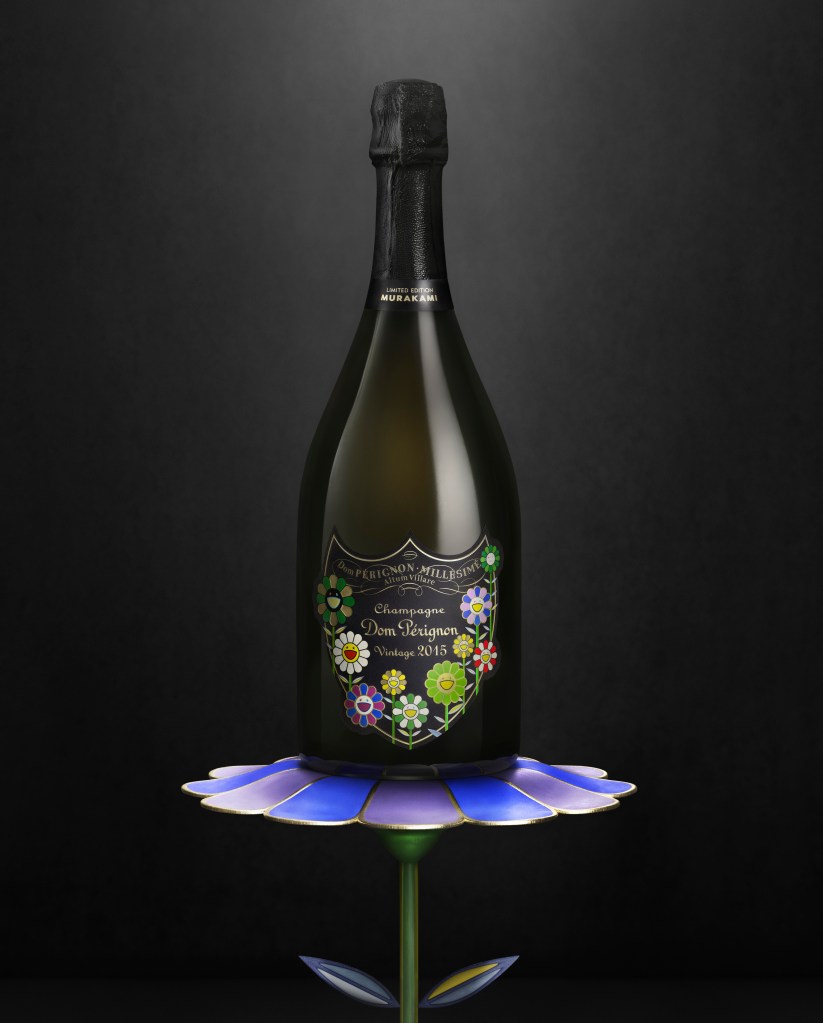
A Vintage Born of Contrast
The 2015 vintage embodies this duality perfectly. “It’s a wine of presence,” says Chaperon. “Strong, yet serene. Intense, but never aggressive. When I taste it, I think of looking toward the horizon, the meeting point of power and peace.”
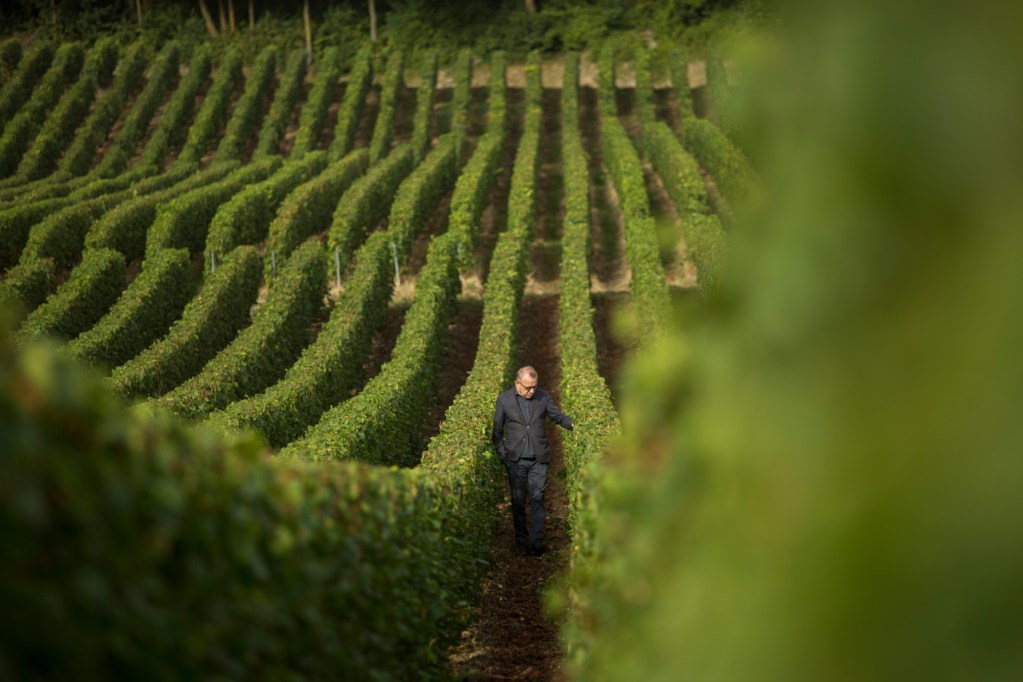
That balance didn’t come easily. The year was marked by heat and drought, part of a new climatic rhythm reshaping Champagne. “We’ve been entering an era of extremes,” he explains. “Since 2003, the first year we harvested in August, the region has been adjusting to shorter growing cycles and rising temperatures. Each vintage is now a new challenge.”
Those conditions yielded grapes of remarkable concentration, but also demanded restraint in the cellar. “Power without harmony can become harsh,” he says. “Our work was to preserve lightness and elegance while embracing the natural richness of the year.” It’s this sensitive calibration, intuition meeting precision, that defines Dom Pérignon’s evolving style. “There is no recipe. Each blend is a response to the year, to what nature gives us. The beauty of Champagne lies in its adaptability.”

The Radical Rosé
That adaptability extends beyond the white cuvées. The Rosé Vintage 2010, Chaperon notes, represents a turning point for the house, a decade-long pursuit of Pinot Noir’s expressive power. “We wanted the Pinot to sing in the rosé,” he says. “To make it not just present, but central.”
The journey began with his predecessor and continued under Chaperon’s direction, through years of experimentation in viticulture and red wine vinification. “We had to rethink everything, from the selection of terroirs to building a dedicated winery for red wine in 2008.” The result is a rosé that carries both strength and grace, structure and radiance. “It’s about reconciliation,” he says. “Intensity from Pinot Noir balanced by the harmony that defines Dom Pérignon.”
For collectors, the 2010 vintage represents not just another chapter, but a culmination, a bridge between the past and future of rosé champagne. “It’s an invitation to see how far Pinot Noir has come within our universe. A decade of exploration, distilled into one bottle.”
Time as Alchemy
If terroir gives Dom Pérignon its foundation, time gives it its soul. Maturation, for Chaperon, is a process of creation rather than decay. “We don’t age champagne, we mature it,” he says. “Time in Dom Pérignon is constructive, not destructive.”
Each vintage spends no less than ten years on the lees before its release. During that time, the wine develops in intimate contact with the yeast, protected from oxidation while being nourished by it. “The lees give texture, umami and depth,” Chaperon says. “The wine becomes more complex, more layered, more itself.”
It’s a philosophy that mirrors the patience of the monks who once tended these same vineyards: transformation through stillness, art through time. “Maturation is the soul of Champagne. It’s how emotion takes shape.”

A Meeting of Worlds
This interplay between art, nature and time makes Dom Pérignon’s ongoing collaboration with Takashi Murakami feel not only natural, but inevitable. Murakami’s vibrant, smiling flowers, now blooming across the bottles of the 2015 vintage and Rosé 2010, reimagine the house’s century-old shield label through his distinctly modern lens.
“Murakami replaced the grapevines and leaves on the original label with his iconic flowers,” Chaperon explains. “He transformed it while respecting its composition. It’s not a takeover, it’s a dialogue.”
That conversation extends far beyond design. “We share a common heritage,” Chaperon says. “For Murakami, it’s Japan’s centuries of craftsmanship and philosophy. For Dom Pérignon, it’s the Benedictine spirit of contemplation and creation. Both are rooted in tradition, yet speak in their own modern languages.”
And at the center of that conversation lies nature, a constant source of renewal. “For both of us, nature is the beginning and the end,” Chaperon reflects. “It’s where creation starts and where it returns. You feel that same vitality in Murakami’s flowers that we feel in the vineyard. Life, transformation, metamorphosis—it’s the same energy.”
Harmony Reimagined
As Chaperon speaks, it becomes clear that the connection between Dom Pérignon and Murakami runs deeper than aesthetics. It’s about shared creative philosophies, about seeing tradition not as something to preserve, but something to reinterpret. “Dom Pérignon is one,” he says. “But within that unity, there are many voices. Each vintage is an expression of that dialogue.”
In this latest collaboration, those voices converge: the quiet patience of the vineyard, the exuberant joy of Murakami’s flowers and the timeless balance of Dom Pérignon itself. Together, they form a portrait of modern luxury, where art, nature and time exist in perfect harmony.
“Ultimately,” Chaperon says, “our work is about emotion. The wine, the label, the collaboration—they’re all invitations to feel something.”
And like the smile of Murakami’s flower or the shimmer of a perfectly poured glass of vintage Dom Pérignon, that emotion lingers, delicate, effervescent, unforgettable.


What are your thoughts?