Designing the Hyundai Boulder Concept
The entire Hyundai Group, including Genesis and Kia, will see the fruits of this new design direction
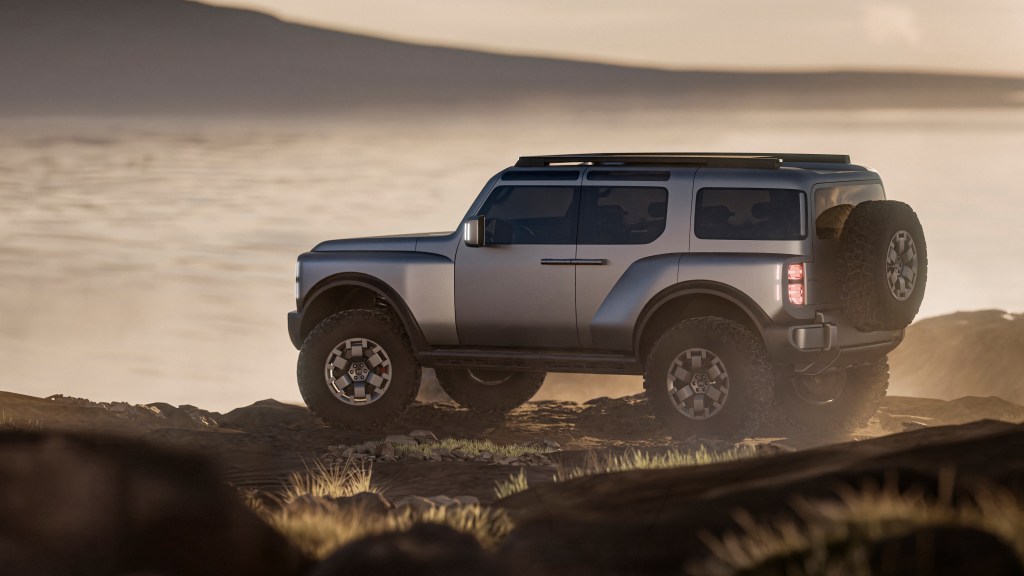
Hyundai just debuted the most meaningful concept of the 2026 New York Auto Show. And not necessarily for the reasons you’re guessing.
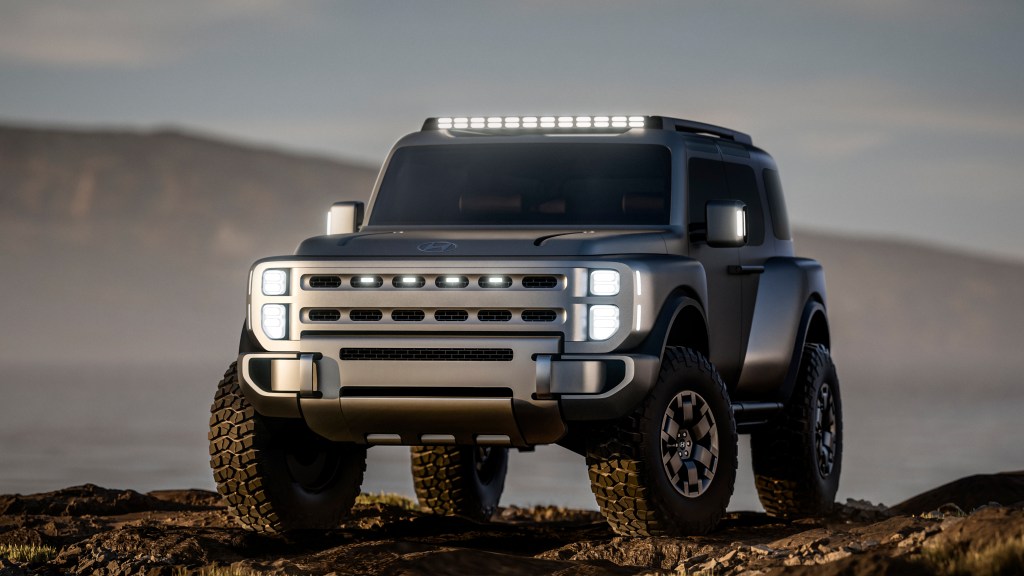
Sure, with Toyota FJ vibes, perhaps overlayed with a bunch of Land Rover Defender brawn, you can imagine this as a very large Ford Bronco-like off-roader. But if you ask Brad Arnold, who just prior to the show was promoted to become Hyundai’s Chief Designer and Head of Hyundai Design North America, the bigger deal is that the Boulder signals a foray into an entire offshoot of product categories where Hyundai really doesn’t exist right now. Think trucks and rugged SUVs. Hyundai’s new push will be part of an onslaught of 30 new vehicles in the next four years, and 22 new Genesis products, too. (The Hyundai Group also includes Kia.)
As for the Boulder part of that equation, Arnold is the perfect person to lead the effort. He’s recently been put in charge of a California-based studio team called “The Sandbox,” which is responsible for Hyundai’s XRT, off-road-grade versions. Though, really you’re only seeing Arnold’s fingerprints on the most recent Palisade XRT PRO. Previously, he also created Hyundai’s CRATER Concept, and has had a hand in multiple Genesis vehicles, too.
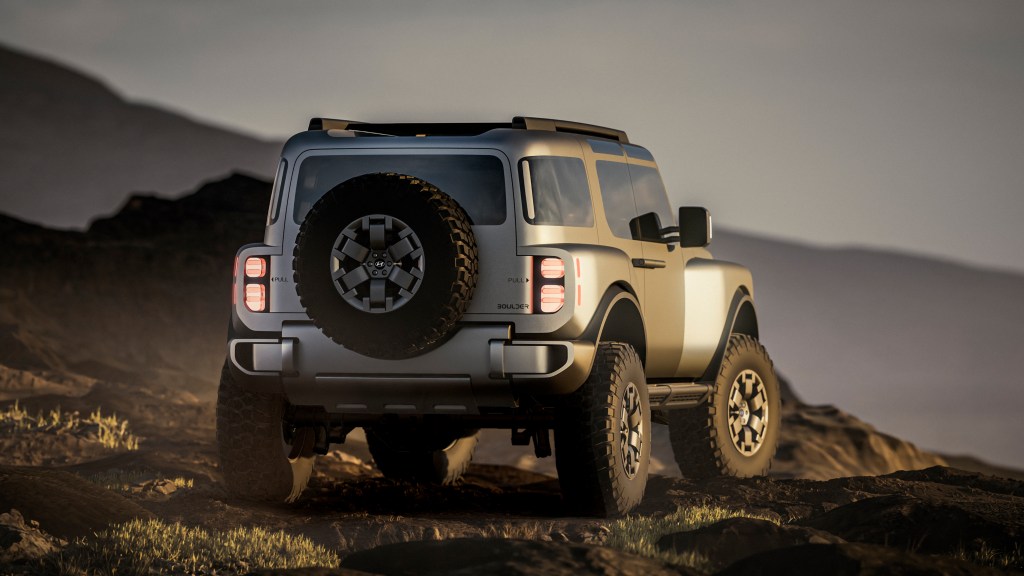
With the Boulder, however, XRT is no longer a riff on an extant vehicle, but an entirely new direction for the whole of the Hyundai Group. Kia head of design, Kurt Kahl, said the entire group is reflecting a trend in customers wanting the aesthetic of “a pared back, honest, rugged SUV.”
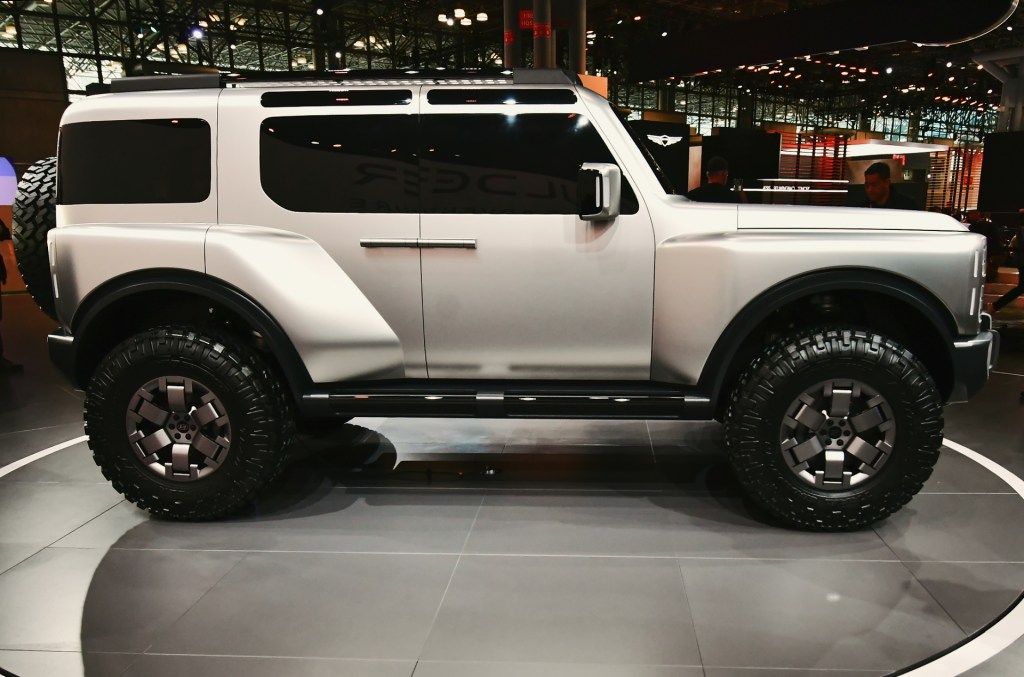
At Kia, that’s evident in the beefier form language of the latest Telluride, which debuted this past fall. Arnold said the Boulder, which has been in development as a concept for about four years, “Goes beyond where we are with XRT. Boulder reflects where we’re going. We’re developing our products even more finely focused for outdoor adventures.”
Arnold explained that the goal wasn’t to be cartoonishly exceptional with forms or “show-car-only” aspects. “What you’re seeing is pretty accurate for a lot of different body-on-frame offerings.”
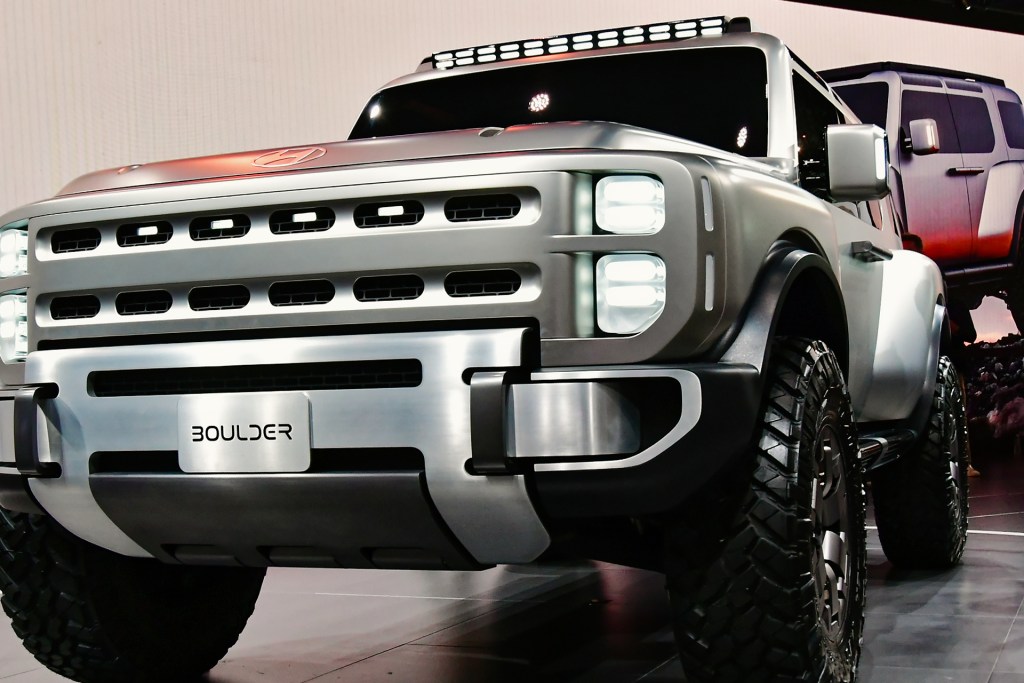
Which, if you missed it, is a crucial aspect of the Boulder. Its underpinnings will be based on a ladder frame, which is how pickups are built. The entirety of the Hyundai Group will get trucks or trucklike vehicles, and you can imagine that as a Genesis rival to Range Rover at the top of this tree, and Hyundai and Kia both getting multiple tiers of both mid-size pickups, but also, probably, more rugged riffs in the fat, mid-size crossover segment dominated by the Toyota RAV4.
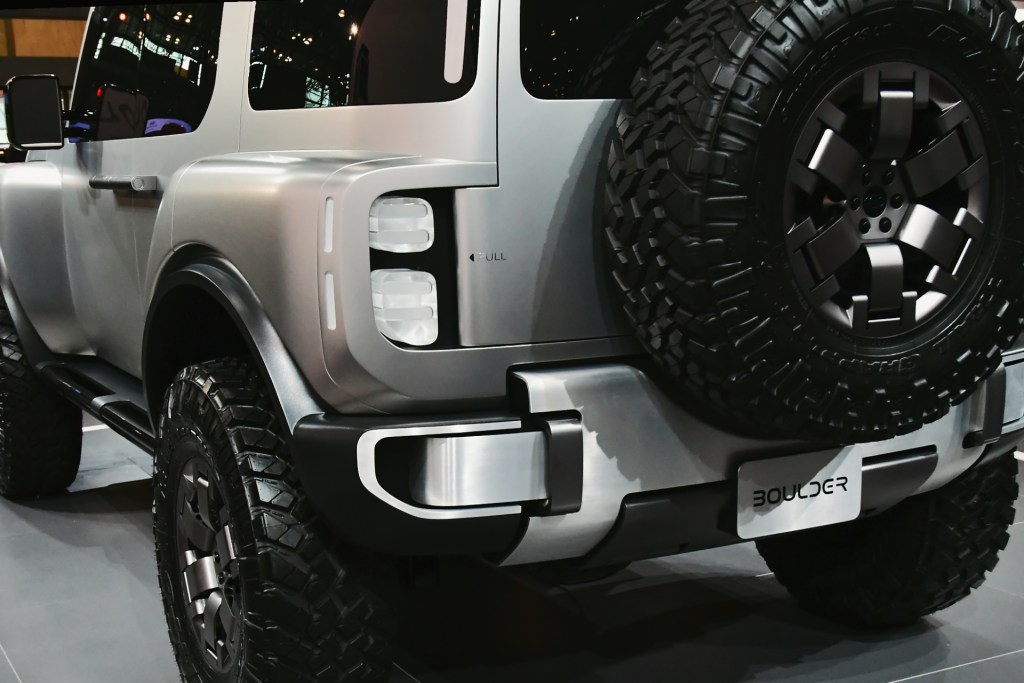
But unlike most crossovers, which are just tall cars, Hyundai wants all of these iterations as body-on-frame vehicles. The advantages to this not only include greater towing and off-roading strength, but also packaging for batteries and hybrid motors. Arnold was coy on aspects such as hybridization or electrification, though Hyundai promises multiple kinds of hybrids and EVs to come. Ladder frames offer some safety and packaging advantages for battery adoption vs. alternatives.
“Designers, we want to embellish everywhere, right? But every day you have to think about what you’re designing for. With Boulder we want to show restraint. It’s a tool for getting to that sunset, to have that experience, not for distracting you from that moment.”
Brad Arnold, Hyundai’s Chief Designer and Head of Hyundai Design North America
As for the design, Arnold points to the blockiness of shapes and paring back to show the vehicle’s simplicity. He said, too, that a Hyundai ethos is to show brawn without menace, which is why so much of the dimensionality is actually rounded rather than purely angular. “We’re just trying not to mess it up. It’s just short wheelbase, short overhangs, high ground clearance, big tire. Those are the things you need to go off roading.”
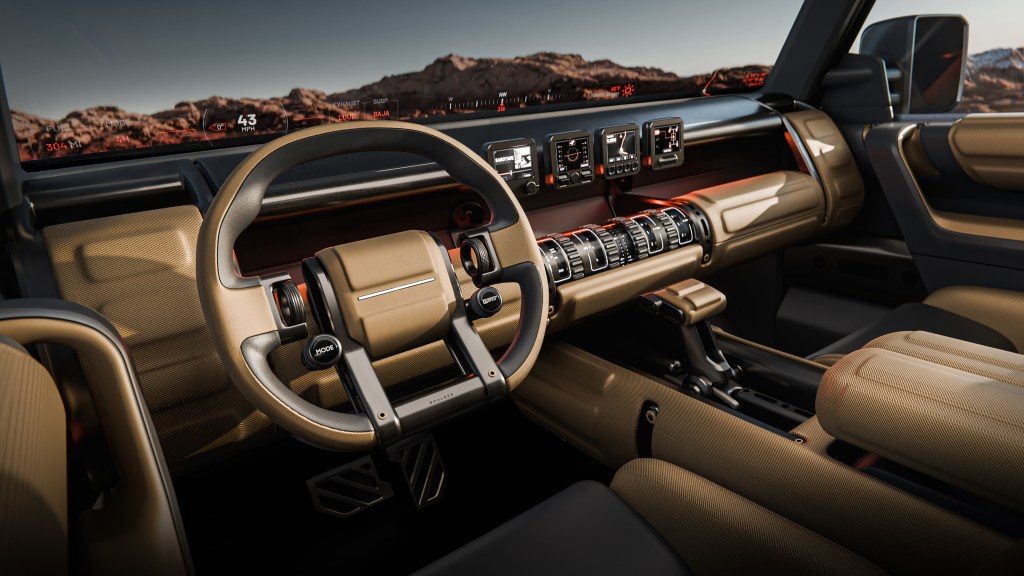
Arnold expanded on how Boulder would filter across Hyundai, saying that there’s a uniqueness to the brand. Where, for instance, the Ioniq 6 doesn’t look like a downsized Santa Fe. “We’re not forced to use the same line or surfacing at Hyundai; that’s not authentic to us. And designers love that because it means we get to reinvent based on each new product.” So, “boulder-ness” may be used lightly or heavily, depending on the user group and each vehicle’s personality.
A product-first approach is evident in the Boulder concept, Arnold said, noting, for instance, that the vehicle stresses the experience of being out in nature, with oversized glass and even skylit shoulders, to bring as much of the outside world into the vehicle. Too often, he added, muscular SUVs feel like bunkers, which is exactly what he didn’t want with the Boulder. The goal was simplicity, especially on the interior.




What are your thoughts?