Living Like a Roman: The Artful Dialogue of Past and Present at Palazzo delle Pietre
In the historic Campo Marzio district, a 15th-century residence bridges the gap between antiquity and modern design for independent travelers
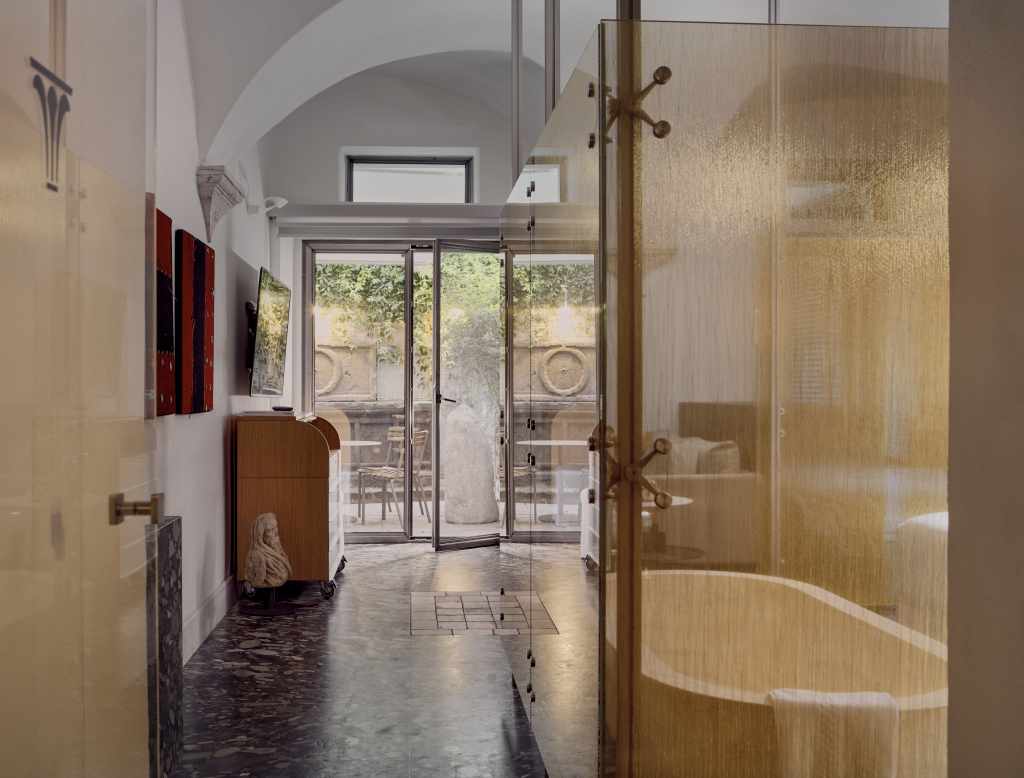
In a city defined by its layers, where medieval churches sit atop imperial temples and Renaissance palazzos house modern life, finding a hospitality experience that authentically engages with Rome’s complex stratigraphy is rare. Too often, the choice is between the anonymous luxury of international hotel chains or the uncurated scattering of vacation rentals. Enter Palazzo delle Pietre, a unique property redefining small-scale Roman hospitality for the culturally literate, art-loving, independent traveler. Located on the historic Via delle Coppelle, this 15th-century building has been meticulously transformed into a collection of luxury serviced apartments—each unique—that function less like a hotel and more like the private home of a sophisticated collector.
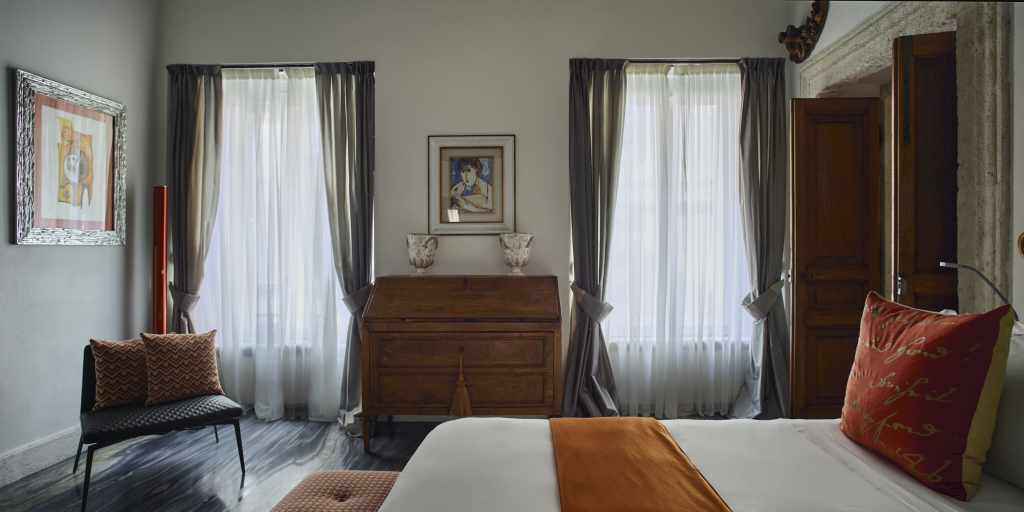
The vision behind the Palazzo is rooted in the ancient concept of Civis Romanus sum: the idea that one becomes a Roman citizen not just by birth, but by elective affinity. This philosophy is the brainchild of owner and collector Carlo Mazzi, who rescued the time-worn building in 2012. Over a seven-year restoration, Mazzi sought to create a space where guests enter a “conversation between past and future,” offering a sense of belonging rather than creating just a nice play to stay.
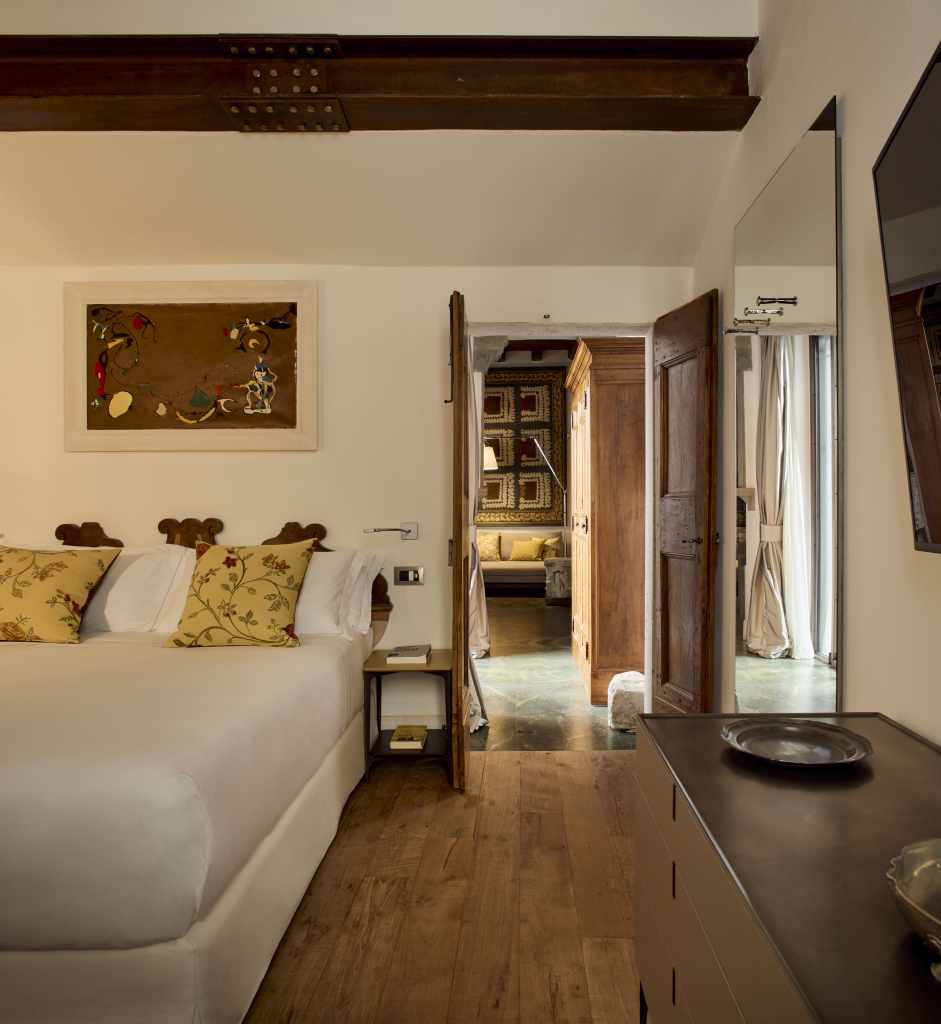
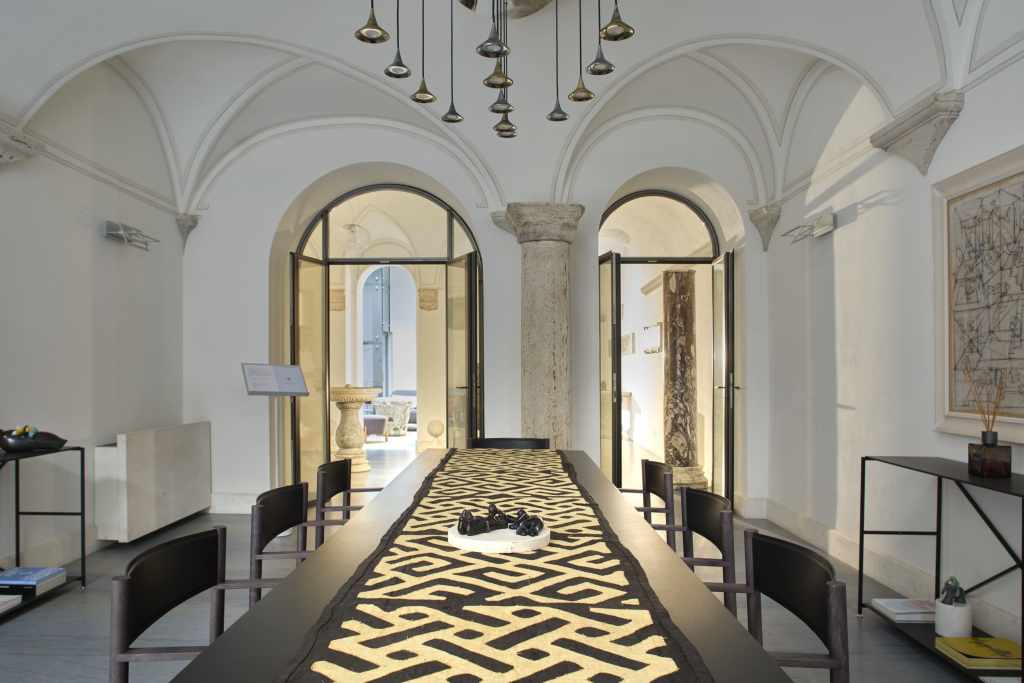
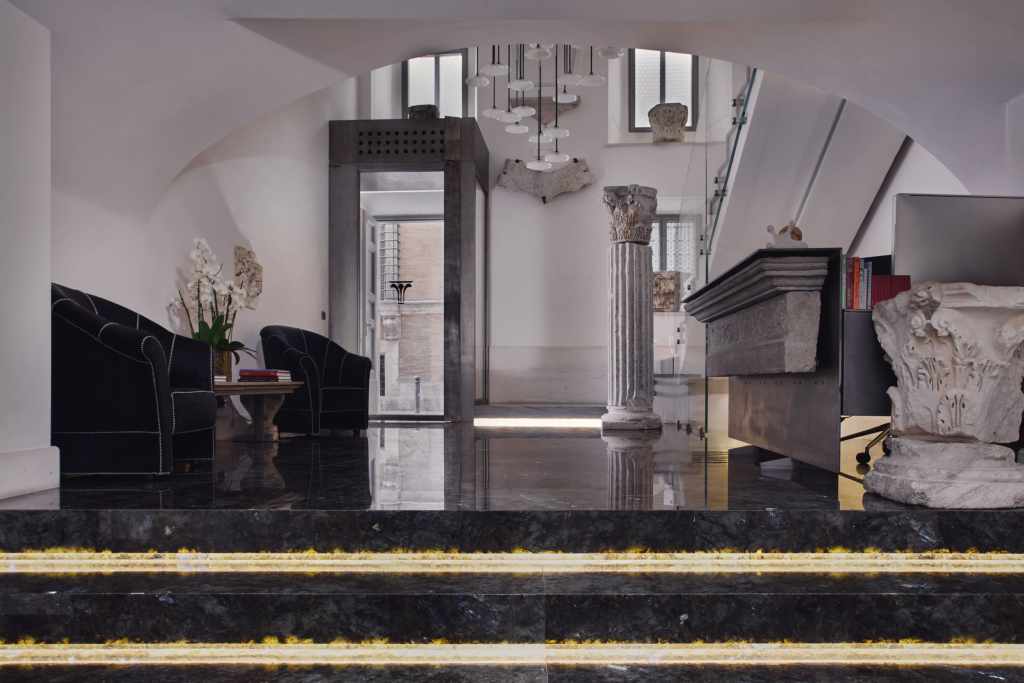
For the design-savvy traveler, the immediate draw is the interior’s balancing act between the owners vast collection and contemporary design. The property’s name, Palazzo delle Pietre (Palace of Stones), is literal; the building sits on the site of the ancient Baths of Nero, and the interiors display a remarkable assortment of museum-quality Roman artifacts. Mazzi has distributed his family’s historical collection throughout the common areas and ten apartments, placing some 200 archaeological finds and 50 Renaissance-era pieces in direct dialogue with modern masters.

A wooden artisanal wardrobe stands next to a modern Artemide table lamp, desk and chair De Padova. Photo by Matteo Lavazza. Courtesy of Palazzo delle Pietre
The property’s aesthetic is one of seamless juxtaposition. Underneath vaulted ceilings and amidst travertine doorways you will find Harry Bertoia chairs by Knoll and desks by De Padova. Artemide lighting is soft and architectural, illuminating spaces where Roman stone fragments share the room with contemporary paintings and classic tapestries from Milan’s Altai Gallery. The attention to materiality is obsessive—at least ten different types of marble were utilized in the restoration, including rare, book-matched slabs that create continuous veining across staircases and rooms. Palazzo delle Pietre is a living design ecosystem where a marble Napoleonic bathtub might sit just feet away from modern comforts and perfectly balanced modern designs.

Bertoia chair designed by Harry Bertoia for Knoll, sofa and table by Alivar, kitchen by Spagnol. Photo by Matteo Lavazza. Courtesy of Palazzo delle Pietre
The residence comprises ten apartments ranging from an intimate 40-square-meter studio to expansive penthouses. These spaces are designed for the traveler who prefers the autonomy of an apartment but refuses to compromise on service. The kitchens are fully equipped and stocked with bespoke items, including Richard Ginori porcelain, allowing guests to embrace the rhythm of daily Roman life. The hotel’s front desk attends to guest requests, from arranging appointments in the downstairs spa, holding meetings in the property’s ample meeting and event space, and of course recommendations for dining, shopping and more.
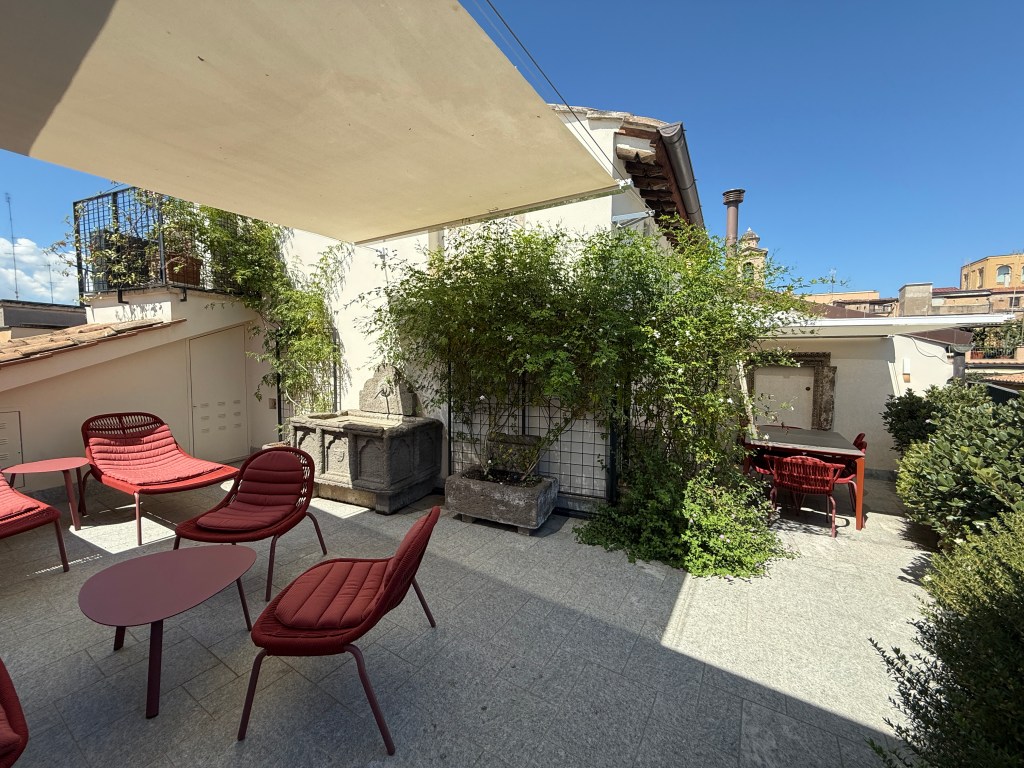
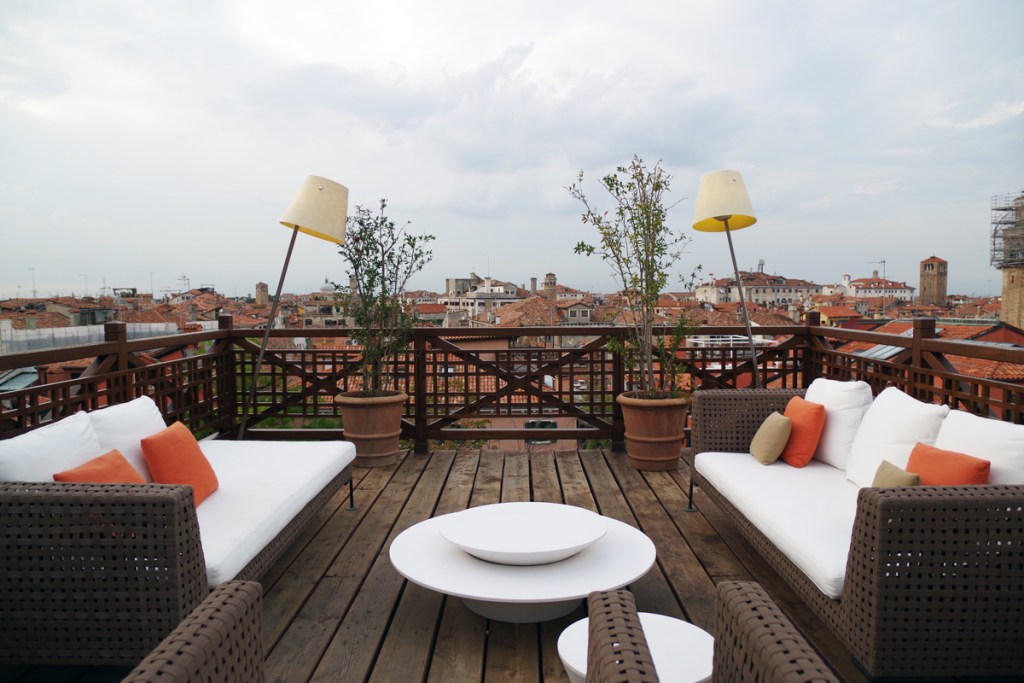
The “Penthouse Apartment” and “La Corte Rooftop Terrace” are the crown jewels. The latter, a split-level residence, features a panoramic terrace and a private hammam, blending the domesticity of a private flat with the indulgences of a spa. The interiors are softened by textiles from Lo Studio di Beatrice Petriccione di Vadi, adding warmth to the geometry of the stone and wood.
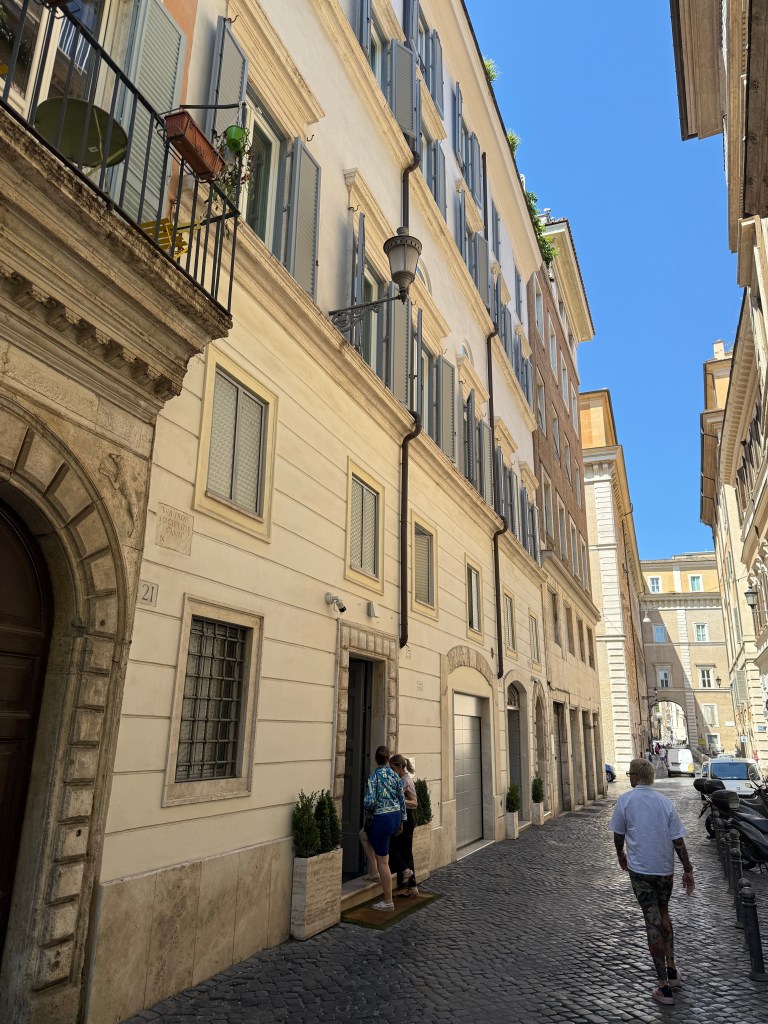
While the interiors provide a refuge, the location of Palazzo delle Pietre offers an immersion into modern authentic Rome. Situated at Via delle Coppelle 23 in the Campo Marzio district, the property occupies a sweet spot of connectivity and history. This area, once part of the medieval pilgrimage route to St. Peter’s, retains a strong artisan identity.

For the modern explorer, the convenience is unmatched. The Palazzo is mere steps from the baroque theater of Piazza Navona and the classical grandeur of the Pantheon. It places guests within walking distance of Caravaggio’s masterpieces in San Luigi dei Francesi and the imposing colonnade of the Temple of Hadrian at Piazza di Pietra. Despite being central, the neighborhood feels distinct from the more chaotic tourist hubs, offering a pocket of Roman living”where history, art, and artisan culture converge.
Palazzo delle Pietre distinguishes itself further through its “FraMmenti Club,” a curatorial project that integrates the property into the city’s contemporary cultural fabric. Far from a standard concierge service, the club hosts monthly events, talks, and salons aimed at fostering social cohesion and reviving the conviviality of ancient Roman academies, to which guests are welcome to attend.
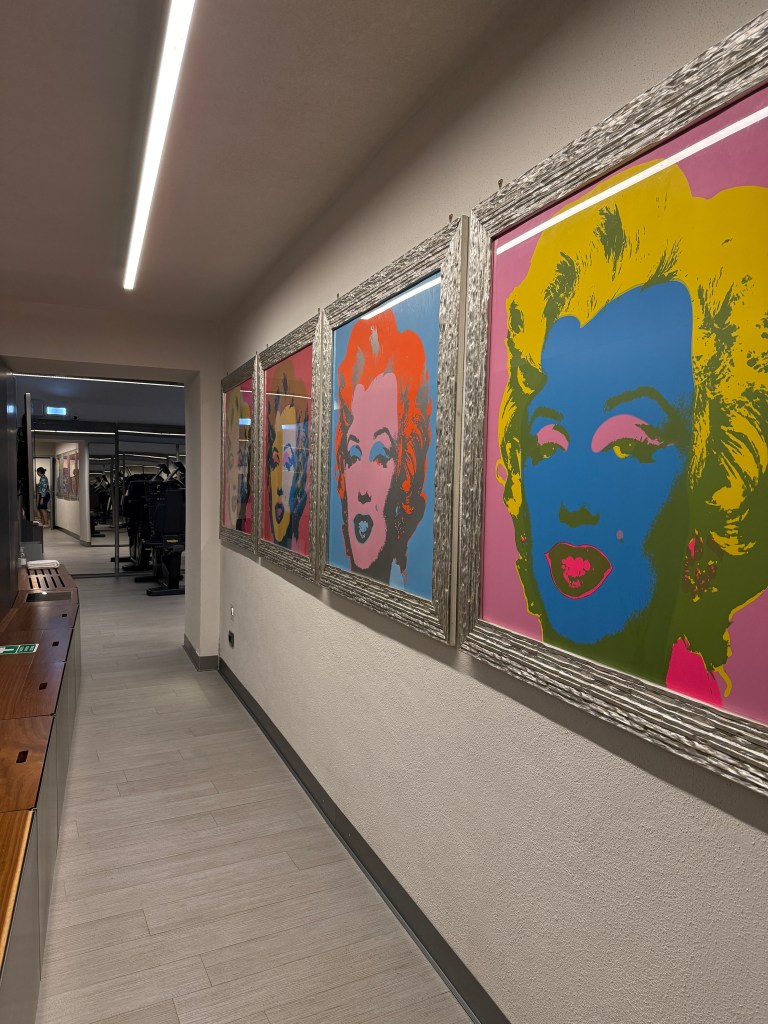
Wellness, too, is treated with an artful touch. The fitness room is lined with original Andy Warhol Marilyn portraits—perhaps a first in all of our travels—a pop-art contrast to the ancient stones upstairs—while the communal wellness area features a hammam decorated with green mosaics and a massage room clad in warm yellow marble. Whether it’s a private cooking class exploring traditional Roman recipes or a grocery delivery managed with discretion, the service is designed to respect the privacy of a residence while providing the support of a luxury hotel.
Palazzo delle Pietre is more than a place to sleep; it is a palimpsest of Roman history, renovated for the 21st century. It offers the savvy traveler a truly discreet and unique hospitality experience and the chance to stop being a tourist and start being a citizen, surrounded by the beauty of a city that never ceases to evolve.







What are your thoughts?