Triennale di Milano: Andrea Branzi with Toyo Ito, Lella and Massimo Vignelli
The Milan Triennale presents the work of Italian designers in a dialogue between East and West
At the Triennale di Milano, two recently inaugurated exhibitions present two different visions of Italian design, one that looks east and one that looks west. The protagonists are Andrea Branzi and Lella and Massimo Vignelli.
With “Andrea Branzi by Toyo Ito: Continuous present,” the gaze starts from Italy and often turns towards the East. The exhibition presents itself as a dialogue between the Italian design master and Ito, the Japanese architect who won the Pritzker Prize in 2013.
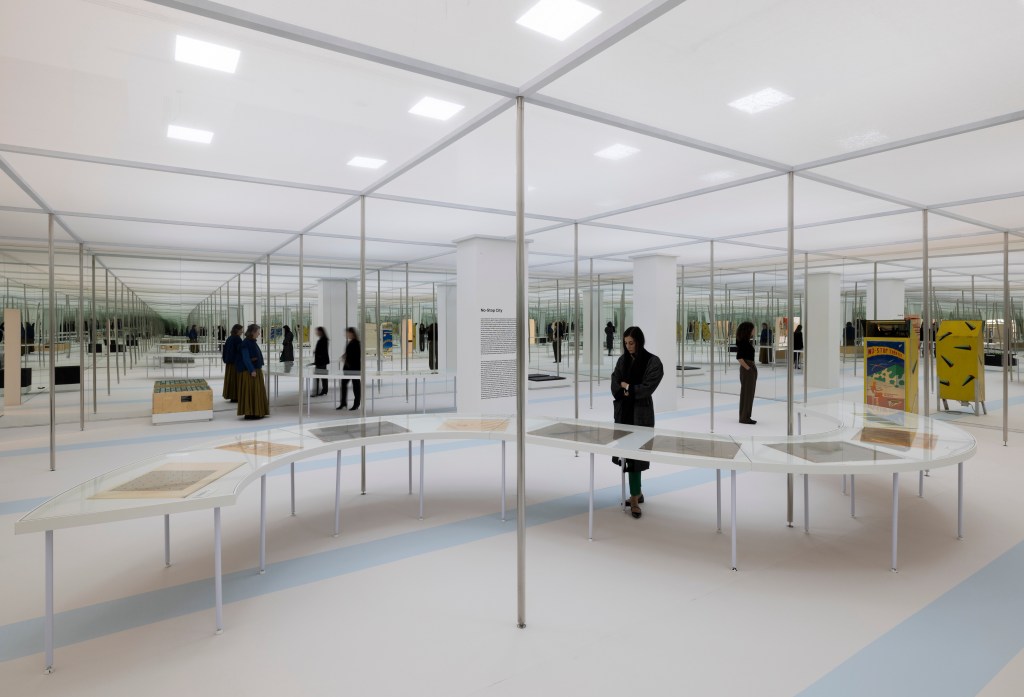
Andrea Branzi was an intellectual who could speak about architecture and biology, urban planning and electronics—all elements he constantly incorporated into his work, from spatial design to object design. As Stefano Boeri recalls in the introduction to the exhibition’s catalog, “his architectures were his thoughts.” And these thoughts leaned toward the East, especially Japan.
In the exhibition, Ito includes many documents, urban models and objects, covering the entire scope of Branzi’s output. We become aware of how his vision embraced the way of thinking about and living in a space—from the large space occupied by people in a home to the small space occupied by flowers in a vase.
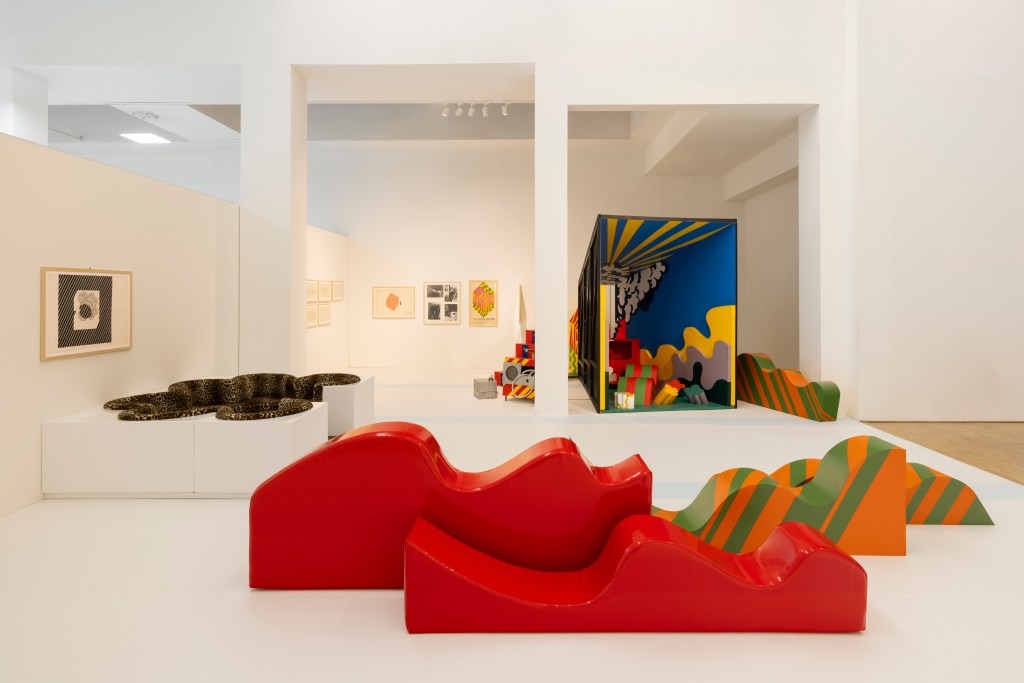
The exhibition begins with his first projects from the 1960s, when he was one of the protagonists of the Florentine radical design movement. Here we find posters, urban models, drawings and a reproduction of the Superarchitettura of 1966. There are also iconic objects such as the Superonda sofa from 1967 and the Safari sofa from 1968, both created with Archizoom Associati. It is a highly colorful and illogical space, one of the first experiments in juxtaposing architecture with consumer society, to highlight its practical and visual contradictions.
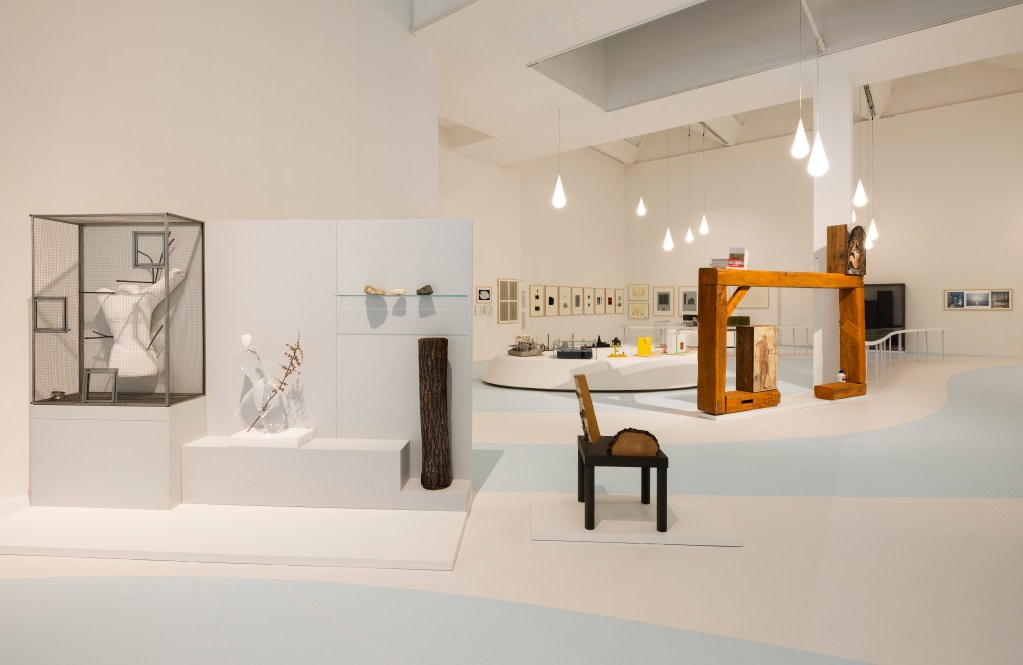
As we progress through the exhibition, we notice how the natural elements increasingly become part of his work, where we often encounter trunks and branches integrated with highly colorful plexiglass or metal surfaces. Several environments created by Branzi have been reproduced in the Triennale spaces—semi-open spaces called Open Enclosures, dating from 2008.
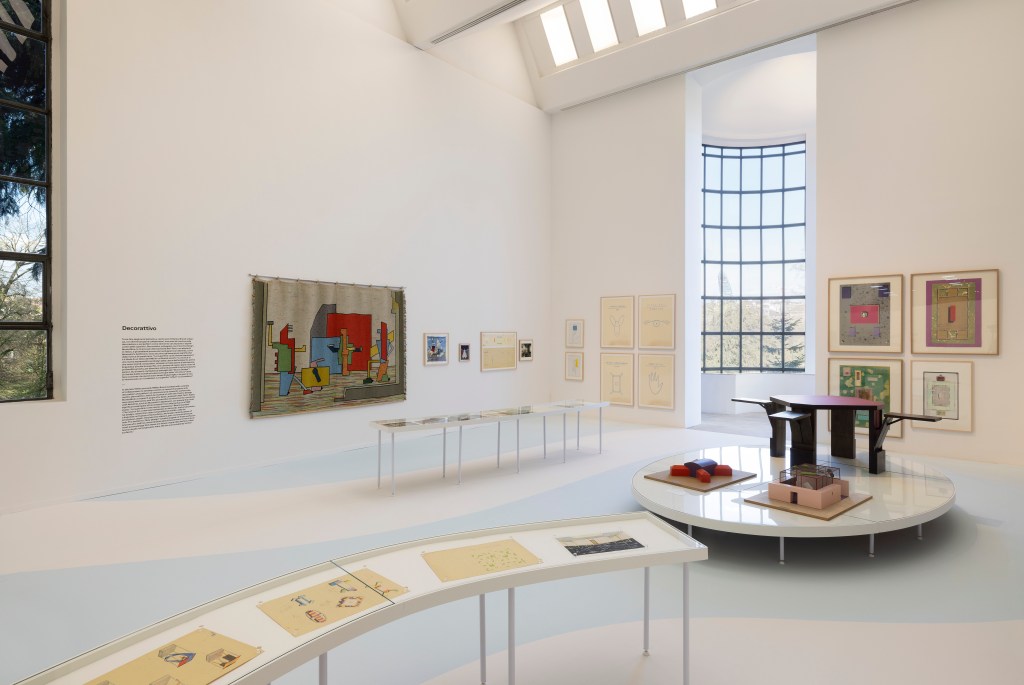
Also striking are the tapestries and embroidered panels, designed by Branzi and created by his wife Nicoletta Morozzi, also a designer and frequent collaborator, demonstrating both a human and professional partnership.
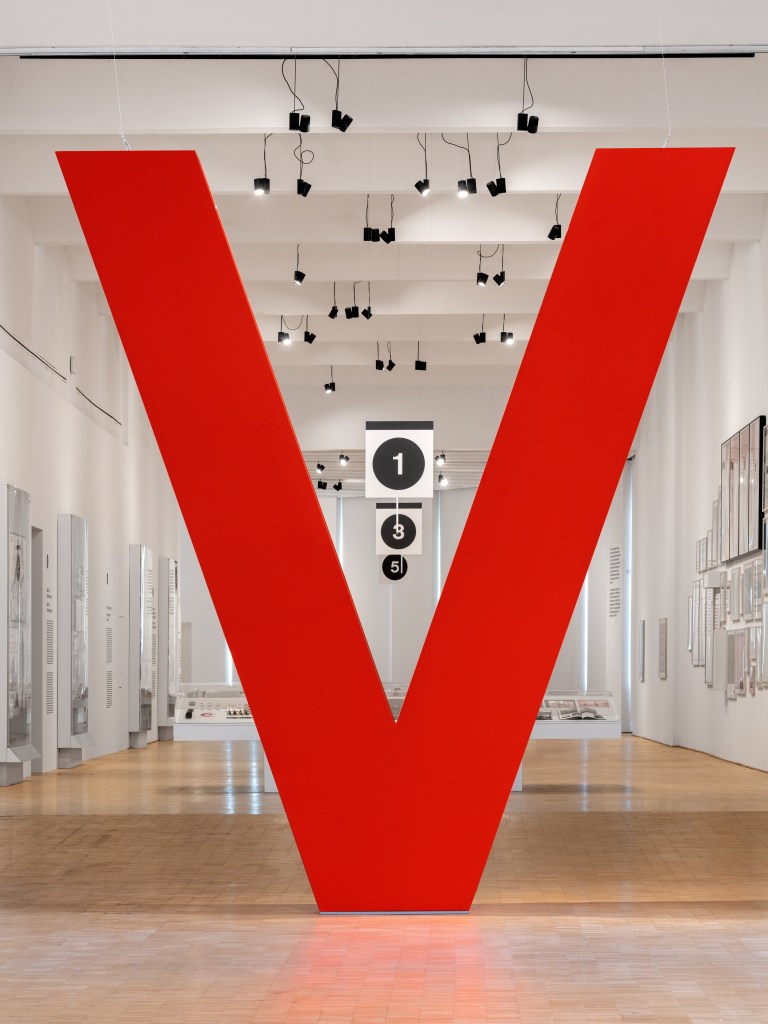
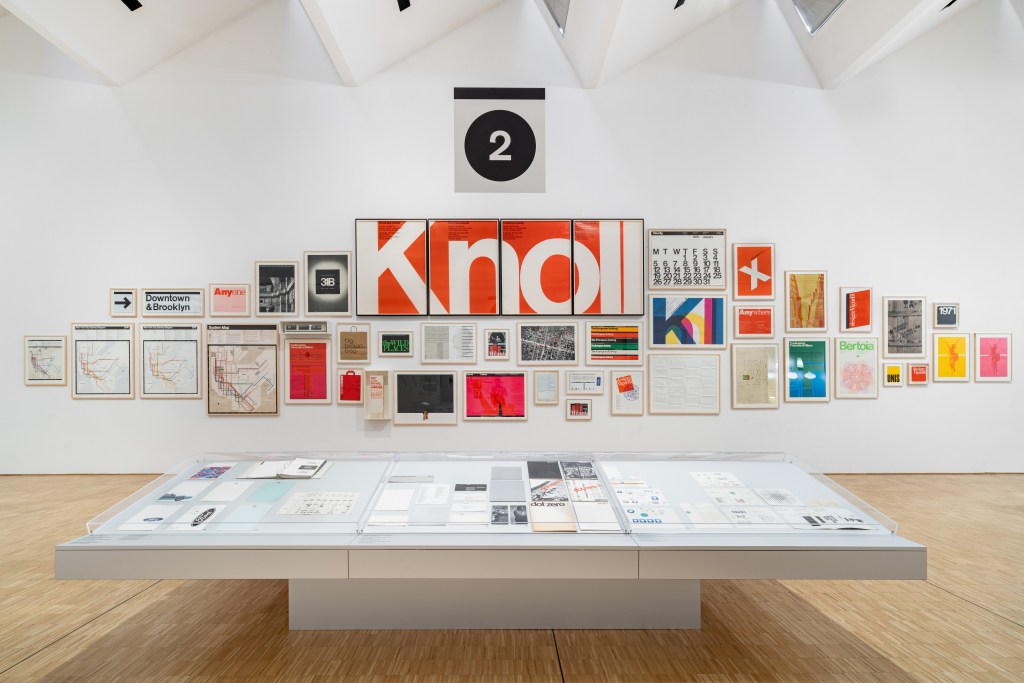
The story of a couple comes to life in the second exhibition of the Triennale, titled “Lella and Massimo Vignelli: A Language of Clarity.” The curatorial team—composed of Francesca Picchi, Marco Sammicheli and Studio Mut—chose to consistently credit both Vignellis as authors of the works on display. In fact, their work was symbiotic in every aspect. Whether it was the legendary New York subway diagram, the Knoll corporate identity or the studies and graphics for TG2 news, every project they created emerged from their two minds.
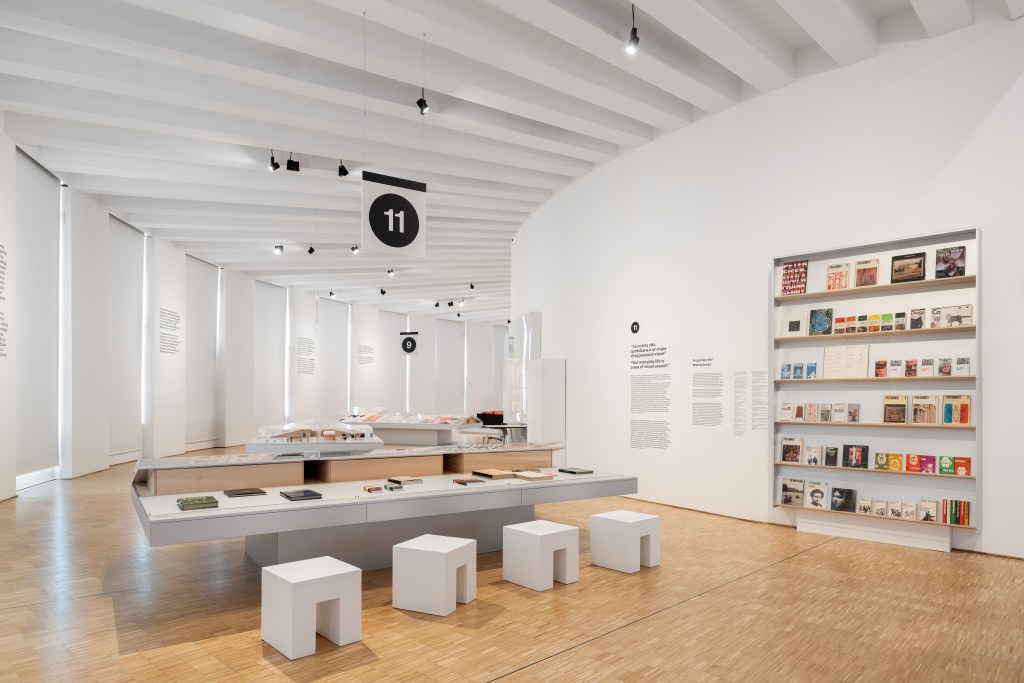
The exhibition’s layout—conceived by Jasper Morrison Office for Design with David Saik—aims to be clear and legible, exactly like the works presented. It opens with a gigantic three-dimensional red V, a kind of inverted portal that immerses us in the world of the Vignellis. From here we embark on a journey that starts in Venice and Milan heading westward, toward Chicago and New York, where in 1965 the duo founded Unimark International with Bob Noorda, Ralph Eckerstrom, James Fogelman, Wally Gutches and Larry Klein.
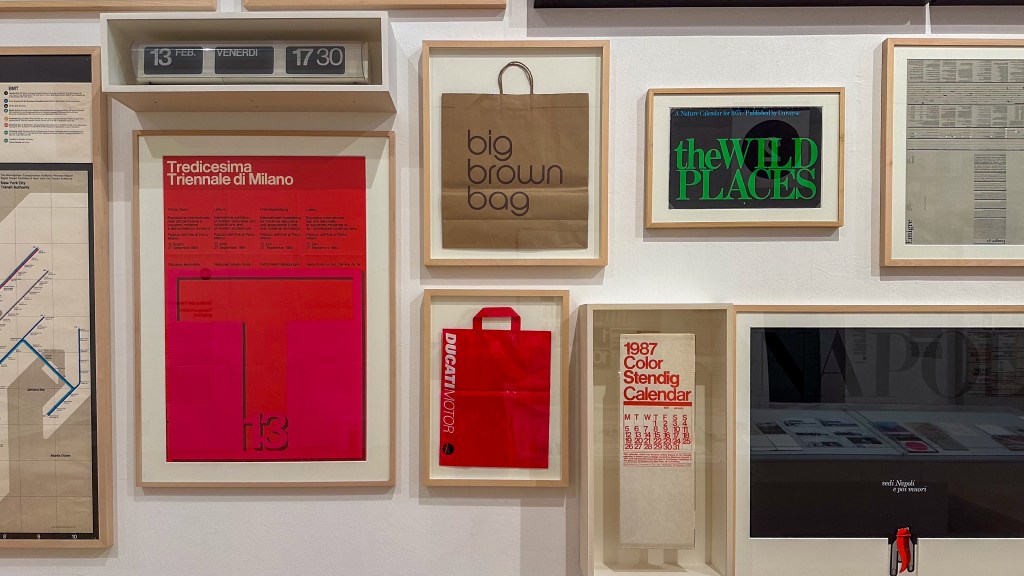
It’s impossible not to recognize something we’ve already encountered on display, such as the Pirelli posters, the graphics for the Piccolo Teatro di Milano or for the U.S. National Parks, the American Airlines logo, Bloomingdale’s shopping bags and the Stendig calendars. On one hand, we feel a touch of nostalgia for a golden age of graphic design that will not return. On the other hand, it’s reassuring to see that their work is today an indispensable point of reference for new generations, who find in their essential style a key framework for designing even today.
The exhibition “Andrea Branzi by Toyo Ito: Continuous Present” will be on view until 4 October, 2026, while “Lella and Massimo Vignelli: A Language of Clarity” can be visited until 6 September, 2026. Both exhibitions take place at La Triennale Milano. For information and opening hours, visit www.triennale.org.




What are your thoughts?