Milan’s Unifying Winter Olympic Events
Milan shines a new light on the art, history and culture of the 2026 Milano Cortina Winter Olympic Games
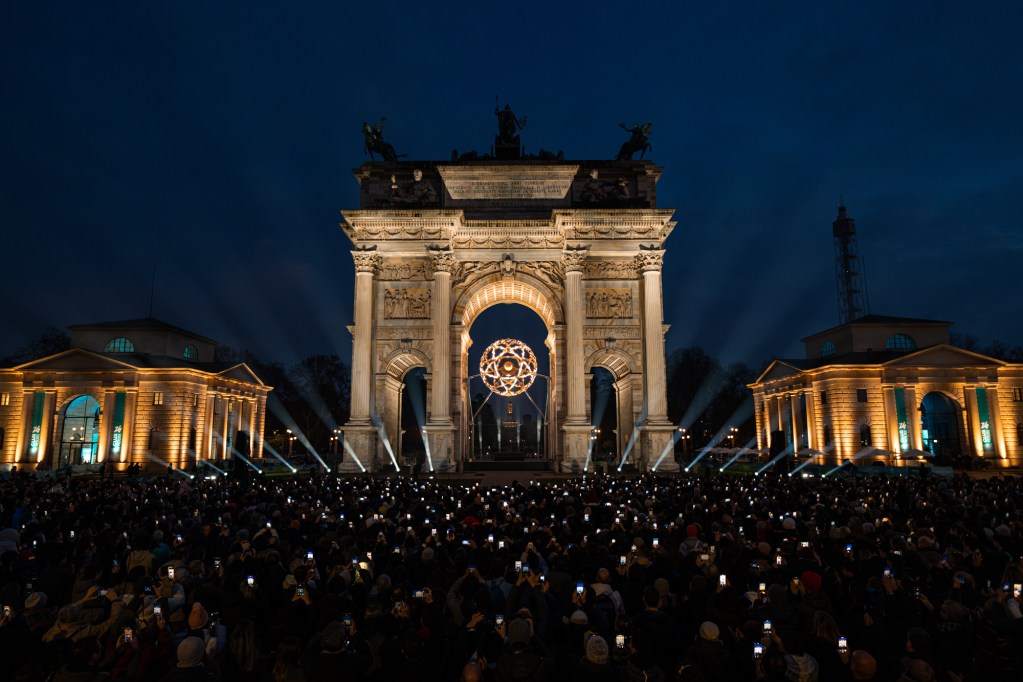
There is a wide program of initiatives broadening the Olympic spectrum more than ever. The starting point and guiding light came from Marco Balich, lead creator of the highly inclusive inauguration ceremony, with his design and placement of the Olympic Cauldron in a public square.
Installations, exhibits and happenings in Milan are connecting people of all ages not only with each other, but also with the diverse stories of art, history and culture behind the global phenomenon that is the Olympic Games. The connection happens through educational initiatives as well as commercial projects, all inspired by Olympic values of respect, friendship, excellence and solidarity—uniting athletes and supporters, professionals and tourists, local citizens and visitors.
Casa Italia
For example, at Triennale—which famously houses the permanent Museum of Italian Design—the Italian National Olympic Committee has established a base for Casa Italia, intended not only for private receptions but for public hospitality as well. The project is directed by Lorenzo Pelliccelli and aims to present contemporary Italian identity through sport, culture, art, architecture, and design. It is like a museum within a museum, with high-end décor pieces scattered across all spaces. Designers presenting their items include Francesco Binfaré, Fernando and Humberto Campana, Patricia Urquiola, Gaetano Pesce, Mario Botta, Formafantasma, Philippe Starck, and Achille and Pier Giacomo Castiglioni.
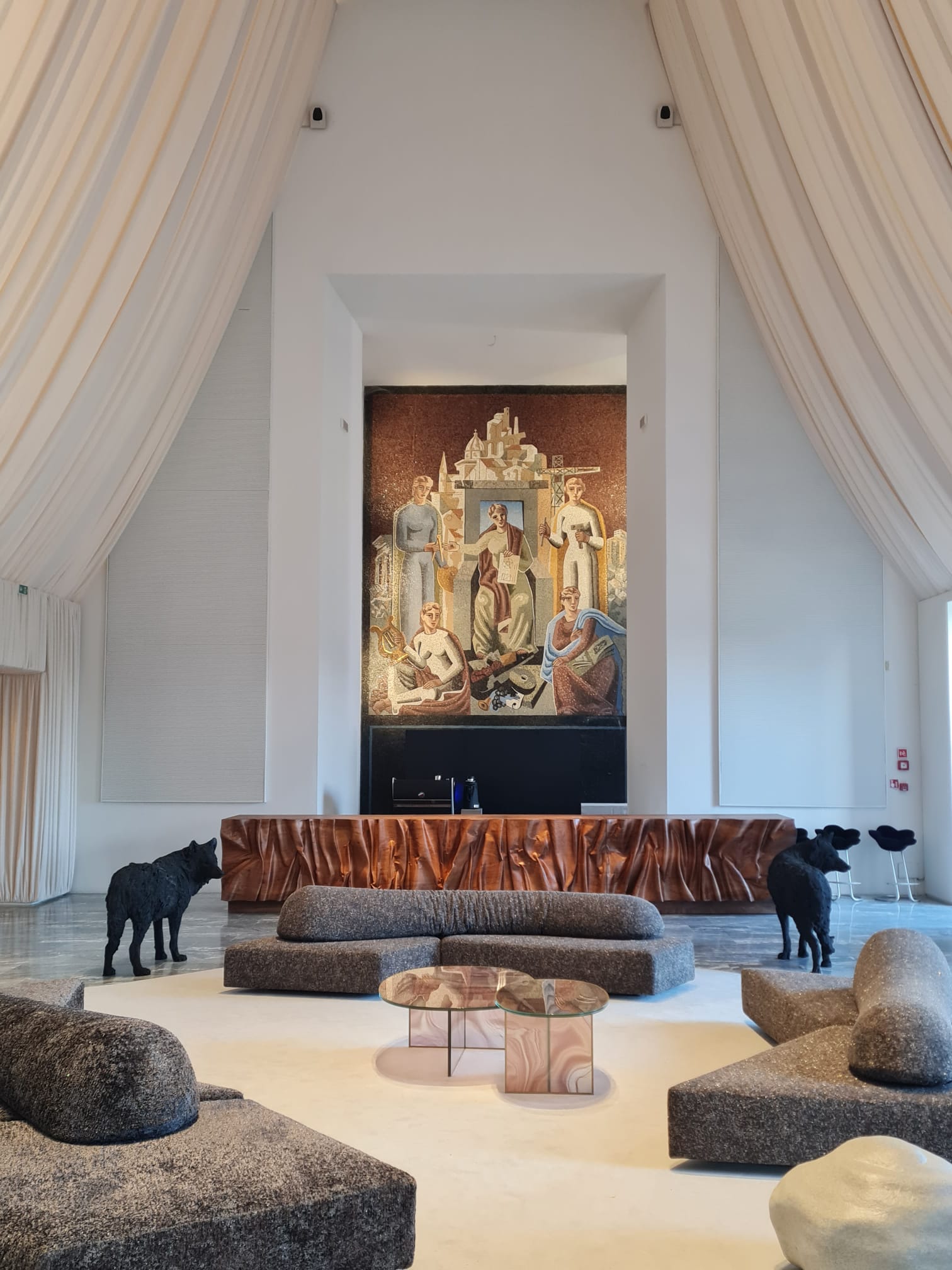
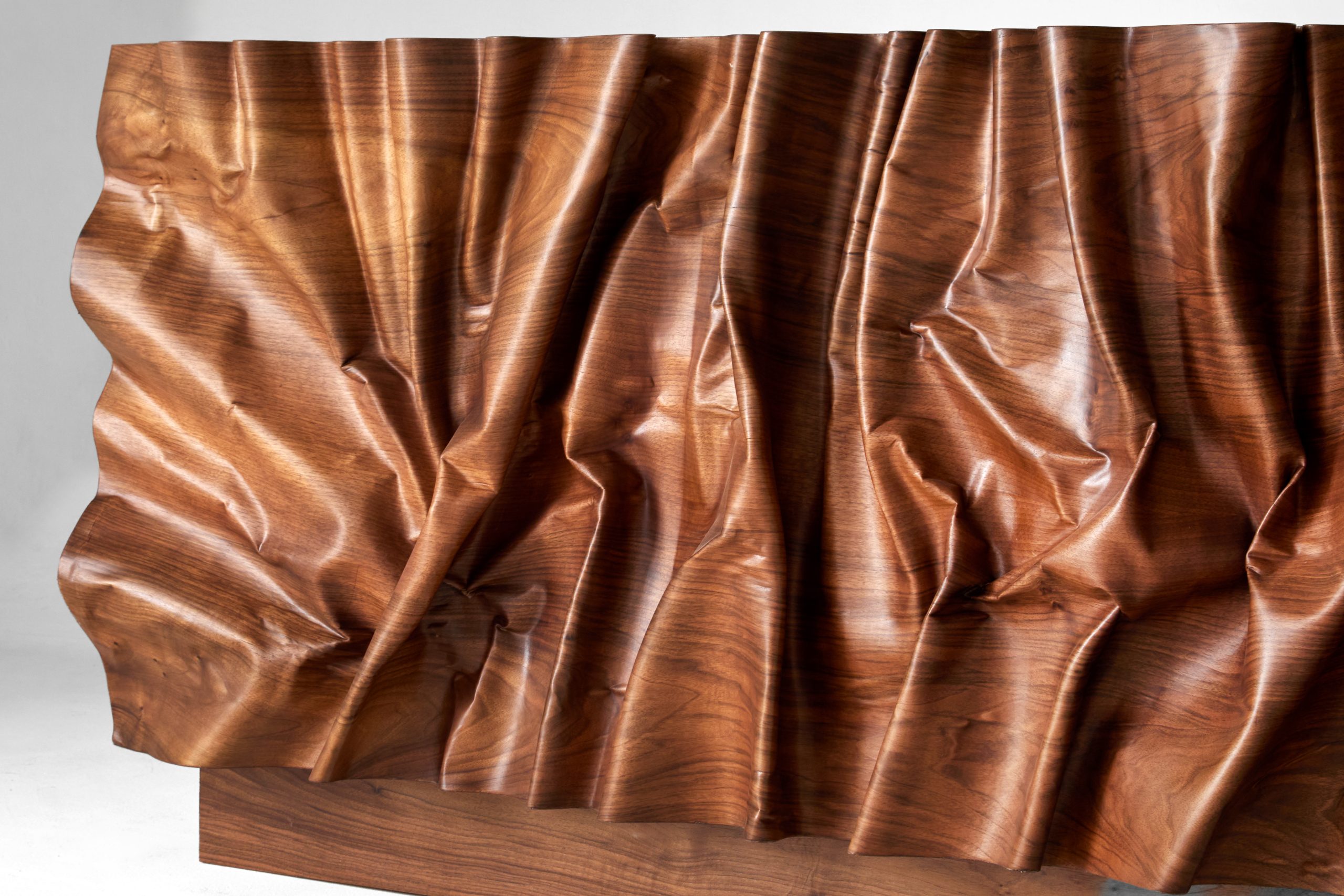
In the museum’s hall of honor, Casa Italia elegantly hosts panels and private receptions. Food in the lounge is provided by renowned chef Davide Oldani and served atop a dazzling, 16-foot-long wooden counter by Stefano Marolla. The Rome-based designer took a sturdy element like wood and turned it into something soft and curvy, like drapery, achieved brilliantly through steaming and hand-curving techniques.
Casa Italia’s captivating public exhibition, titled MUSA, is an original and extremely interesting journey through the concept of inspiration and Olympic values. Divided into seven sections, like the seven Muses of Greek mythology, the show explores the perception of Italy as an inspirational element for international culture over the last century.
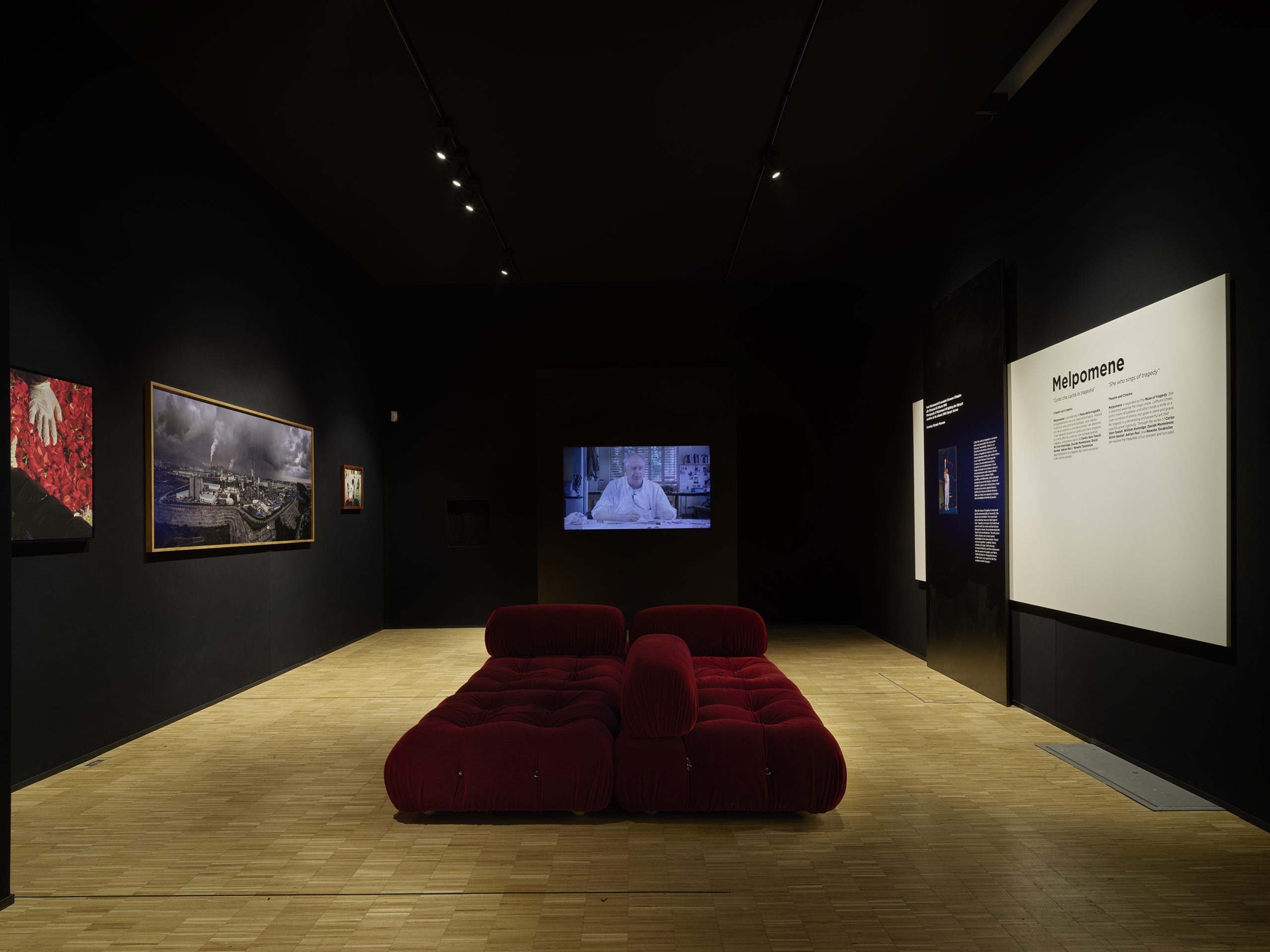
Diversity is a fundamental value for the Olympic Committee, and it is highly represented here by the diverse artists on display, including Giacomo Balla, Fernando Botero, Massimo Campigli, Christo, Giorgio de Chirico, Keith Haring, Daniel Spoerri, Ai Weiwei, Robert Rauschenberg, Cy Twombly, Sol LeWitt, William Kentridge, and JR. Their artworks are thoughtfully paired with iconic pieces lent by the Olympic Museum in Lausanne, Switzerland. MUSA is curated by Beatrice Bertini and Benedetta Acciari, with design by Studio di Architettura IT’S and Bianca E. Patroni Griffi, and lighting by Marco Frascarolo and Massimo Pascucci.
The Olympic Games Exhibit at Fondazione Luigi Rovati
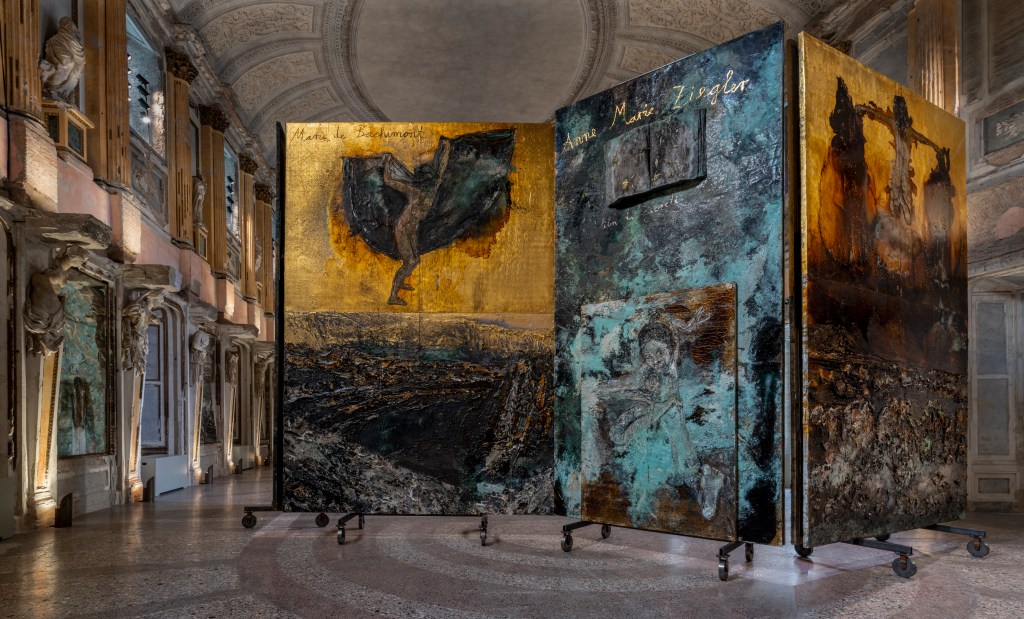
In Milan, several other cultural spaces are linking their presentations to the Olympic Games. The Fondazione Luigi Rovati archaeological museum opened three years ago in a prestigious 19th-century palazzo. Its current exhibition is dedicated to Olympic sports in history, both recent and ancient. It is part of the Cultural Olympiad of Milano Cortina 2026, the official program accompanying the Games—a dynamic, widespread platform that aims to enhance Italian cultural heritage and promote Olympic values through art, history, and participation. The program also includes the spectacular Anselm Kiefer exhibition at Palazzo Reale.
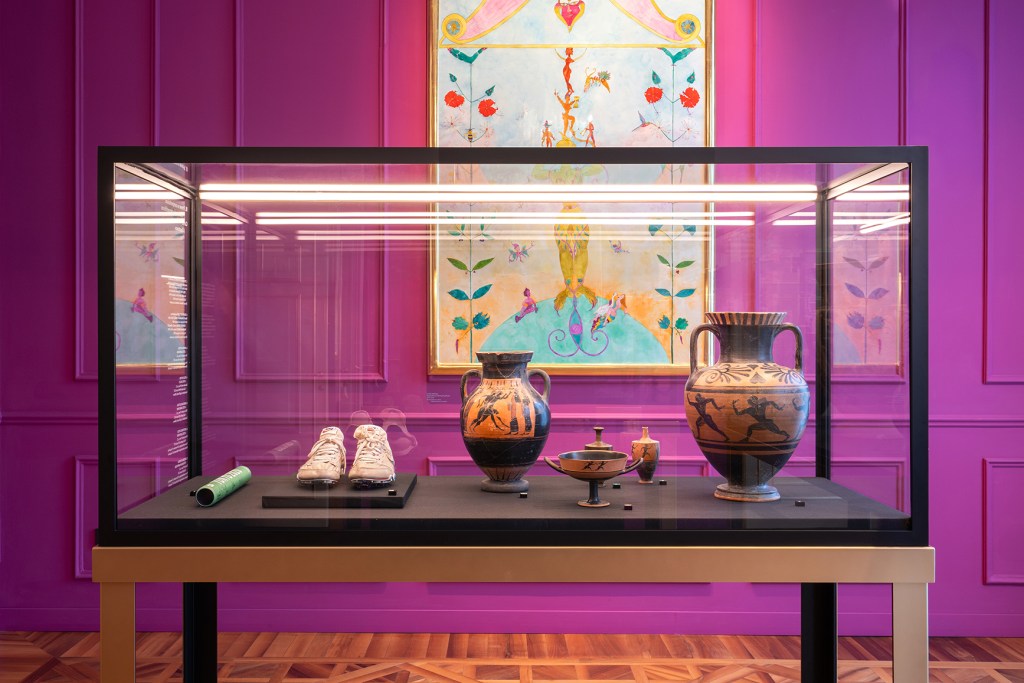
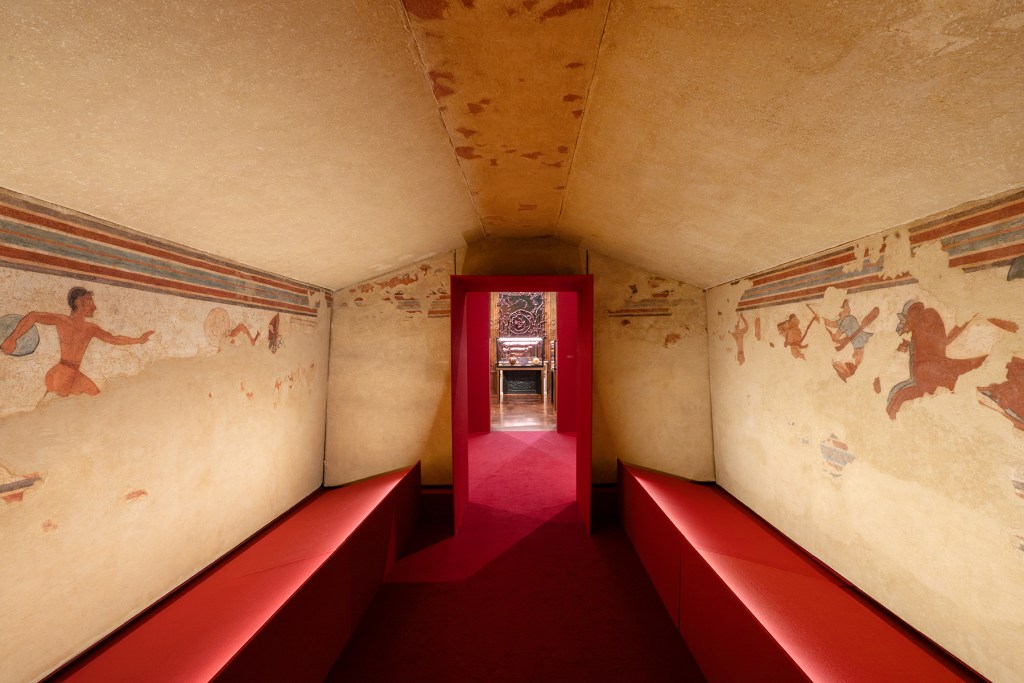
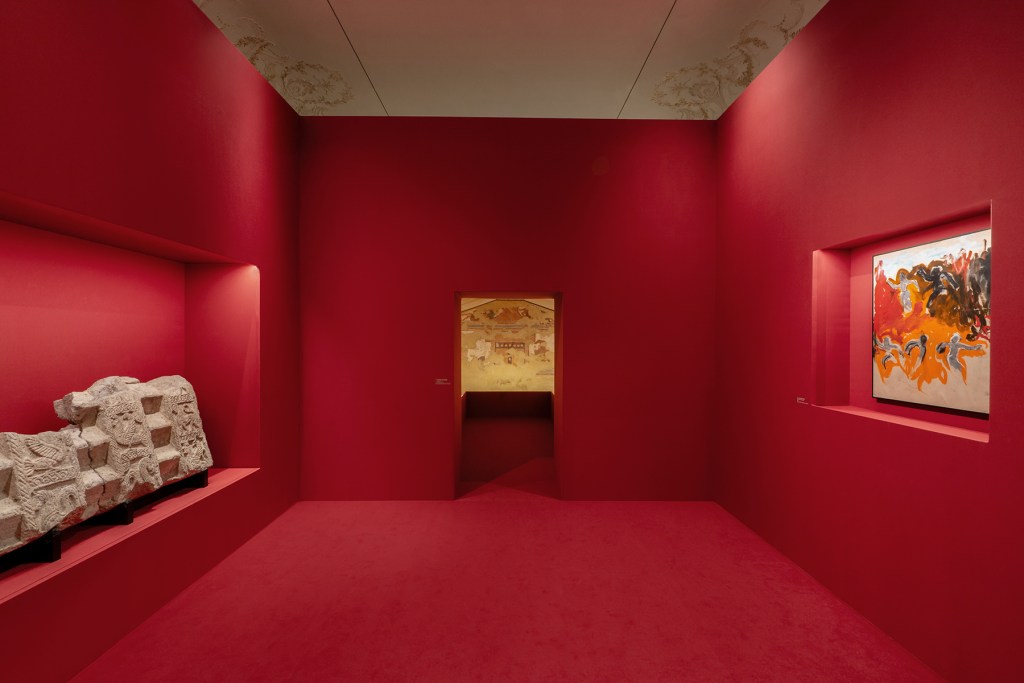
At Fondazione Rovati, modern memorabilia such as medals, certificates, torches, and equipment are paired with archaeological treasures from ancient Greek, Roman, and Etruscan civilizations, including vases, jewels, and the pièce de résistance: Tomba delle Olimpiadi (aka Tomb of the Olympiads). The sixth-century-BC tomb has been transported in its entirety from central Italy and is exceptionally on display, with greatly preserved sporting scenes decorating its walls. The exhibition is curated by Anne-Cécile Jaccard and Patricia Reymond (Olympic Museum), Giulio Paolucci (Fondazione Luigi Rovati), and Lionel Pernet (Musée cantonal d’archéologie et d’histoire).
Casa Airbnb
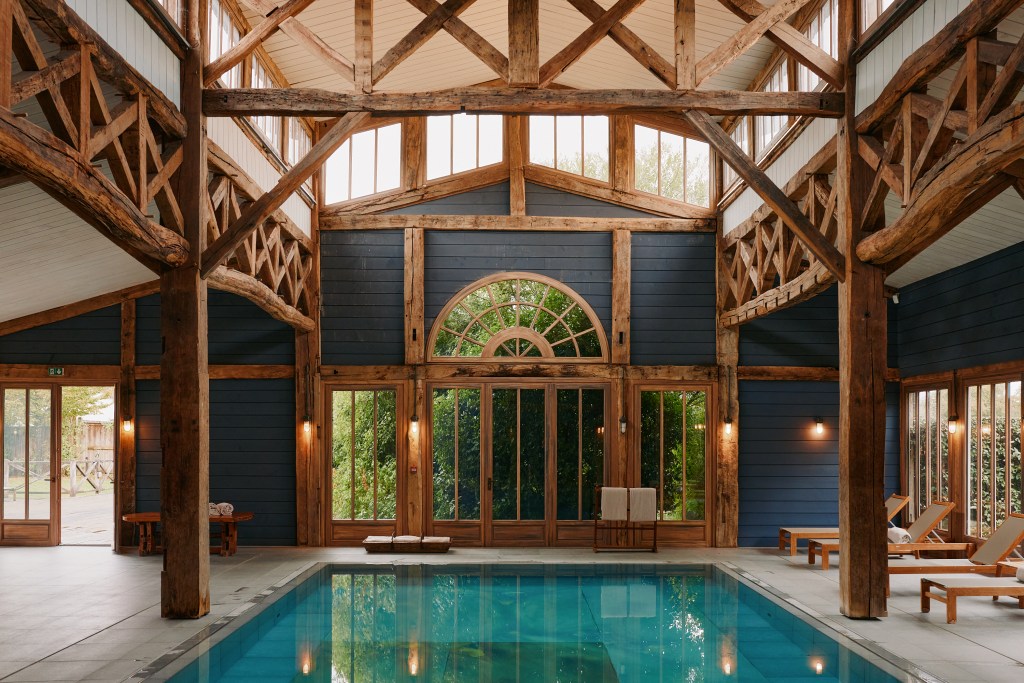
A few blocks away, in the heart of the fashion district, a discreet building hides a secret garden—one of those quietly surreal Milan moments. That is where Airbnb created its Olympic Games space: a cozy, warm, modern lounge inside a glass greenhouse, with an additional indoor space built across the garden and decorated like a mountain log house. From there, the space shifts into a packed program of bookable experiences—talks, hands-on sessions and meetups—running across the two-week schedule.
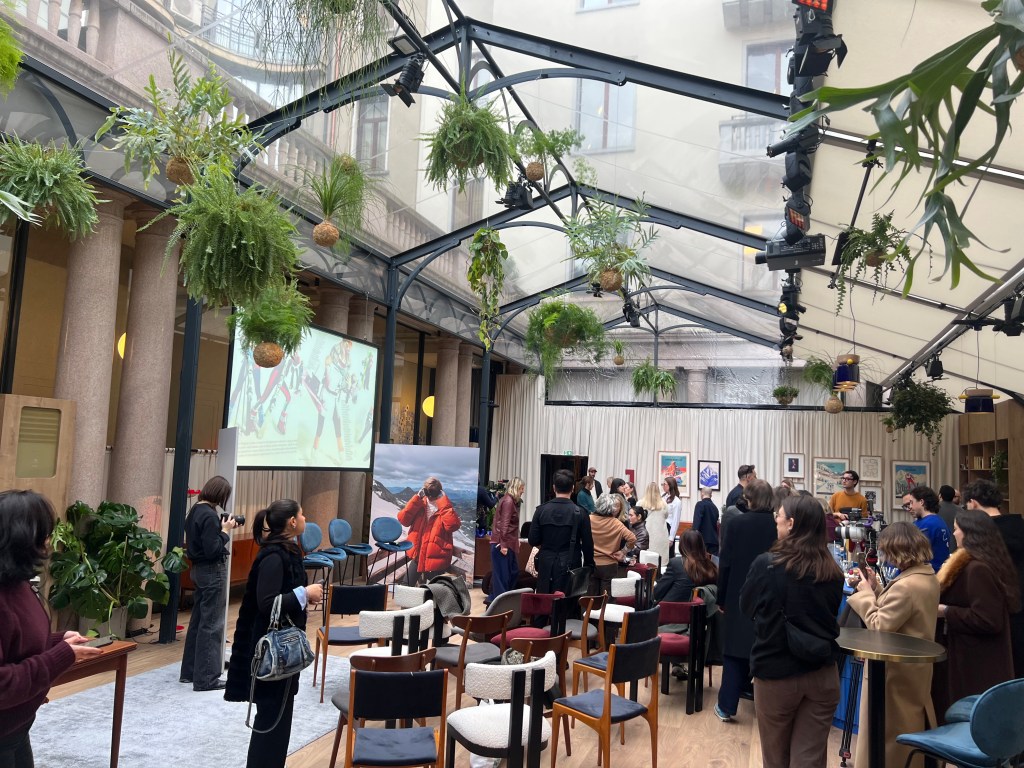
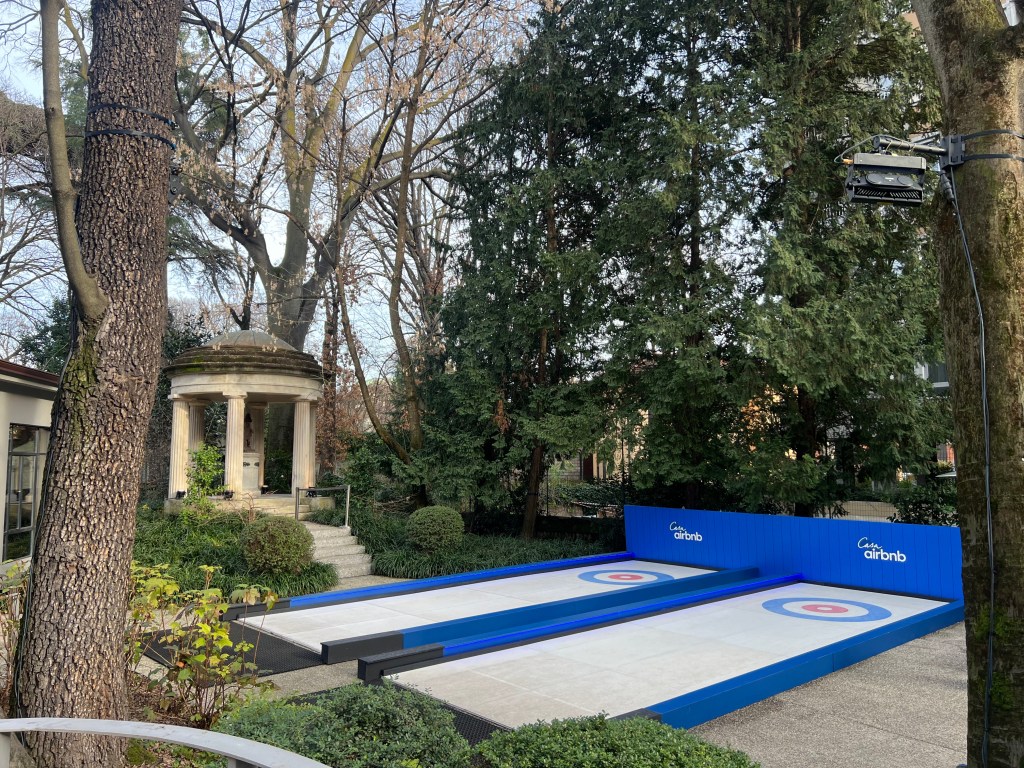
The program includes activities with 15 Olympic champions. For examples, Italian alpine skiing legend and three-time Olympic gold medalist Deborah Compagnoni will host a cooking class. In the program there are also exclusive experiences with 15 Airbnb hosts, from fitness training to corsetry to poster printing. Two curling rinks in the garden complete the Olympic atmosphere.
Omega and Esselunga Brand Pavilions
If some events thrive on the concept of exclusivity—which the city of Milan has sometimes been criticized for—it should also be said that there is a wide program of installations open to the general public. Amid some purely commercial projects, there are plenty of interesting and thoroughly curated ones, such as Omega’s, the official timekeeper of the Winter Olympics since 1932. In an elegant pavilion in the central, recently renovated Piazza San Babila, the brand has set up not only an exhibition on the records and technical specifics of timekeeping in Olympic history, but also bobsleds and virtual-reality headsets that let visitors experience a thrilling simulated run. It’s a pleasure for kids and grown-ups alike, as is the opportunity to create your own triumphant, AI-generated ski champion portrait on the slopes.
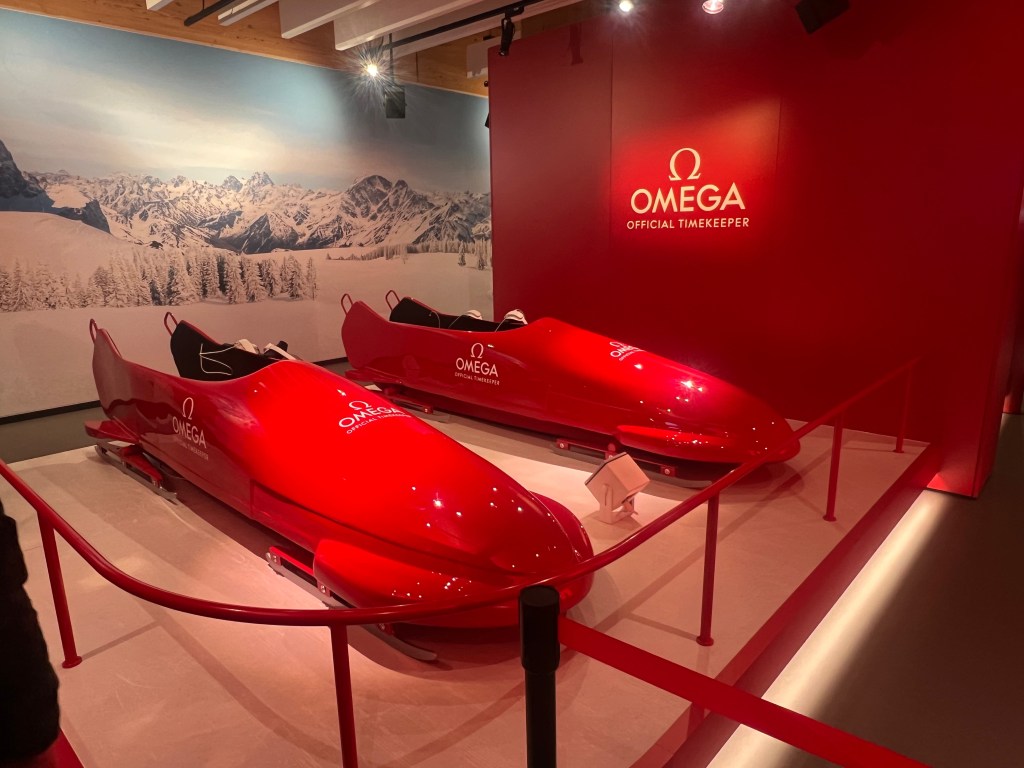
A similar initiative is set in another recently restored area, the parade court at Castello Sforzesco. There, the large-scale retail leader in northern Italy, Esselunga, has created a hybrid of temporary museum and indoor fairground, with contemporary Olympic art mixed with family-friendly games and challenges, all finely tuned to the aesthetics of its widely popular supermarket identity.
The vibe all around town is one of great excitement, among citizens as much as Winter Olympics regular visitors, who are perhaps more used to snowy mountain landscapes than the urban feel of Milan. The colorful international supporters blend well with the typical Milanese crowd, in their own blend of understated and high style. The lines outside of the events are sometimes long, but never bored, and the cheering is loud for all teams at sports facilities, like the brand new Arena Santa Giulia. In May, the arena—the largest innovation brought to town with the Olympic Games—will also serve at Milan’s long-awaited and much-needed 15,000-seat concert venue.
Most of Milan’s Olympic installations and events will be accessible through mid-March 2026, till the end of the Paralympic Games.
What are your thoughts?