Observatoires at Musée d’Art et d’Histoire
Museum director Marc-Olivier Wahler and artist-curator John Armleder collaborate for a third time with Observatoires at the Geneva-based museum
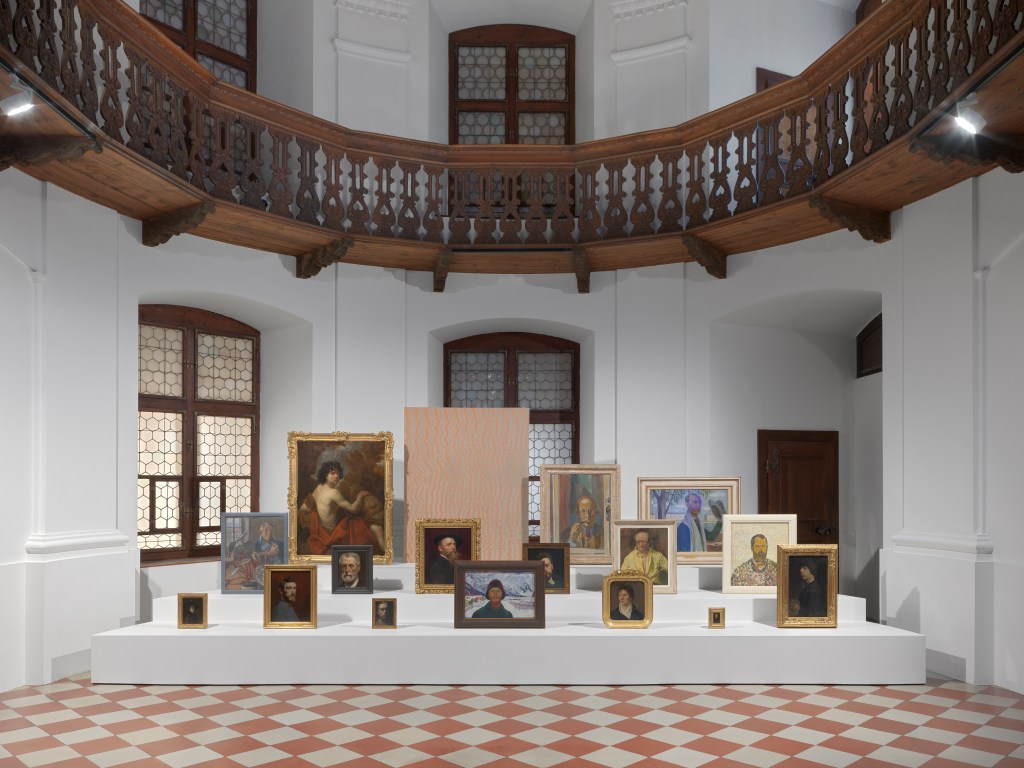
Giving carte blanche to art curators and observing the audience, their behavior and their interaction can be powerful tools to reinvent a museum. This is what director Marc-Olivier Wahler is doing at Geneva’s Musée d’Art et d’Histoire (MAH), especially with Observatoires, the current exhibition curated by John Armleder.
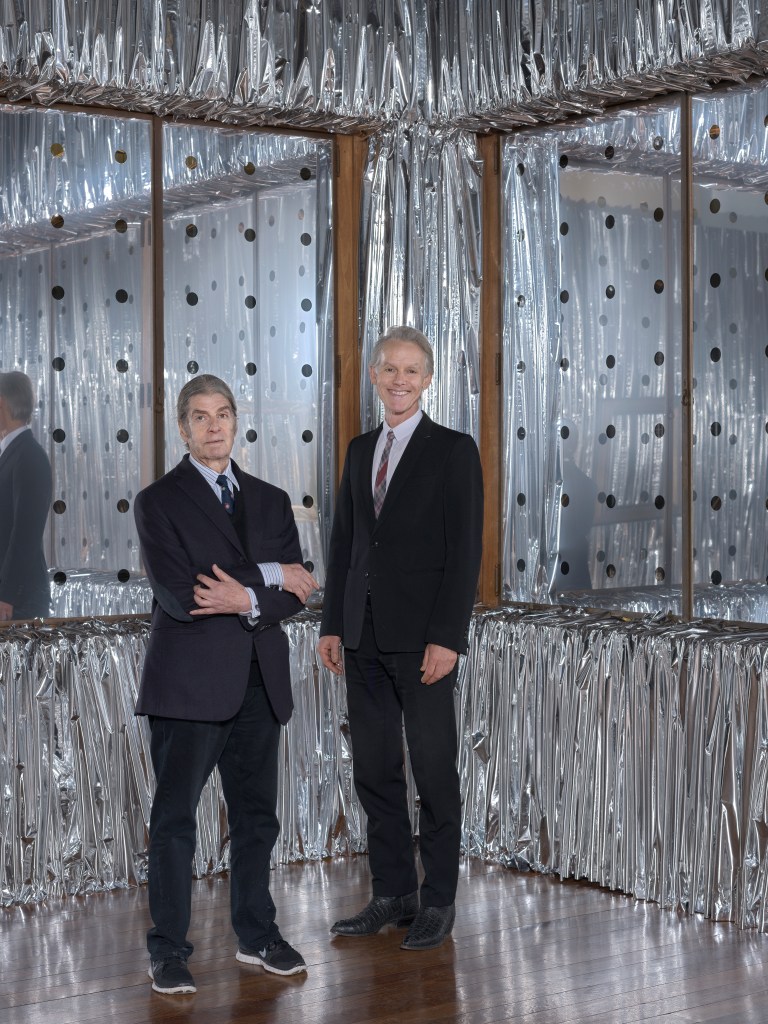
Both Wahler and Armleder were born in Geneva, and this is their third collaboration, after the curatorial projects at the Swiss Institute of New York and at Paris’ Palais de Tokyo, where Wahler was previously the director.
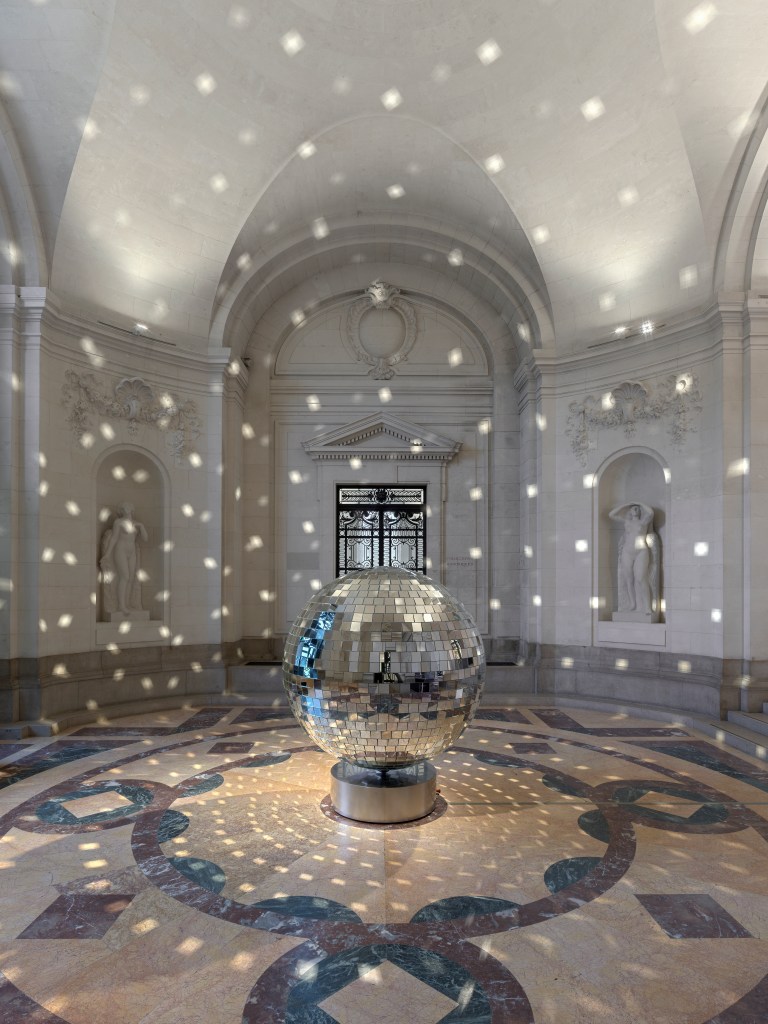
At MAH, cultural heritage and contemporary art probably couldn’t find a better curator than Armleder. Humor, constant conceptual challenge and a polymorphic blend of Fluxus, Dadaism and Abstract Expressionism have made him an internationally known and celebrated artist for the last five decades. It felt natural to invite him to MAH. His first initiative was to place a gigantic, spinning disco ball in the middle of the museum’s entrance, which made director Wahler proud.
Wahler charms with his dedication to the museum and with his entrepreneurial spirit. He likes developing museums as ecosystems. And he does it with courage: “In a few years, we plan on shutting down the museum for a complete renovation and total re-invention. I’m talking about subverting a very obsolete scheme,” he says. “Internationally, we have conceived the museum the same way for about a century—from the first step through the door, to the way we are welcomed in a hallway, the information desk, the ticket office before seeing the collection, the gift shop at the end of the exhibit, et cetera. These are all protocols that can be changed.”
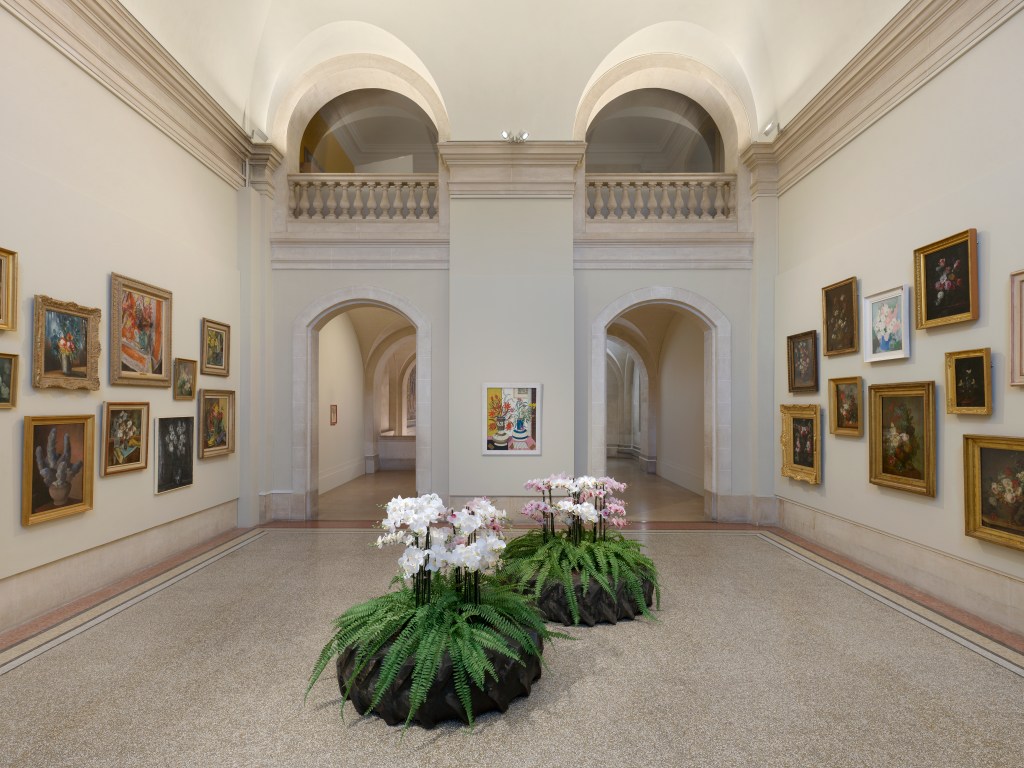
Built in 1910 in neoclassical style, so that you’d think it was a much older edifice, MAH was born out of Geneva’s city hall project to unite several foundations and small museums, creating a huge treasure of artifacts and works of art that now counts over 650,000 pieces. Most of them come from donations of local collectors and are now spread through the grand museum’s main site and its three storage facilities.
It’s a very eclectic museum. Art ranges from ancient to contemporary. Then there’s archaeology, musical instruments, jewelry, armory, watches, books and usage-value works and crafts, ranging from lamps to stamps. Over the museum’s grand entrance is “Big Crunch Clock,” a digital artwork by artist Gianni Motti. It’s a countdown measuring the time until the estimated implosion of the sun—which should happen more or less in five billion years—a call for perspective on human history and the collection of the museum, which spans “only” 15,000 years. But the collection isn’t just sitting there: the museum truly interacts with citizens and tourists in Geneva. There’s a range of very diverse cultural offerings: restaging of previous Carte Blanche projects in one-room presentations, ephemeral works decorating the courtyard, residencies, conferences, museum therapy sessions and children’s programs.
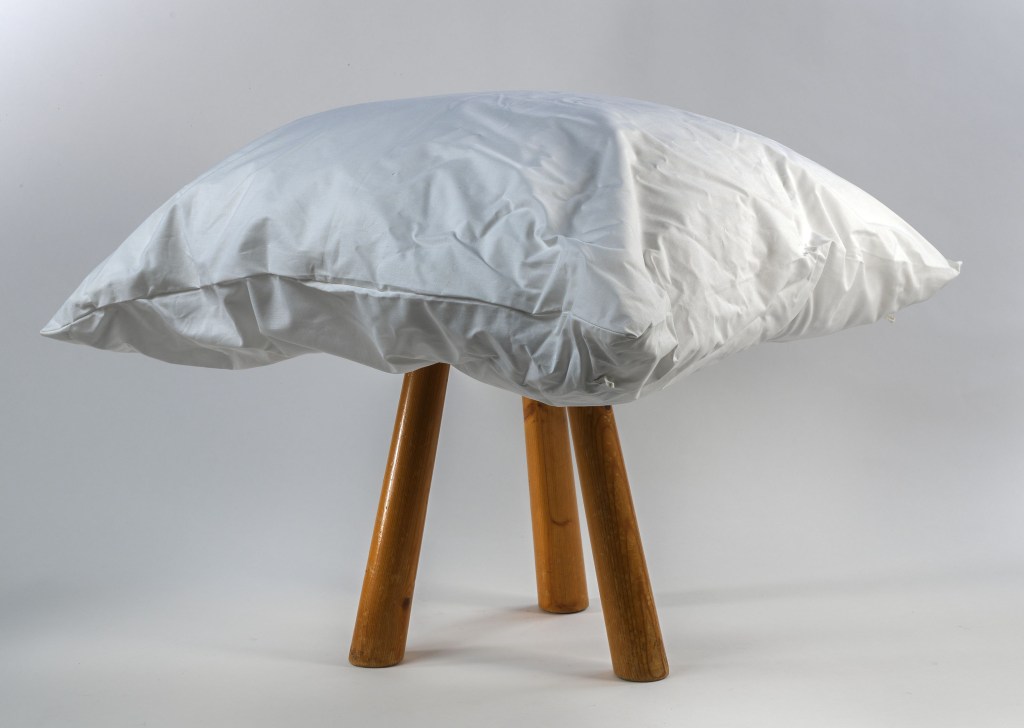
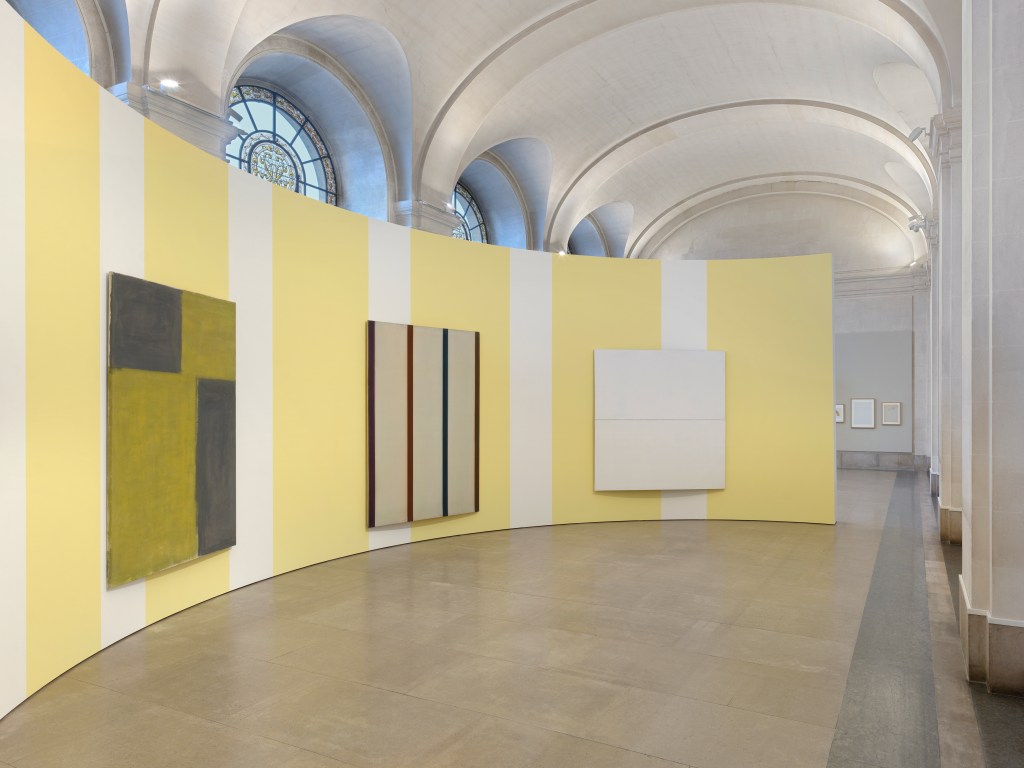
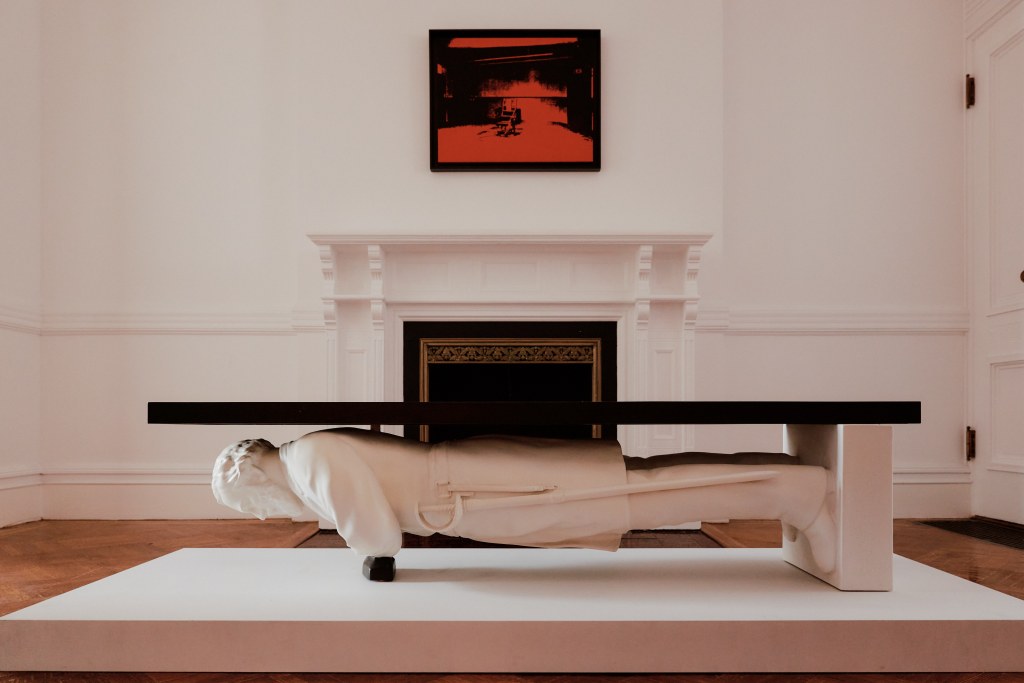
First of all, Armleder’s approach to rethinking the vast 17-room space on MAH’s first floor was to spend a whole year researching the immense collection with the museum’s conservators. The result is an astounding mixture of expressive language without any restriction, pulled from the museum’s collection, including some of Armleder’s iconic pieces of furniture-sculpture. Such an unusual condition allowed him to break the only Carte Blanche curator rule of not including their own work in the exhibition. By agreement, he was free to pick whatever he wanted, and he turned to both his own works and the most unusual pieces, including some tiny silver cork stoppers, Byzantine coins and a six-horn trumpet. One of his abstract paintings inspired a supersized arched wall of the same shape, where other artists’ paintings hang.
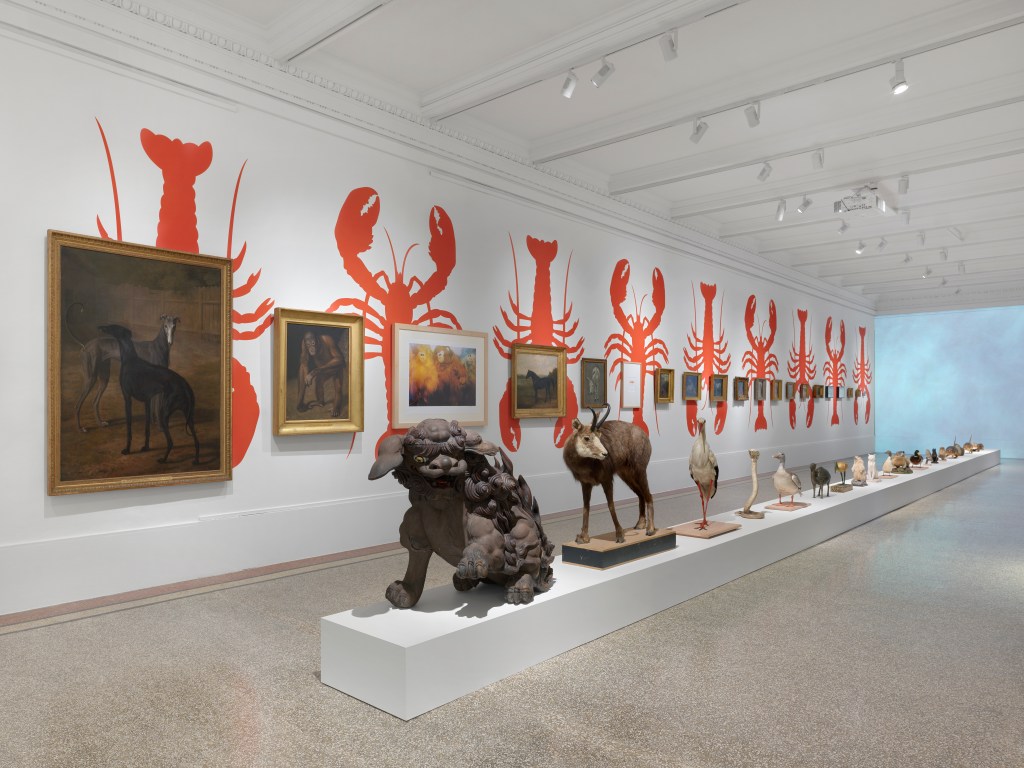
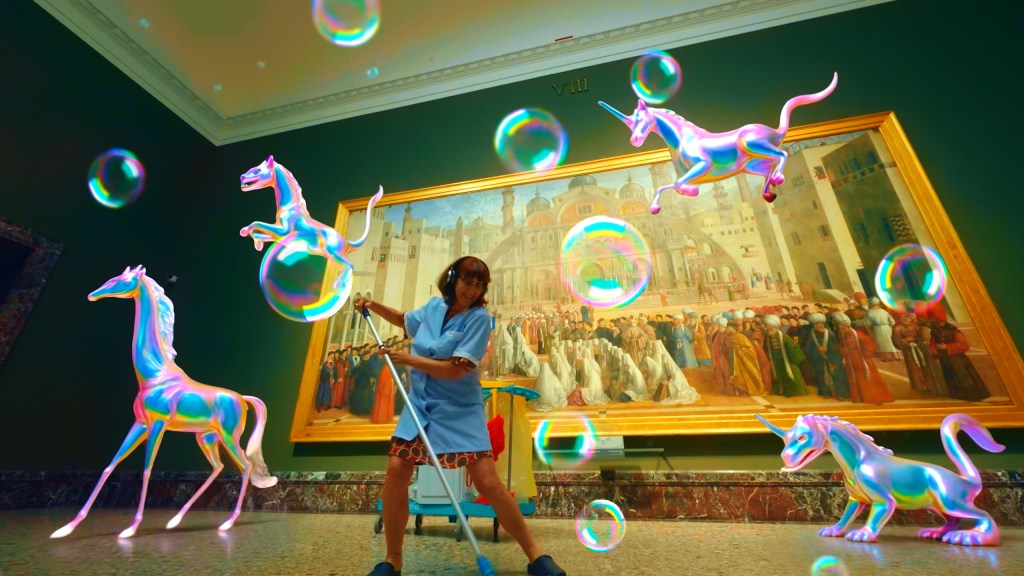
In the Animals room, Armleder’s spirit is more evident than ever, mixing irony, cuteness and ingenuity, juxtaposing elements of all sorts: craft and archaeology, a modern cat scratcher and ancient statues, wall paintings and discarded stuffed animals from the local museum of natural history.
Perhaps the most striking and poetic room is one called Transparency. The walls present mosaic glasses originally from the city’s cathedral, taken down and put in storage centuries ago, at the time of conversion from Catholicism to Calvinism. The floor is covered with empty glass chimes that used to protect clock bells. Two types of forgotten and underestimated objects turned into protagonists.
In the final room, dedicated to debris, damaged statues and archaeological fragments are presented with demolition residues of the most recent exhibition, as well as a loaf of bread decomposing. All of these pieces speak to the visitor about finiteness.
Ever since arriving at MAH in 2019, Wahler has been organizing and commissioning one special curatorial project every year—open invitations to the likes of Wim Delvoye, Ugo Rondinone, and Carol Bove. The results are increasingly significant for the museum and its future. “We have an opportunity to create something completely modern, and these Carte Blanche exhibitions have given us an immense source of information and inspiration,” Wahler says. “We observe, collect data, experiment.” Meanwhile, these projects have won over all the initial conservative or even dubious resistance. Admission to the museum is free, but the voluntary entry donations—which come from roughly 20% of total visitors—allow MAH to collect more money than a general admission charge, according to Wahler.
Observatoires: Carte Blanche to John M. Armleder is open at the Musée d’Art et d’Histoire in Geneva until 25 October 25, 2026.




What are your thoughts?