Works From Keith Haring’s Formative Years, Many Rarely Seen, on View at the Brant Foundation
Beyond the ubiquitous graphic lines, this concentrated survey of the artist’s early Eighties work dives into his raw activist roots, underscoring a legacy designed to fight ignorance, fear and silence in any era
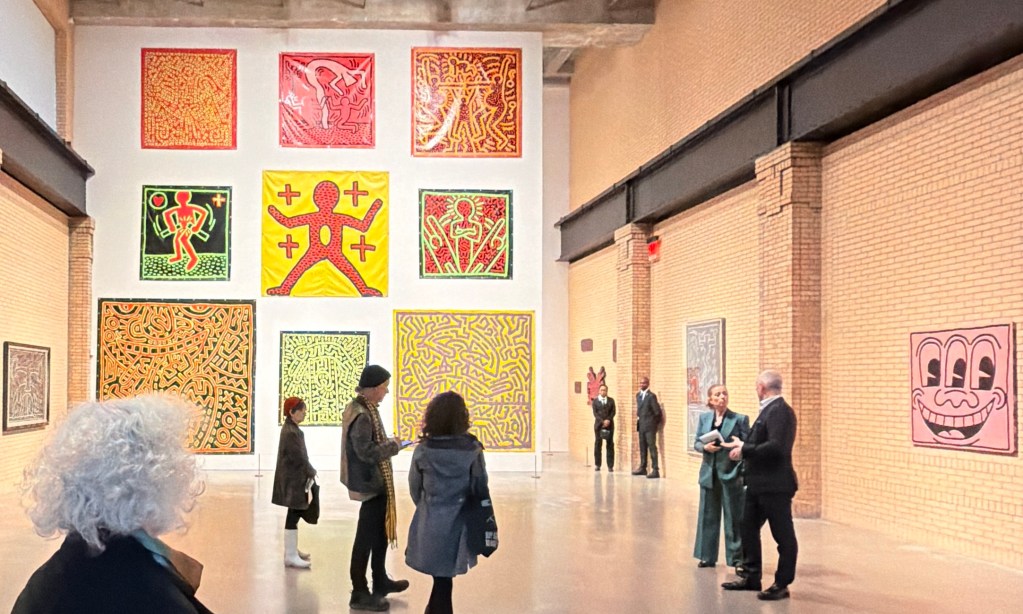
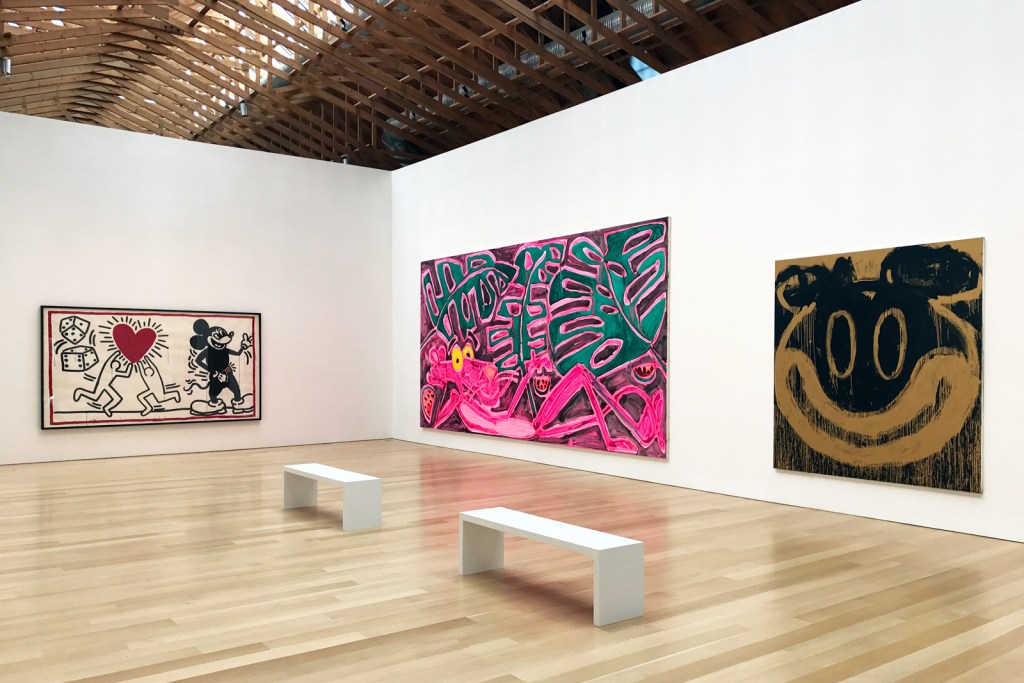
In the heart of NYC’s East Village, housed within a century-old former power company substation that once served as the studio of Walter De Maria, the Brant Foundation has unveiled an exhibition that feels less like a retrospective and more like a kinetic time capsule. This latest showcase, simply titled Keith Haring, bypasses the polished ubiquity of his later commercial success, focusing intensely on his breakthrough years of the early 1980s, with emphasis on the raw, unbridled creativity of his prolific formative work from 1981 to 1983. It was during this brief window that Haring’s visual language, a humanist code of barking dogs, radiant babies and pulsating auras became the forbearer of emojis, solidified in his laboratory of NYC’s subways and downtown clubs, created in his studio only a few blocks away from the Brant Foundation.
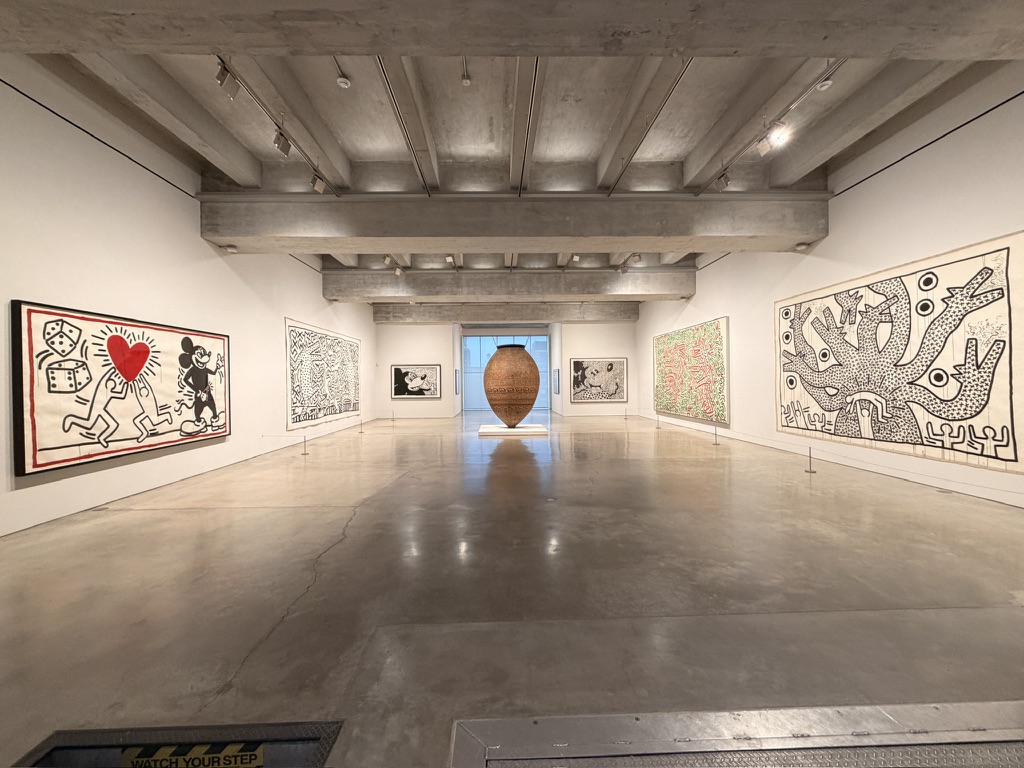
The exhibition, curated by Dr. Dieter Buchhart and Dr. Anna Karina Hofbauer, presents a rare opportunity to view Haring’s work through a more tactile, experimental lens. While often remembered for his graphic clarity on paper and canvas, this show highlights his restless need for materials that could keep pace with his rapid-fire execution. Haring worked fast, and he needed surfaces that responded to that urgency; consequently, his works in ceramic and wood are of immense importance but remain incredibly scarce, as is his work on leather. There are fewer than 20 known ceramic works and around 10 wood works in existence, many of which are sequestered in private collections and galleries that are notoriously hesitant to lend such rare and fragile pieces. This is part of the Brant Foundation’s pull and sway—founded by a collector, who has an extensive collection by the artist, his relationships and connections with fellow collectors go a long way to getting rarely seen works into the shows at the Foundation.
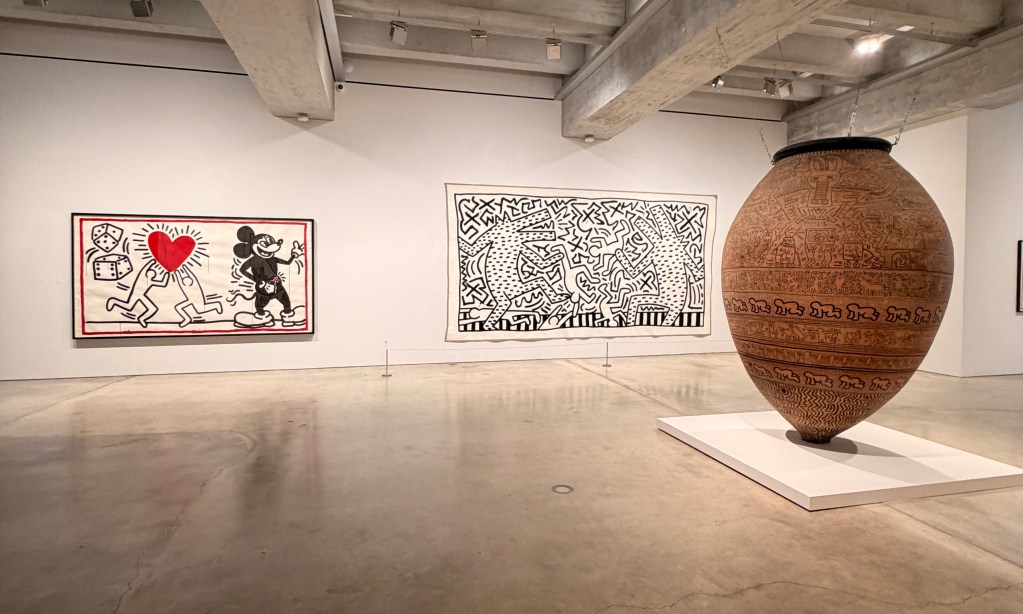
The centerpiece of the show is Untitled (Tinaja) (1982–83), an 8.5-foot tall terracotta vessel painted by Haring during a visit to Italy in the early 1980s, it stands as an uncommon bridge between ancient tradition and street-level subversion. Having studied Egyptian, Greek and Roman vases at the Metropolitan Museum of Art, Haring used the vessel’s sculptural form to translate his “image-language” into three dimensions, wrapping his signature characters around the vessel in a way that recalls the borders of classical pottery. Such objects from his experimental series rarely appear in major museum exhibitions given their limited numbers, fragility and complex logistics and handling, making their presence here significant for scholars and enthusiasts alike.
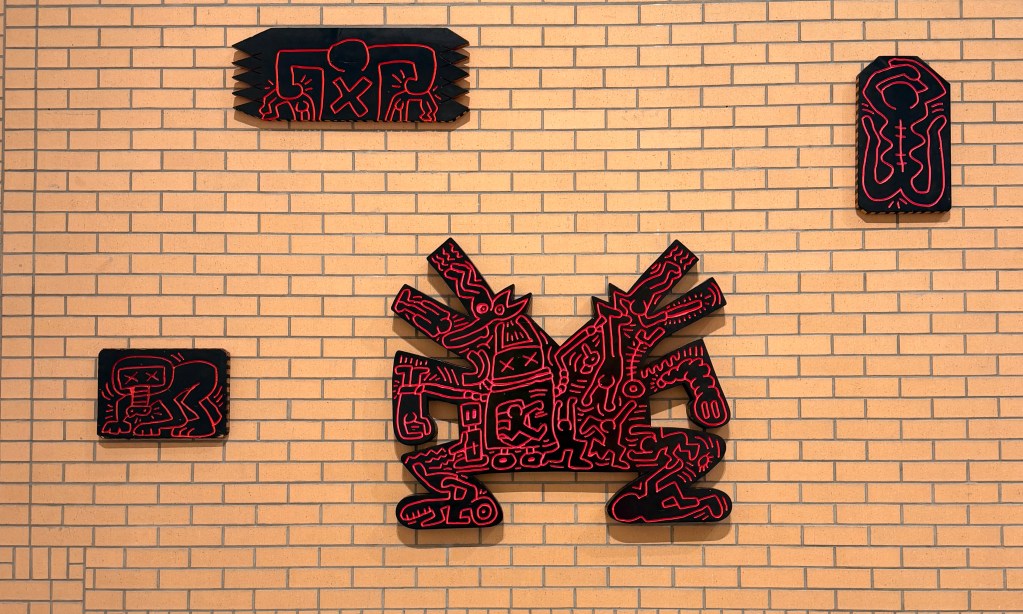
The exhibition also features rarely seen wood works, such as his 1983 enamel on incised wood. These works, often given as personal gifts to friends, possess a visceral, carved quality contrasting with the fluid, uninterrupted ink strokes of his better-known drawings. By bringing together nine major tarps and eight surviving subway drawings, the Foundation reinforces the idea that for Haring, the medium was always an extension of the street’s grit.
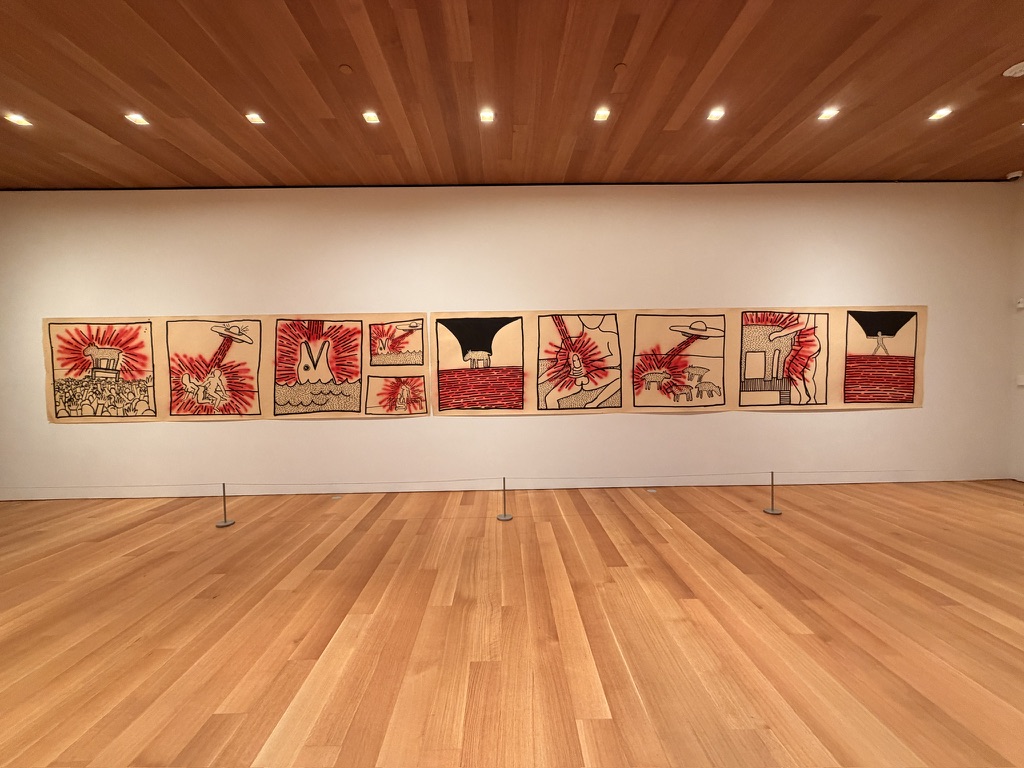
The show leans heavily into the activist nature of Haring’s practice, a theme that resonates with startling clarity in today’s social landscape. As Peter M. Brant notes, “Haring was a champion for important causes of his time, particularly the AIDS crisis. He used his art to support his tireless activism and advocate for change.” The curators underscore that this work is not a relic of the past; rather, as Dr. Dieter Buchhart explains, “it’s about now… it tells us so many stories, but also about what is happening today.”
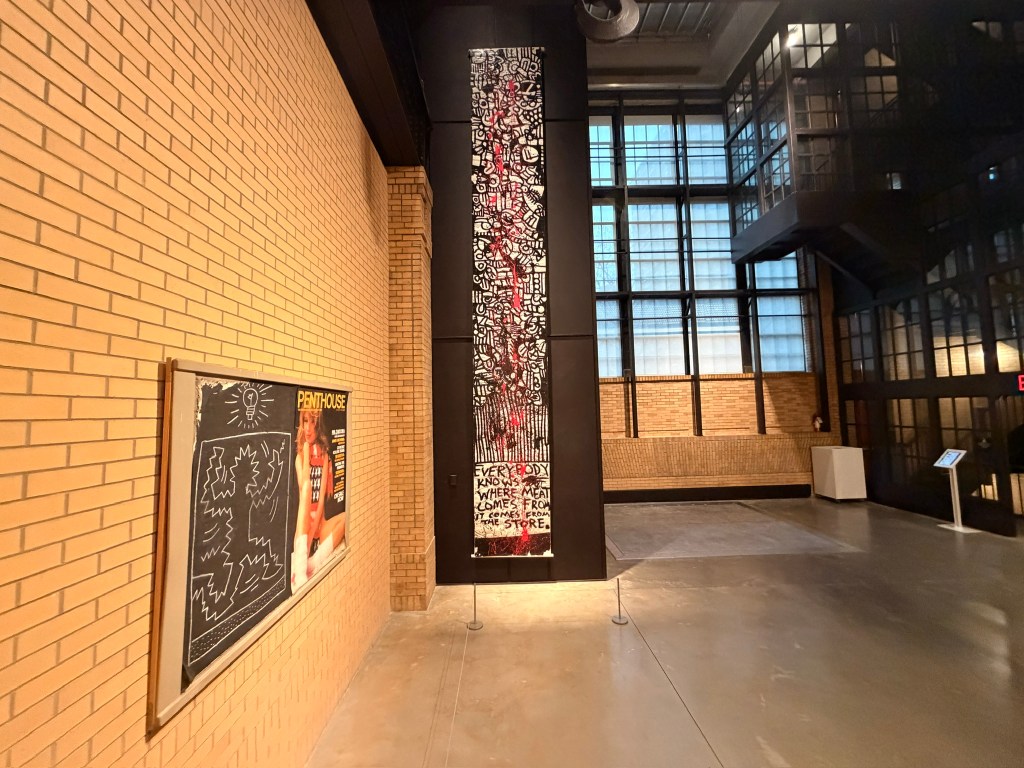
Speaking to enduring struggles of racism, politics and the oppression of the individual are topics that Haring addressed with a style and visceral, emotive ferocity designed to fight against ignorance, fear and silence. Dr. Anna Karina Hofbauer emphasizes that “there’s so much to relate to in his works today in this moment,” noting that the viewer can still feel the weight of his social commentary. Buchhart takes this a step further, comparing Haring’s influence to a “positive humanist virus” remaining embedded in our collective memory, famously declaring, “For better or worse, we are all speaking Haring now.”
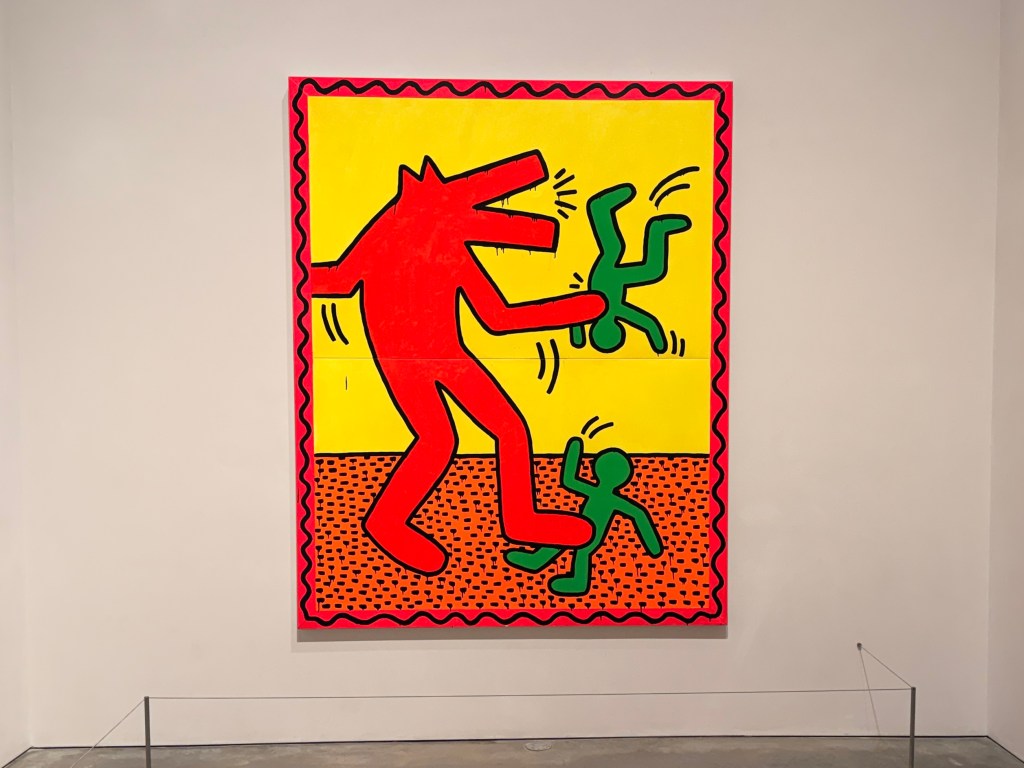
Visually, the exhibition captures this energetic vibe in the recreation of the legendary Blacklight Room from his 1982 Tony Shafrazi Gallery show. Under ultraviolet light, Haring’s Day-Glo enamel on metal and wood works come alive, mimicking the neon-drenched atmosphere of the 1980s club scene where “people could be themselves, regardless of race, sexuality or gender.” It is a poignant reminder of an era of unbridled experimentation eventually silenced by the loss of Haring and many of his contemporaries to the AIDS epidemic.
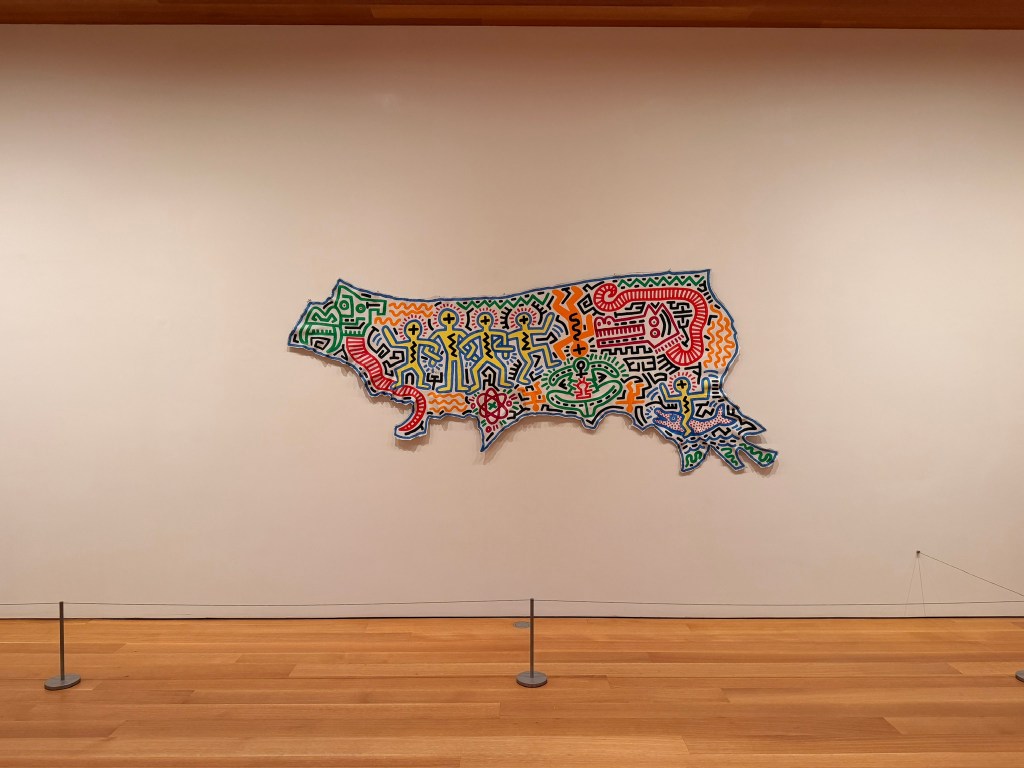
Keith Haring is on view at The Brant Foundation Art Study Center (421 East 6th Street) from 11 March to 31 May 2026. The gallery is open Wednesday through Friday from 11 am to 6 pm, and Saturday from 11 am to 5:30 pm. Tickets must be booked in advance. For those looking to dive deeper into Haring’s sculptural legacy, the exploration continues this summer with a similarly unique and promising exhibition of the artist’s multi-dimensional works, Keith Haring in 3D, opening at Crystal Bridges Museum of American Art in Bentonville, Arkansas, on 6 June 2026.



What are your thoughts?