A Visit to Zeyrek Çinili Hamam
The Instanbul-based hammam is a space to take care of the body, learn about the area’s rich cultural history and soak up the beauty of the site and its art installations
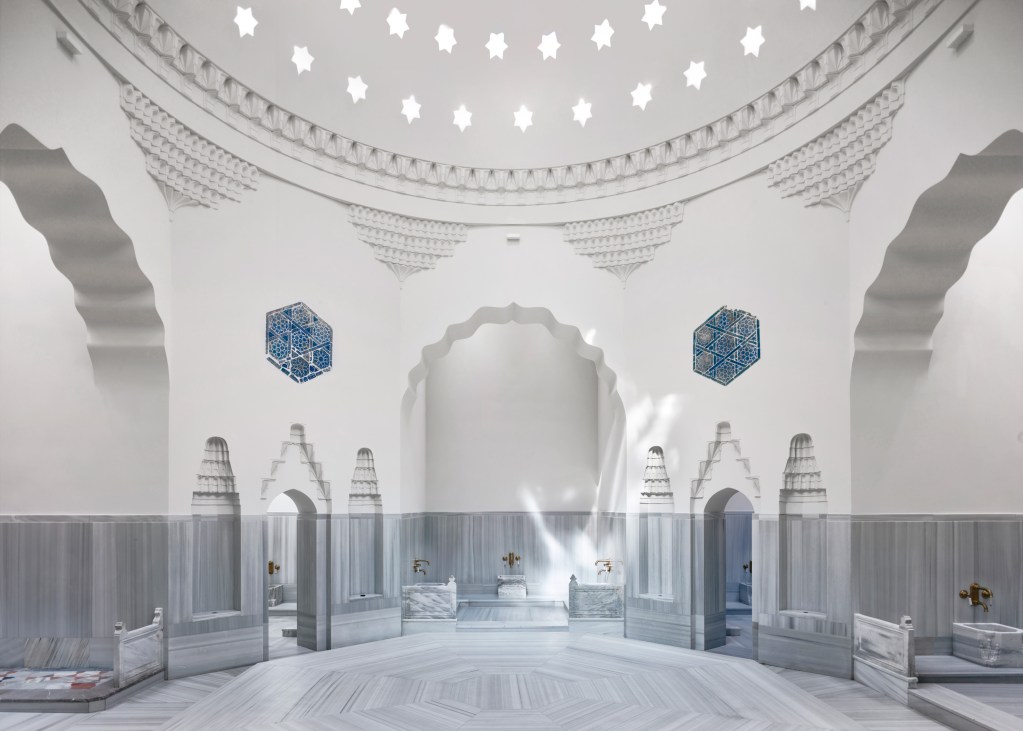
Istanbul, Turkey has been a crossroads of civilizations for centuries, a capital of the world in every sense. Positioned at the confluence of eastern tradition and western culture, the city occupies the meeting point of two continents, where zest for life combines with introspection and human creation meets natural beauty.
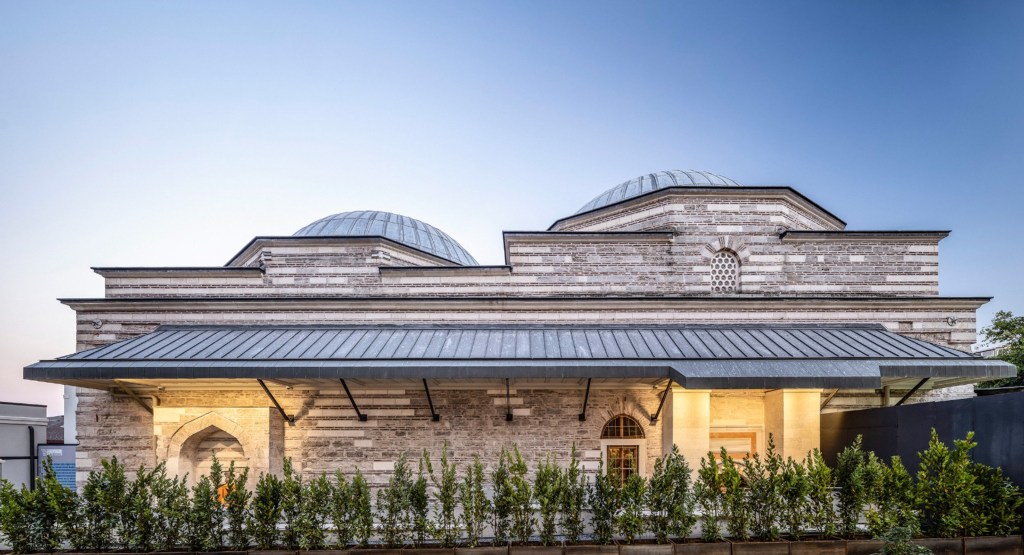
A visit to the recently launched Çinili Hamam in the lively, authentic and non-touristy Zeyrek neighborhood, is a one-of-a-kind example of Istanbul’s unique cultural blend. Visiting the hammam is both a physical and intellectual experience: it’s a space to take care of the body, learn about the area’s rich history and soak up the beauty of the site and its art installations.
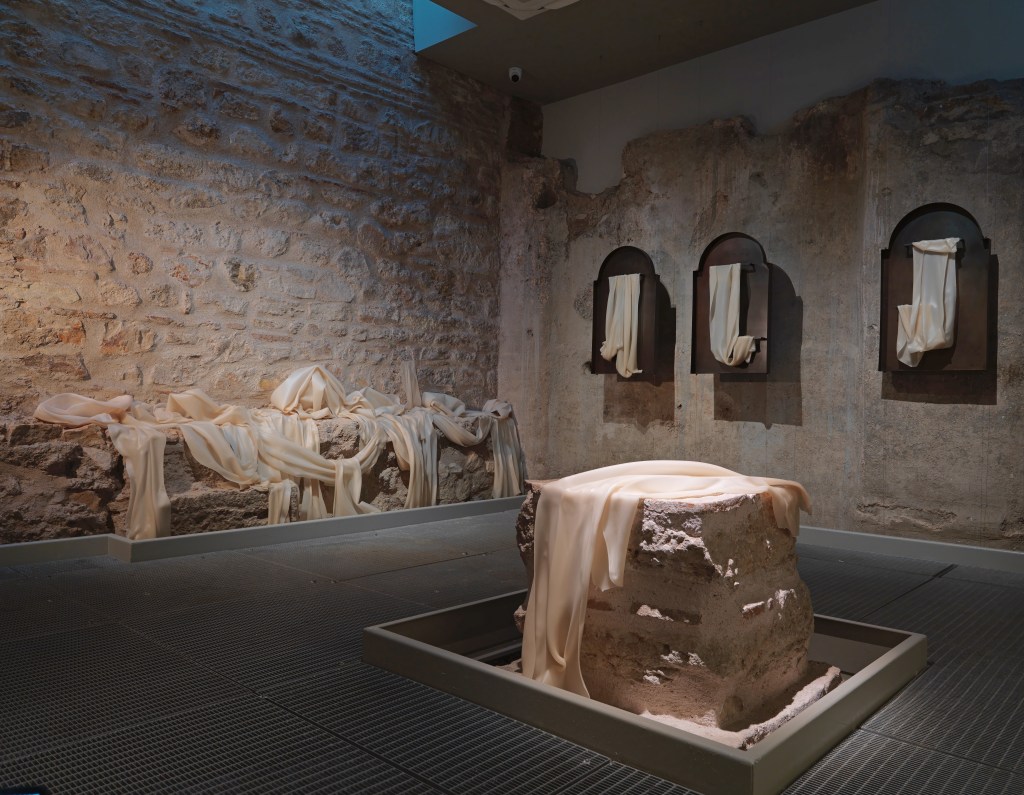
For example, the ongoing exhibition, “Where The River Burns” by French artist Juliette Minchin, presents a striking interpretation of two essential elements, water and fire—the true heart of a Turkish bath. The term “site-specific” has never felt more apt. In Minchin’s work, beauty, purification and enlightenment meet darkness, sin and brutality, reflecting deep personal and mystical connections. Zeyrek Çinili Hamam has always embodied these contradictions: a secular temple for cleansing and elevation, but at some times, a prison and a place of slavery—a historic landmark that demanded preservation.
This became clear to Koza Gureli, entrepreneur and founder of Zeyrek Çinili Hamam, as she took on the task of restoring the site: an endeavor grounded in her family’s decades-long commitment to hospitality through the Marmara Group, owner of several hotels in Turkey and New York. When Gureli’s mother decided to expand their business and bought the historic, neglected hammam (you can see how beautiful yet decaying it was in Ferzan Ozpetek’s movie “Hammam”), she had no idea what she would discover.

As renovations began, many archeological finds emerged, including a whole, undocumented cistern. The hammam was built 500 years ago by the greatest Ottoman architect Sinan under the commission of Barbaros Hayreddin Pasha, the renowned Ottoman navy admiral. In order to face an intricate and often slow-moving bureaucratic process that lasted 13 years, Gureli set up her own archeological team to support the Archeological Museum of Instabul in the classification of all finds emerging from the works. The business has shifted to a total cultural mission now, as Gureli explains, “We will never recoup the investment. There was a point when our company’s board begged me to stop digging. There are areas of the land around here that we could explore forever. And it’s a shame that most of these initiatives have to come from privates without the support of public institutions.”

Particularly noteworthy are the tiles that once adorned the hammam’s wet areas (Çinili means “tiled”). These handcraft masterpieces were removed and sold in small lots during the nineteenth century. Some samples now reside in world-class museums like the Louvre and the V&A. A recent auction at Sotheby’s saw one tile selling for €200,000. Fragments of thirty-six distinct tile designs have surfaced during excavation and are featured in an exhibition at the hammam’s museum—worth a visit before or after your bathing ritual. Thanks to its original design, Zeyrek Çinili Hamam accommodates clients of all genders at any hour, with separate spaces that eliminate the need for alternating shifts.
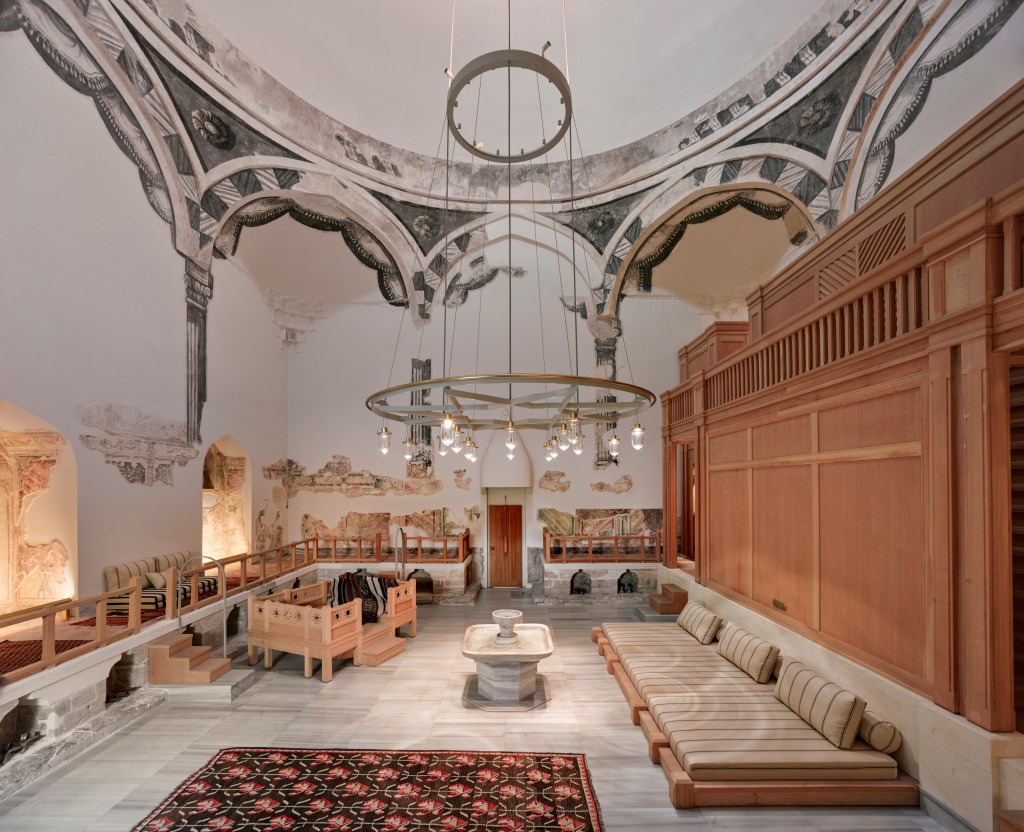
Gureli remains committed to creating a cultural and social venue—a refreshing departure from the dominant paradigm of food-centric socializing. “For generations, hammams were gathering places beyond social divisions, where people nurtured hygiene, built friendships and expanded social horizons. Importantly, they granted women unique autonomy from men, enabling them to meet and connect with other women outside their familial boundaries.”

Artistic Director Anlam De Coster curates two installations a year, always stretching creative limitations. “Juliette Minchin is vigorous in her material research,” De Coster says, “experimental with chemical elements, scrupulous in her historic research and extremely physical in her act of creation.” Most of Minchin’s pieces use sheets of wax, manipulated within seconds to achieve their final shape. “She had a very clear project, and sometimes redid things over and over again, but also allowed room for surprises and improvisation.”
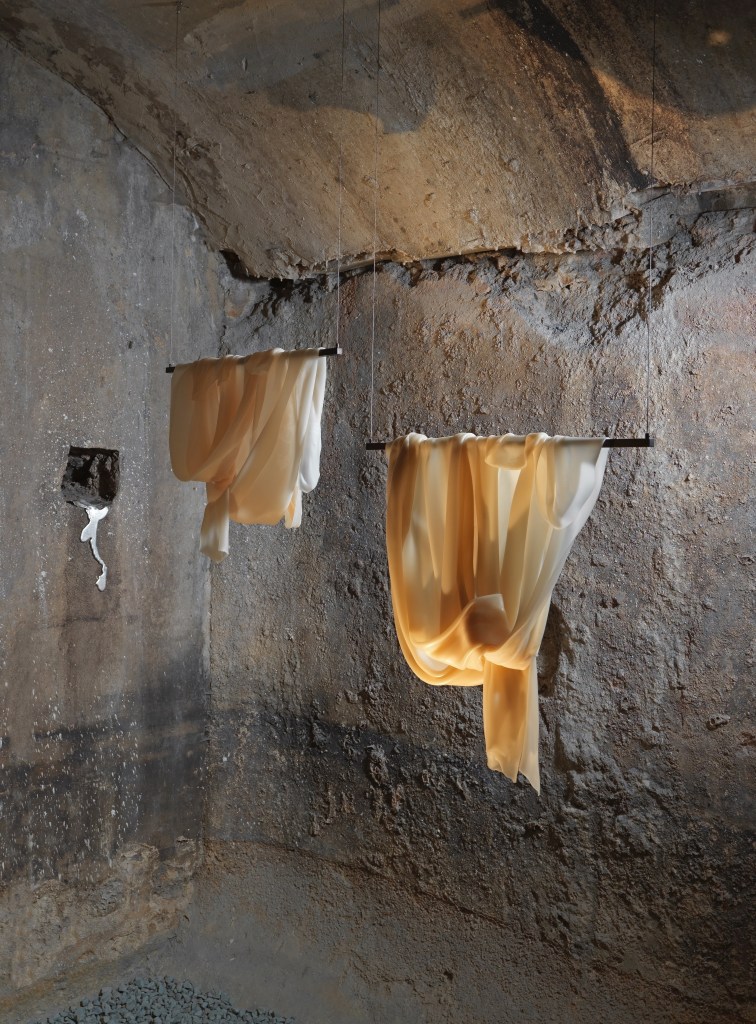
Minchin, based in Paris, works across sculpture, installation, video and drawing, exhibiting at venues including Art Brussels and Art Basel. She was selected by De Coster “for her understanding of the hammam’s elemental qualities and that perfect coexistence of fire and water. Minchin struck me for her sensibility in artistically inhabiting historical places,” De Coster says, “and for her ability to convey a sense of universal spirituality that transcends specific religions, which is a common thread in all artists we choose to host at our hammam.”
Amid growing social restrictions in Turkey, the hammam’s emphasis on freedom and creative exchange feels particularly vital—and makes Zeyrek Çinili Hamam even more inviting.


What are your thoughts?