Airbnb Experiences Offers a New Way to Take in Miami Art Week
With its Art Basel Miami Beach partnership, Airbnb shows guests how to immerse themselves in the city’s vibrant art culture with exclusive tours, artist talks, private chefs and more
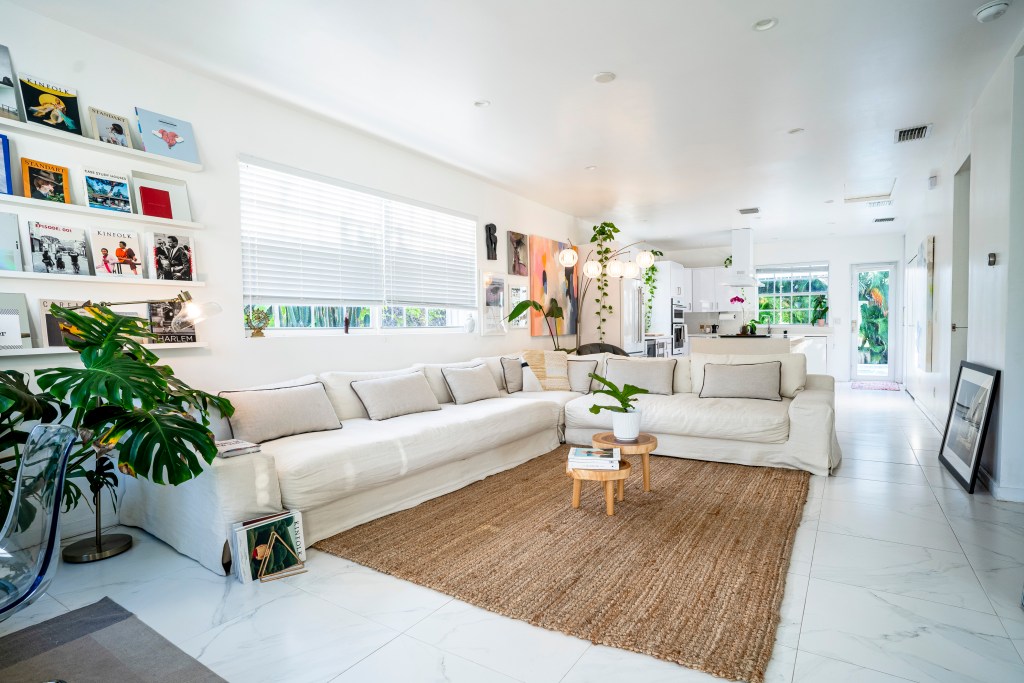
Each December, Miami’s Art Week brings to town an ever-growing number of art and design fairs, installations, events, presentations and parties. People gather from all over the world for an explosion of opportunities not to be missed. The dialogue on contemporary and modern art takes the lead, yet it also offers fertile ground for connections with music, fashion, film and other creative disciplines. With such an abundance of stimuli, navigating the experience can be overwhelming for both first-time and regular visitors. Airbnb has found a formula that offers its clients a way to live Miami’s vibrant week of art and design through exclusive on-site experiences, while still carving out space and time for rest, relaxation and actual reflection.
The experience begins with the choice of accommodation. Opting for a private home or apartment, rather than a standard hotel room, shifts the entire rhythm of the week—suddenly there is room for privacy, intimacy and a sense of grounding between openings and after-parties. From there, Airbnb layers in a series of exclusive Experiences designed as extensions of the fair rather than extras on the side. You are not just sleeping in Miami for Art Week; you are dropping into a community of artists, curators, chefs and local insiders who act as guides through the noise.
“This year, our partnership with Art Basel Miami Beach came to life through a curated set of exclusive Airbnb Experiences that immersed guests in the energy and creativity of Miami’s art scene,” said Juan David Borrero, Global Head of Partnerships & Business Development. “From intimate sessions with renowned artists to behind-the-scenes access with local trailblazers, these Experiences helped passionate art lovers engage with the fair in a new, deeper way—connecting directly with the people and stories that make Art Basel so extraordinary.”
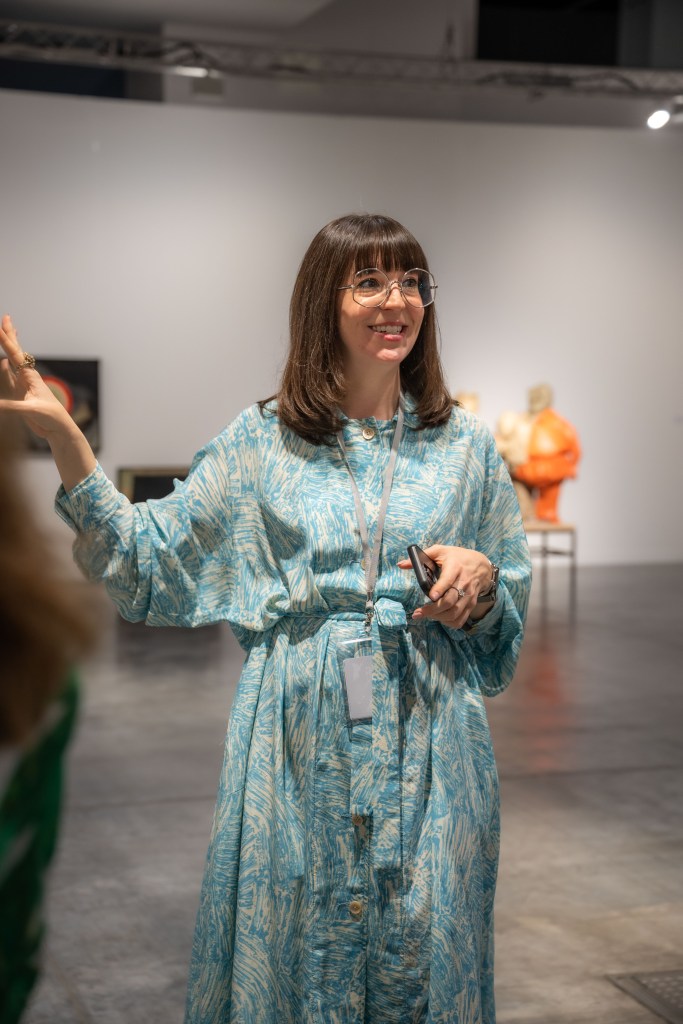
The signature moment was a private, pre-opening tour of Art Basel Miami Beach one early morning with the fair’s director, Bridget Finn. In her third year in the role and hosting this kind of intimate walkthrough for the first time, Finn set a tone that was both generous and rigorous. She was warm and enthusiastic without sacrificing depth, translating the language of galleries and institutions into something accessible without dumbing anything down. Her route through the fair said a lot: instead of starting with the safe, blue-chip material, she led the group straight into the most experimental zones—the Meridians sector, with its large-scale, spatially demanding works, and Zero-10, the fair’s new program dedicated to digital art in the broadest sense. Here, “digital” did not mean just NFTs or screen-based pieces; it encompassed any work where technology is embedded in the process, form or behavior of the piece.
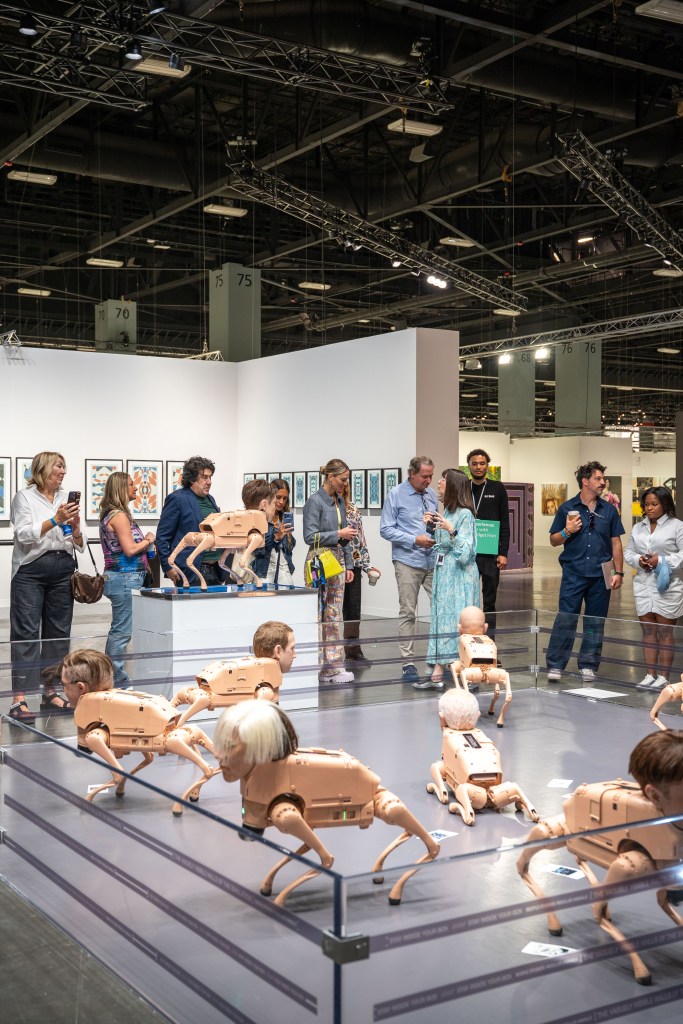
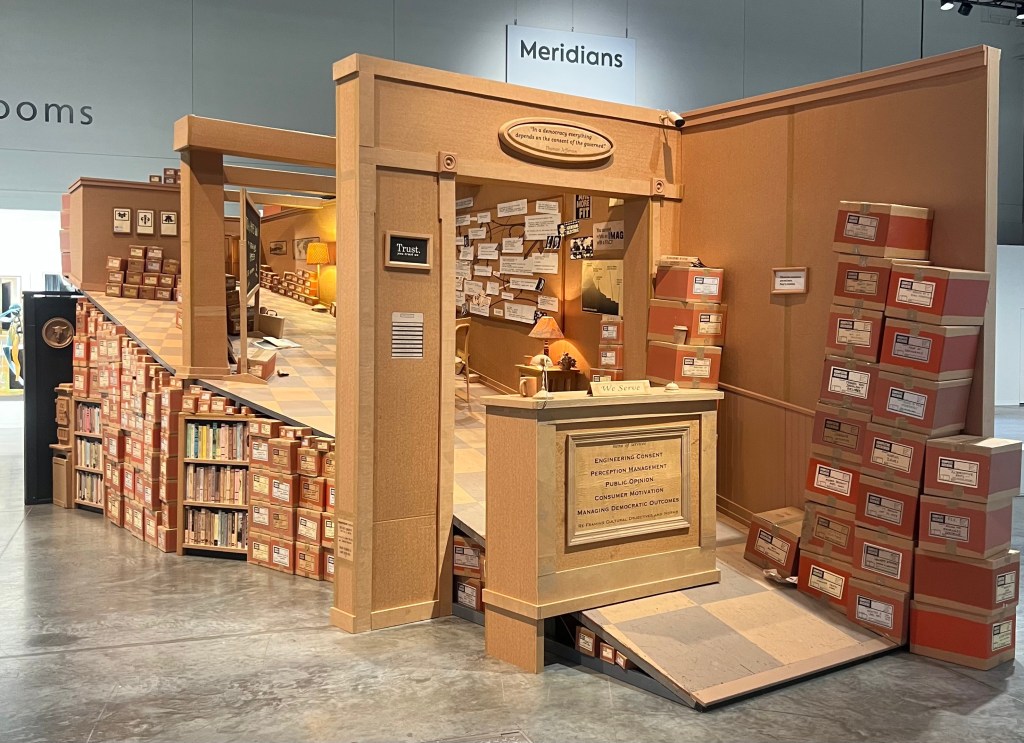
Finn also helped guests approach and interpret Beeple’s much-debated viral installation “Regular Animals,” featuring robotic dogs with hyper-realistic masks of figures like Elon Musk, Jeff Bezos and Mark Zuckerberg, literally “pooped” AI-generated prints—images that might have thrilled Warhol. This area of the fair underscored a strong commitment by artists and galleries to engage with social issues. One of the most striking political works was Ward Shelley’s “The Last Library IV: Written in Water,” a monumental handcrafted cardboard recreation of a life-size library filled with banned books, stolen papers and confidential state plans, symbolizing the fragility of contemporary culture, knowledge and democracy.
It was a delight to quietly explore the 283 galleries from 43 countries behind closed doors. On the contemporary side, the presentation at Elvira Gonzalez’s gallery stood out for its restraint and precision, a careful counterpoint to the more maximalist booths nearby. At Rolf Art, moonlit photograms made in the Amazonian forest by Roberto Huarcaya held their own amid the visual noise: ghostly, large-scale images created by exposing photosensitive paper directly in the landscape. Learning that a previous work by Huarcaya at Art Basel Miami was acquired by a major museum added another layer of narrative to the encounter.
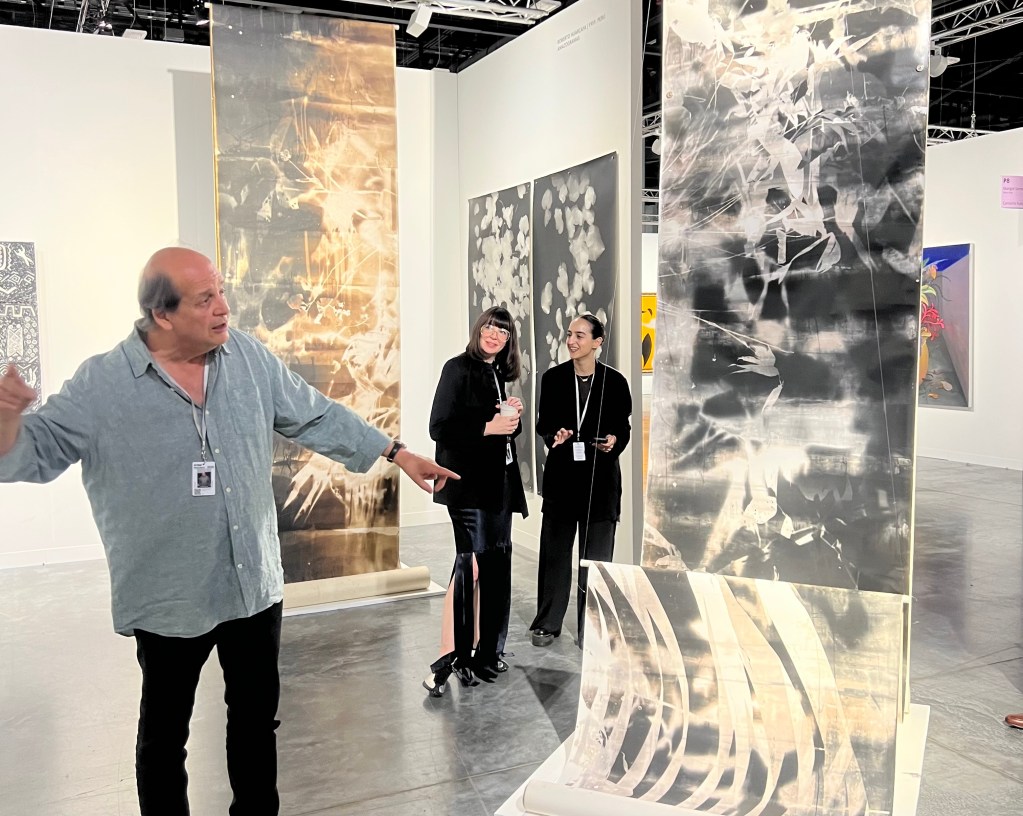
At the opposite end of the spectrum, the modern wing offered a concentrated hit of art history—Picasso, Basquiat, Haring—alongside equally magnetic works by Frida Kahlo, Leonora Carrington and Leonor Fini, in a tightly curated presentation by Weinstein Gallery that felt like a reminder to read women artists not as footnotes but as parallel pillars.
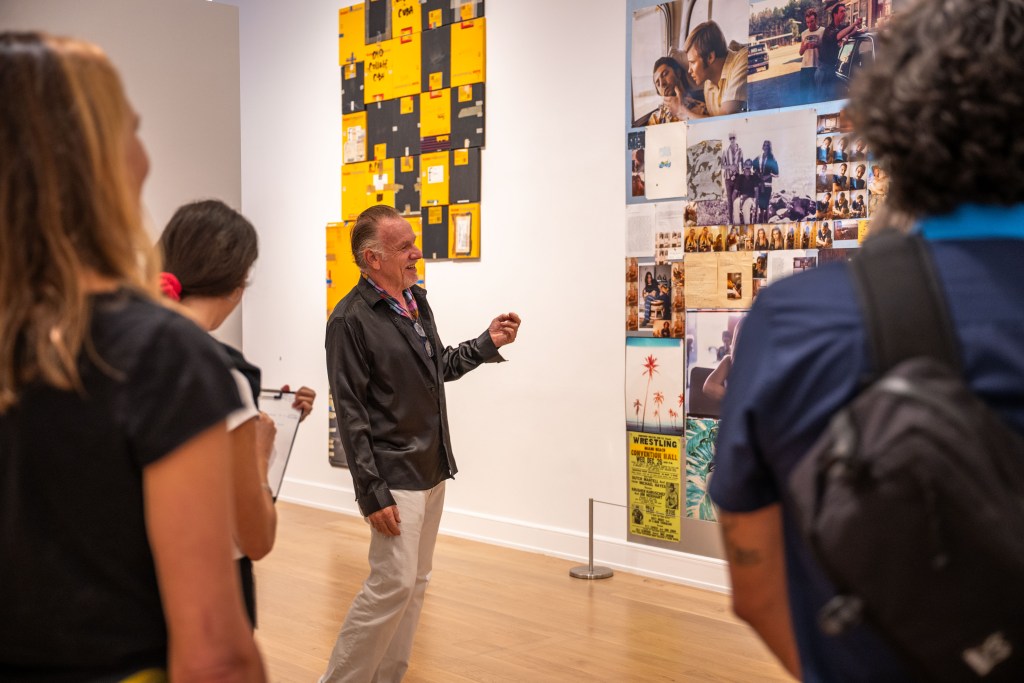
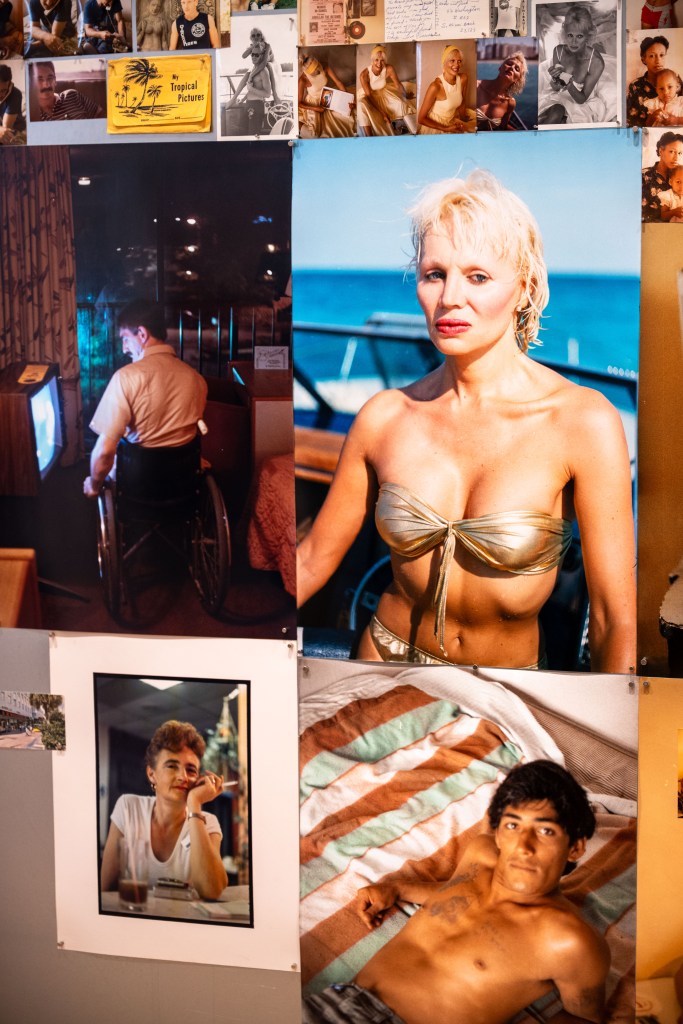
Another Airbnb Experience collapsed the distance between viewer and artist entirely. At The Bass Museum of Art, a small group of guests met New York–based Jack Pierson for a personal walkthrough of his exhibition. The Bass, already one of Miami’s most interesting permanent institutions, became the backdrop for something closer to a salon than a standard museum visit. Pierson was disarmingly open—charming, self-ironic and expansive, unraveling anecdotes about his life and career, overturning the stereotype of the aloof artist who prefers to let the work speak entirely for itself. Even with imagery as eloquent and relatable as Pierson’s photographs, collages, sculptures and installations, the direct encounter with the artist added a new depth of understanding and human warmth.
Through these exclusive experiences, Airbnb aims to help people connect more profoundly with a place through its locals, while also creating meaningful economic opportunities for hosts and communities. Around major cultural moments, the focus is on spreading travel beyond crowded centers and ensuring that benefits extend well beyond the event itself.
In Miami, curated suggestions ranged from top-tier personal trainers to private chef experiences at home for a cozy night in. French-born, Miami-based Chef Vincent Catala, for example, brings 28 years of Michelin-level experience to bespoke luxury dining, blending an exquisite French touch with Miami’s contemporary food culture.: clean, precise techniques applied to bold local flavors, plated with the kind of detail usually reserved for white-tablecloth dining rooms. But the real luxury is not just the food—it’s the setting. Instead of battling gridlocked traffic on Collins Avenue, guests sit around a dining table, talking with Catala as he works, slipping into an easy conversation that blurs the line between host and audience. After a day of fairs, museums, and installations, that kind of night in feels less like retreat and more like another, softer chapter in the Art Week narrative.

All of this plugs into Airbnb’s origin story and future strategy. Large-scale events are woven into their DNA: the company itself was famously born when Brian Chesky and his co-founders hosted guests on air mattresses during a design conference in San Francisco, when hotels were sold out. After Miami Art Basel, Airbnb is already preparing for other major global moments. It recently announced multi-year partnerships with iconic events such as FIFA tournaments, Lollapalooza and the Tour de France—more opportunities to make a visitor’s experience feels less transactional and more like a series of memorable, human encounters.


What are your thoughts?