Test Drive: 2025 Porsche Carrera T Cabriolet
The snappy six-speed has one of the best modern manual transmissions we’ve driven
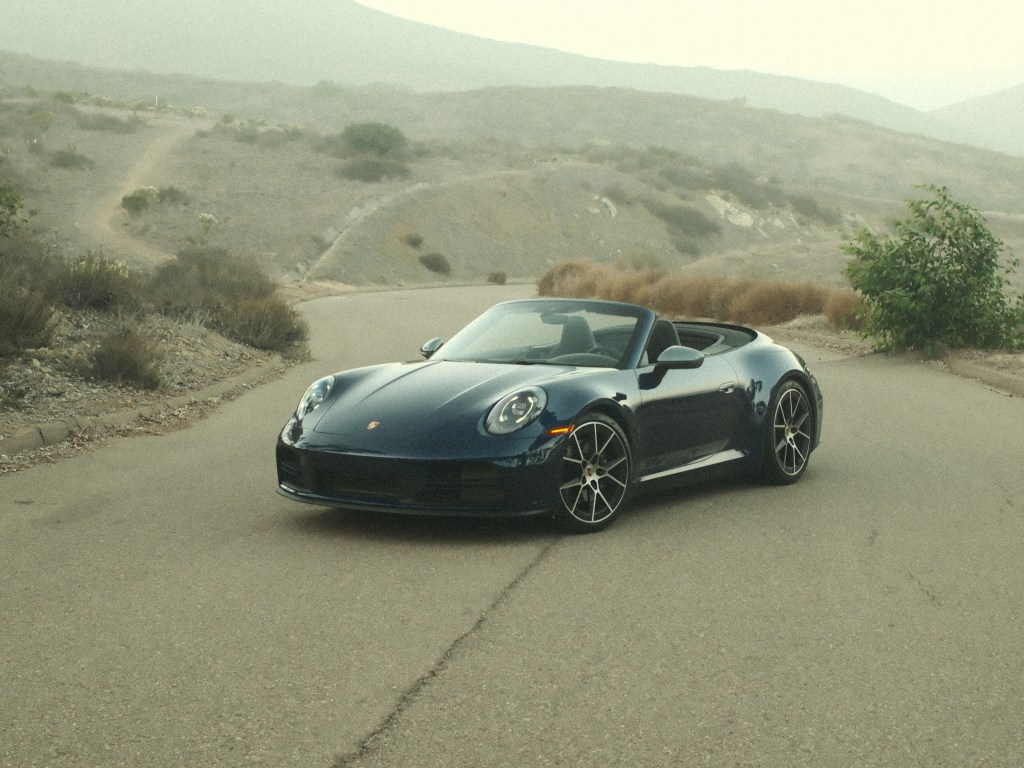
If we were to stick to our typical schedule of trying out a new vehicle over the course of seven days, we’d spend 20 weeks just driving new 911’s. Not that we’d complain about having to do so either. The 911 may be larger and heavier than ever before, but it’s also a better car than ever before. That Porsche still offers such a wide variety of the iconic sports car and also manages to imbue each model with a distinct personality is a testament to the brand’s engineering capabilities. From the base Carrera all the way up to the Turbo S and GT3 variants, nobody splits hairs as skillfully as Porsche does.
Which brings us to the 2025 Carrera T. Absent from the Porsche lineup since 1973, the 911 T returned in 2018 as a “lightweight” enthusiast-oriented model. In both the 991.2 (2016-2019) and 992.1 (2019-2024) generations, most buyers opted for the manual transmission over the PDK, so Porsche is only offering a manual transmission for the new 992.2 generation Carrera T. Much to our liking, the seven-speed gear box that was previously shared with the base 911 Carrera is gone, replaced with a snappy six-speed. To make this fix quick and cost effective, Porsche lopped off the unloved seventh gear, then borrowed bushings and linkage from the GT3, then topped the package with an open-pore laminated walnut shift knob. It is without a doubt one of the best modern manual transmissions we’ve driven.

By combining the reworked transmission with standard rear-axle steer, standard PASM active suspension (that’s 10-millimeters lower than the Carrera), and standard Porsche Torque Vectoring, the Carrera T is now more compelling than ever in the 911 lineup. Going a step further, this is the first time Porsche has offered the Carrera T in cabriolet form. While the additional weight of the convertible contradicts the original concept of the T as a “lightweight model,” we’re long past the 911 as a purists’ sports car. It has been a sports touring car, or sports GT if you like, for at least the past two generations, if not the past three. The customer argument for an enthusiast oriented, manual transmission convertible 911 must have been made clear-as-day to Porsche and after driving it, we’re in total agreement.
There are few things as well suited to each other as a convertible 911 and driving in Southern California. For us, it’s not so much the sunny days that encourage top-down driving, but the just-cool-enough nights. Whether racing through the winding canyons at dusk or cruising along the Pacific under a full moon, there is no doubt that the experience is dramatically enhanced by the air rushing overhead. Happily, letting the top back doesn’t mean sacrificing comfort in the cabin. As with any current 911 convertible, the electronically activated wind deflector works wonders. By reducing buffeting, hats and hair stay in place, and conversations may continue without strain on ears or voice. Of equal importance is that with the top down the varied notes of the standard sport exhaust reach your ears more easily. Reduced sound deadening and lightweight glass help with this to some degree in the coupe, but the effect isn’t nearly as noticeable as simply removing the roof from the equation.

With the top up we certainly didn’t forget we were driving a convertible, so much as we didn’t care. Even after a day that included six hours of highway driving, we weren’t tired of being in the car, despite a fair amount of road noise. There is no question that the pros clearly outweigh the cons here. There’s plenty to be impressed by on the Carrera T Cabrio, but not compounding fatigue is our favorite feature of all. A good car makes you want to keep driving, a great car reinforces your will to do so. Much of this is owed to Porsche’s always exceptional 18-way adjustable sport seats. Apart from Volvo’s supportive buckets, there’s no seat we’d rather log long hours in. And, with all due respect to Volvo, their vehicles don’t transform from highway cruiser to canyon carver with the twist of a steering wheel-mounted knob as the Carrera T does.
Another noteworthy trick up the Carrera T Cabrio’s sleeve is an easily overlooked no-cost option that’s new to the 992.2 generation: a rear seat. Laugh if you want, but if you’ve got little kids or need to move average size adults a short distance, the availability of two additional seat belts matters. They can also be flipped down to accommodate large suitcases or other items that won’t fit in the frunk. Again, the cabriolet stands out here against the coupe for ease of loading and infinite headroom.

One could argue that at this point the “T” designation has lost some of what made it unique in the past. After all, the 991.2 model boasted a radio delete, no rear seat, door loops instead of handles and available fixed-carbon buckets that bumped weight savings from 11 pounds 44. We’d say there’s a valid point there, but we doubt buyers will care. Even those that opt for the convertible will only see a weight penalty of 163 pounds over the base Carrera coupe. Is it worth it for the combination of a manual transmission and soft top? We think so. Besides, the 992.2 model is a much, much better car all around than its predecessors. Not only is it far more enjoyable to drive hard, it’s much easier to live with day-to-today than the 991.2 or 992.1 models.
Crucially, it’s also a better looking car inside and out. Exterior design refinements represent Porsche’s commitment to iterative perfection rather than dramatic change. The 992.1 possessed a visual blockiness both at the front and the rear that never quite sat right with us. The 992.2 solved that with thoughtful tweaks that reduced the visual weight at the nose. The rear fascia appears better sculpted and benefits from a more natural integration of the lower valance. This is true whether you opt for the standard appearance, Sport Design Package or Sport Design Package in High Gloss Black. The Carrera T benefits further from its restraint in that it forgoes the GTS’s vertical lower air dam louvers, leaving visual complexity to be paired with the technical complexity in the form of the new hybrid-electric turbocharged motor.
For our part, we like the look of the Carrera T as it comes. Those in-the-know would take one look at the Vanadium Gray mirrors and know what it is, even if the “911 Carrera T” decal delete option box were to be ticked. We think it’s fair to say that whether you go for a bright exterior color like Gentian Blue Metallic (as our test car did) or one of the more muted choices in the “Paint To Sample” catalog of 132 colors, the Carrera T is the most understated 911.

Regardless of appearance, what remains unchanged is that the Carrera T is the 911 at its most essential. It is focused, analog where it matters and has been enhanced where it counts. Prior to our drive, we bemoaned the loss of the analog center tach in the gauge cluster in favor of a fully reconfigurable digital setup, but we forgot about it after a day or two. Harder to countenance was the move from the twist-to-start ignition nub to a push-to-start button that’s shared with the rest of the Porsche lineup. At least it’s still in the right place, to the left of the steering wheel. Ultimately what matters above all else is the overall user experience and as we said before, it’s the best Carrera T yet.
Taking stock of its place in the 911 lineup, we think it negates the need to consider a Carrera S. If you truly need all-wheel-drive a Carrera 4S makes sense and if you can’t drive a manual transmission, the base Carrera does offer a lot of capability. The jump in power from the Carrera T to Carrera S is significant on paper, not in the real world within the legal limits. In addition to the huge gap in cost, the Carrera GTS is now an entirely different proposition with its hybrid power plant. As such, the most direct spiritual competitor to the Carrera T ends up being the only other 911 to currently offer a manual transmission, the mighty GT3. Given that even those who can afford them can’t get access to them without jumping through hoops, the Carrera T becomes an even more enticing proposition. Yes, there are performance cars that cost less and offer more on paper. For those who appreciate craftsmanship that reveals itself through use rather than by proclamation, the 911 will continue to be the obvious choice and the Carrera T is the one to have.
What are your thoughts?