Happiness in the Museum
Luca Finotti’s “Felicità” blends ancient art, contemporary creativity and happiness to promote Italy’s National Museum System
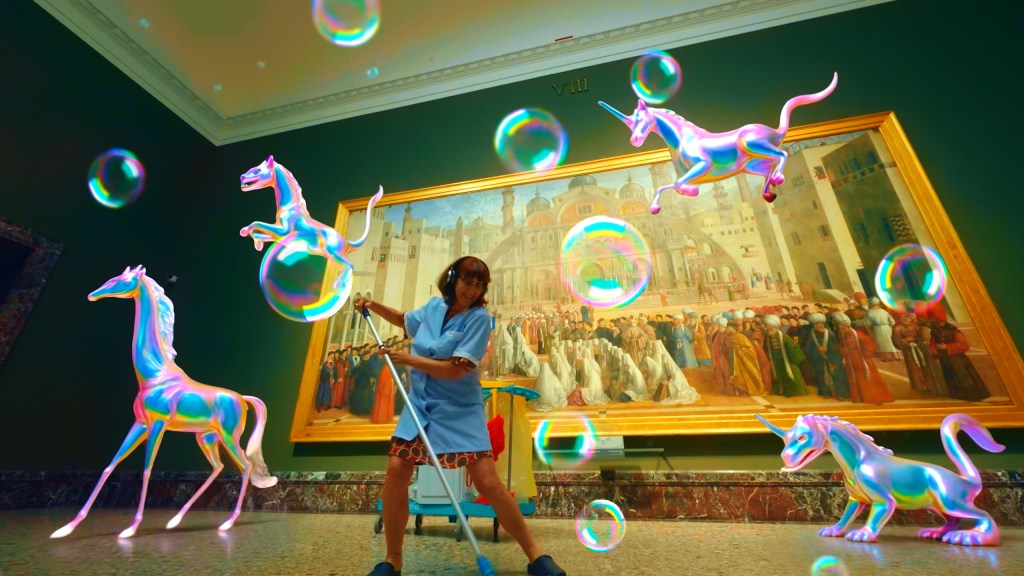
When you put together Italy’s most iconic art treasures with an international legend like Raffaella Carrà, everything becomes possible. According to director Luca Finotti, the outcome is encapsulated in one word: felicità.
Felicità (meaning happiness) is the title of a song synonymous with celebration, but also that of a campaign that has been promoting the National Museum System and the Musei Italiani app for the past few days—the official platform for discovering and booking national museums across the country.
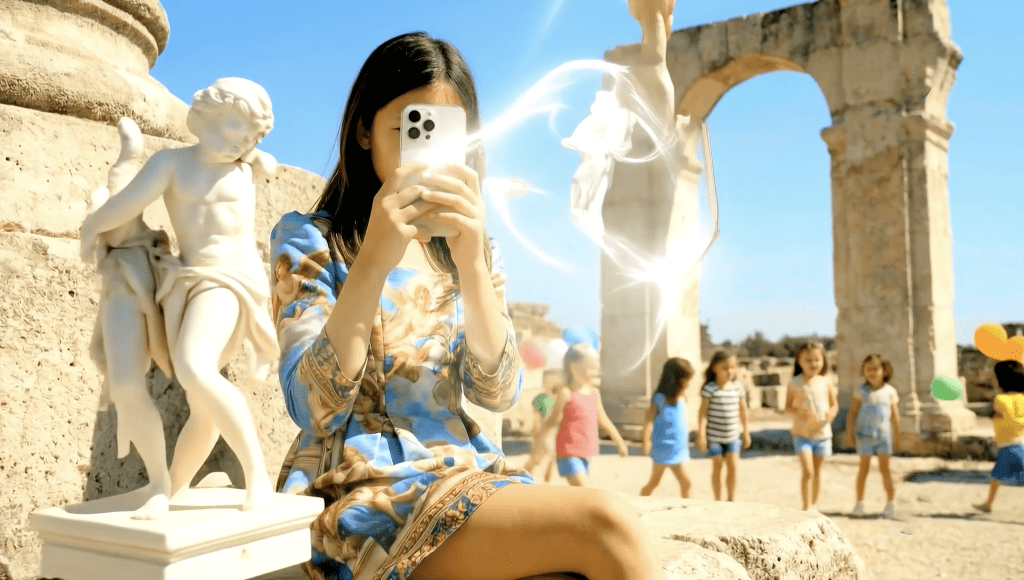
The project was promoted by the General Directorate of Museums, written and directed by filmmaker Luca Finotti, in collaboration with art director Paola Manfrin, and developed with the contribution of twenty cinematographers, local artisans, 25 international graphic studios and digital artists. In just a few minutes, it showcases Italy’s cultural heritage across nearly 40 sites.
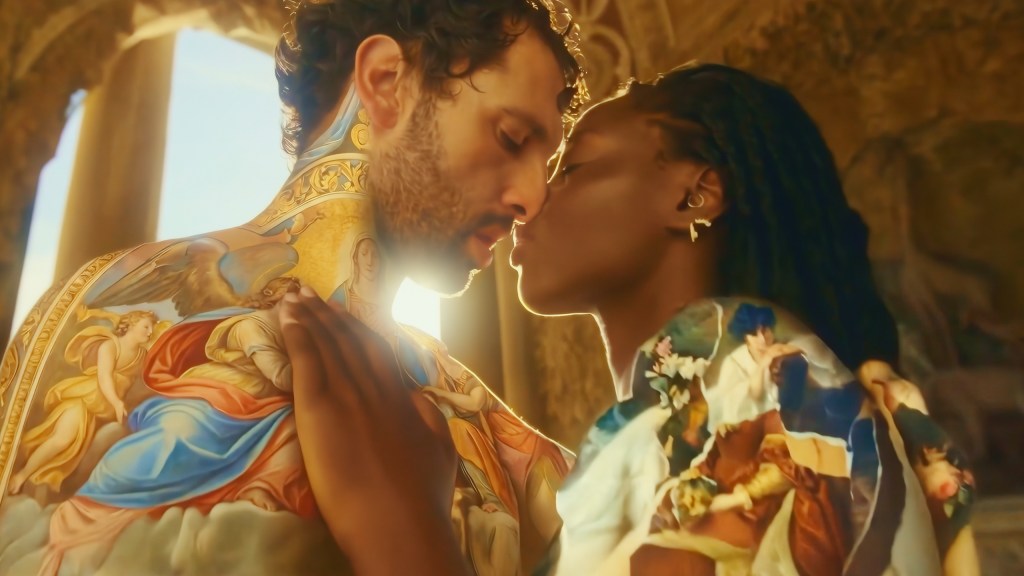
But don’t expect the usual slow-motion sequences, postcard-perfect panoramas and excessive drone footage. Here, everything is energy, movement, speed and color—but above all, accessibility. In fact, one of the video’s primary objectives is to demonstrate that museums are open and accessible places for everyone. Among the video’s protagonists are musical, dance, cinema and theatre talents, as well as Olympic and Paralympic athletes, blind and deaf individuals—all equally part of the joy that Italian art gives us.
We spoke with director Luca Finotti about the project’s genesis. “I always begin with something personal,” he says, “something that resonates as authentic. I knew this would be a long and challenging undertaking, so I needed to find something genuine to sustain me through assembling such a grand tapestry of people and colors. My fascination with color has always been central to my work, which is why I felt compelled to visit these museums in person. I had never seen Botticelli’s Primavera at such proximity, nor had I ever spent so much time with it. When I noticed those golden threads in her hair, I was struck.“
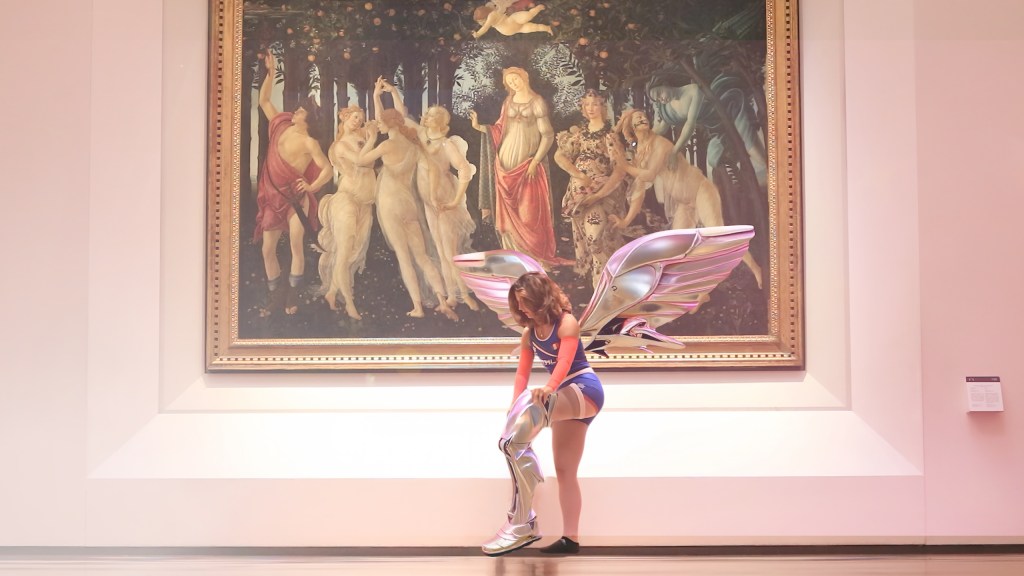
Shooting spanned six months across nearly 40 locations throughout Italy. The captured footage was then sent to 25 graphic studios worldwide—each with a distinct visual language—for post-production. Finotti reflects on the complexity: “Coordinating studios across just six months meant working nights and weekends. I owe everything to my team. We deliberately assembled diverse talents: 3D artists, 2D artists, motion designers. Some sent work-in-progress phases for feedback; others delivered finished pieces. We had some wonderful surprises too—like the final Caravaggio scene, where Saint John reaches toward the actor. I never requested it, yet it flows naturally into the story.“
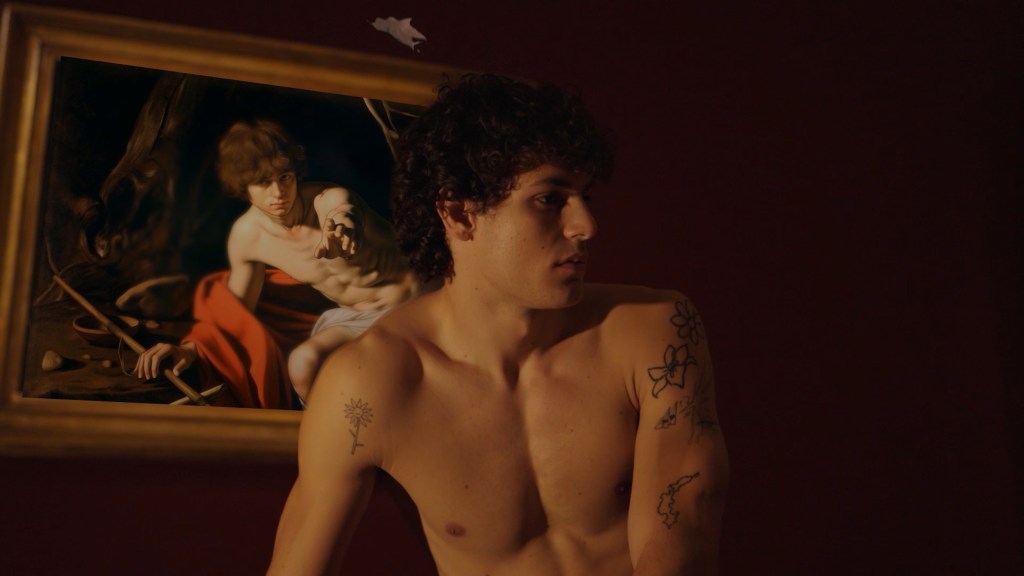
What sets the video apart—beyond its color palette and kinetic energy—are stylistic choices deeply rooted in Finotti’s personal history. “My parents took me to museums frequently as a child,“ he says. “I remember stepping into these grand residences and palaces, so different from the spaces where I lived. It felt magical—everything seemed enormous. Years later, I found myself asking, what did I actually see through a child’s eyes? And what might children perceive today? That question shaped many of our compositional decisions. Notice how often we shoot from a low angle looking upward—it’s a deliberate echo of that childhood perspective.“

In museums, the rules are clear: don’t touch the artworks and definitely don’t run. Yet throughout “Felicità,” people sprint through galleries, halls and among archaeological treasures—a deliberate choice with cinematic roots. “I didn’t learn to run until I was 27,” Finotti says. “It became a source of profound joy. I was deeply moved by the scene in Bernardo Bertolucci’s ‘The Dreamers,’ where three figures race through the Louvre’s galleries, interwoven with sequences from Godard’s ‘Band of Outsiders.’ When we filmed our own running sequences, we were playful and free. I’d blast Cosmo’s ‘Tristan Zarra’ at full volume and this raw energy would surge through everyone. My intention is straightforward: run to experience museums.“
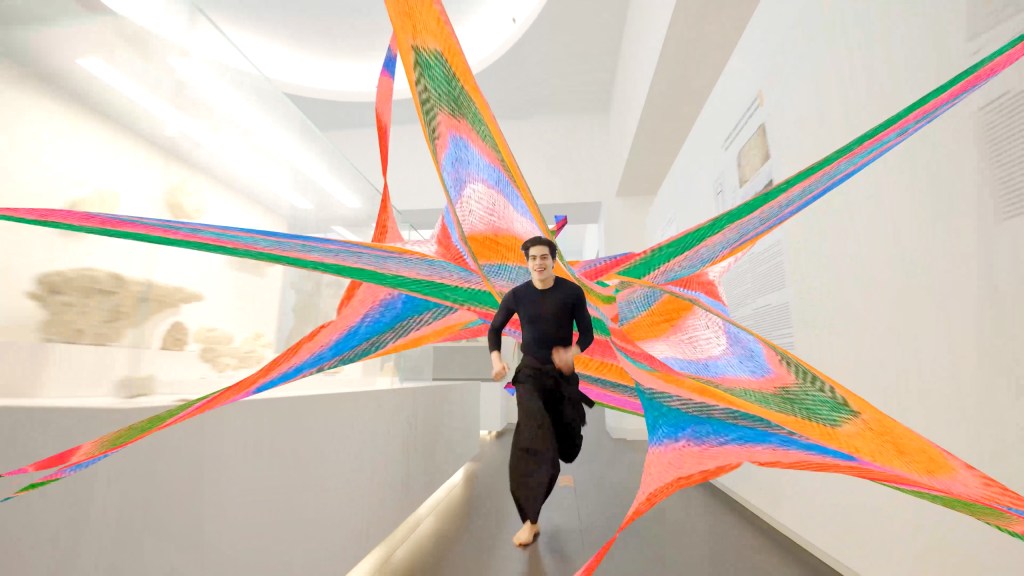
Ultimately, art and museums are spaces of happiness accessible to all. “I wanted to be happy,“ Finotti reflects, “and so I made this film. We’re living through a moment in history where I see and feel so much that troubles me—things I struggle to face, things that don’t resonate with who I am. I understood then that all I could do was create something that truly inspired me. I was taught long ago that you should always aspire to embody the qualities of people whose work and creative process you genuinely admire. That’s why I selected Raffaella Carrà’s music—as an homage to a pop cultural figure who accomplished remarkable things for Italian culture.“


What are your thoughts?