BMW’s Designworks Studio Uses AI to Design for the Future
The studio designs with the future in mind, treating AI as a world-building collaborator that helps define the environment a product will live in
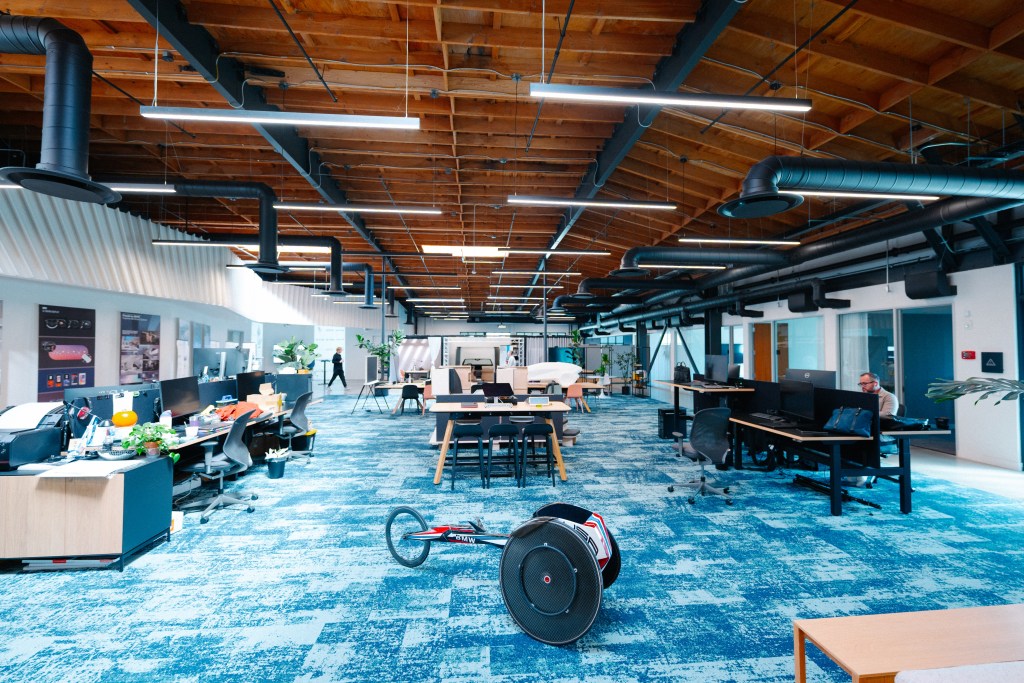
To celebrate a half-century of its innovation in the U.S., BMW opened the doors of its Designworks studio in Santa Monica, California. What ensued was a candid look at how both the parent group and the creative consultancy prepare for the next era of mobility. AI, not sheet metal, set the tone.
“We made a conscious choice to be AI creators, not users,” Designworks CEO Julia de Bono said in the great room of the studio. In front of her stood a modified turntable attached to a projector. On one side was a series of BMW products from years past. On the other, a random amalgamation of items, from a portable radio to the Peterson Automotive building. A user moved several dials to signal where to pull more influence from, left or right, and a proprietary AI generated a car mixing the two columns. Sometimes the results were cool, other times they were thought-provoking, other times they were downright ridiculous.
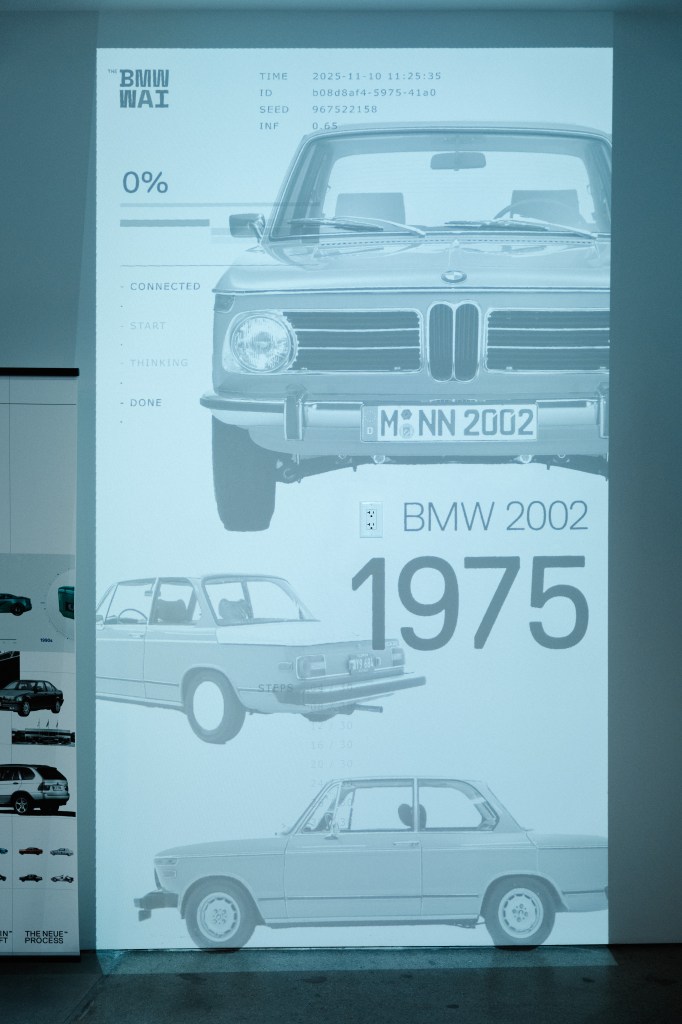
But that’s the point. The studio treats AI as a collaborator that can “hallucinate” and generate off-the-wall ideation in seconds. De Bono said that originally they took AI too far, took the innocent fun out of the creative process. So Designworks returned to an earlier model, one that could iterate without a self-imposed judgement.
In practice, that means the early-phase work can expand dramatically. Static images can be animated to help envision products in 3D. Designers can iterate scenarios quickly, compressing what used to take days into a faster cycle of exploration and refinement. Designworks plans to fully incorporate AI assistance into its design flow within the next couple of years.

Rather than relying solely on off-the-shelf tools, it is using AI as a world-building tool that helps define the environment a product will live in, then designs the product with that future in mind. Paul Ferraiolo, Designworks LA Director of Strategy and Partnering, described it as starting at the beginning of any project with a focus on understanding the customer and looking into the future to create a future vision. Designworks uses AI to create projected environments where designs might exist in the real world, building a narrative and context that informs the product or service. Ferraiolo emphasized that the studio is not using AI to design the product, but rather to imagine the future vision and world, then using that story to design a better product or service for that future.

At the center of that future is Neue Klasse, BMW’s next generation vehicle platform and design philosophy. Neue Klasse is not a single model or powertrain, but a reset that integrates software-defined vehicles, electric architectures, new manufacturing logic and a radically rethought human machine interface. BMW plans to introduce up to 40 Neue Klasse-based models by 2027. The platform’s debut expression is the iX3, which combines electric propulsion with a new design language and an interior built around information clarity rather than feature overload.

Designworks played a significant role in shaping that vision. The studio contributed to the Neue Klasse design language and in-car experience, while also supporting BMW’s “Design for Circularity” strategy. The iX3 reflects this shift with increased use of secondary raw materials and a focus on lifecycle thinking, where materials, manufacturing and eventual reuse are considered from the first sketch. The goal is not to impress with complexity, but to make advanced technology feel calm and human.
To understand why BMW places so much weight on this Santa Monica studio, it helps to look back. Designworks was founded in 1972 by Chuck Pelly in his Malibu garage as an independent industrial design consultancy. BMW began collaborating with the firm in 1975 and acquired it outright in 1990. What makes Designworks unusual is that it still operates as both BMW’s internal design arm and an external-facing studio serving non-automotive clients. That dual role is deliberate. It keeps BMW exposed to shifts in materials, interfaces, and human expectations that emerge outside the auto industry.
That outside-in perspective has paid off before. One of Designworks’ most consequential contributions was the BMW X5. Developed with deep insight into American consumer behavior, the X5 reframed BMW’s entry into utility vehicles as a “Sports Activity Vehicle.” BMW was initially reluctant to build an SUV, but the X5 changed the trajectory of the brand. Today, X models form a cornerstone of BMW’s global business, many produced at its Spartanburg, South Carolina plant and exported worldwide.

Designworks’ influence extends beyond BMW. The studio played a key role in the relaunch of MINI under BMW ownership in the early 2000s and continues to shape MINI’s digital experience. The current round OLED center display translates a historic design signature into a modern UX and UI system, unifying information, entertainment, and control into a single emotional focal point.
During the Santa Monica event, BMW Group Head of Design Adrian van Hooydonk framed Designworks as “our eyes and ears” and “a door that connects us to the outside world.” That framing matters. AI, sustainability and software-defined vehicles are not trends BMW can solve in isolation. They demand constant exposure to culture, technology and disciplines beyond automotive design.
What ties Neue Klasse, AI and Designworks together is not novelty but continuity. BMW has repeatedly used Designworks as a translation layer between the outside world and industrial reality. In the past, that meant understanding American utility needs before inventing the X5. Today, it means using AI to imagine future environments, then designing vehicles that make sense within them.



What are your thoughts?