Designing Against Inequality: Inside Milan’s 24th Triennale
The latest Triennale International Exhibition explores global imbalances through bold installations, data storytelling and visionary ideas

It’s no news that political and biological inequalities are part of our daily lives, but can design do something to address them in a contemporary way?
That’s the central question of Inequalities, the 24th Triennale Milano International Exhibition, the collective show that happens every three years since 1923, invites us to reflect on social and current issues through the lens of design and architecture.
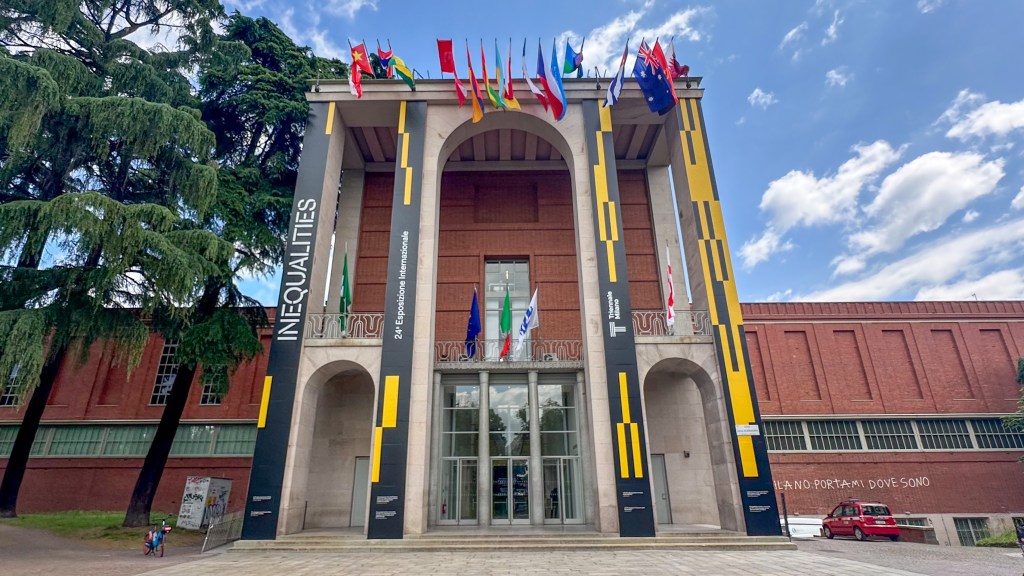
The first floor of the historic Palazzo dell’Arte is dedicated to exhibitions on geopolitics, while the upper level hosts reflections on biopolitics. In total, there are 8 main exhibitions and several installations, plus 20 international participants. What stands out as you walk through the rooms of the building is the presence of large panels showing key data points, a curatorial choice that helps visitors deeply understand each step of the narrative. The data visualization and overall visual identity of the international exhibition were developed by Pentagram in collaboration with Giorgia Lupi. This choice underlines the emphasis of facts and data in the Triennale’s intentions.
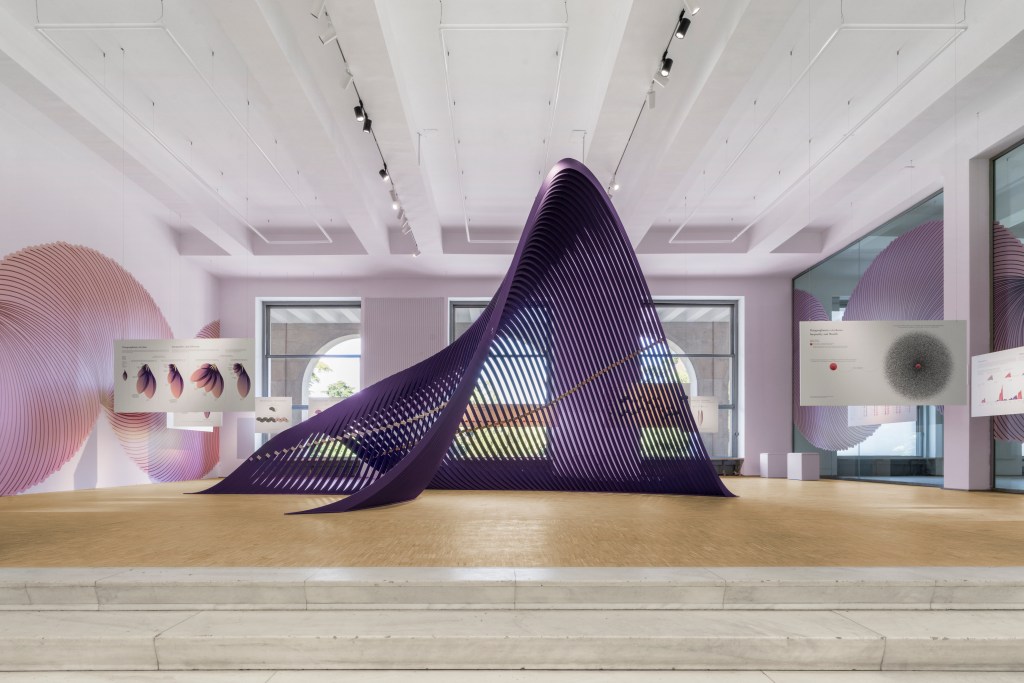
Among this sea of numbers, we learn that a quarter of the world’s urban population lacks access to clean water, electricity, and sanitation. Six million people live in refugee camps and remain there for an average of 10 years. 10% of the global population holds over half of the world’s wealth. 87% of people forced to migrate live in low- or middle-income countries. 24% of the world’s urban population lives in slums, favelas or informal settlements. By 2050, 70% of the global population will live in cities. In the last decade, the wealth of the world’s five richest billionaires has more than doubled, while that of the poorest 60% has stayed the same. And worldwide, only 27% of parliamentary seats are held by women. How can design be used to address all of this?

“Inequalities talks about cities and spaces,” says Stefano Boeri, President of Triennale Milano and Commissioner General for the 24th Triennale Milano International Exhibition, “but also about bodies and lives, showing how immense riches today lie in the hands of a few, while being born poor is an irreversible condition for millions. Inequalities shape our health and life expectations, and fuel ghettos and wars — the most brutal outcomes of injustice. Yet the exhibition also presents good ideas, careful policies, and projects that can transform inequalities into fertile differences, into shared qualities that allow us, though different, to enrich one another. With Inequalities, Triennale Milano does not pretend to exhaust the theme, but to suggest reflections and propose solutions.”
Some projects focus on these inequalities, such as the exhibition “Cities,” curated by Nina Bassoli. Cities are places with many possibilities, where, at least in theory, tensions and imbalances can be resolved. Today, however, contrasts are becoming increasingly stark. The exhibition seeks to offer solutions through urban planning and architecture to restore balance and address inequality. Particularly striking are the sections dedicated to the 2017 Grenfell Tower fire in London and the consequences of the long-standing Israel-Palestine conflict, told through the perspective of filmmaker Amos Gitai.
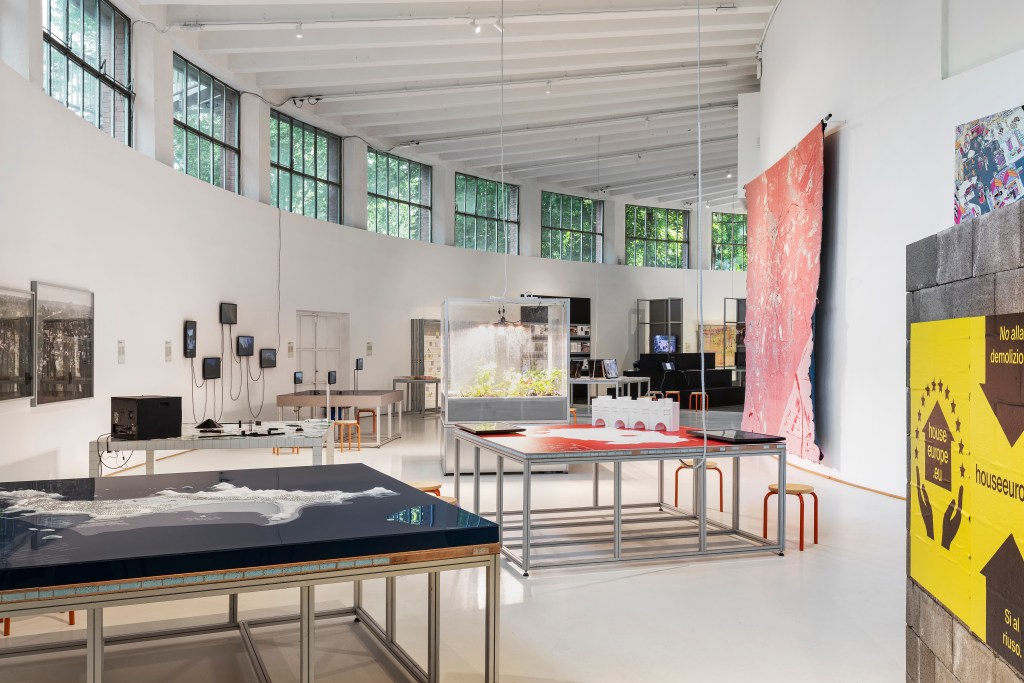
At Inequalities, we discover that differences are not just political and social, but biological as well. Again, the numbers speak for themselves. Contemporary urban populations have 50% less bacterial diversity compared to their ancestors. Half of the world’s population is exposed to extreme climate conditions. In 2020, the weight of human-made objects surpassed that of all living organisms combined. In Italy, 7.6% of the population is unable to access healthcare due to financial difficulties. From this data, it’s easy to understand that our life also depends on the actions of humans concerning nature.

The exhibition “We the Bacteria. Notes Towards Biotic Architecture,” curated by Beatriz Colomina and Mark Wigley, explores this dimension. For centuries, we’ve tried to eliminate bacteria using disinfectants and detergents. But today we know they are essential and can even be our allies. Bacteria can be used to create new materials, but also to preserve the past, as shown in the exhibition through a decorative fragment from the Duomo of Milan, where bacteria are used in restoration.
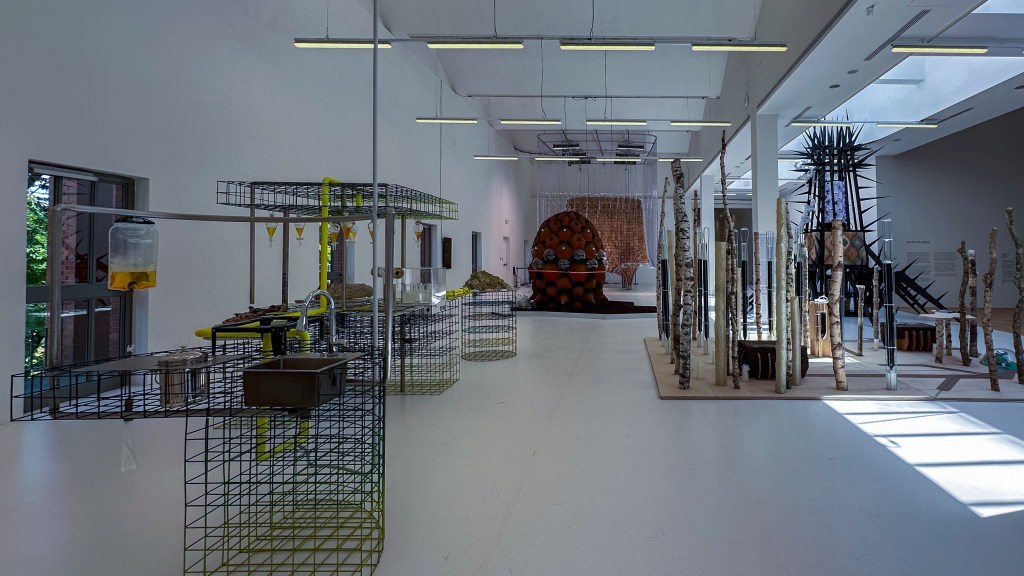
“The Republic of Longevity,” curated by Nic Palmarini with Marco Sammicheli, is both thought-provoking and playful. It mixes art and design in a highly creative, almost surreal way. The narrative imagines a future republic with ministries such as Purpose, Sleep, Democracy, Physical Freedom and ending with the Ministry of Togetherness. Here we learn key insights, such as how relationships can extend life, and that the countries with the highest levels of happiness aren’t necessarily the richest.
The Inequalities, the 24th Triennale Milano International Exhibition is open until 9 November, 2025, with free admission throughout August.





What are your thoughts?