The Power of Fragments at Lake Como Design Festival 2025
From ruins to reassembly, designers across the globe reinterpret broken pieces as symbols of memory, justice and hope

In a world undergoing rapid change, where conflict and division cut through society and culture, the fragment depicts the mood of many. At the same time, the fragment offers a starting point for rebuilding according to new logic. From this reflection begins the Lake Como Design Festival, where Fragments has been chosen as the theme of the 2025 edition.
The idea originates with creative director Lorenzo Butti and unfolds across dozens of exhibitions and installations throughout the city of Como. From here also departs Giovanna Massoni, curator of the Contemporary Design Selection, which gathers the work of 51 designers from around the world in the gardens and greenhouses of the splendid Villa del Grumello.

“What’s clear is that we’re all living through a global crisis,” Massoni says. “There are major wars, conflicts that go unnoticed but continue nonetheless. That makes the idea of the fragment both timely and meaningful. For me, it was about recognizing the fragment as something profoundly significant, especially today but also in the past, for thinkers like Walter Benjamin during the Second World War. A fragment not only holds the memory of the past, evidence of something destroyed, it also becomes almost a symbolic act.”
After reviewing the submissions for the exhibition, Giovanna noticed something unexpected: “Fragmentation can even be deliberate. What is broken apart and then reassembled becomes part of the creative process. This focus on breaking and recomposing is unsettling because it feels like an allegory for what we are experiencing right now.”
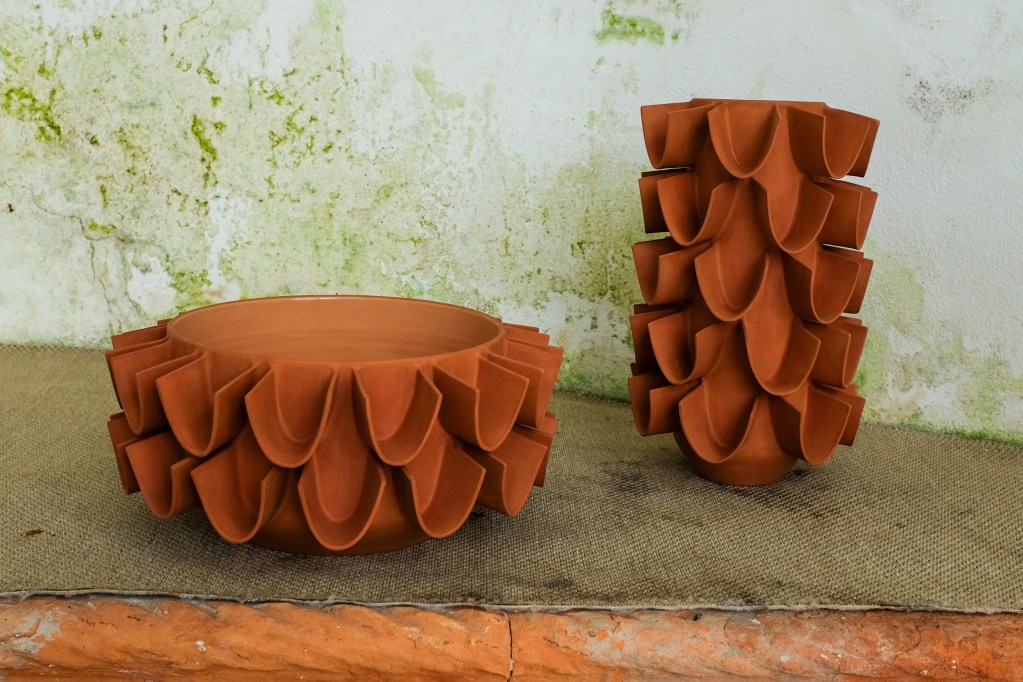
Exploring the selected projects reveals very different ways of addressing the theme. Naessi Studio drew inspiration from the fragments of Rome, in particular Monte dei Cocci, a landfill of discarded amphorae and tiles that today forms an entire hill. The Testae vase tells the story of the Eternal City beginning with its remains, reassembled to create something new.
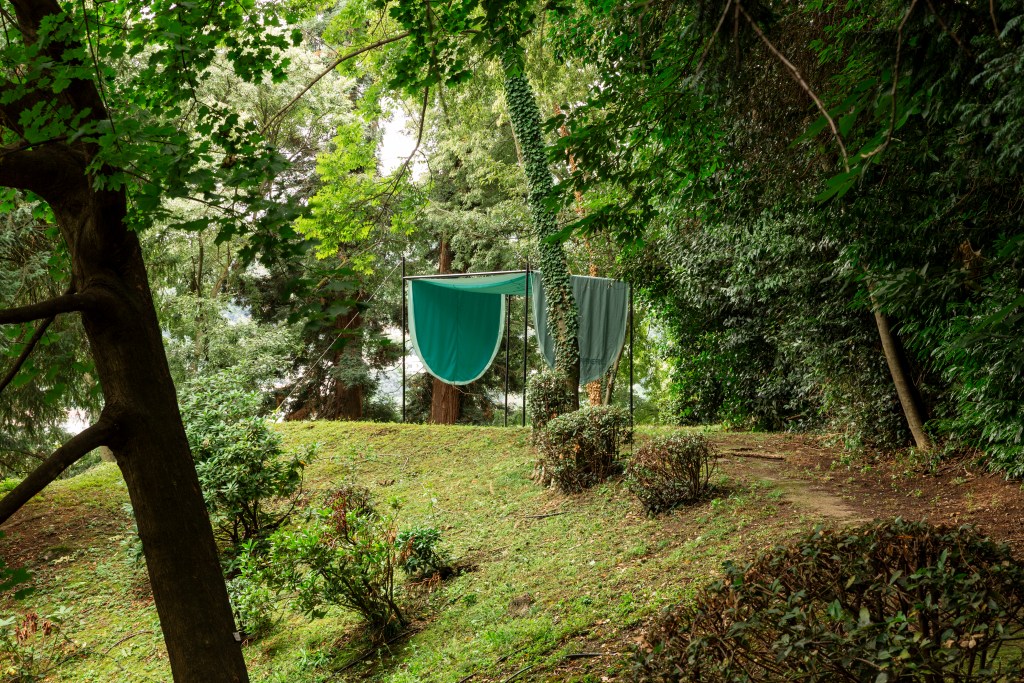
Through design and performance, the project We Mediterranean seeks to build a bridge between Mediterranean cultures that are drifting further apart. In Como, they present a tent developed with Caterina Frongia, a symbol of unity that hosts performances by Giuditta Vettese and Maddalena Iodice, directed by Carolina Merlo.
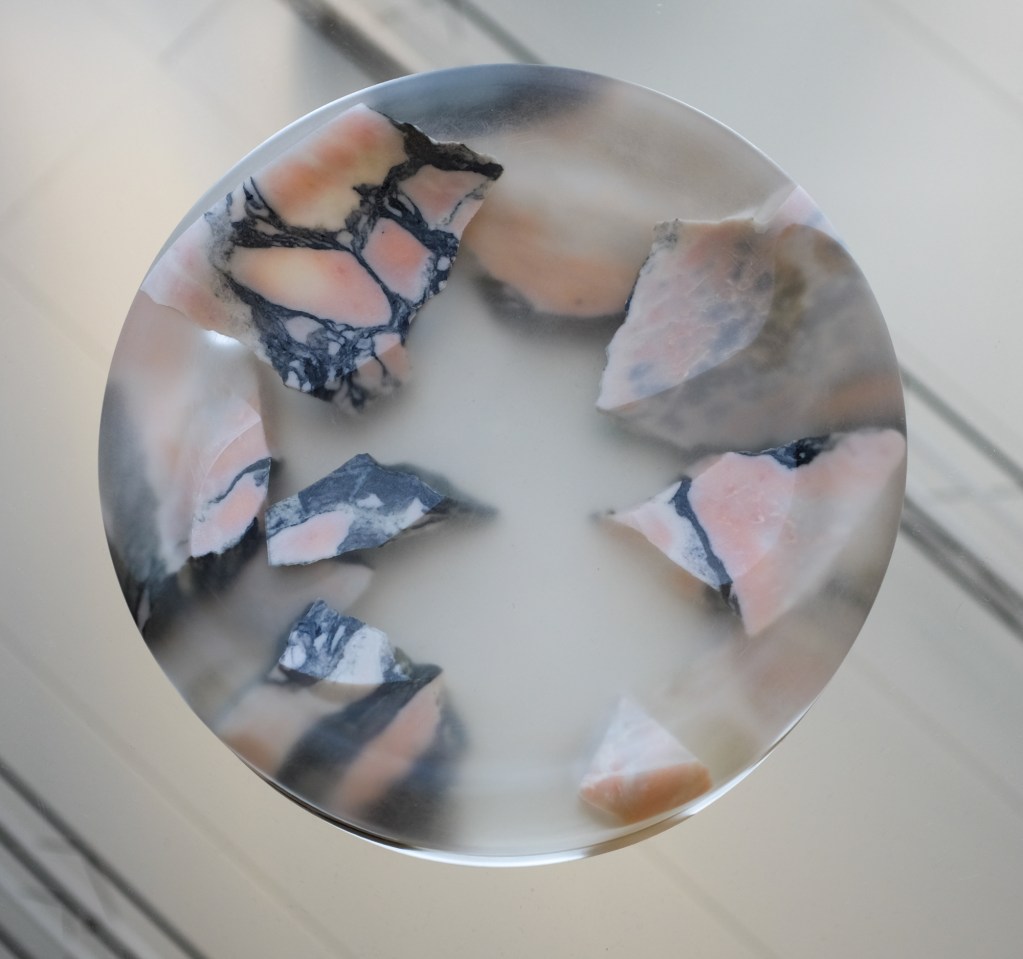
Many designers reflect on materials, such as Studio Högl Borowski from Vienna. The Nougat bench begins with pieces of found wood, assembled with resin and cut into sculptural forms. Remains by Omniaworks x Payam Askari follows a similar approach, this time using marble fragments, carefully arranged and set in transparent resin.
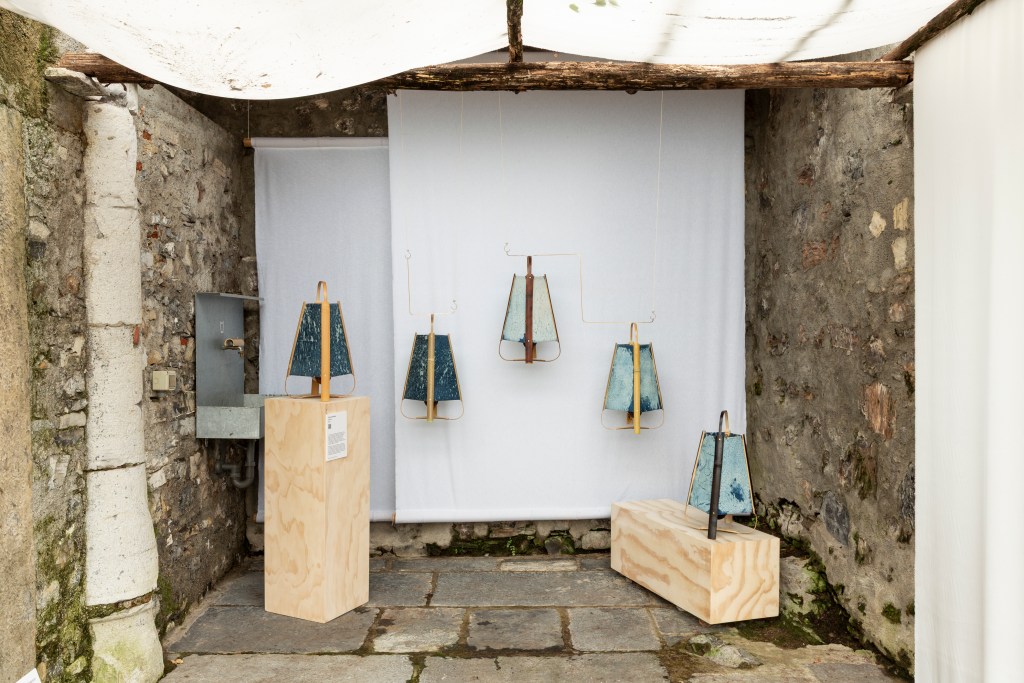
The Stardust lamps by French designer Tobie Chevallier draw inspiration from the genealogy of matter. Studies show that the atoms forming our creations come from distant planets. His wireless lamps are therefore “fragments of light” made from faraway materials, including bamboo, cyanotype-dyed batik lampshades and batteries upcycled from exhausted energy storage devices.
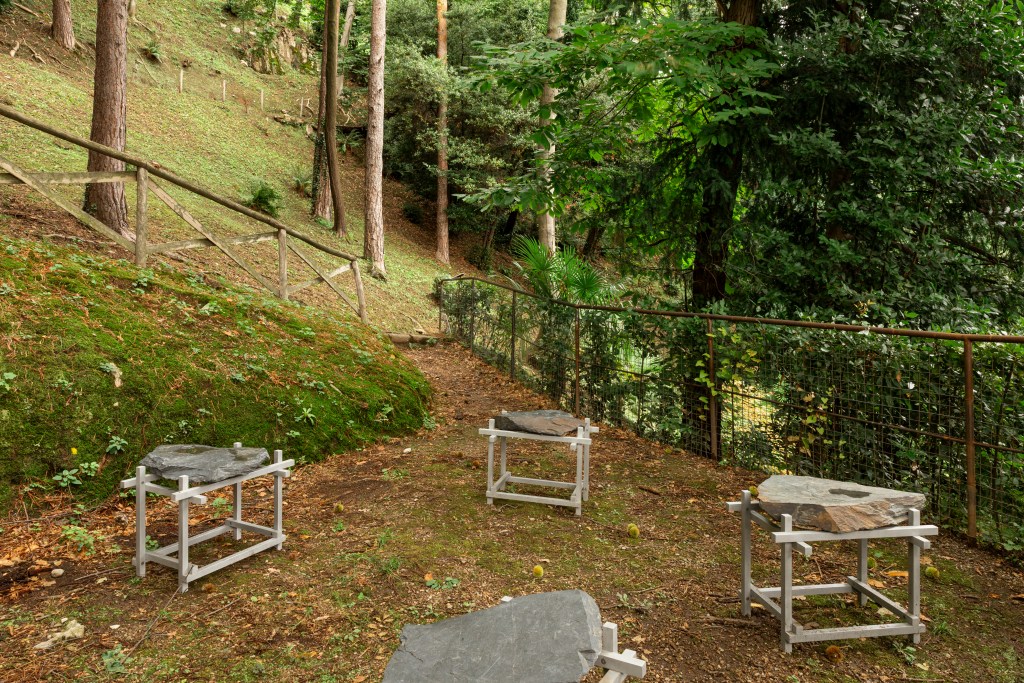
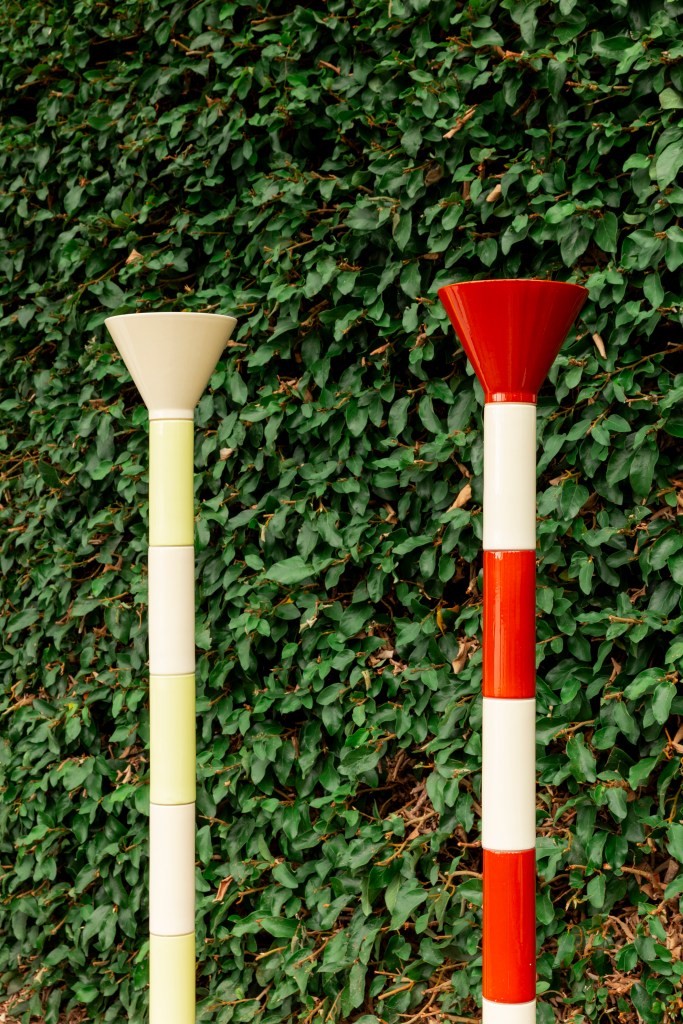
Contemplation Bench by Verstrepen.studio places a rough slab of schist stone over a precise aluminum frame, two distant aesthetics brought together in a new dialogue of fragments. A more harmonious pairing emerges in Adélie Ducasse’s Ceramic Totem, a stack of colorful ceramic pieces that forms a sculptural lamp.
In her introduction to the Contemporary Design Selection, Giovanna Massoni recalls Walter Benjamin’s idea of the fragment as “the result of violence.” Alongside him she cites Aldo Rossi, the focus of a surprising retrospective in Como, who described the fragment as “an act of hope.” Do these represent opposing views?
“For Benjamin,” Massoni emphasizes, “a fragment is indeed born of violence, but through attention, recovery and recomposition it also becomes an act of justice. So Benjamin’s ‘act of justice’ and Rossi’s ‘act of hope’ reinforce one another, even if they carry different emotional tones. There is no opposition between them: both allow fragments to coexist. Fragments of lives, of experiences, of stories that were ignored and therefore destroyed.”
Lake Como Design Festival runs until Sunday, 21 September. The rich program spans archive explorations, visits to architectural masterpieces and a series of talks on design and architecture. The full list of events and openings is available on the official website.





What are your thoughts?