A$AP Rocky on Innovation, Archive and His PUMA Era
The designer’s AWGE Fall/Winter 2026 runway show, featuring pieces from his evolving PUMA partnership, highlights racing-inspired looks, tailoring and an innovative twist on heritage silhouettes
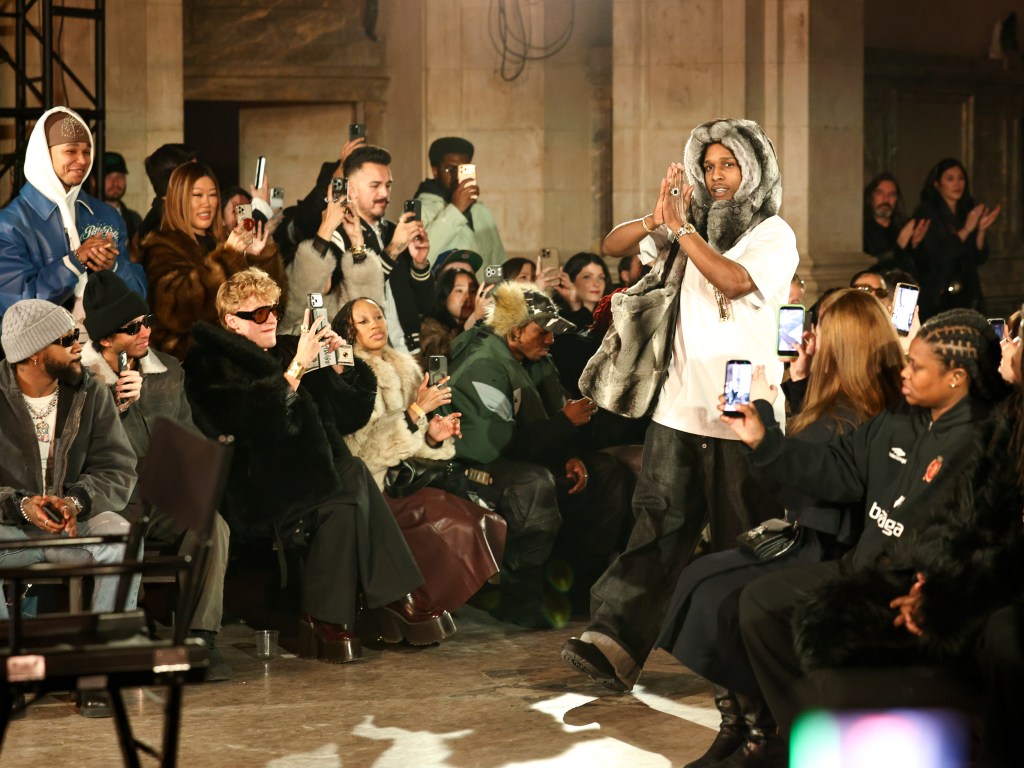
“My design mindset was just kind of like, take nuances from my current swag and what I like in my taste,” A$AP Rocky tells us, standing inside a steel vault in Manhattan’s Financial District. “And also just break the fourth wall as far as showing people the process, how things started, how things go.”
The philosophy was not abstract. It structured the entire AWGE Fall Winter 2026 runway show and framed his evolving partnership with PUMA as something more deliberate than a standard collaboration.
“I think everything I do with PUMA is always just outside the box,” Rocky said. “It’s always different. We just plan to carry on tradition in that way. I want to do things that feel like obscure designs or innovative thoughts manifested into product.”
The setting amplified the message. A former bank, with marble floors and institutional scale, became the stage. Instead of hiding the mechanics of fashion, AWGE exposed them. Models paused at working glam stations. Hair was adjusted under hard lighting. Makeup happened in motion. A live feed projected the backstage lineup onto the main floor. Process replaced polish.
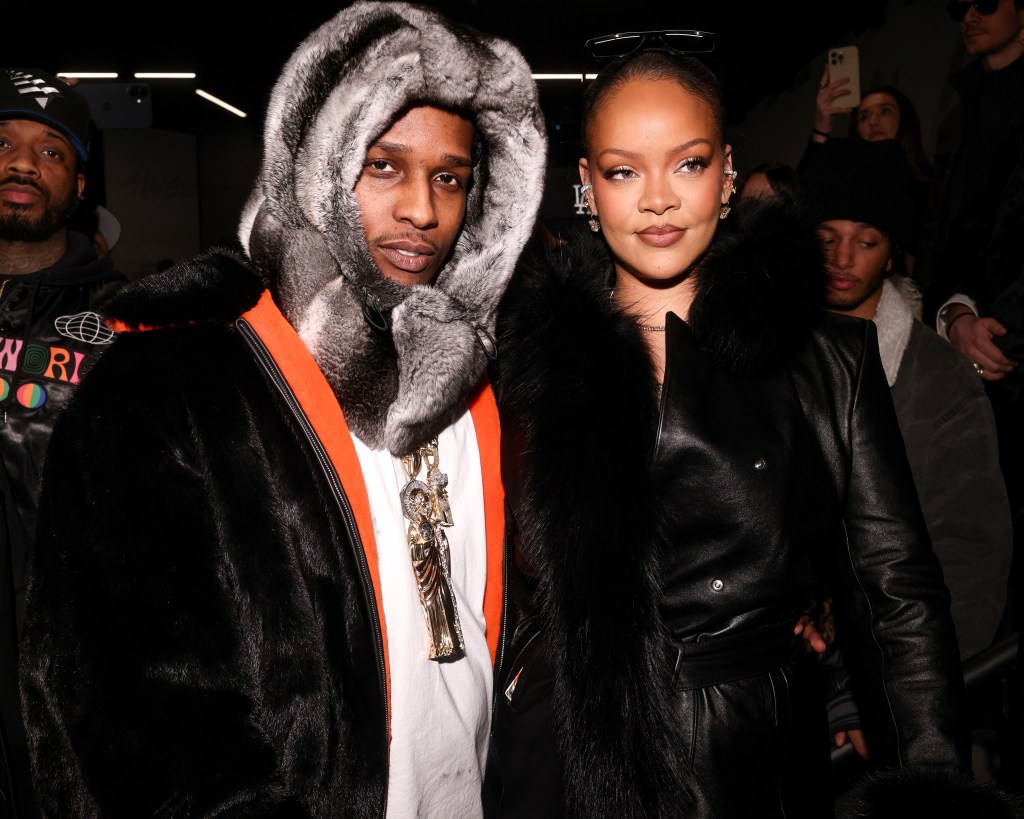
For Rocky, that exposure mirrored how he approaches heritage.
“The beauty about PUMA is just its heritage,” he said. “You get to go into archives, you get to get inspired by the past, you get to make revisions based off the past. When you’re dealing with something with heritage, it makes it easier to decipher how to design things or release things.”
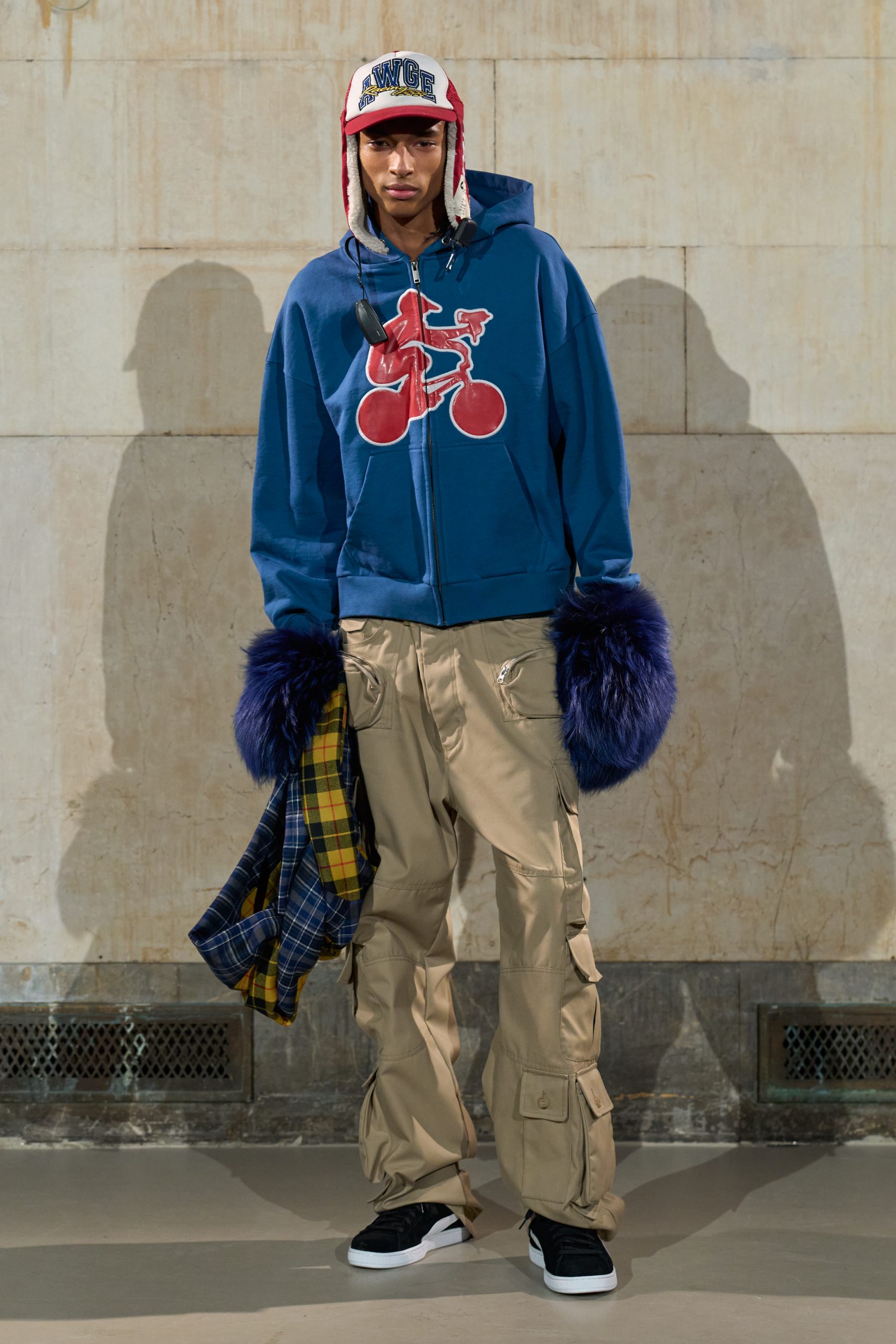
Photo by Filippo Fior / Gorunway.com 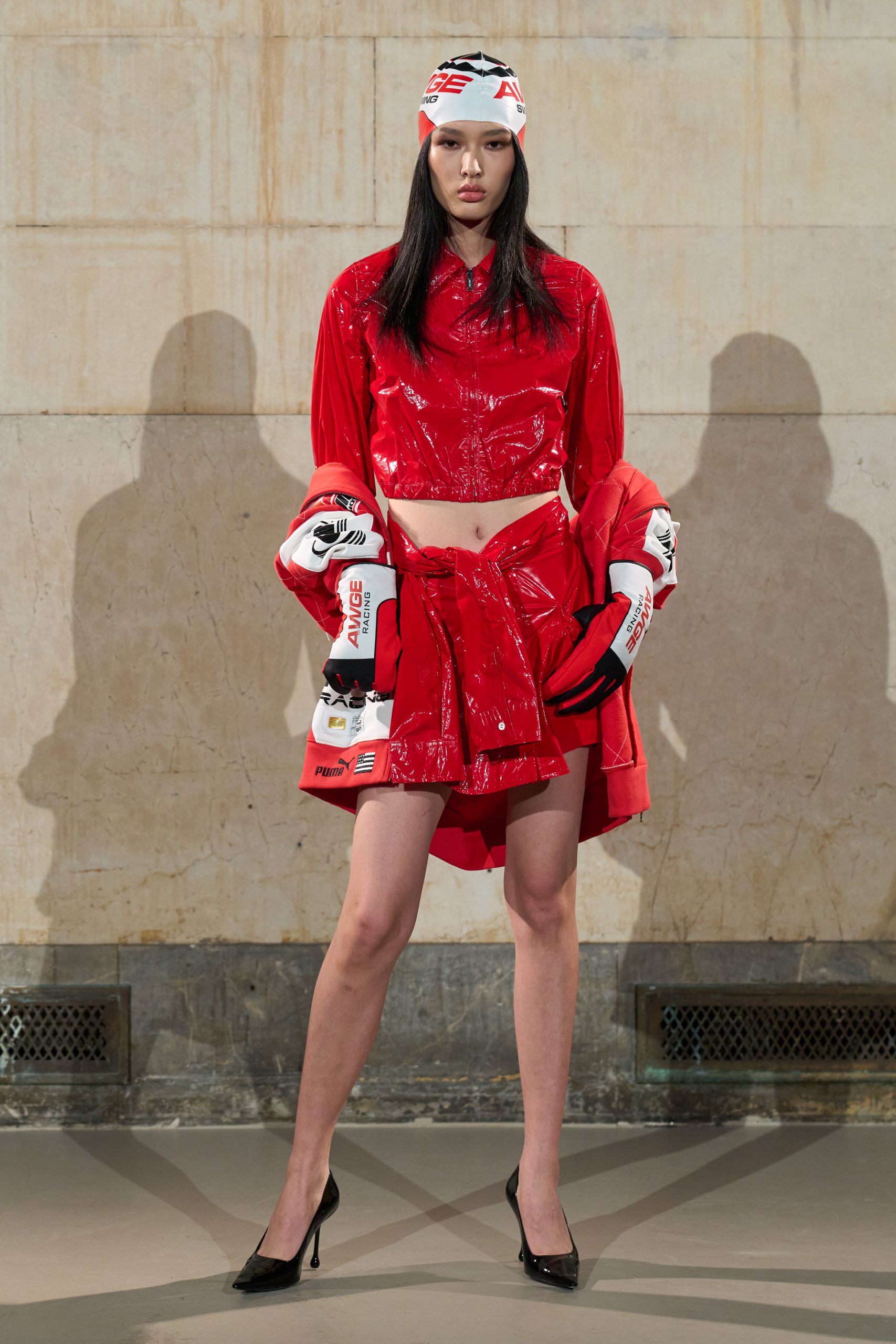
Photo by Filippo Fior / Gorunway.com 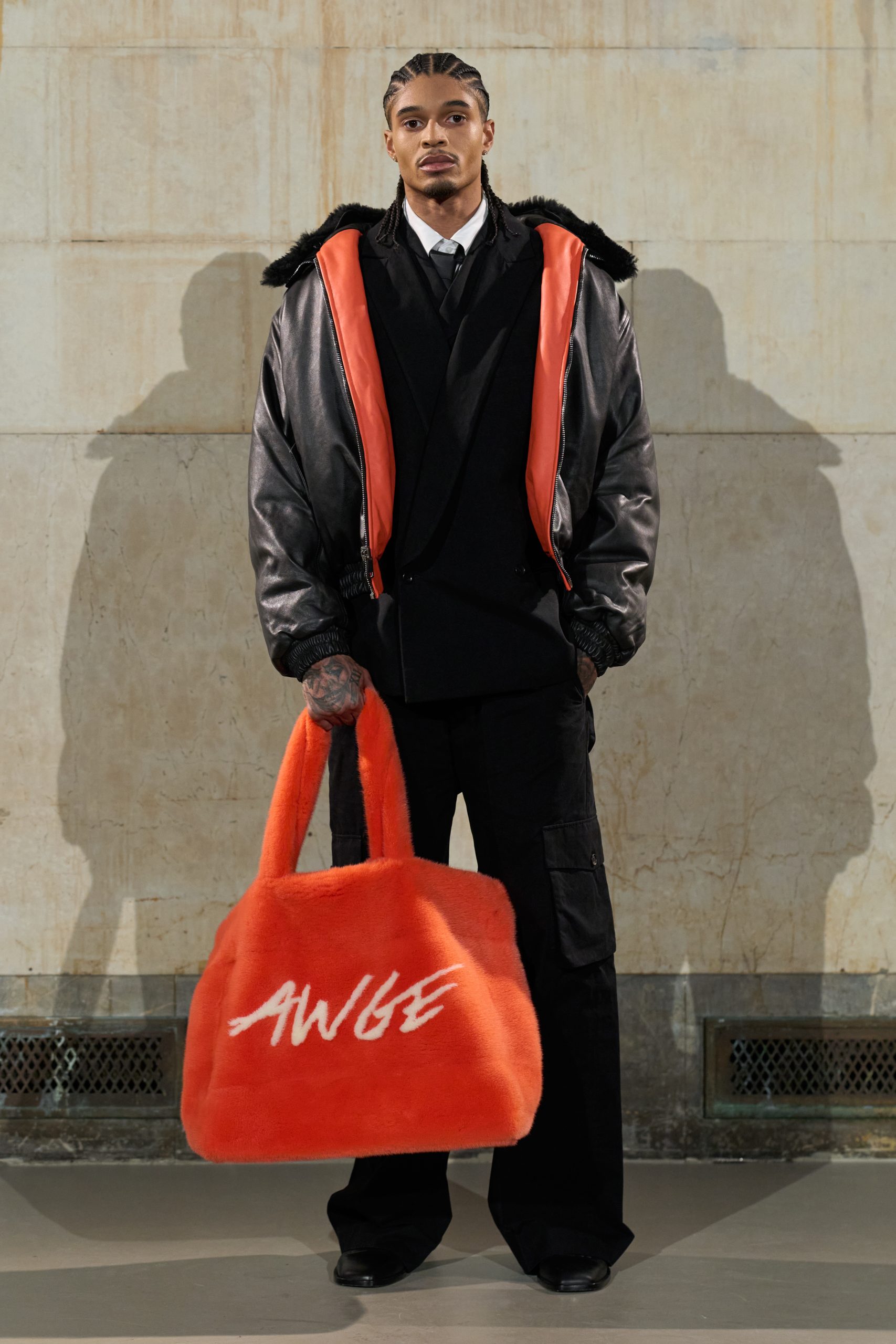
Photo by Filippo Fior / Gorunway.com 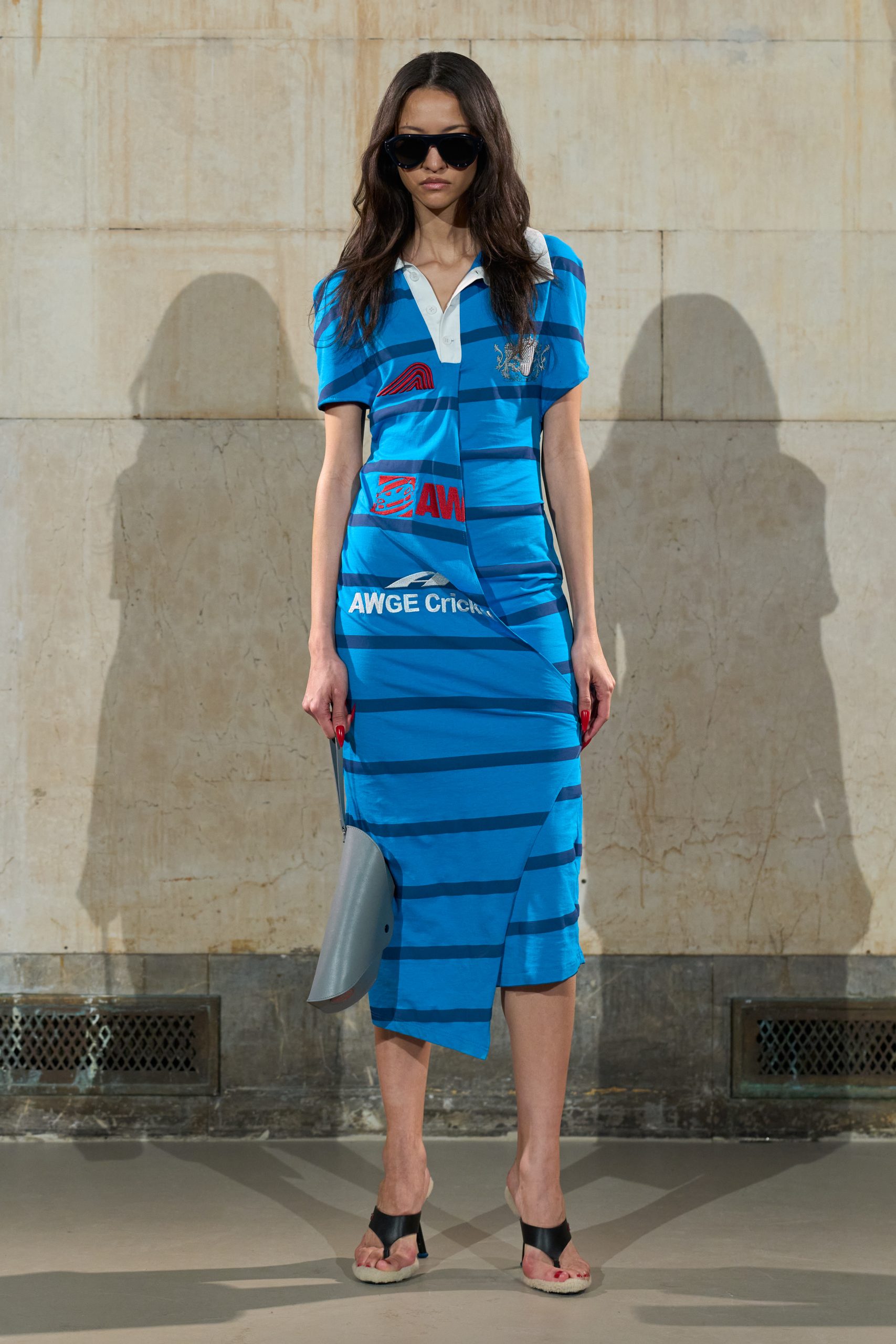
Photo by Filippo Fior / Gorunway.com 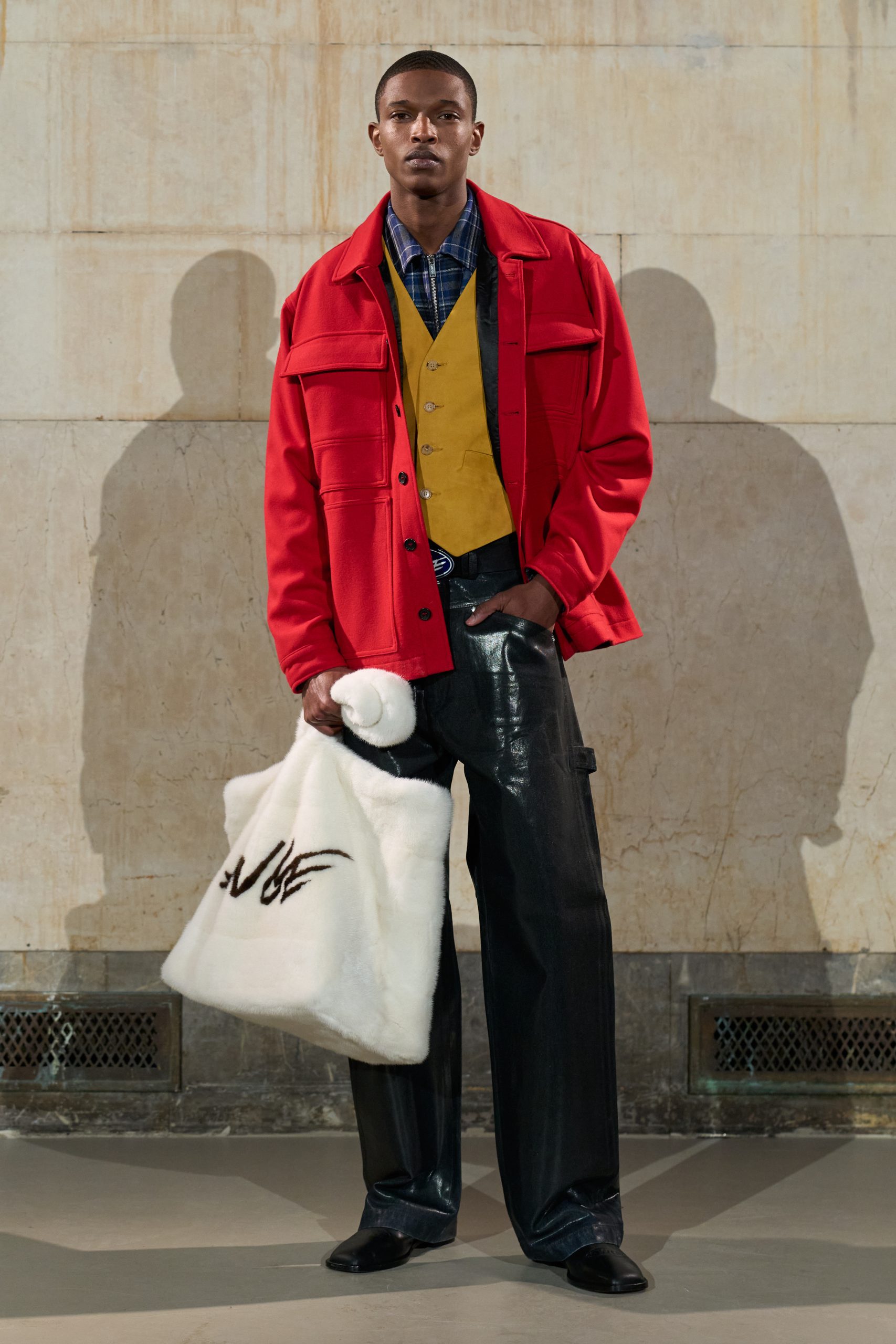
Photo by Filippo Fior / Gorunway.com 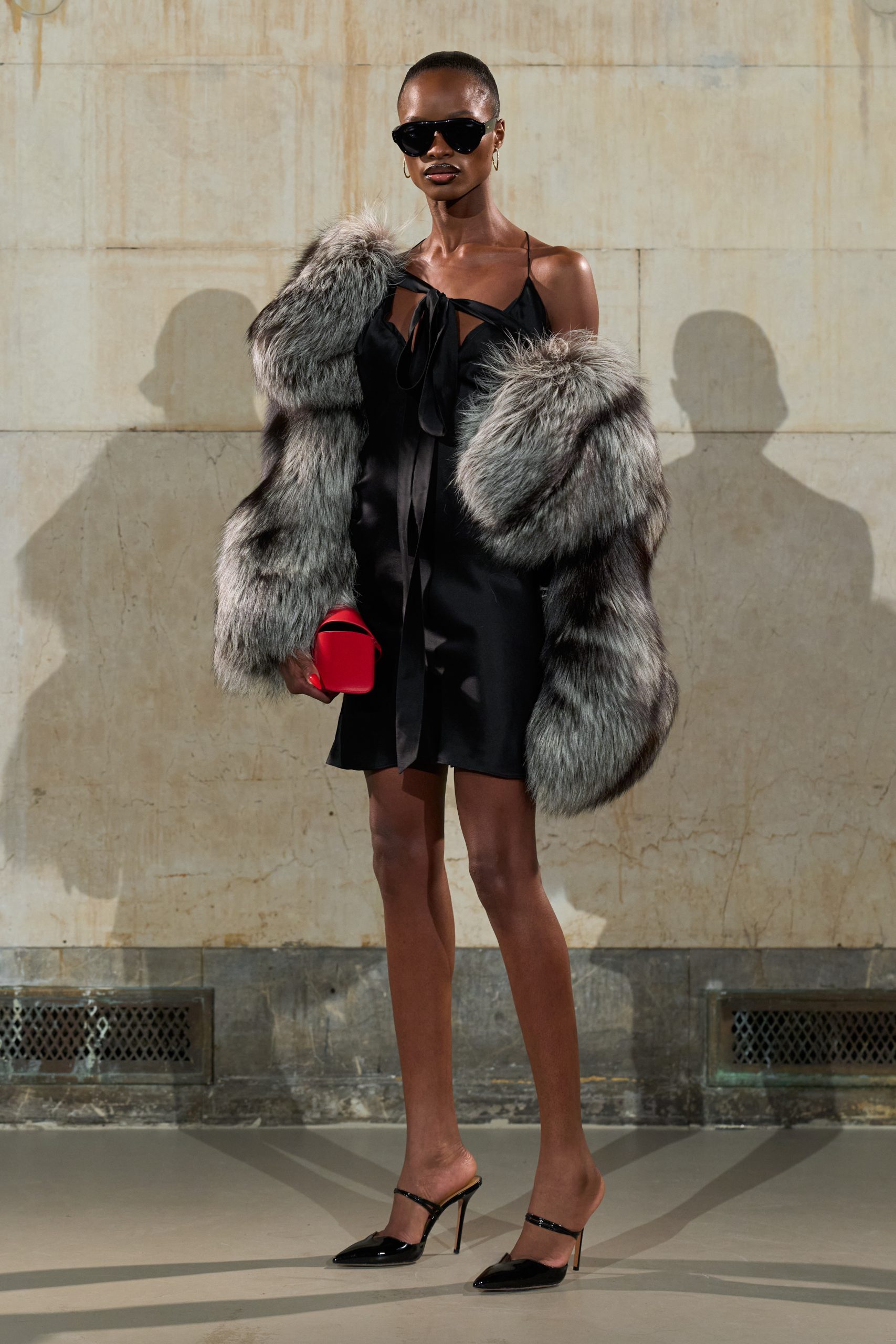
Photo by Filippo Fior / Gorunway.com 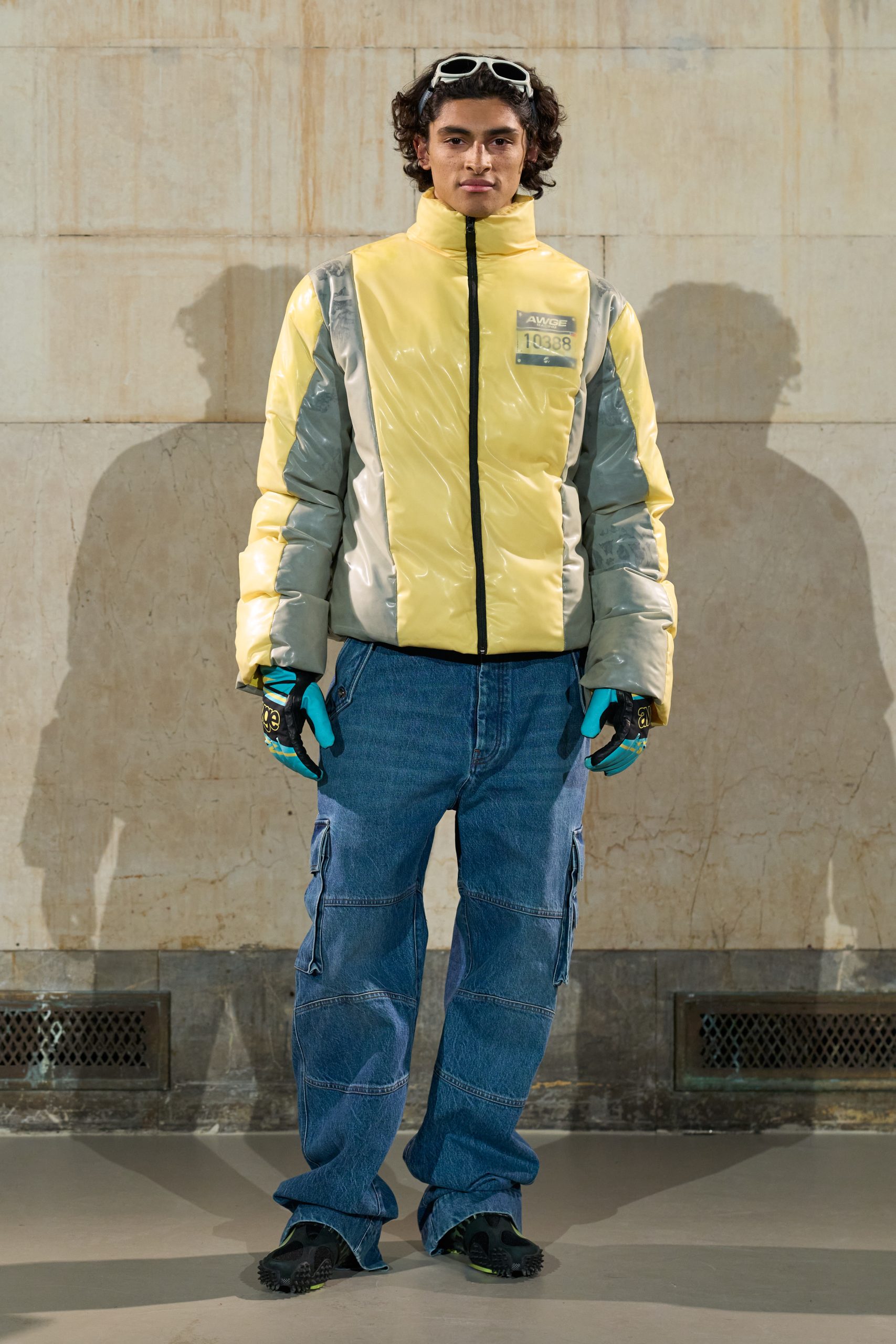
Photo by Filippo Fior / Gorunway.com 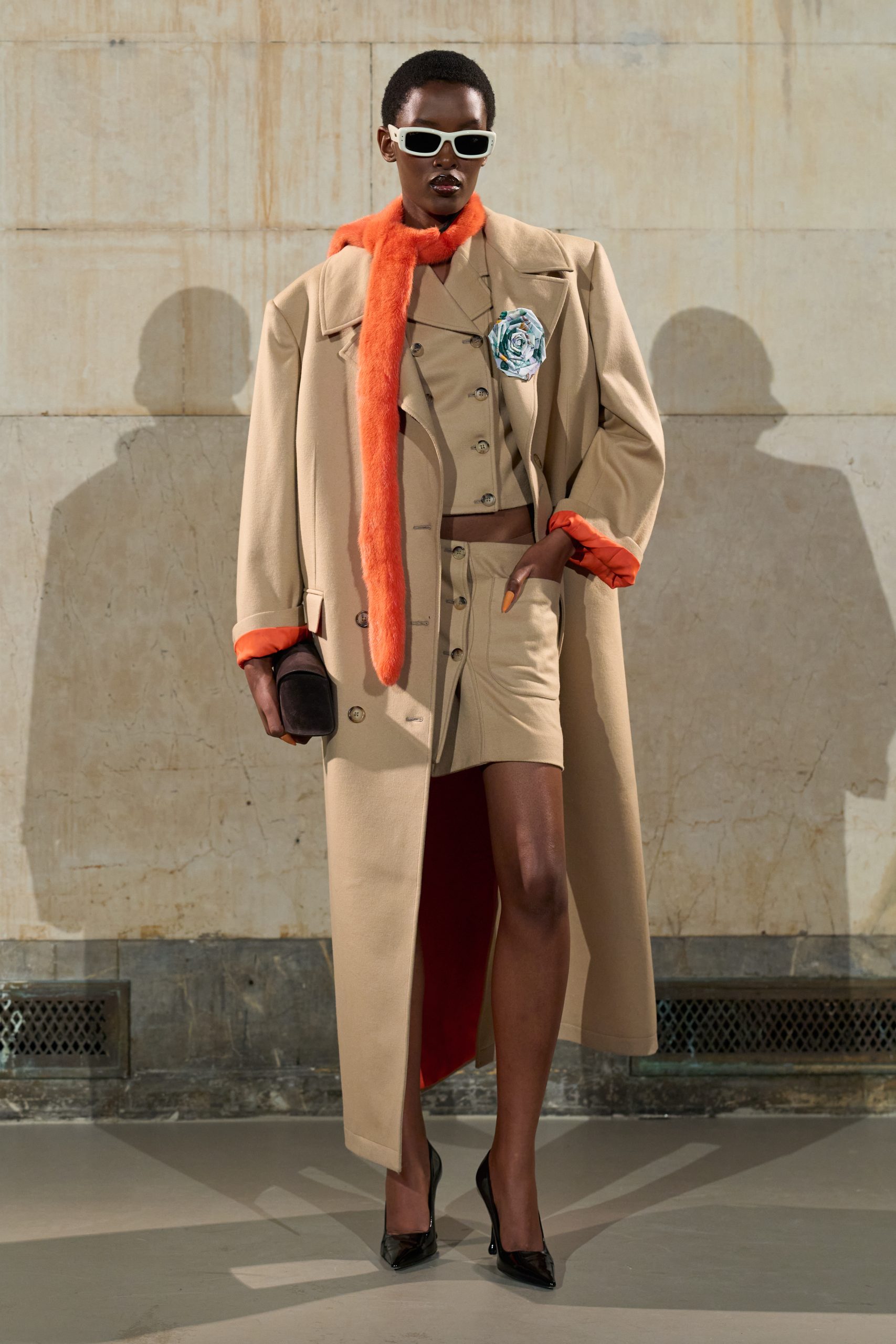
Photo by Filippo Fior / Gorunway.com 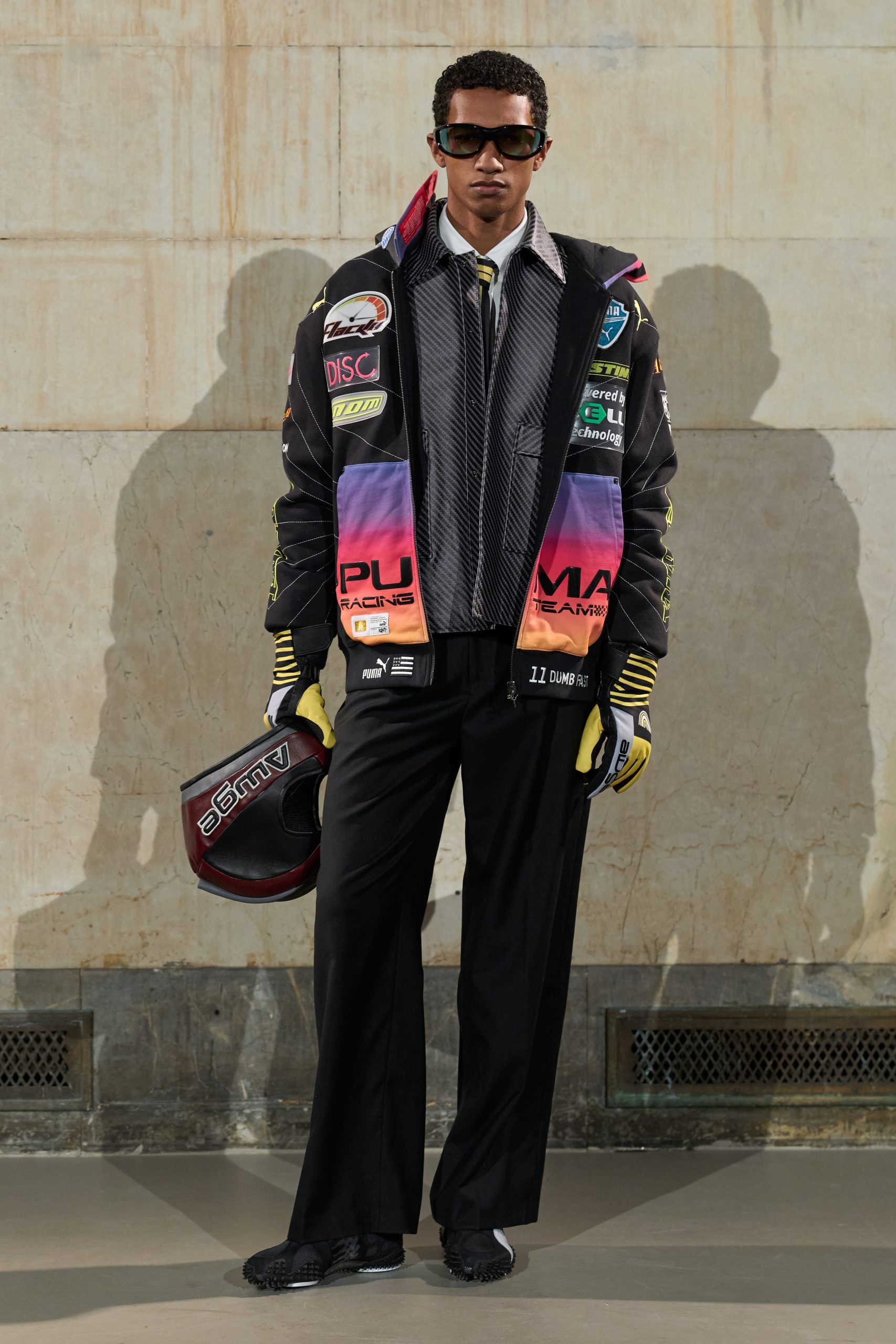
Photo by Filippo Fior / Gorunway.com
Archive is not nostalgia. It is infrastructure.
On the runway, that translated into the Mostro Lenticular, the runway-exclusive Mostro 3.D Mule and the A$AP Rocky x PUMA Straycat slated for release this fall. The silhouettes felt embedded inside AWGE’s motorsport references rather than appended to them.
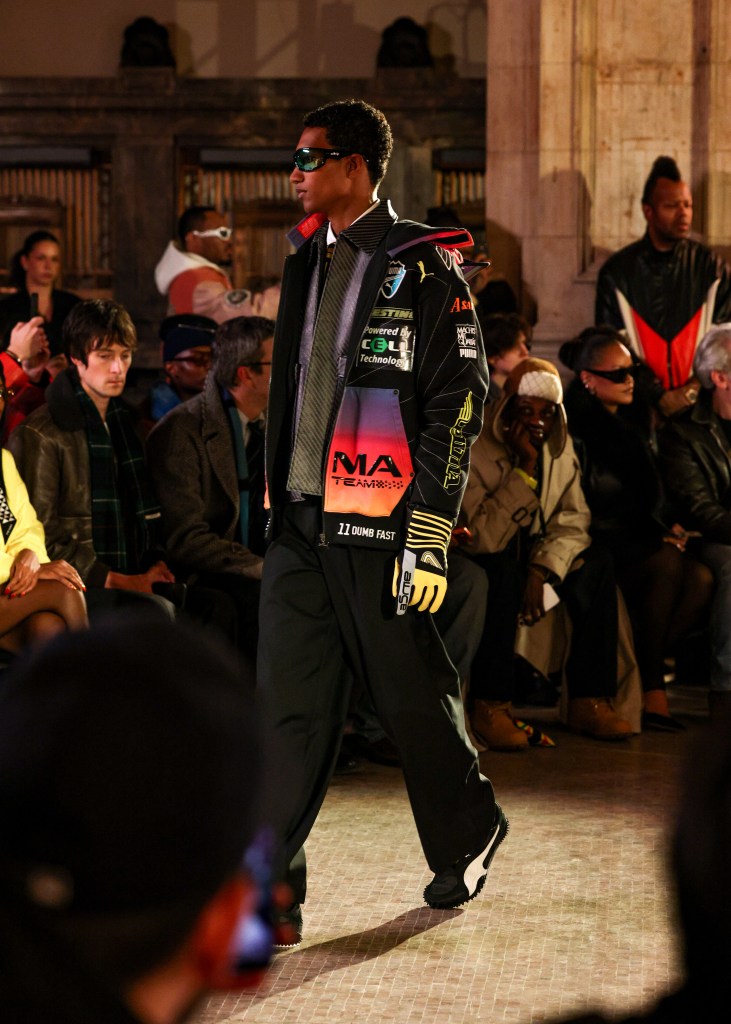
When asked what makes the Rocky Suede silhouette distinct, he pointed directly to lineage. “What makes the Rocky Suede so special is that it borrowed parts from most of the vintage skinny shoes,” he said. “What we wanted to do is kind of give it a subversive take on it. Take traditional classic energy and vest it with throwback kind of energy. Going back to the old to kind of look at the new. That’s what we came up with. Very classic, simple, but made for racing.”
The Mostro 3.D Mule leaned into practicality. “The Mostro 3.D is sick and I thought that they was so convenient to get into,” he said. “That’s why we wanted to make a mule version just so you could just slip right onto the shoe and walk. Way easier.”
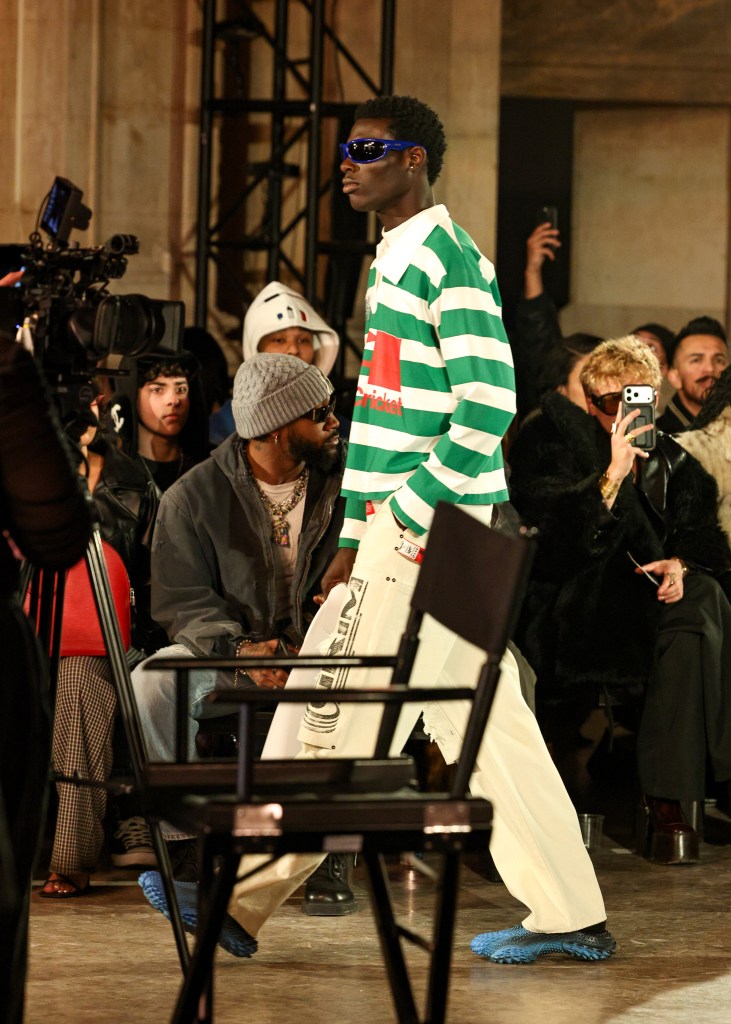
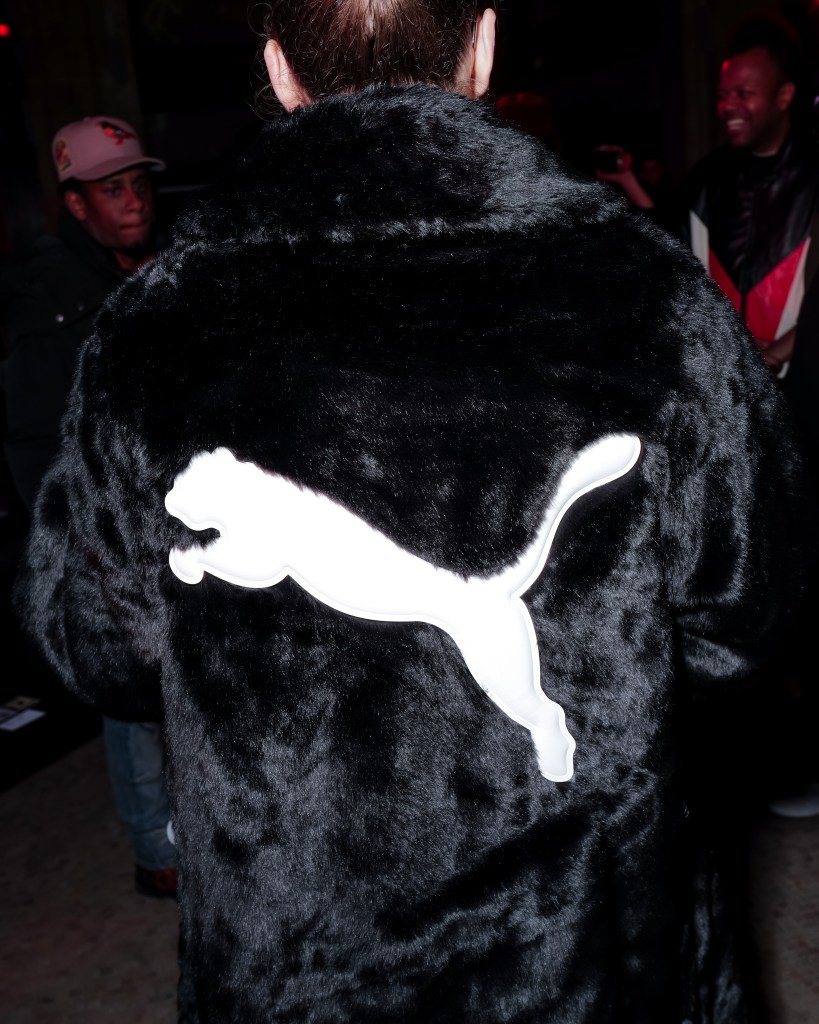
Even his favorite piece spoke to that racing through line. “My favorite PUMA piece was the hoodie that was like a racing animal,” he said. “I love that one the most. My heart.” The prowling cat graphic stretched across the chest, less logo placement than kinetic emblem.
As to maintaining the mystique AWGE is known for its whole partnering with a global sportswear house, he distilled it bluntly. “AWGE defines mystique.”
The phrasing was instinctive but revealing. In his framework, mystique is not about opacity. It is about lineage. It is about understanding the codes of the past deeply enough to reinterpret them without flattening them.
That thinking also shapes how he situates this partnership in his broader trajectory. “I think that this PUMA partnership is just like a significant pivotal part of my career,” he said. “Especially when it comes to innovation and design. Stuff that we put out in the recent years has been so remarkably new and like a fresh breath, fresh air. And we challenged the thought of the norm.”
Challenge, in this case, applies to format as much as product.
The decision to stage the show in a bank vault was not subtle. If fashion operates as currency, the vault is where value is stored and protected. By hosting interviews there and projecting backstage labor onto the runway, AWGE reframed what holds value. Not illusion, but process.
Throughout the conversation, Rocky returned to authorship. He does not treat scale as dilution. “I’m pretty involved,” he said when asked about his role in shaping the designs. “I would say around the board.”
That breadth is visible in the cohesion. The footwear, accessories and apparel did not compete for attention. They operated inside a single system of references. Racing cues filtered through tailoring. Industrial humor surfaced in the Oil Can Bag. Archive silhouettes were revised without being replicated.
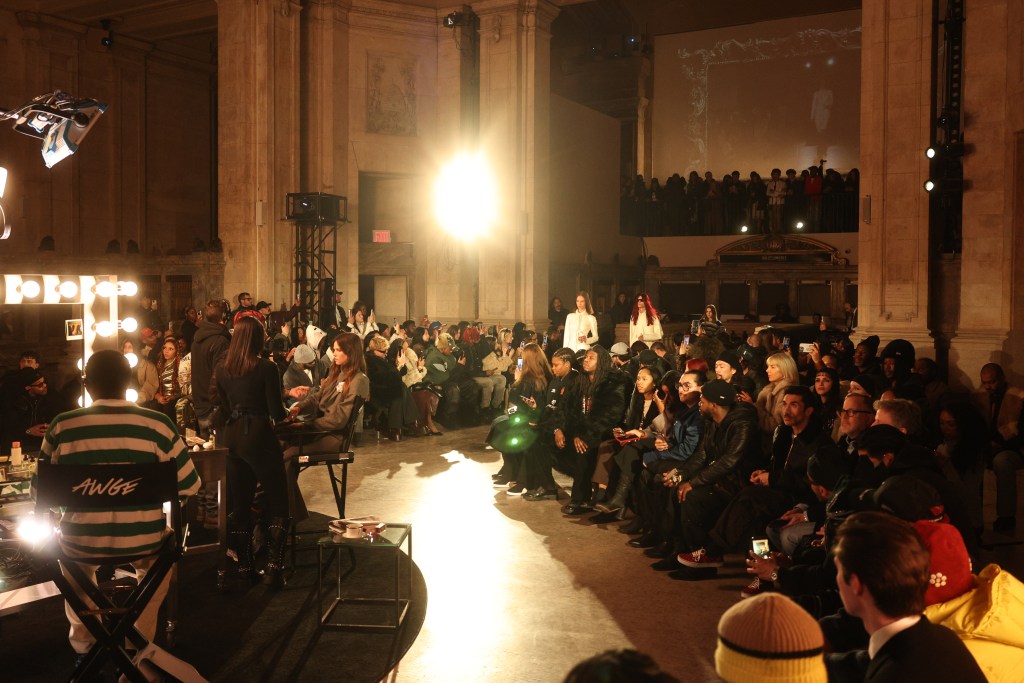
Breaking the fourth wall became both staging device and metaphor. Instead of presenting a sealed narrative, AWGE opened it up. Stylists, artists and models became part of the visual hierarchy. The audience saw the seams.
“My design mindset was just kind of like take nuances from my current swag,” he repeated, grounding the show in personal taste rather than abstract trend forecasting.
As for what comes next, he remained intentionally opaque. “You gotta stay around, you gotta see, man. I got a bunch of shit about to come out.”
The evasiveness feels strategic. Momentum is part of the architecture.
Inside a steel vault in the Financial District, under fluorescent light and institutional ceilings, Rocky articulated a simple thesis. Go back to move forward. Break the fourth wall. Let heritage do the talking.
And in that system, PUMA is not just a partner. It is a language being rewritten in real time.
What are your thoughts?