Iranian Dutch singer-songwriter Sevdaliza announced her upcoming Raving Dahlia EP (out 25 February) with “The Great Hope Design,” an ominous and bewitching track she wrote and produced with Mucky (aka Reynard Bargmann). …
With 250+ parts, this robot kit (intended for children age 10 and over) is perfect for aspiring engineers and DIY enthusiasts. Kids will learn spatial reasoning and engineering knowhow while building their …
Last week at the University of Oxford’s Ashmolean Museum, Aidan Miller unveiled the world’s first highly-realistic humanoid robot artist, Ai-Da, who wrote poetry inspired by Dante’s Divine Comedy. Using algorithms programmed with …
An “iridescent purple nipple the size of a steering wheel” could be the answer to one of biotech’s trickiest problems: creating a device that successfully detects and recognizes odors. Koniku, founded and …
The United Nations has declared that 2021-2030 will be known as the Ocean Decade (aka the Decade of Ocean Science for Sustainable Development). This comes with the approval of several initiatives aimed …
Wheels may be a more stable means to roam around the challenging terrain of Mars, but they limit where robots can go. In fact, to date, all of the robots scouring the …
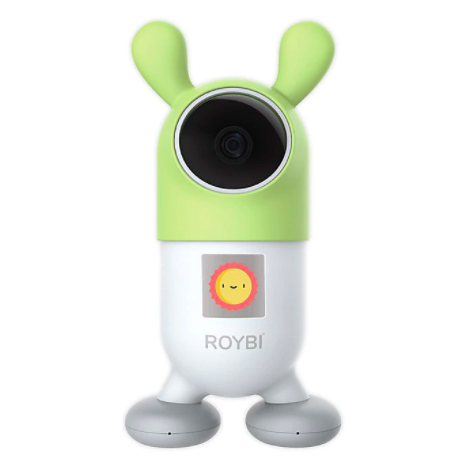
A sophisticated educational tool in the form of a charming little robot, ROYBI comes with 500 free daily lessons as well as 40 stories and songs. ROYBI encourages children (from pre-school age …
Israeli designer Ofri Lifshitz’s “Industrial One Of” addresses our fear of automation overtaking craft. Lifshitz created a machine-run reproduction of a ceramic jigger that can produce impressive plates and bowls—complete with unique …
“These are entirely new lifeforms. They have never before existed on Earth,” Michael Levin, the director of the Allen Discovery Center at Tufts University in Medford, Massachusetts, tells The Guardian. “They are …