Balich Wonder Studio Reinvents the Classical Music Performance
Marco Balich and his team produced an immersive orchestral experience at Arena di Verona, bridging the worlds of tech-driven creative visuals with centuries-old musical compositions
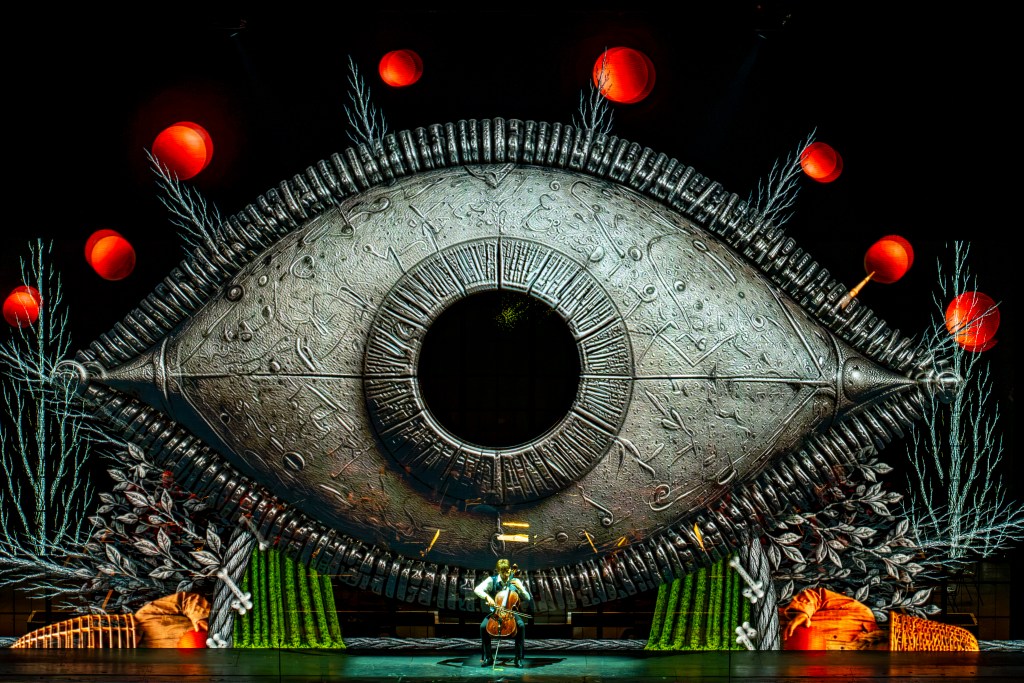
At the Arena di Verona in Italy, the experience of classical music is getting a distinctly contemporary treatment. In August, Balich Wonder Studio and the Arena di Verona Foundation presented two immersive concerts, pairing live orchestral performance with large-scale projections and three-dimensional visuals. The returning Viva Vivaldi was joined by the world premiere of Paganini Paradise, a new tribute to the radical virtuosity and imagination of Niccolò Paganini.
Marco Balich informally hosted a relaxed aperitivo gathering before the premiere of Paganini Paradise. He sat with guests and friends at a café in Piazza Bra, a grand yet unpretentious square with the easy, authentic, lived-in charm of la dolce vita. There, Balich told COOL HUNTING that the core idea behind these shows is to attract younger and new audiences. The live music business keeps growing overall, but orchestras around the world continue to lose older patrons faster than they gain younger regulars.
Balich shared a fun anecdote about his connection to the Arena di Verona and its audience, which dates back to the beginning of his career. The magnificent Roman amphitheater hosts major productions and international artists; Sting has said that it is his favorite venue in the world. Balich first stepped onto that stage as a young assistant production manager, with the terrifying task of telling the audience that the George Michael concert they had come to see had been cancelled because of a malfunction in its complex scenic structure. Since then, Balich has become a globally recognized creative producer behind major live spectacles, ceremonies and immersive cultural projects. His signature style blends theater, music, technology and cinematic visual storytelling. His major credits include Expo 2015’s Tree of Life, Olympic ceremonies, the Vatican Museums-linked Giudizio Universale immersive show, and projects for luxury brands like Dolce & Gabbana, Louis Vuitton, Ferrari, Max Mara and Cartier.

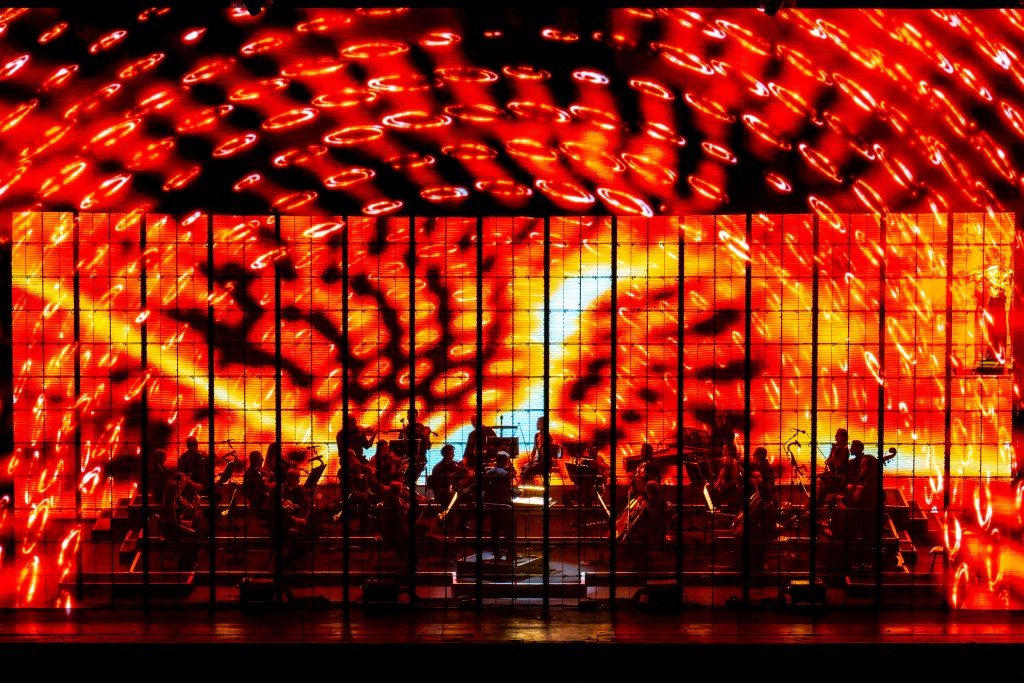
Fresh from the Milano Cortina Olympic Winter Games opening ceremony and FIFA World Cup ceremonies, he has put his energy into the second season of Viva Vivaldi: The Four Seasons Immersive Concert and a new concept: Paganini Paradise: Superlive Immersive Concert. The two shows bring projections, transparent LED screens, visual effects and three-dimensional video into the ancient amphitheater.

Viva Vivaldi returned this summer for its third consecutive season, following two sold-out editions. It places Antonio Vivaldi’s The Four Seasons at the center of an immersive production, performed by 29 musicians from the Arena di Verona Foundation Orchestra, conducted by 28-year-old violinist Giovanni Andrea Zanon. The score remains faithful to Vivaldi’s original music, while the visual work gives the concert a different kind of scale.
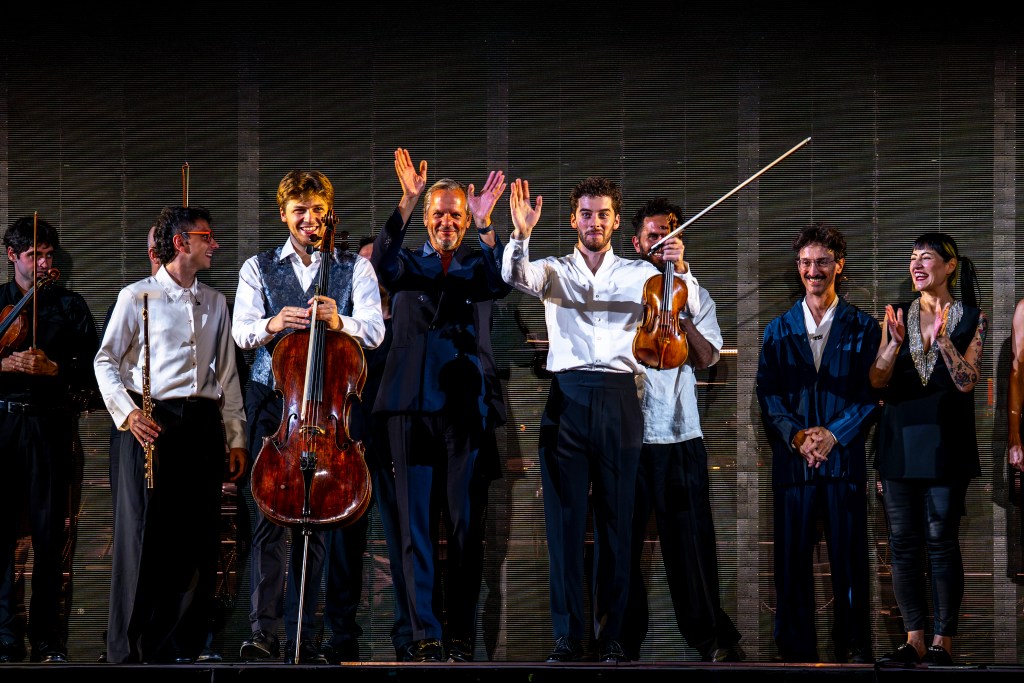
The novelty is Paganini Paradise, which premiered the night before. Structured in three acts, the show moves from light to darkness, through an inner journey into the human soul and toward a final vision of cosmic chaos. Paganini’s music is placed alongside works by Pachelbel, Albinoni, Handel, Tartini, Fauré and Barber. Zanon is joined by 23-year-old cellist Ettore Pagano, and the two musicians are at the center of the performance. Highlighting accomplished, albeit young, artists on stage helps establish a connection with younger audiences as well.

Balich insists that there needs to be a shift in approach. Staring at an orchestra for two hours in a concert hall is no longer, on its own, a reason to appreciate music. At the same time, wider sensory stimulation is no longer necessarily a distraction, but can be a way of feeling more connected to the music. His approach remains respectful of artists and tradition. The whole project was closely followed by Zanon, while Cecilia Gasdia—the celebrated former soprano and now Superintendent of the Arena di Verona Foundation—gave Balich carte blanche, in a gesture of total trust.

Overall, Paganini Paradise was impressive and captivating. Zanon and Pagano stole the show with their sheer talent, never overstated by its visual elements. The projections were especially emotional in the first part, where elements from the intricate paintings of Hieronymus Bosch were animated and multiplied to create celestial and infernal imagery, following the passage from light to darkness that runs throughout the show. In the second and third acts, the visuals become modern and futuristic, with geometric forms, natural phenomena, plants and animals transforming into a striking, turbulent universe.
The only dubious element is the decision to amplify the music with a sound system. It flattens the pathos of seeing an orchestra perform live—and that could itself be an attraction for younger audiences accustomed to hearing music through speakers. This is especially true at the Arena di Verona, known for its acoustics across more than a century of opera performances. The underlying technique—live music accompanied by mapped visuals—may already be established, but the Arena productions bring it to a full-scale Roman amphitheater, with transparent LED screens and video designed to rise beyond the stage and into the open-air venue. Overall, the mesmerizing format has huge potential to travel internationally and reach new audiences, while confirming the Arena as a natural place for the development and staging of this kind of shows. New performances of Viva Vivaldi and Paganini Paradise have already been announced for 24 and 25 August 2027.



What are your thoughts?