Homo Faber 2026: Es Devlin Celebrates Craft on an Island of Light
On an island in Venice, 500 artisans and 700 objects lead visitors through a slow and sensory exploration of the handmade
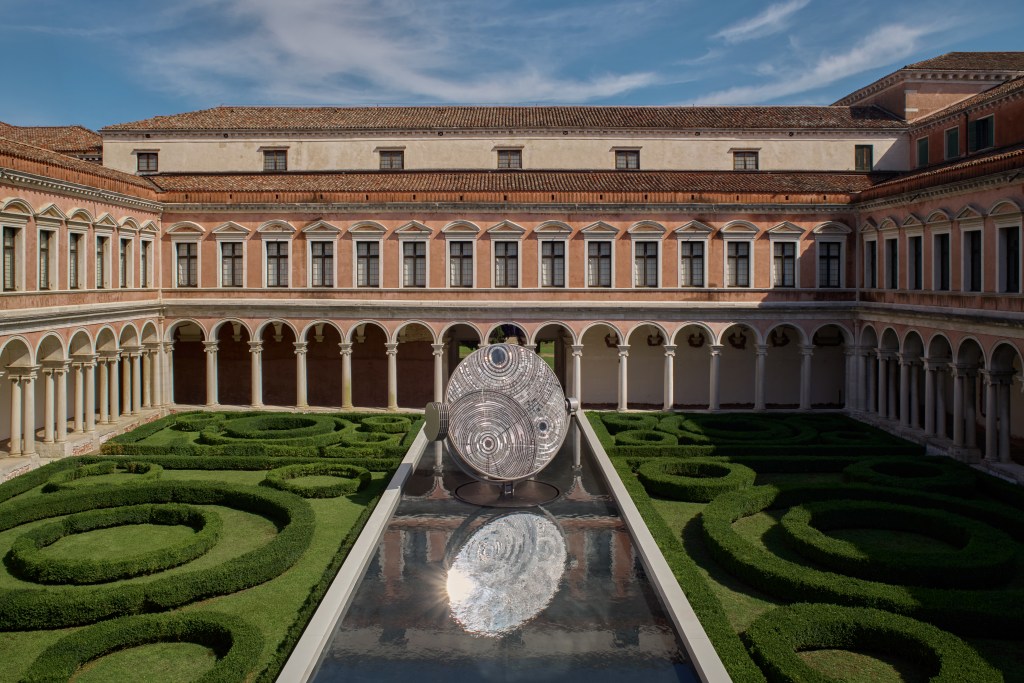
Venice takes shape across more than 100 islands, separated by canals and joined by bridges. One of them is San Giorgio Maggiore, and until 30 September it hosts Homo Faber, which turns it into an island of light.
An Island of Light is indeed the title of the fourth edition of Homo Faber, the craft biennial organized by the Michelangelo Foundation for Creativity and Craftsmanship, which lets us admire handmade masterpieces from around the world in the halls and cloisters of the Fondazione Giorgio Cini. This year the artistic director is set designer and artist Es Devlin. Over her career she has built stages in arenas for the planet’s biggest stars and lit theaters around the world, but this time the challenge ran differently: to tell the story of artisanal mastery along a single, coherent path.
“I would want to not just present,” Devlin tells us, “but I’m not really a curator. So my way into it, the portal for me, was collaboration, which is what I do. I’m very comfortable collaborating with objects, and I was fascinated by a collaboration with hands and those that make.”
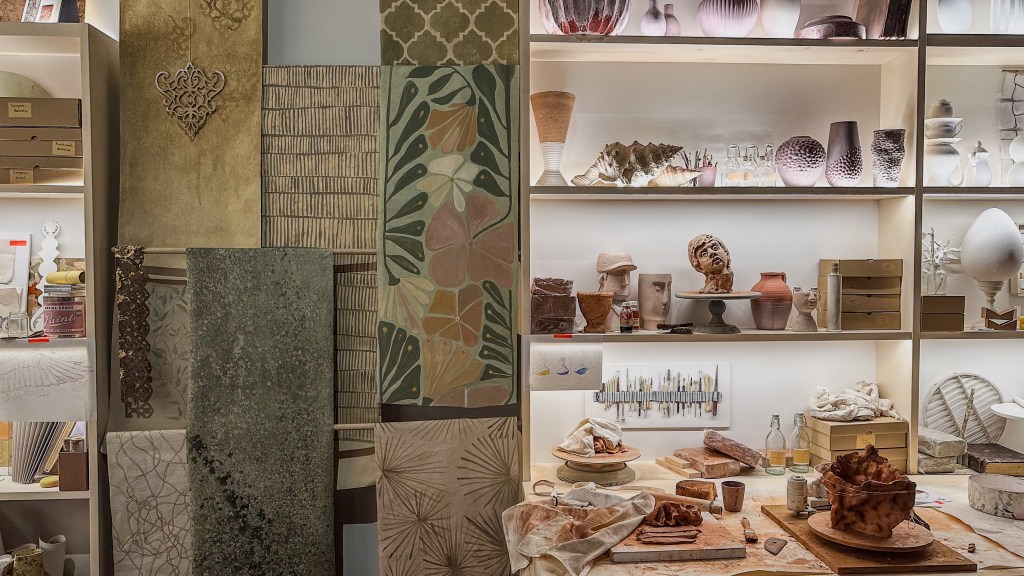
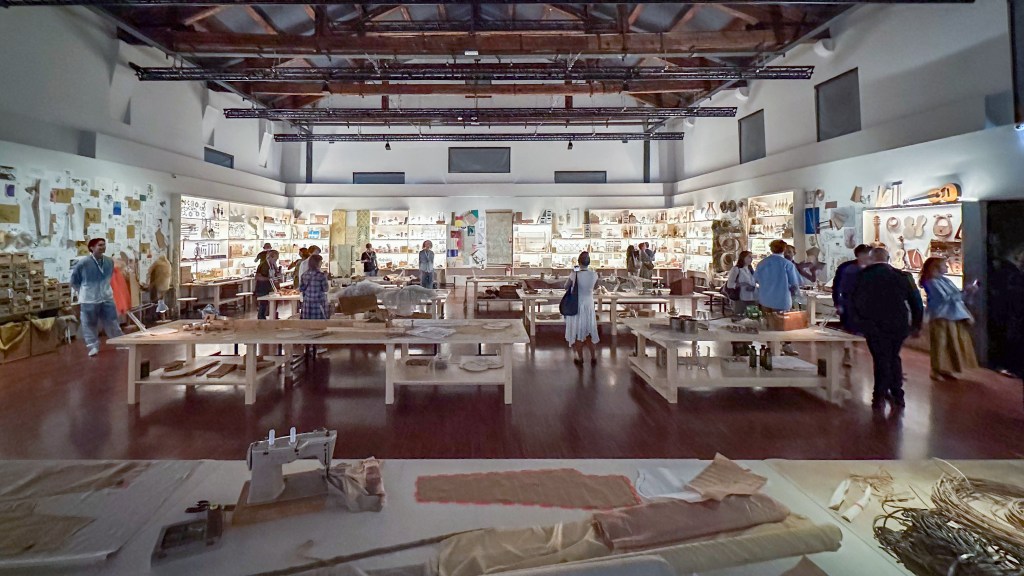
Hands take the lead in the first room, staged like an enormous atelier inhabited by different artists and artisans, beautiful in its creative chaos. Tools, drawings, materials and the instruments of goldsmiths, tailors, sculptors and silversmiths surround us. An emotional video celebrates the importance of hands, narrated by Devlin’s own voice. She explains why: “In the first room especially, I wanted to impart the information very personally, and I wanted to tell you the story of engaging with these hands. I speak in a way that is quite intimate to invite [visitors] to be hushed and to be focused.”
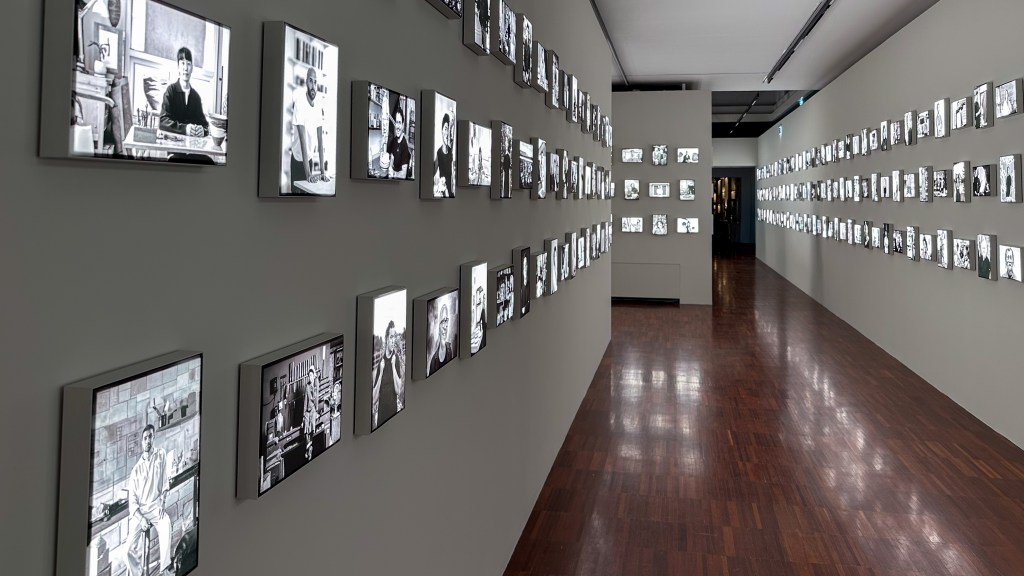
Black-and-white portraits of all 500 artisans involved in Homo Faber cover the second room entirely; the makers behind the more than 700 objects, from over 70 countries, are displayed across the 15 exhibition spaces that visitors will explore. Faces, not names, in a sort of portrait gallery that gives the right tone to the story.
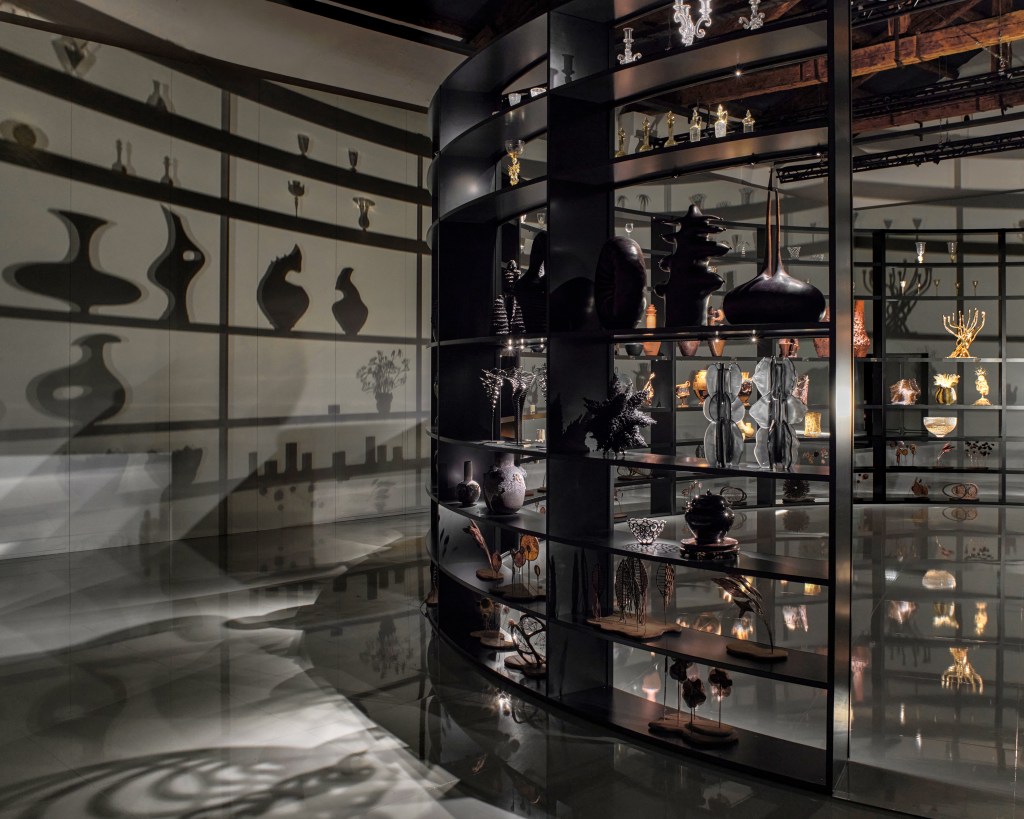
From this room full of light, we reach one full of shadow. An Alphabet of Objects is a kinetic circular library that gathers dozens of objects in different materials. A lighting system throws their shadows onto the walls, almost forming a language at once familiar and alien, the ABC of craft. Here we suggest you try to guess what the objects are made of, because surprises are common: glass looks like rock, metal looks like paper, bronze looks like rope.
Homo Faber’s Young Ambassadors animate every room, including students from the world’s finest schools of applied arts, design and business. You will recognize them by the uniforms designed by Colomba Leddi, dyed in soft gradients of natural indigo. They tell the stories of the objects on display and of the artisans who made them. Interacting with them, witnessing their passion and commitment, adds an extra layer to the visit.
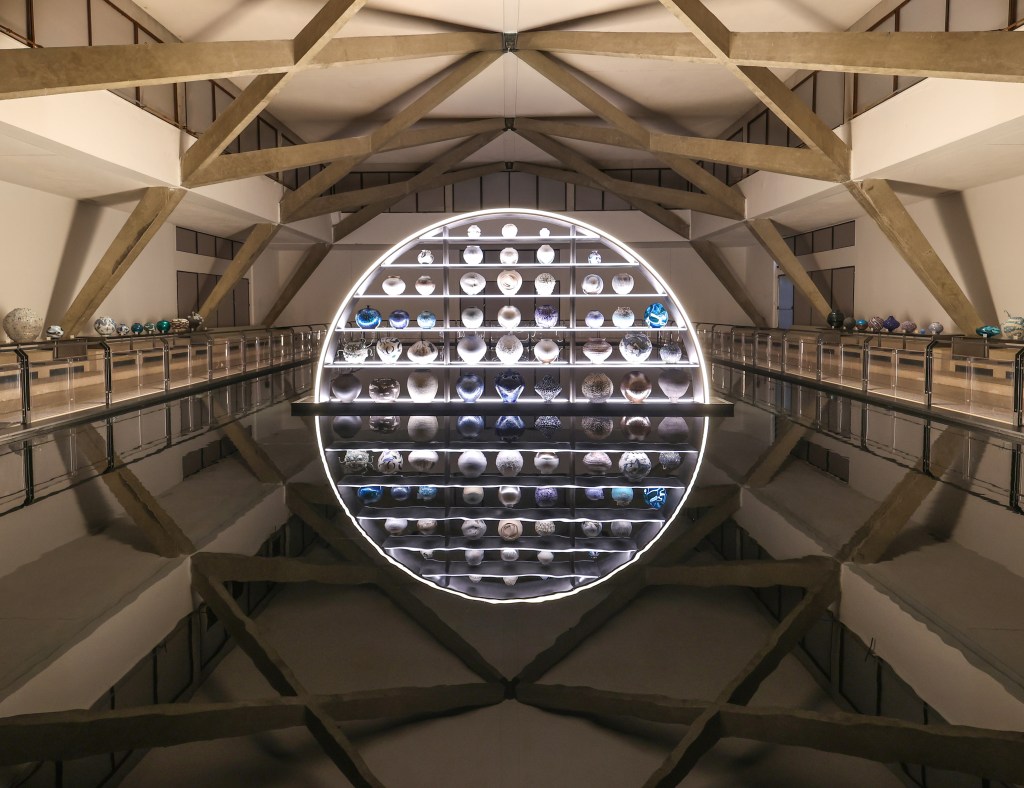
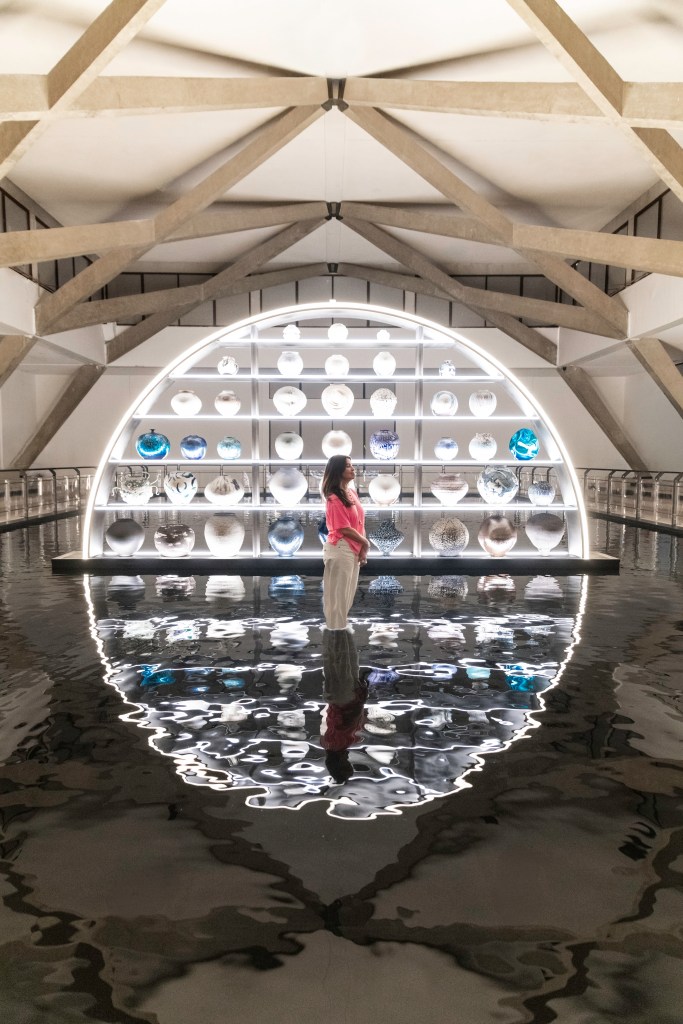
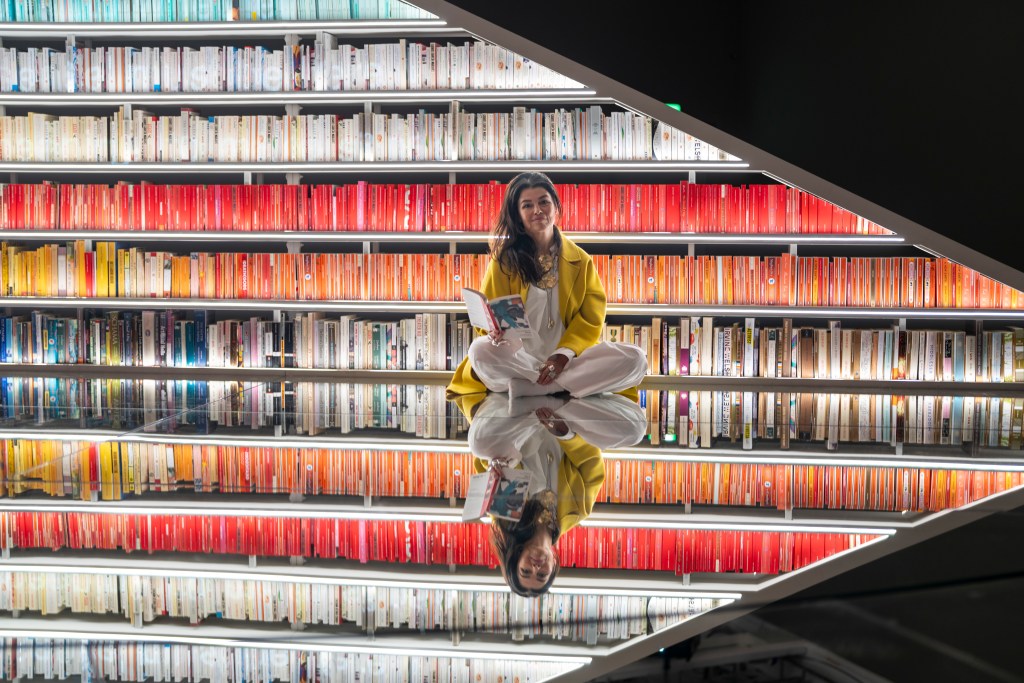
The next installation ranks among the most spectacular, set in the Piscina Gandini, the swimming pool designed in 1960, a true masterful architecture. A Full Moon Rising stars the moon jars, the large circular vessels of Korean tradition. Dozens of them line the sides of the great hall, made in different materials by artisans from all over the world. At the center of the pool, a circular library emerges from the water like a moon rising over the sea. The dialogue between objects, installation and architecture creates an effect of pure magic.
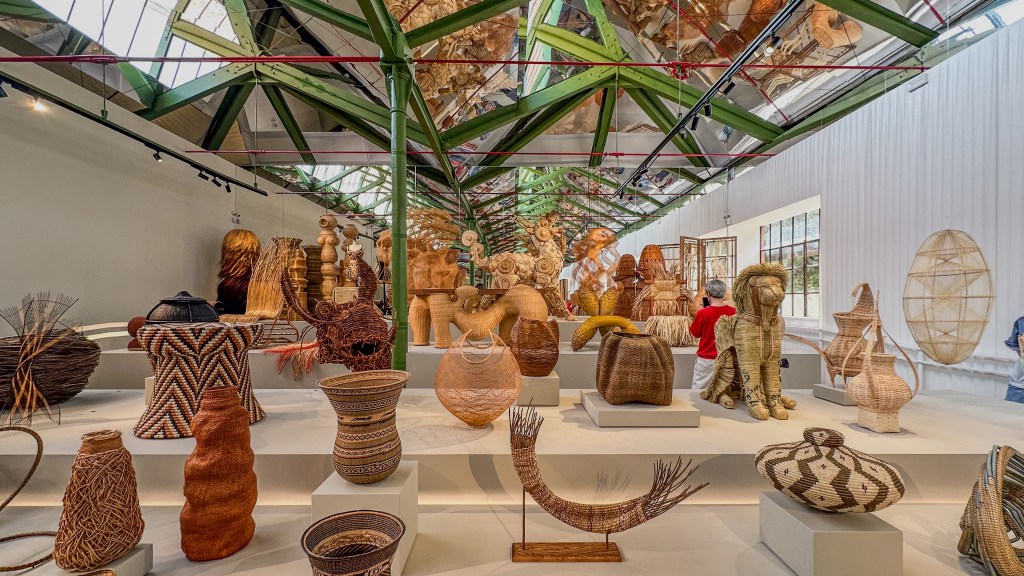
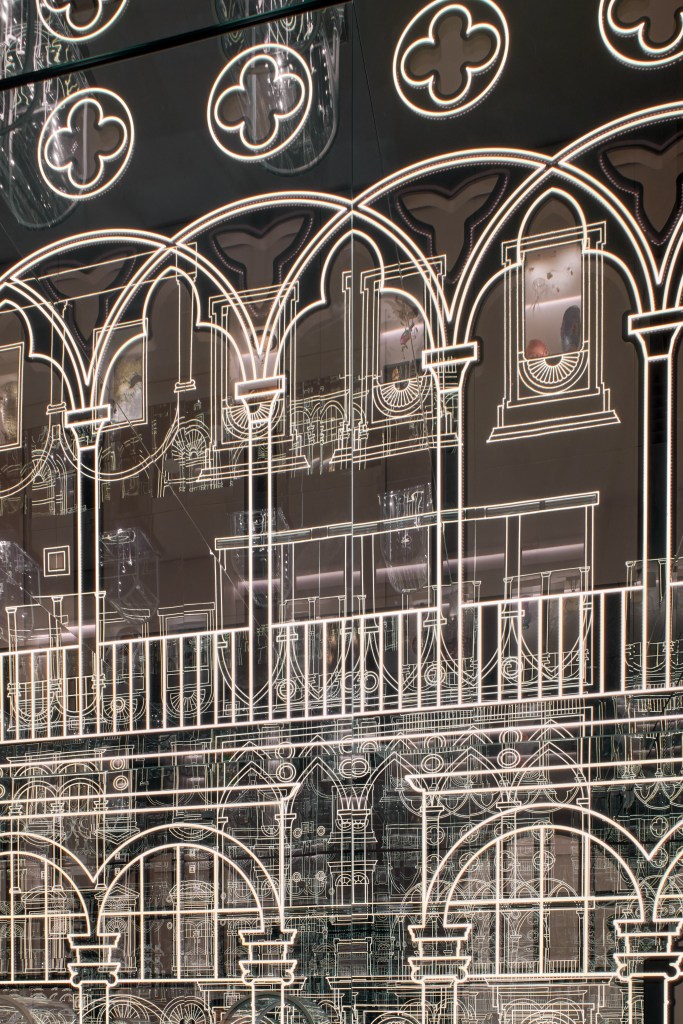
The next pavilion belongs entirely to wood, woven wicker, rush and willow. Devlin suggests we not only look but also breathe. The scent is pleasant, and a staging of nothing but mirrors makes it feel like an endless forest of objects. Here we see the most ancestral, ancient techniques, which make clear that these methods run common across every continent.
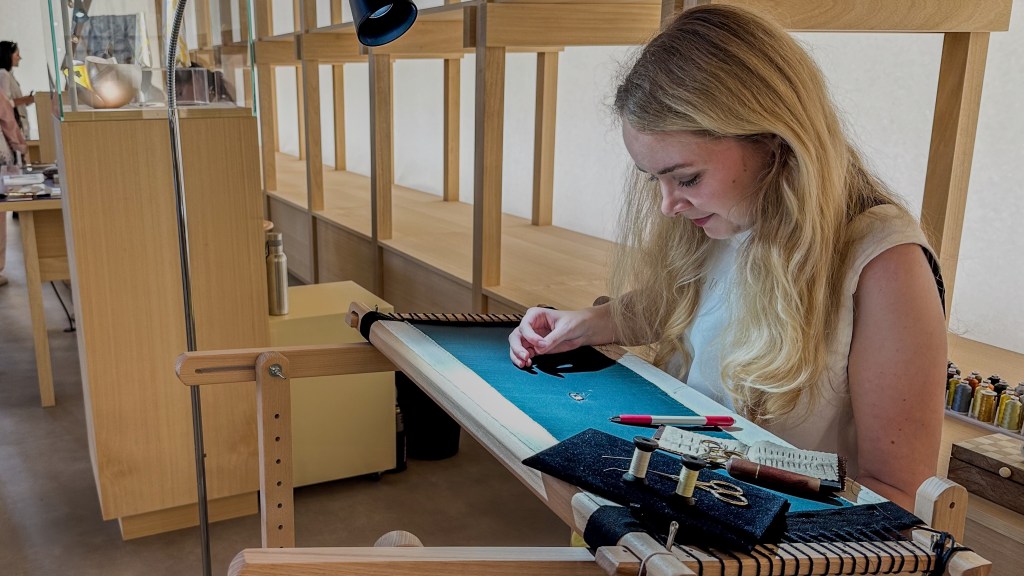
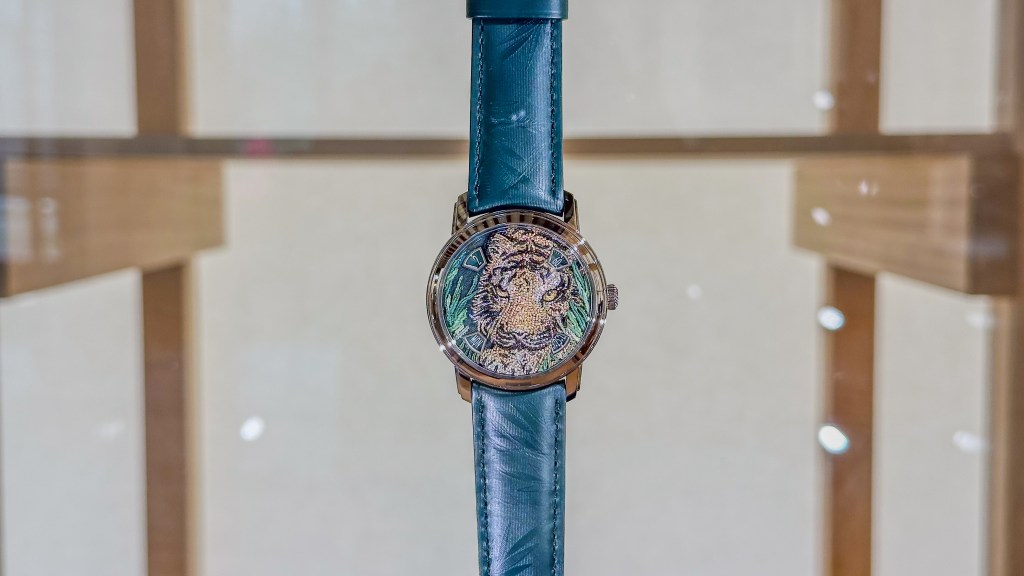
We then arrive at An Atelier Alive, where many artisans work before us, showing how they make paper flowers that look real, glass micromosaics on curved surfaces, embroidery so delicate it ends up on watch dials and straw inlays as shiny as metal. They come from Pakistan, Italy, France, the United Kingdom, South Africa and more. We stand before living proof of what Alberto Cavalli, Executive Director of the Michelangelo Foundation, means when he says that Homo Faber is not an exhibition but a movement, a constant effort to show that we can experience a whole range of more human forms of intelligence and connection.
Right next door we reach the most precious room, literally, filled with objects in gold, diamonds and precious stones, though textiles and paper appear too, all worked with exquisite refinement. The theme is birds, made and depicted in the most varied and extravagant ways, yet always incredibly detailed. Here too the play of light and mirrors lets us imagine we have stepped into the aviary of a fairy tale.
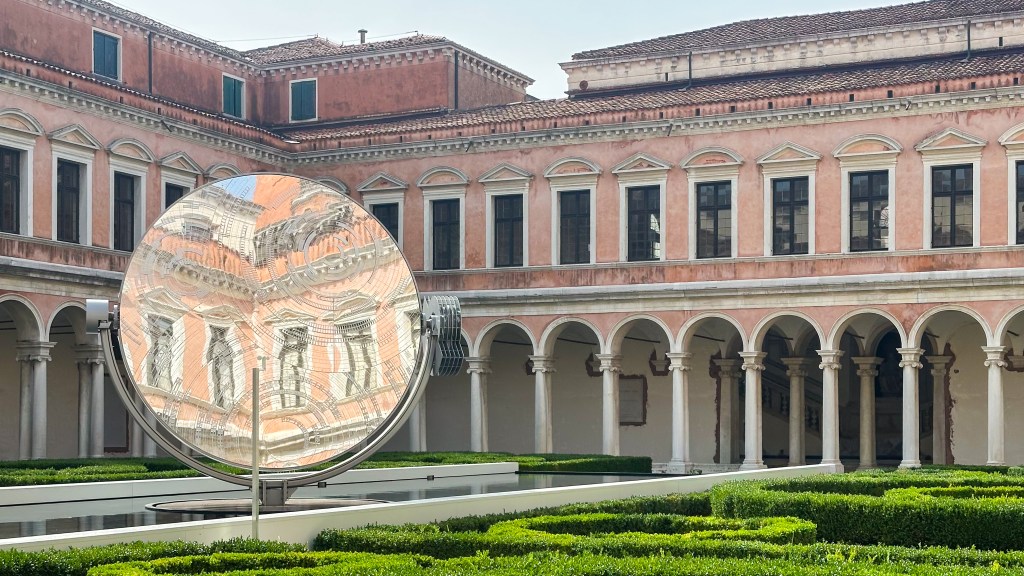
The journey continues in the cloister designed by the great Renaissance architect Andrea Palladio. Here, Devlin has imagined a large, round mirrored structure that rotates on two axes and plays with the light of sky and water through the hours of the day. The pattern on its surface recalls gears, yet it draws on the marks of rain falling into Venice’s canals.
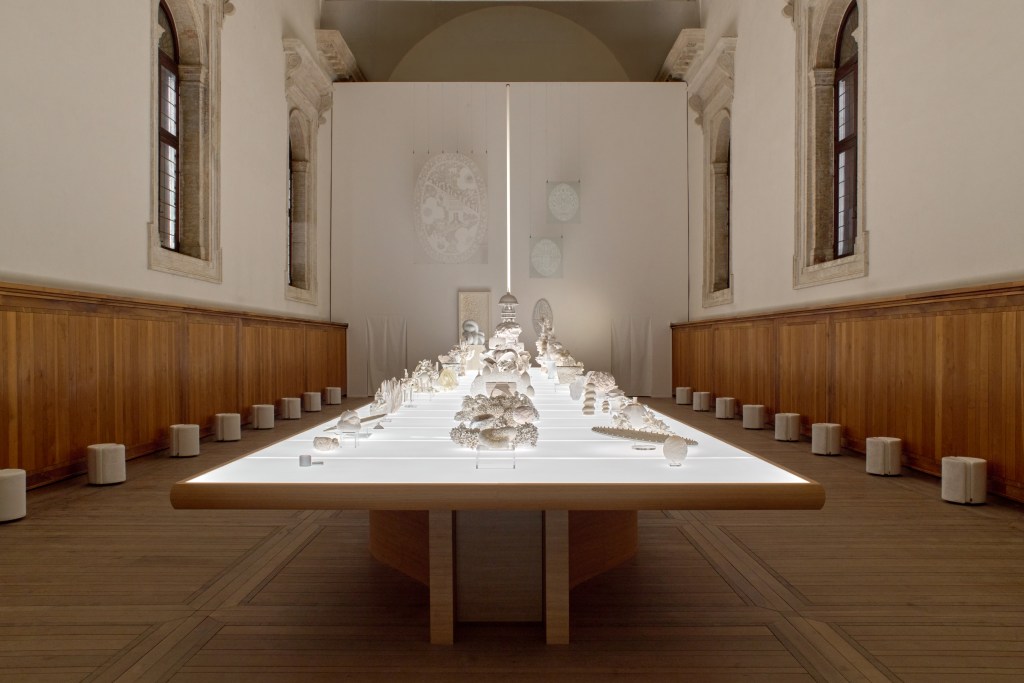
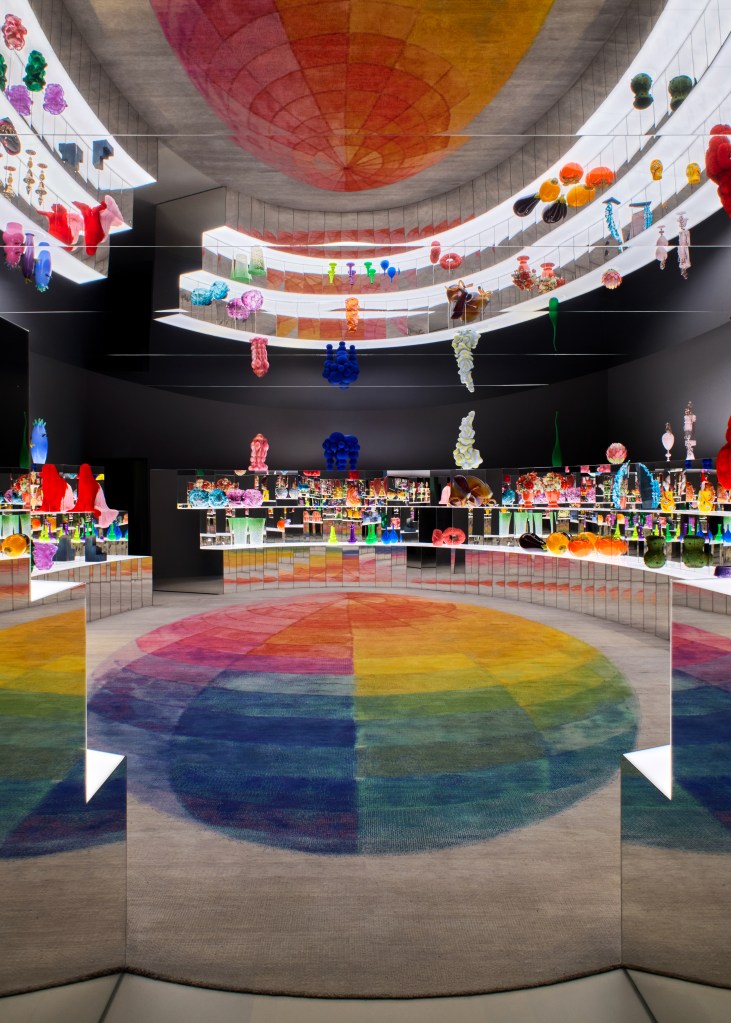
A Feast of Light and A Rainbow of Forms work by contrast: the first installation presents only white objects, the second only vividly colored ones. In both, the use of materials and the transforming power of the makers’ hands, drawn from every corner of the planet, hold us spellbound. This journey will reveal something new to every visitor, and it changed Devlin too: “It’s humbling to realize how little I knew about what could be done with a pair of hands in a piece of wood, or a pair of hands in a piece of egg. I won’t look at an eggshell in the same way again, honestly.”
Not just an exhibition, not just a show, not just a biennial. To close, we ask Devlin what this edition of Homo Faber means to her and which word we should use to describe it: “A lot of people use the word movement. I would say the word practice is also very useful. And the word essay, [it] means to try. So I think when you sit at the desk and you see the wood shavings, bits of clay, hopefully you’re put in mind of someone who is making an essay, engaging in practice. So you could call it a rehearsal of a different way to be.”
Homo Faber runs until September 30 on San Giorgio Maggiore. Beyond the island, Homo Faber in Città opens artisan workshops across Venice and brings craft into the recently renovated Casa Sanlorenzo. For more info on the full program, visit homofaber.com.



What are your thoughts?