Salón ACME Electrifies Mexico City Art Week
Exploring the colorful installations, performances and celebrations at Mexico City’s sensorial art event
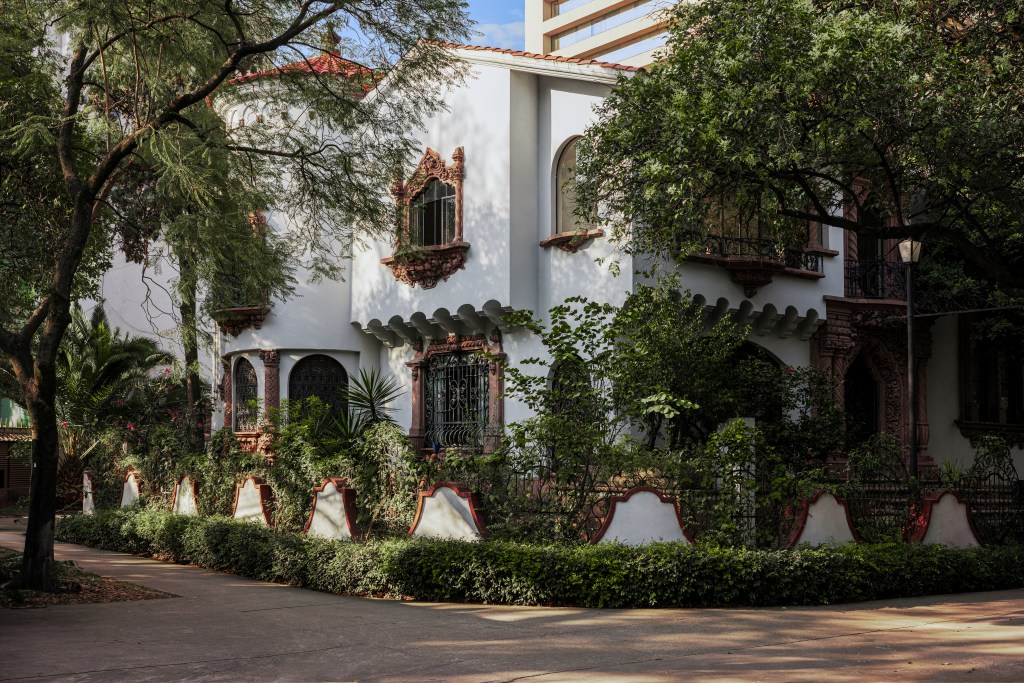
While Zona Maco was the big draw for CDMX at Centro Banamex, the eclectic art experience of Salón ACME took place at the Proyectos Públicos grand event space in Colonia Juárez. Built in 1905 by engineer Alberto Robles Gil, the General Prim house is considered to be one of the great examples of Porfiriato-era architecture. The 13th year of Salón ACME presented by Base Proyectos, Archipiélago, and Proyectos Públicos is presented in six sections with works by 82 artists.
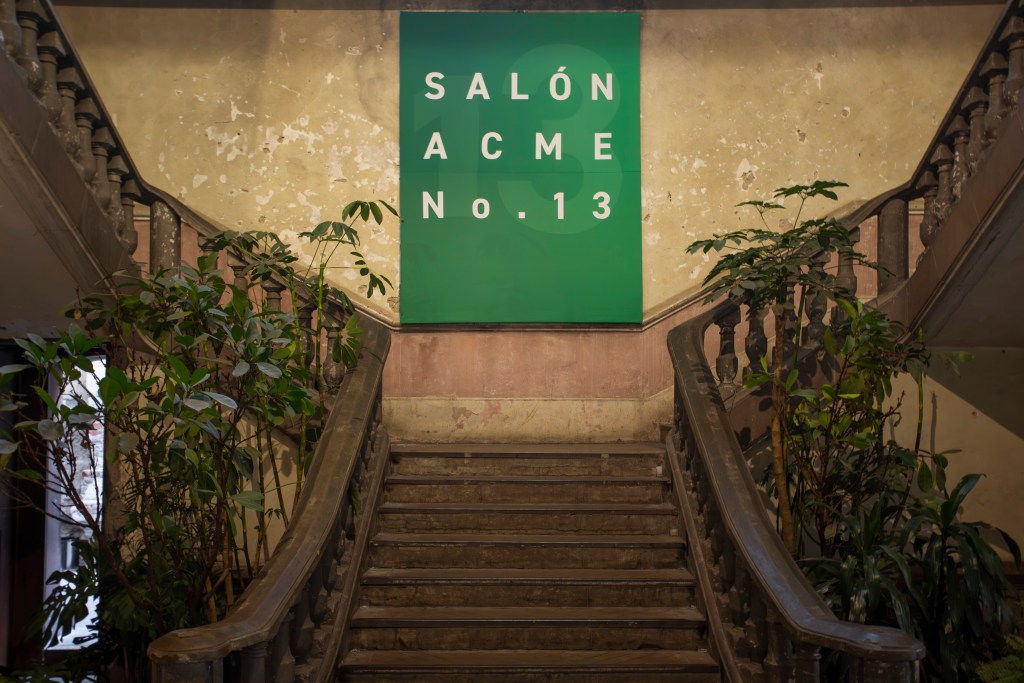
For this edition of Salón ACME, Puebla was the invited state. Curated by Nina Fiocco, the exhibition Footprints, Voices and Other Clues, featured the work of 15 artists currently living and working in Puebla. “Every year is new,” says Zazil Barba, Salón ACME Co-Founder. “This year with the focus on Puebla, we visited the state to understand the culture.”

Salón ACME is created by artists for artists to provide visibility and support for emerging creators. The show is composed of six main sections: Open Call, Bodega, State, Projects, Sala and Patio. With many artists from Mexico represented, Salón ACME also featured special guests from various international institutions, including Gasworks in London, Getty Research Institute of Los Angeles, and KW Institute for Contemporary Art in Berlin.
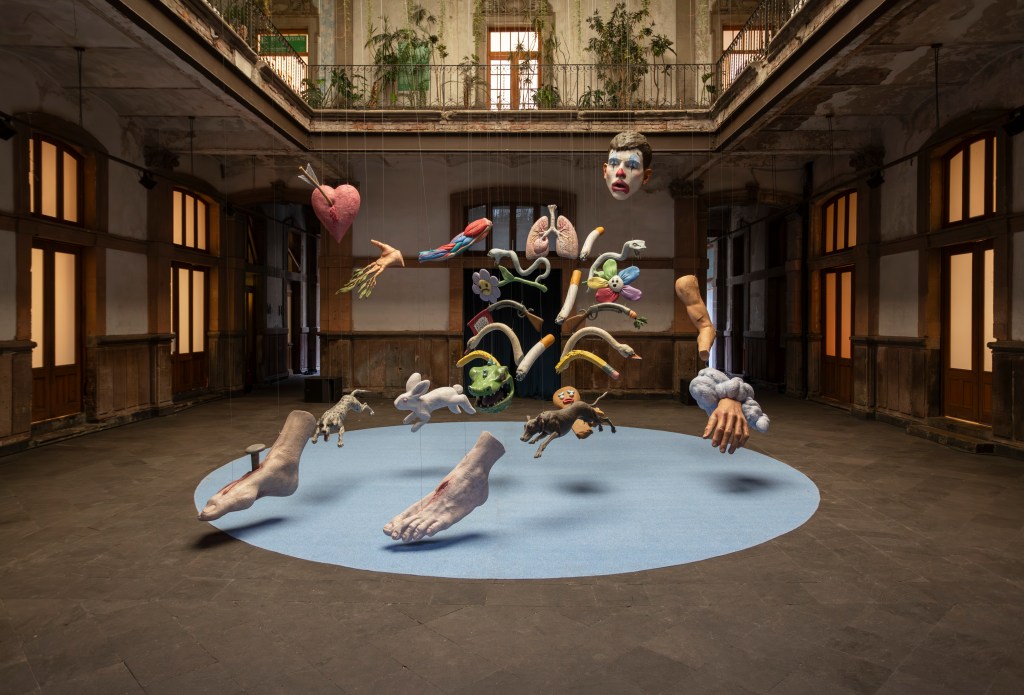
A large installation by Enrique López Llamas filled the center Patio section. “This artist is from Guanajuato and his first exhibition in Mexico City was at Salón ACME in the guest space,” says Barba. “His gallery met him there. Then he was in the Open Call and in all of the sections of ACME. And now he is the center piece with I am the Resurrection and I am the Life, inspired by a song by the Stone Roses.”
The large-scale installation of a clown head with animals and objects that comprise the body glows in the natural light filtering down from above. “The first time I showed my work in Mexico City was at ACME 9 years ago,” says López Llamas. “This idea was levitating around me for a while. It was not all settled. But then the invitation came and it all made sense.”

López Llamas 3D printed each piece with plastic polymer. “My printers are 25 centimeters in size, really small,” he says. “So the head for example is the biggest one that was made from 74 pieces that we assembled.” Each shape is glued, filled to seal the seams and painted.
“The clown has a lot of historic connotations,” says López Llamas. “The one that makes us laugh or that we make fun of or that we are scared of. He was the only one allowed to make fun of the king. The clown element comes from an autobiographical reason. I don’t know why, but my mom decided to make my first birthday a clown theme. My picture next to my cake is not next to a clown, it is me dressed as a clown.”
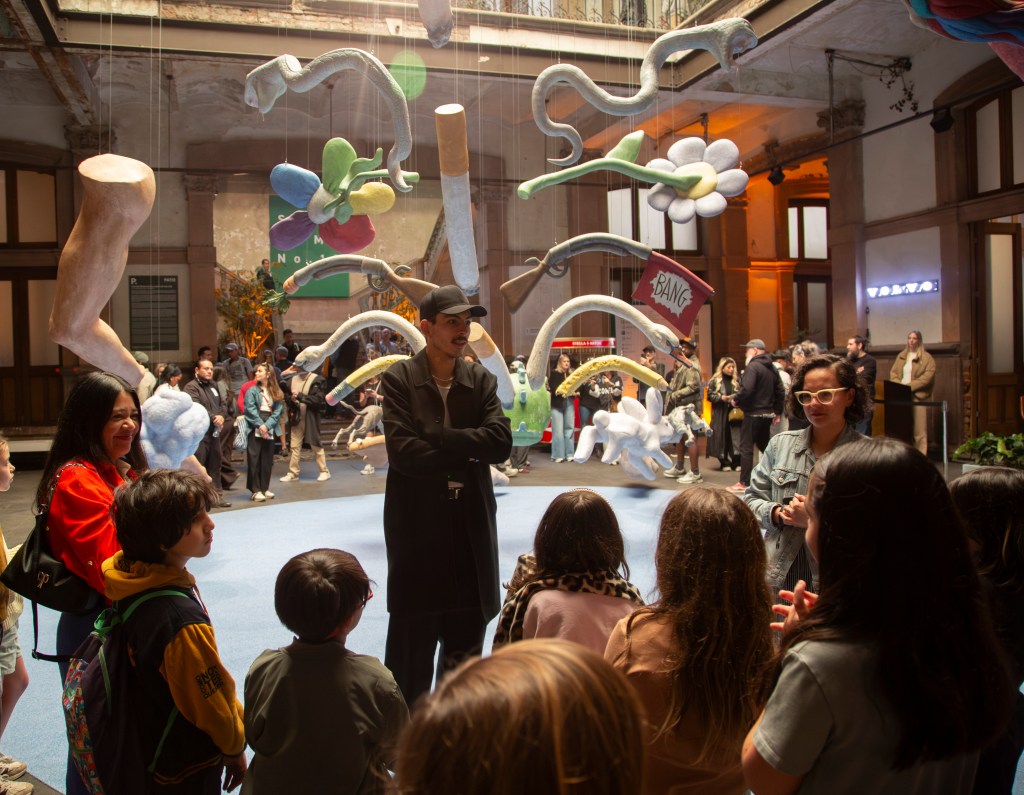
“We have a saying in Spanish, ‘infacia es destino,’ which translates to ‘childhood is destiny.’ Here is the clown that entertains everyone at this big party,” López Llamas says. “Earlier today there was a clan of little kids. It was amazing to see them with their mouths open. They were pointing to stuff and saying ‘Oh look! There is a snake and look—there is a flower!’”

As visitors make their way through the building, they pass under a large banner that reads “TODO PASA.” The building, layered with the patina of years of history, was filled with art fashioned from countless materials. In the Galeria Nina Menocal room, artist Juana Martinez’s pieces on canvas and pottery are made with recycled paper that has been manipulated to look like fabric.
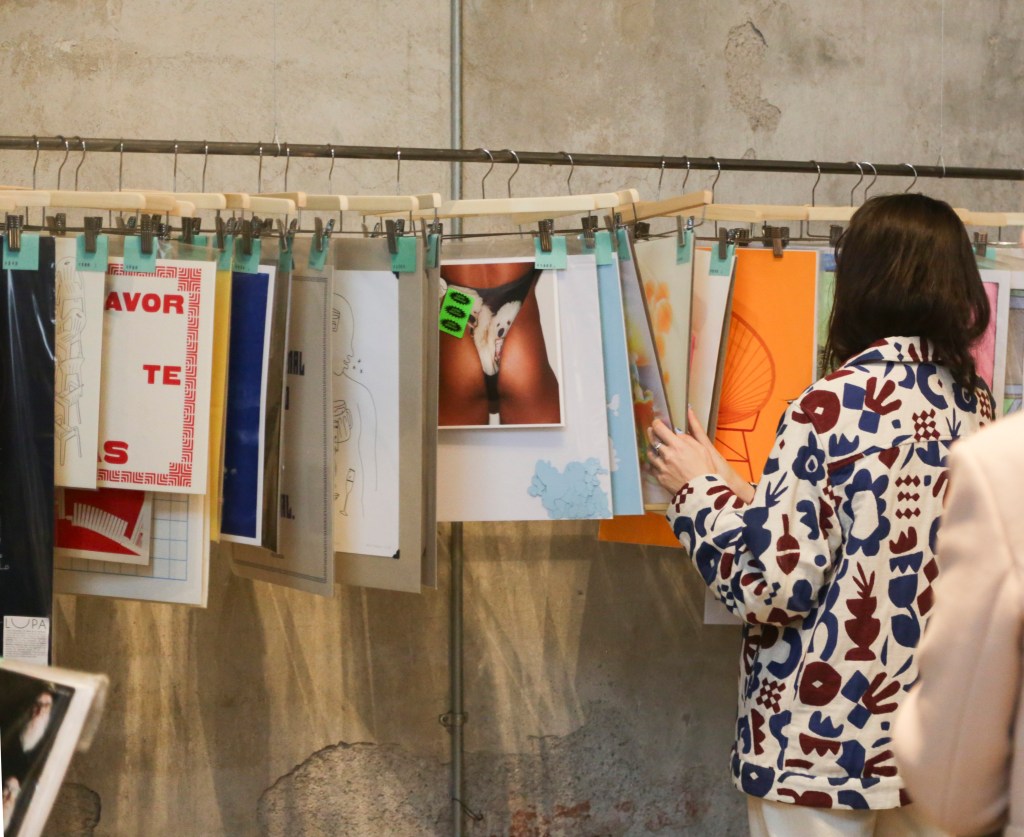
The Salón ACME shop was filled with books, prints, t-shirts and original art. A small box of small framed works by Andrea Pazos depicted tiny images of dogs on chairs and sofas. “This series proposes two readings of the chair as a design object,” says Pazos. “On one hand, it revisits iconic chairs from the modern design canon—a canon that has historically privileged male authorship while omitting or diluting the contributions of women designers.” Each piece is titled with the name of its designer: Ray Eames, Cini Boeri, Charlotte Perriand, Florence Knoll, Eileen Gray, Afra Scarpa, Gae Aulenti, Gigi Sabadini and Patricia Urquiola. Pazos intends to make visible contributions that have long been minimized or ignored.
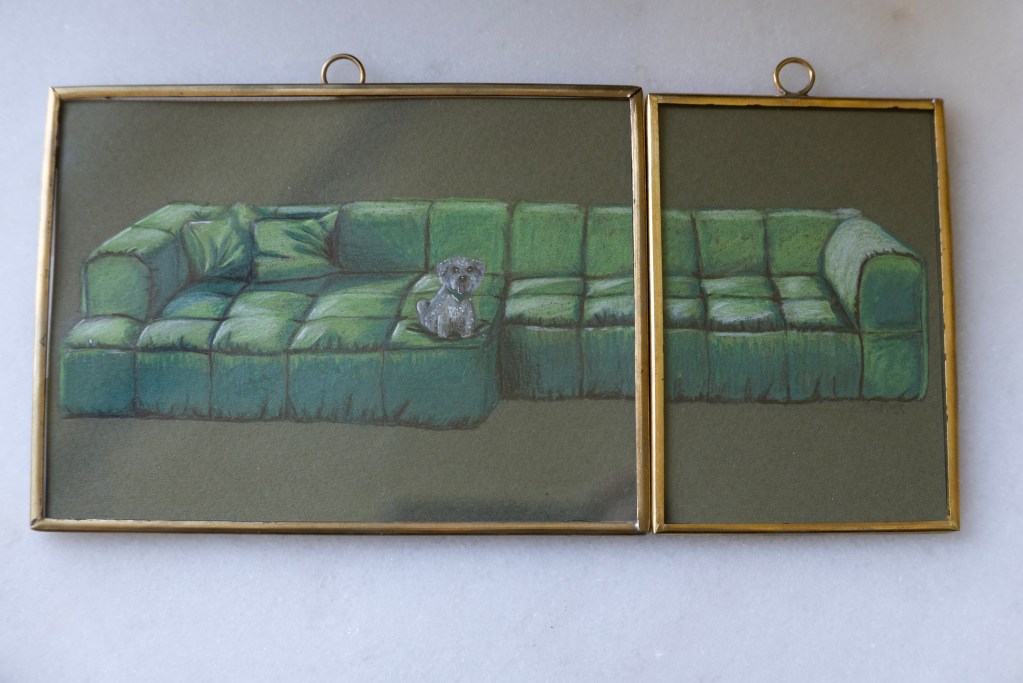
The green sofa with a small grey dog is inspired by the Strips chair designed by the Italian architect and designer Cini Boeri. Pazos also presents her series to offer a critical reading of objects appropriated by dogs, completely indifferent to the symbolic value of design. “Through these everyday gestures, the pieces question authority, hierarchy and the seriousness often attributed to design objects,” says Pazos.
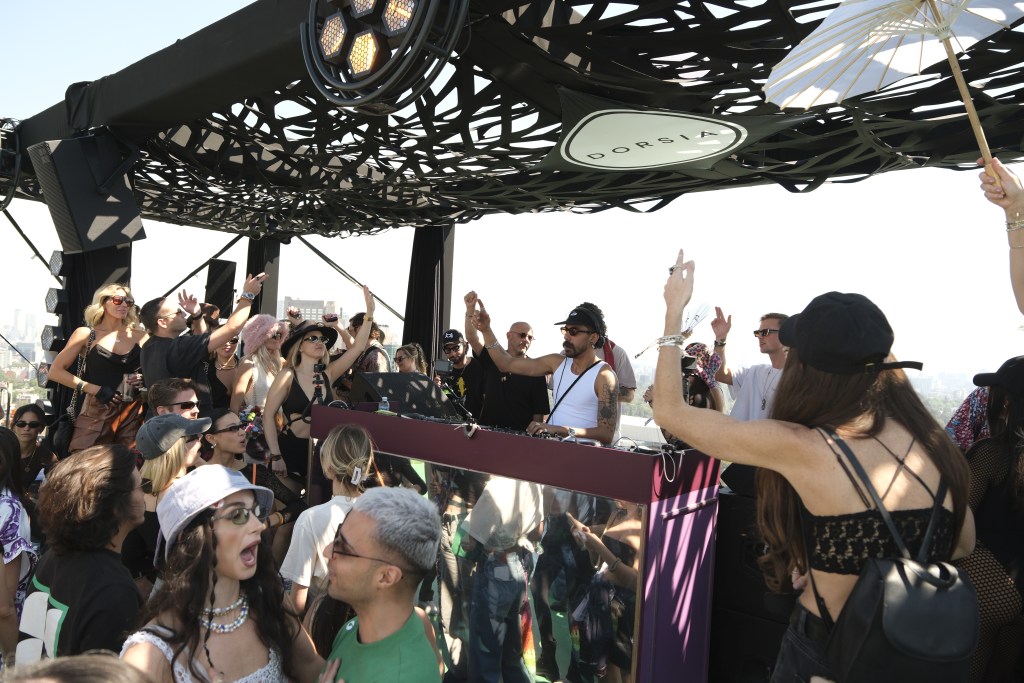
The performances, podcasts and a hospitality space on the roof deck drew thousands of eventgoers. The excitement was palpable, even when there was an earthquake alarm that forced visitors to evacuate the building for safety. Everyone filed out calmly to the street and stood together in anticipation of returning to the festivities.
This event and many others were offered with special access by Dorsia’s new Culture Calendar.



What are your thoughts?