Signal Festival Founder Martin Pošta on Light, Crowds and Changing Society Homeopathically
A conversation with the director of Prague’s festival of digital and creative culture
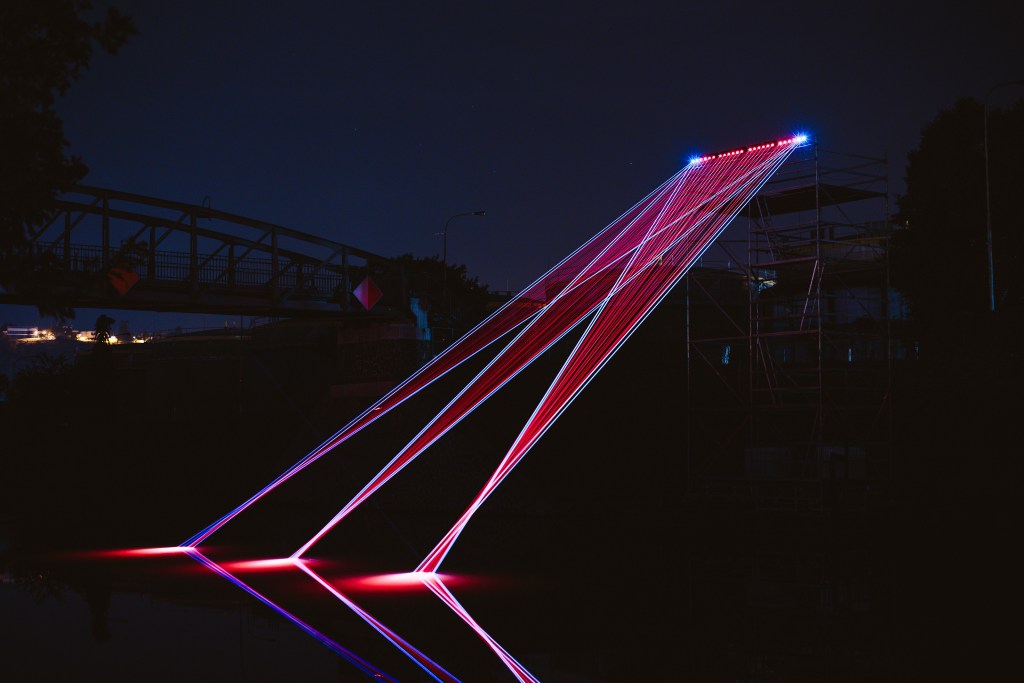
There are plenty of good reasons to visit the great historic capitals and art cities: monuments, museums, food and wine top the list. But sometimes the draw lies in contemporary creativity, as it did for us a few weeks ago at Signal Festival in Prague, which has filled the Czech capital with light, video mapping and digital art every October since 2013.
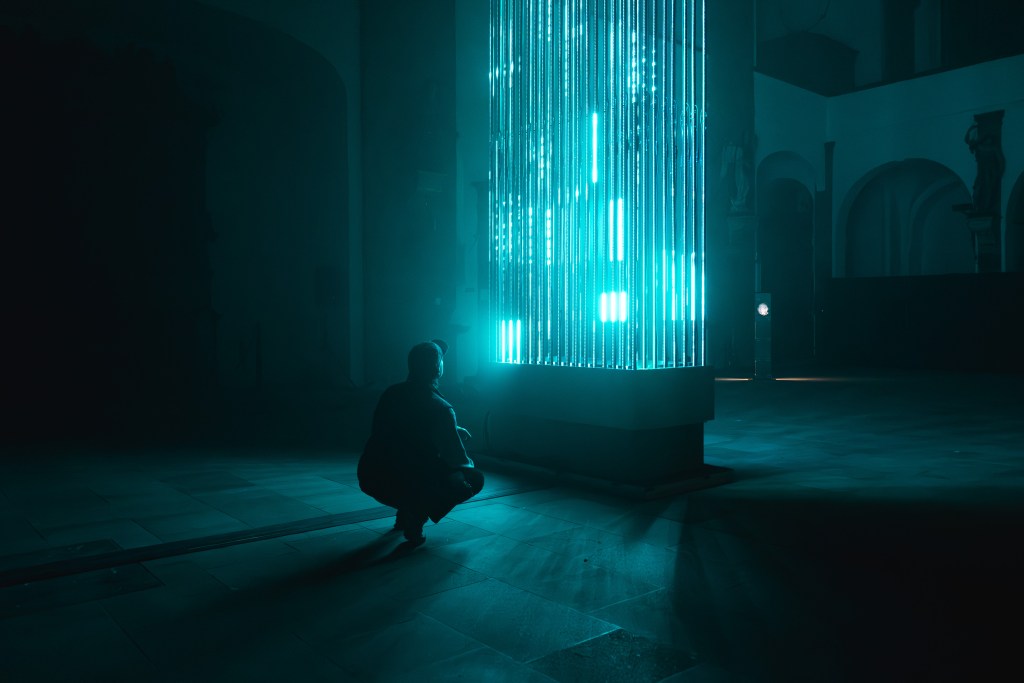
From 15 to 18 October, we followed the festival’s 14th edition across Prague, where 21 light and audiovisual installations by Czech and international artists took over streets, squares and buildings.
We also took the chance to sit down for a long conversation with Martin Pošta, director and co-founder of Signal Festival.
At around 14, Pošta started working for the Karlovy Vary International Film Festival in Western Bohemia, “the A-list festival of the Czech Republic,” as he puts it, and the experience set his course. That pull eventually led him to FAMU, Prague’s film academy (which he attended alongside the Prague University of Economics and Business) and then on to running events of his own. A longtime friend pitched him a video mapping project, and his first reaction: “What the bleep is mapping?” Three years later, he conceived Signal together with curator Jan Rolník and artist Amar Mulabegovič.
Research and comparison mattered from the start: “There were festivals around the world, so I traveled to see how they operated,” he says. “I took the ideas and what I saw and tried to adapt them to Prague, to figure out how this could work. One of the biggest challenges was explaining to people what it was, what the idea was, what we wanted to do.”
Asked about the festival’s benchmark in those early days, Pošta doesn’t hesitate, saying “In a sense, it still is: Fête des Lumières in Lyon. We jokingly call it the mother of the festivals.” Its roots run deep: it began in 1852, when the people of Lyon spontaneously lit small candles on their windowsills in honor of the Virgin Mary. Today, in Lyon, Prague and around the world, light festivals offer far more than candlelight.
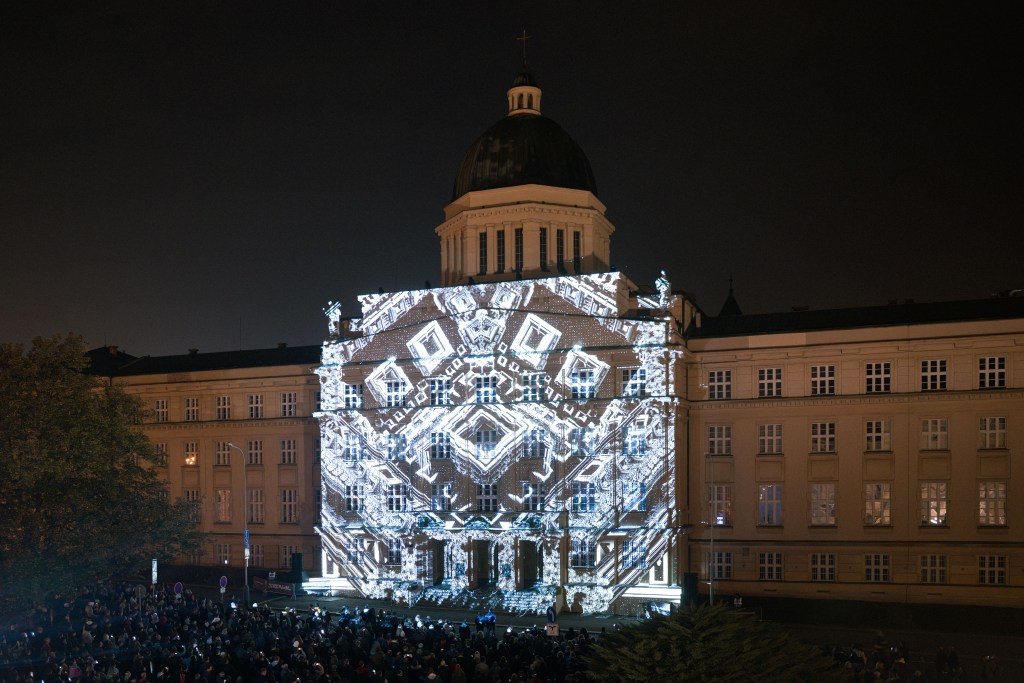
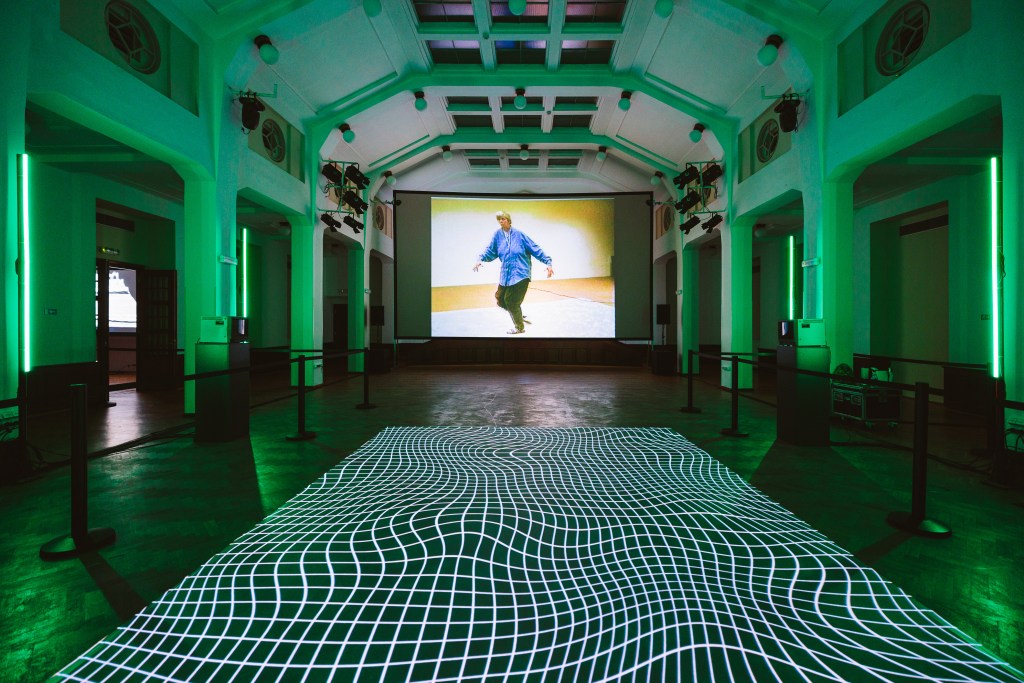
The proof lies in the scale of this year’s Signal Festival: 21 installations in total, 13 free and eight in the ticketed Signal INSIDE zone; around 500,000 visitors at recent editions; a new route through the Dejvice neighborhood, where Felix Frank’s video mapping Missing Interval wrapped the façade of the Archbishop’s Seminary; and the third edition of Signal Forum, the festival’s conference on digital and creative culture.
The festival has also outgrown its four October nights. In fall 2025 the team opened Signal Space, a permanent gallery for digital and immersive art in Prague’s Old Town Market Hall.
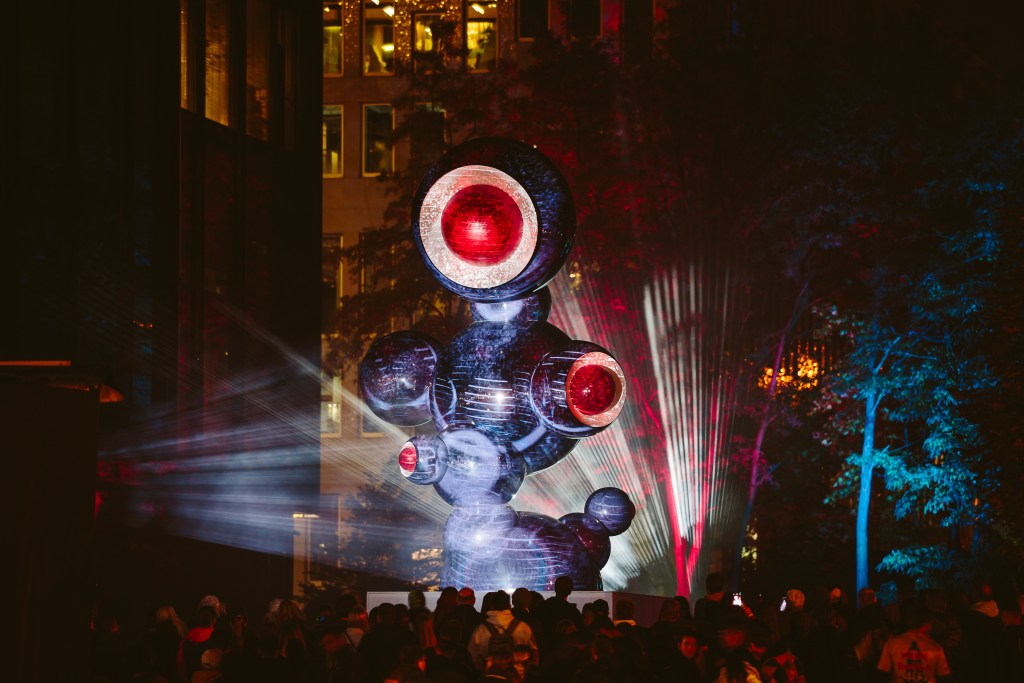
This edition’s lineup carried weight too, under the theme “Dream On! Dreams and Visions.” Curation plays a key role, and it evolved over the years. “We started real curation some 10 years ago,” Pošta recalls. “The first edition was really, literally, just a wish list of the artists we wanted to see.” In 2026, the lineup of artists and designers included Laurie Anderson, Milan Cais, Jim Campbell, Aka Chang, ENCOR Studio, Felix Frank, Kurt Hentschläger, Hsin-Chien Huang, Yiannis Kranidiotis, Laterna magika, Media Tribe, Svitlana Reinish and Maxim Velčovský.
Looking back from the first edition to this one, we wondered how people and the city had received Signal over the years, and whether it ever faced harsh criticism. Pošta answers without hedging: “Definitely. In the first editions, people were just pleasantly surprised. And I’m going to be sarcastic now: everybody slept on their art history books and woke up an art critic. Now we have a whole city of art critics. So we made fun of ourselves. One year we made merchandise with hate comments from social media. We had a t-shirt saying ‘Last year it was better,’ and another saying ‘Next time I’m not going.’ This year we have a new favorite, actually from yesterday: ‘I had no expectations, but I’m still disappointed.’ As you can see, we take it lightly.”
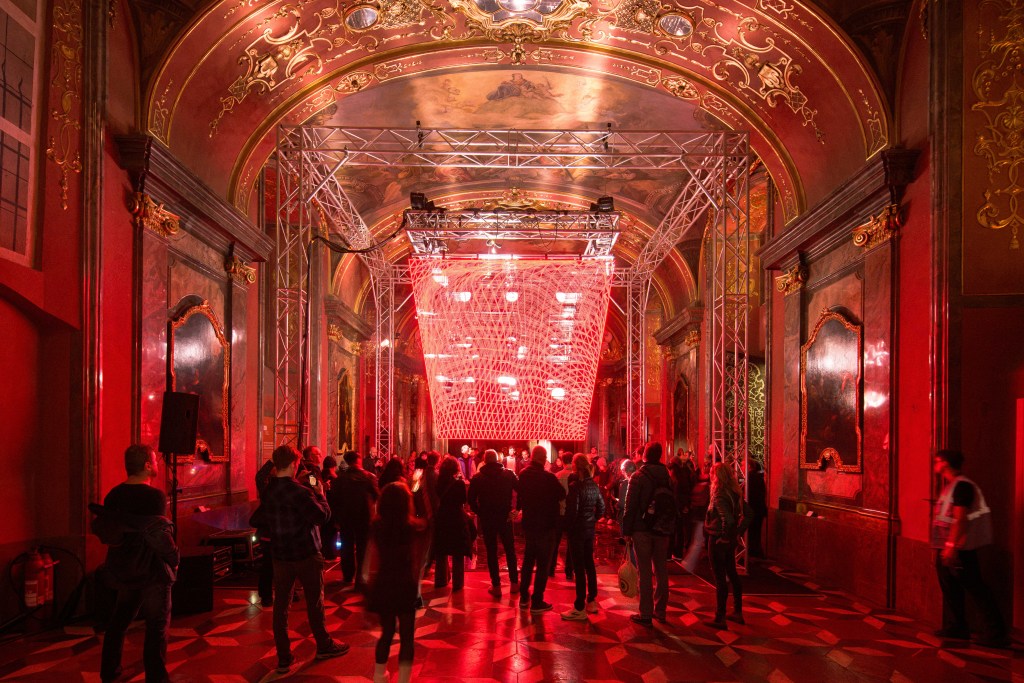
Some people surely don’t consider it art, just technology or entertainment for the masses, so we asked Pošta where Signal stands between the two. “I think it’s very subjective. For me it’s about feeling and perception. I have my own sense of what’s right, but I can’t say I know what’s right. We experiment a lot, so it’s hit and miss, as it always is when you experiment. But if you look at it piece by piece, I’m fairly sure people would agree it’s really good quality art.” And it remains a collaborative project, he says, adding that “the people behind the festival, creatives, technologists, coders, programmers, scientists, combine all of this, which is already a very Renaissance approach to making art.”
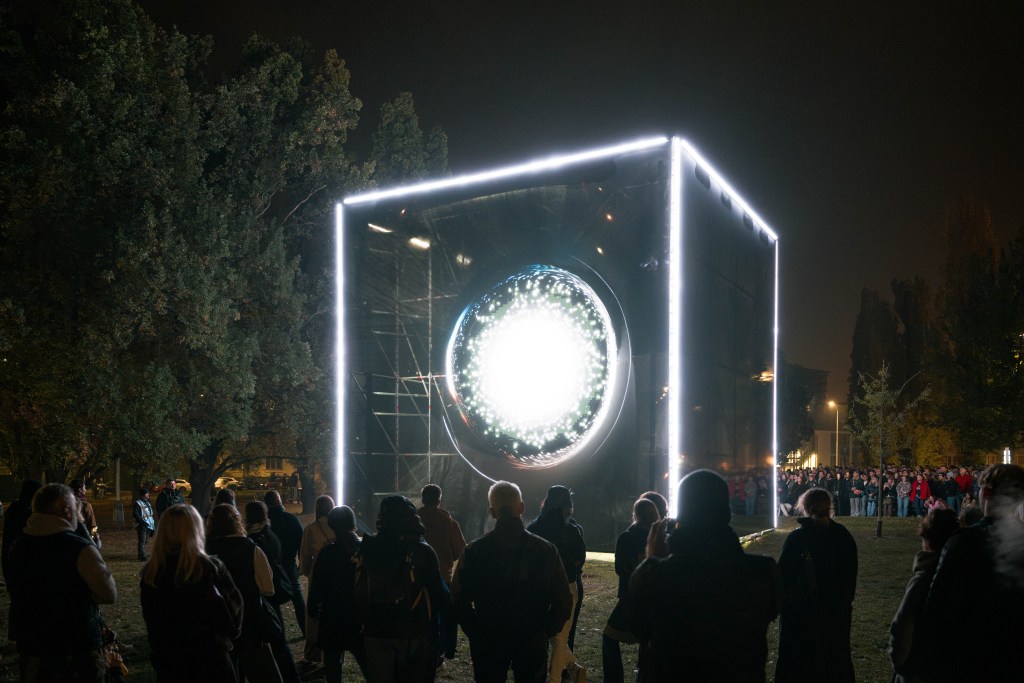
Talking with Pošta, we realized that most of the installations make you slow down: you have to stop to really enjoy them and you start to think. And since thinking remains the most powerful weapon we have, we wondered how much message a work needs before it counts as activism. Pošta leaves that measure to the viewer: “We provide all the information about each installation, but visitors tend to just go and enjoy. If you want, you can simply be flooded by light, amazed and awed. Some works offer more if you think about them, and that’s up to you—how deep you want to go, how long you want to stay, how many times you want to see them. That doesn’t mean we’re not activists. In 2022, for example, Maxim Velčovský brought cars from Ukraine, destroyed, shot through, burned. We put them in a square and just lit them. As simple as that, nothing else. No music, just a basic light, so you could actually see the cars in the darkness. That was the strongest way to say what we think matters, what people should understand. The magic thing: people were quiet. Crowds stood there experiencing the situation. This one actually needed no words.”
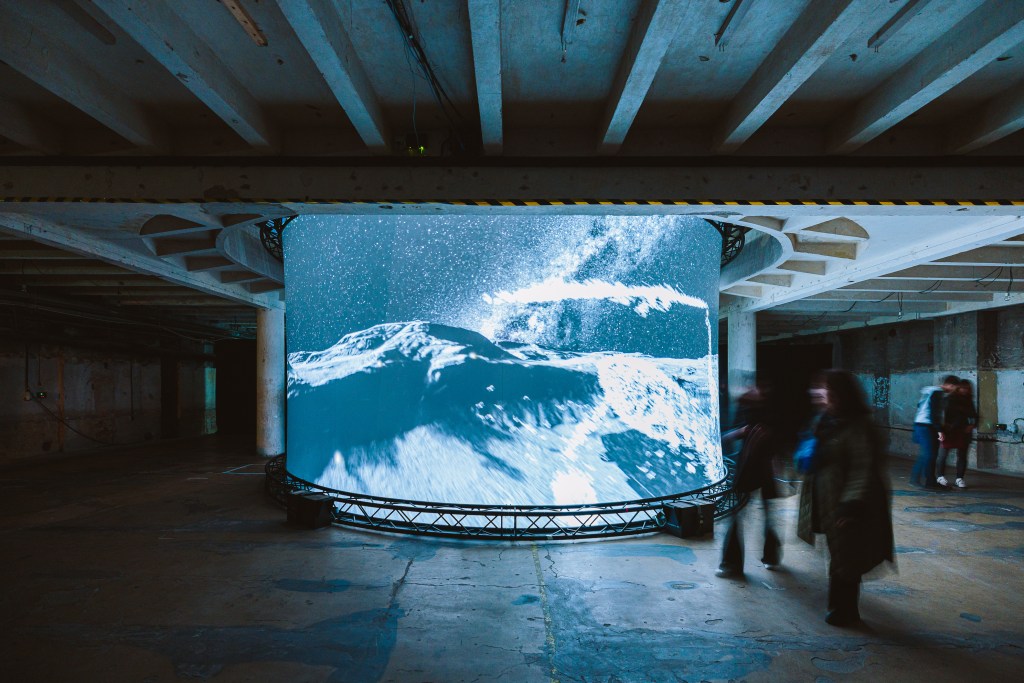
Pošta likes to say that Signal Festival contributes to making the world a better place, though whether the world has actually improved since 2013 he answers with a dose of irony. “I joke that we can transform society homeopathically through art,” he says. “If we look at the geopolitical situation, then we failed. So maybe it’s utopian, but if you look at history, cultured societies were always more advanced, because they could understand. That’s why it’s so important to travel, to be a sponge, to dip into different cultures and open up your mind, so you can grasp the concepts and what lies behind what’s happening. When you get immersed in art, your brain works a bit differently.”
Signal Festival returns to Prague from October 14 to 17, 2027.
Additional reporting by Danilo Tosti.
What are your thoughts?