Highlights from Miami Art Week 2025
This year’s standouts included modern takes on heritage craft, whimsical, surrealist installations and deeply personal artworks
Miami’s Art Week was as eclectic and thriving as ever, full of playfulness, politics and beautifully conceived individual projects. Here’s a shortlist of exhibitions, installations and works that are still on our minds a month later.
Es Devlin’ s Library of Us at Faena Beach Hotel
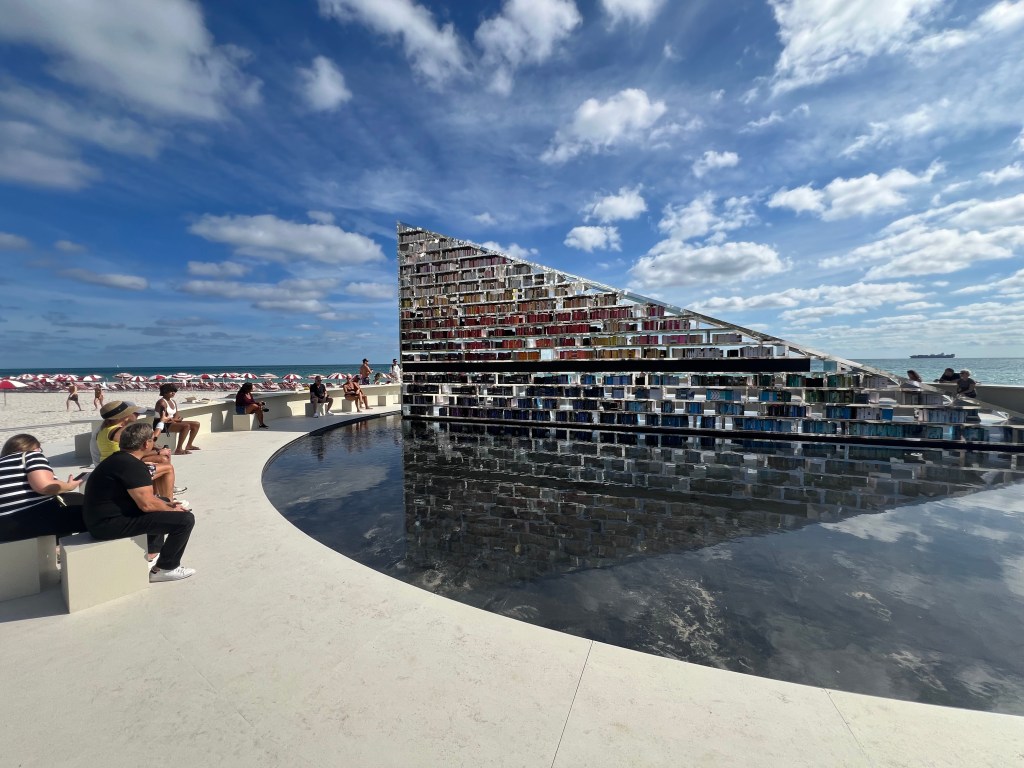
Acclaimed artist and stage designer Es Devlin brought to Miami’s beach a public installation, Library of Us, filled with over 2,000 books she considers inspirational. Visitors could stop by and read the books as the installation’s seats rotated with the main piece, while a voice read powerful and motivational passages. Inspired by Devlin’s previous work at Milan Design Week but fully site-specific for Miami, the 50-foot-tall revolving library resembled a giant sundial surrounded by water—a representation of floods and climate change, as she explained in a conference at Miami Design. On that same occasion, Alberto Cavalli, Executive Director of the Michelangelo Foundation, announced that Devlin will be Artistic Director of next year’s not-to-be-missed Homo Faber Biennale in Venice. At the end of Miami Art Week, all books were donated to libraries, except the recently banned volumes, explained Devlin, directing attention to these hard times for culture and freedom of expression. It was a perfect example of thoughtful art for everyone, and an act for the community.
Marco Brambilla’s After Utopia at Wolfsonian Museum
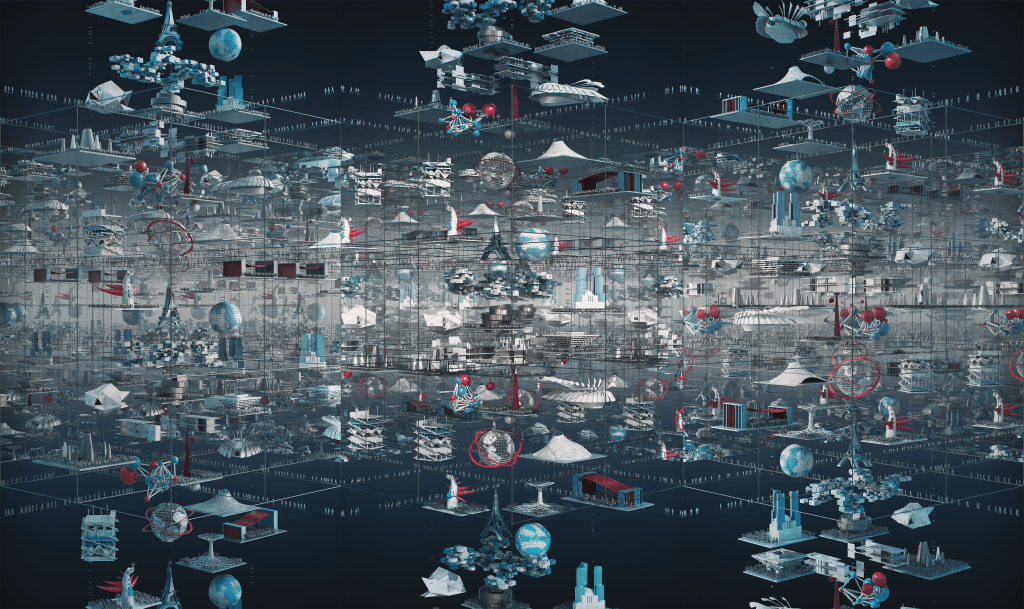
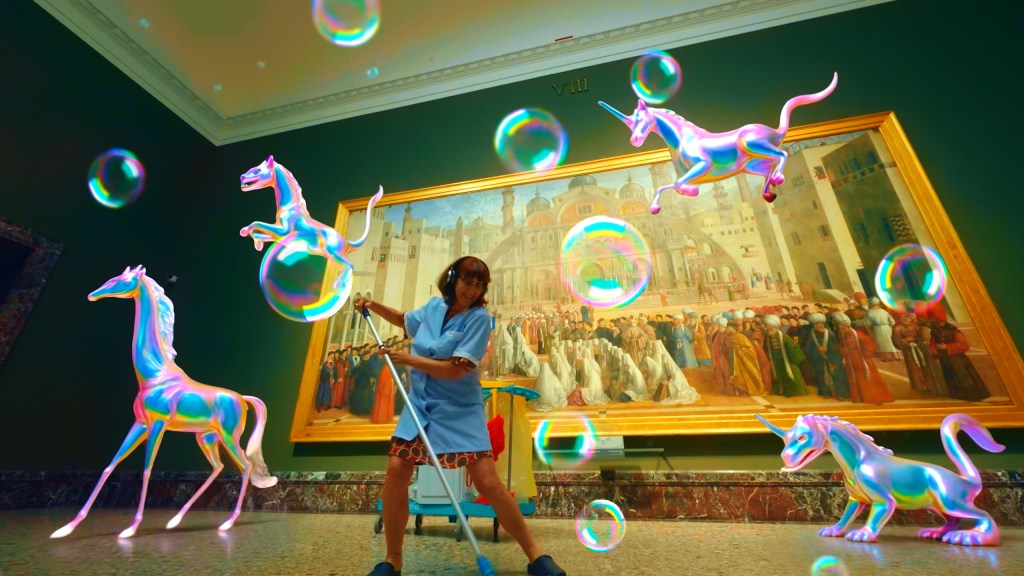
Miami’s Art Week is not only about temporary fairs; it also highlights major institutions such as the Wolfsonian Museum and Research Center. It currently hosts After Utopia, a surreal AI composition of iconic elements and data from 18 world expositions, from Paris 1889 to Osaka 2025. The three-screen installation layers ascending, hyper-detailed visuals representing the utopian ambitions of expos and their enduring belief in “better living through technology.” Marco Brambilla’s work can be seen until March 2026, alongside Wolfsonian archive masterpieces from past world fairs, including the fascinating Art Deco visuals of Chicago’s 1933 Expo.
Tuleste Factory at Design Miami
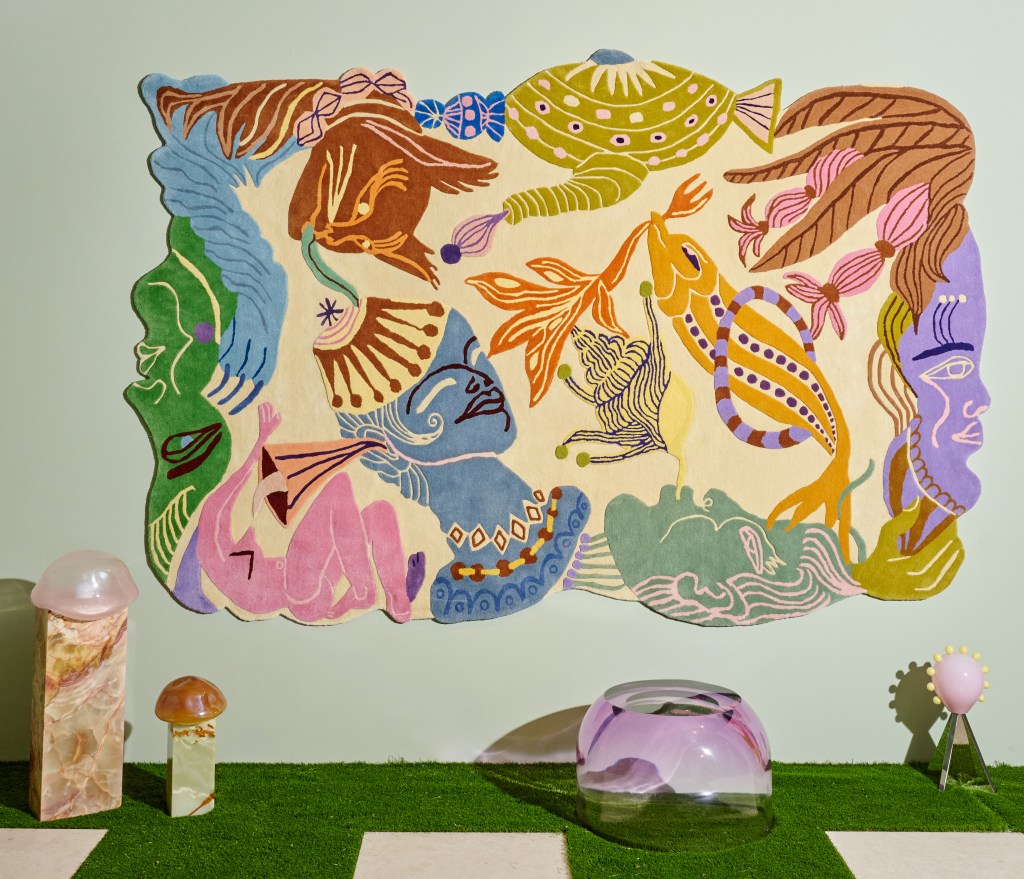
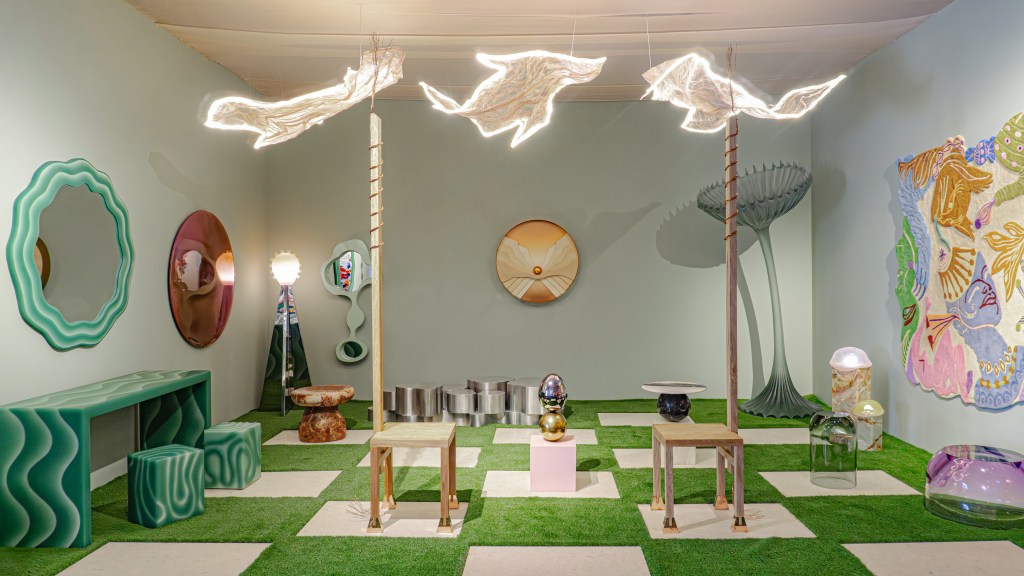
New York–based gallery Tuleste Factory presented one of the most artistically curated and conceptually rich stands at the Design Miami fair. Embracing optimism, joyful playfulness and a bold palette, it unveiled an entire room composed of works by a dozen diverse artists, including Marina Abramović, Pilar Zeta and Ian Alistair Cochran. The result was a convincingly immersive and cohesive experience. “Welcome to Keep It Curious—a world where imagination meets refinement,” read their statement. The presentation lived up to that message, especially in Facture’s Wake Desk, Mirror, and Side Table, made of solid resin and wood with a sinuous, undulating pattern.
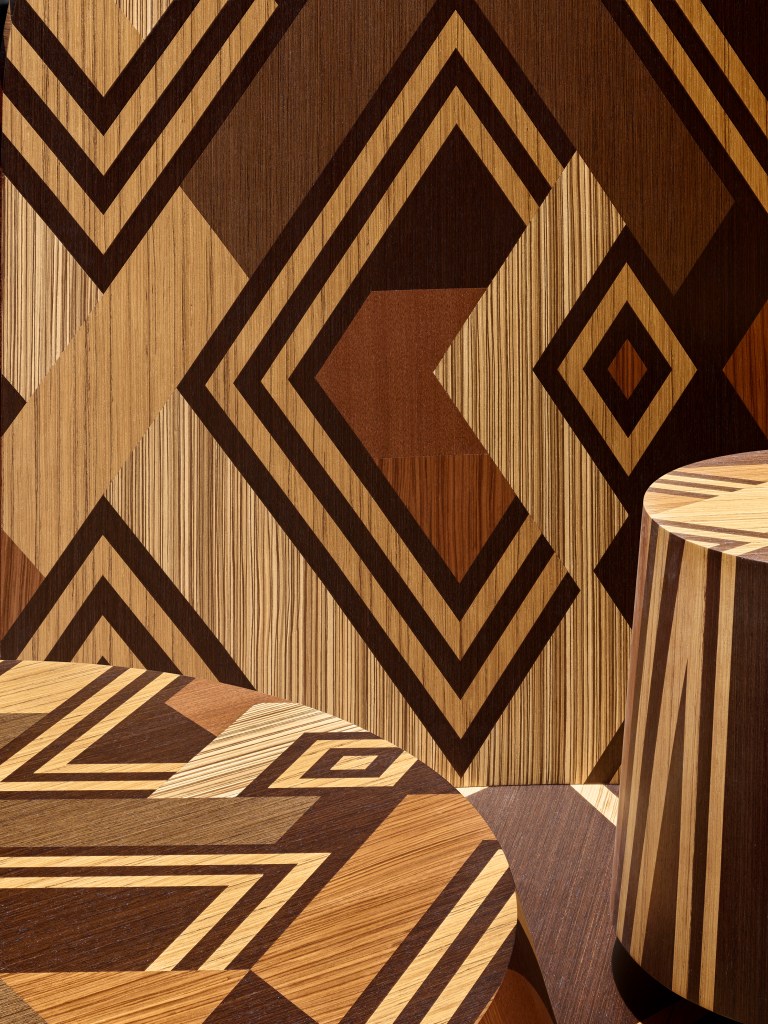
Stephen Burks Man Made with ALPI’s The Lost Cloth Object at Design Miami
Reconstituted wood decorative surfaces pioneer ALPI gave voice to the creativity of the artistically nomadic and dynamic duo Stephen Burks Man Made for three pieces of striking and fascinating craftmanship of the highest level. The Lost Cloth Object offers a contemporary reinterpretation of Kuba, a centuries-old textile art form originating from Congo. Renowned for its intricate geometry and masterful handwork, Kuba cloth finds renewed expression in wood through ALPI’s Legacy collection. Here, the ancestral patterns are transposed onto timber surfaces, imbuing new vitality into the natural grain, hue and texture of once “lost” or endangered species such as ebony, teak and rosewood. The mesmerizing creation comes from authentic cultural respect, and deep material and technical research developed by Malika Leiper and Stephen Burks with contemporary Kuba artisans in Congo-Kinshasa.
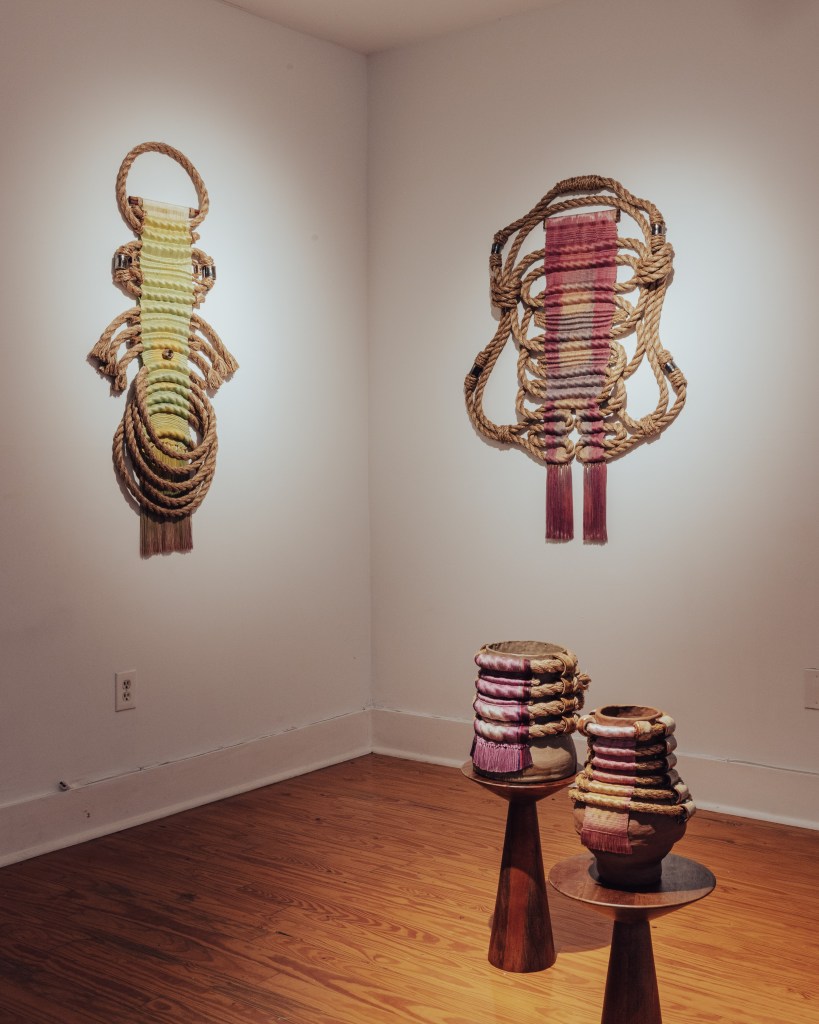
Terumi Saito’s Interweaving – Fiber and Clay at Alcova Project
The highly inspirational Alcova itinerant platform play on a smaller scale in Miami than in Milan, but they do it with the same intrepid spirit. This year, again with a total takeover of the city’s oldest hotel, the River Inn, steps away from the vibrant Little Havana area—an elegant, old-fashioned haven amid the chaos of Miami Art Week. Alcova Miami presented young and upcoming designers. Most notably among them all, was Terumi Saito’s Interweaving – Fiber and Clay, perfectly balancing the authentic spirit of Japan’s respectful cultural memory and adventurous contemporary craft and art. The same unexpected balance was found in her choice of materials, juxtaposing fabric threads with clay modeled according to ceramic traditions. The New York–based Japanese artist focused on backstrap weaving, a millenary-old weaving technique that has been found in several civilizations, a thread uniting people through cultural diversity and creative ingenuity.
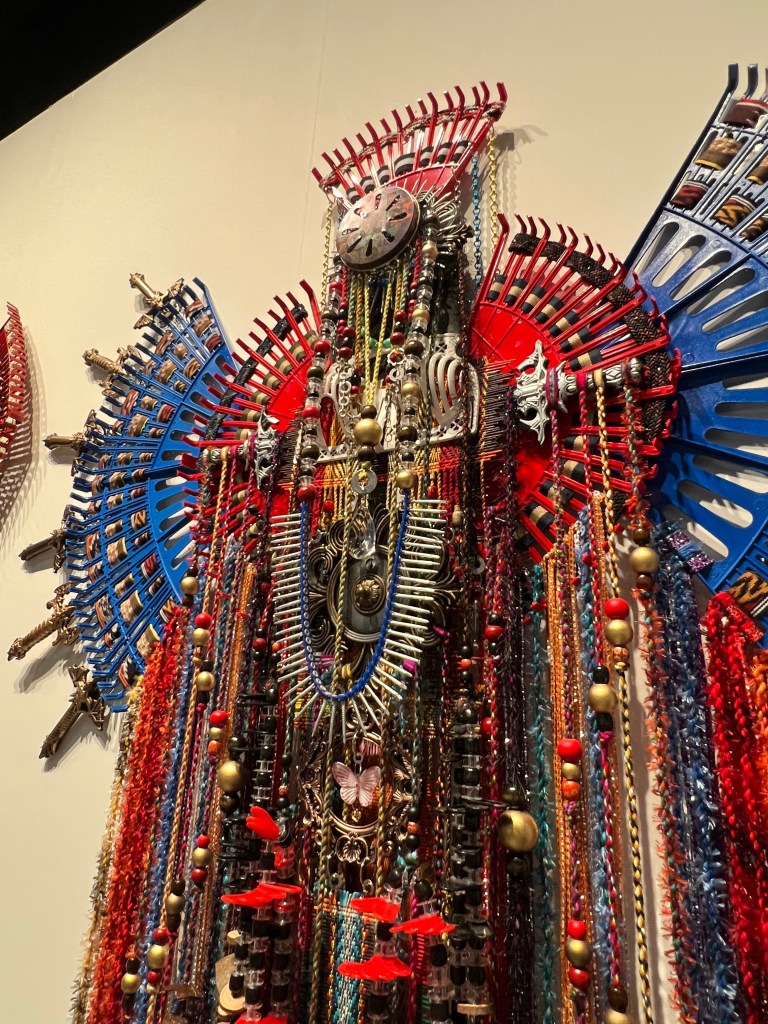
Anne Samat’s The Unbreakable Love…Family Portrait at Art Basel Miami Beach
At Art Basel Miami Beach’s Meridians section, dedicated to large-scale artworks, stood this monumental installation by Malaysian artist Anne Samat, dedicated to women and family ties. Samat mixes very diverse household materials with extremely complex traditional weaving techniques from her country of origin. A piece worth displaying in a contemporary art museum, The Unbreakable Love… Family Portrait features anthropomorphic shapes that foster a conversation about the strength provided by familial support. A feast for the eyes, both at a distance and in its smallest details.
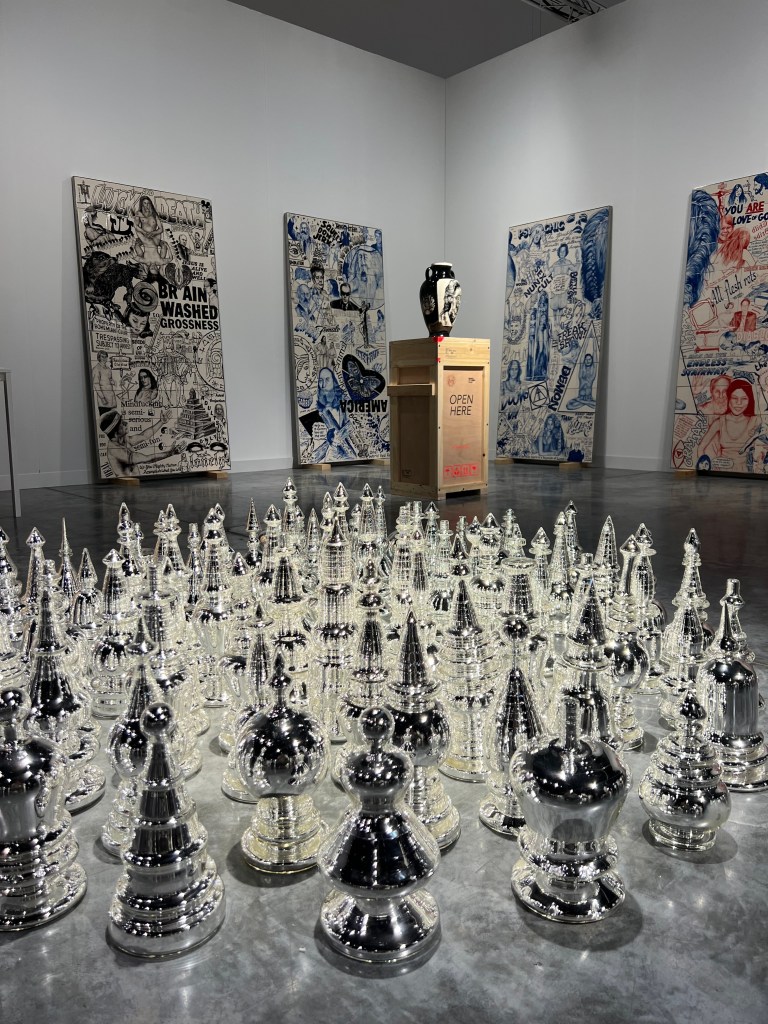
Renata Petersen at Art Basel Miami Beach
Within the NOVA section at Art Basel Miami, Pequod Gallery presented a solo booth for Mexican artist Renata Petersen. She operates inspired by childhood memories of her mother’s anthropological fieldwork, which shaped her curiosity about cults and religious movements. The artist grew open to understanding, not judging, always asking questions, and adding her own sense of irony and political and social satire. The presentation featured three distinct and apparently disconnected works: murals made from tiles, covered with slogans and representations of generational icons; ceramic vases with refined decorations; and blown glass. The latter are a perfect example of the artist’s background and point of view: anthropological studies (the reference to Buddhist monuments) and irony (their shape being similar to sex toys). According to director Bridget Finn, “Petersen’s work is so elevated in terms of ideas and references. Art in the past may have disregarded certain materials and histories of cultures. Renata brings these new elements together in an intellectual conversation through her subjects and materials, and that is exciting.”
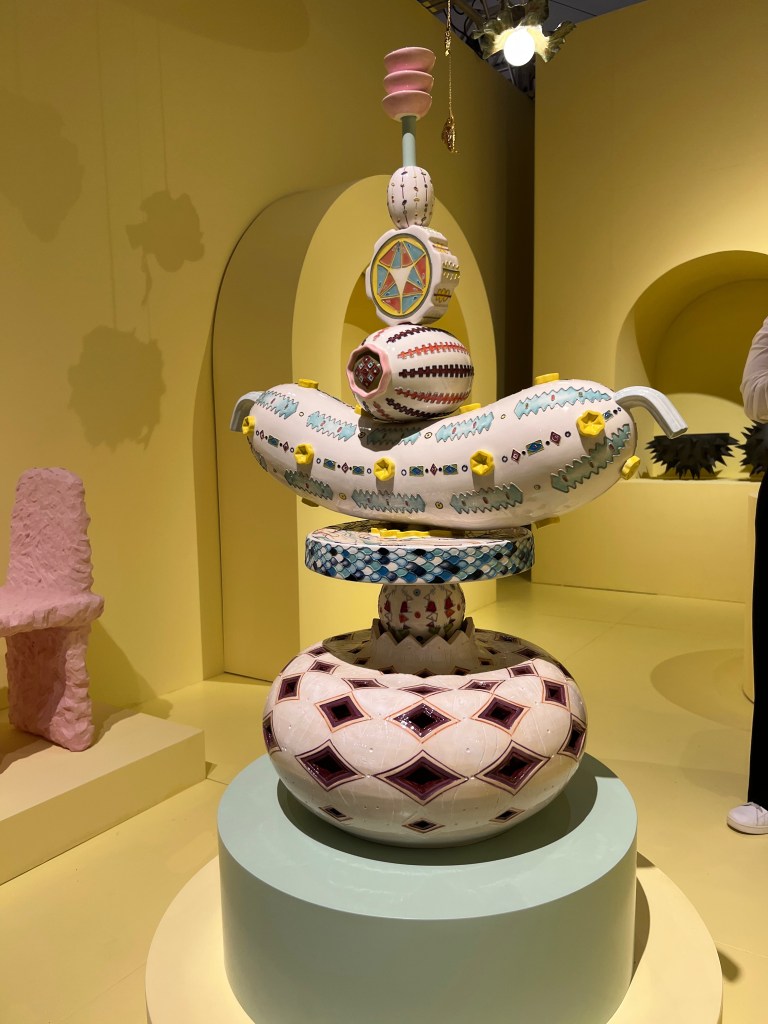
Bethan Laura Wood with 1882Ltd’s Pickle Tower at Design Miami
Bethan Laura Wood is an abstract painter based in Ottawa, known for her intuitive, gestural oil paintings rich with bold colors and compositions. She herself is a joyous and colorful manifestation of her own artwork. In a tight collaboration with Stoke-on-Trent ceramic studio 1882Ltd, she presented a playful, whimsical 4.5-foot ceramic totem, shaped like stacked vinegary pickles—a nod to trompe l’œil traditions enthusiastically received at Design Miami. The artist herself expressed her gratitude and satisfaction at being paired with a very talented artisan at 1882Ltd, developing a joined work of perfect synthesis between art and craft.
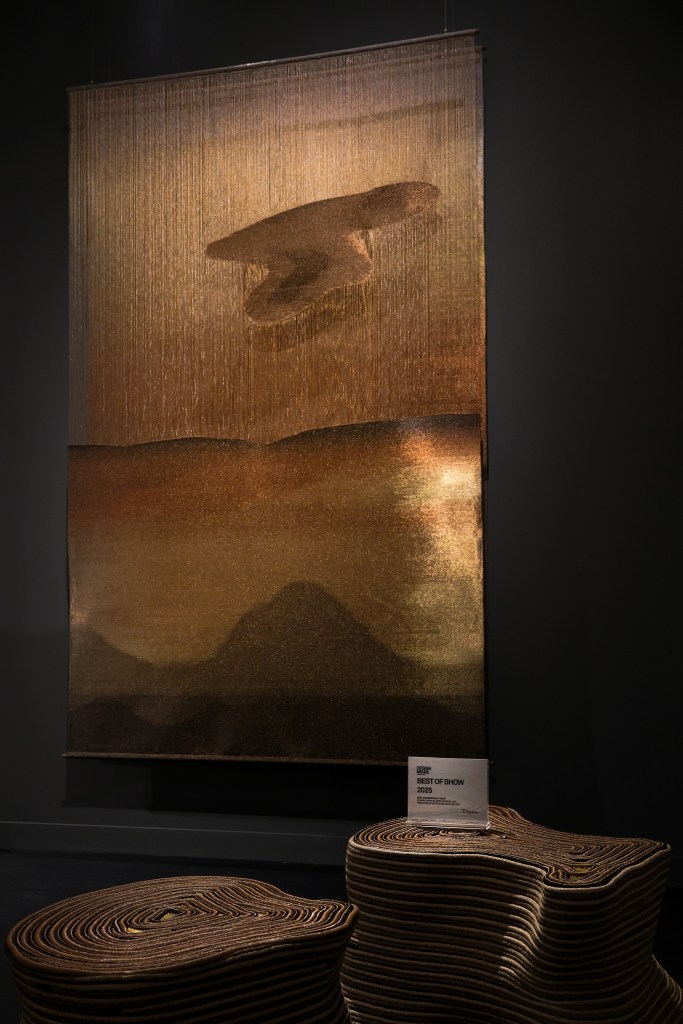
Jorge Lizarazo’s Japanese Sunrise at Design Miami
Jorge Lizarazo’s stunning wall hanging, Japanese Sunrise, received the Best Contemporary Work award at Design Miami. The piece drew visitors in with its delicate, luminous composition—a coppery tapestry inspired by a sunrise the artist witnessed near Fukuoka, Japan, captured at precisely 5:55 a.m. The Colombian artist, who leads the atelier Hechizoo Textiles, worked with fibers as fine as a baby’s hair, weaving copper threads that both filter and reflect light. The work combines poetry, technical mastery and architectural sophistication.
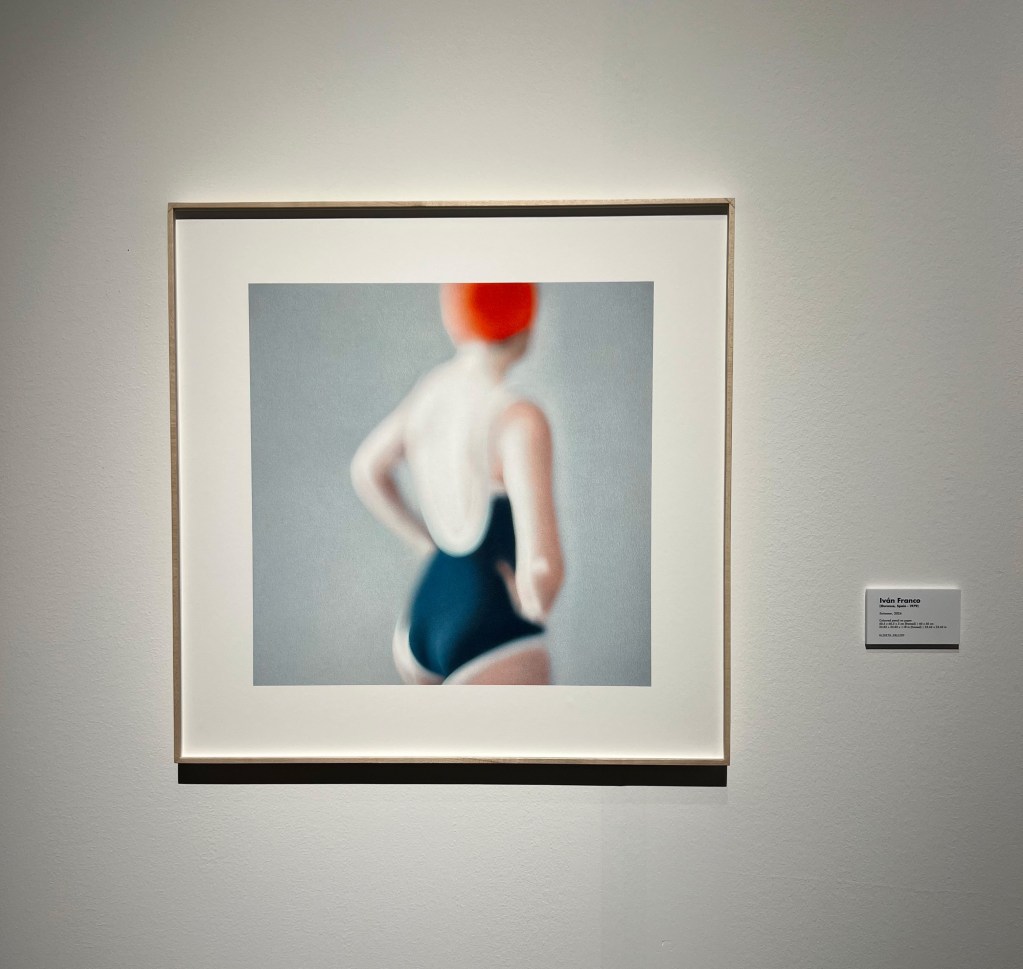
Ivan Franco’s Swimmer at NADA
NADA, the fair of the New Art Dealers Association, focuses mainly on painting and emerging art, with a radiant, energetic atmosphere featuring young artists and forward-looking galleries from thirty countries. The enthusiasm is palpable and the quality level is remarkable. Sometimes the cleanest, most direct paintings are the ones to catch the eye of collectors and art lovers. For example, Spanish artist Ivan Franco’s crayon technique reproduces Polaroid portraits on canvas with detailed, non-digital, handcrafted hyperrealism. He presented works with attention to chromatic details, investigating both his subjects’ identity and the viewer’s emotional response. But if interested in one of his pieces, prepare to join a long waiting list at Alzueta Gallery in Barcelona.
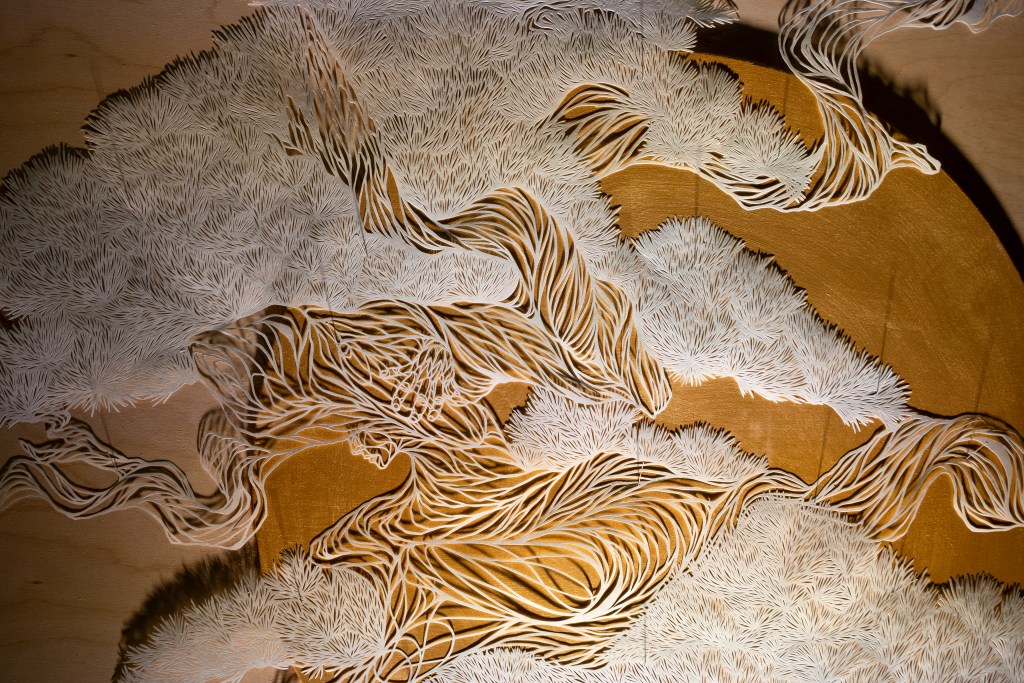
Hiromi Mizugai Moneyhun at Nobu Hotel
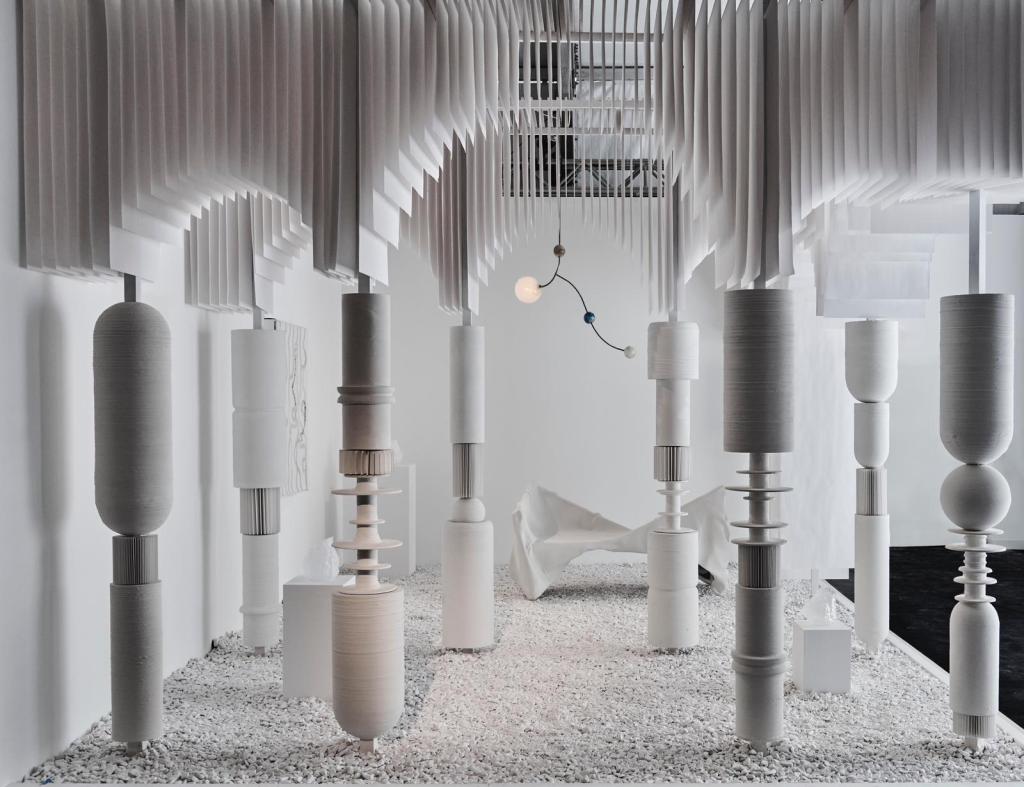
Among the luxury hotels on Collins Avenue contributing installations to Miami’s lively art week, Nobu hosted the minimal but striking exhibit of Hiromi Mizugai Moneyhun, a Florida-based papercut artist from Kyoto. Her three-dimensional pieces are made of large, thin paper sheets cut with modern sensibility while reflecting Japanese tradition, exceptional precision and innovation. The exhibition was in partnership with Delray Beach’s Morikami Museum and Japanese Gardens, a 16-acre site reflecting Japan’s evolving landscape traditions.
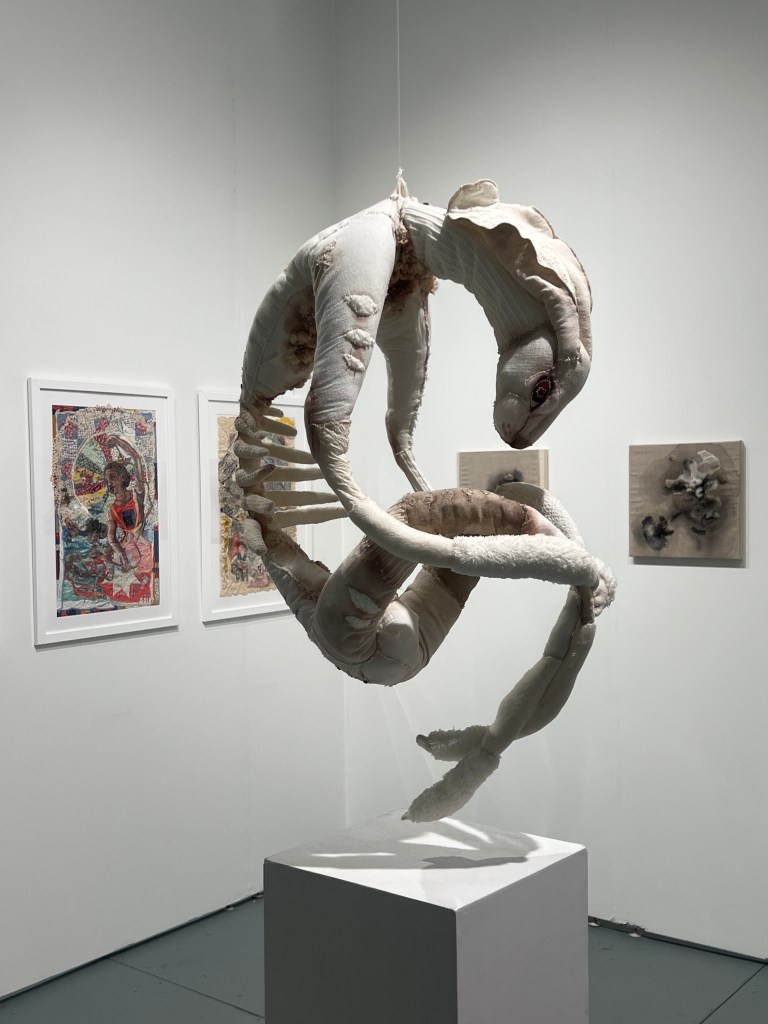
Hou Guan Ting’s ? at Scope
Visiting Scope by the beach offers chances to discover emerging artists amid critiques of its commercial leanings. It is gratifying to find a quiet gem like the artwork of young Taiwanese fiber artist Hou Guan Ting (aka White Chicken), represented by The Camp Gallery. Mixing cotton, linen, pigment ink, beads and meticulous embroidery, the artist poses questions about the fragility of vulnerable beings facing discrimination, uncertainty and stereotyped gender labels. The curled posture of an animal’s body shaped like a question mark suggests both self-protection and exposed vulnerability. Grotesque yet delicate, gentle but combative.

What are your thoughts?