The Birth of Peak Design’s Roller Pro Luggage
Developed for both photographers and travelers, this new roller bag is truly unlike anything else on the market
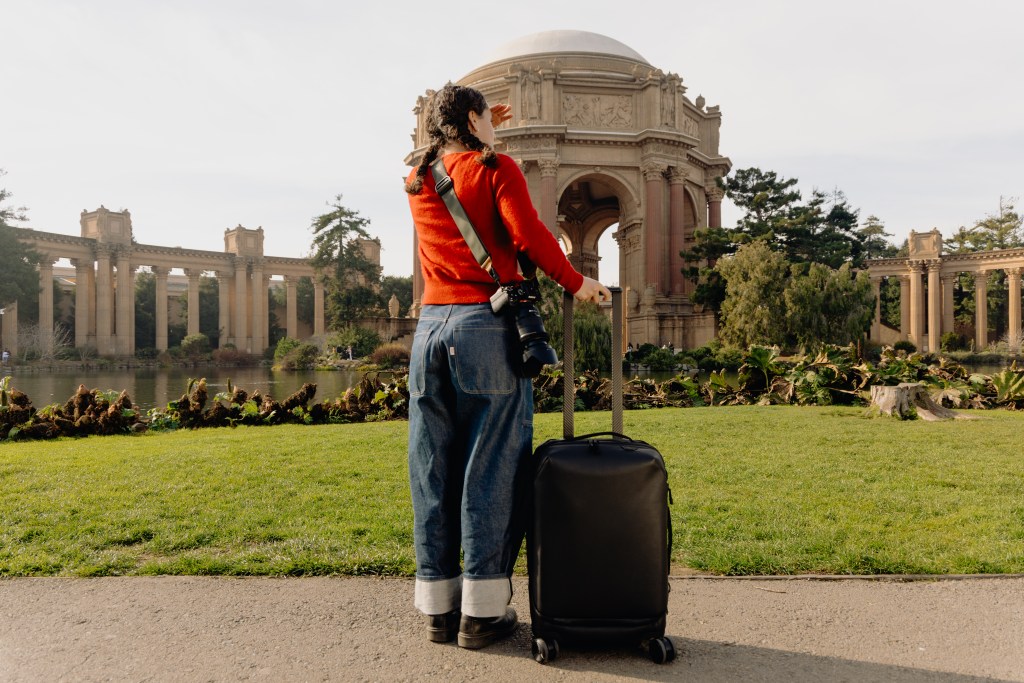
Four years. That’s how long Peak Design’s Roller Pro has been in the works. Liv Eaton has lived every moment of the bag’s gestation, and its birth earlier this year couldn’t have been more earned.
However, backing up several steps, why was it necessary in the first place? Well, just think about how many times the roller bag you presently use has annoyed you. Think about its telescoping handle (called a trolley in luggage-speak), and how much space that seems to chew up within the bag. Think about that handle’s design, too, and how the thing jiggles around—always seeming like it’s on the verge of rattling itself right out of its mooring. These are but a few aspects of rolling, overhead-bin-fitting luggage that annoyed engineers at Peak Design—a company that reinvented camera tripods about a decade ago when company founder, Peter Dering, couldn’t stop being irked by how conventional tripod legs were too bulky, and deployed with all the grace of an arthritic giraffe trying to sprint.
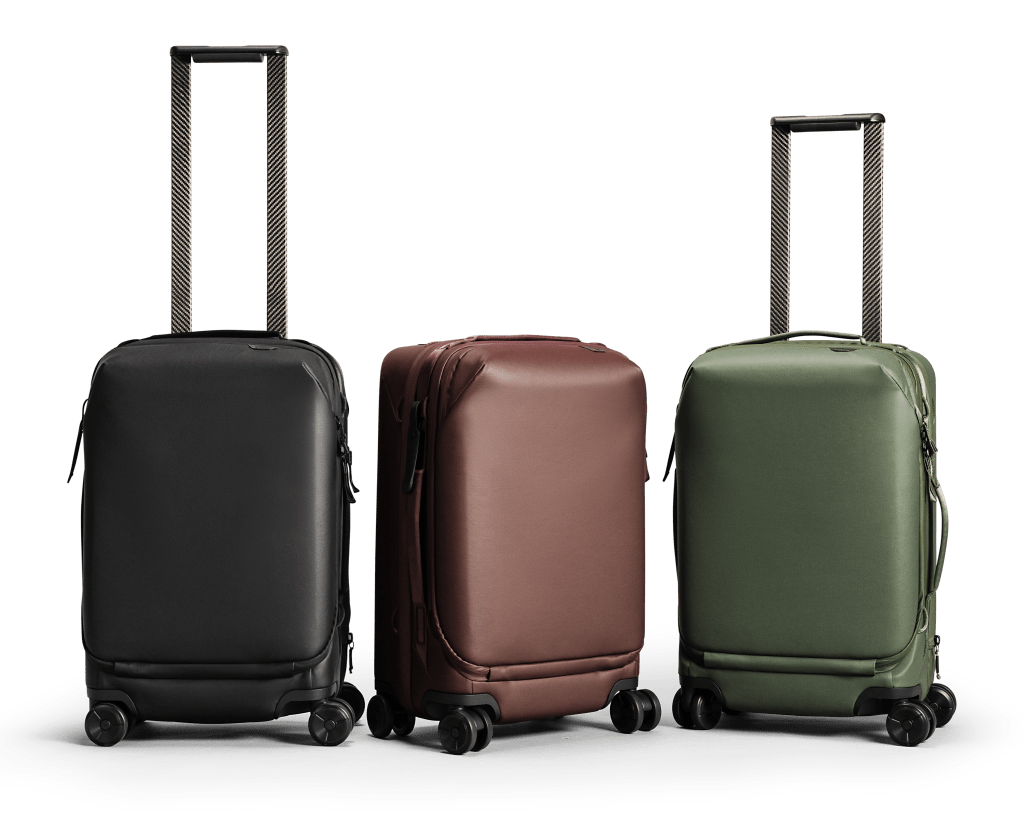
Since then, the company has come to reinvent many products, from camera bags to phone cases and mounts. Eaton says the creation of the Roller Pro was more consumer driven. “We’d launch a new product, and no matter what that was, the comments on Kickstarter were constantly, ‘When are you going to do a roller bag?’” But the reason why it took a while has had less to do with Peak Design and more to do with an industry reluctant to change.
COOL HUNTING: What was step one? What was the “Big Solve” you wanted to attack with the Roller Pro?
Liv Eaton: The most annoying thing about roller bags are these giant tubes in the bag that you have to constantly pack around. That’s the real pain, and it eats up a bunch of the interior. So we wanted to somehow make a bag where the trolley assembly could exist, but somehow the bottom of the interior was perfectly flat. Where we ended up, it’s not perfectly flat. There has to be something there, but it’s the thinnest thing on the market by far.
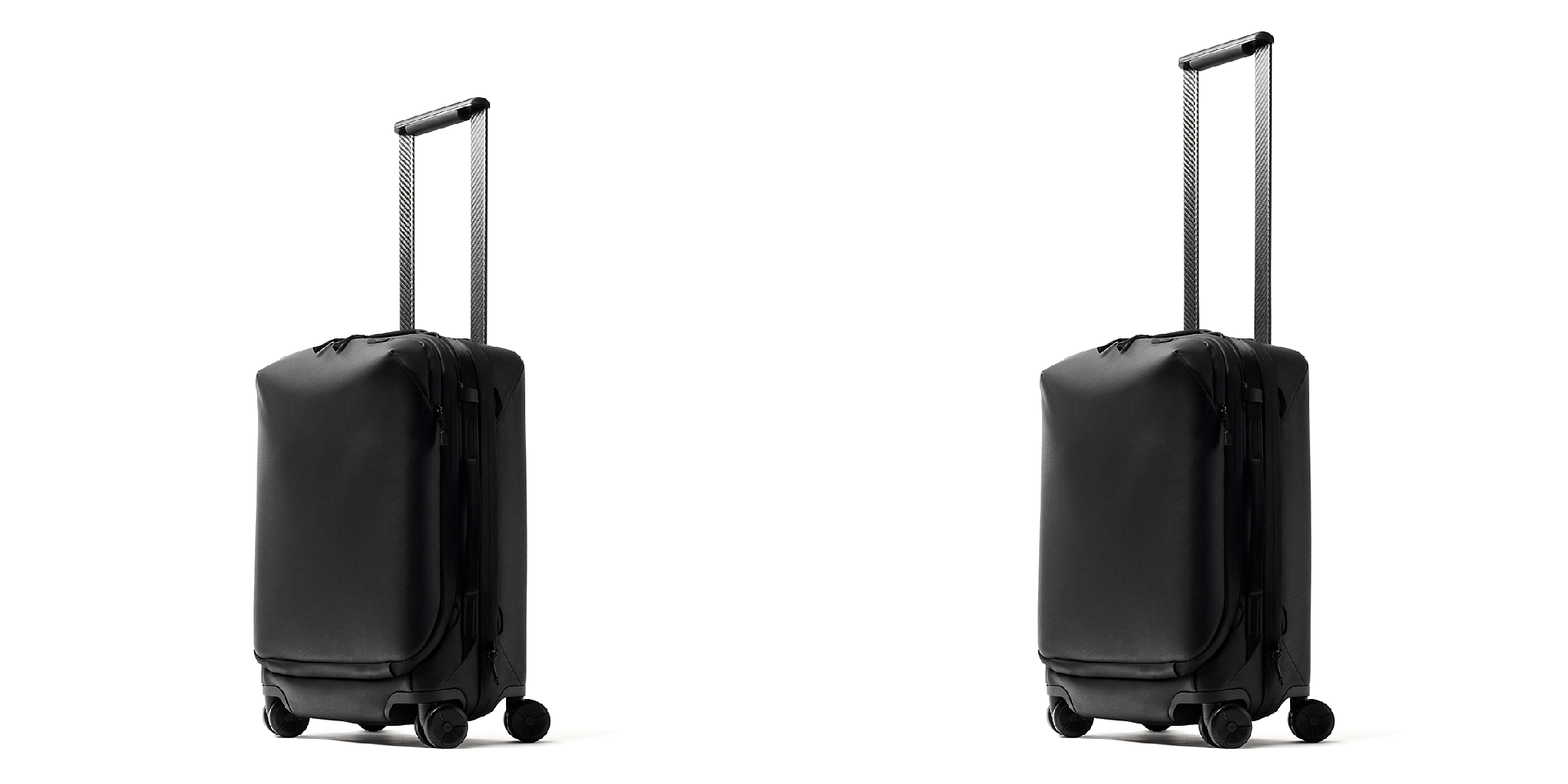
CH: Now to the how. How was that achieved?
LE: We spent a lot of time on the trolley, and it’s carbon fiber, with super thin, smooth legs and it’s really an engineering marvel. But the luggage industry is kind of like the legacy bike industry. They have a set suite of options, and you pick from the suite of options, and then they just shoot out a generic roller bag. And so when we wanted to really be annoying about engineering a trolley—we’re an engineering-led company—and then on top of that, to convince them that we knew enough about working with carbon that we could make a carbon fiber trolley—we literally got laughed at. I had hand-built the first four or five prototypes, and we could show them these really tight tolerances—which is how you don’t end up with a bag with that jiggly handle—and they laughed at us. Nobody made trolleys like this.

CH: In the end, you wound up with the company that makes your carbon fiber camera tripod legs, because there was trust there. But beyond the super slick trolley, the bag also has this very silky zipper, which also seems distinct from the industry.
LE: Zippers are so hard. Ours didn’t happen by accident. You can’t ask zippers to move in more than one plane at a time. They hate twisting; if you want it to twist, you have to do so in a way that’s not asking too much. Ours goes around the shoulder of the bag really gradually, and we added asymmetrical zipper tape to account for the different radii of the inside path vs. the outside path.
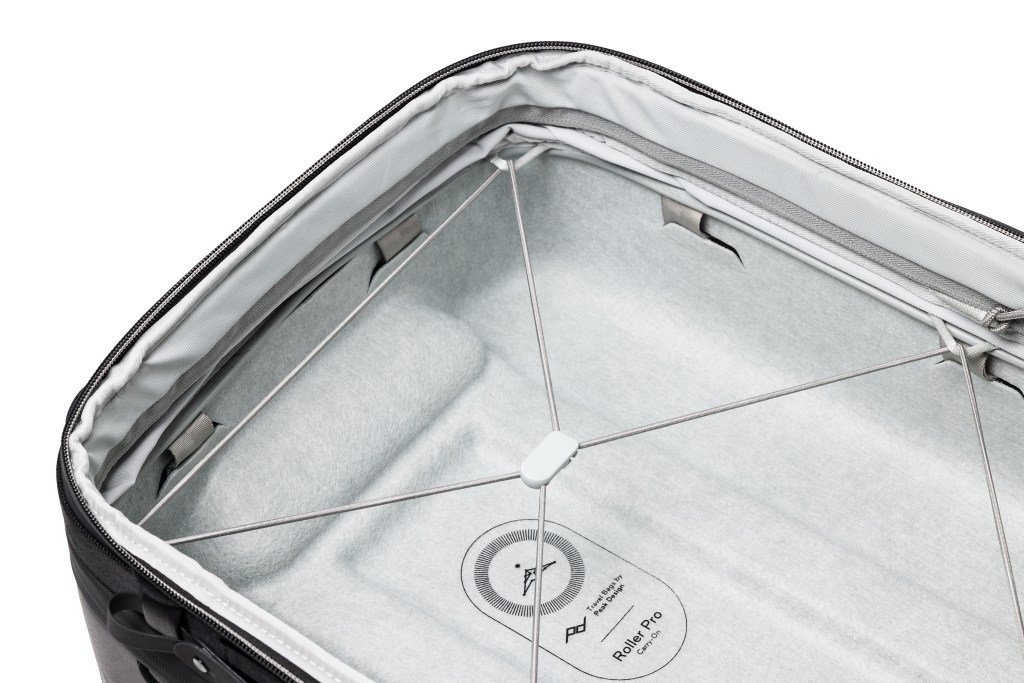
CH: Then there’s the interior, which doesn’t seem like the inside of any luggage. It’s not like the guts are all exposed, like with other bags.
LE: We thought that the lamest part of roller bags is you open it and it’s got this floppy, shitty liner made of crappy fabric, and it’s super cheap. And here you paid several hundred dollars for this thing, and then you open it up, and it’s totally uninspiring. We spent a lot of time with different materials, and we ended up studying the materials used for car interiors. We wanted that kind of experience when you touch the fabrics, something tactile and upscale. And so the back of the shell gets this felted, formed, soft surface that you want to touch, rather than want to avoid touching.
CH: One of the “Easter eggs” is the snap-tent system that holds your laptop in place on the back of the bag. You just slide your laptop in, and it stays put. It’s like this magic trick. What are the whys and hows of this system?
LE: That came out of us hating the hook-and-loops straps you’d normally see there. They’re unkind to your hands and over time they start to look gross and bend and peel away. We first arrived at the snap-tent during an afternoon we spent noodling with the head of design on different ways that you could try to fix the laptop in place. And we love magnets at Peak Design. And so magnets were a thought, and we just kind of got there after a couple of trials and making it better and better. But yeah, we were super excited when we got the tent system to work.
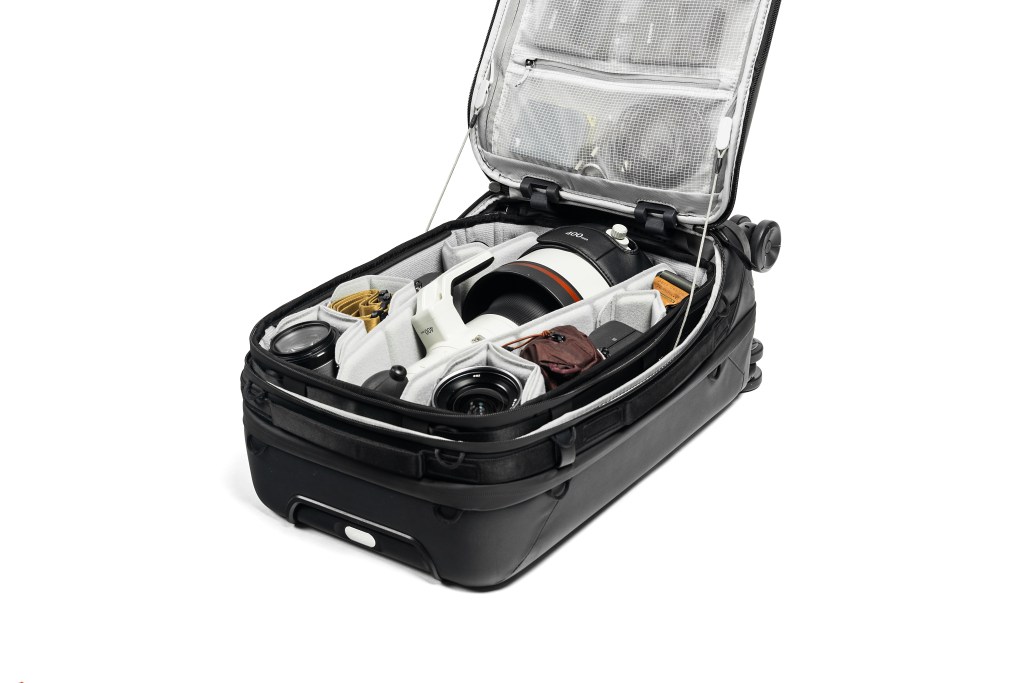
CH: I think one major highlight is the cantilever opening, where the lid tilts away from the interior at 110 degrees, so it stays put and you can see both sides of the interior all at once.
LE: Yeah, that was really important for us from the start, because of camera cube access. This bag was designed with photographers in mind. It’s great for travelers, but we’re camera dorks at Peak Design and we wanted this bag to be a workstation for photographers. We wanted you to be able to max out camera cube capacity and make cameras very accessible on the go. That means seeing everything inside. We call this opened mode the “drawbridge,” and we couldn’t have the bag just flop open. The advantage of this system of cables is you can adjust the degree of opening, and then the sleeves [on the lid side] work where you could see everything; maybe it’s batteries, maybe it’s chargers, maybe it’s SD cards, and you can just see everything you need, all your accessories.
We’re really proud of this part of the Roller Pro. We spent a lot of time sweating, over-engineering, and then in the end we went back to very, very simple guy lines. And the simplicity, that’s the magic, actually.








What are your thoughts?