The Bold Mission of the Deji Art Museum In Nanjing, China
The Nanjing museum shares its fine art experiences in a futuristic mall all day and late into the night
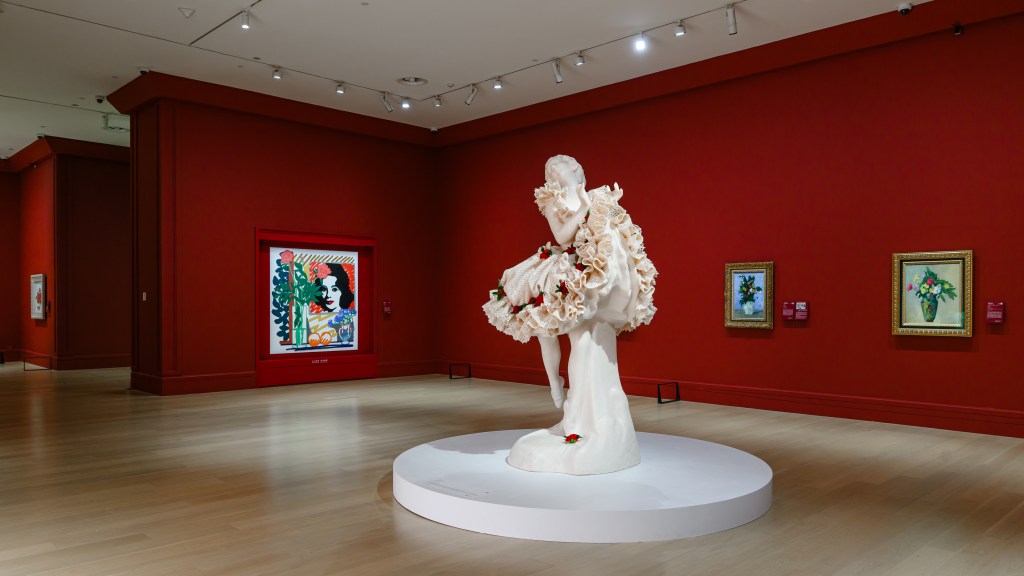
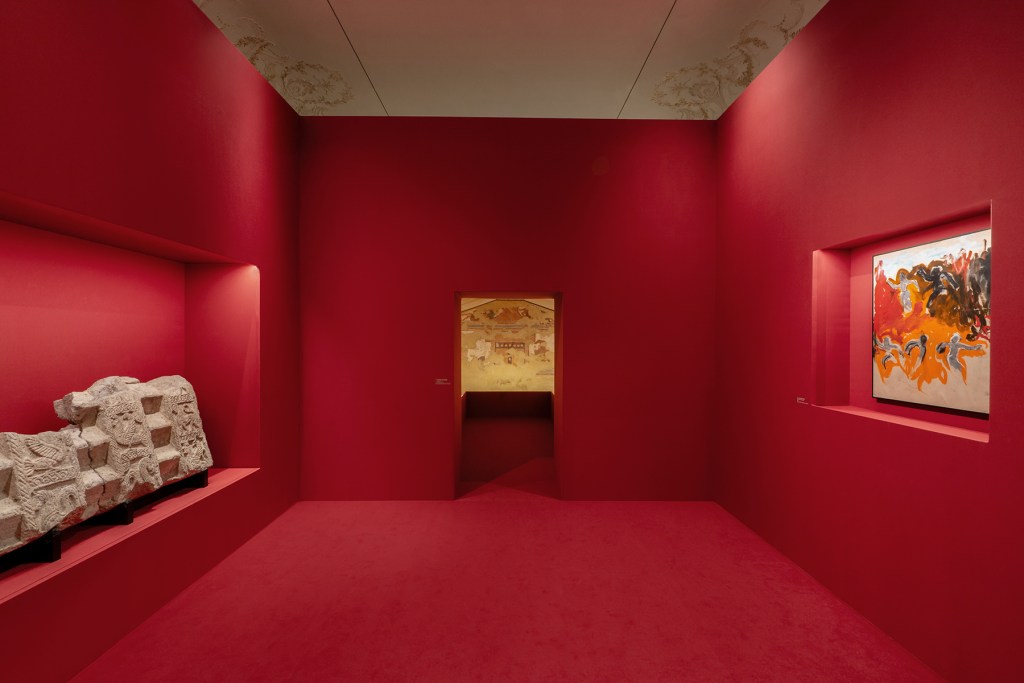
It’s 11pm on a Monday night. Several people stop to study paintings of flowers in the Deji Art Museum in Nanjing, China, about 170 miles from Shanghai. In the first room, the gallery walls are painted bold ruby red to display a collection of rose paintings. In the middle, Jeff Koons’ Ballerina sculpture perches atop a circular pedestal festooned with fresh blooms. The exhibit, “Nothing Still About Still Lifes: Masterpieces from the World of Flowers Collection,” brings together 140 floral-themed artworks by 109 artists from China and around the globe. This new iteration of the show highlights many pieces that are on view at the museum for the first time in a reimagining of their flower-focused permanent exhibition. This night is not a special event; the opportunity to view the collection so late has become a core tenant of the museum to make their collection accessible 365 days a year from morning until midnight.
“Nothing Still About Still Lifes” was curated by Professor Joachuim Pissarro in collaboration with Artistic Director Shen Boliang and Museum Director Ai Lin. Developing these experiences requires a cadre of art experts. “Research drives the collection. We have a really good research team, including young scholars from abroad and educated locally,” says Deji Art Museum Artistic Director Shen Boliang. “I am in charge of how to lead them in collaborating together.”

With the goal to reemphasize the value of still life paintings, Boliang worked with Pissarro to amass an impressive collection of artwork. “You can look at flowers and witness lots of transformation and movement,” says Boliang. “For us, this part is important, because not only the transformation of an artist’s own career, but also the transformation of art history, politics, the economy, technology and culture.”
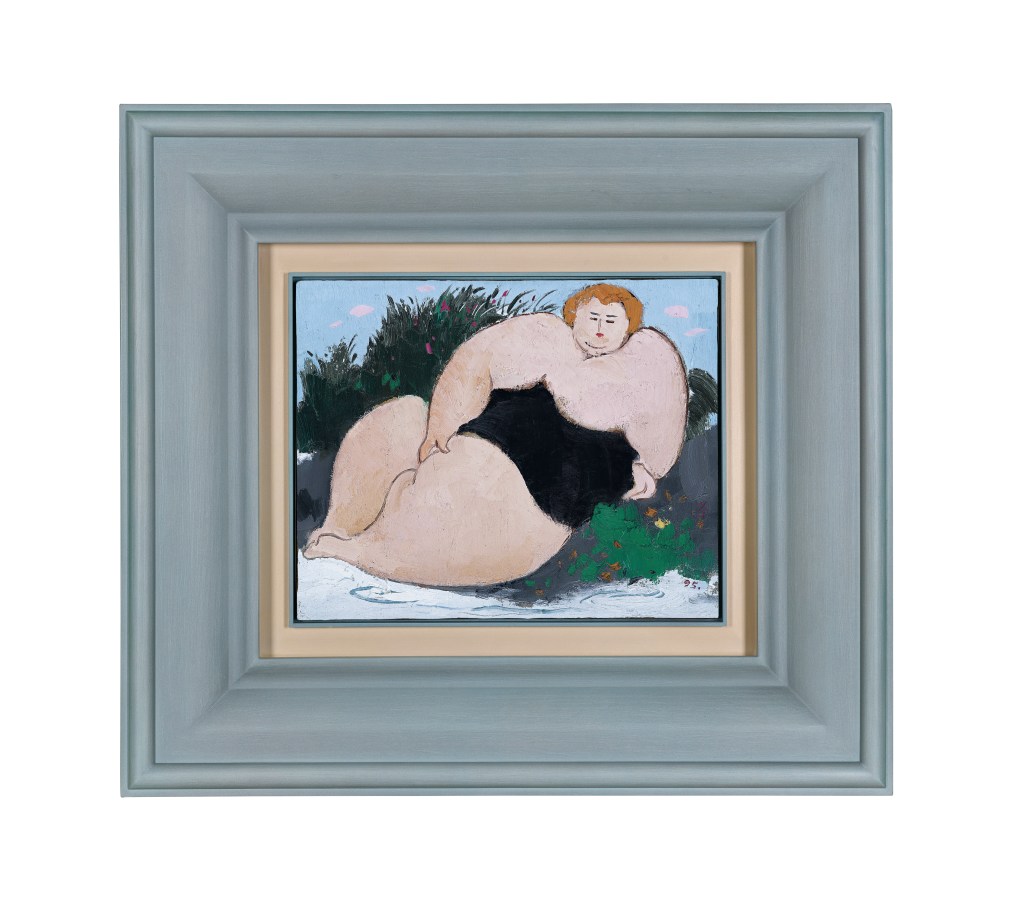
This exploration of flowers in art also takes the viewers on a journey through the visual worlds of pioneering Chinese artists such as Sanyu, Pan Yuliang, Wu Dayu, Wu Guanzhong, Zao Wou-Ki, Chu Teh-Chun, Chen Yifei and Zhang Xiaogang. The collection also brings together works by artists from Japan, Europe and North America.
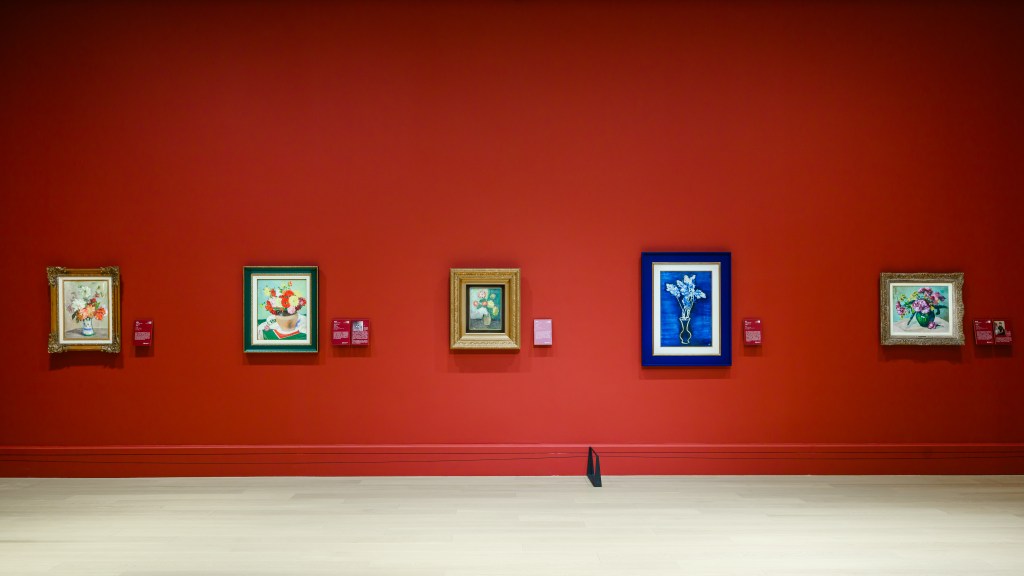
In the first gallery, the works on the bold red walls focus on roses. “A rose is so common in our lives,” says Boliang. “But for impressionist artists, they were really something new for their time. Many flowers have symbolic meanings and stories to tell.” With examples from Impressionism, Post-Impressionism, Cubism, Fauvism, Expressionism, Dadaism, Surrealism, Abstract Art and Pop Art, viewing the exhibition feels like walking through an art history garden, an exploration of floral themes through time and time traveling into contemporary interpretations. “So, there’s nothing still about still life,” he adds. “It keeps growing.”

Standing by Pierre-Auguste Renoir’s “Fleurs dans un Vase,” the painting of flowers in a ceramic vase is displayed behind glass next to an actual vase. Boliang explains that the vase is in fact the very same that is not only in this painting, but appears in several other Renoir works, which can be viewed on the screen beside the vase. Adding to the interaction, Boliang demonstrates how the lower screen allows museum-goers to turn the image around to see all of the sides of the vase. It’s a stunning moment to view the object that was in the room as the work was being created.
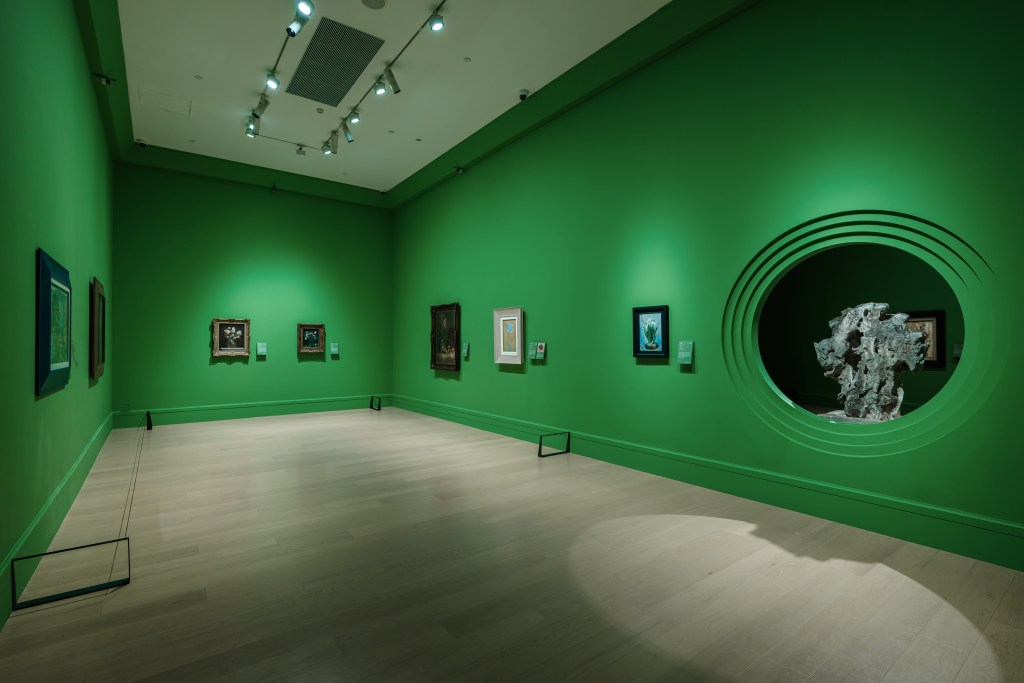
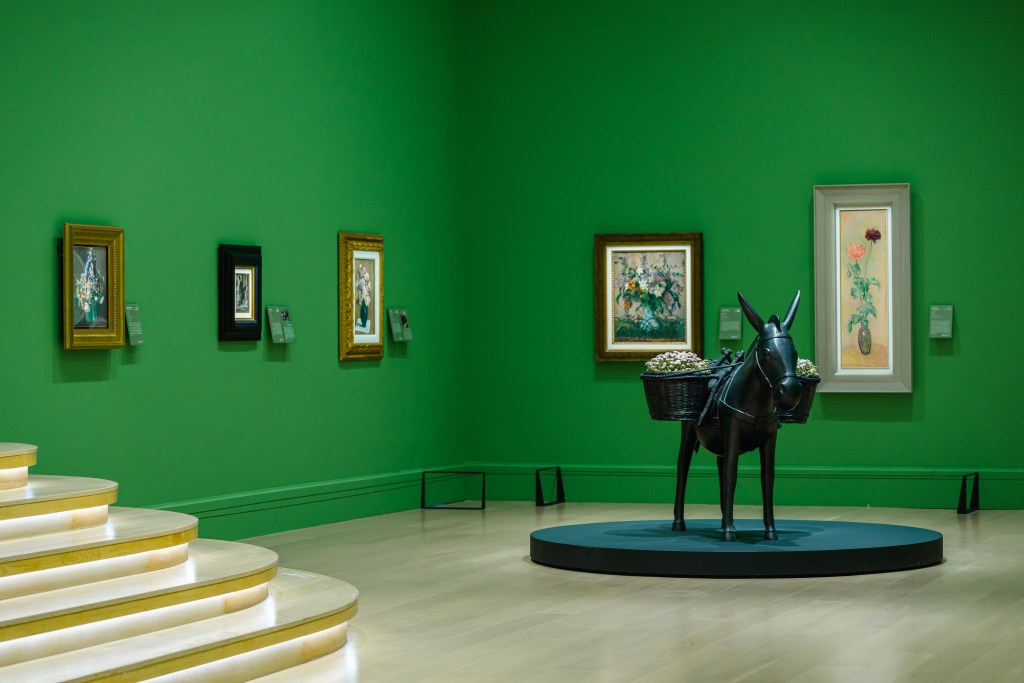
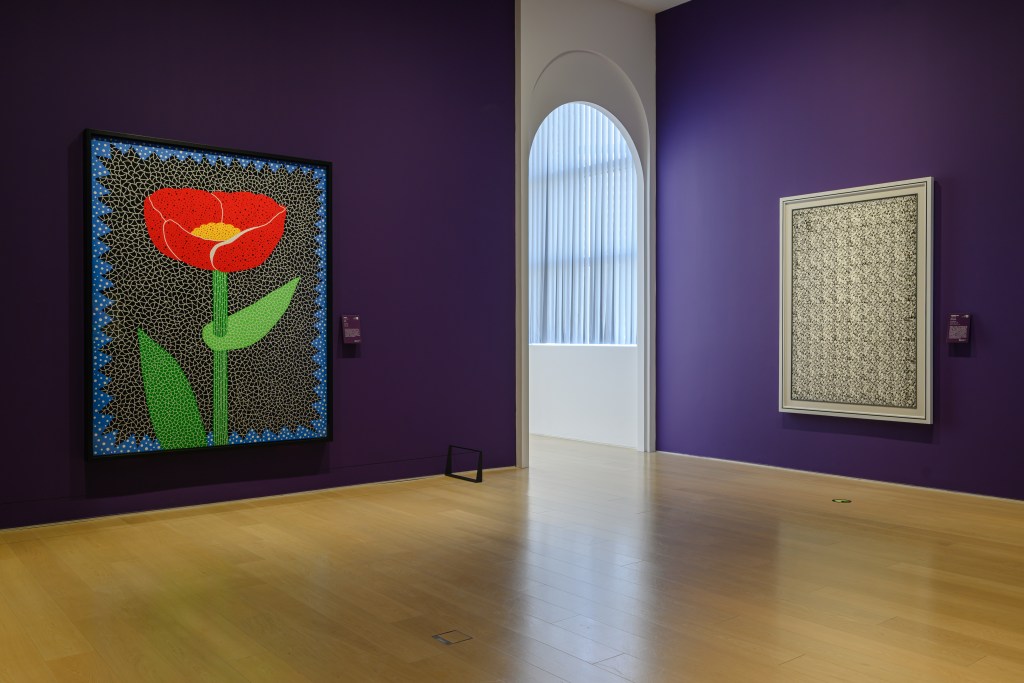
The exhibit continues to tell a story in installation design and collection. In a gallery painted a vibrant leafy green, the French sculptor François-Xavier Lalanne’s donkey sculpture Âne Planté (Planted Donkey) totes fresh purple mums surrounded by a variety of lush flowers painted by Western and Chinese artists. The purple room beckons the late-night visitors to floral works by David Hockney, Tamara de Lempicka and Yayoi Kusama. And finally, through an arched doorway into a glowing white room, Takashi Murakami’s “A Flower Forest” and Alex Katz’s “Gladiola 3” lead the journey into the contemporary representation of blooms.
To get to the Deji Art Museum, visitors walk through a multilayered luxury shopping mall. Public restrooms have been staged as experiential design installations. One section feels like a fun house with massive kitten paws jutting out from the walls near colorfully lit escalators. A lobby with a coffee robot leads to The Ritz-Carlton Nanjing adjoining tower.
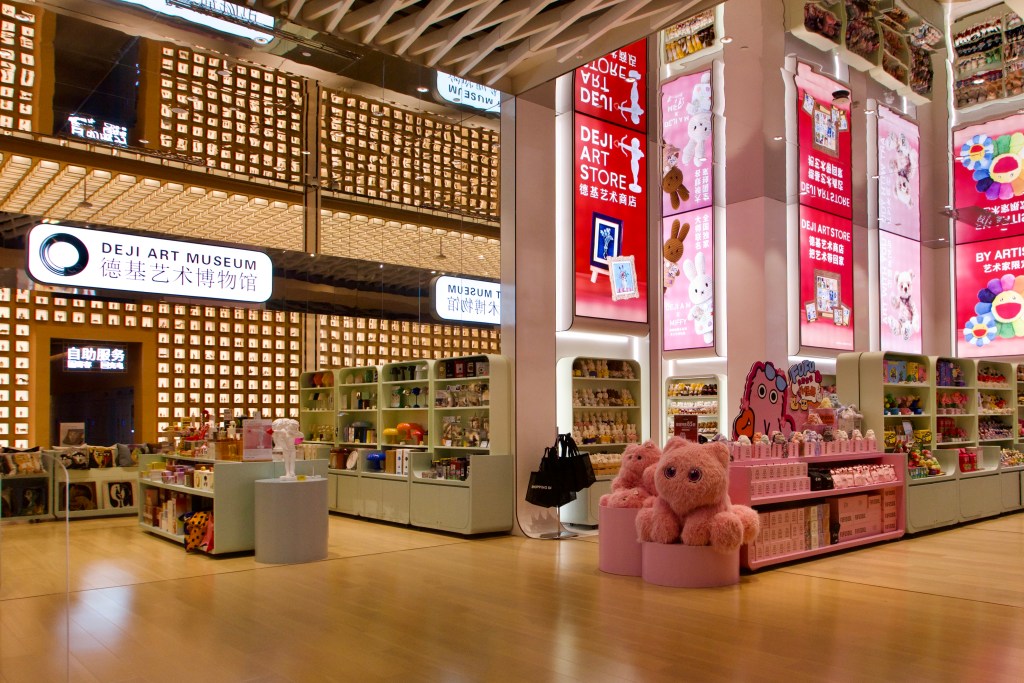
At the mall, guests can look up to the top floor to see banners, projections and vibrant glimpses of the exhibits. The museum shop wraps around a long section of the space with countless adorable toys and an extensive merch collection for its exhibits. The Deji Art Museum stays open until midnight daily, offering affordably priced tickets for their evening visitors to see this exhibit—and an interactive digital art experience bringing Qing dynasty court artist Feng Ning’s “An Era in Jinling” painting to life and Beeple’s first-ever solo show “Tales from a Synthetic Future.” These shows, combined with “Melting Memories,” the Rafik Anadol wall installation facing the museum store, and two Yoshitomo Nara houses in the middle of the museum level, are beacons to entice mall visitors to view the public art, museum shop and collections.


What are your thoughts?