Laila Gohar on the Whisky That Took Her Back to Cairo
Highland Park’s second Between You and I release is a 17 Year Old single malt built around the artist’s Egyptian childhood, and she tasted it before she ever met the man who made it
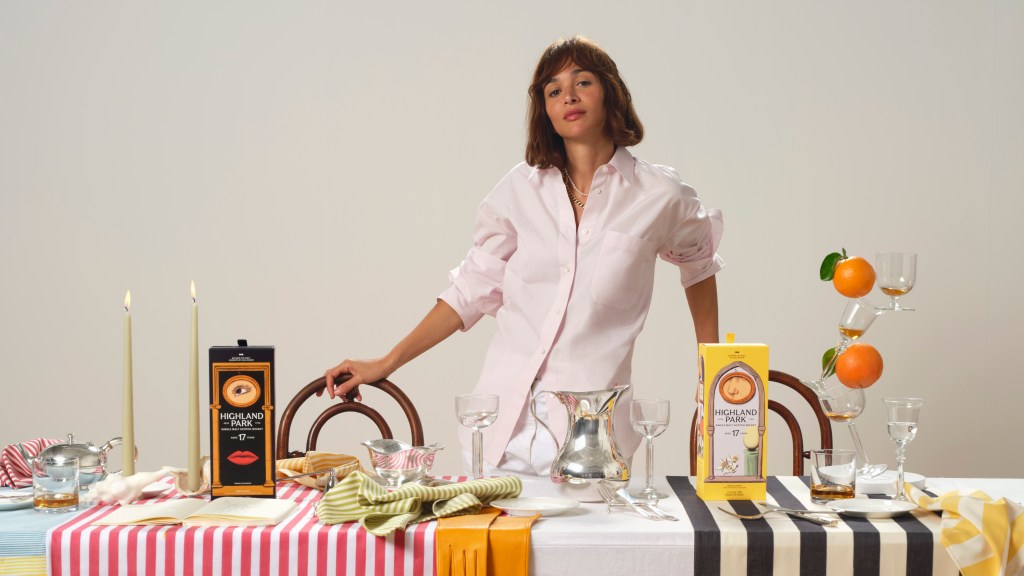
Highland Park Master Whisky Maker Marc Watson received a brief about Laila Gohar and went looking through more than 80 casks for a flavor that would feel like home to her. He was working from a description. The New York artist known for butter sculptures, seafood towers and tables that read as exhibitions had never been in a room with him.
“I actually didn’t meet Marc until after he created the whisky,” Gohar tells us. “He interpreted my background and Egyptian heritage in his own way. When I tasted it, I immediately thought of the Gayer-Anderson Museum in Cairo, where I spent a lot of time as a child.” A sip took her to a building she knew from childhood, and that reaction became the material she would work with.
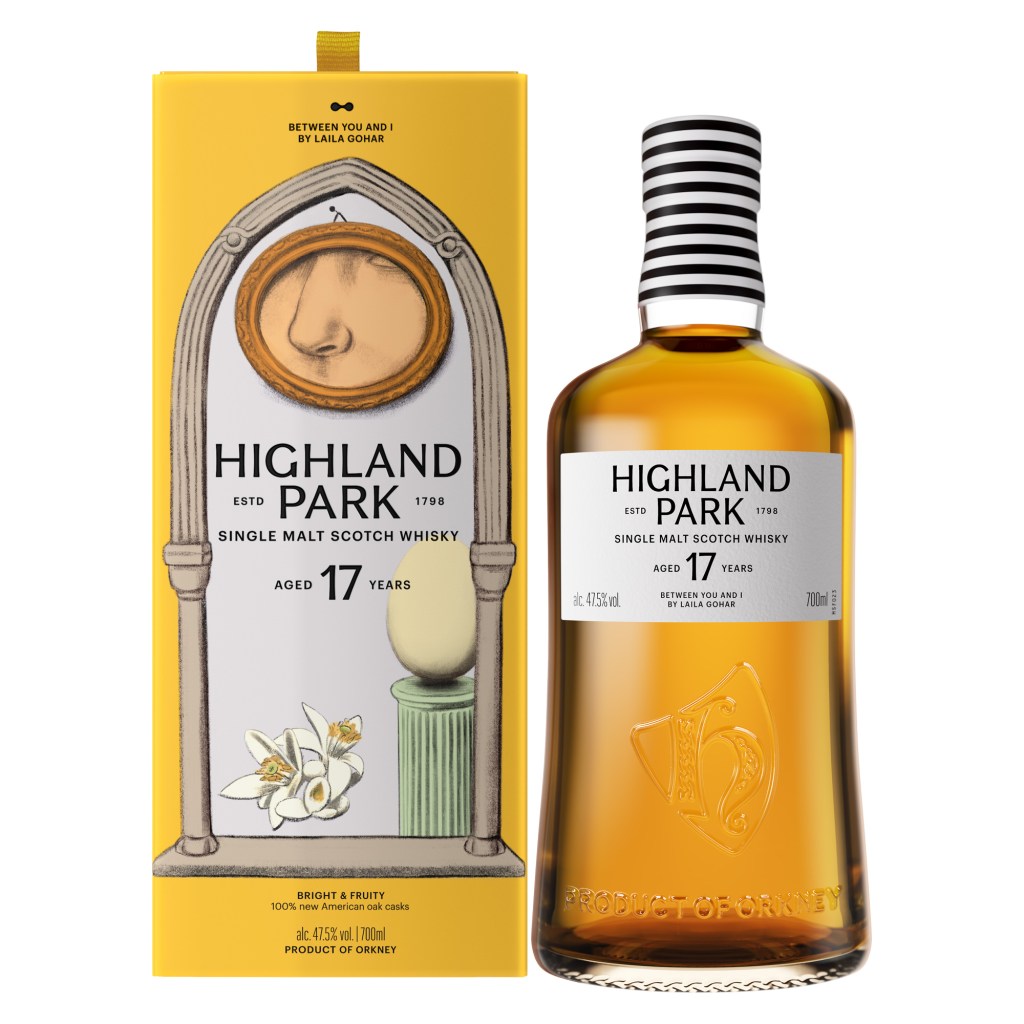
The result is Between You and I, by Laila Gohar, the second edition in a Highland Park series made with collaborators from food, art and fashion spaces. The 17 Year Old single malt spent 11 years in refill casks and finished in unseasoned American oak, which pushes orange blossom, leather and warming spice forward over the distillery’s peat smoke. It went on sale 24 September at $160, and Gohar marked the release with a dinner at her apartment in Tribeca.
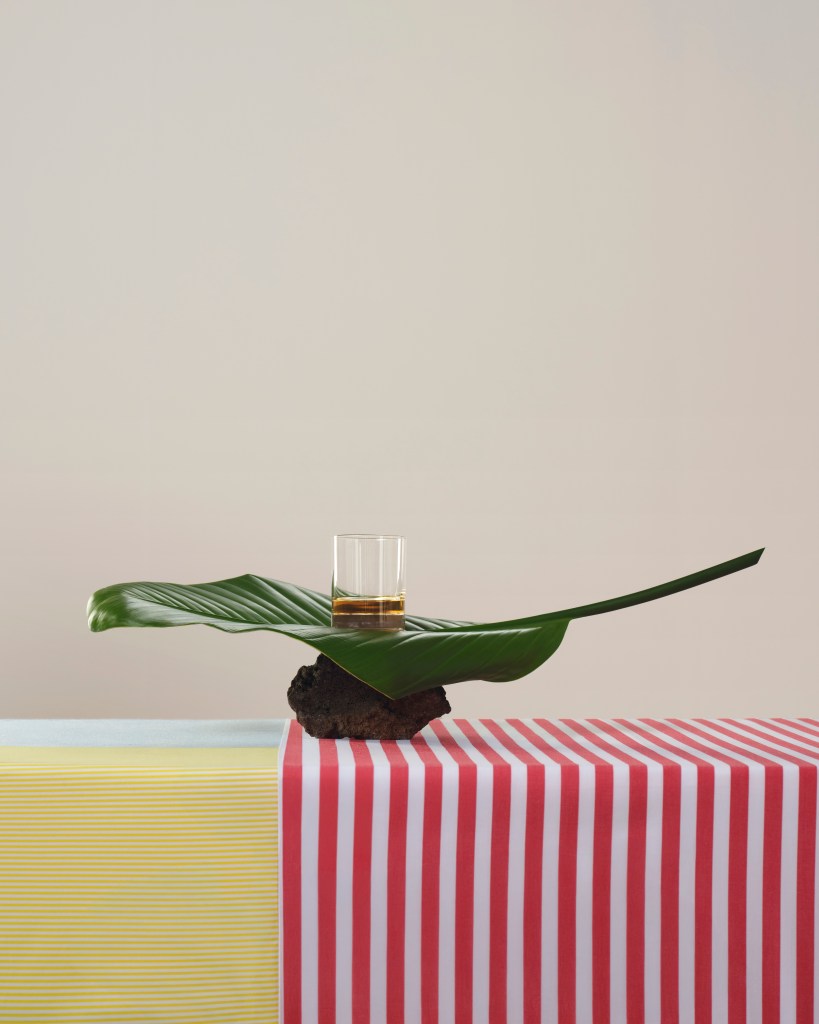
Her first encounter with it was quieter. “I tasted it on my own at home and wrote down whatever came to mind without overthinking it,” she says. “I wasn’t trying to identify traditional tasting notes. The flavors immediately became starting points for memories and images, some familiar and some completely unexpected.” Those notes became the starting points. Leather became ancient artifacts in a Cairo museum. Orange blossom became a sun-drenched courtyard in Andalusia. Vanilla became the slope of a tropical volcano under a night sky. All three scenes now appear on the packaging and in the booklet inside it.
I like the idea that you can put something on the table without telling people exactly how they’re supposed to experience it.
Laila Gohar
Gohar usually builds the object herself and hands it to a room. This time the object arrived finished, and she treated it as raw material. “I approached the whisky the way I would any other material or ingredient, with curiosity and imagination,” she explains. “It was finished when it came to me, but that was really just the beginning of the conversation.” The whisky went in one end and a set of images and short texts came out the other.
Those texts replace the tasting notes. Inside each pack is a booklet of vignettes Gohar wrote, one for each scene. “Flavor can take each person somewhere completely different, which is what I wanted the prose to capture,” she says. A reader gets a starting point and keeps the destination for themselves.
The illustrations came out of a back-and-forth with artist Silja Goetz. “Working with Silja is very collaborative,” Gohar says. “We played off each other’s ideas and used my memories and associations with the whisky as a starting point, rather than trying to literally illustrate a flavor. We wanted it to feel colorful, surreal and a little mysterious, while still leaving enough space for your own imagination.” The pictures hint at a memory without pinning one down.
The title frames the release as a conversation, and Gohar is clear about where it happens. “I think it’s really a conversation between the person drinking it and whatever the whisky brings up for them,” she says. “Hopefully the person across the table has their own story to add to it.” She sets the table and lets the guest supply the ending.
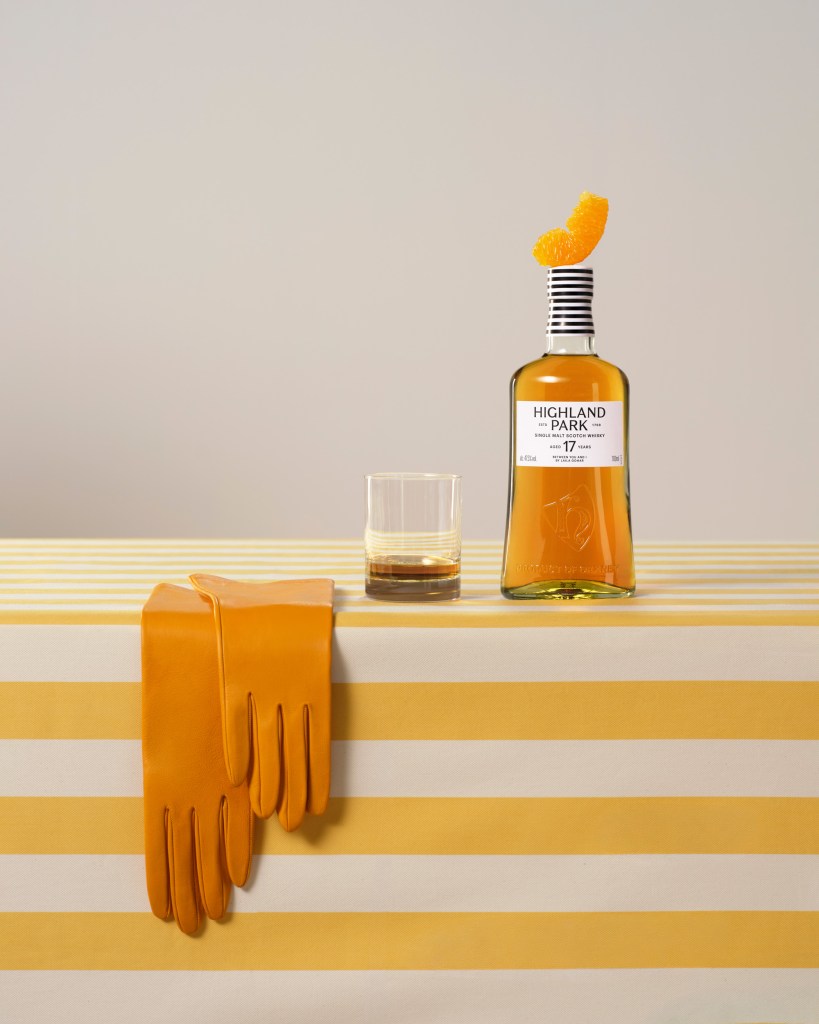
So much of her work disappears by the end of the night that a bottle with her name on it is a departure. “The permanence is actually quite special to me because so much of my work is ephemeral,” Gohar notes. “Even though the bottle remains, the experience of drinking it changes depending on who is drinking it, where they are and what it brings to mind. I like that the object can last while the experience around it keeps changing.” The bottle stays put while everything around it moves.
Orkney and Cairo sit at opposite ends of the map. Highland Park has made whisky on the same site since 1798, and that continuity is what Watson had to work through. “I love that whisky has such a strong sense of place, is made in the same place, with the same care, for so many years,” she says. “Marc took that history and tradition and interpreted my own background through it.” A tradition built over two centuries in one place was bent, for one bottle, toward a childhood somewhere else.
She launched it at her own table. “Hosting it at home made the evening feel personal, which felt right,” she says. “I wanted the table to feel generous and inviting, with the whisky naturally part of the experience rather than something overly presented. For me, the best tables are the ones that make people want to stay, taste and talk.” The whisky was one of the guests.
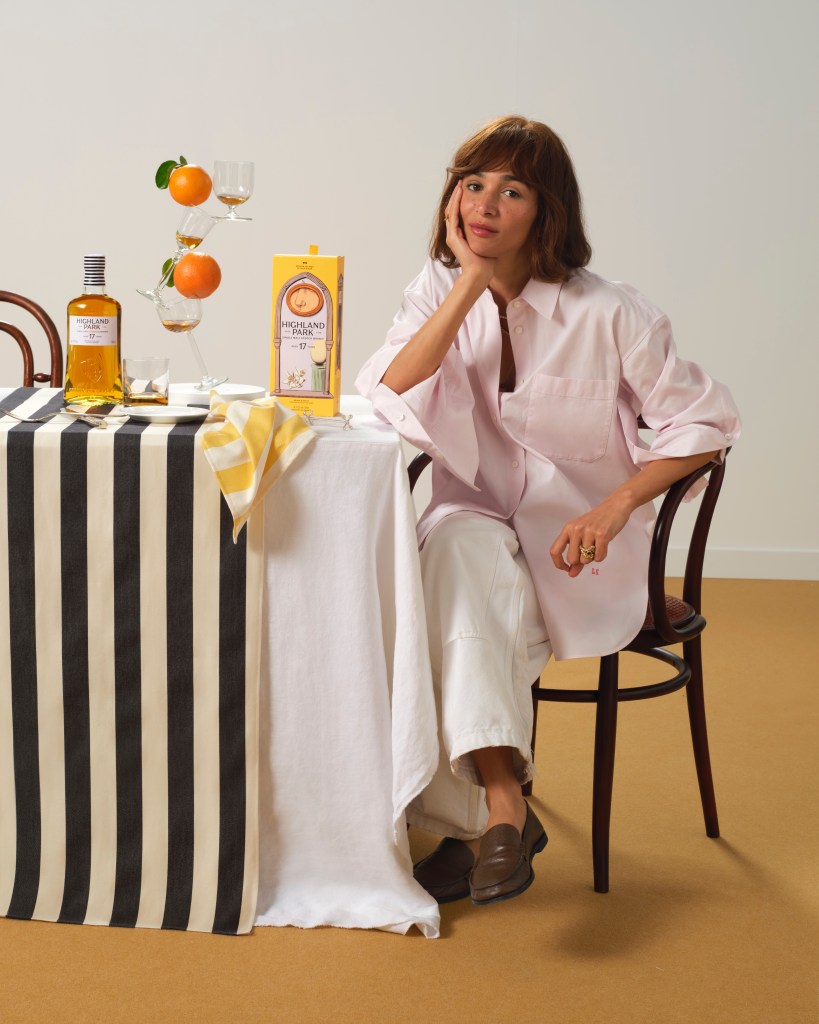
The project also pointed somewhere she wants to keep going. “I’m interested in how far you can take food beyond the act of eating it,” Gohar says. “Flavor, memory and imagination can exist without necessarily needing a plate or an object to contain them. This project made me think more about that space between something you taste and something you imagine, and I’d like to keep exploring it.” A whisky she had no hand in making turned out to be a way into that space.
Watson read a brief and built a flavor. Gohar tasted it and found a museum, a courtyard and a volcano. The conversation the title promises happens at the table, between the drinker and whatever comes up in the glass, and it starts over every time the bottle is opened.





What are your thoughts?