New York Modern Meets Indian Craft in SHWETAMBARI’s Newest Collection
The luxury label’s Fall Winter 2026 collection launches in September, celebrating cultural heritage, original textile design and the importance of the handmade

After 20-plus years of working in fashion in Paris and New York, Shwetambari Mody found herself looking for ways to revitalize her painting passion. Her busy work schedule and city living didn’t leave much spare time—or space—for painting and other creative pursuits. But during visits home to Mumbai, where she’s from, she’d be inspired to create art.
“I would paint because it’s a release,” she says. “It’s who I am.” Growing up, Mody’s mother would take her and her sisters to extracurricular art and dance classes, and making art really resonated with her. “I remember doodling in textbooks, not paying attention, sketching clothes.”

Her artistic explorations in India eventually led to fashion school at FIT and ESSEC Business School in Paris, plus years of working in brand management and fabric R&D for both luxury and mass market brands. Then in 2019, right around the time of her wedding, Mody launched her namesake label SHWETAMBARI in New York City. It started out as a personal project, focused on creating original fabric prints from her paintings, then eventually it expanded to full collections—now launching its sixth this September.

“My goal was to unite my passion for textiles and painting, weaving them together to create something that feels truly personal and original,” she says. Her textile background proved invaluable in her label’s creation: “Fabric is the foundation of every garment—if you know how the body works and how the fabric flows, it’s a great medium. It’s also a beautiful canvas for my lifelong love of painting.” She works with both larger abstract designs and smaller prints, depending on the garment.
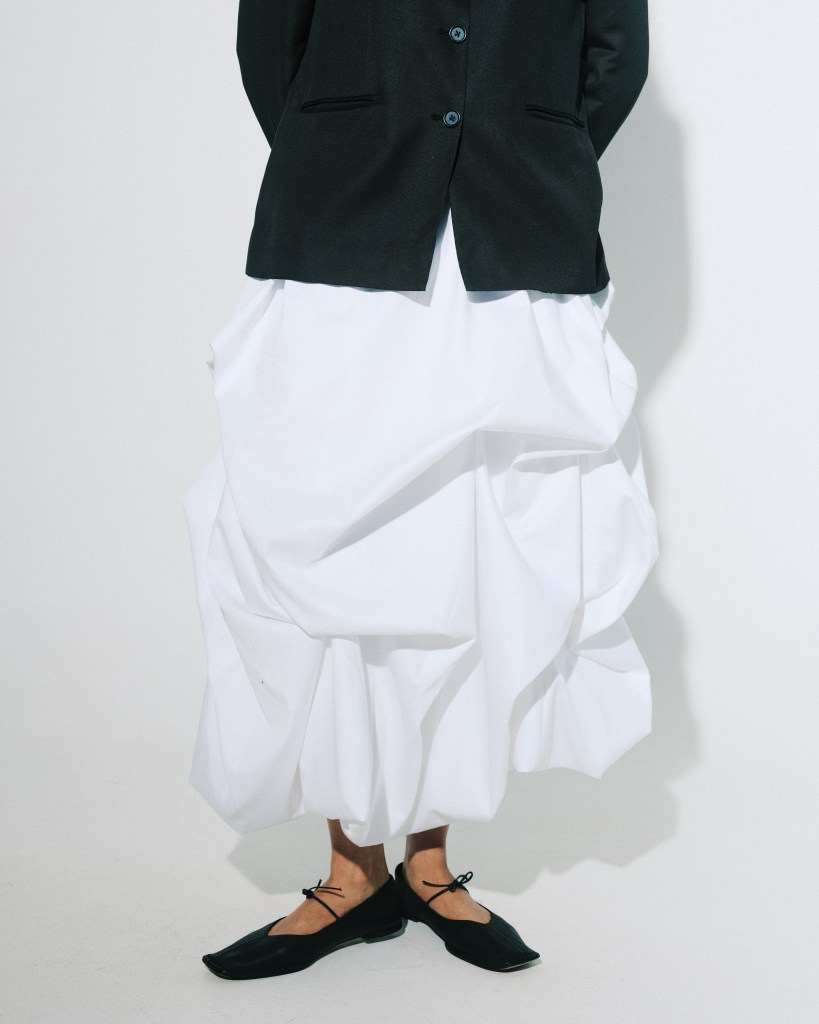
Mody wanted to try something new when launching SHWETAMBARI: partnering with manufacturers in India. During her studies in Paris, she was “inspired by the pride the French take in their savoir-faire and the way they celebrate generations of craftsmanship,” she says. “I realized that India has an equally extraordinary heritage of textiles and artisanal techniques—one that deserves the same global recognition.” When it came to her own label, highlighting Indian craftsmanship was a must.

Ritu Bhasin, SHWETAMBARI’s Mumbai-based head of production, has been part of Mody’s team since the beginning. She has a long family history in textiles and helped connect Mody with the best Indian artisans and manufacturers. “[Bhasin’s] strong connections with artisans and manufacturing partners help us create beautiful, handcrafted pieces that honour both fabric and craft,” says Mody. “Producing in India is deeply personal to me. As an Indian designer based in New York, SHWETAMBARI is my way of celebrating that heritage through a contemporary lens. After spending much of my career abroad, returning to work in India has allowed me to reconnect with my roots and rediscover home.”
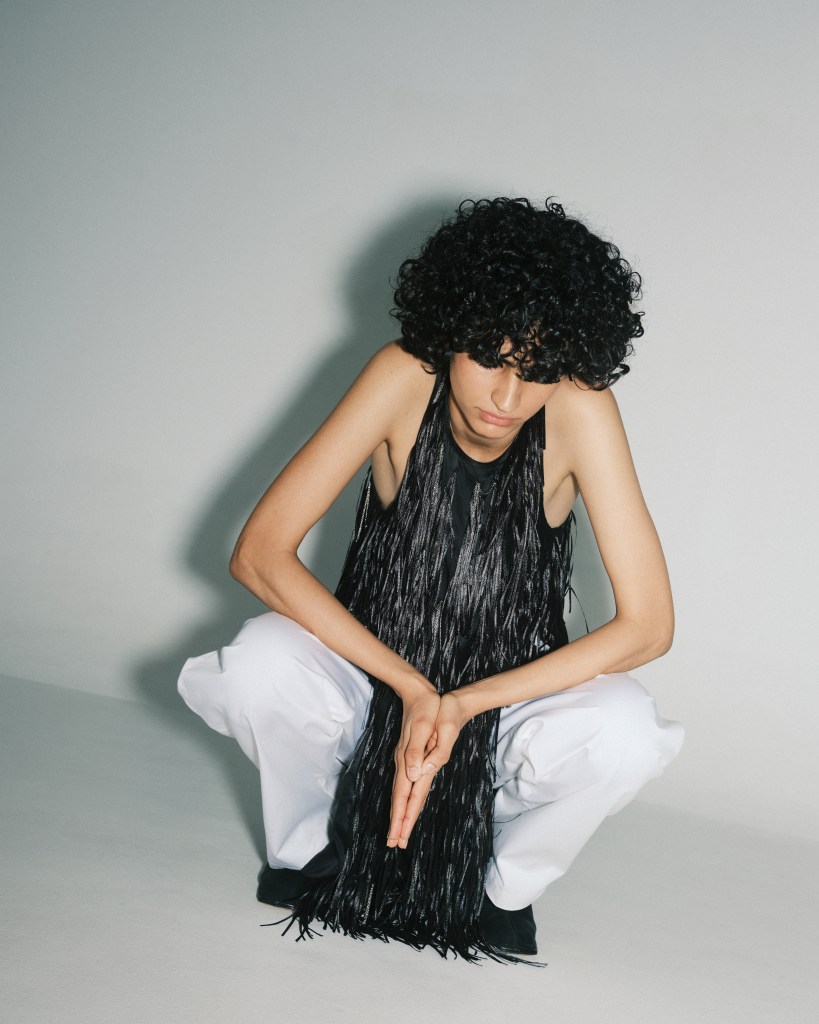
Each collection features a new embroidery or fringe design detail, highlighting artisan handwork from Indian cities like Calcutta and Mumbai. “Working with the Karigars is always exciting because their hand-embroidery skill is a tradition passed down through generations,” Mody says. “They’re open to trying new ideas with each collection, so every piece we make is unique.”

The Fall Winter 2026 collection, Hastha (Sanskit for “hand”), debuts in early September and celebrates the craft of the handmade. Mody created a ‘hand of the maker’ design that shows up as both embroidery and an abstract print on several pieces. Fabrics include two kinds of silk, cotton sateen from southern India and cashmere from northern India—a SHWETAMBARI signature fiber that took three years to develop with local artisans. Sculptural forms, fringey silhouettes, flowy silks and modern tailoring highlight the craft behind each garment. Black, ivory, chocolate and a pop of crimson round out the color palette, and the creative ways Mody incorporates her hand drawings can’t be missed.
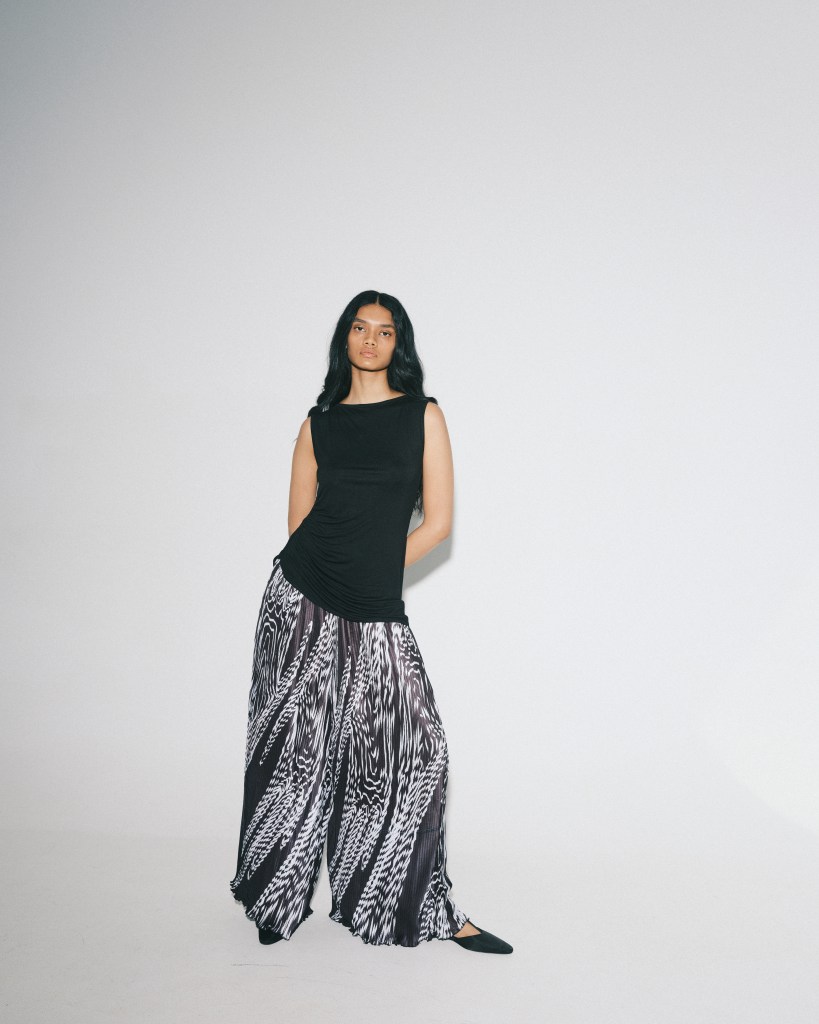
The wide leg silk plissé pant gives the elongated, hand-drawn prints “a special texture and depth, making them look abstract and three-dimensional,” and the t-shirt dress uses a delicate hand-embroidered technique that takes over a month to complete. “The embroidery is worked directly into the fabric, not just added on top,” Mody says. “This traditional embroidery method lets the design become a natural part of the garment, so it moves smoothly with the person wearing it.”
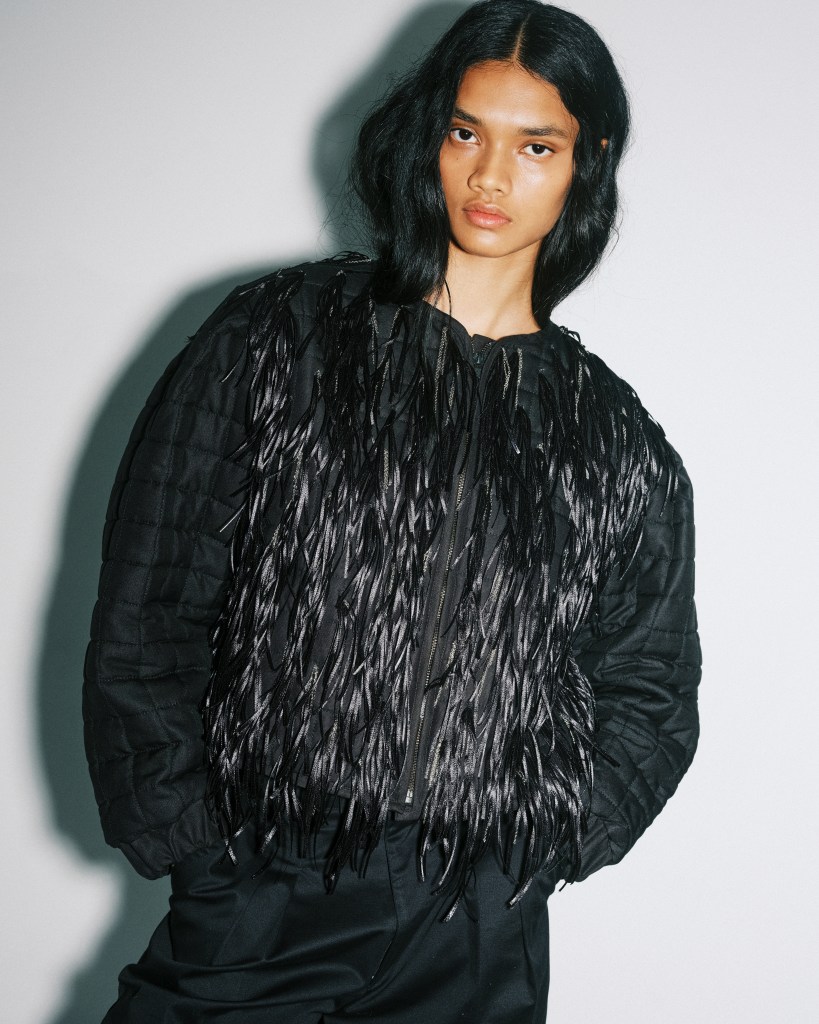
Mody’s favorite piece from the collection, the quilted silk bomber jacket, incorporates a playful fringe, an embellishment echoed throughout the collection. As for the more pared-back moments, the one-shoulder sari drape top brings a modern twist to the traditional Indian garment, while the red silk dress is so sleek it almost has a fluid-like feel to it.


The collection is lively yet refined, intentionally focusing on quality over quantity. “In our industry, we over produce,” Mody says, explaining that some of her designs require so many hours (or days) of handwork that they’re only made to order. “For me, sustainability begins with creating fewer, better pieces. I want to design garments that people cherish, wear for years and eventually pass on, not pieces that are treated as disposable fashion.”

SHWETAMBARI’s sustainability values extend beyond the clothing itself. “Everyone involved—from our artisans and tailors to our manufacturing partners and mills—deserves fair wages, respect and the opportunity to build a meaningful, long-term career,” Mody says. “When we invest in people, we help preserve extraordinary craftsmanship for future generations.” We can’t think of a better way to honor heritage and the art of the handmade.
To shop past collections and learn more about SHWETAMBARI, visit shwetambari.com.








What are your thoughts?