Design, Duende and Emotion: Why Brach Madrid is Our Favorite Hotel of 2025
Evok Collection’s impeccable 57-key Spanish debut sees Philippe Starck move beyond fleeting trends to craft an “elegant, precise poetry” on the Gran Via, celebrating the city’s passionate soul and modern nostalgia
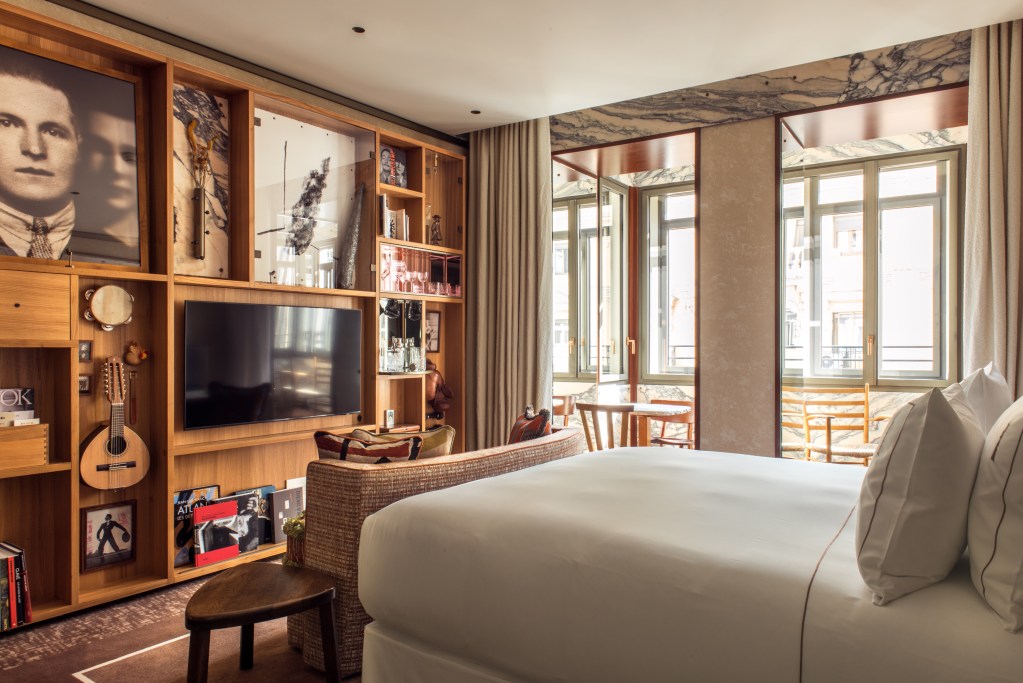
The luxury hospitality scene in Madrid has exploded, but few newcomers match the architectural grandeur and deep emotional resonance of the 57-key Brach Madrid, Evok Collection‘s newest gem located centrally on the city’s iconic Gran Vía. A meticulously restored masterpiece housed within a seven-story structure originally built between 1919 and 1922 by architect Jerónimo Pedro Mathet Rodriguez. The property features an elegant white stone façade, original wrought-iron staircase and lofty windows, all beautifully preserved. A masterful design by STARCK (following his work for the brand’s Paris property) creates an immediate, easy attraction. Its location on one of Madrid’s most vibrant avenues is near some of the city’s best museums, shopping, coffee shops and restaurants.
Most CH readers are familiar with Philippe Starck’s hotels—hospitality icons like the Royalton in NYC, the Delano in Miami, the Sanderson and St. Martin’s Lane in London, Le Royal Monceau and Brach Paris and the Rosewood Sāo Paolo, not to mention his catalog of furniture and furnishings. He’s always taken us on an adventure, but the beauty of the Brach is the accumulation of his life and design experience, expertise and his mellowing with age. The Brach doesn’t have jazz hands or big gestures that shock and awe; it’s a considered, mellow, layered vibe that reveals itself slowly as you experience the property’s rooms, dining, wellness offerings and often looked over spaces like stairwells, an evolution from the large, in-your-face gestures defining the boutique hotel movement he pioneered decades ago.
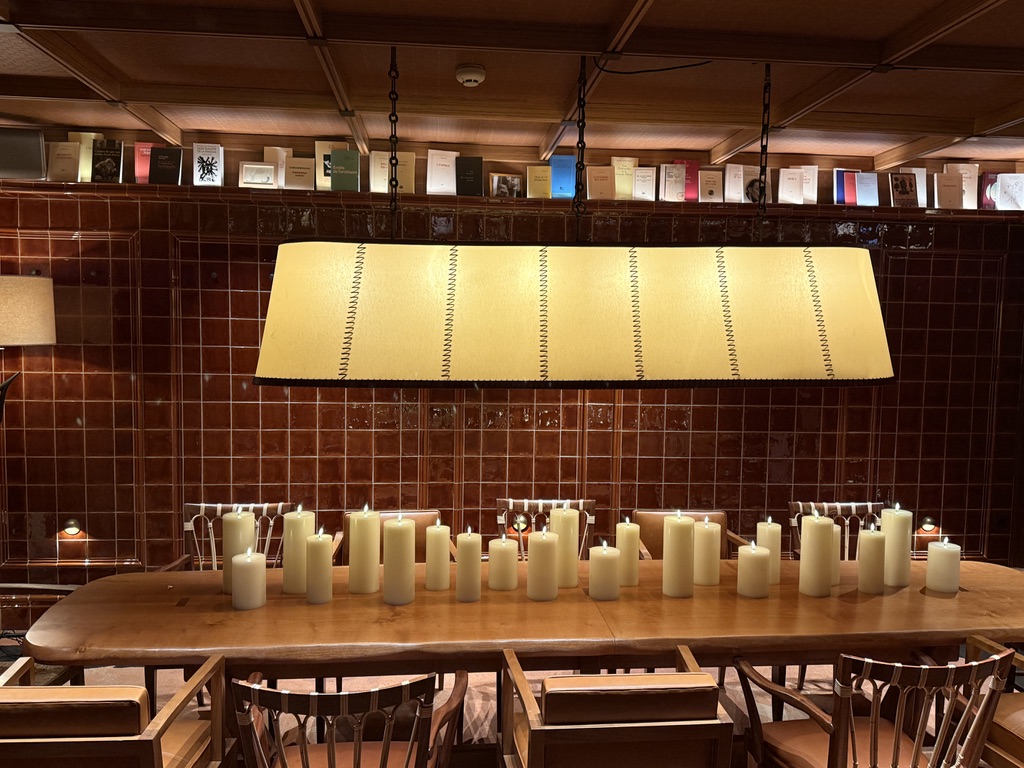
Starck’s current focus is less on decoration or fleeting trends and more on duration and depth, guided by the notion that “If you design a fashionable hotel, it’s going to last five years! In five years’ time, all the materials and energy that went into it will be thrown out… My ambition is to create something that will last at least a century,” says Starck. For Brach Madrid, he shifted his signature modern nostalgic design to emphasize a concept built on love and passion, treating the property as a story to be lived and experienced, focusing on emotional memory, storytelling and sensory richness. Starck himself describes his core design objective as creating a place where “The unifying element is poetry, the daydream that transports us, transforms us, and elevates us”. His intent is to move beyond the physical object to focus on the poetry and service provided. If you’re looking for a masterclass in modern hospitality this is a good place to start.
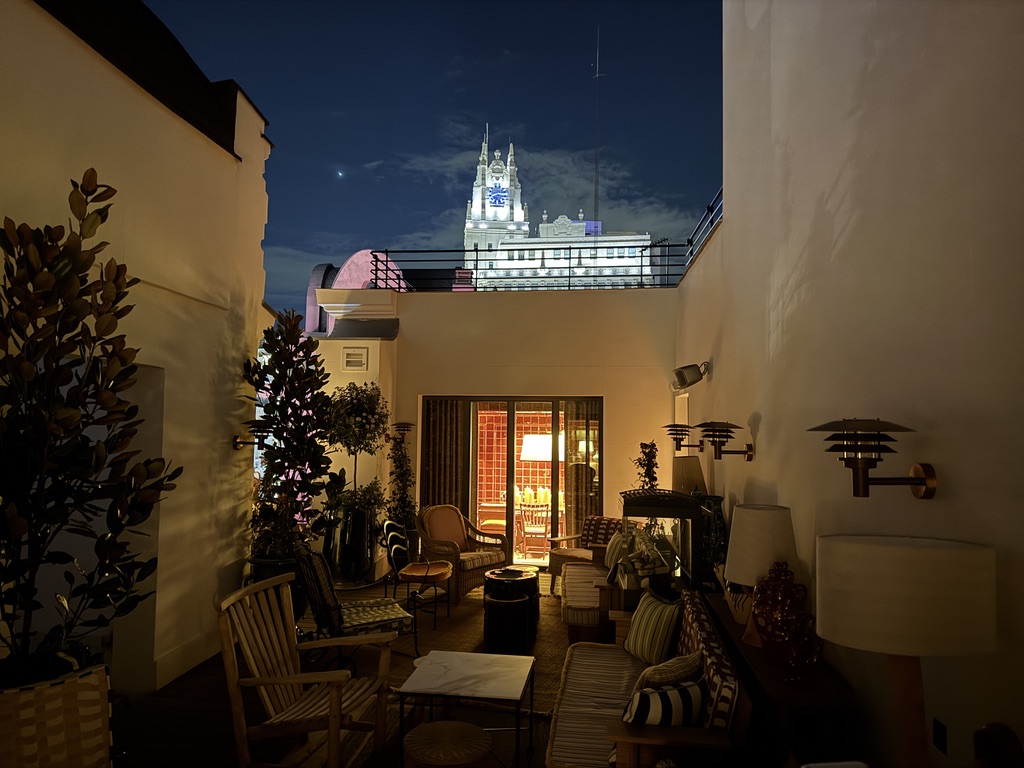
The design of Brach Madrid is a powerful love letter to Spain, encapsulating the spirit of Spanish culture and history. Starck drew inspiration from the country’s sharp cultural contrasts—the earthy and the ethereal, the rustic and the refined. He specifically aimed to reflect Madrid’s history, spanning the Franco dictatorship and the countercultural liberation of the Movida movement. “I wanted to encapsulate the unspoken spirit of Spanish poetry, a form of modern nostalgia that is never backward-looking,” Starck explains. This contrast is seen physically in the design, from the ground-floor entrance, restaurant, bar and café paved entirely in terracotta, balanced by the etherial whites used in the La Capsule spa in the hotel’s lower level, which offers a hyperbaric chamber to help offset your jetlag. Starck showcases Iberian ceramics throughout, incorporating warm materials like wood, rattan, and glazed terracotta tiles, custom art and photography, artifacts, color and texture.

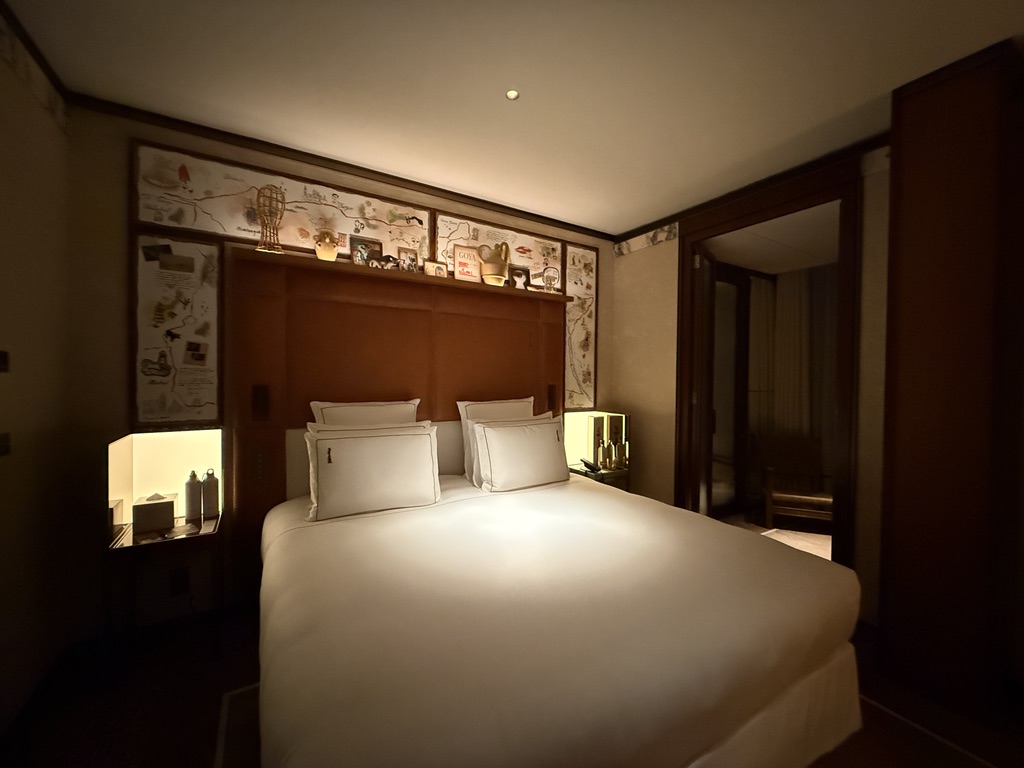


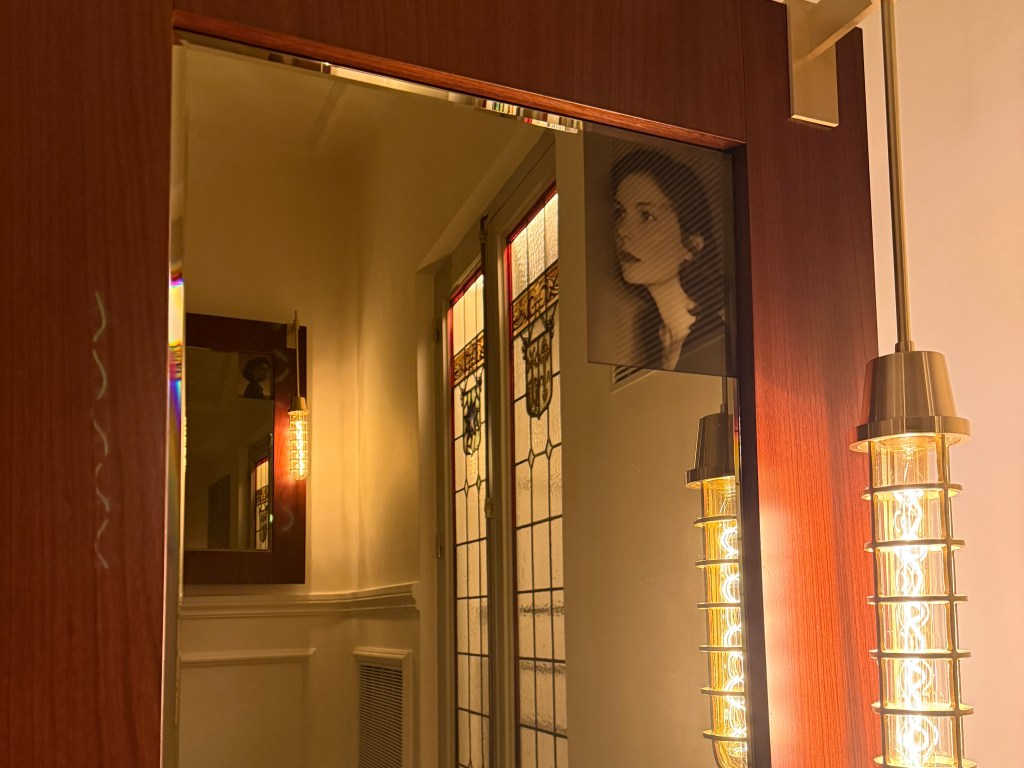

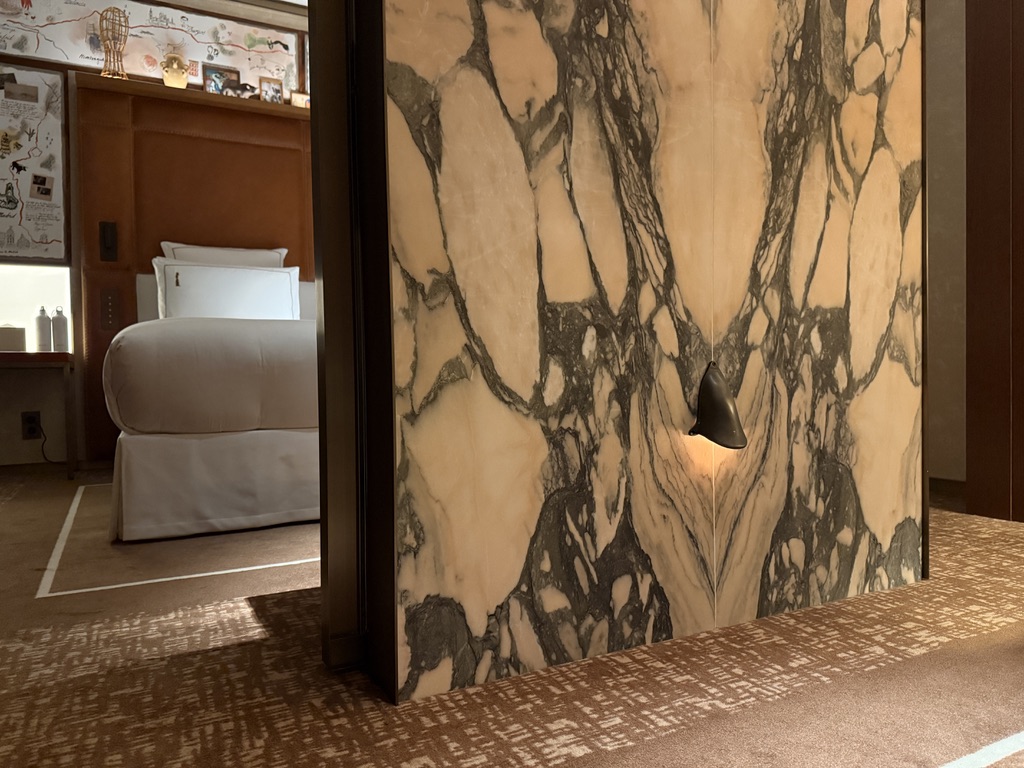
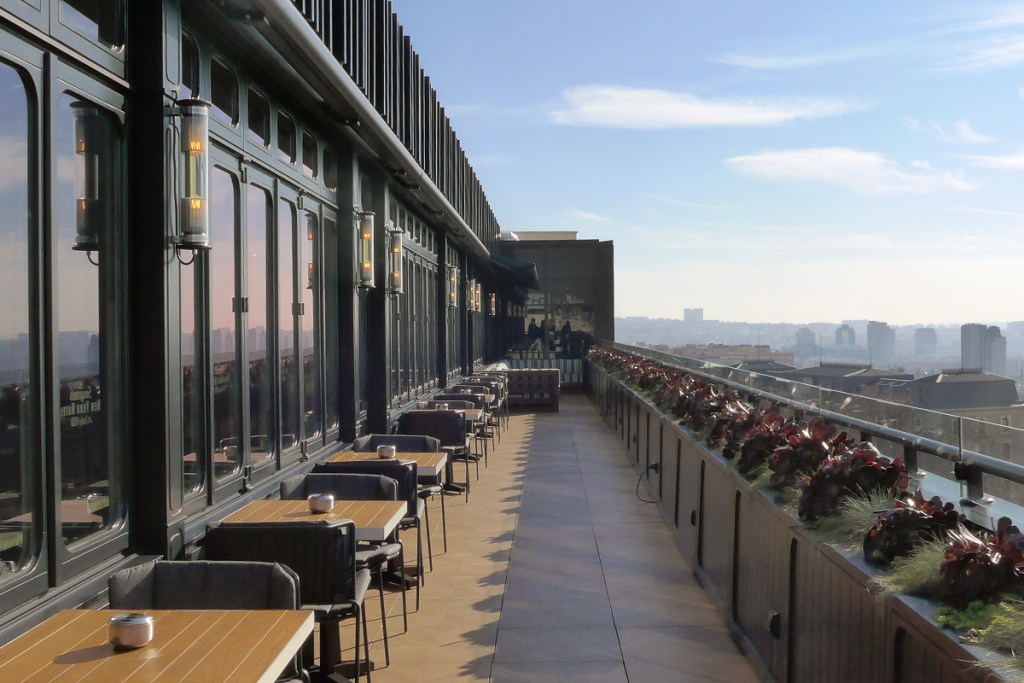
The guest rooms and suites are perhaps the most intimate expression of Starck’s narrative-driven approach, designed to feel like a private, eclectic home. The 57 unique rooms (including four suites) tell the imagined story of a man’s love for a woman, expressed through objects, sketches, and travel notes that chronicle their memories. The rich details include jatoba wood, thick leather headboards, pottery and wickerwork, providing a palette evoking the “softness and warmth of a setting sun touching the Iberian earth.” Decorative elements are obsessively curated, ranging from castanets and a traditional Spanish mandolin to boxing gloves and playing cards, all displayed in glass cases or integrated as biographical clues. Starck affirms this emotional connection, stating, “The room is sentimental. The walls are not made of shagreen, but of history, little scars, little details. You’re completely in the realm of the emotional.” The bathrooms defy the standard luxury formula, featuring solid breccia stone floors and ornate, oversized mirrors framed in glazed, moss-green terracotta, which Starck envisioned as a piece crafted by the clumsy, loving hand of the story’s protagonist. The four suites on the upper floors also provide shaded terraces with 180-degree views of Madrid’s rooftops, and can be used together for larger events, meetings and gatherings.

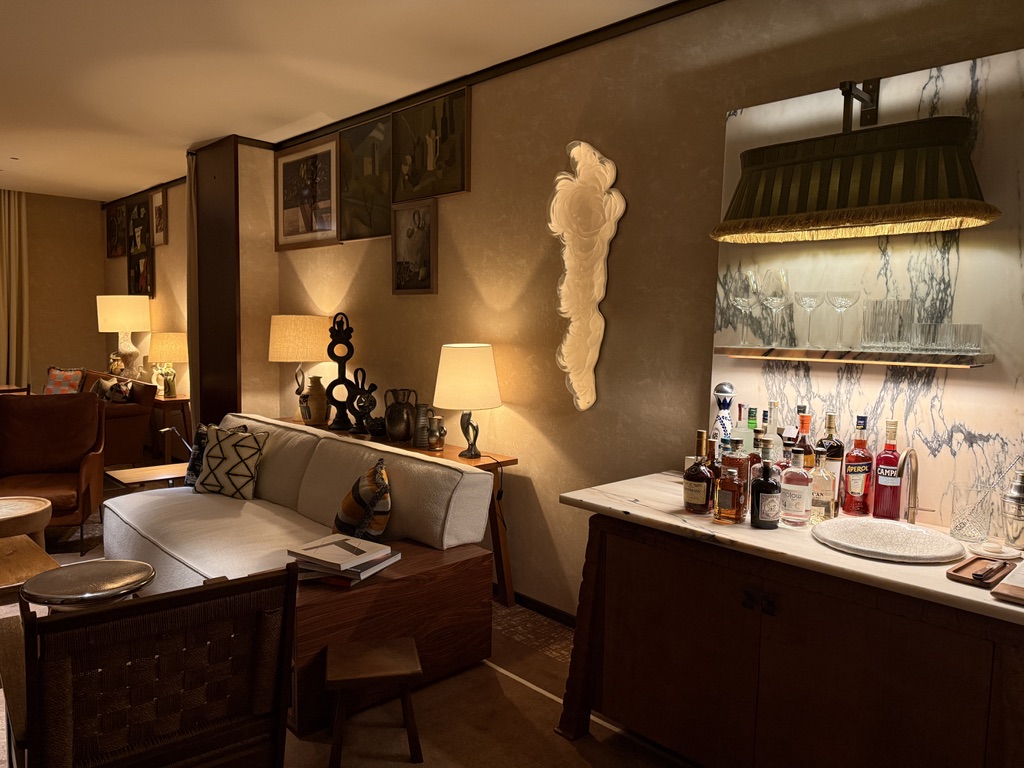
The food and beverage program centers on Brach Le Restaurant, designed to evoke the spirit and energy of Madrid’s grand cafés of the 1920s and 1930s—intellectual hubs where figures like Dalí, Buñuel, and Lorca might have gathered. Starck’s design features mahogany-paneled walls, woven leather ceilings, natural leather banquettes and deliberately tilted 1920s American brasserie mirrors, which fragment the space and allow diners to discretely observe the scene without turning their heads. The open kitchen features a large mural by his daughter Ara Starck and an eclectic art collection that was sourced over three years, intended to mimic the historical practice of penniless artists paying for their meals with their own works. Chef Adam Bentalha directs the kitchen in his first time chef de cuisine role, providing a Mediterranean-inspired, sharing-style menu infused with Middle Eastern flavors and strong Spanish culinary traditions like open-fire cooking and locally sourced ingredients. Chef Bentalha notes the cosmopolitan nature of the offering, believing that “In Madrid, my menu will really come into its own, because we’re now in a country where the gastronomic scene is very cosmopolitan, and our cuisine speaks to everyone.” The intimate cocktail bar offers a whimsical touch with woven straw-wrapped balloon bottles nodding to traditional Spanish village cafés. La Pâtisserie offers French pastry classics alongside Spanish-inspired desserts, catering to the local ritual of mid-morning and late-afternoon coffees and pastries.

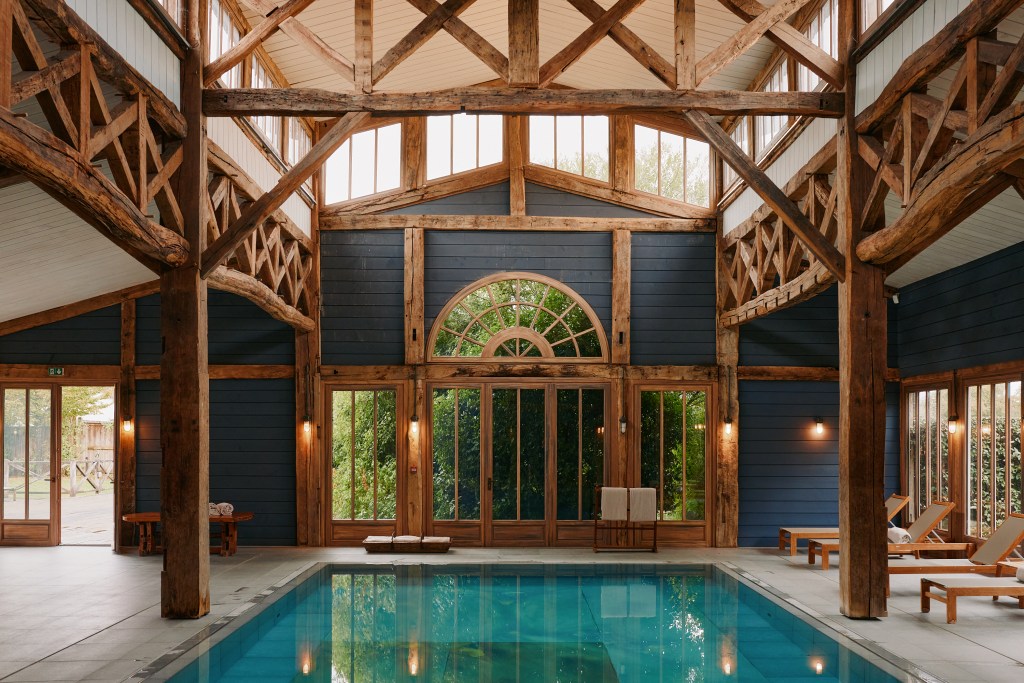
In contrast to the earthy, narrative-heavy public spaces, the subterranean La Capsule is an intimate, 400m² wellness sanctuary. Starck designed the spa as a realm of weightlessness, contrasting the gravity found elsewhere in the hotel. Adorned with gold and featuring pure white, cream marble interiors, La Capsule aims for serenity and spiritual energy. This high-tech urban retreat offers a 20m pool, a flotation bath and hyperbaric oxygen chamber alongside more traditional workout equipment. Specialized wellness treatments include guided ice baths, an infrared sauna and massage modalities including Tui Na, and Chi Nei Tsang. Starck explains the deliberate shift in aesthetic: “While gravity is very much in evidence throughout the hotel… I envisioned La Capsule as a cloud, an unblemished, intangible, floating space. Weightlessness changes relativity and the weight of the body is replaced by pure spiritual energy.”
Brach Madrid stands as a living testament to the ongoing renaissance of the Spanish capital and the evolving philosophy of Philippe Starck. Evok Collection and Starck have succeeded in creating a space that seamlessly blends French sophistication with Madrid’s vibrant, magnetic energy. Emmanuel Sauvage, co-founder and managing director of Evok Collection, remarked on the fusion of cultures: “Creating a new Brach without copying Brach Paris was no easy task. Philippe Starck has done a marvellous job of surpassing this task, for in Madrid we can see the Brach hallmarks, adapted to the country in a way we ourselves could never have imagined, such is the Spanish character of this new establishment.” The hotel is a sophisticated, cultivated multipurpose space fully integrating itself into the local scene, achieving a distinctive, timeless aesthetic designed for longevity and emotional connection. Brach Madrid shows that the next wave of luxury design is less about spectacle and more about the power of storytelling, memory and profound connection to place.


What are your thoughts?