Experience the Total Solar Eclipse with Music-Loving Space Scientists
On 12 August, the International Space Orchestra will perform in San Francisco alongside live eclipse footage from the path of totality in Europe

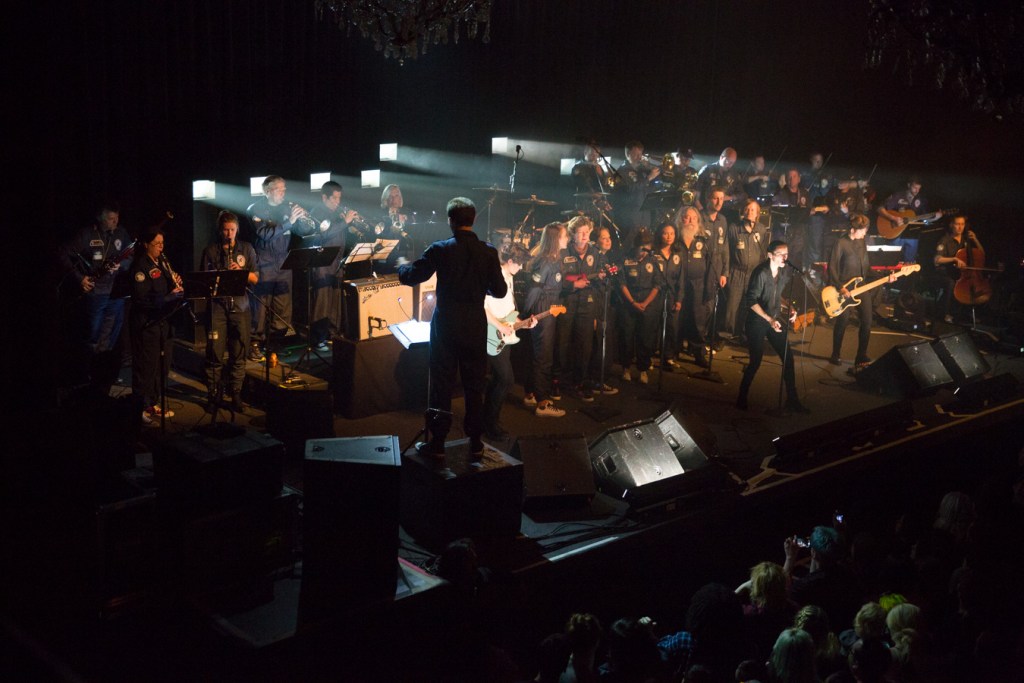
The International Space Orchestra (ISO) has the basic components of an average orchestra: musicians gather to play music on their instruments and a conductor leads the group’s performance. But the ISO is anything but traditional. Founded by Nelly Ben Hayoun- Stépanian, Ph.D in 2012, the 35-member ensemble is the world’s first orchestra composed of professional space scientists. The amateur musicians are based mostly in California’s Bay Area, where they hail from the NASA Ames Research Center, SETI Institute, Singularity University and more.
“I started the International Space Orchestra as I wanted to build a counterculture [where] space operators could reflect together on the future of space exploration—outside of the current mainstream narratives in which outer space is a playground for the military industrial complex,” says Ben Hayoun- Stépanian. “Because you are playing the dobro and I am playing the trumpet, but you are the head of NASA and I am the new engineer on the block—we are suddenly in the same room, able to discuss and be vulnerable together, learning a new craft and exchanging ideas and critical reflection.”

ISO has performed in a variety of venues. Its first show featured Ground Control: An Opera in Space—an original composition about the Apollo 11 space mission by Damon Albarn and Mike Smith of Gorillaz, Bobby Womack, Grammy-winning ISO music director Evan Price and others—in front of the world’s largest wind tunnel on the NASA Ames campus. Other performances include playing with Beck at Davies Symphony Hall, performing with Savages at The Fillmore and opening for Sigur Rós at Hollywood Bowl. The ensemble has also been the subject of a full-length documentary film, recorded music at Skywalker Ranch, broadcast its work into space and has a CD onboard the International Space Station for astronauts to listen to. For each performance, the group adds a patch to their matching navy jumpsuits, another way that sets them apart from a typical orchestra.
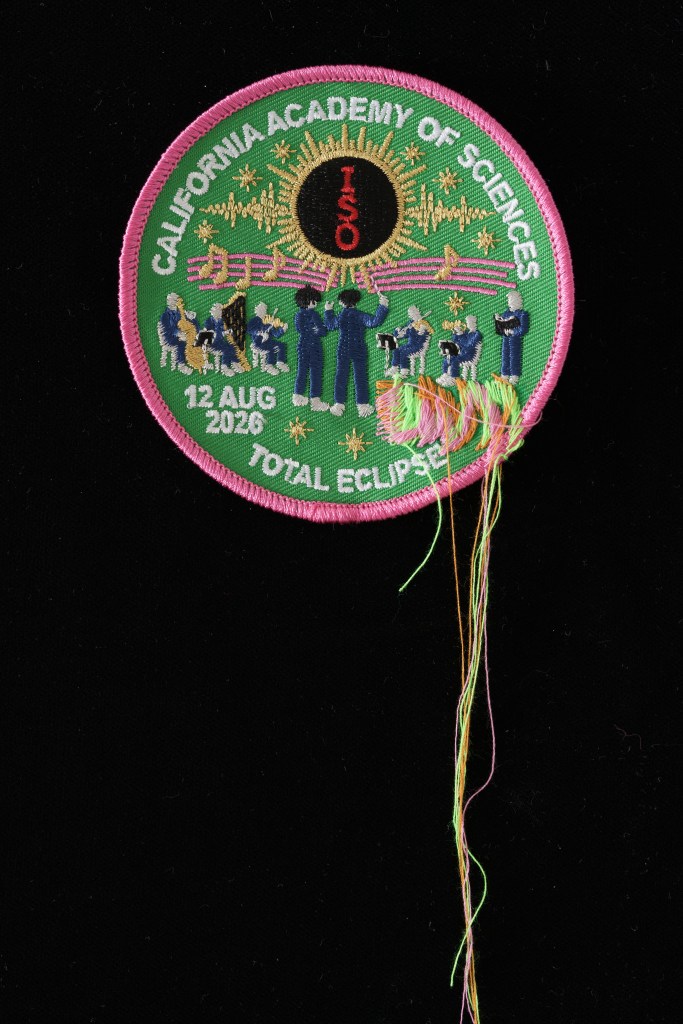
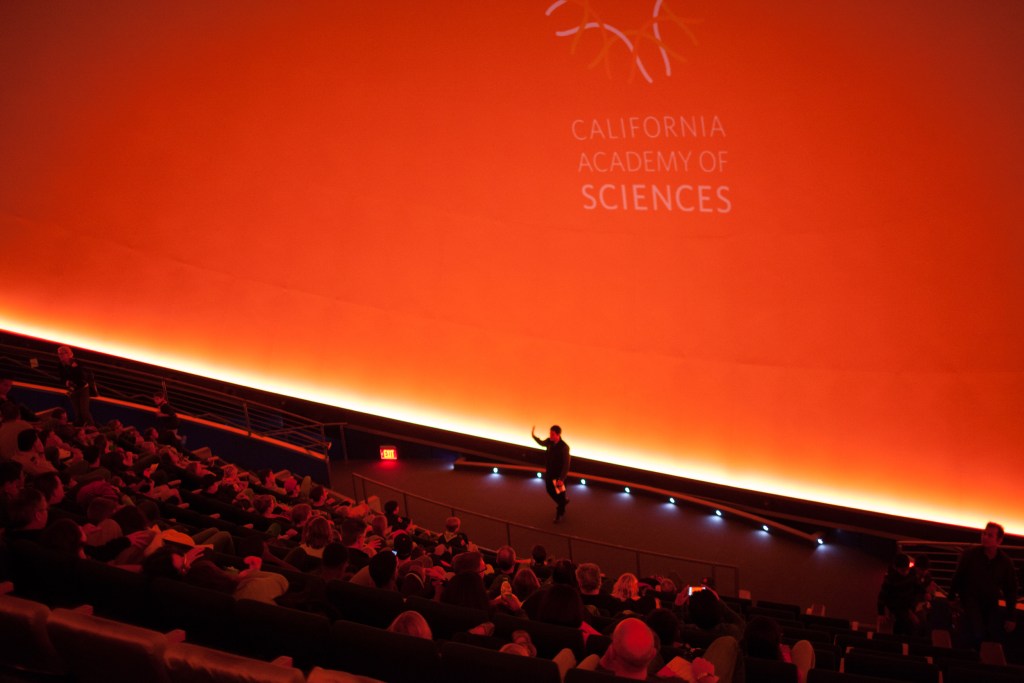
This week’s total solar eclipse is an ideal opportunity for another space-centric performance, and ISO will be playing at the California Academy of Sciences in San Francisco’s Golden Gate Park. While California isn’t in the path of totality, the ensemble will celebrate the cosmic event—and its 14th anniversary—and perform music alongside a livestream video of the eclipse from Iceland and northern Spain. SETI scientists will also give talks and answer questions about the importance of eclipses, the sun and the study of the solar system.
The 12 August performance will feature PJ Harvey’s Voyager, a piece written from the perspective of Voyager 2, described by Ben Hayoun- Stépanian as “one of humanity’s most culturally resonant space missions. It speaks to the Golden Record and Carl Sagan’s ‘pale blue dot’—a project he put together with Ann Druyan and Frank Drake.” Drake was one of Ben Hayoun- Stépanian’s mentors at the SETI institute who inspired them to develop the Experiences Department, so it’s a bit of a full-circle moment. Harvey’s “piece is so relevant to the SETI institute’s history and people and it felt so fitting that her new album is focusing on the cosmos,” they say.
Scientific knowledge and creativity are connected and this knowledge should be accessible to all.
nelly Ben Hayoun-Stépanian, International space orchestra founder
Although the ISO and the Academy are part of the same Bay Area science ecosystem, this is the first official collaboration between the orgs. “There has often been a false dichotomy between art and science,” Shannon Bennett, Ph.D, Chief of Science at the California Academy of Sciences says, “and it’s incredibly meaningful to bring an orchestra comprised of scientists here to perform and help our visitors experience the power and deep connection forged when these two disciplines come together.”
Ben Hayoun- Stépanian adds that the project is moving forward “thanks to Dr. Franck Marchis, one of our long-term collaborators. He is a living star as he is the first astronomer to have witnessed a volcanic eruption through his telescope and has an asteroid named after himself,” they say. “The Academy is a natural partner because it understands that scientific knowledge and creativity are connected, and that this knowledge should be accessible to all.”
Accessible, indeed: the 12 August performance is included in visitor admission to the museum, and for non-locals, the entire event (including the visual streaming component from the path of totality and accompanying talks) will be livestreamed starting at 10:30 am PDT.
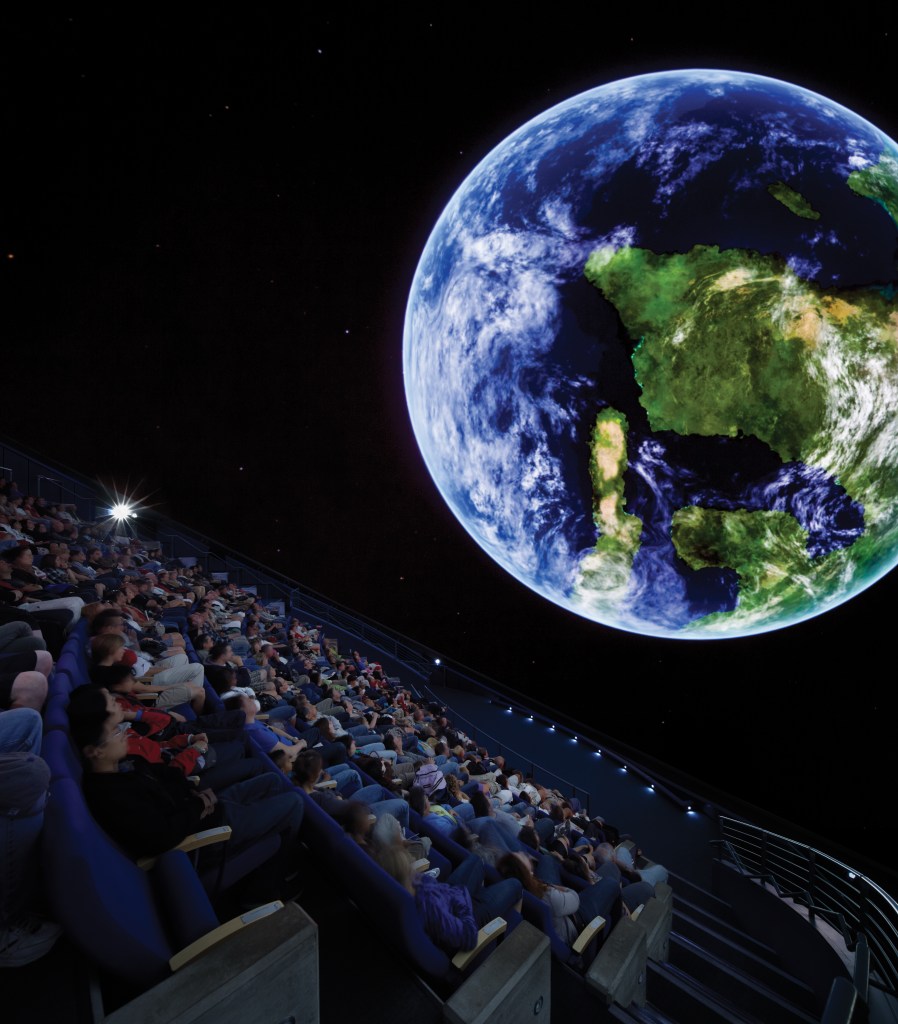
“An event like the total solar eclipse is a good reminder that we are all sharing one sky,” Ben Hayoun- Stépanian says. “Every night when we look up, we see that we are only a tiny part of something so much bigger. Music is an excellent universal vehicle for reminding ourselves that outer space is a place for all of us to activate our radical imagination, but also for us to think through liberation and thinking otherwise. Music is fantastic as a tool for communicating complex ideas in a more physical manner.”
ISO’s solar eclipse performance will be livestreamed here on 12 August, 2026 at 10:30 am PDT. For more info on ISO and its future projects, visit internationalspaceorchestra.com.







What are your thoughts?