Studio Visit: Artist Refik Anadol
Where technology, data, light and space develop an interactive evolution of cinema
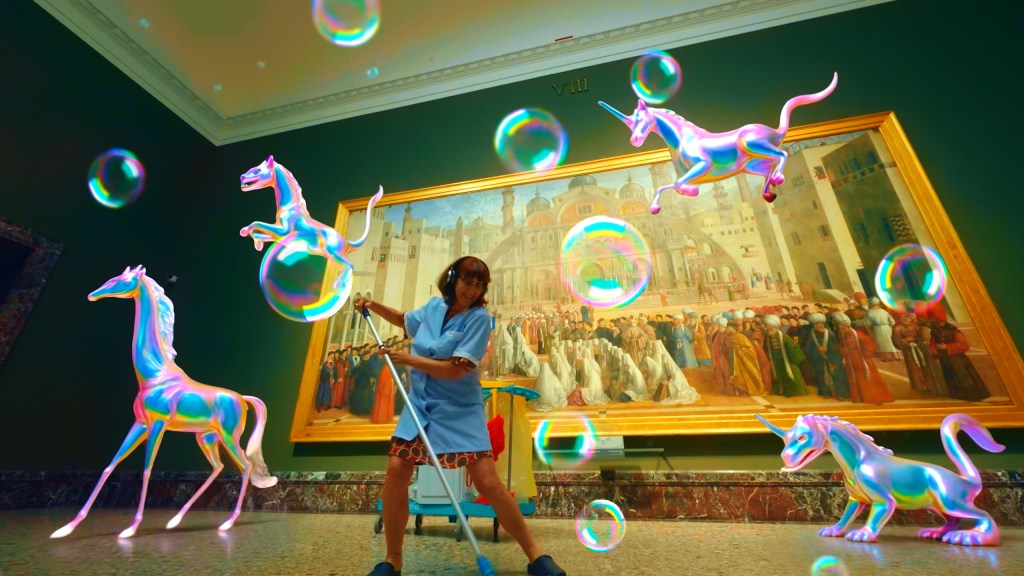
Refik Anadol is in the future—not from the future or thinking about it, but working within a space that many have yet to approach. The Turkey-born, LA-based artist creates immersive works that use light to explore architecture. He employs developing technologies and complex algorithms to create what he feels are an interactive evolution of film. Take “WDCH Dreams,” a 2018 work that uses the exterior of Downtown LA’s Frank Gehry-designed Walt Disney Concert Hall as a canvas for projecting the building’s “dreams” onto. These are colorful visuals created by Anadol and his team through machine learning algorithms that make use of the LA Phil’s 45-terabyte archive. Works like this speak to the Anadol’s approach and interests, these giant projects that employ technology to do the seemingly impossible.
What are your philosophies on light and space? How do you approach this in your work?
Artists like Dan Flavin, Robert Irwin and James Turrell are my heroes. But what would happen if they had the same body of work and philosophy, but with today’s tools? They’re thinking of light as a material but they were also a part of their technology. They were clearly thinking about light in an environment, which is very fundamental thinking. Yet it’s not just light itself that’s inspirational: I’m also thinking about the future of architecture. Why are walls empty? How can we bring a cognitive capacity? What would happen if this building remembers? What if it has dream processes?
Light is a divine material that is as existential as water
Light and space is doing that. Light and space connects. But data was missing in that. Light is the best material in the world, that can project imagination into a built environment because, clearly, concrete, glass, and steel are biased materials because of gravity. Light? It can travel infinitely if there is no barrier. Light is a divine material that is as existential as water. All these purposeful reasons make it very easy for me to focus on this material.
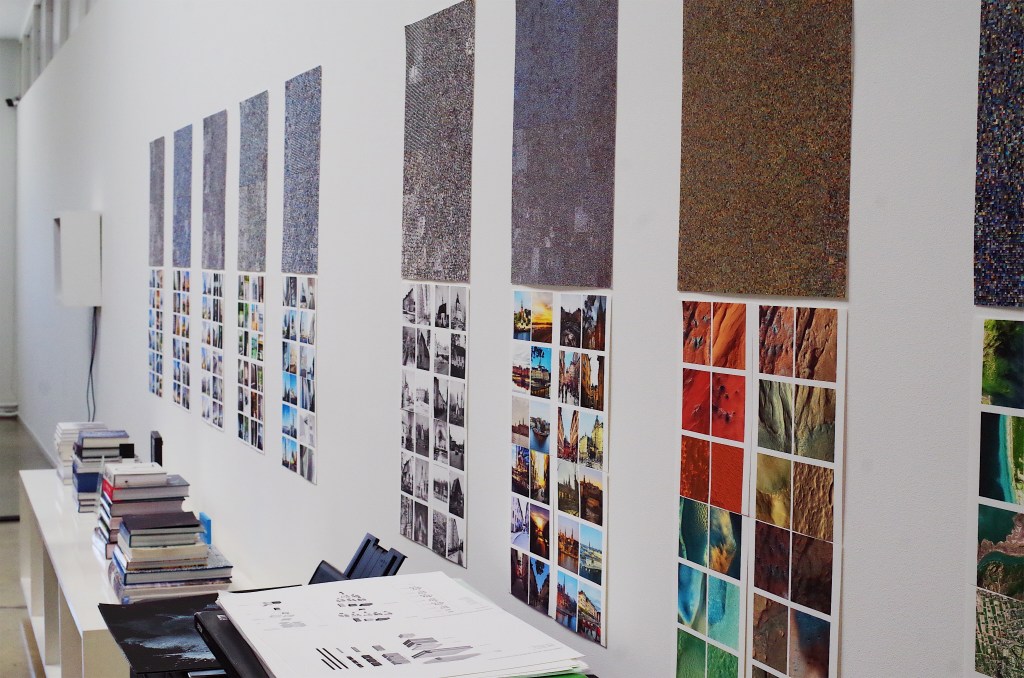
Your work has gotten more textural and tactile. How is texture data?
In 2009, I was researching on the topic of computational graphics. Ken Perlin, a professor at NYU, created a fantastic algorithm called Perlin Noise. It’s a 46-line of code that has gotten an Oscar award. The reason is interesting: with this code, you can visually create landscapes, sky, clouds and even ocean. It’s an algorithm that can create kind-of-reality. I was fascinated with that. Again, the cinema is one of my greatest inspirations: if this algorithm is used for that, what else can we use for this algorithm?
The texture is coming from this algorithm. But to go deeper, we dive into the computational design process to develop our own library, our own softwares, where we can take data from wind, from human memory, from body motion, from a breath, from water, and apply this invisible pattern of data into an invisible layer of noise algorithm. It was a very fresh approach, I think, that pioneered something in this field. I even coined a term called “data painting,” where you really give a pigment a life, to move in a dynamic context.
The second inspiring algorithm is fluid simulations. I was heavily inspired by water. That’s my second favorite material in texture. We heavily research fluid algorithms where you can simulate water.

What are the challenges in your work?
It’s a very multi-layer process. You have a layer of hardware and a layer of software, which is where complications lie. We’re on the edge of complications. We’re not doing things that anyone can do. We’re working with tech giants, standing on the shoulders of the people inventing the future. We are using tools from the near-future for now. To solve these problems, we have to use tools from now, materials from now, dialogues from now to invent near-future experiences. This is a time machine problem: you go somewhere, come back and—shit—the time is too far behind.
That’s one thing. Second, the ideas can’t be too fresh. When ideas are too fresh, it cannot be used immediately. It needs to be digested, sit for a while, to really understand what it can mean. Why use this algorithm? Why that canvas? These technical questions are the real problems. Sometimes we are quick, sometimes we are slow. We don’t want to make a gimmicky experience.
The true challenge, the most intimate challenge for me, is once we are in the public realm, that means a specific experience will be touched by people and it may touch their soul, their mind, their memories. This is a very big responsibility. That’s one of the reasons I take my time. Every pixel needs to be done with this same purpose to make sure that these aren’t cold ideas. These are intimate responsibilities beyond algorithms, beyond machines. It’s very human. This is my inner, biggest challenge.
COOL HUNTING always gets permission to use the images we publish; however, as an independent publication, we cannot afford to continue fighting unfair claims of copyright infringement, so the images have been removed from this post.