Heron Preston Wants Racewear That Shows Where It Came From
The designer’s long-term partnership with Formula E, previewed at ComplexCon, turns the sport’s own recycled materials into apparel built to be read
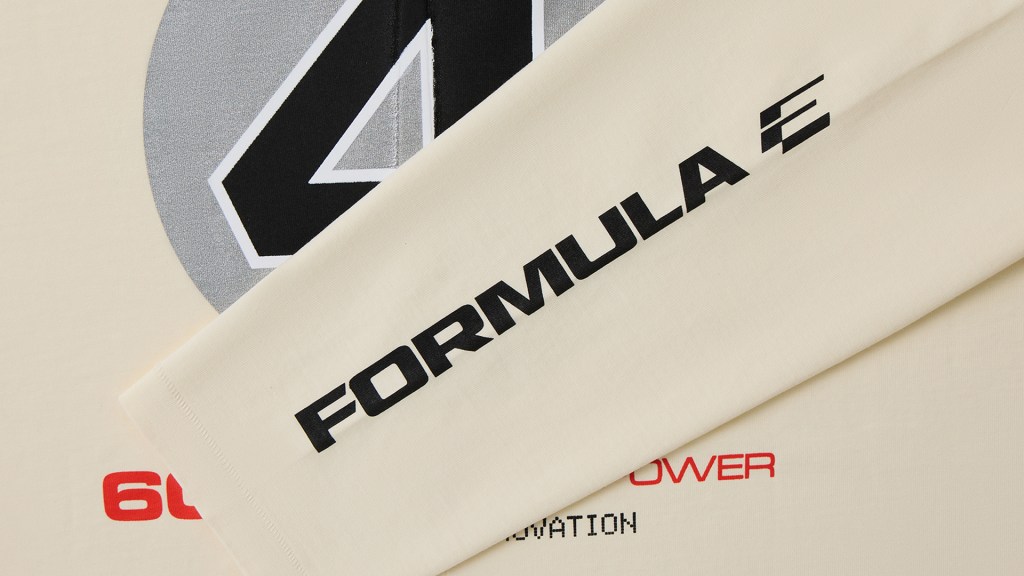
“We’re both reusing energy. They do it on the track. I do it with materials, taking what would be wasted and turning it into design,” Heron Preston says of his partnership with Formula E, previewed this weekend at ComplexCon in Los Angeles. The installation set a GEN4 race car in his livery beside garments cut from recycled fabric, a first look at a creative relationship both sides plan to run for years.
The idea took hold during the discovery phase, while Preston was gathering everything he could about the series. He learned that Formula E cars, which are all electric, recover energy under braking and feed it back into the race, and the rhyme with his own practice landed immediately. For more than a decade he has made work from materials that already carry a history, and Formula E offered a whole sport’s worth of them.
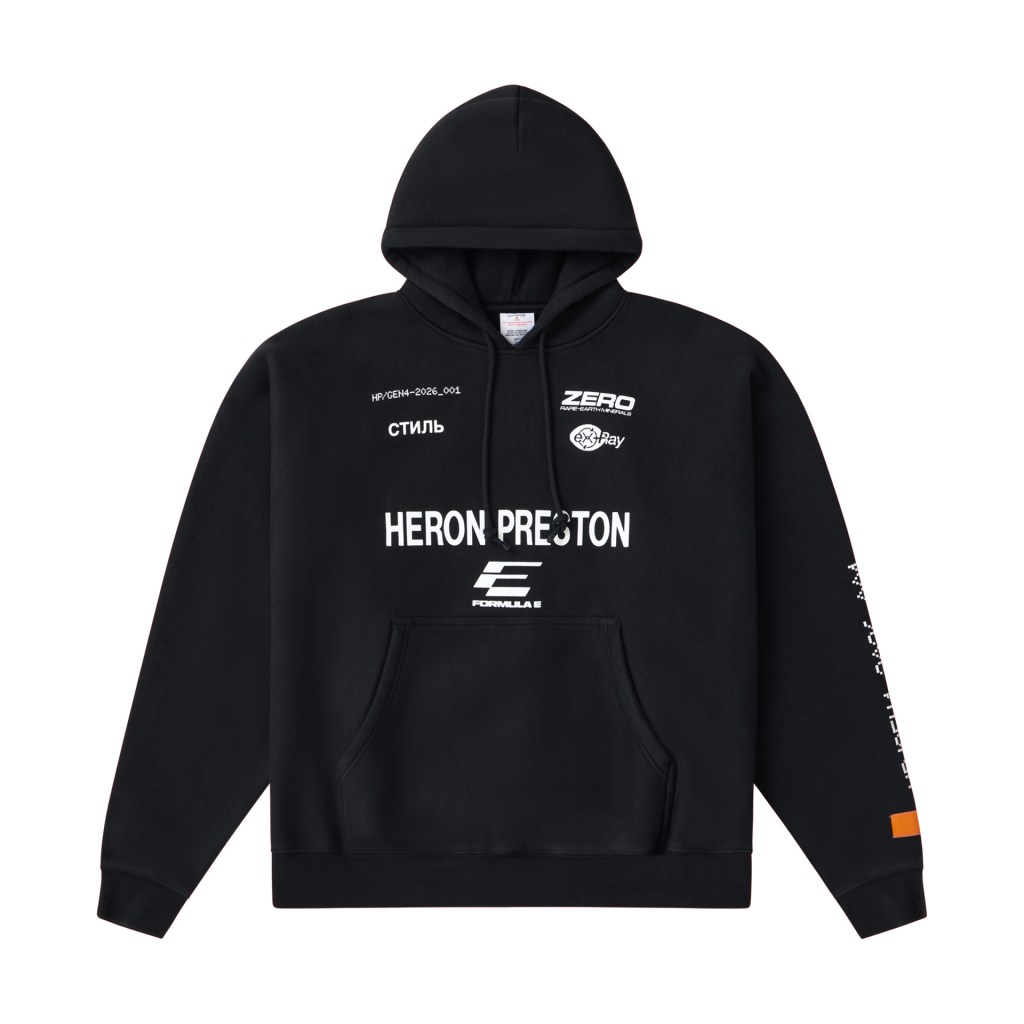
“What surprised me is how much of Formula E’s own apparel already uses recycled materials. It’s in their DNA,” he says. That common ground told him the two were starting from the same place, a rare thing to find at the top of a brand partnership.
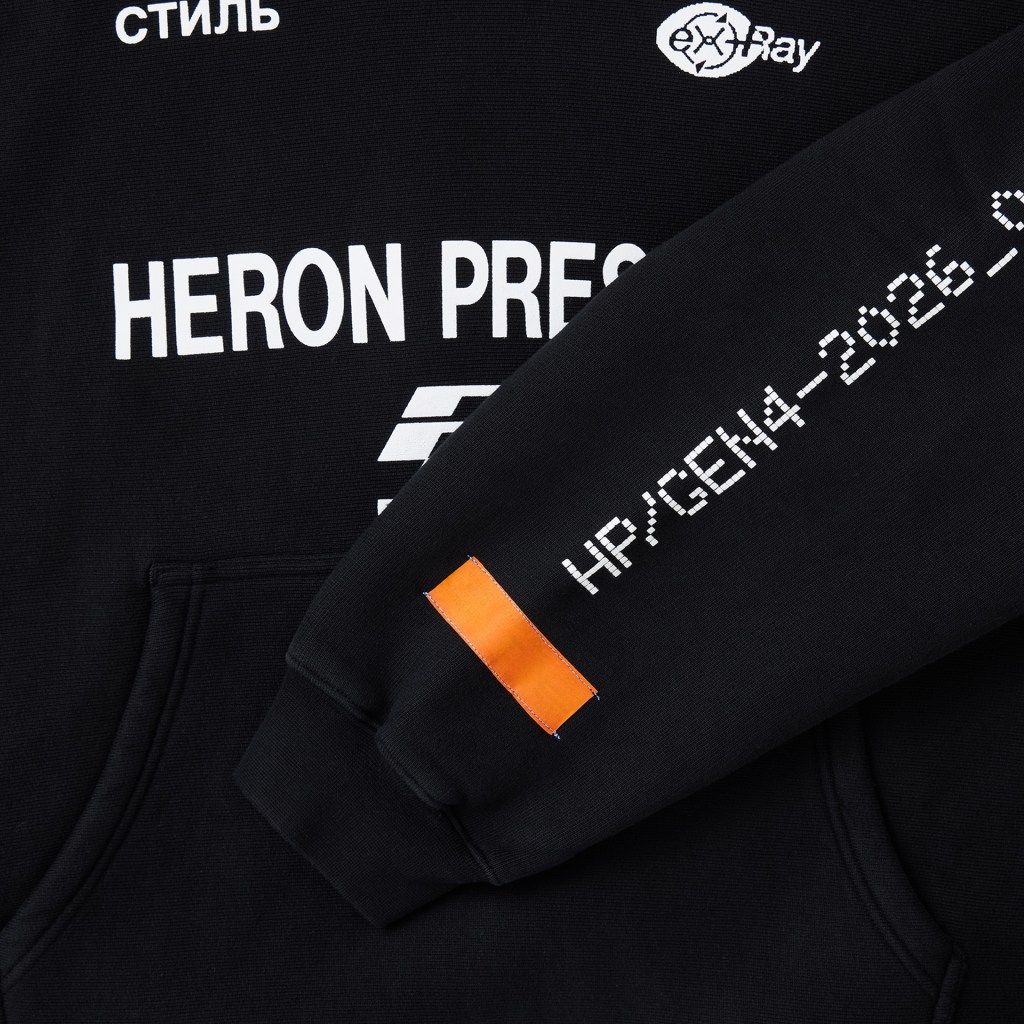
The ComplexCon pieces come out of eX-Ray, which Preston calls his most advanced L.E.D. (short for less environmentally destructive) line. The collection looks at every element of a product, from the fiber up to the people who make it, and Preston develops his own cloth from the inside out instead of ordering it finished from a mill. For this first chapter he pulled a fabric he had already been building: recycled cotton spun from pre-consumer factory off-cuts, sorted and shredded and re-spun into yarn, then woven heavy and tight into a knit meant to feel substantial and long-lasting. “It’s a fabric I believe in: factory waste turned into something new,” he says. The material does the arguing for him.
What surprised me is how much of Formula E’s own apparel already uses recycled materials. It’s in their DNA.
Heron Preston
His standard for it comes from clothes built to work. “Workwear and military gear are performance clothing too. That’s where I come from. Every detail has to earn its place,” he says. Racing reads to him as the extreme version of that idea. There’s one rule he treats as the whole point: a piece should hold enough of its source—the color, the texture, the way it was built for the sport—for anyone to look at it and know it came from racing.
That belief shaped the GEN4 car as much as the garments. Preston began with color and logos, the loud graphics that pulled him towards motorsports as a kid. He leaned into orange, the institutional color of the HP brand, and pushed it to a chrome finish that catches the light as the car rounds each corner, set against a matte texture for contrast. He also let the car explain itself, with text graphics calling out “Zero Rare Earth Minerals” and “600kW Max Power” to mark how far GEN4 has come from previous generations. Designing for a car taught him economy. “A car is seen from far away, at 200 mph, for a split second. That changes everything. It made me simplify,” he says. Every mark had to read at full speed.
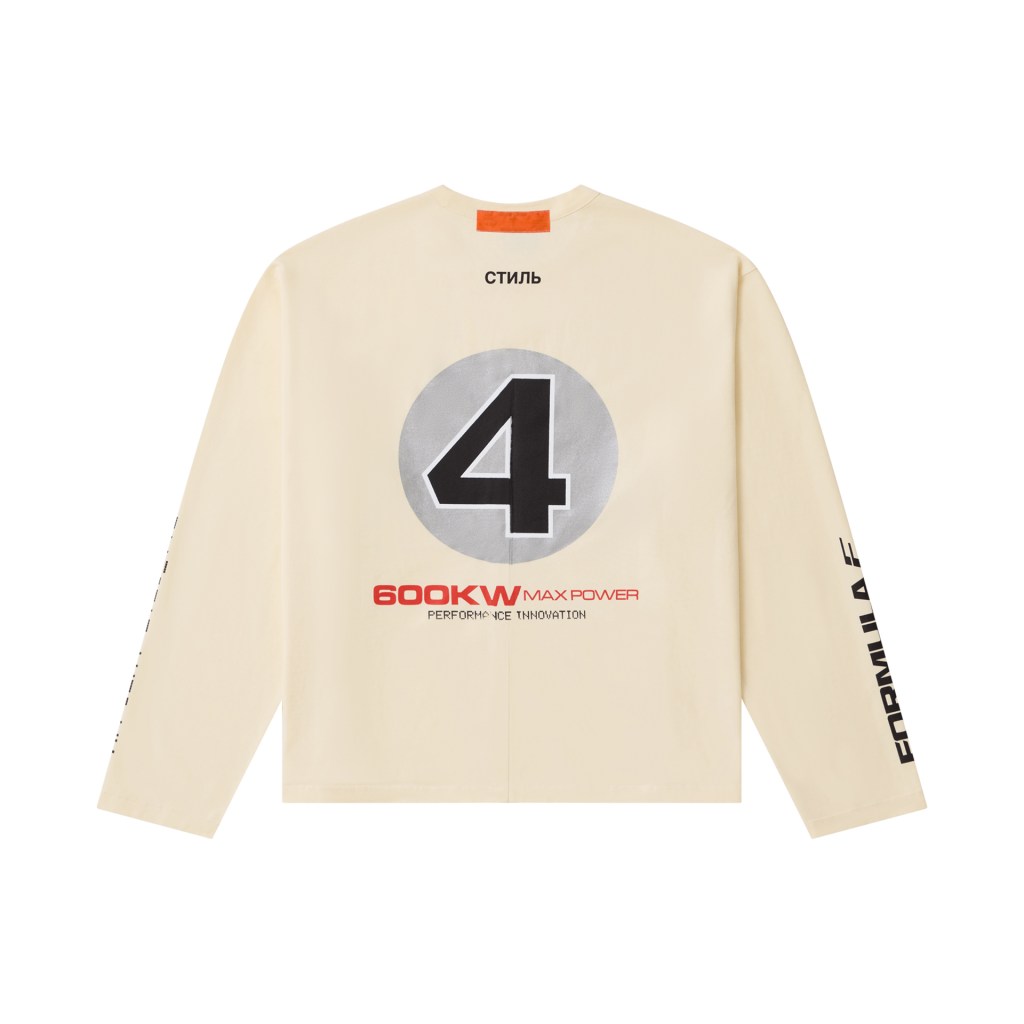
The partnership sits inside a longer line of work. Preston’s 2016 UNIFORM project gave decommissioned New York City Sanitation uniforms a second life; more recent pieces have come from Mercedes-Benz crash-test airbags and reclaimed city street signs, each one engineered for a single moment and then kept going. Formula E is the next chapter of this work. “It’s the same question at a bigger scale: what’s already here and what could it become?” he says. The sport answers it with warehouses of materials that already have a backstory.
The plan reaches past the preview toward performance apparel, accessories and fan merchandise made from upcycled components of the sport, and it’s the merch that Preston is most eager to rethink. “I want fan gear to be the best-made thing in the stands, not a logo on a blank,” he says. Fans touch and keep what they buy, which makes merchandise the truest test of whether the thinking holds, and the place where the most people meet it first.
Showing it at ComplexCon followed the same instinct to go where people already are. The fair gathers style, sneakers, music and design in one room—much of that crowd new to racing. “ComplexCon is culture. We’re meeting them where they already are,” he says. The partnership treats a culture audience as the front door to the sport.
For Preston, the measure of success arrives a few seasons out. Sustainability reads to him as the starting point of both operations, Formula E’s cleaner way to race and his own more honest way to make things, the ground the work is built on rather than a finish applied at the end. He will know the standard moved when the product comes from the sport’s own materials and fans can read exactly what their gear is made of. The real livery here is the one on the clothes: proof of origin, worn in plain sight.





What are your thoughts?