Technics Writes a New Legend in Sound
The EAH-A1000 wireless noise cancelling headphone is a feat of world-class engineering and comfort celebrating the intimate experience of personal music listening

The night has changed its music many times since the Technics turntable first took its place within it. Beneath the changing records, the platter has continued its revolution with equal composure to both the celebrated club and the obscure room where somebody was learning what music might become. One encounters it behind listening bars, among musicians’ possessions and wherever else an affection for vinyl has grown sufficiently serious to inconvenience the furniture.
We went to Tokyo for a hands-on immersion with Technic’s new EAH-A1000 flagship wireless noise-canceling headphones. They follow the spirit established by the the brand’s legendary SL-1200 turntable. Introduced in 1972 and followed by the MK2 in 1979, the turntable established the foundation for decades of refinement and invention. Its endurance lends force to the notion of getting a thing right at the beginning, making the original concept sufficiently sound with room to grow. That spirit is clearly present in the EAH-A1000, Technics’ new flagship wireless headphones, which bring the expectations of that history into the intimacy of personal listening.
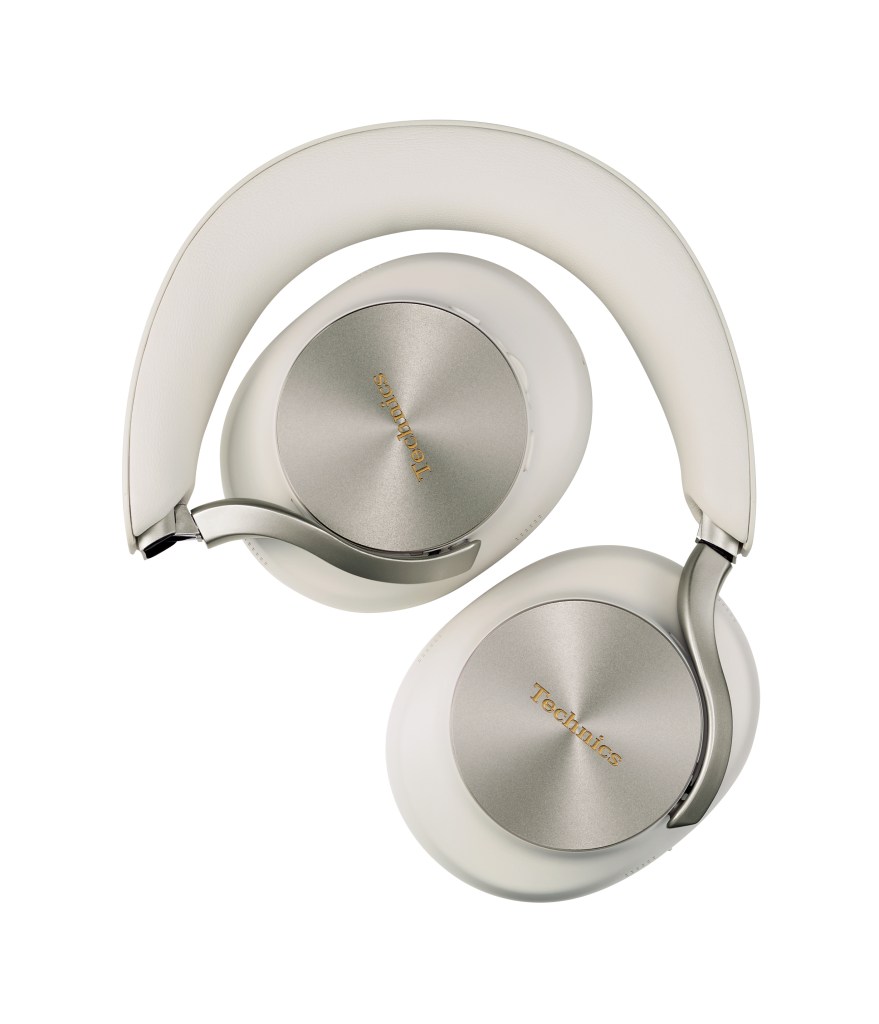
There is a family likeness, with a circular finish of the outer earcups referencing a vinyl record, and the metal rotary knobs on Technics’ hi-fi systems. A slender flow arm joins the front and rear slider surfaces through a v-shaped cantilever, supporting the housings with a restrained bearing. Real metal finishes are featured on the arms and ear cups. They are available in black and “Platinum Greige,” which gives the geometry a warmer luster.
Beneath this composed exterior, fluid attends to movements too slight for the eye. The newly developed 40 mm magnetic fluid driver uses a material with liquid behavior and magnetic properties to steady its diaphragm, helping the surface follow the recorded signal more precisely. The over-ear format makes room for a larger driver, substantial bass and an expansive presentation, though greater scale also invites unwanted resonance and distortion. According to Technics, the fluid helps restrain these deviations, preserving detail with less coloration.

The diaphragm shares that obligation. Its cone-shaped carbon fibre construction reconciles the lightness required for responsiveness with the rigidity that resists flexing, the geometry lending strength towards the outer regions. Technics’ carbon fibre is pure, not a composite or laminated. Around it, the SST Edge brings Symmetrical Surround Technology from the company’s flagship loudspeakers, balancing forward and backward travel to reduce low frequency distortion.
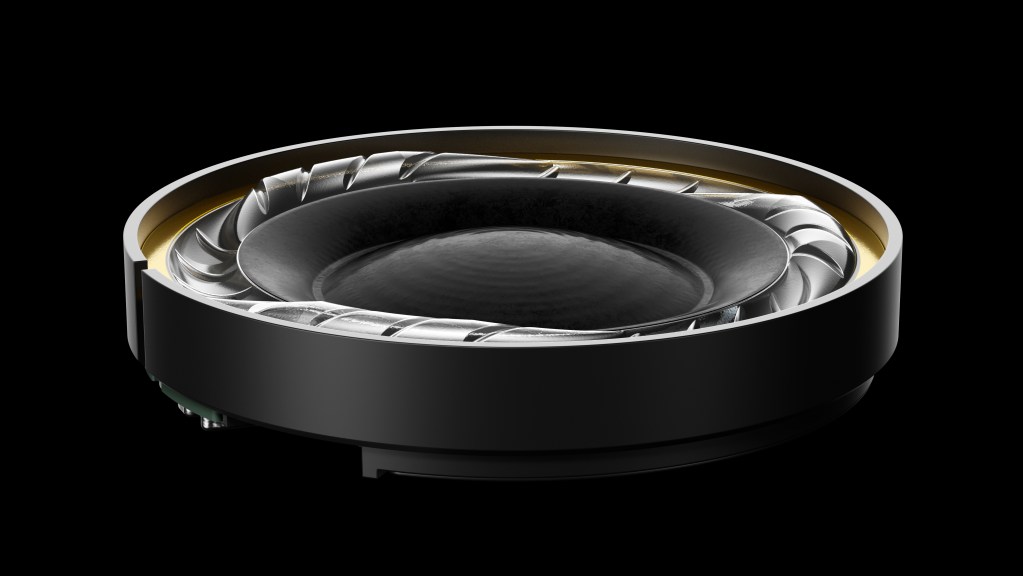
The intended benefit is bass that retains its articulation, allowing weight and character to arrive together. Even the air has been given its appointed passages. Before the driver, a Baffle Flat Structure reduces irregularities and unwanted reflections, helping sounds occupy their intended positions. The Acoustic Control Chamber and tuning vent behind it manages airflow, balancing lower and middle registers, preserving the atmosphere of a performance, the attack of a note and the lingering decay, yielding its place.
As the successor to the EAH-A800, the EAH-A1000 carries forward an emphasis on natural tonal balance and powerful bass engineered for prolonged listening, seeking greater openness, clearer middle and upper registers, improved noise cancellation and a slimmer form. The driver, diaphragm, surround, acoustic pathways and seal around the ears have all received renewed attention, and the magnetic fluid remains quietly at work among them.
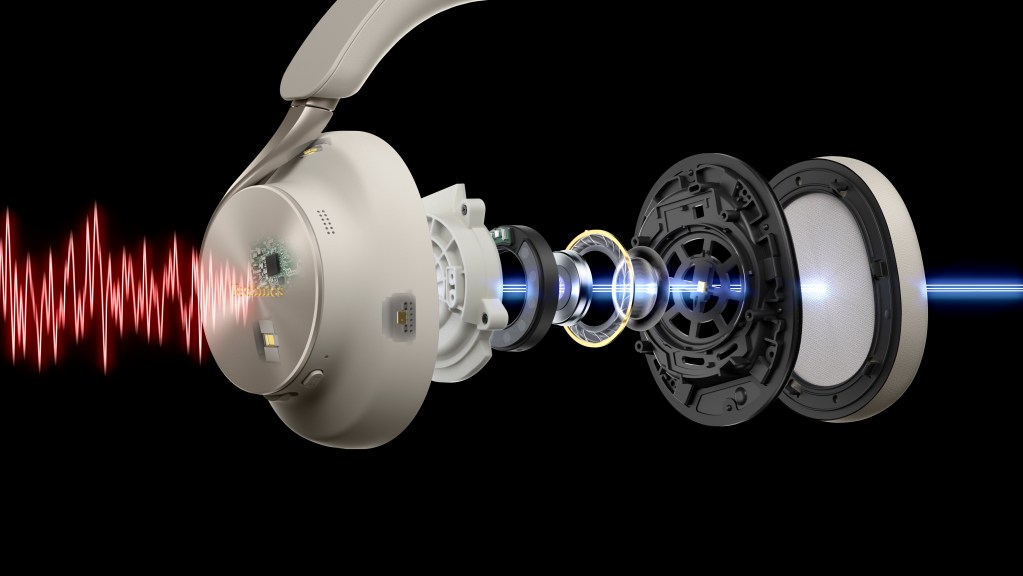
Outside the headphones the world is less invasive. Adaptive Noise Canceling responds to ambient noise, the fit of the headphones and differences in ear shape, using three feedforward microphones and one feedback microphone in each ear cup to monitor noise from multiple directions. Flights, events and cafés were part of our broader headphone testing through repeated listening across varied conditions, and every time the sound never disappointed.

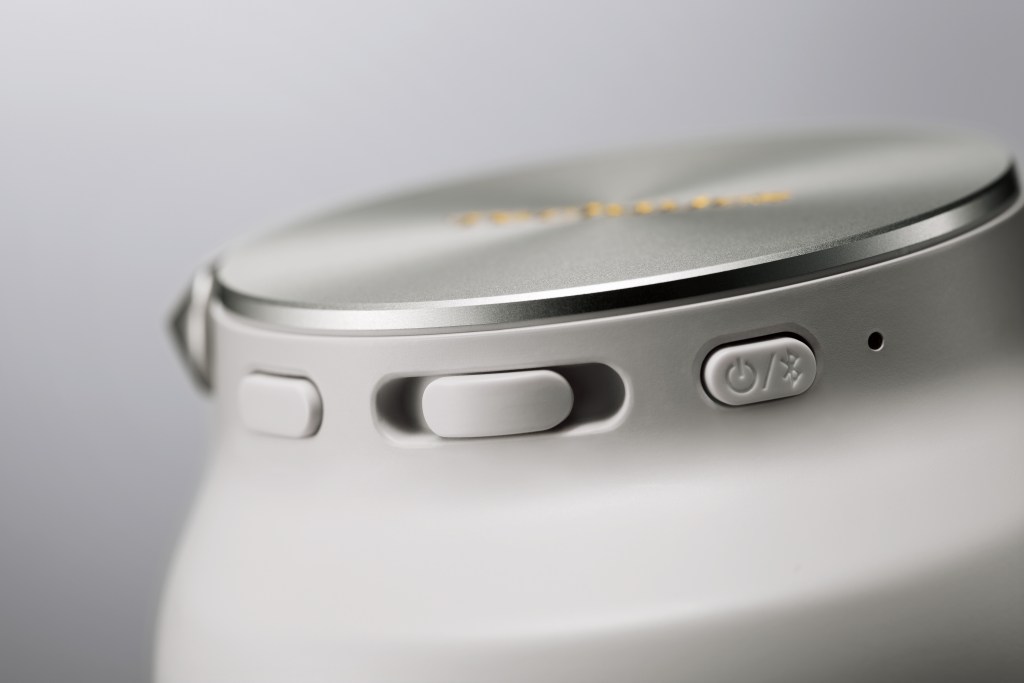
High-density memory foam ear pads and pressure distribution across the head make extended wear easier and more comfortable. A stated battery life of up to 45 hours, USB audio, LDAC support and simultaneous multipoint connections to three devices accommodate the passage between sources, while a sliding switch provides direct control.
At Technics, the relationship between the measured signal and the musical phrase finds a human expression in Michiko Ogawa, the brand’s director, audio engineer and accomplished jazz pianist. The development process includes a sound committee, rigorous listening assessments and repeated physical evaluations, keeping judgement by ear beside judgement by measurement. A pianist knows that a note continues to shape a phrase after the finger has left the key, its diminishing presence preparing what comes next. Through this regard for the scarcely perceptible, a Japanese tradition of workmanship makes itself felt.










What are your thoughts?