Test Ride: Santa Cruz Vala Alu 70
From technical trails to flatter commutes, the aluminum electric mountain bike offers impressive power and a fun ride
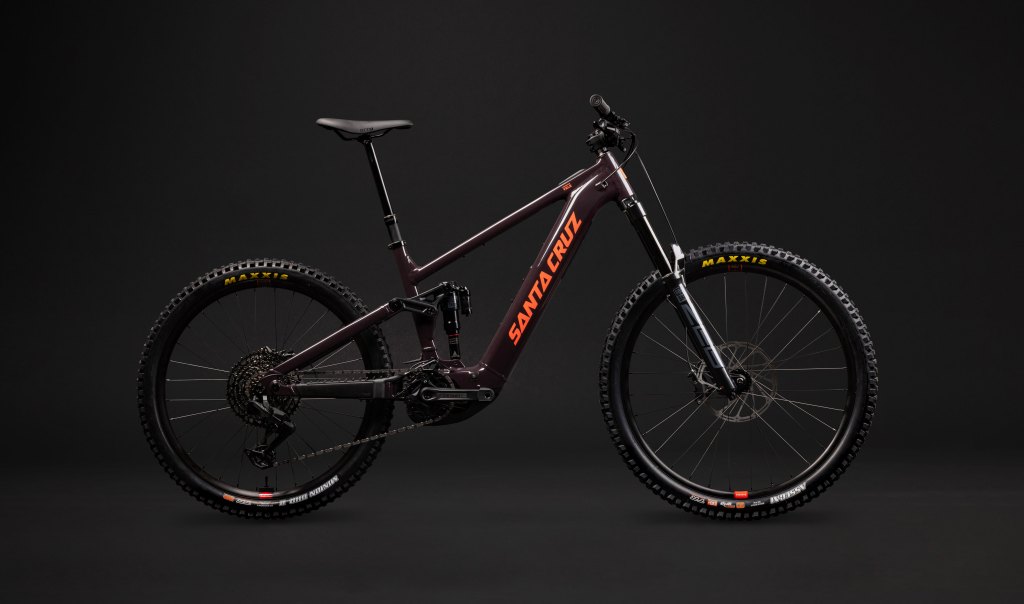
A lot of fitness-focused cyclists get the idea of e-bikes wrong. They grok the idea for commuters, sure. But when we were recently discussing the new, price-breakthrough Santa Cruz Vala Alu with a friend, he poo-pooed the idea. “Maybe someday, but I’m fit enough to ride the trails without needing that ‘blood doping,’” he said, with a hint of superiority.
Here’s the thing: You are never fit enough to not “need” the technological revolution that’s arrived on two wheels, where a combination of superior motors, smoother power delivery and advanced suspension kinematics is making e-mountain bikes their own category of cycling. This lends you more fun on your local trails, not because of added speed, but because riding technical terrain over several hours degrades fitness, rather than building it. So many trail systems are simply too taxing to shred daily.
That’s why even the world’s most fit athletes don’t train on singletrack. Adding the “blood doping” of battery power lets you polish that very same terrain at a far lower effort. In turn, this also allows you to hone the technical skills it takes to ride more adeptly, because you’re not in the red when you get to that rock wall or granny gear climb. Riding the Vala Alu for a few months cleaned up sloppy line selection and hit the reboot button on a lot of mountain biking terrain we thought we were riding smoothly.
We’ll grant one part of this question: There is truly no “need” here. Just as there’s no “need” for a non-assisted bicycle that costs $6,849—of which there are many, and plenty that cost double that sticker.
But the argument for why this bike is a game-changer is that it’s the metal version of the more expensive carbon Valas from Santa Cruz, and by switching to aluminum, the Vala suddenly becomes a sanely justifiable electric mountain bike. As for spec, this is a pedal-assist-only e-bike. Unlike the people you see in your neighborhood not pedaling their bicycles, the Vala Alu only aids your output (at four different levels) when you’re also pedaling.
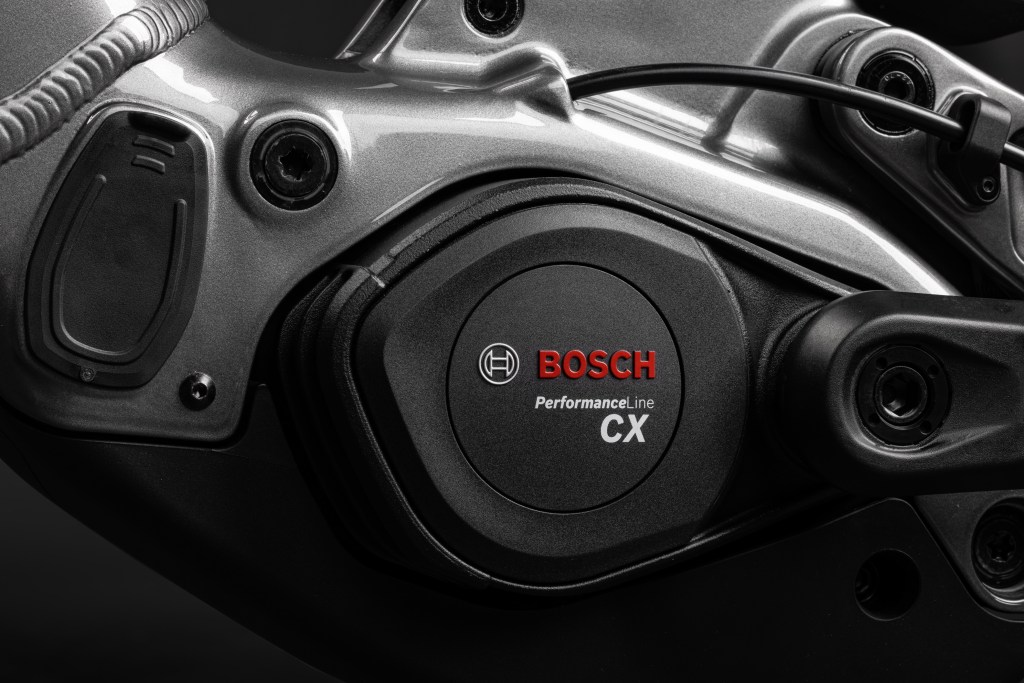
And it’s got enough range to ride for hours without depleting Bosch’s 600Wh battery. For assistance, the system provides up to 85Nm of torque, making the Vala a very powerful e-bike. We scorched plenty of two- to three-hour rippers without exhausting the battery. You can also add a 250Wh-range extender that fits neatly in the bike’s water bottle holder, providing enough power to pedal for an entire day.
Santa Cruz has arrived at an excellent, ultra-lively chassis that proved entertaining pretty much everywhere we tested. In part, that’s thanks to a mixed wheel size—the rear wheel is a smaller, 27.5-inch hoop, and the front is 29 inches in circumference. Santa Cruz’s engineers found two big benefits: the rider gets what’s called better “standover,” which is the ability to shift your weight around within the cockpit. You’re more “in the bike” than on it. A smaller rear wheel also contributes to the feeling of a more reactive suspension.
Santa Cruz has always been a brand that excels at making playful, fun bikes. But when you add a motor and all the extra weight of that large battery (the Vala Alu tips the scales at just over 53 pounds for a size medium), you risk a dead-feeling machine. Remarkably, the Vala Alu feels anything but. An especially low center of gravity makes it snappy and lively, and the quick-to-transition Alu reminded us of snappier skis, where edge-to-edge hop is what you want at slower speeds.
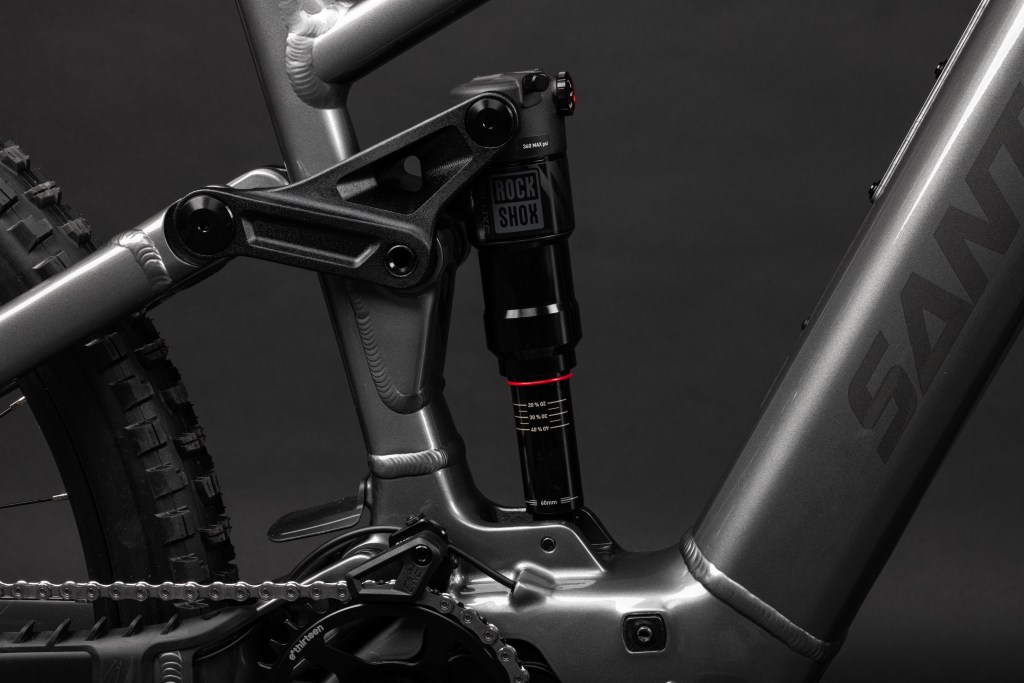
Go fast, and the Rockshox suspension excels at balancing pedaling forces when you’re climbing, with minimal bob, along with quelling high-speed chatter when you’re bombing downhill. This bike, especially with its mass so low in the frame, butters over the bumpiest singletrack. Santa Cruz engineers explained that during development, they made test mules without batteries to dial in suspension feel. At that point they realized how much “quieter” the Alu felt with the battery aboard. This, they explained, comes down to having more mass centered within the bike, which serves as a sponge for absorbing especially high-frequency trail “noise.”
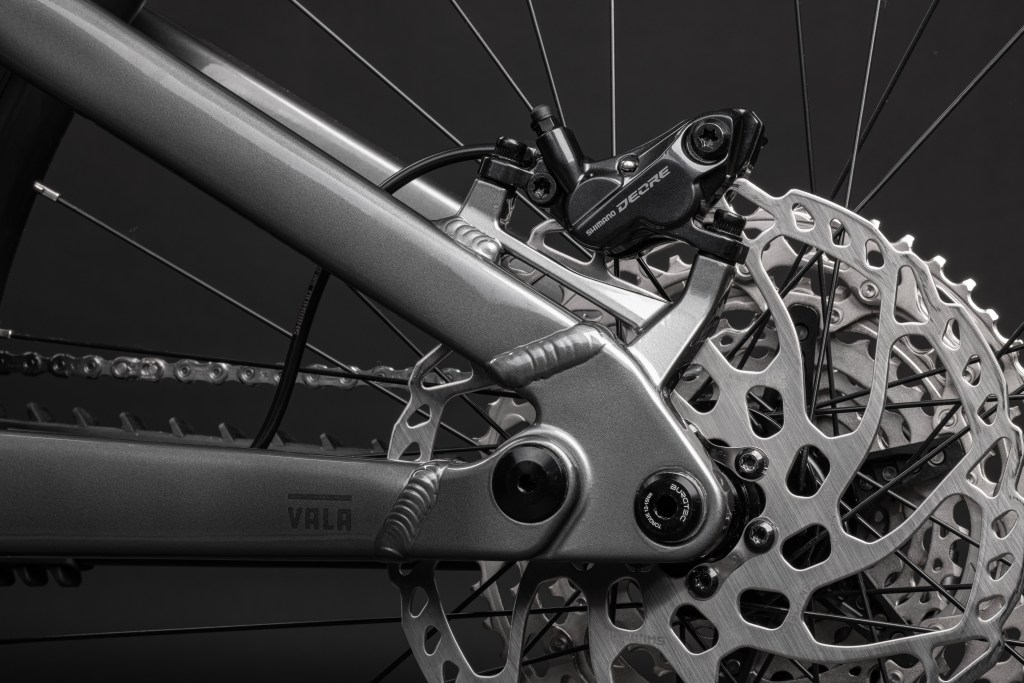
Another major bonus: SRAM’s Eagle transmission shifts incredibly quickly and solidly. No, it’s not electronic. Instead, SRAM has engineered a direct-mount system where there’s far less slop in the motion of the derailleur (the device that moves the chain from gear to gear). That results in an ultra-firm, “positive” shift feel from gear to gear. That’s especially important when you’re grabbing a gear you need to create right-now torque to pop up and over obstacles in the trail, like logs or rollers.
Of course, the added power of the Bosch motor makes a difference, but don’t forget, this is a pedal-assist e-bike. There’s no throttle to grab. Which means being in the right gear to power across terrain, especially when you’re in the heat of battle over really rugged trails, is just as important as when you’re riding a non-battery-assisted-bicycle.
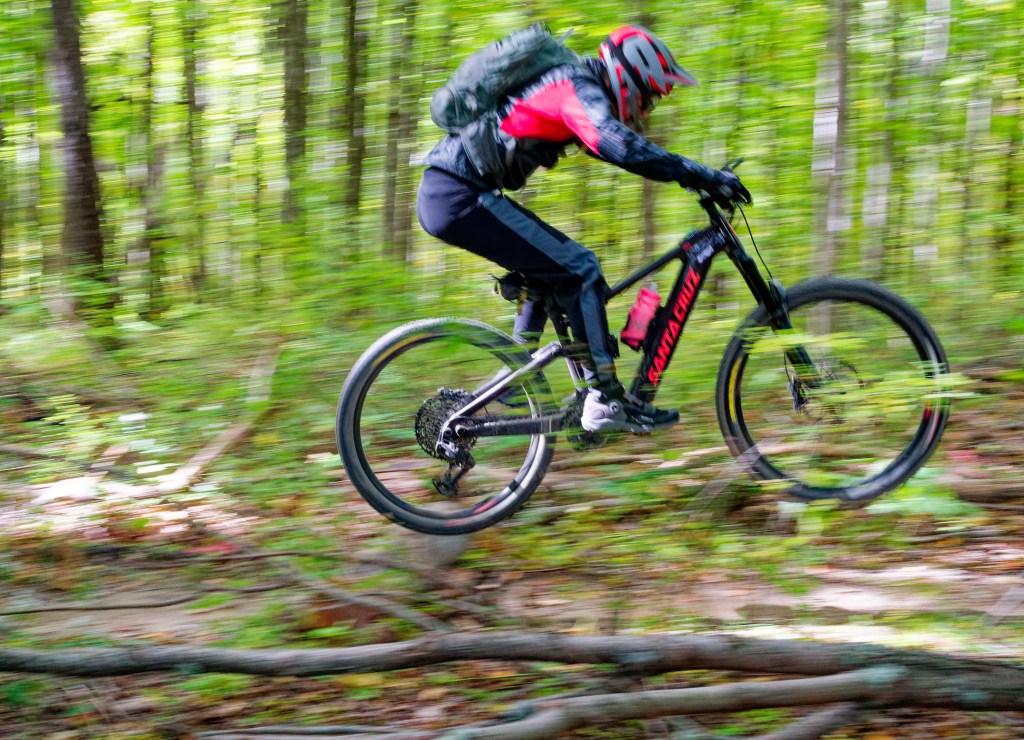
The reason the Vala Alu 70 provides such a significantly different experience is that it’s all-terrain fun. We tested it out on mellow, mixed rail-trail commutes and rolling carriageways we might otherwise ply on a gravel bike. The Vala proved a perfectly tame and fun commuter, too. And at full-tilt on ultra-choppy terrain with tons of climbing and steep descents, the geometry was perfectly suited to both the ups and downs. And we could conquer that “gnar” for hours, without going deeper into the tank. On rides of trails with long steady ups and equally long descents, we saw our average heart rate falling 20-30 beats per minute. Over the course of a few hours, that’s the difference between feeling fresh and feeling fried.
Disadvantages? Sure. You’d maybe want the few pounds of weight savings that come with the carbon frame. But the bigger deal is that Santa Cruz engineers can more finely tune their carbon frames than their aluminum ones, so you’d get further “snappiness” through cornering, especially. Carbon fiber costs more than aluminum, however.
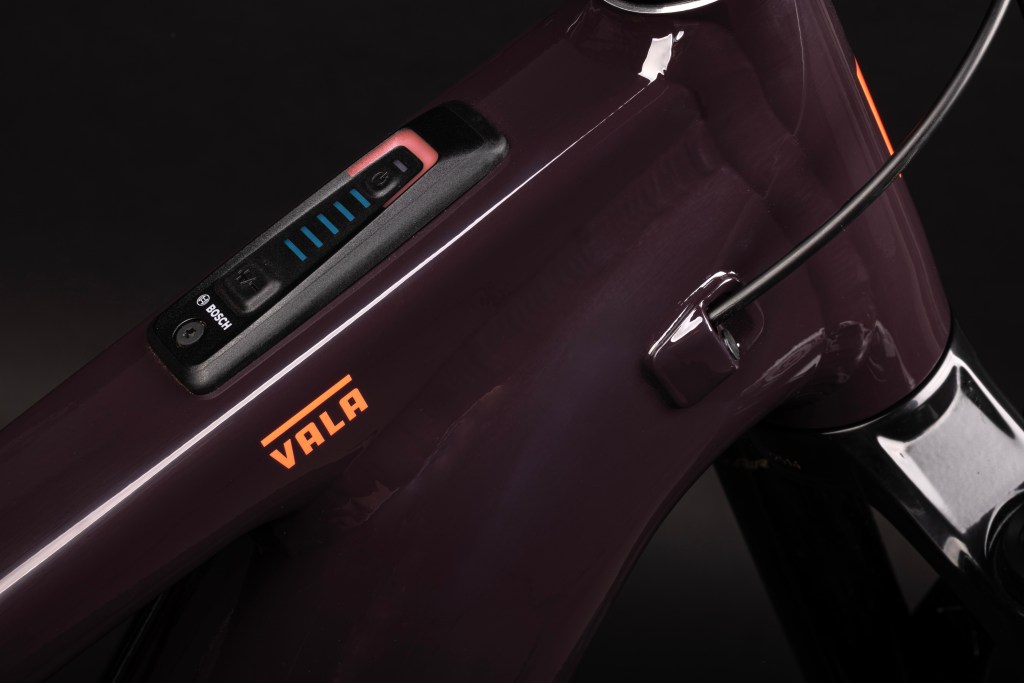
There’s no “screen” that comes with this bike: the battery life indicator and power mode is reflected through a color-changing controller on the bike’s top tube. This system doesn’t include a default display with more information, but it can be added separately. Luckily, Bluetooth pairing enables you to use your phone as a type of on-bike computer with Bosch’s Flow app.
Finally, the frame itself has space limitations. There’s a slide-out water bottle cage, so you can remove that and swap in a cage specifically built for holding that range-extending battery. But this suspension design limits riders to only having room for carrying a single water bottle—a common issue for many non-electric mountain bikes, too.
As for “needing” this specific bike, of course, there’s no such necessity. But the game-changing part of the Santa Cruz Vala Alu is how it feels so analog and natural, even when it’s reducing your own effort, making all kinds of pedaling that much more enjoyable and grin-inducing.








What are your thoughts?