Kate Bergeron on AirPods Pro 3: Designing Innovation You Can’t See
With heart rate sensing, refined transparency and a growing ear database, Apple’s latest earbuds merge health, fit and fidelity into a seamless everyday design
This month marked one of Apple’s boldest refresh cycles in years. With the debut of iPhone 17, iPhone 17 Pro, iPhone Air, a new Apple Watch generation and a reinvigorated push in AR and software aesthetics, Apple has reshuffled its ecosystem. The iPhone 17 family arrives with upgraded cameras, the house-made A19 chip and the new iPhone Air model pushing the envelope on thinness without giving up power. On the wearables front, Apple Watch Series 11 introduces hypertension alerts and deeper health insights. In that context, the AirPods Pro 3 could have been overshadowed. Instead they become a lynchpin: a space where health, communication, accessibility and entertainment converge.
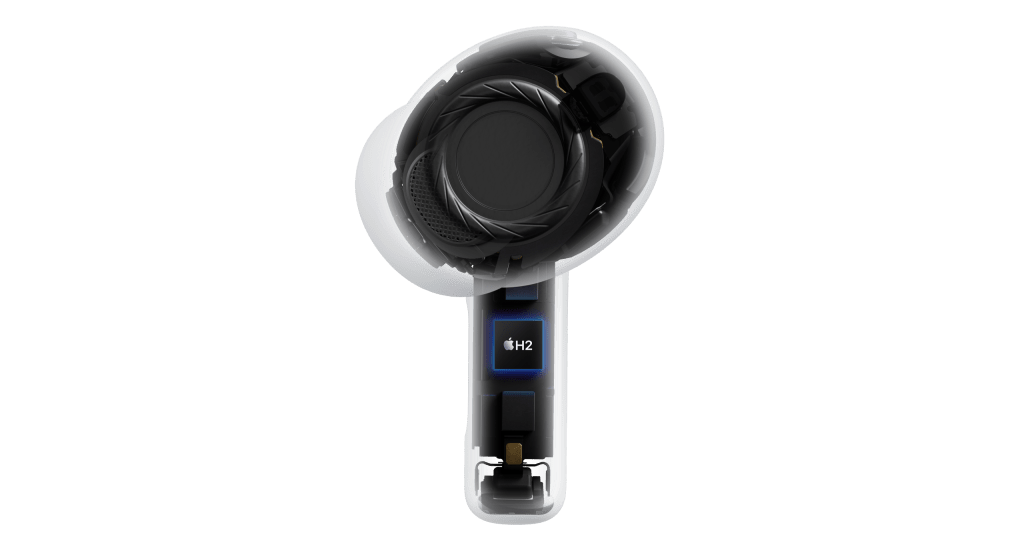
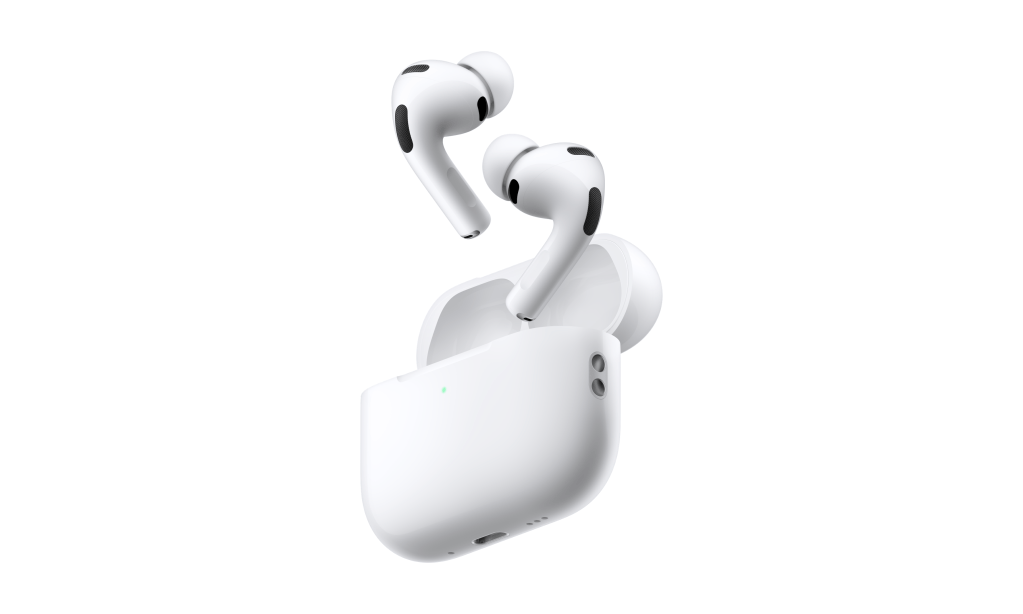
Apple’s new AirPods Pro 3 balance familiarity with quiet reinvention. At first glance they look like a refinement of the iconic form yet inside they represent a leap in engineering. Kate Bergeron, Apple’s VP of Hardware Engineering, described the design challenge succinctly: “It’s a 3D Tetris game of trying to pack in as much as we can in a very, very small space.” That game has yielded earbuds that are smaller, lighter and tougher—including improved water and dust resistance—all while improving the sound quality and comfort that defined earlier models.

The leap is not just physical—it’s computational. Each earbud now functions as a compute device powerful enough to support tasks that once were exclusive to the iPhone or Watch. With this generation AirPods Pro 3 (and select previous generation models) can facilitate live translation in parity with the Translate app, enabling conversation across languages directly through your ears. It reframes the role of the product: AirPods are no longer simply conduits for sound but active participants in processing and mediating the world around you.
One of the most significant additions is the heart rate sensor, Apple’s first in an AirPods product. Unlike the Apple Watch which has more surface area for optics, the challenge was to integrate biometric sensing in a fraction of the space. Bergeron emphasized why the ear is an ideal site: “The ear is a really stable point for measurement, and so it’s a great place for us to be able to track heart rate.” This transforms the earbuds from audio accessories into health-aware wearables—measuring your heart rate while you run, meditate or simply move through daily life. The feature works alongside the Apple Watch to track workouts, constantly evaluating and utilizing the best data source. And it also works without the Apple Watch to track several workout types directly on the iPhone.
Transparency is basically the exact opposite of active noise cancellation
Kate Bergeron, VP Hardware Engineering at Apple
Transparency mode also sees its most natural evolution yet. Redesigned microphones and acoustic tuning allow voices to come through with uncanny clarity while environmental noise is shaped to feel organic rather than filtered. Bergeron explained that improvements to active noise cancellation (ANC) also improve transparency: “Transparency is basically the exact opposite of active noise cancellation. In ANC, we’re trying to block out every everything as much as we can. And in transparency, we’re trying to bring as much of the real world in as we possibly can. And so the good thing is that, from a math perspective, as well as our passive attenuation, it works very well together that we make strides on ANC, and that’s also going to help transparency” In our testing this is the most mind blowing feature—when enabled the pass through sound is nearly impossible to discern as processed from microphones to speakers and just sounds like you’re not wearing AirPods at all. And yes, the ANC is incredibly impressive as well.

Then there’s music, the original reason for AirPods’ existence. Custom drivers and freed-up acoustic chambers, made possible by microscopic miniaturization, deliver richer bass, crisper highs and more spatial nuance than before. Songs sound bigger and more detailed with adaptive EQ adjusting playback in real time to suit your ear’s unique geometry. For a device this small the fidelity borders on uncanny.
We’re constantly trying to figure out how to pack more into the same volume
Kate Bergeron, VP Hardware Engineering at Apple
Much of this refinement stems from Apple’s relentless drive to shrink the invisible. The antenna system is now printed directly onto the system-in-package, passive components have been reduced to sub-millimeter scales and every layer of design serves to create space for sound. Bergeron described the paradox at the heart of their work: “We’re constantly trying to figure out how do we pack more into the same volume or even less volume.”

In tandem to a focus on performance and durability is the fit—because design isn’t only about what’s inside the bud but how it adapts to the body. AirPods Pro 3 benefit from years of building what Bergeron calls their ear database, a digital library of scans used to refine ergonomics and ear tip design. She explained: “Whenever we hear from somebody who says that AirPods don’t fit them well, we invite them to come in and get their ear scanned. And then we add that to our ear database, which we use for every generation.” This constant accumulation of data means that AirPods are quite literally shaped by the diversity of human ears.
We want people to just put them in and have them work the way they expect
Kate Bergeron, VP Hardware Engineering at Apple
The result is an object that feels both intricate and effortless. Heart rate sensing, live translation, improved transparency, ruggedness, better sound and an even better fit—all wrapped in a design that still looks jewel-like, almost simple. As Bergeron put it, “We’re always trying to do more in less space” and “We want people to just put them in and have them work the way they expect.”
AirPods Pro 3 embody Apple’s most characteristic kind of innovation: one that hides its complexity. What you notice isn’t the new antenna system, the shrinking of components or added biometric sensors. What you notice is how little you notice aside from the music, your conversation, the city or your own heartbeat—all flowing through a pair of earbuds designed to disappear.










What are your thoughts?