Audi’s Q9 and SQ9 Make Their Case in Light
The three-row flagships debut in Brooklyn with adaptive beams that shadow oncoming drivers and seriously thin taillights
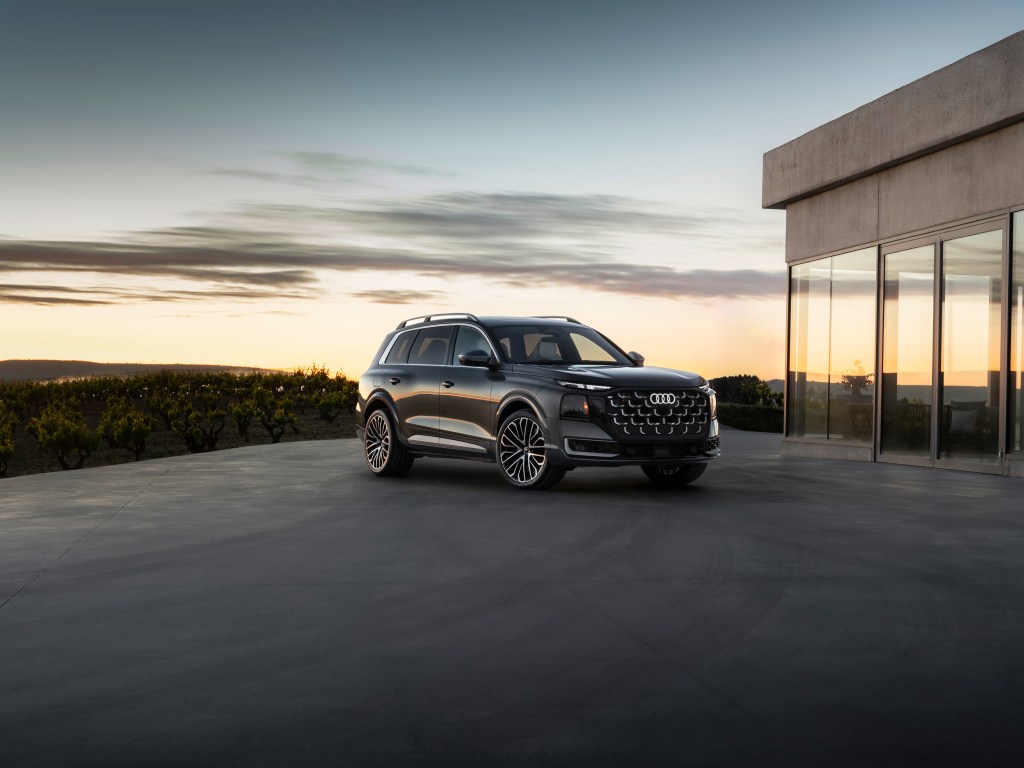
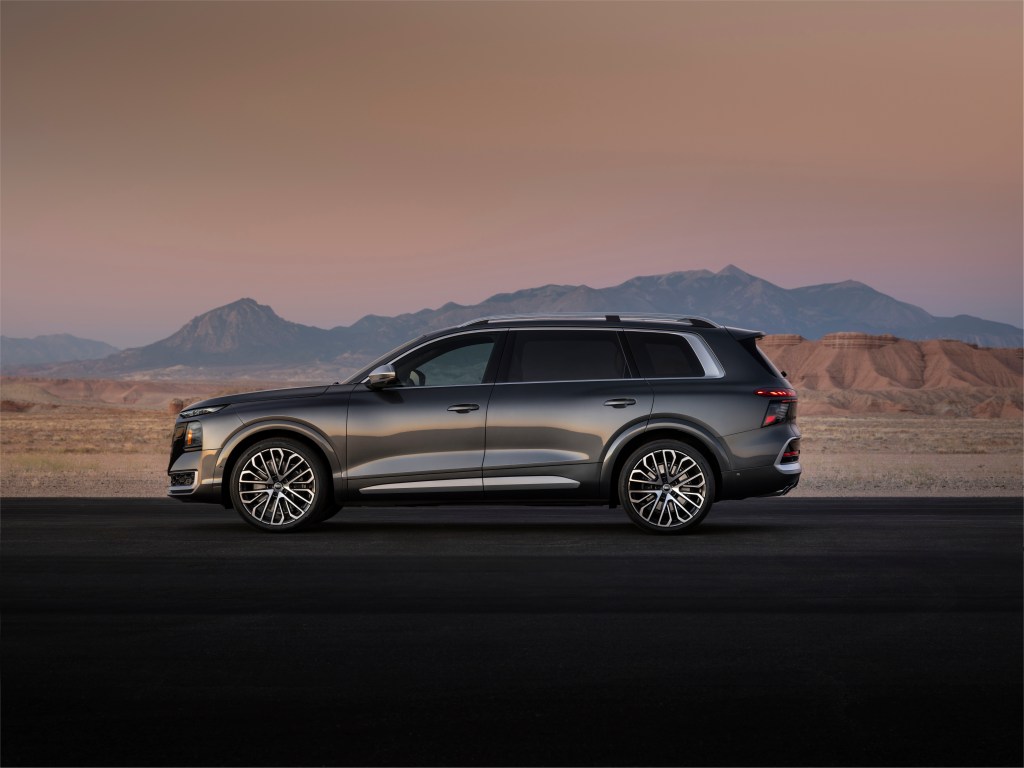
Audi unveiled its Q9 and SQ9 in Brooklyn and while the pair stands as the German brand’s largest SUVs to date, the more consequential story sits at either end of the bodywork with light is its through line. The Q9 family introduces Digital Matrix LED headlamps to the US for the first time on any Audi, a technology held back for years by federal regulation, alongside third-generation curved OLED taillights the brand positions as an industry first. The design philosophy treats illumination as both ornament and safety apparatus, capable of masking glare for oncoming drivers, projecting turn signals onto the pavement and rendering a hazard warning directly into the taillight. Performance follows in kind, but our eye goes to the light.
For Audi, illumination has long functioned as signature and safeguard at once, and CEO Gernot Döllner returned to that pairing during our conversation: “I believe that innovation in lighting is a big and important story because it adds character to the design of a car, plus it adds functionality that is highly safety related.”
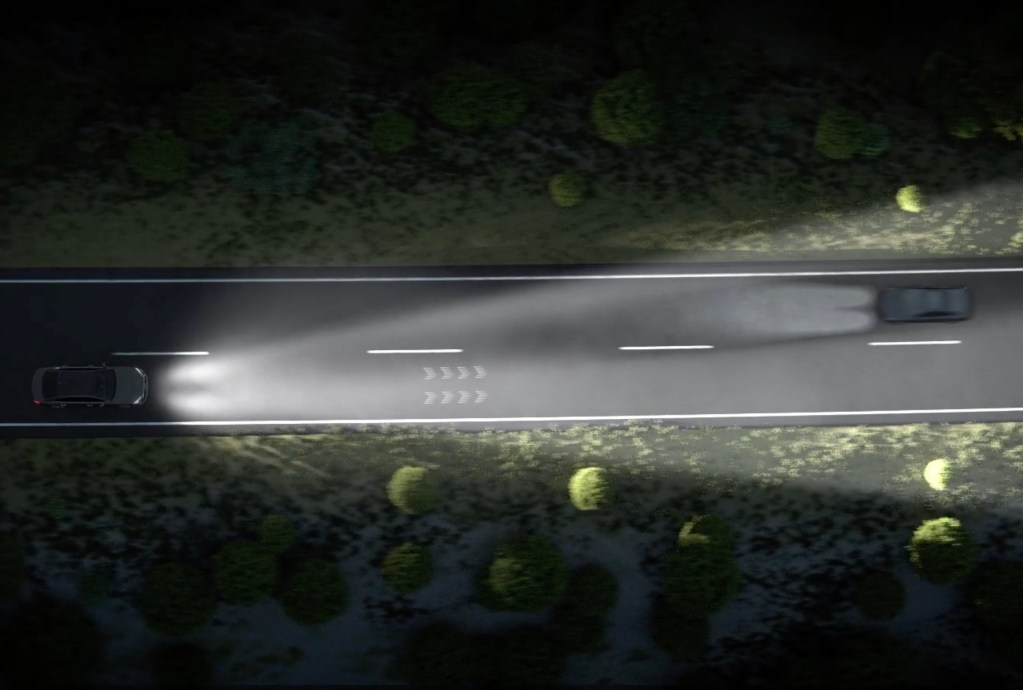
The Digital Matrix LED adaptive driving beam is new to the US market though hardly new to Audi. The brand developed and launched the system in Europe back in 2013, but the Department of Transportation rules kept it off American roads until 2022. Audi’s engineers spent the interval since then bringing the hardware in line with the stricter DOT standard. Conventional high beams have two states: on and off. The Digital Matrix system works in gradients, drawing on a micro-LED array of 25,600 individually addressable points. Front-facing cameras read oncoming traffic in real time and the array darkens only the precise pixels that would blind another driver, holding full brightness across every other surrounding degree of the road.
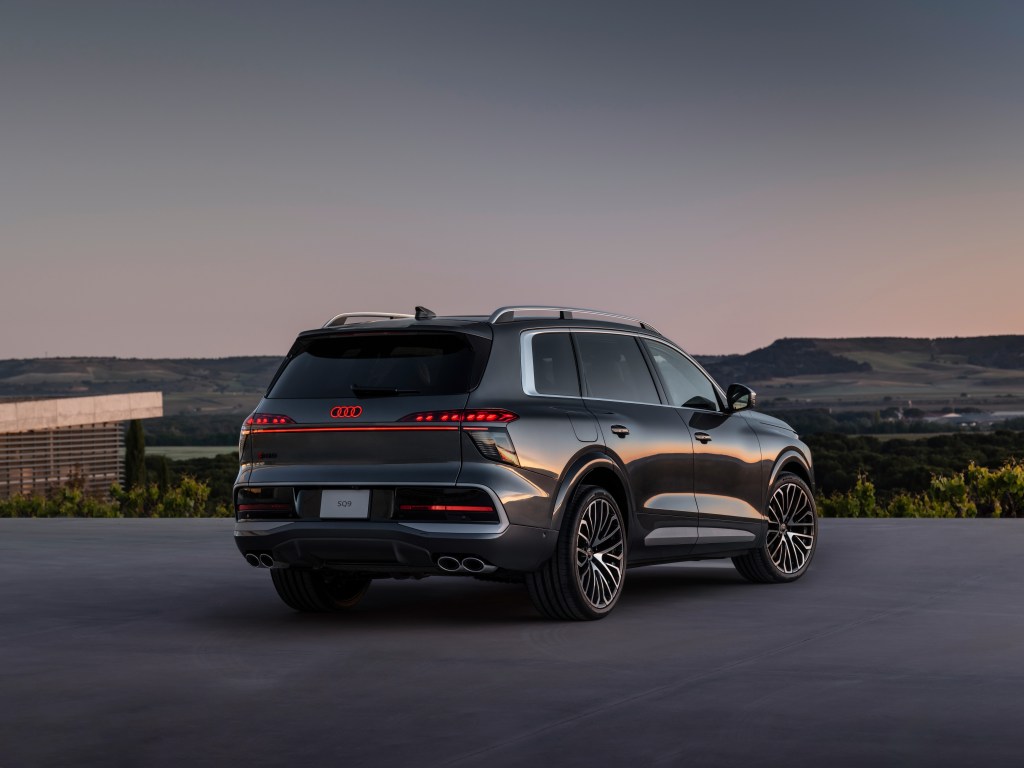
The Q9’s third-generation curved digital OLED taillights use a glass substrate just 0.1 millimeters thick—roughly the width of a human hair—bent across three dimensions to follow the body’s contours. The curve is more than sculpture. By wrapping the panel around the vehicle’s edges it widens the angle from which the lights stay legible, a subtle geometric gain that lets a driver approaching from off to the side register the car sooner.
That same segment density does more than sharpen visibility—it hands the driver a measure of authorship over the car’s face and tail. Six panels carry 512 individually controlled segments, enough resolution that the lighting becomes programmable. Through the MMI interface a driver selects from eight signature patterns spanning both the daytime running lights up front and the taillights behind, each configuration subtly broadening the vehicle’s apparent width. And when the moment demands it the rear segments turn instructive—when sensing a hazard, or engaged by the hazard switch, the OLED resolves into a warning triangle set into the taillight itself, addressing whoever follows behind.
The lighting innovations also extend to the ground. The Q9 and SQ9 cast a stylized turn signal onto the pavement beside the vehicle, synchronized to the car’s dynamic indicators—most vivid after dark though still somewhat legible in daylight. The projection signals to cyclists, pedestrians and motorcyclists near the car and also reaches drivers one lane over, whose view of the fixed indicators might be blocked by a vehicle between them.
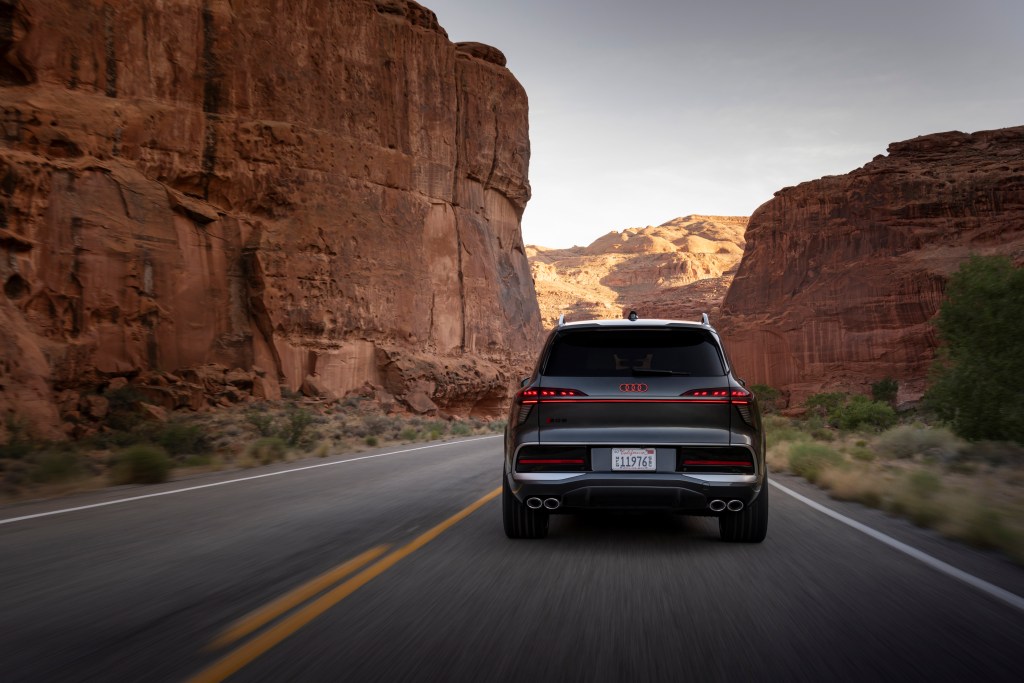
Strip away the horsepower and the seat count and what Audi has really built is a vehicle that treats its own surface as a display—one that shadows an oncoming driver, widens its stance on command, throws a signal onto the asphalt and, when the situation turns, warns the car behind in plain pictographic language. Döllner is candid that the appeal is finally emotional: “good lighting gives you a good feeling, and I believe that’s very important, and it also is an important business case”. The Q9 doesn’t just illuminate the road. It reads it, and answers back. Both the Q9 and SQ9 reach dealerships in the fourth quarter of 2026.





What are your thoughts?