Celebrating 60 Years of Timeless Design at the Mauna Kea Resort
Careful renovations and new amenities at Mauna Kea Beach Hotel preserve the legacy of the storied Big Island destination
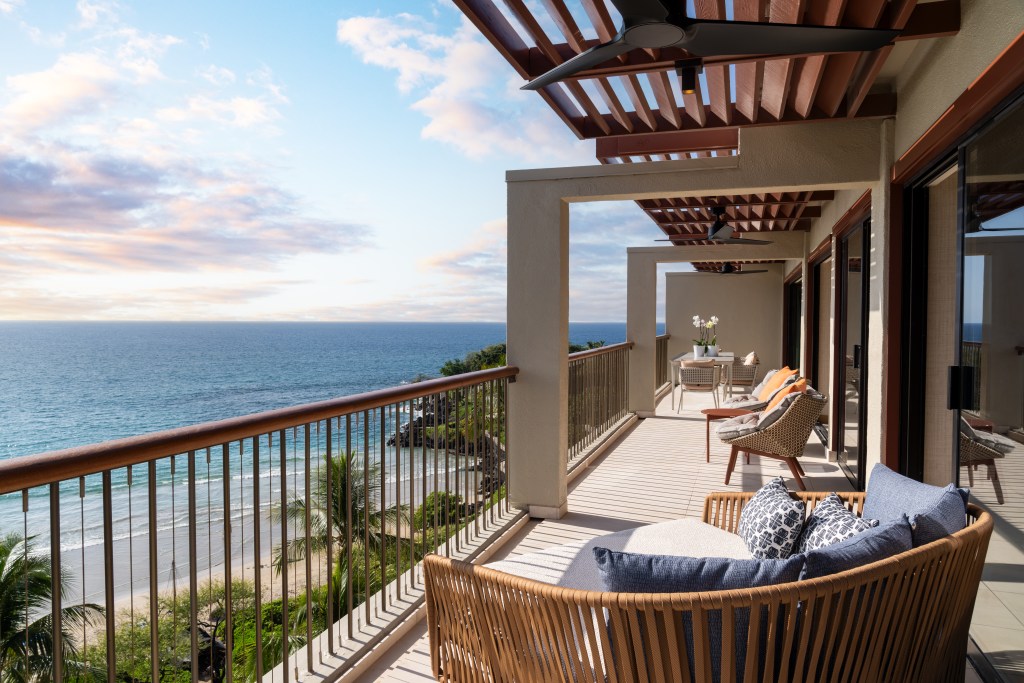
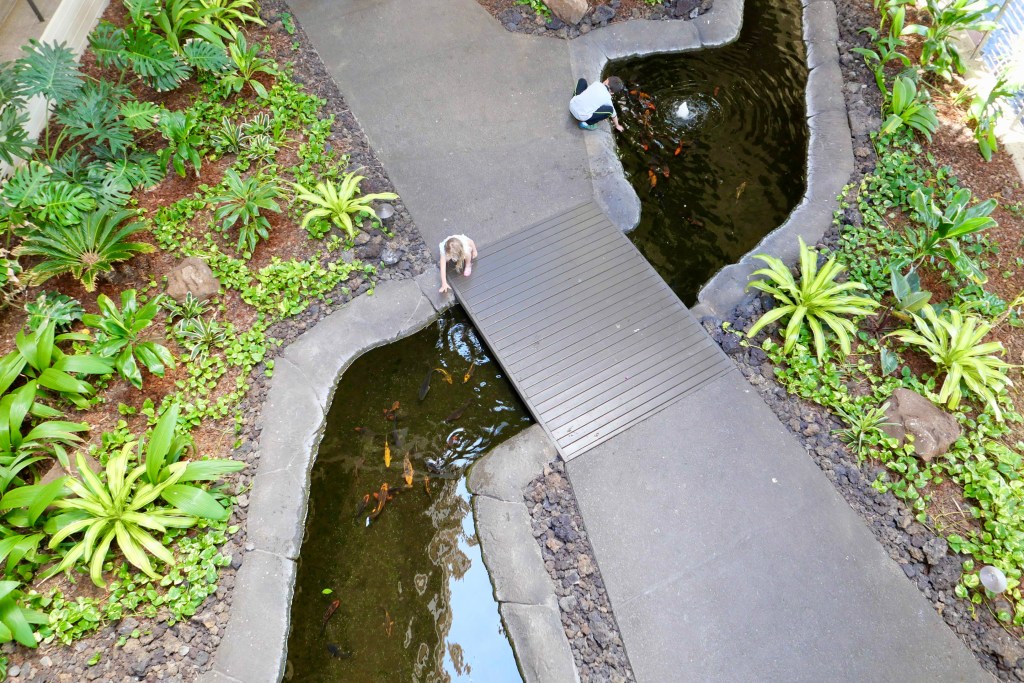
For 60 years, the Mauna Kea Beach Hotel on the Big Island’s Kohala Coast has charmed visitors from around the world. Set along a serene Kauna‘oa Bay, Laurance S. Rockefeller built Hawai‘i Island’s first resort in this idyllic setting, designed to optimize the ocean views with an open floor plan to take advantage of coastal breezes. The resort now features updated guest rooms, restaurants and a new state-of-the-art spa. As the hotel celebrates its 60th year and recent $240 million renovation, small children feed the koi fish in the beautiful ground floor ponds where families have gathered for generations.
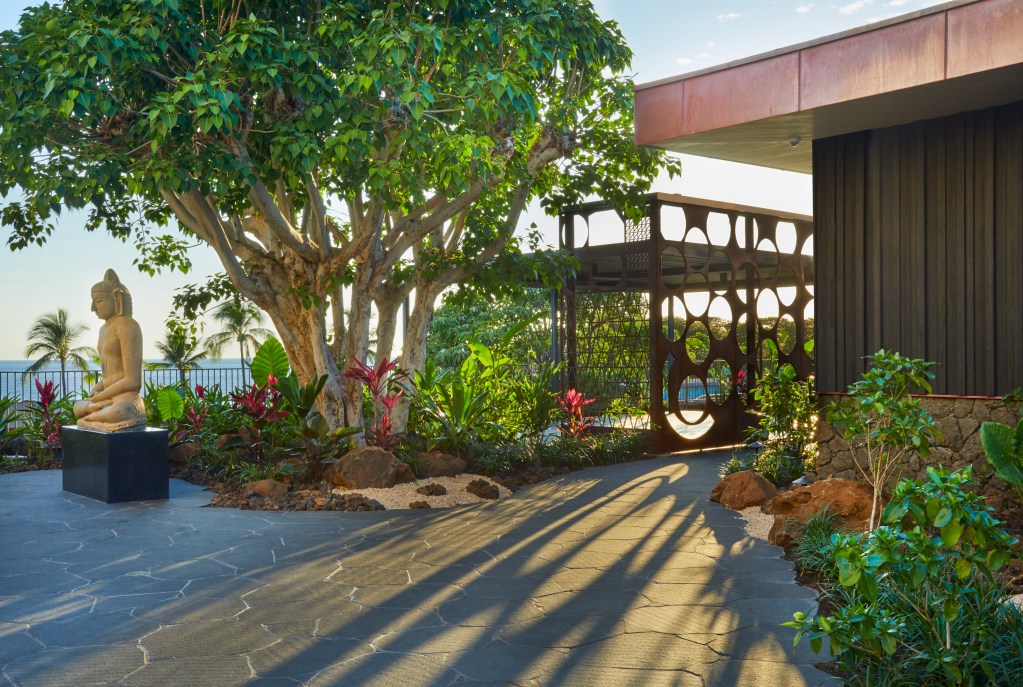
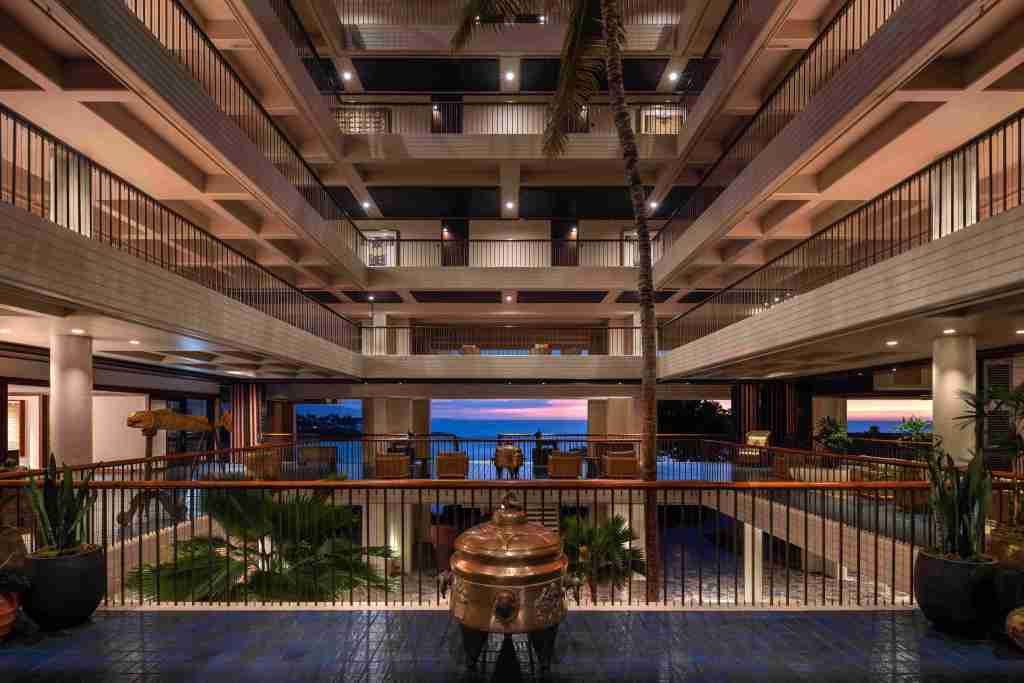
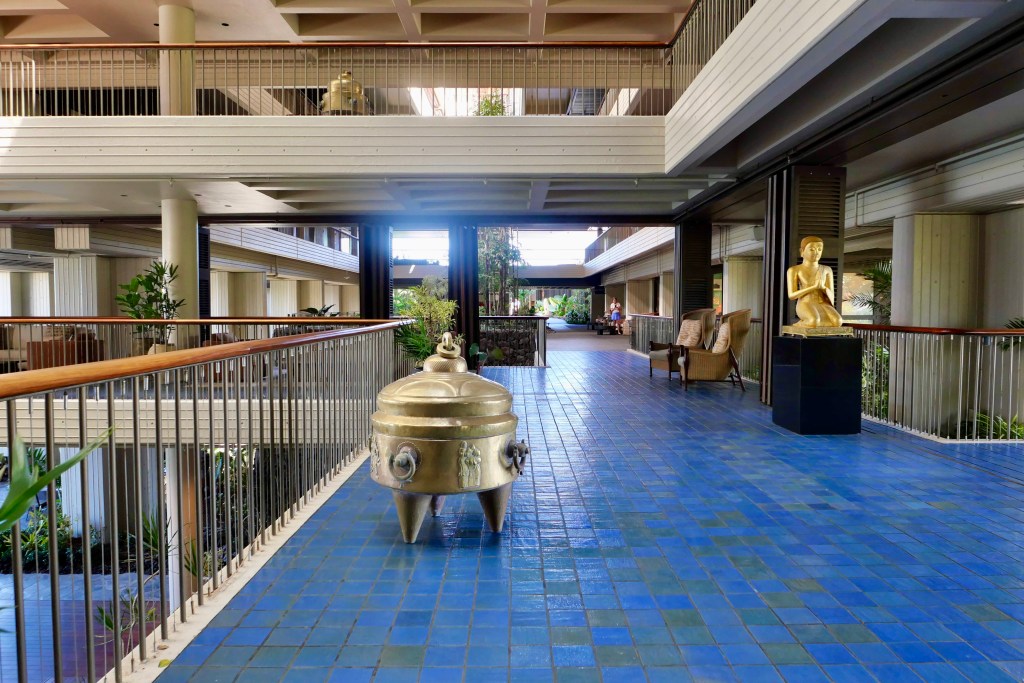
“There are two signature moments in the hotel that to me are unique to Mauna Kea,” says architect Neu-Wa O’Neill of AHL Design, who helmed the careful architectural restoration and creation of new spaces of the historic property, originally designed by architect Edward Charles Bassett and interior designer Davis Allen of Skidmore, Owings and Merrill. “The first is the arrival bridge into the lobby, flanked by the two gold leafed statues and looking through the atrium out to the ocean beyond. That view encompasses all the magic of Mauna Kea.” O’Neill loves how the landscape blends with the architecture, atrium spaces and the resort’s comprehensive art collection, creating a constant visual connection to the place. “The second is the view from the Promenade up to the Buddha statue, now in front of the new spa,” he adds. “That view truly captures the mystique of this place.”
The complex renovation involved the work of multiple firms—guest room design by Looney & Associates; suites, restaurants, retail and the lobby were designed by The Vanguard Theory; and the spa by MADE Brands.
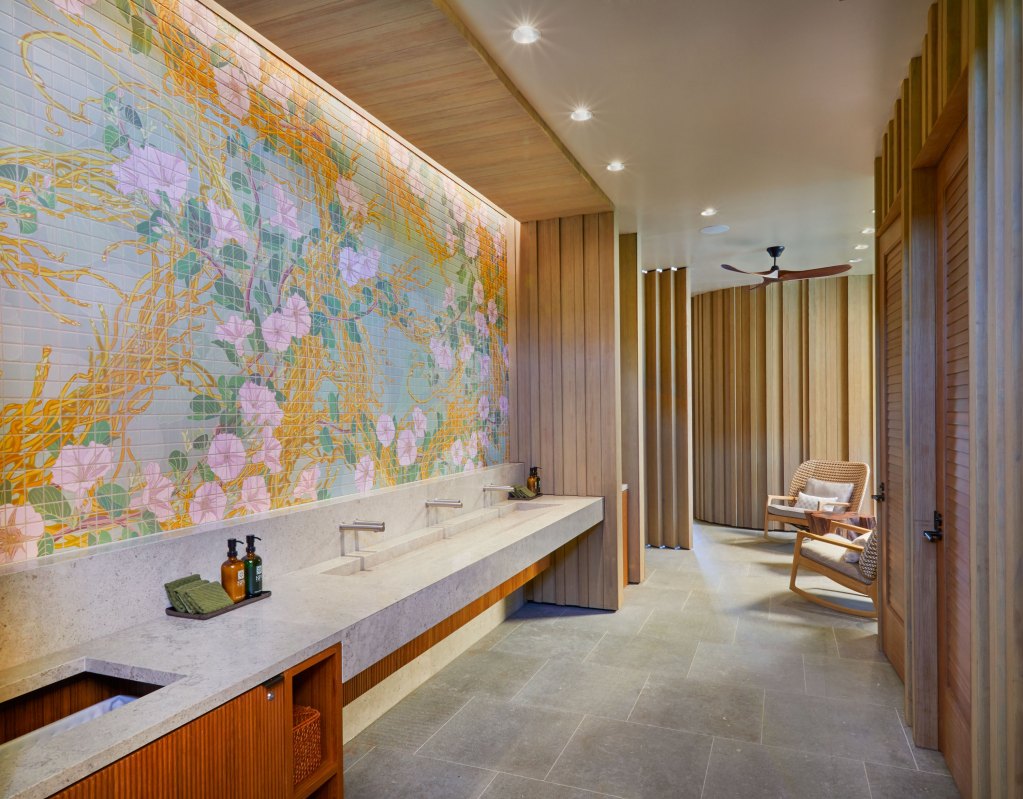
As renovation plans progressed, regular guests expressed time and time again their love for the resort and their hopes that the original character of the property would be preserved. The new architectural spaces intentionally reference the existing structure. “This is such an iconic property and building that it was critical to the team to respect the original design intent,” says O’Neill. “The new infinity lap pool builds off the horizontal terracing of the existing architecture. The vertical wood siding is a nod to the board-formed concrete of the hotel. As one moves through the spa, there is always a new view to a garden space and art, tying directly back to the open hotel corridors.”
Together the architects and interior designers, along with the art restoration teams, focused their decisions of preserving the timeless designs and legacy of the Mauna Kea. “We had a duty to respect the existing building and only add elements that would enhance or restore what was already here,” says O’Neill. “For the spa and fitness campus, our key design narrative words were filtered and framed views, art as focal point and blending of indoor and outdoor.”

The architectural team had access to partial scans of the original 1965 construction drawings, as well as some of the subsequent renovation plans. O’Neill found the scanned originals were very useful in identifying key structural elements, especially the roof of the north garden which became the home of the new spa, informing the proportions and scale of the spa roof. The entire team made every effort to restore, salvage or carefully match any existing materials, including the terrazzo flooring at the beach wing.

MADE Brands, led by Jackson Butler, designed key interior components for the renovation. Butler describes how the choices they made respond to a sense of timelessness over generations of shared memories at the Mauna Kea. “We tapped into this narrative for the new spa, inspired by the sacred ascent of the island royalty to Lake Waiau. The spa experience is intended to be a serene escape that evokes the feeling of a dream with treatments designed as a journey, gently releasing fatigue, restoring balance and renewing inner clarity.”
In addition to the dining spaces, the cocktail bar holds a special significance that honors the midcentury resort’s history. “We wanted to create a space as an homage to Mr. Laurence Rockefeller, his vision and the rich legacy he left behind,” says Butler. “Our efforts were to be in the mindset of a moment and place, new and midcentury…timeless. We asked ourselves where and how we could elevate the past while delivering something unique and fresh. The idea of a speakeasy gave us license to explore and to be in the mindset of, ‘What would Mr. Rockefeller design?’ Rich natural materials, clean lines, form following function, with a bit of mystery and fun. And, of course, amazing cocktails and music.”
The Ulu Garden shares examples of more than 45 varieties of seasonal local produce that are harvested for menus throughout the resort’s culinary offerings. This garden continues the tradition of supporting local farmers, ranchers and fishermen since the opening of the hotel 60 years ago. Mauna Kea’s sustainability practices also extend to the golf course with its drought-resistant turf.

In partnership with Island Eclectic, a Hawaiʻi Island-based fine art handling and restoration company, the art team expanded conservation efforts to include the Polynesian tapa collection, Papua New Guinean masks and numerous artworks that had not been displayed at the hotel for decades. Throughout the property, the entire Rockefeller Collection is now on view, many with newly designed archival frames or custom plinths to be preserved for generations.
The Rockefeller art collection records were transitioned into two digital platforms to catalogue each piece. “Each work is digitally tracked by its location, condition, conservation history and maintenance schedule, allowing us to proactively manage cleaning, restoration and rotational displays while ensuring the long-term preservation of this remarkable collection,” explains hotel general manager Kansas Henderson. They partnered with conservation teams at Bishop Museum, including Dr. Alice Christophe, former Ethnology Collections Manager and Curator (now Curator and Head of Oceania at The British Museum). Pieces requiring specialized treatment were transported to Bishop Museum’s conservation laboratory on Oʻahu while others were carefully restored on property.
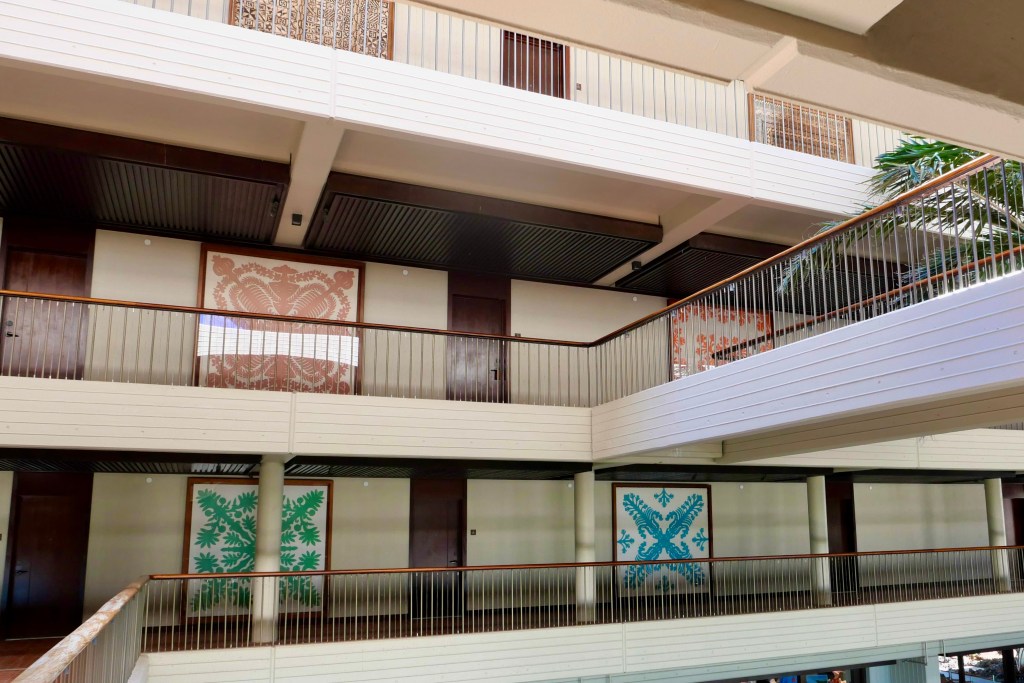
“Among the first priorities were the resort’s exceptional collections of Hawaiian kapa and quilts, recognized for their rarity, cultural significance and historical value,” says Henderson. “Bishop Museum conservators meticulously restored these works and designed custom archival frames tailored to each individual piece to ensure their long-term preservation.” Many of the quilts in new protective framing hang along the resort’s open hallways, while the Hawaiian Coat of Arms Quilt is displayed in the Discovery Center.

Unlike the more than 30 quilts Laurance Rockefeller commissioned from renowned quilter Mealiʻi Kalama, this quilt was created around 1965 by Kalama and members of the Kawaiahaʻo Church community as a personal gift to Rockefeller. “Rather than taking it home, he chose to leave it at Mauna Kea Beach Hotel, where it remains part of the collection today,” says Henderson. “What makes the quilt especially meaningful is not only its unique design, featuring the Hawaiian Coat of Arms and the state motto, Ua Mau ke Ea o ka ʻĀina i ka Pono, but also its place in Hawaiʻi’s cultural history. The quilts Rockefeller commissioned from Mealiʻi Kalama helped preserve and revitalize the Hawaiian quilting tradition during the 1960s, and today the collection represents an important part of her legacy as a designated Living Treasure of Hawai’i.”
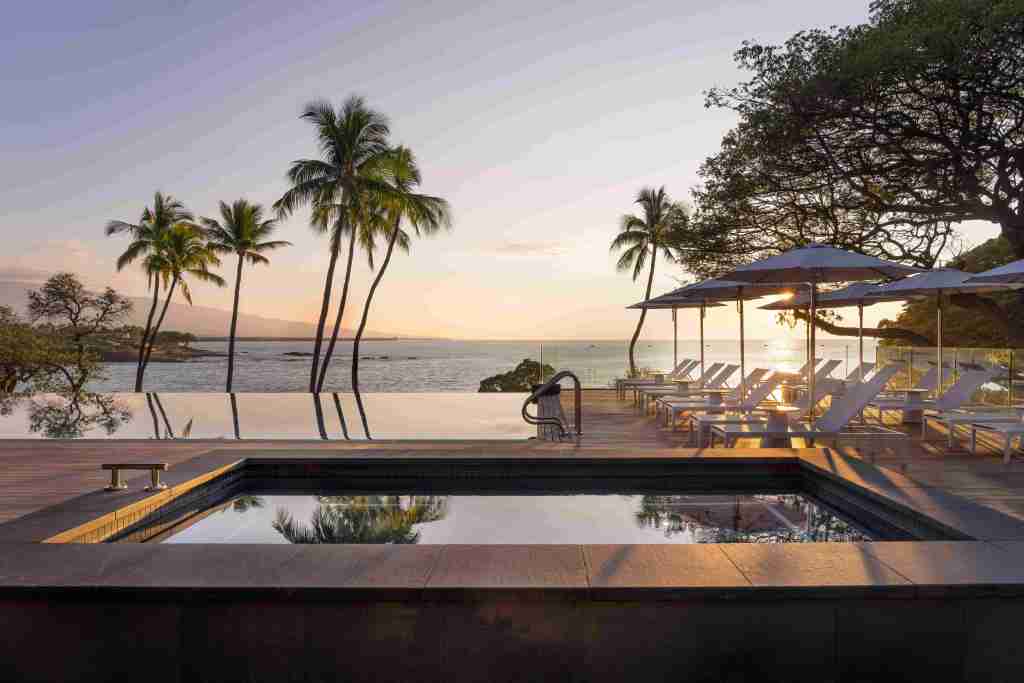
At dawn, guests can walk past the historic quilts and down to take in views of Kauna’oa Bay. There, strolling on soft sand, relaxing on lounge chairs, sipping warm cups of coffee and taking in the idyllic scenery feels like a dream. A traditional sunrise ceremony begins with a group chant and continues with guests walking into the ocean and fully submerging in the calm water. In the evenings, a manta ray swimming experience offers an up-close encounter with the majestic animals after dark. Each element of the hotel, from the ocean views to the pools to the beach, wraps each visitor—and local—up in the magic of the island.
From the pristine blue water to the overall celebration of the arts and culture of Hawai’i, the Mauna Kea’s thoughtful updates will welcome guests for generations.

What are your thoughts?