Art Basel Paris 2026 Highlights: Five Booths That Made the Most of a Shortened Fair
Protests cut the fair’s public run to a single day. From a first-time Emergence exhibitor to a London duo sharing a stand for the second year running, five galleries still made their mark
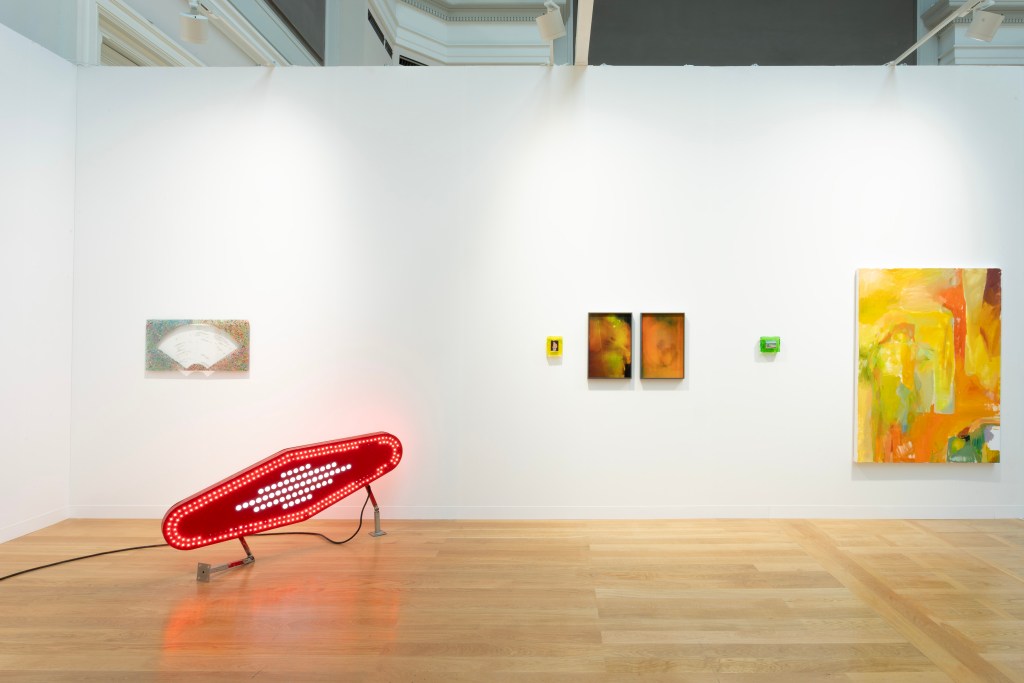
Under the glass roof of the Grand Palais nave, a wave of color: oranges, blues, yellows, primaries everywhere. And that was just the crowd. This wasn’t fashion week. It was Art Basel Paris.
Phones were out for the perfect selfie as influencers went live from the VIP opening. At a ground-floor booth, an older gentleman admired his reflection in an Anish Kapoor mirror sculpture. “I feel like Dorian Gray,” he said. “I need one, regardless of cost.” The price was on request, but Christie’s sold a similar Kapoor for €538,000 in 2020. Call it the most expensive selfie filter in the building. At Pace Di Donna Schrader hung the fair’s priciest work: Amedeo Modigliani’s “Nu étendu (Lolotte)” (1917), valued at more than $100 million.
Then the schedule changed. On Thursday, organizers announced the fair would close at 7 p.m. Friday and stay shut all weekend, citing planned demonstrations. Police had already briefly locked down the Grand Palais during installation amid student protests over schools and public services.
The blue-chip galleries drew the crowds. For smaller galleries, a booth at Art Basel is mainly a chance to be seen, and the shortened run took much of that away. Five booths still stood out: Mariposa, a first-timer in Emergence; Sans titre and Sultana from Paris; London‘s Seventeen and Nicoletti; and New York‘s Karma.
Mariposa
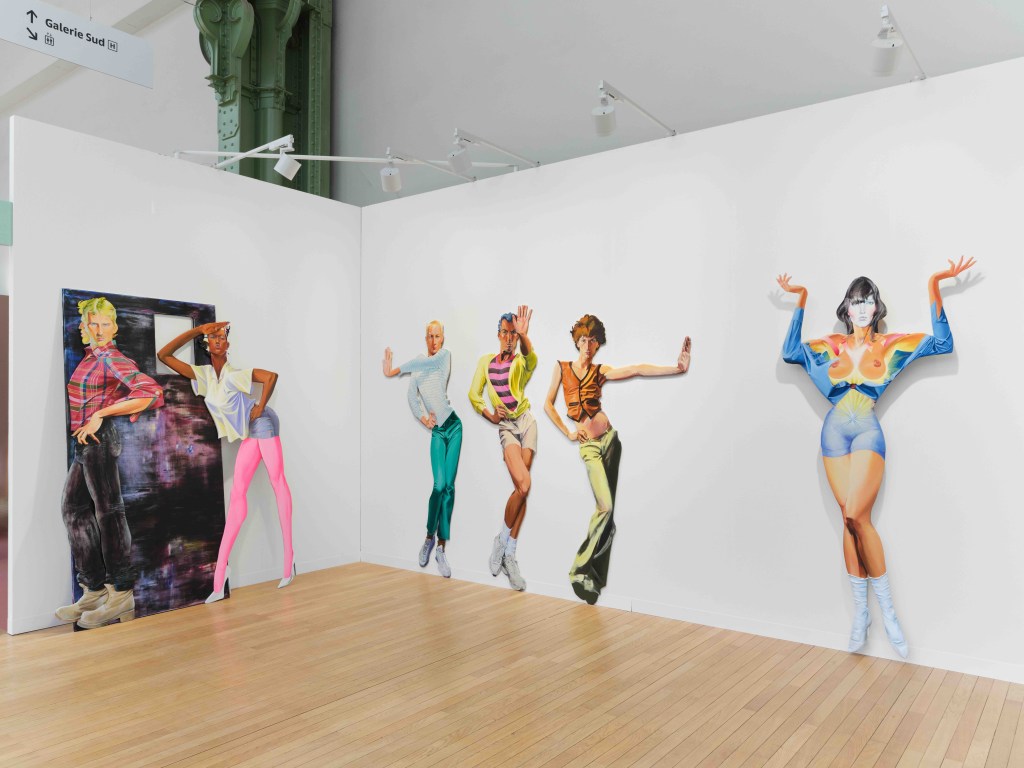
For its presentation at the fair in its Emergence sector, Mariposa gave its stand to Drake Carr and 10 life-size figures he spent two years painting in acrylic on plywood, cutting out with a jigsaw and presenting the works leaning against the walls. The gallery reshuffled them into what it called a “modular fresco.” They had the long limbs, cocked hips and poised fingers of Mannerist saints, dressed in plaid shirts, track pants, chunky sneakers and bomber jackets. The mix made sense given Carr’s background—growing up in a church community in Flint, Michigan, then spending years tending bar at Happyfun Hideaway, a tiki-themed gay bar in Bushwick, where his drawings were stapled to the walls. Both rooms, in his view, were full of art nobody really looked at.
Sans titre
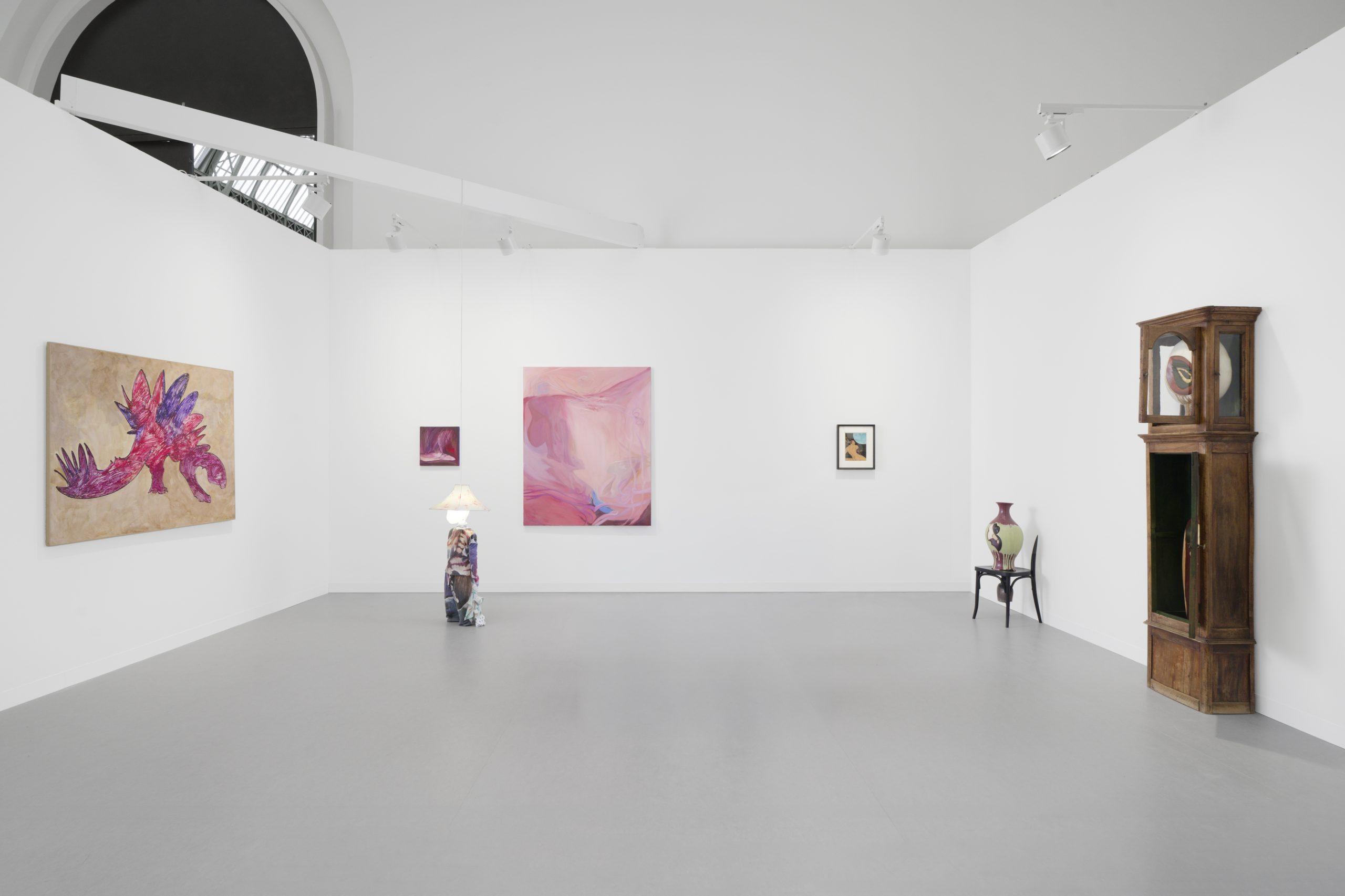
Sans titre, the Paris gallery that spent its early years showing in apartments, parking lots and a shipyard, borrowed the title of its 2024 Ezio Gribaudo show for its booth: “Paysages, d’après la fin du monde,” or “Landscapes, after the end of the world.” The six artists on the stand worked with what was left over.
Gribaudo (1929–2022) anchored the stand with a 1970s work from his Atlante series, made in industrial print shops by pressing ink into paper until it looks like a scorched horizon. Wei Libo showed a wooden vitrine modeled on the interior frame of his grandfather’s rural house, since demolished, with an incised ceramic form inside. Jessy Razafimandimby showed paintings on old bedsheets and secondhand household textiles, and in Sequoia Scavullo‘s Car Crash painting, body and car fused into a single mass. Mel Odom‘s Charleston (1985), a lone figure against a night sky, recalled his place in 1980s downtown New York and looked all the more poised next to the wreckage. At the center, Liselor Perez‘s child-sized sculpture held a doll beneath a lampshade, lit from within.
Sultana
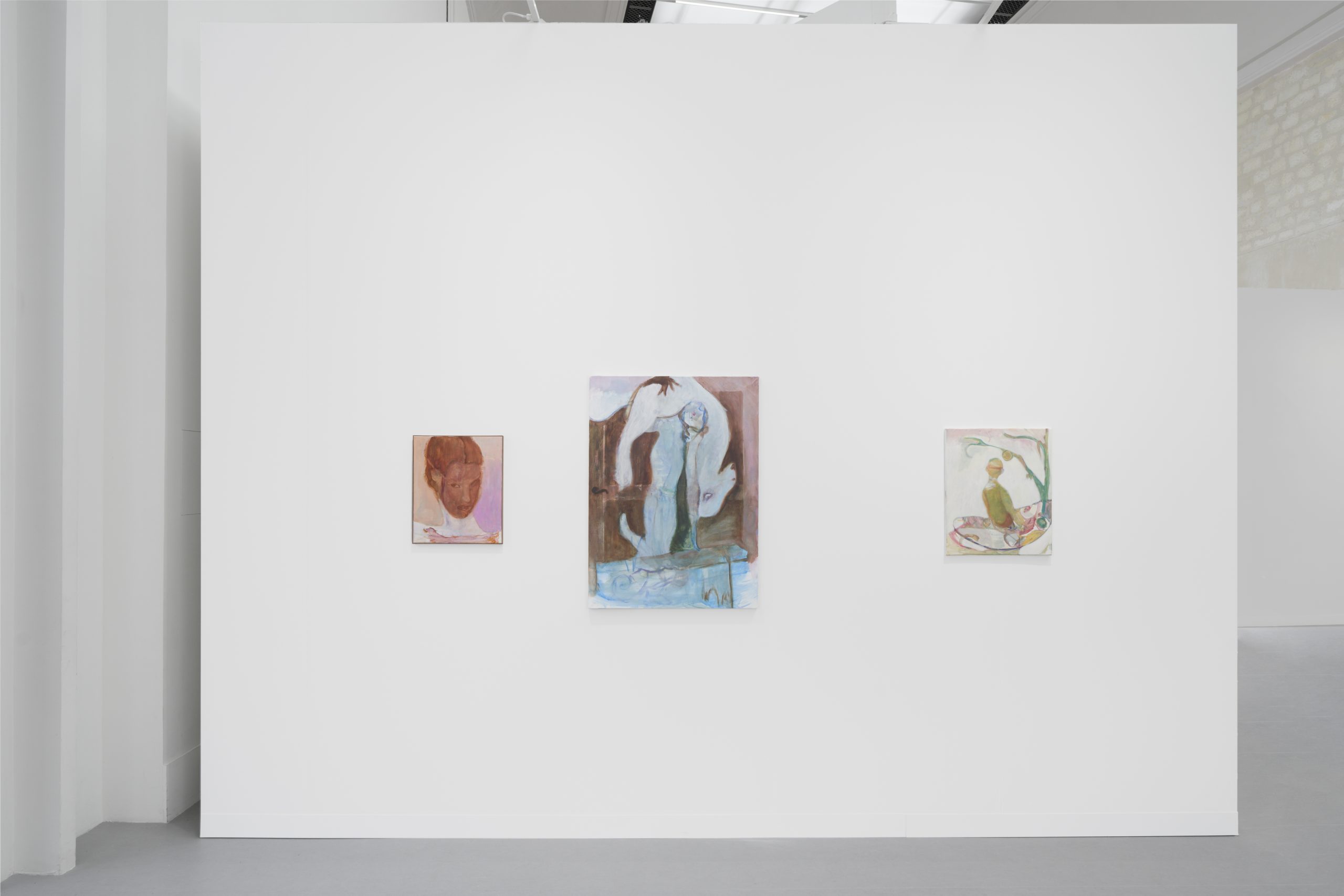
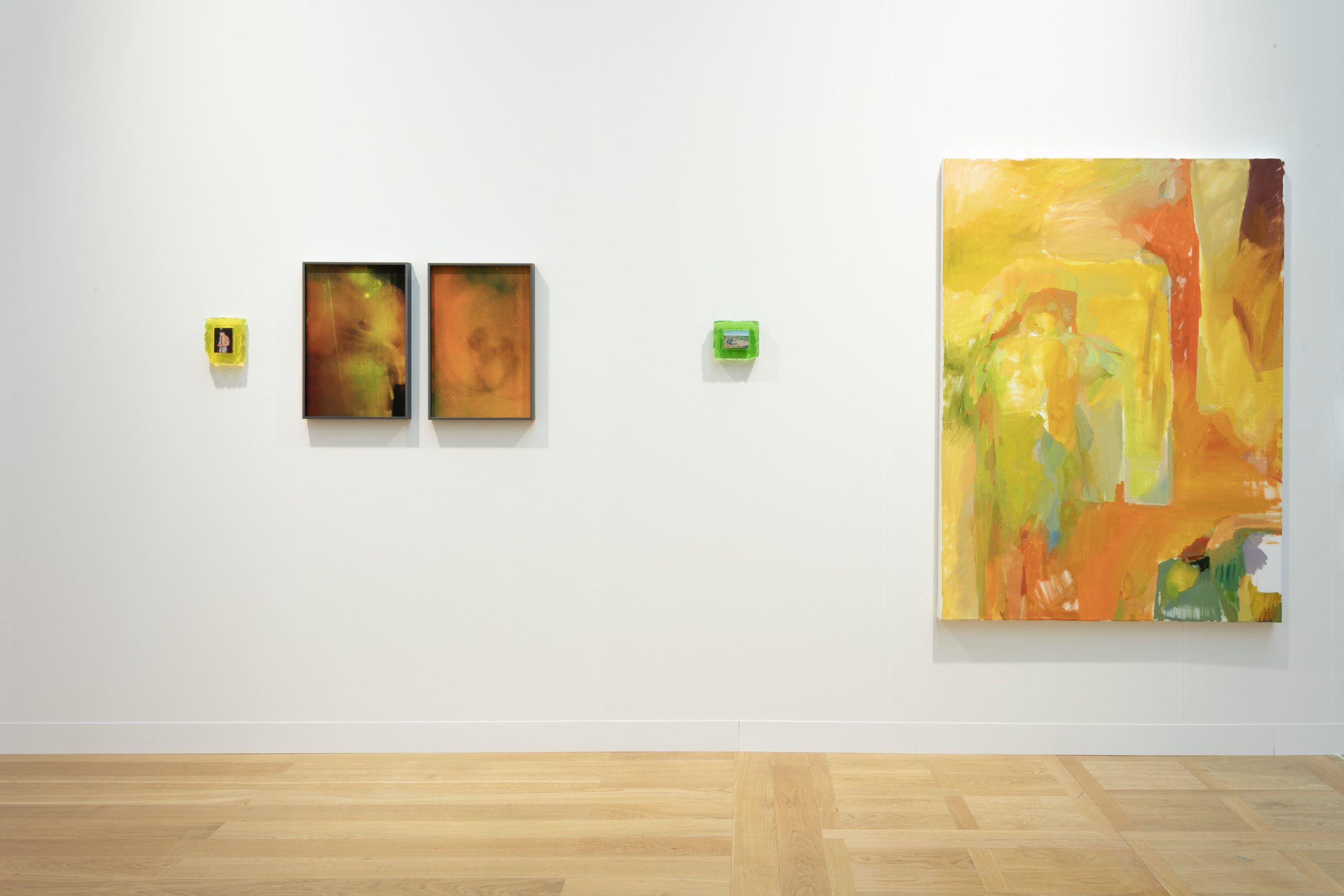
Much of the Paris-based Sultana’s stand was small and meticulous. Jean Claracq showed miniatures in oil on wood, some only about 9 by 5 centimeters, set in glass-paste frames. He finds his sitters on Instagram and Grindr and paints them with the care of a 15th-century Flemish master. Bettina Samson‘s Spume Heads were a crowd of tiny heads in glazed porcelain and stoneware, most under 15 centimeters tall.
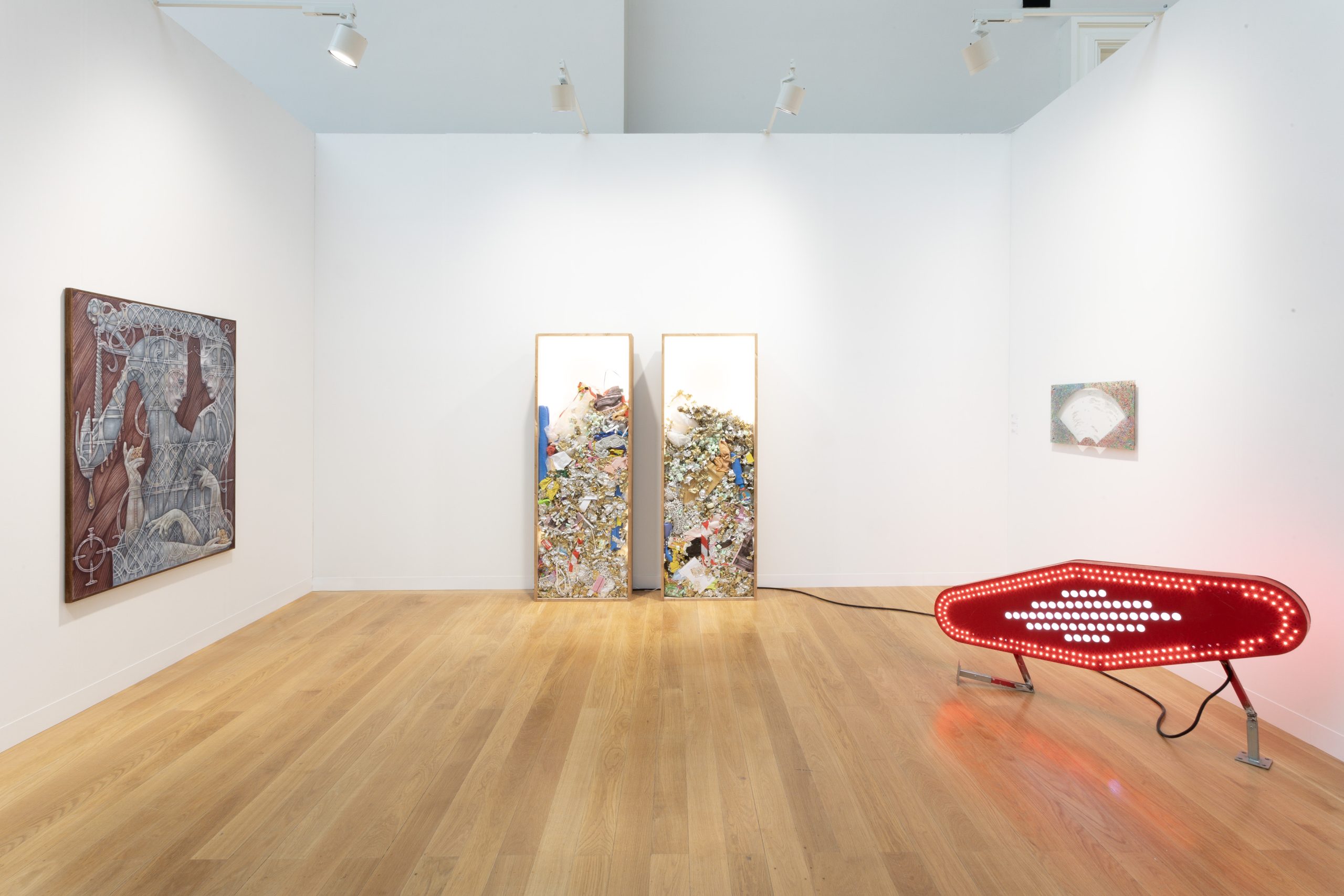
Jesse Darling, the 2023 Turner Prize winner, showed illuminated shop signs he has damaged by hand, from his Blanks (les enseignes) series, alongside Reliquary 2 (for and after Felix Gonzalez-Torres, in loving memory) (2023), light boxes holding leftovers from Gonzalez-Torres installations including candy wrappers, light bulbs and beads. Benoît Piéron, who has spent much of his life in hospitals, piled decommissioned hospital sheets into soft mounds topped with porcelain for his Cairn series (2026), an offshoot of his installation at Art Basel’s Unlimited sector this summer. And Philipp Timischl‘s Louvre (2026) paired a painting with an LED panel, a pointed choice in a week when protests briefly closed the museum.
Seventeen and Nicoletti
For the second year running, London galleries Seventeen and Nicoletti split a stand, bringing six artists interested in how images get built, layered and faked.
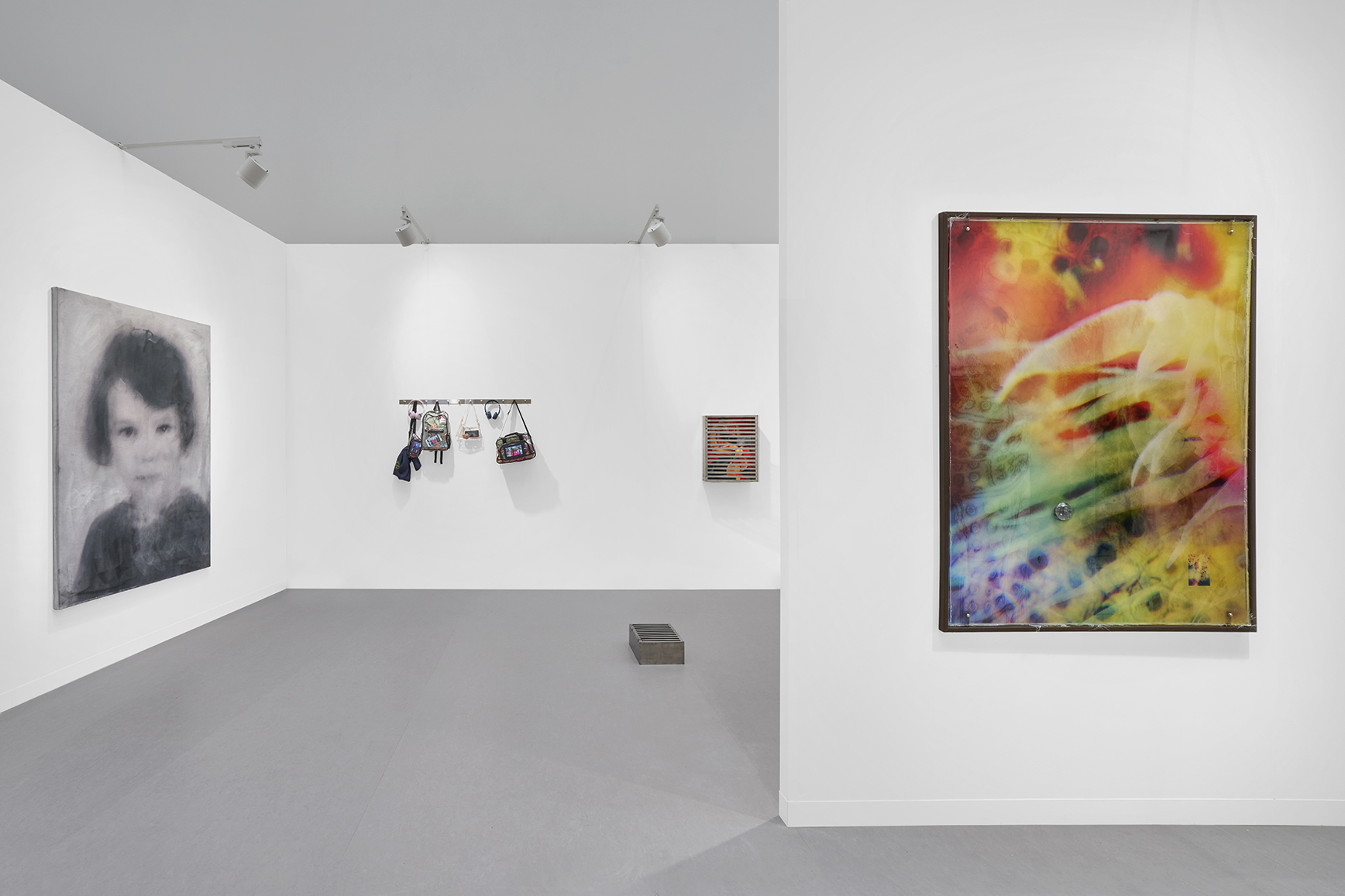
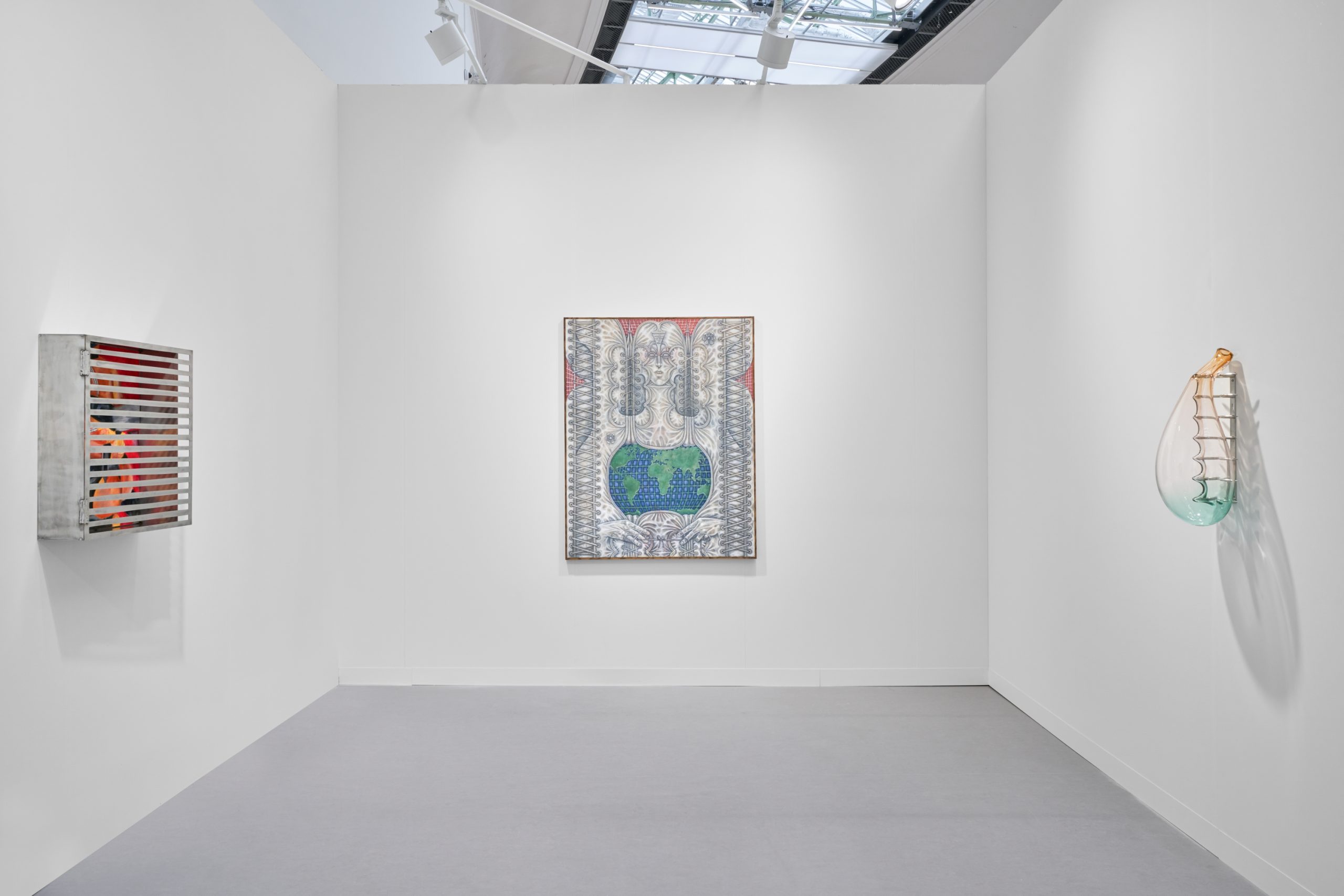
Josèfa Ntjam, a Marcel Duchamp Prize finalist with a solo show on view at the Musée d’Art Moderne de Paris, showed photomontages on Kozo paper built up with resin, bark, mushroom powder and petals. Tarek Lakhrissi‘s VELVET SERIES (2026) set oil-pastel drawings of boots pressing down on bodies behind stainless-steel sidewalk grates, some of which opened like hatches. Ana Viktoria Dzinic paints over printed photographs to imitate digital filters, and her velvet prints included a tangle of charging cables from Balenciaga’s 2020 “Blue” show.
On Seventeen’s side, Justin Fitzpatrick‘s Shoe Angel (The poet Milton in heaven geolocating William Blake’s foot) (2026) riffed on Blake’s Milton, in which the dead poet lands on Blake’s foot as a comet. Gabriele Beveridge paired hand-blown glass with chromed steel, and Nina Davies‘ Image Syncers (2026) hung screens in clear bags on a clothes rail, playing a fictional podcast about staging real events to look AI-generated. Davies shot it without post-production, so everything that looks synthetic actually happened.
Karma
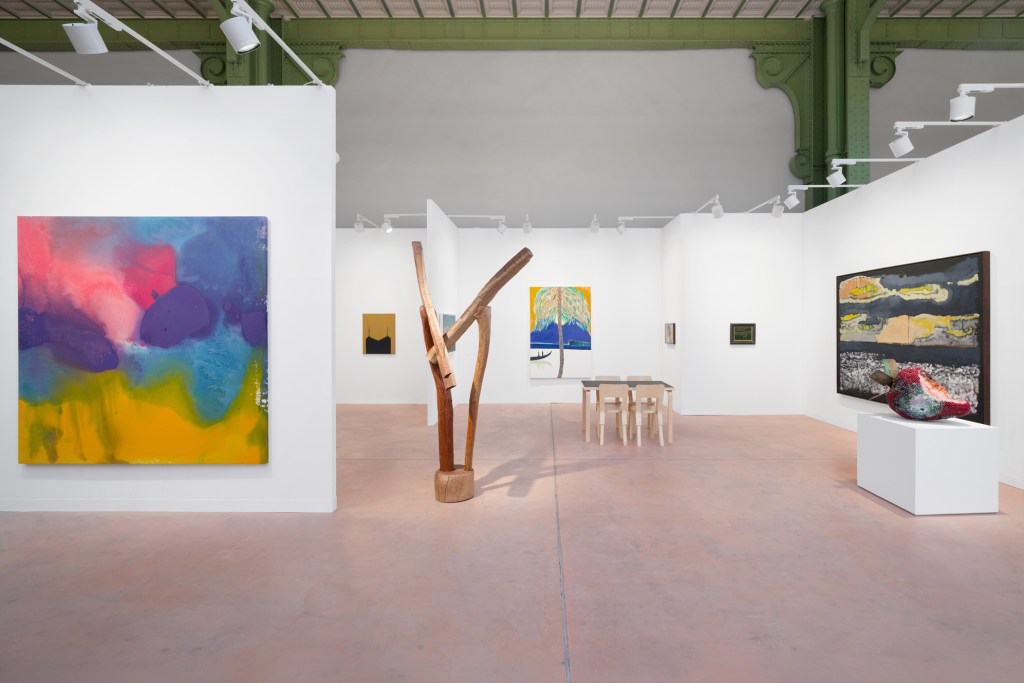
Karma built its stand around shows happening elsewhere this fall. Mungo Thomson, whose Monument opened at Lafayette Anticipations on October 21 with a bronze tower of mailing tubes in the courtyard, showed Nageire Variation No. 4 Upright Style (2026), a lenticular print named for a freestyle form of ikebana. Reggie Burrows Hodges, whose A Theater of Passions opened at the Getty Center a day earlier with paintings responding to Orazio and Artemisia Gentileschi, brought the nearly eight-foot-wide The Buoy: Sturdy Inclinations (2025). Peter Bradley, headed to MoMA PS1‘s “Hard Art” in November, showed Masqualero (2026), which shares its name with a Wayne Shorter tune.
The rest of the booth was about materials. Kathleen Ryan‘s Bad Strawberry (Blossom) (2026) was a moldering berry built from 16 kinds of stone, with a John Deere tractor fan worked in. Jeremy Frey, a Passamaquoddy tribe basket maker from Maine, wove Vapor (2026) from ash and sweetgrass. Maja Ruznic‘s seven-foot oil Renunciation of Infinite Illusion II (2026) and Dusk (2017), a tall canvas by the late Matthew Wong, anchored the painting side, with Milton Avery and Gertrude Abercrombie among the historical names.

What are your thoughts?