Mapito Safari Camp Serengeti, Builds a Pathway Between People and Place
On the edge of the Serengeti, a founder who invited the local chief to lunch builds Autograph Collection’s first safari camp with local hands
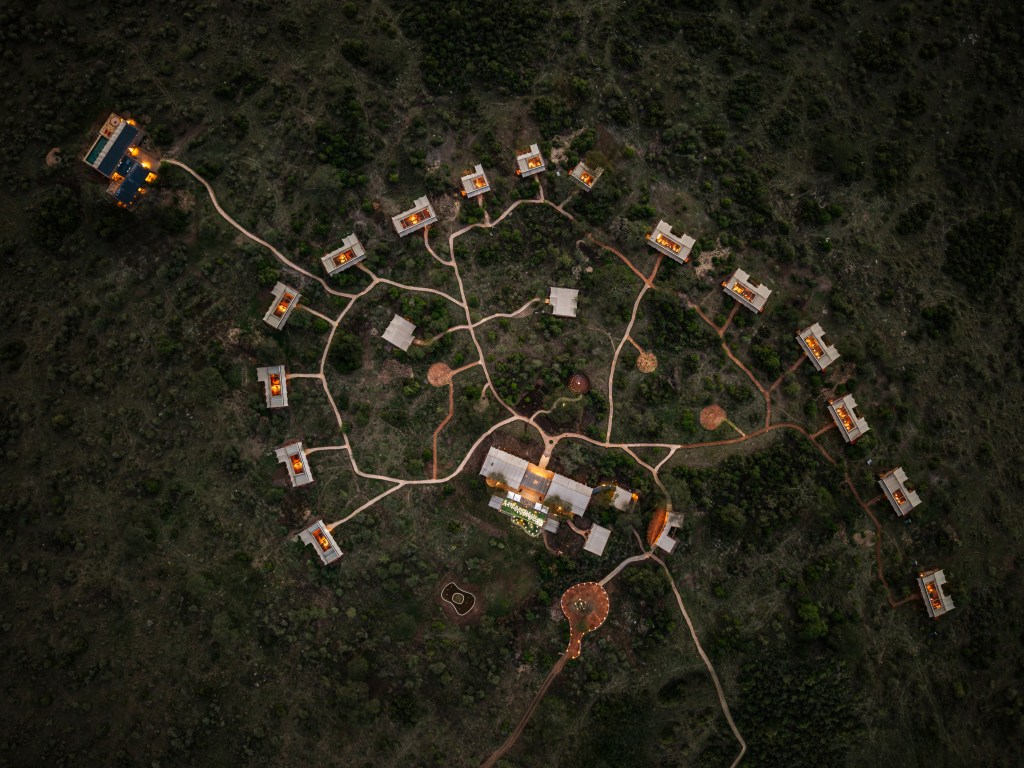
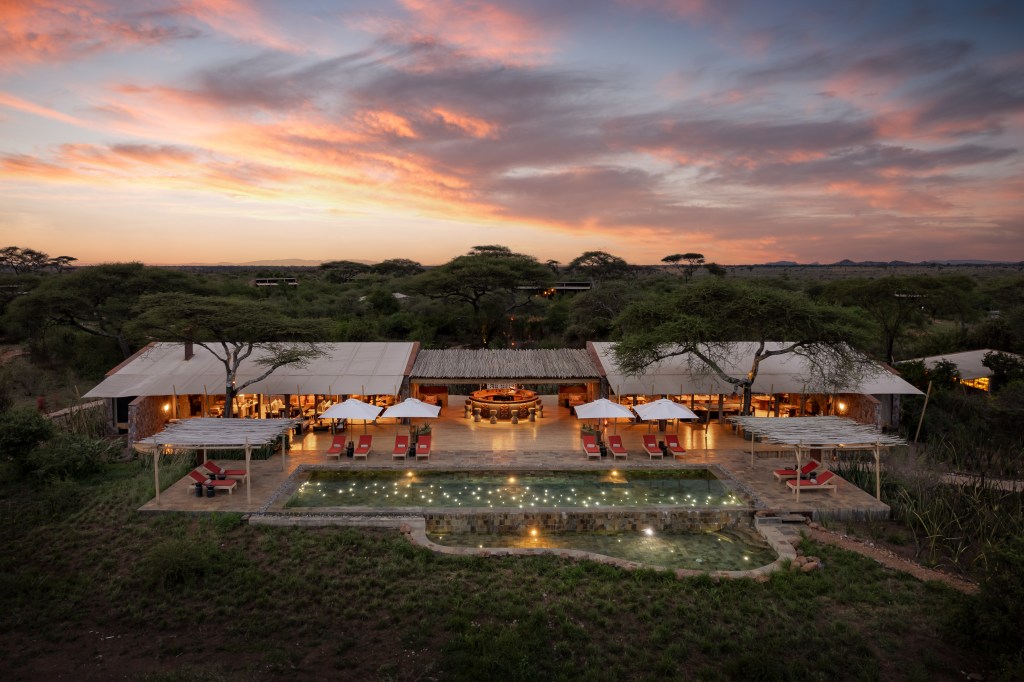
Mapito Safari Camp, Serengeti, Autograph Collection sits in Tanzania’s Ikona Wildlife Management Area, on the western edge of Serengeti National Park, and when it opened in January 2025 it became the first safari camp in Marriott’s Autograph Collection. It is the work of Rishen Patel, a Tanzanian who came home after studying in the US and building a successful bagel business, and of Arusha’s Dunia Designs, whose recycled-plastic furniture and network of local makers give its 15 tented suites and two-bedroom villa an unmistakable sense of place. We spent four nights there in June with a Nikon Z8 in hand, and we came away knowing that the camp belongs on any safari shortlist.
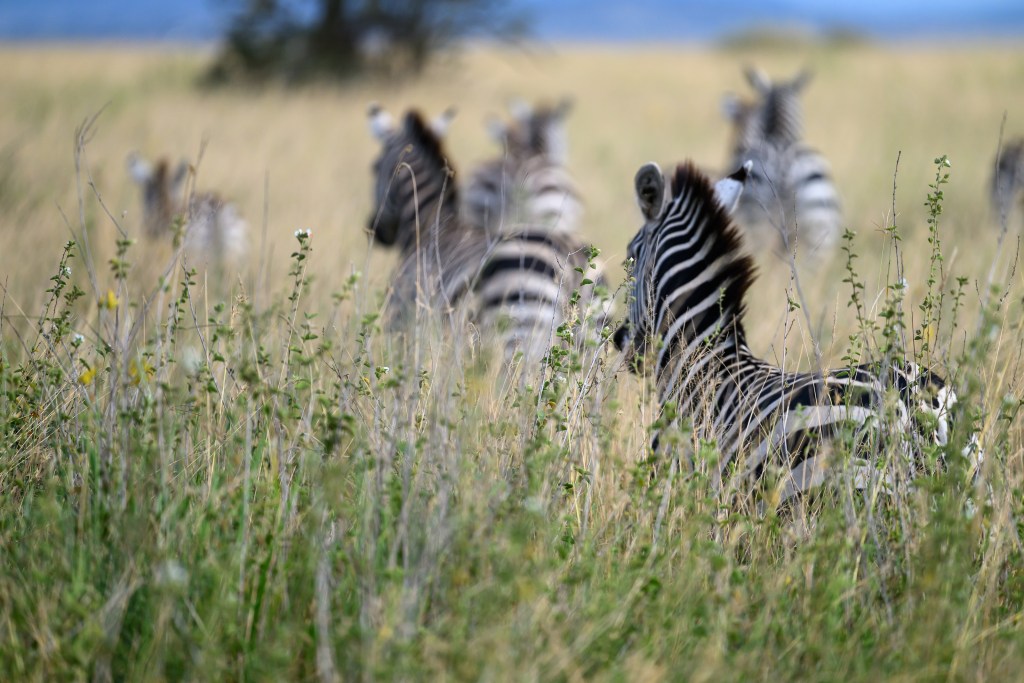
A safari is a life-changing experience—for the land, the light, the energy you feel beneath your feet and for wildlife seen up close. Choosing the right one is daunting given the size of the continent, the range of wildlife, the myriad options and for many the long journey to get there. We’ve been on many safaris in many countries, and we’ve even hosted two COOL HUNTING travel experiences in Africa. So where do you even begin to explore your optoions? Start with the questions. When is the best time for you to go? Which animals are you most eager to see? How much travel—often in small planes and bumpy 4x4s—is comfortable for you? How luxurious a lodge or camp do you prefer, how private an experience do you want and what’s your budget? Research is essential, but there are options for every answer.

Here’s what we look for. Unless you’re after one very specific animal, you will nearly always see a lot of wildlife, though shy species are another matter, and a cheetah or a Pel’s fishing owl may elude you even after many trips and the most expert guides. You’ll likely want to stay in or very close to a national park or wildlife area, which offers sanctuary for the animals and respect for the indigenous population on land owned either by the country or by a local community. Nearly all operators there must build non-permanent structures, so while your room may feel like a luxury suite, it’s a tented structure that can be removed from the land with little impact.
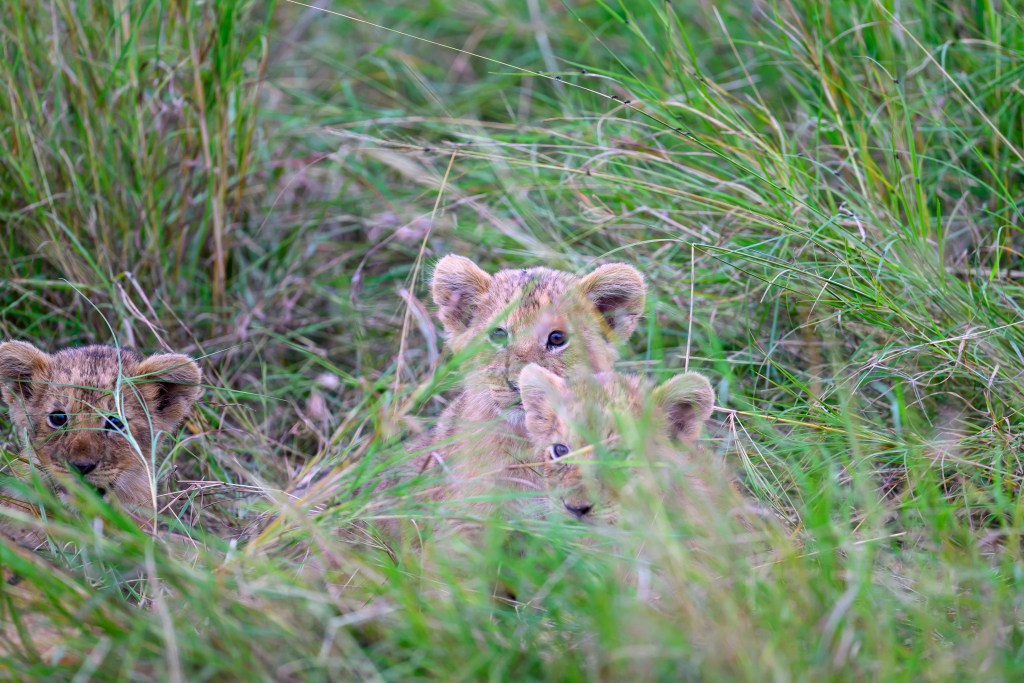
Each season has its merits, but we’ve come to prefer the start of the dry season in early summer for its high level of activity and the irresistible parade of baby animals. Changing seasons mean changing environments, and the animals are constantly on the move in search of food and water, to mate and to give birth. Nowhere is this more dramatic than in the Great Migration, when two million or so wildebeests, zebras, gazelles, topis and other antelopes travel a vast loop through Kenya and Tanzania over the course of the year. The large parks and adjacent reserves essentially form one immense wildlife area; the Kenyan portion is the Maasai Mara and the Tanzanian portion is the Serengeti.
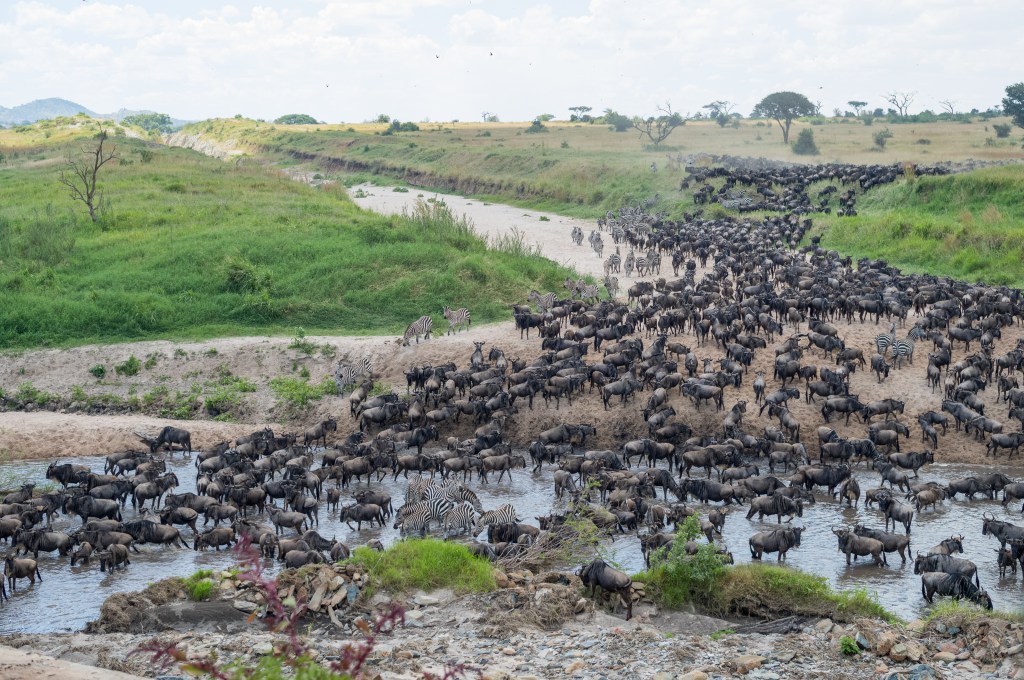
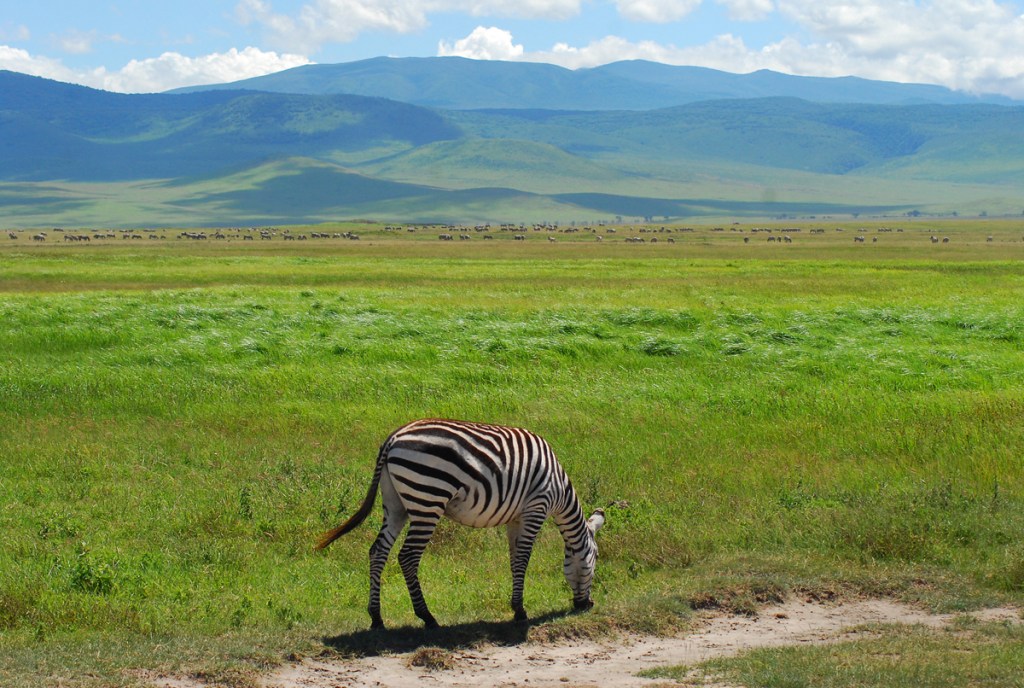
Our arrival at Mapito set the tone. As we drove into the reserve we crossed a very small bridge, and our guide said we were going to stop and see what was going on. It didn’t take long before hundreds, then thousands of dots drew closer, and we watched an early wave of wildebeests and zebras descend to the water below us, drink and politely make room for one another. The two species often travel together because wildebeests have acute hearing and smell while zebras have sharper eyesight, and between them they can warn the herd of predators. They share well too, as the zebras graze the tall tops of the grass and leave the more tender shoots for the wildebeests.
That cinematic welcome alone would have earned the camp our thumbs-up, but our visit was enriched by having the owner and the design team on site. It was then that we made the connection between the people and the place, and Mapito moved from a very nice luxury safari camp into the realm of truly special properties—ones created with insight, pride of place and a passion that’s often missing elsewhere. Few safari camps utilize local design firms and locally made elements that you see and touch.
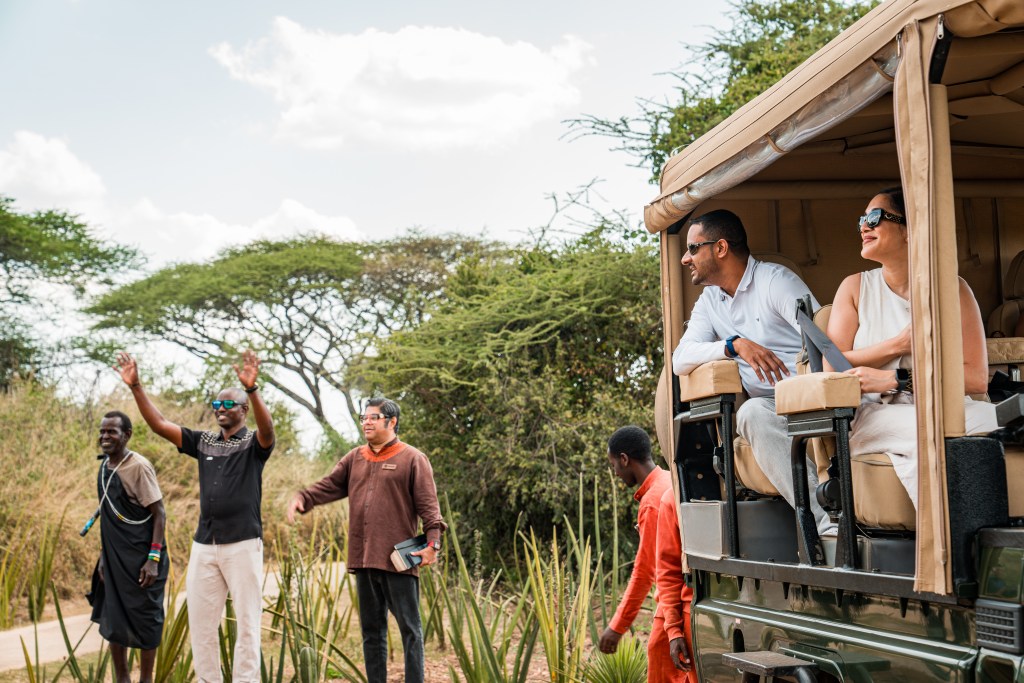
Rishen Patel is a third-generation Tanzanian who left to attend university in the States, settled in New Hampshire and built a successful bagel company. That business would only have grown, but he started to feel the desire to make an even bigger difference to a community more in need of what he could create. After some difficult conversations with his family he sold his business and moved his family back to Tanzania. With no hotel or safari experience, he rather quickly opened what is now one of our favorite safari camps, one that marries people, place and passion with the will to get every detail right.
Patel’s commitment extends well beyond the camp’s footprint. Before building, he took the time to get to know the surrounding communities and what they needed; he has since brought clean water infrastructure and hospitality training to the local village. The camp is also restoring the Robanda Healthcare Centre, where a new full-time doctor it employs offers free consultations and medicine in a place that previously had no healthcare at all. Construction created more than 250 jobs, and 90 percent of today’s staff, senior leadership included, is Tanzanian. Patel also supports the Hope for Girls and Women center, a charity housing and educating girls who have fled families practicing female genital mutilation, which we visited on an emotional day, an hour from Mapito. It was a life changing moment speaking with the children there, hearing their dreams, and meeting the staff. When we met the chief of the local tribe, he told us that Patel is the only developer who has ever invited him and his team to lunch (most send business delegates or managers), and that the conversation begun at that table continues today. It is the kind of engagement that goes far past the basic requirements for local care, and it explains why Mapito feels rooted rather than imposed.
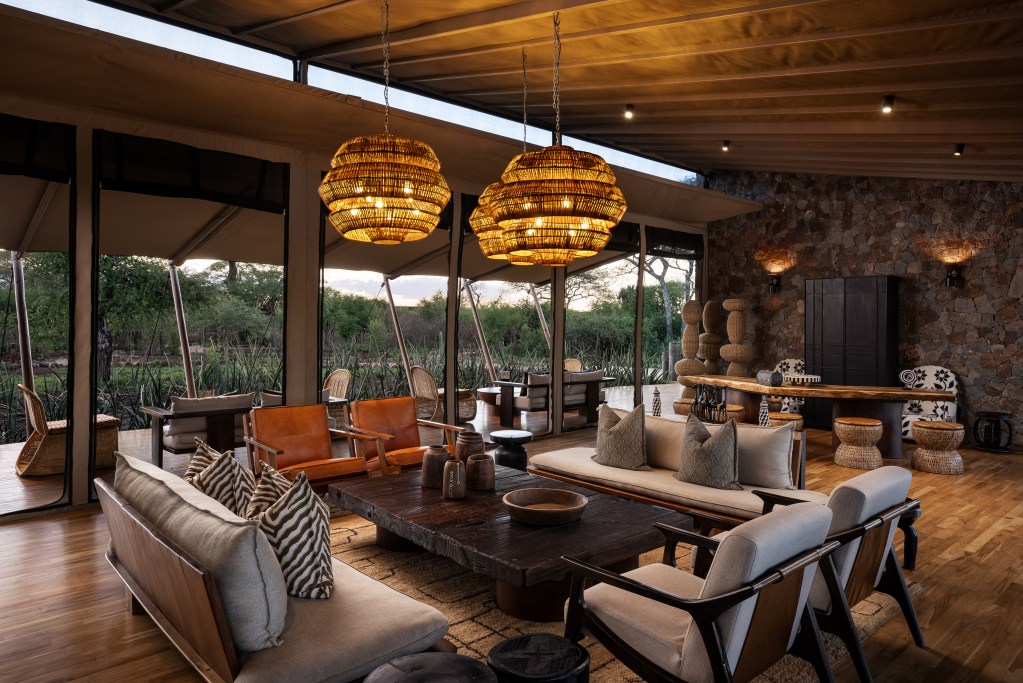
Patel’s brief was refreshingly open. He wanted a camp that felt unmistakably Tanzanian, built around one signature feature—a retractable roof over each bed—and finished to a high standard, yet he arrived without mood boards or tear sheets. Interpreting it fell to Alexis Cronin, an Irish architect who traded mansions in London’s Notting Hill for Arusha, Tanzania some 14 years ago, and Dunia Designs, the studio he founded in 2016 with his wife, psychotherapist Evanna Lyons. Dunia began as a dare: Lyons challenged Cronin to make something desirable from the plastic waste clogging Arusha’s streets and rivers, and his first answer was a pouf stuffed with shredded plastic. Today the studio turns hard plastics into furniture, decking and cladding, and it reports some 900 tonnes recycled so far.
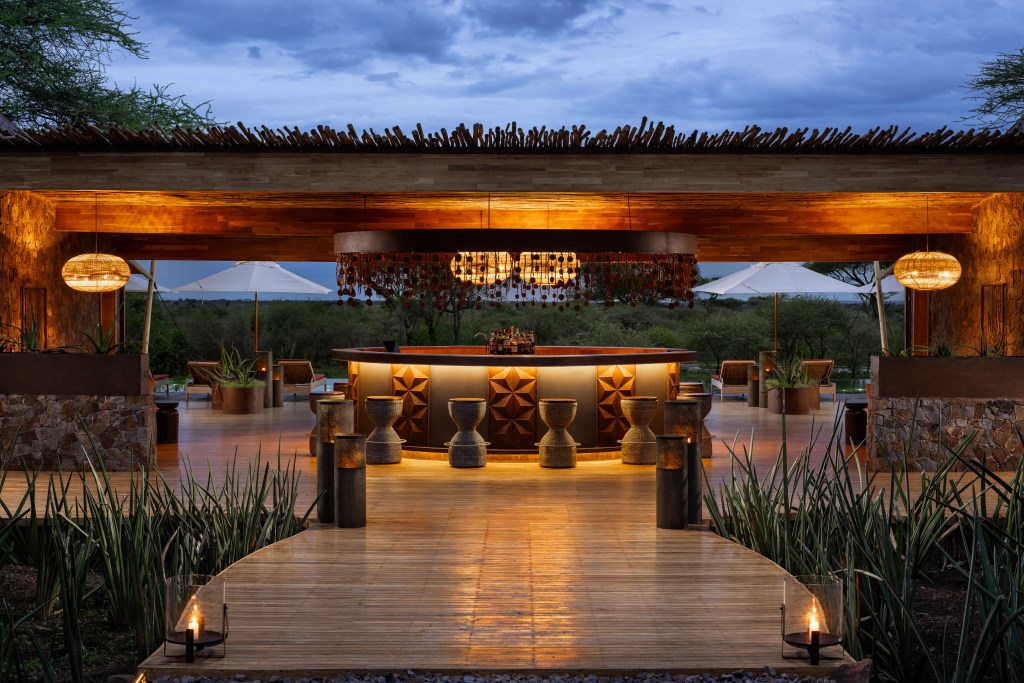
That ethos runs through nearly every room at Mapito. The camp began as Patel’s private project, and Marriott came aboard once construction was under way; the team built quickly, drawing labor from nearby Robanda village and setting the tents on steel footings. The landscaping was left to regrow rather than be manicured, and passive design does much of the work of keeping guests comfortable: stone-walled bathrooms hold the cool, mesh tent walls invite cross breezes and deep overhangs shade the verandas. Inside, almost everything is local: a sofa made entirely of recycled plastic save for its leather, some 180 carved wooden pieces made by the neighbors of a longtime Dunia collaborator, bells and clay beads strung by women in Robanda to dress the bar, glass decanters finished with beadwork and artifacts sourced from Arusha’s Cultural Heritage Centre. Kikoy textiles from the Ifakara Women Weavers Association, beadwork from Randilen and Fort Ikoma and hand-blown glass from the Shanga workshop join them. By Dunia’s count, roughly 85 percent of the furniture, fittings and finishes were made or sourced in Tanzania, and the imports are mostly bathroom fixtures, mattresses and bedding, some textiles, among them the rugs, and a few decorative lamps. Cronin can name the maker behind every object, and we left hoping the camp finds more ways to share those stories with guests. Some of the items are available in the property’s gift shop.
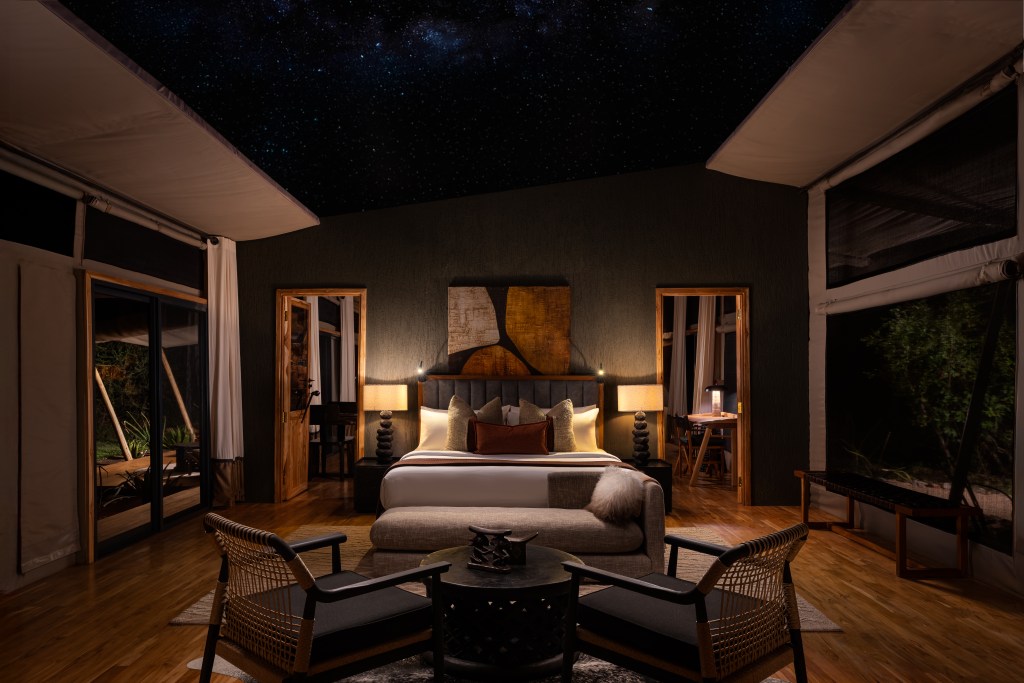
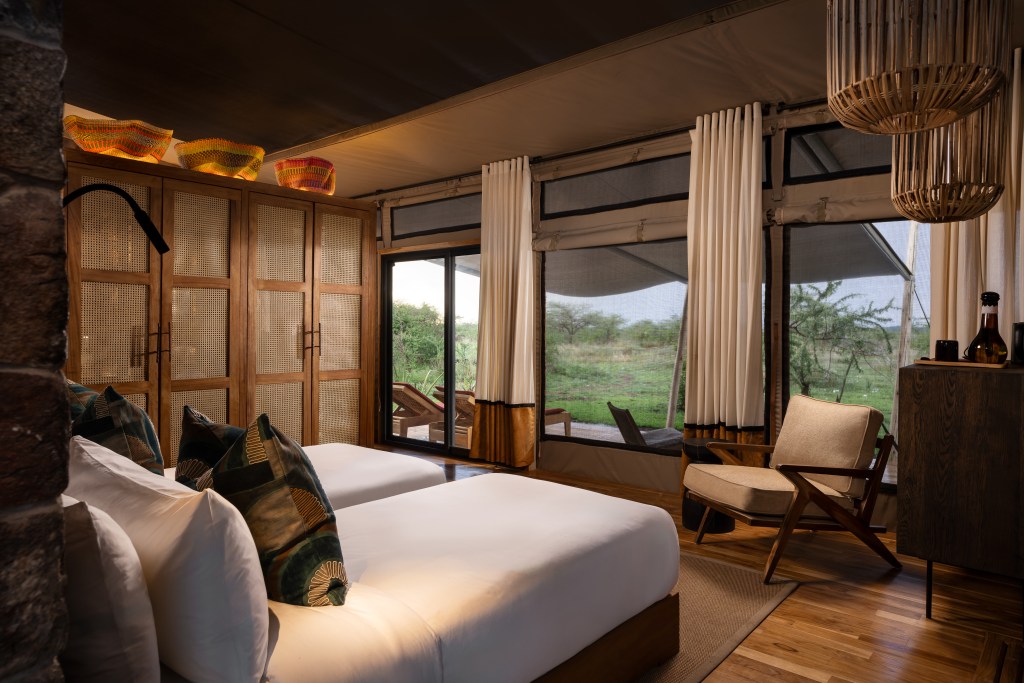
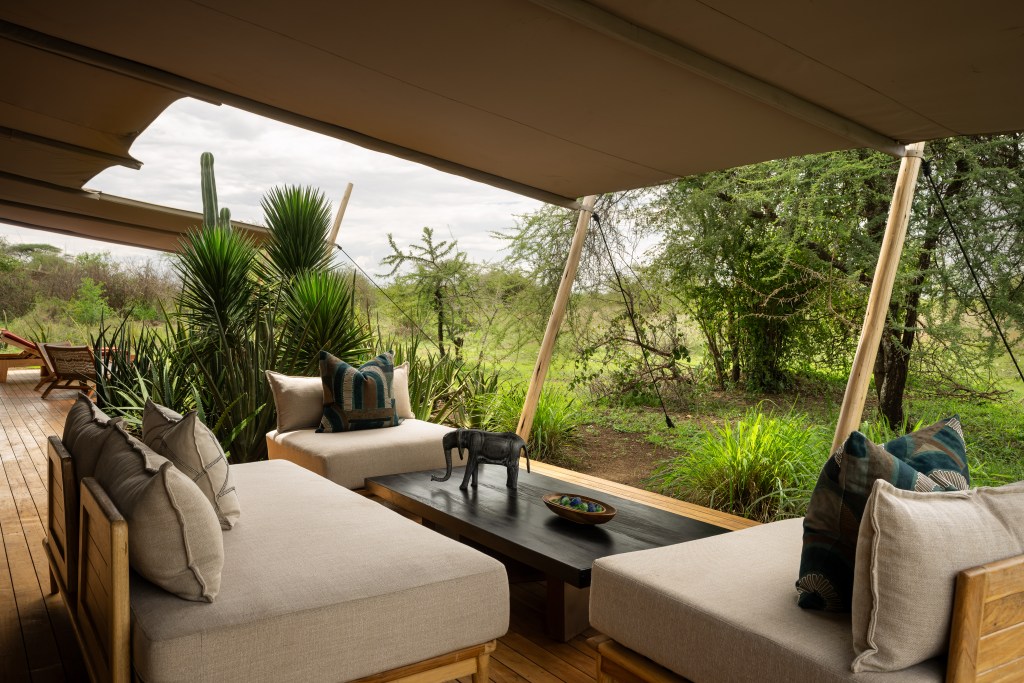
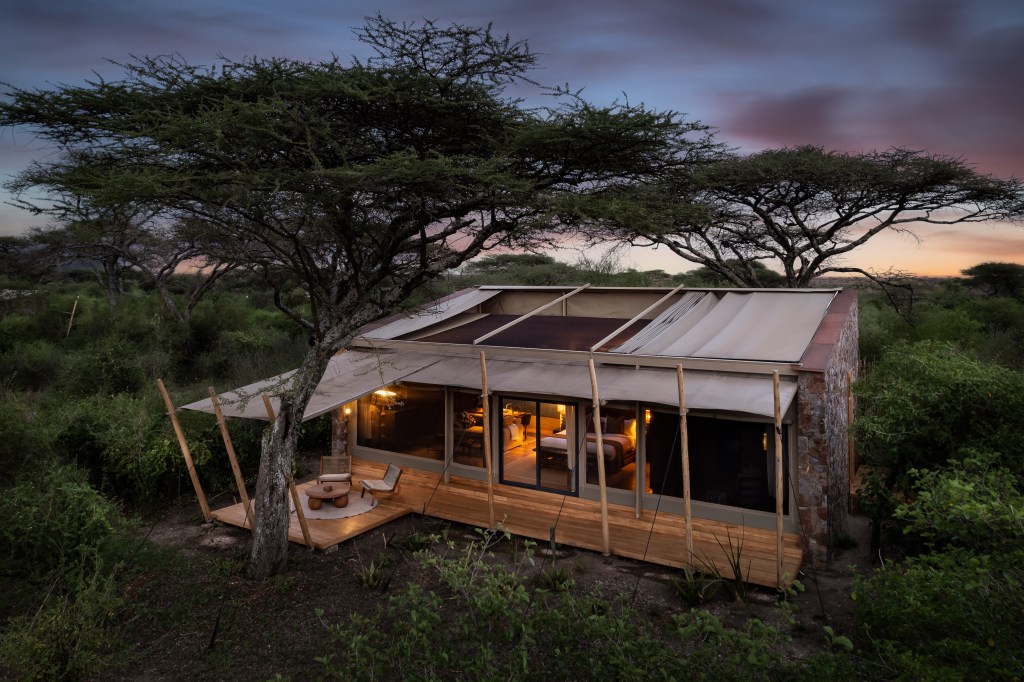
The stay itself checked everything on our list: comfortable, spacious rooms that feel more like small homes than tents, local style with real flavor, tasty food and drink, amazing guides and great service. A motor draws back the screened roof above each bed, so you can move from fully enclosed to sleeping beneath an incredibly starry sky, and the camp bills its suites as the first in East Africa with motorized retractable roofs. A small indicator on each gable shows staff whether a roof is fully closed before an evening downpour, and there’s no television to compete with the view, only an in-room telescope for the sky. After dark, lights set into the floor of the rim-flow pool echo the stars overhead.
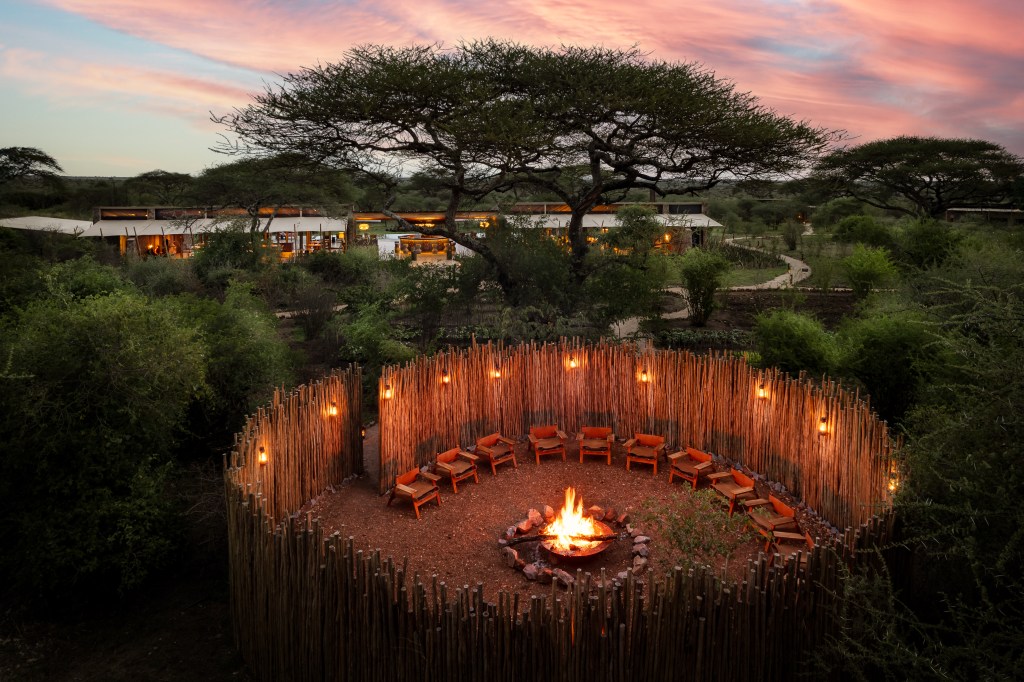
The hospitality matched the setting. It was warm and friendly, with team members, nearly all of them from local villages, always on hand for any request; every tent is looked after by a butler who quickly learns your preferences and greats you by name. Meals were delicious and options plentiful, with seasonal ingredients for Njia, the camp’s restaurant, grown in its own vegetable garden.
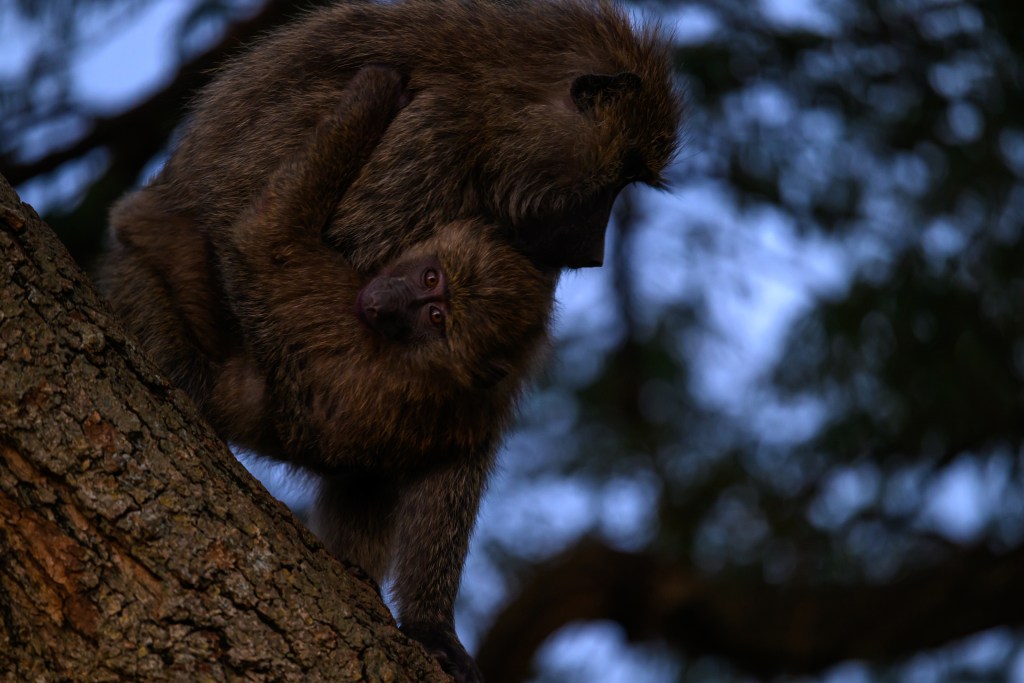
Staying in the Ikoma Wildlife Management Area rather than inside the adjacent Serengeti National Park proved a real advantage, since there are far fewer camps and far fewer tourists. There’s wildlife everywhere around you, not just in the national park. The area also permits night drives, which aren’t allowed inside the park, and Mapito keeps its own to set routes near camp with softened lighting to spare the wildlife. We spent one day in the park itself searching for rhinos and came up empty, and we were shocked, and a little saddened, by how crowded it was compared to the Ikoma, which is private land.

There’s plenty of wildlife to see on most any safari, but the naturalist guides are the key to your experience. Their knowledge of the land, relationship with the local animal populations and sense for where to find animals at different times of the day and their extensive knowledge make each drive deeply educational. You can specify when making your reservation at Mapito whether you want your own guide and car, if you want to share with your group, or if you want to ride along with other guests. On our way back one evening, less than ten minutes from camp, a caracal, the tufted-eared wild cat that even veteran guides rarely see, paused long enough for a frame, and our guide Charles was as thrilled as we were. Despite his many years and thousands of hours in the area, it was only his second sighting of the shy, solitary animal and was a very joyous moment for our group.


While modern mobile phones are more capable than ever and provide some decent photos on safari, it’s definitely worth your while to bring a proper camera with a few good lenses. We brought a Nikon Z8, pairing Nikon’s NIKKOR Z 400mm f/4.5 VR S with our own F-mount 70-200mm f/2.8 by way of the FTZ II adapter. The camera’s 45.7-megapixel stacked sensor reads out fast enough that Nikon dispensed with a mechanical shutter entirely, delivering silent shooting that won’t spook a skittish subject and a viewfinder that never blacks out mid-burst. It shoots up to 20 frames per second in RAW, its subject detection recognizes animals and birds, and Pre-Release Capture keeps the frames from just before the shutter is fully pressed, a gift when a bird takes flight without warning. In-body stabilization is rated at 5.5 stops. We liked the camera enough to ask Nikon for more time with it once we were home.
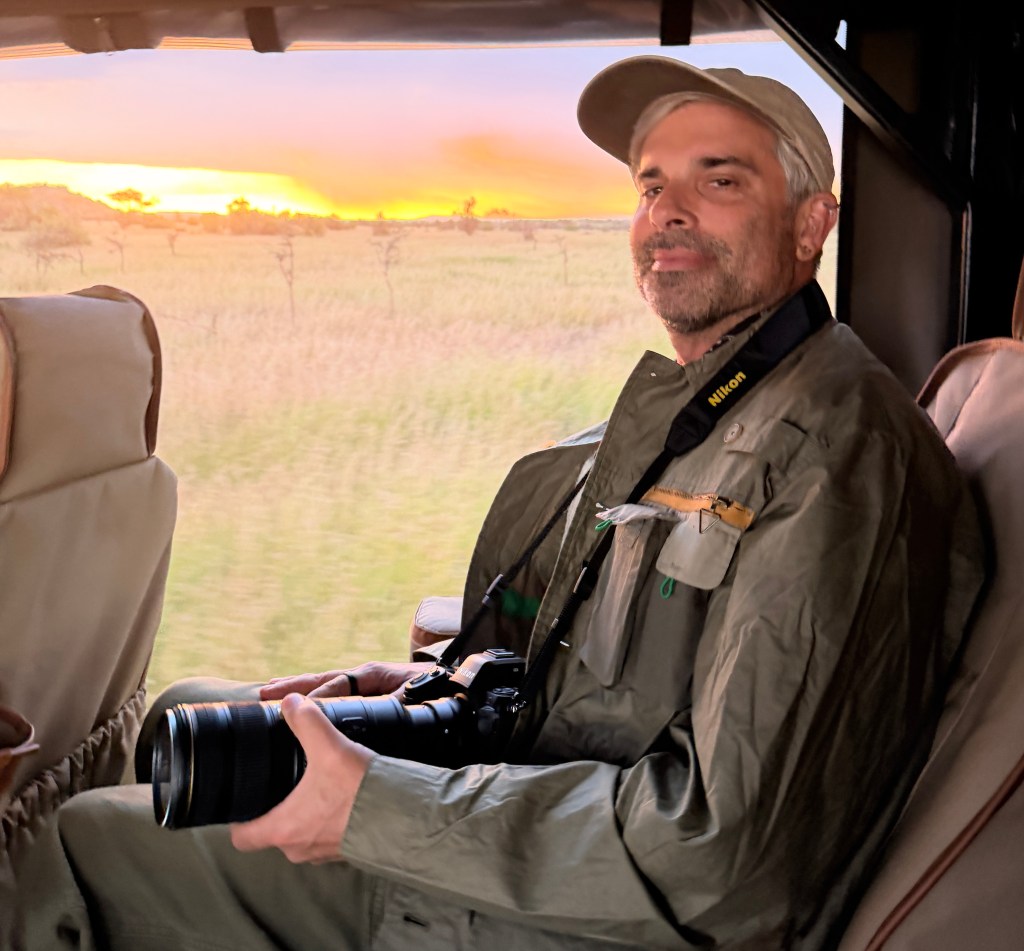
Shooting with it felt like an extension of the hand. For CH founder Josh Rubin, a lifelong Nikon photographer, part of that comes from controls that stay familiar from one body to the next, so there’s nothing to relearn when the action starts. He shoots with every setting on manual but relies on the blazing-fast autofocus to catch decisive moments, capturing shots like the caracal, which nearly any other set up would have blurred or missed.
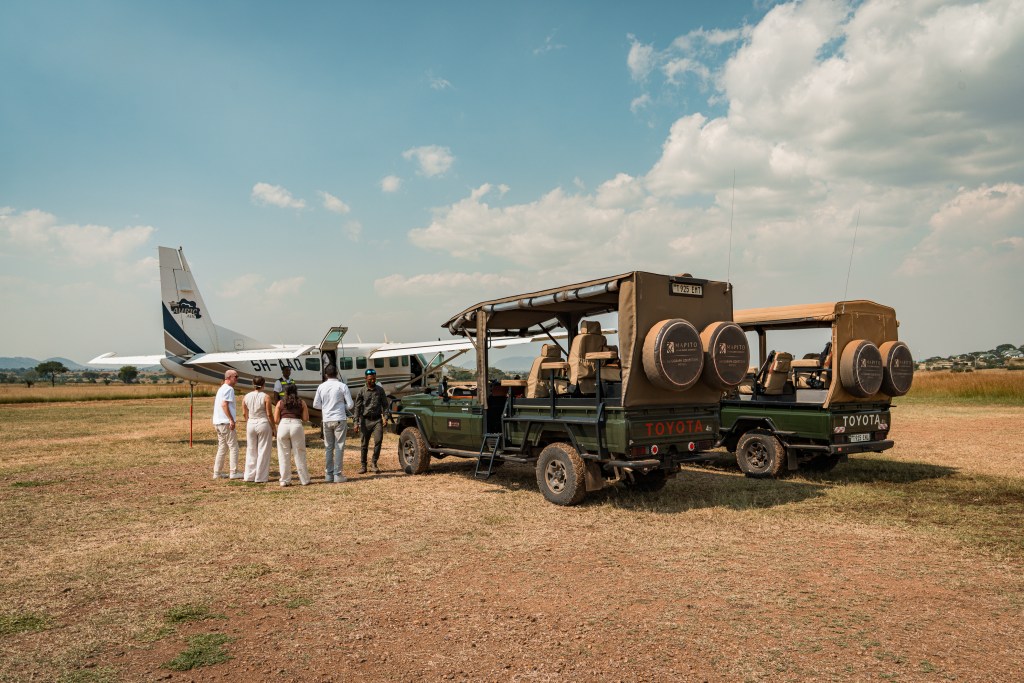
Mapito Safari Camp, Serengeti, Autograph Collection is reached by a short charter to the Fort Ikoma Airstrip, roughly 75 minutes by air from Kilimanjaro, and rates run from $1,400 to $2,200 per person per night, including meals, drinks, private game drives and park fees. Book through Marriott, where Mapito is listed as part of the Autograph Collection; Marriott Bonvoy members can earn and redeem points.




What are your thoughts?