The Future of BMW Design: A Conversation with Max Missoni
From A.I. to BMW’s Neue Klasse language and how it all works on the new 7 Series
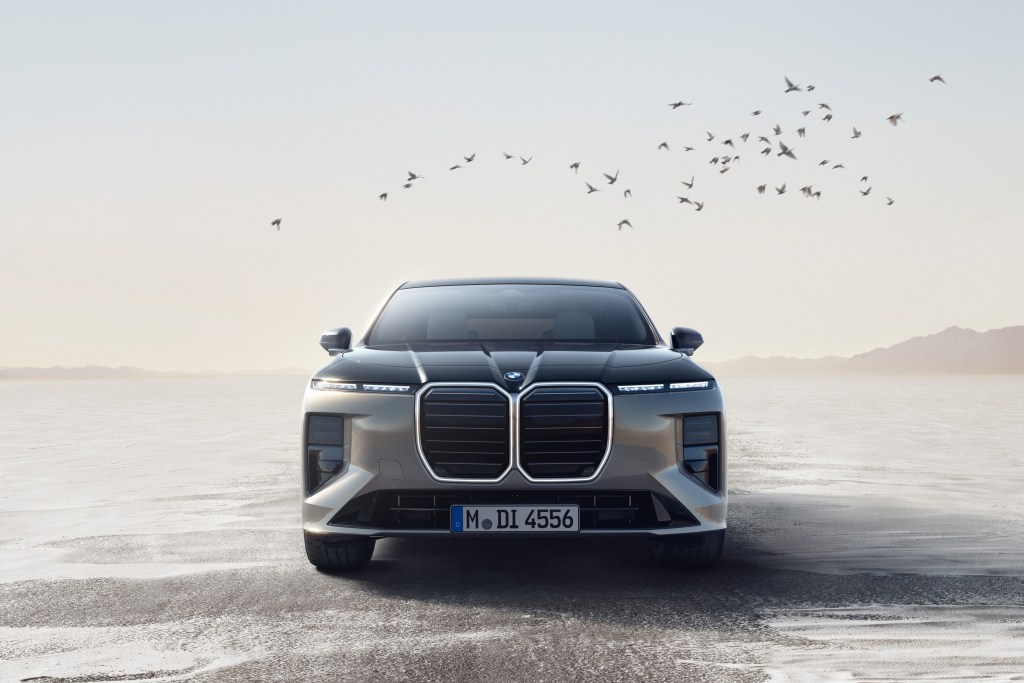
Max Missoni has been rising fast in the automotive design world. We interviewed Missoni just a few years ago when he was at Polestar, and now he’s a VP at BMW in charge of mid-size and large vehicles. As such, he has a fair challenge ahead of him, because BMW’s recently debuted Neue Klasse design ethos has quickly scaled from what looked like a reborn 1 Series to a production EV crossover in the iX3. And now there’s a new flagship, the 7 Series saloon. With very different scales and proportions, carmakers are always taxed by somehow retaining brand identity—but often get caught out by simply shrinking or growing a shape, so that the branding fades fast by being too conservative, rather than intriguing buyers across price tiers. Or, simpler: Cloning is dull. Riffing is interesting.
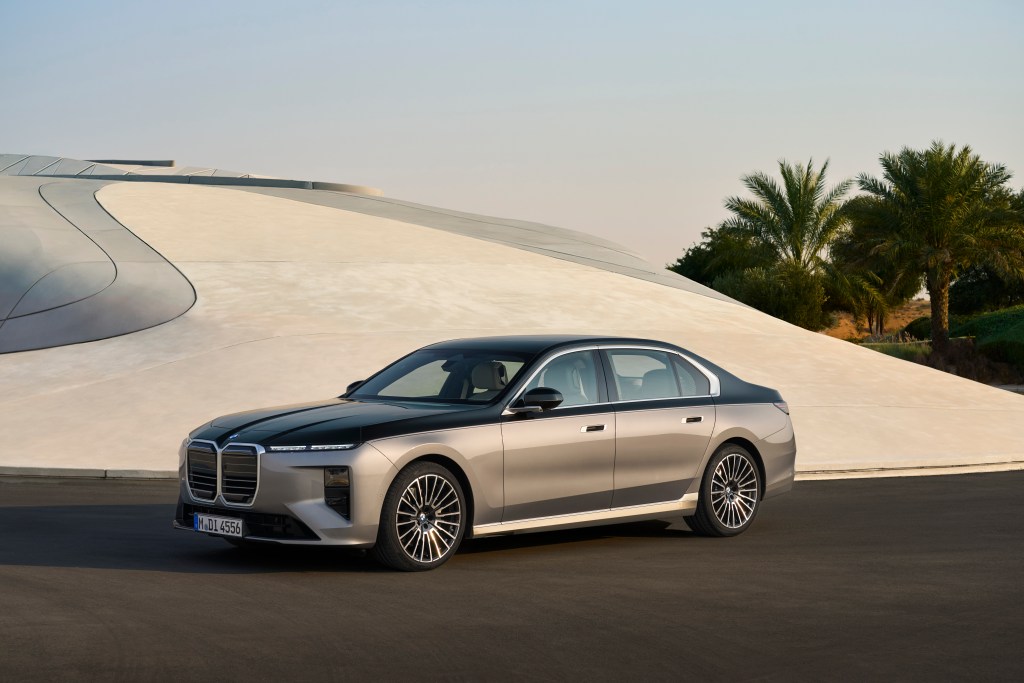
Go too radical, however, as BMW has done in its past, and you’ll court controversy. Missoni said the right way forward lies somewhere between these extremes and noted at the 7 Series debut in New York recently, that a car like this has to be treated with an understanding of the brand’s history and its values.
“BMW made the clear decision to create a progression through different clusters, different sizes of vehicles to the different families,” he says. “Neue Klasse styling design wouldn’t be identical going all the way up into the luxury segment.”
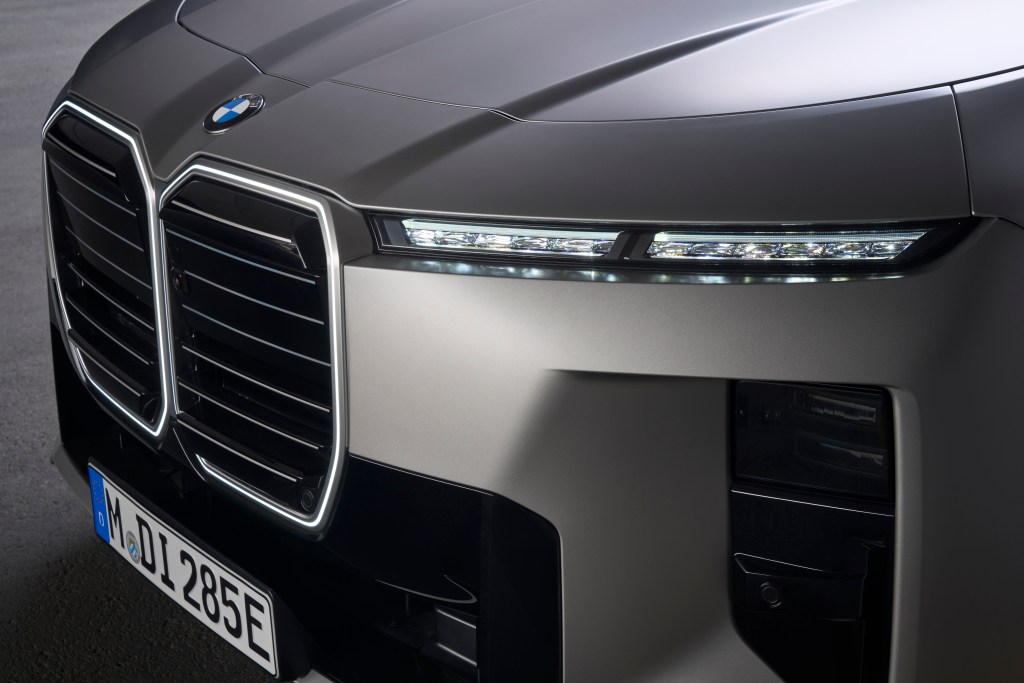
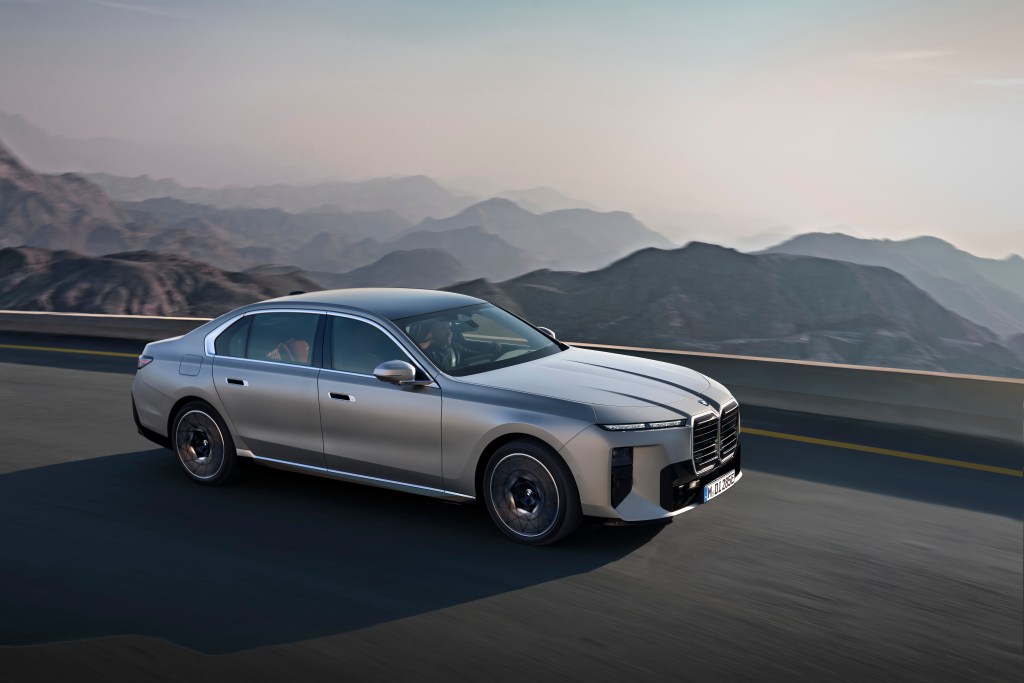
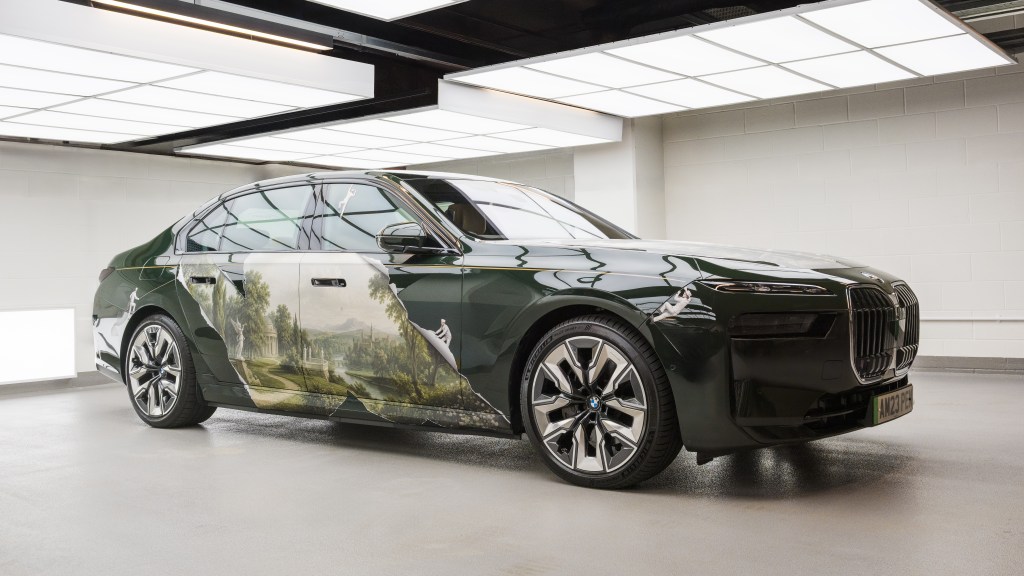
Missoni zeroed in on the grille of the 7 Series as a comparison to that of the iX3, and especially the twin-kidney shapes. Proportionally, these are huge, flat, and stretched wide as dinner plates on the 7 Series, while they’re shrunken, nearly to an afterthought on the iX3. With the 7, Missoni says, the carmaker is leaning on two poles, one of classical proportion and another on the idea of modernity. “On the 7, the kidneys basically encompass the whole front. It’s a bit more classical, and yet a very modern approach to an icon.”
Since the debut took place in Grand Central Station, Missoni gestured to our surroundings, noting that the 7, likewise, benefits from its sheer bulk and gravitas. “That’s the magic of proportion, of how much presence this car exudes.” But, he adds, to prevent that proud nose from feeling threatening, “there’s a little additional trick by slimming down the headlamp substantially,” which has a jeweled, dazzling effect on our perception of the car’s mass.
Missoni notes that one test for getting design right always comes back to “golden” ratios—because it cuts across every culture. “I believe the notion of grandeur, the notion of presence is quite universal.” But one new frontier for car designers isn’t on the exterior, but on how to integrate technology on the interior.
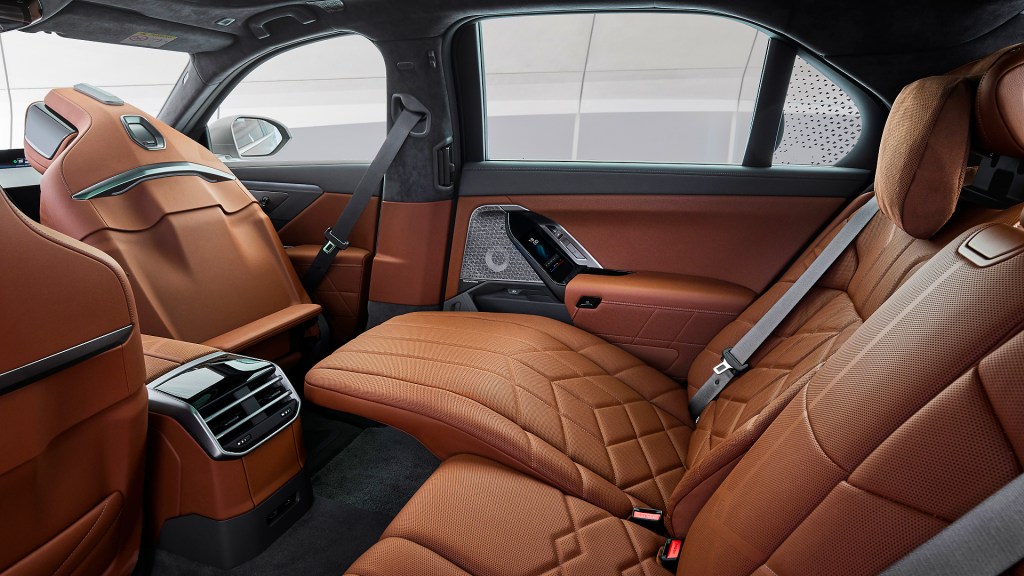
On the 7 Series, for instance, there are multiple levels of screens, from a cabin-wide cinema display that drops down from the ceiling in the second row, to small touch panels on the rear doors. Then in the front row, BMW pins two six-sided displays to the dashboard, while the driver’s instrument cluster has been excised. (Note that BMW’s playing here, since its kidney grilles are also also six-sided.)
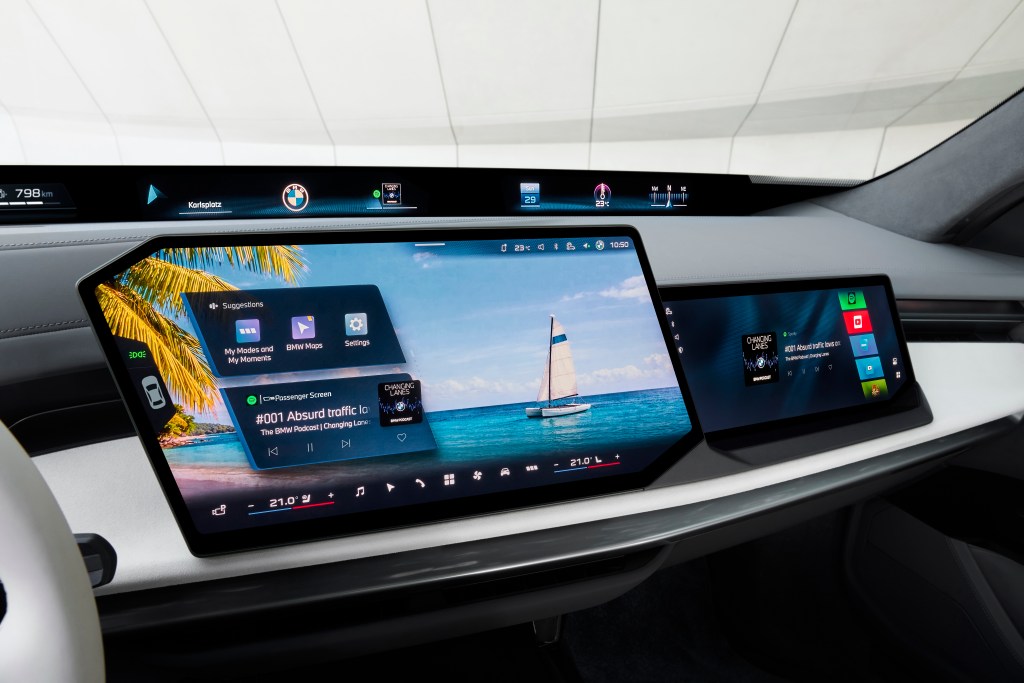
BMW places what’s called Panoramic iDrive above those, at the junction of the dashboard and windshield. This perimeter of pixels shows the driver speed and other vehicular intel, while other panels function as “shortcuts” to cabin information, like climate, the car’s current music or entertainment track and frequently-used secondary functions like mapping. Drivers and passengers can re-order these tiles however they choose.
Missoni doesn’t claim BMW’s supremacy with Panoramic iDrive, but noted that tech integration, done artfully, is an emerging frontier in automotive design. “I would say there’s a race of different ideas on how to integrate those systems.” By layering the screens within the car, whether you reside in the front or rear of the car, BMW is trying to avoid “overwhelming you with one big surface of screens like in a control center.” Because Panoramic iDrive also enables passengers to see the car’s data, he says, “it also gives your passengers some way of understanding what’s going on in your world as the driver.”

Missoni acknowledged another design frontier, too, which involves integrating technology that can evolve over time. Neue Klasse isn’t just a form language. It encompasses an entirely new hardware stack with 20 times the computational power of any BMW to date, while using a third of a mile less wiring, and integrates all functions, from automated driving to entertainment, all being managed by four high-performance computers that BMW calls “superbrains.”
Which, yes, sounds like hype. But Missoni says carmakers really have no choice, because to enable eventual full autonomy, cars need the tech now to become as future-proof as possible. Which is why all cars in Neue Klasse are constantly updatable. “But you have to take a decision now, and withstand a period of latency when the consumer might say, ‘I don’t see the benefit of this technology.’” Because, he adds, if you want the potential of technology to come later, “you have to choose to think two, three or four steps ahead, so that benefit will reveal itself and then the whole story will make sense.”
Still, Missoni knows that lots of BMW customers want cars that are never driven by robots. And he expects a schism to emerge between full autonomy and wholly “off-line” cars. “Those two directions will start deviating, especially in the high-end sports car industry.” Given Missoni’s perspective on multiple interpretations of Neue Klasse, he doesn’t see any issue with these dual tracks. “Some cars will become more and more digital, others will become more and more analog at the same time, and there will be two different families coexisting.”


What are your thoughts?