Antoine Hastoy on Expressivity, Heritage and the Art of Telling Time
At Geneva’s Watches & Wonders, Roger Dubuis reveals new timepieces across two creative directions
Antoine Hastoy has spent more than 10 years at Roger Dubuis working between the engineers, the watchmakers and the designers, three groups who share a commitment to the same object but approach it from positions that rarely agree. While his title is technically Senior Product Marketing Manager, his job, as he describes it, is to take a vision and build the conditions under which those disciplines can produce it together. He has a specific vocabulary for what comes out of that process, using words like “expressivity” and “theatricality” to describe not how a watch looks but what it communicates, and why the finish on a case or the layers beneath a dial are design decisions as much as the overall form.
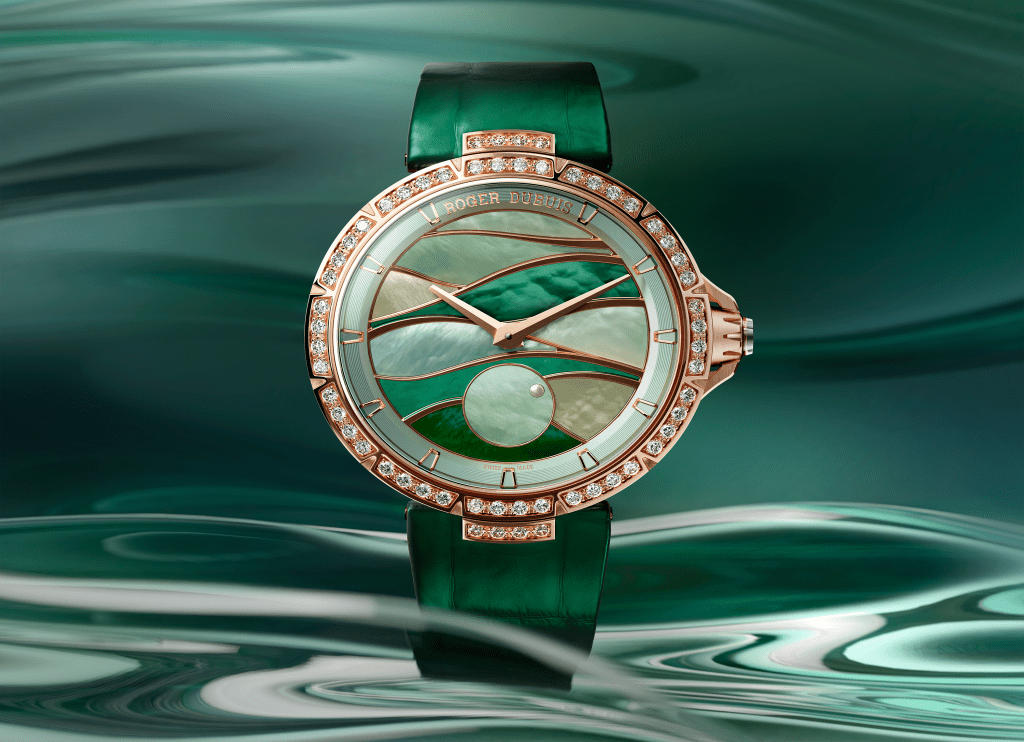
At this year’s Watches & Wonders in Geneva, Roger Dubuis showed work across two directions it has been developing in parallel: pieces rooted in the brand’s Geneva watchmaking heritage and pieces drawn from the Arthurian legend, a narrative world the brand has been building since 2013. The most discussed design was the Lady of the Lake, a ladies’ watch in layered green mother of pearl that went through many rounds of debate and discussion before landing on its final hues. Hastoy talks about those decisions, as well as what design requires when an object has to hold a story, a technical standard and a visual identity all at once.
COOL HUNTING: Looking at your presence at Watches & Wonders this year, how would you describe what Roger Dubuis brought to someone who wasn’t there?
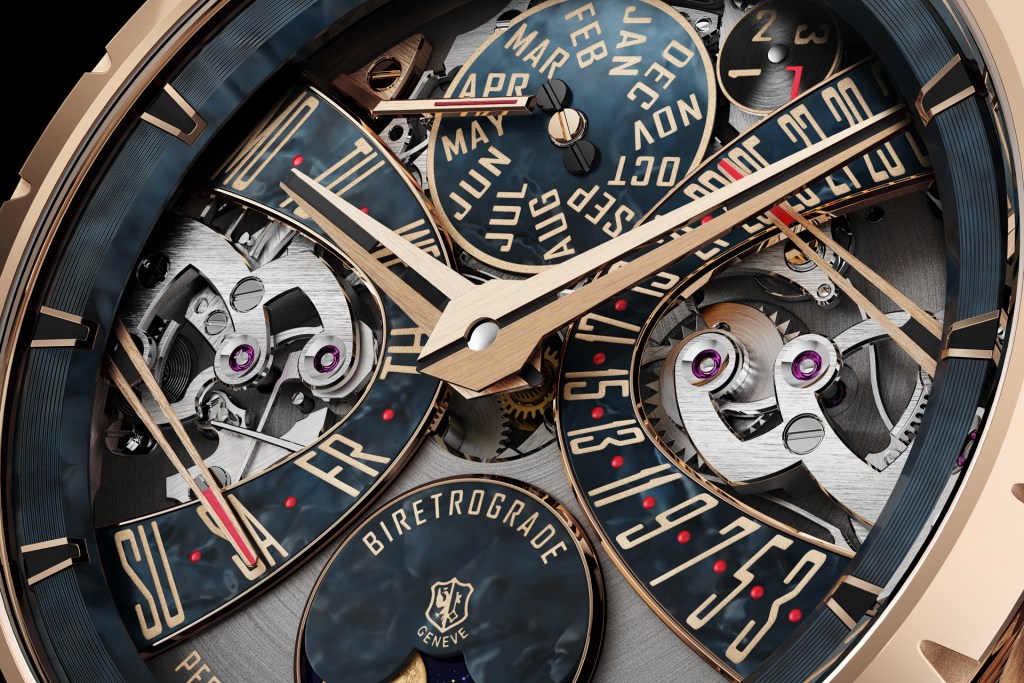
Antoine Hastoy: It would really be based on two pillars. One is what we call Signature, and this is where we are using our heritage and interpreting it in today’s timepieces. That’s more of a bi-retrograde, the perpetual calendar, really the Geneva watchmaking with a little twist. And then the other one would be the Legendary Universes. And this is where we, this year, focused on the Arthurian legend and gave it a new twist with ladies’ timepieces as well.
CH: Roger Dubuis was a singular man who had a very specific vision. What was that vision and how are you executing it today?
AH: What is really important is that we are carrying the heritage of Monsieur Dubuis and trying to pass it to the people that will do the same job as we do in the future. But what we must consider when we think about Monsieur Dubuis is that he created his company when he was 57 years of age. So even him founding the Maison came with already a long story, different inspiration, his own watchmaking culture, deeply rooted into the Geneva watchmaking culture. He came with his different mechanical knowledges. We think about the patents he registered before founding the company, and also the mechanisms or complications he worked on when he was with different maisons before. He came with his personality of a mischievous and curious person, loving to meet and work with other people. When the Maison began, it came with all that.
CH: You use the words “expressivity” and “theatricality” a lot when describing the brand. What do those terms mean at Roger Dubuis?
AH: What we call expressivity moves in different ways, but still with a distinct core identity: being horlogerie de novo, watchmaking from Geneva with all the quality that is required. I’m talking about the Poinçon de Genève, which is extremely strong in terms of watchmaking identity. Talking decorations, with almost a goldsmith level work on mechanism, then complications and functions. It’s not function for function, rather than function to express something, a vision. And that’s expressivity. Also, what you could feel is theatricality, and it’s strongly related to expressivity, because every timepiece we release has a sense. You need time to discover it, to see all the details, to see everything. Like walking onstage with a decor, or looking at a movie, or reading a book, and it’s throughout the pages that you flip that you start to understand perfectly what’s in it, because you have a lot of details.
CH: It would be easy to constantly return to that source material and ask, “What would Monsieur Dubuis want?” How do you use his foundations while pushing beyond them?
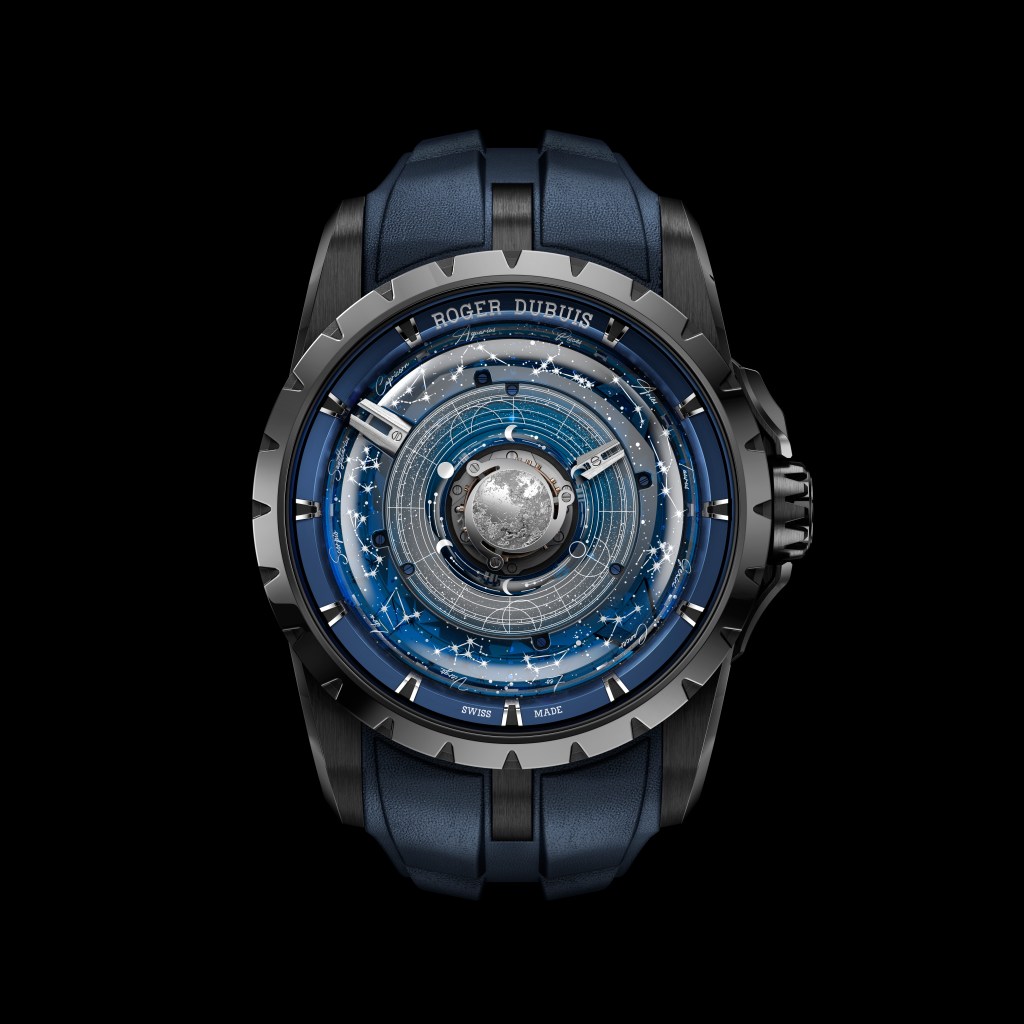
AH: Every now and then we go back into the foundations, the heritage. We took something he created, kept the concepts of the patent, and then made it evolve into the expressivity of today. And the other angle, what we call the Legendary Universes, is strongly related to when he was traveling and discovering new cultures. As a horloger, we are deeply rooted in Geneva, but we like to discover other things that are deeply rooted, and either illustrate or interpret them with our craftsmanship, our know-how and our watchmaking culture. When you start thinking about these different stories, like the Arthurian legend or Chinese zodiacs, it opens doors. You look at what you’re doing with a different perspective. You still get to know who you are and what’s your identity, but then okay, how am I going to tell this story of a legend that is fictional? And when you look at the corpus of that story, it’s humongous. I mean, it started in the Middle Ages, from manuscripts of the Middle Ages to today’s Hollywood blockbusters. This is when you start thinking, this is new and it needs something new.
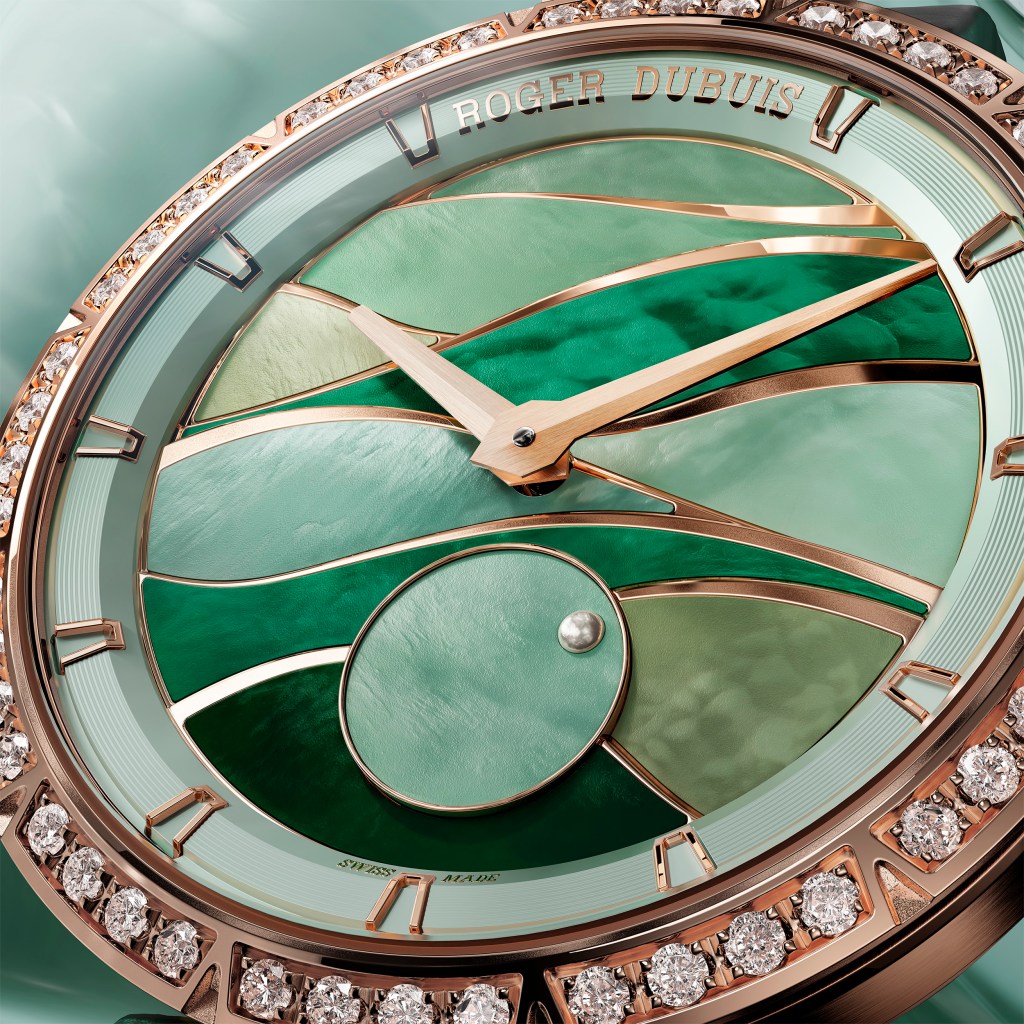
CH: The Lady of the Lake surprised a lot of people. It reads much quieter than what most associate with the brand. How do you think about scale and what makes a watch expressive?
AH: When Mr. Dubuis started creating timepieces, at the very beginning, they were size 34 to 37mm, exactly the sizes of the era in the mid-’90s. But then it evolved, and probably because the other timepieces were more like shockers, people tend to remember the bigger sizes. But we did more wearable. And when we say expressivity, this is how we move. We don’t talk size—we talk about loud or more quiet.
CH: The Arthurian legend has been part of the brand’s vocabulary for over a decade. How did that story lead you to the Lady of the Lake specifically?
AH: At the very beginning it was King Arthur: the knights, their lives, their quest, Excalibur and everything. Two years after, we went slightly deeper into the legend and started the journey in the forest, where a lot of magic and main events of the legend are happening And when we decided for this year to go back into this legend and make it evolve and think about the ladies, we very soon came to the Lady of the Lake, who lives in the forest, close to the lake. We wanted to have different facets of that character, because she is actually a very complex personality that’s nice sometimes, not so nice other times, a powerful, strong woman. And she’s still a fairy, a powerful fairy, but a fairy.
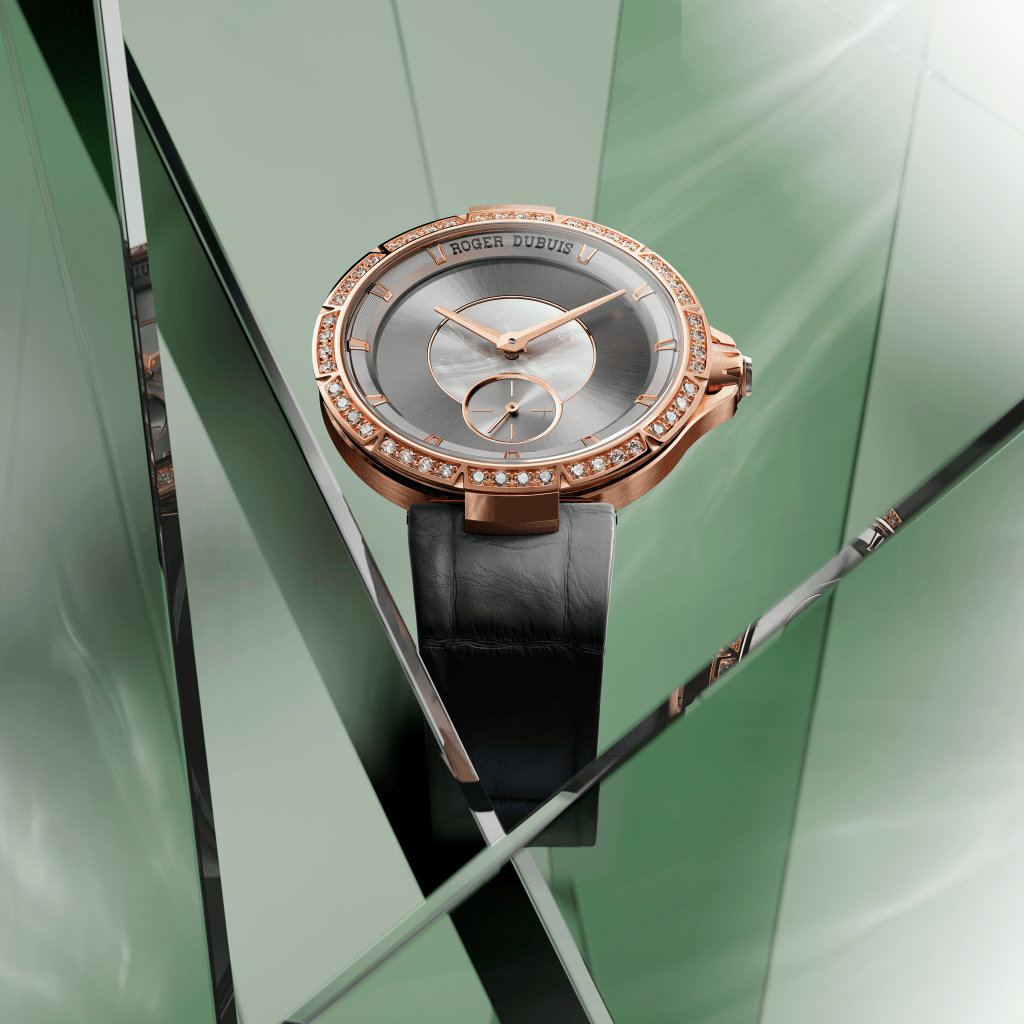
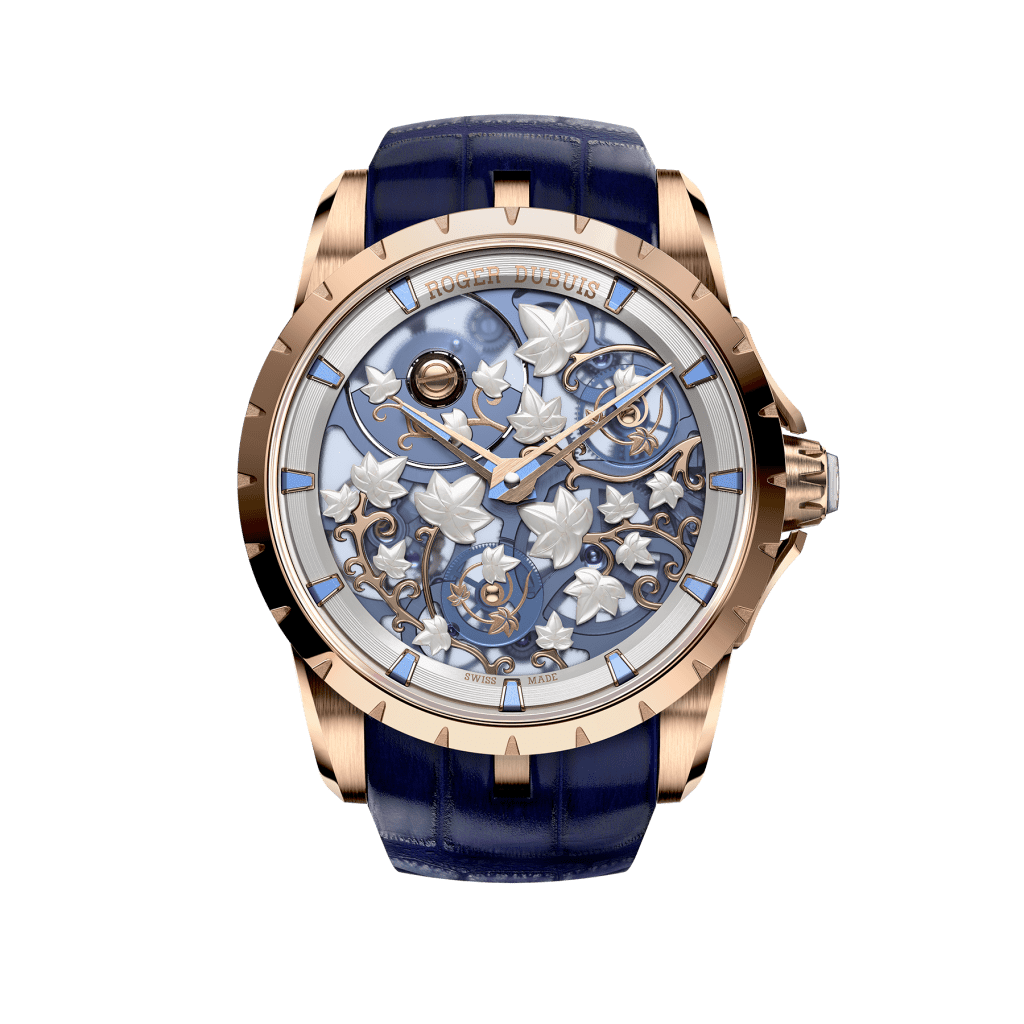
This is how we came up with two different timepieces, because you couldn’t summarize everything in one. The green one was really about her environment, where she lived, where she was. When you look at it, we’re talking about the Lady of the Lake, but it’s green. So, it’s a lake, but it’s green. And we have another piece we released, the forest one, but it’s blue. The obvious way would have been to have the forest green and the lake blue. But no magic, too simple. Lady of the Lake: green. Forest: blue. We keep diving into the legend, and we understand, okay, there’s a lake, there’s a forest, we have waves. And then you start thinking about the materials you could use. It has to be aquatic materials. So, what would make sense, at the same time keeping the identity of the Maison, who were very well known for the mother of pearl with rose gold timepieces or bigger watches at the beginning?
CH: How did you solve that question?
AH: Mother of pearl is kind of our code. It’s an aquatic material, so it has a meaning with the story we’re trying to illustrate. We can have it colored, and yet we can give it a shape using a specific technique so that it represents water. This is how we came up in the end with this timepiece that, indeed, you would say smaller size. We would say maybe less expressive in terms of measurements, but still very expressive in code. At the very beginning, the greens were a lot less saturated in color. It was more like pastel greens, very subtle, even the strap. But at some point, we said, ‘okay, what’s our identity? Expressivity, theatricality. This is going to be too subtle. It’s not us. Make it stronger, make it more saturated.’
We did several iterations, and the strap was probably the biggest evolution of all. It was very pastel, very soft. And it became this strong green that we have today. This is really how we came up with the piece: with a lot of different iterations, using our codes, illustrating the legend and never forgetting that we are looking at different cultures, but our identity must prevail.
CH: A Dubuis on someone’s wrist is instantly identifiable. But there seems to be a tremendous amount of nuance that most people miss. What is that layer beneath the surface that you wish more people understood?
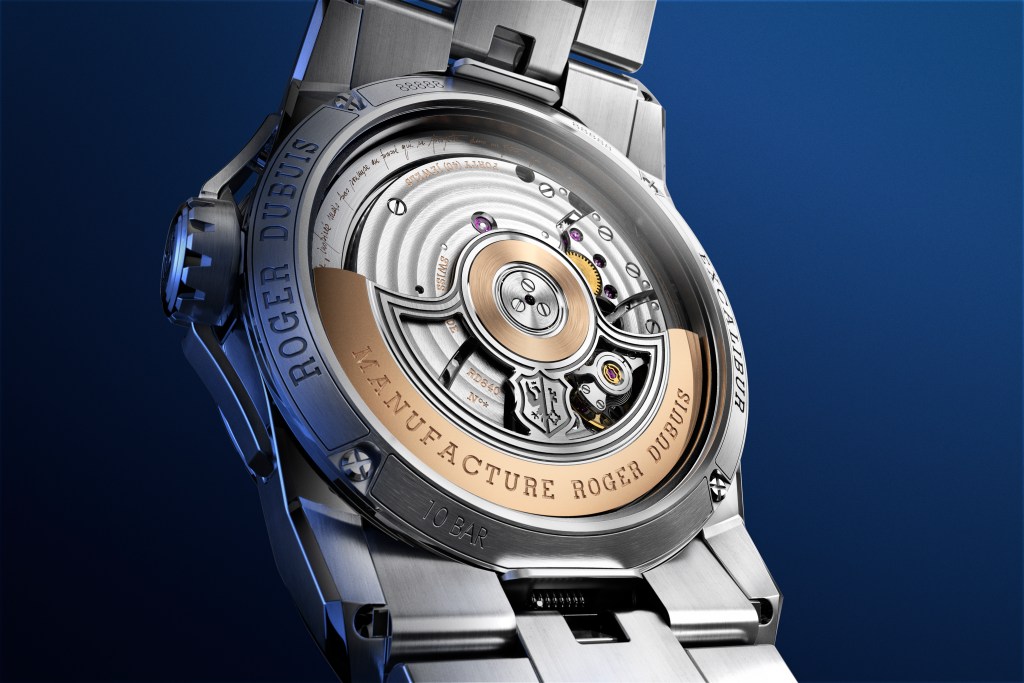
AH: We’re from a Geneva watchmaking culture, and that’s really important, because it means also that we are an integrated manufacturer. We’re in Meyrin. There, we can do everything that’s in a timepiece, except for certain components and the strap. But the core of what we do, the calibers, we do all of them. The level of craftsmanship, the know-how that we bring into our timepieces is super important. We have an external certification, which is called the Poinçon de Genève, and it is under the governance of the state of Geneva. It’s written in the law that we need to comply to a certain level of watchmaking.
CH: What does that mean for the client?
AH: Everything we do brings a lot of richness, that’s into the details and the level of finishes as well. Even on the case—you have brushed, polished, all those decoration techniques that we have in the calibers—and onto the dials because it gives richness. And it’s also a way of displaying our savoir-faire, balancing it and making sure everything is consistent. The people involved in this work are all experts in their field. Most of them have been within the company for a minimum of 10 years, sometimes 20. They are deepening their expertise, amping up their level.
Lastly, the creativity. As you said, ‘big watches are there, loud, some like it, some don’t like it, it’s polarizing.’ Indeed. What you cannot say is that we’re not creative. We created mechanisms, we created designs, we created new combinations of materials, we created new variations of existing complications. True creativity. And this is definitely something that we’re really good at. Maybe you don’t like the way we create. But we create.






What are your thoughts?