The Ferrari Luce Marks a New Era for Maranello
Debuting in Rome, the all-electric four-door, five-seat sports car arrives as a fresh light with a radically simplified LoveFrom design anchored in Ferrari heritage
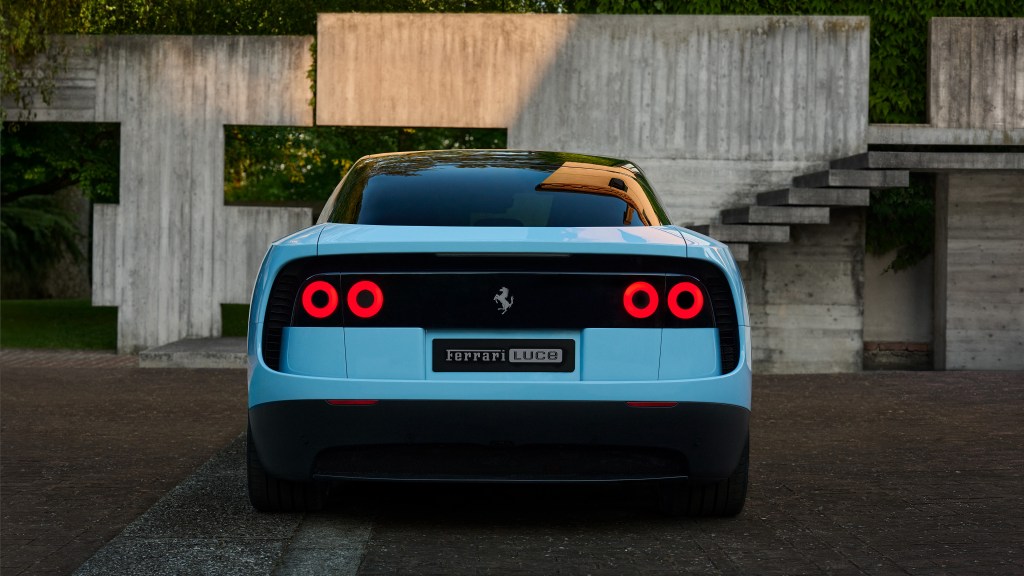
Today Ferrari unveiled the Luce at the Vela di Calatrava in Rome, opening a new chapter in the marque’s history with its first all-electric series car. Five years and 60 patents in the making, it was designed with LoveFrom, the creative collective founded by designers Sir Jony Ive and Marc Newson. The four-door, five-seat sports car represents the most radical aesthetic reset Maranello has ever attempted, while preserving the tactile, driver-focused soul that defines the Prancing Horse. At its core is an in-house 1050 cv (1036 hp / 772 kW) four-motor powertrain that delivers Ferrari’s driving experience while unlocking dynamics only an EV can produce. In fact, all of the Luce’s powertrain components, including the batteries, were designed in house. The exterior is a profound departure from anything in the current range and the interior refuses the touchscreen-dominated default of contemporary EV design in favor of precision-engineered mechanical controls. It is at once a provocation to longtime Ferrari devotees and an invitation to a new generation of clients—a car that asks what a Ferrari can become when freed from the architecture of the combustion engine. But make no mistake, it is a Ferrari first and foremost, and it promises to deliver the performance, handling and Forever Ferrari guarantee that has made the brand and its cars legendary.
“With Ferrari Luce, we are once again redefining the limits of what is possible,” said John Elkann, Chairman of Ferrari. “Today, we are not simply unveiling a new car; we are inaugurating a chapter that turns our vision into reality, strengthening Ferrari’s tradition of anticipating and shaping the future. Such a leap forward in product innovation could only have been achieved through process innovation, this is why we chose to embark on new collaborations, such as the one with LoveFrom for the design. And, as always, our research and engineering excellence have been placed at the service of driving emotions, without compromise. Rome, the symbolic location of our (first racing) victory on this day in 1947, becomes the starting point for a Ferrari that lights up the future and opens new horizons.”
That philosophical foundation was set early in the project. CEO Benedetto Vigna framed the two foundational choices that shaped the Luce as a clear inversion of the industry default: “We needed to start from Ferrari, not from electric technology. We need to start from Ferrari, and…we need to start from the human dimension, from the soul, because only in this way we can make something that is unique, that is innovative and stays authentic.” The Luce was conceived, in other words, as a Ferrari first and an electric vehicle second—a sequence that informs everything from the cabin architecture to the engineered authenticity of the car’s sound.
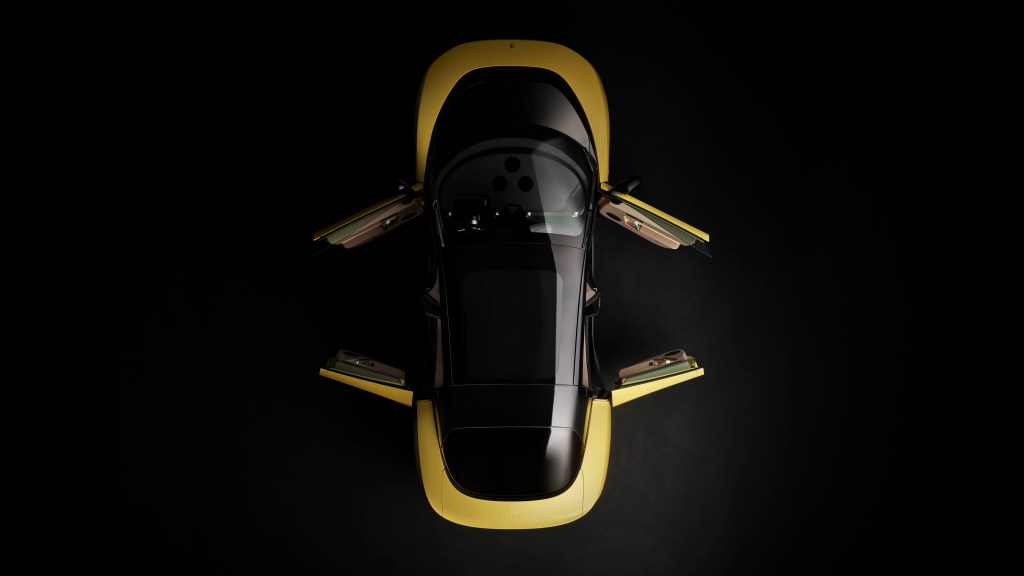
Ferrari intentionally sought a multidisciplinary perspective from the luxury and industrial design sectors to inspire a new language for its first EV. Marc Newson, designer and co-founder of LoveFrom, whose team spent five years working alongside Ferrari engineers and Flavio Manzoni’s Ferrari Design Studio, explained that this unconventional approach was established early on: “Ferrari identified very, very early on in this program, that there are benefits in looking outside of their comfort zone, looking outside of the traditional automotive area.” Everything in the Luce is new—every switch, display, knob, handle, the center tunnel, the UI and the UX. The four independent motors are new, the battery technology is new, the glass, developed with Corning, is new, the displays, developed with Samsung Display are new, the seats and the tires are new.
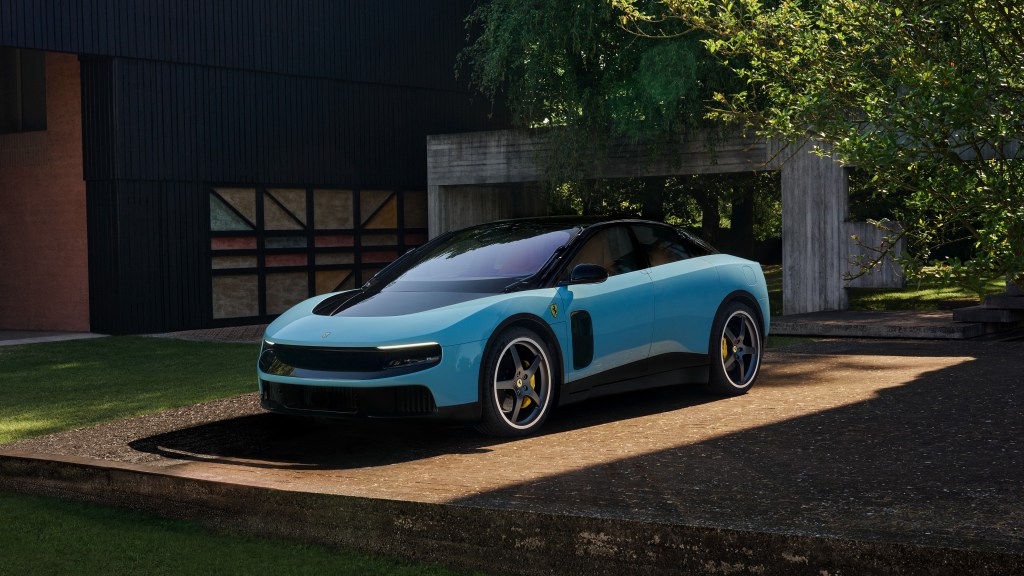
The exterior is defined by an unprecedented purity, characterized by a smooth, continuous glass house and an aerodynamic, shell-like form incorporating suspended front and rear wings that allow air flow to pass through under them. The design team faced the immense challenge of working within the strict aerodynamic parameters of an EV. Explaining how they achieved the car’s aesthetic balance, Newson says, “…we intellectually separate the interior cell, the passenger cell in the glass house. It’s surrounded with an aluminum shell, which is effectively the bodywork that does most of the aero work that encapsulates the front and the rear wing, but enables you to preserve this very pure internal form. The two don’t interrupt each other, they coexist…”
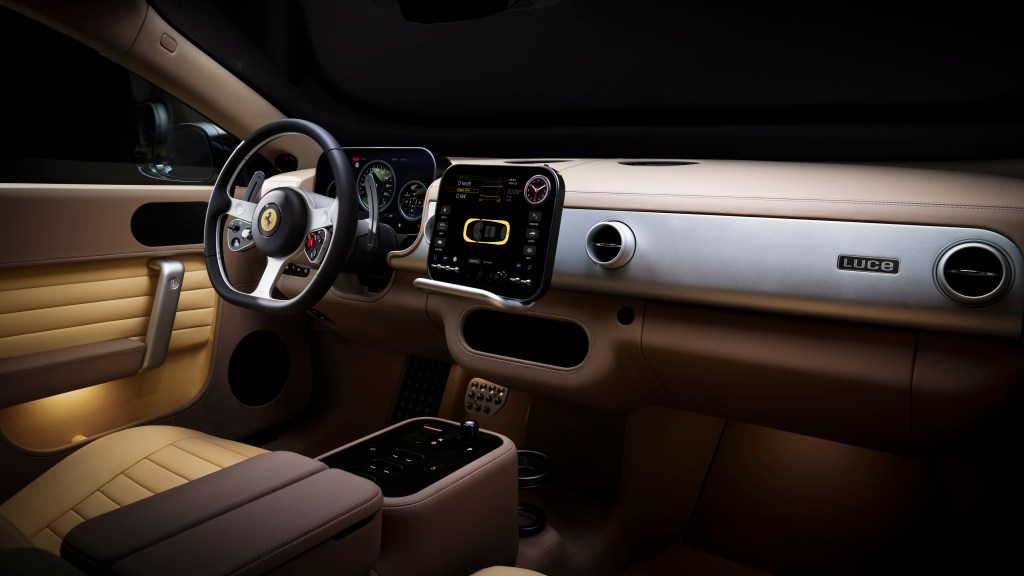
To ensure a seamless transition between the vehicle’s form and function, LoveFrom insisted on a holistic design process–meaning everything you see and touch. “…we wanted to be involved in every aspect of this project, for us coherence was really key,” Newson noted. “We knew the inside touches the outside and everything is connected. We really, really felt that this was an incredible opportunity to create something that totally meshed with the way that we wanted it to.”
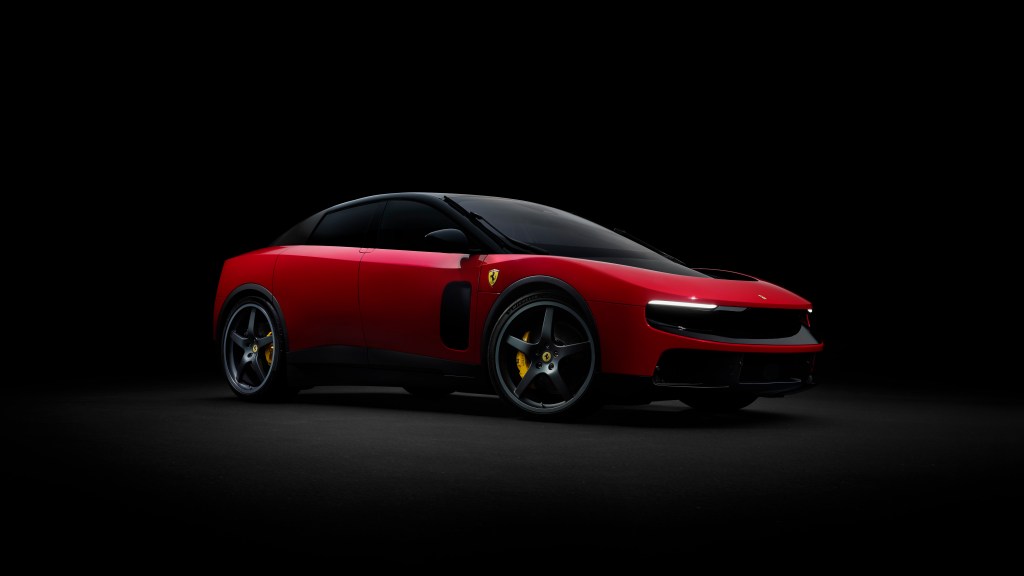
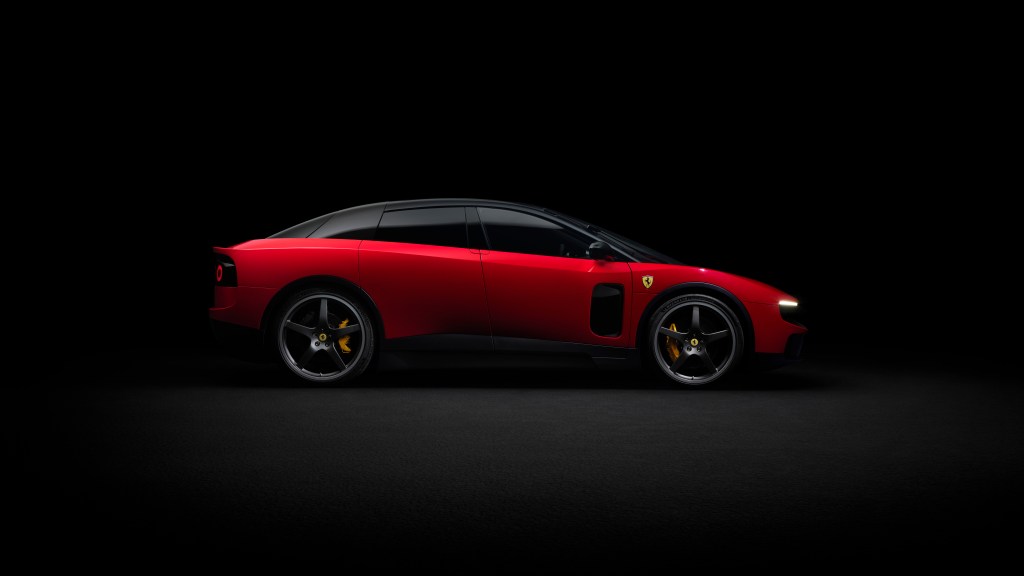
For all its visual departure from anything Ferrari has produced before, the Luce holds references to the marque recognizable by admirers of the existing and historic design language, anchored by three exterior cues that telegraph lineage without nostalgia. An undulating beltline runs the length of the car, gently swelling outward as it rises over the large wheels to emphasize their prominence before lowering at the waist—a gesture long associated with Ferrari’s most sculptural berlinettas. Across the front, the body-colored lateral aero wing masks the black underlying nose of the glass capsule creating a horizontal band across the front, echoing the Daytona-inspired motif that has become a connective thread across Ferrari’s most recent road cars. Four circular halo tail lamps—a configuration born at Ferrari in 1968 and carried through many models since—offers the most immediate signature of all. The front and rear light panels are transparent and integrated into the primary surfaces, gently receding when switched off to preserve the unbroken purity of form. Custom wheels complete the silhouette, with the largest staggered diameters ever offered on a series-production Ferrari road car at 23 inches / 58 cm front and 24 inches / 61 cm rear, available in a forged five-spoke design or an aerodynamically optimized turbine pattern inspired by a jet engine. Options from Pirelli, Michelin and Bridgestone include dry and winter weather and a run flat option.
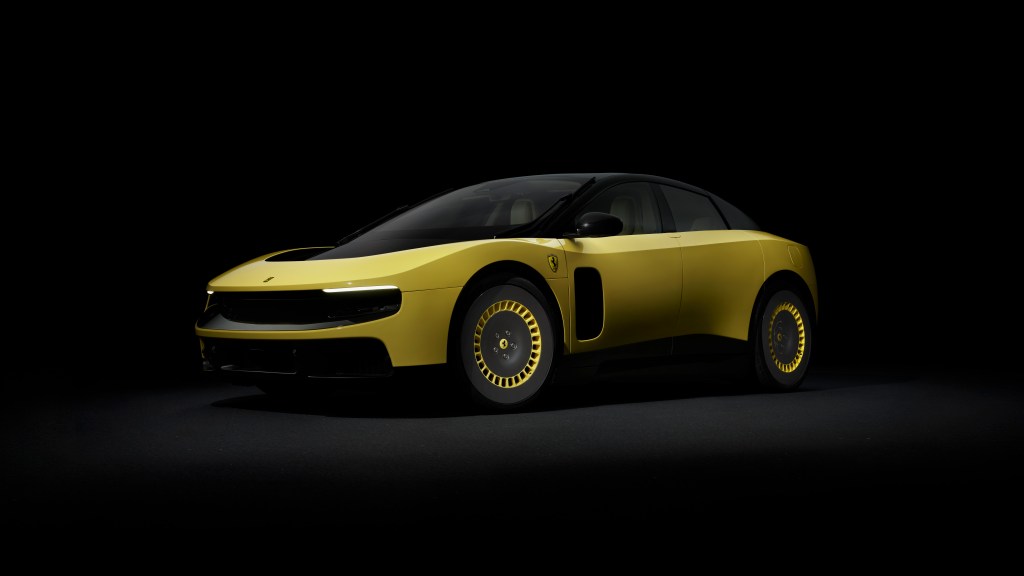
None of this arrives without friction. For the Ferrari faithful—a community whose connection to the marque is often calibrated to specific eras, silhouettes and the aural drama of a naturally aspirated V12—the Luce will, at first encounter, feel unfamiliar and may even provoke anger or disappointment. Its proportions, its silence at low speeds and the very fact of four doors and five seats sit outside the parameters by which Prancing Horse loyalty has historically been measured. Yet provocation of this scale is precisely what this moment in this era demands (cue Taylor’s Shake it Off). A brand that has spent nearly eighty years redefining the limits of performance cannot enter the electric era through mimicry of its own past, and the willingness to unsettle a portion of its existing audience signals a confidence in the longer view.
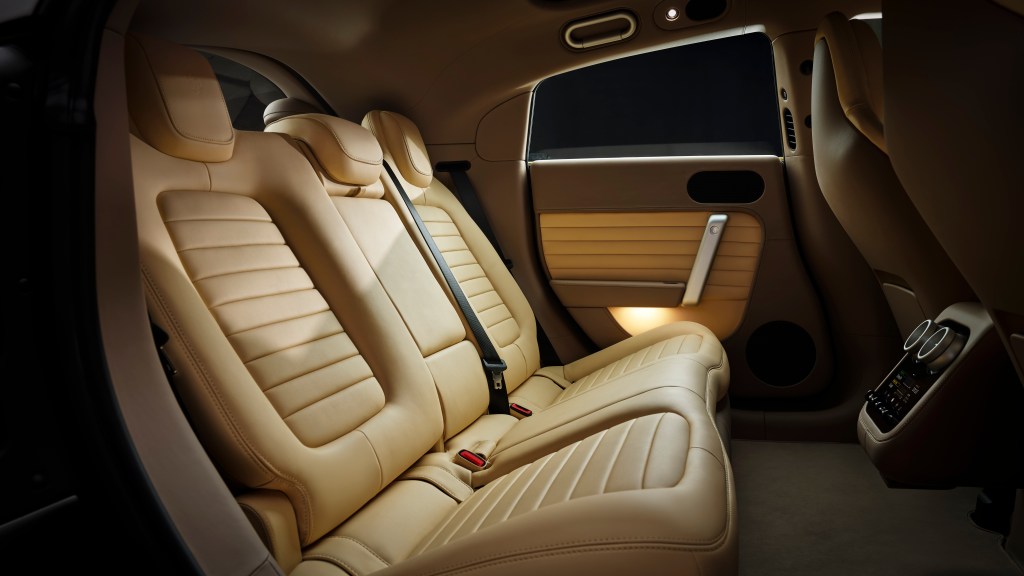
As CEO Vigna framed it on the night of the unveiling, the project required both “courage to challenge the way we work, courage to challenge also what we believe… and the responsibility to make it right.” That same provocation also opens the door, perhaps for the first time at this scale, to a new generation of Ferrari clients—designers, technologists and collectors drawn to the marque not through nostalgia but through the singular ambition on display here. The Luce sets a standard as the new mark of success in the executive lots and garages of entertainment, tech and professional fields from California to Connecticut. You can also comfortably drive it every day.
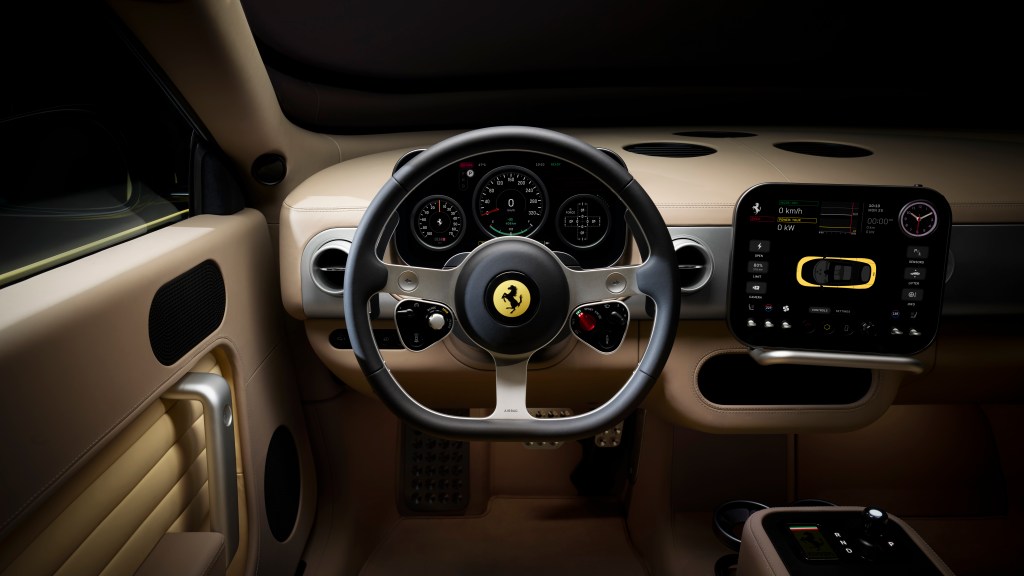
While the aesthetic is a complete reset, LoveFrom and Ferrari were fiercely dedicated to maintaining the intent of the Ferrari driving experience. A major trap in modern EV design is the over-reliance on digital touchscreens—a pitfall the team consciously avoided. Jeremy Bataillou, industrial designer at LoveFrom, detailed this philosophy: “…people think because it’s an electric car, it means interface is going to be fully digital, with massive screens, and from the get-go, this is not the way we should look at this, because with those capacitive buttons or multi-touch displays, they’re not appropriate for when you’re in the cars. As the driver, you should be focusing on driving and enjoying the drive, and not try to look where you’re touching and being confused and not have any kind of feedback, so from the get-go we were thinking, okay, we’re going to really work on tactile buttons and switches, and then we got into that journey of combining the best of digital interface with the best of physical interface…” It’s a masterclass in waking up automotive design studios around the world that modern does not mean mandatory screens all over the interior, and likely marks a new era of simpler, more integrated design that is easier for people to use.
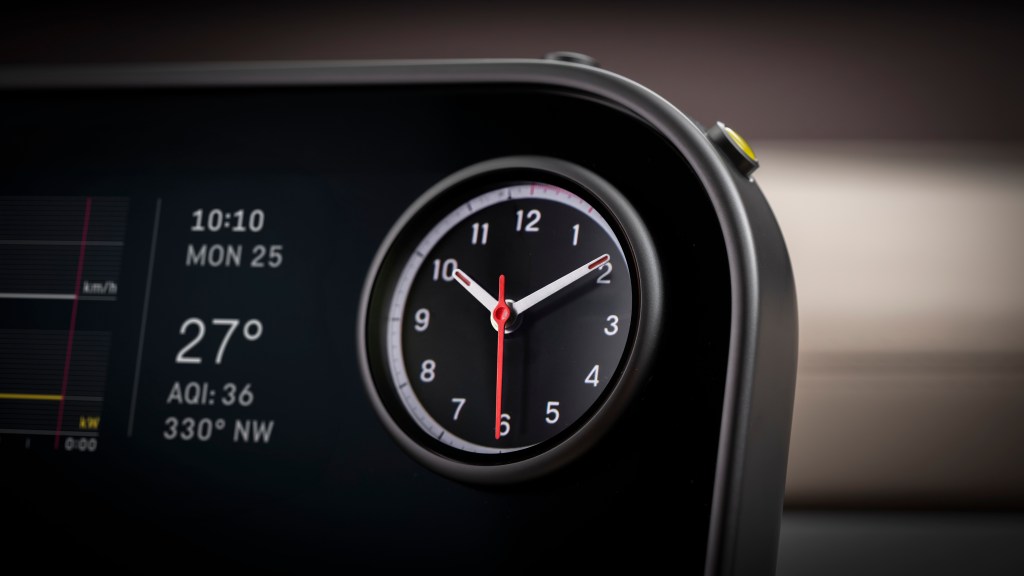
The Luce’s cabin features precision-engineered mechanical buttons, analog dials and toggles combined with multi-layered OLED displays developed exclusively with Samsung Display for the project. They rotate, toggle and click with the precision and feel that is more common in HiFi gear than in a car. Where appropriate and desired you can also intervene and use your finger to adjust, such as with the temperature. Every detail extends the same logic: the three-spoke steering wheel and its two manettino (a new e-Manettini for electric drive options, and the traditional manettini for drive modes) are machined from 100% recycled aluminum; the instrument cluster, or binnacle as they call it (taking a cue from ship design) moves with the wheel, keeping instrumentation in the driver’s sightline.
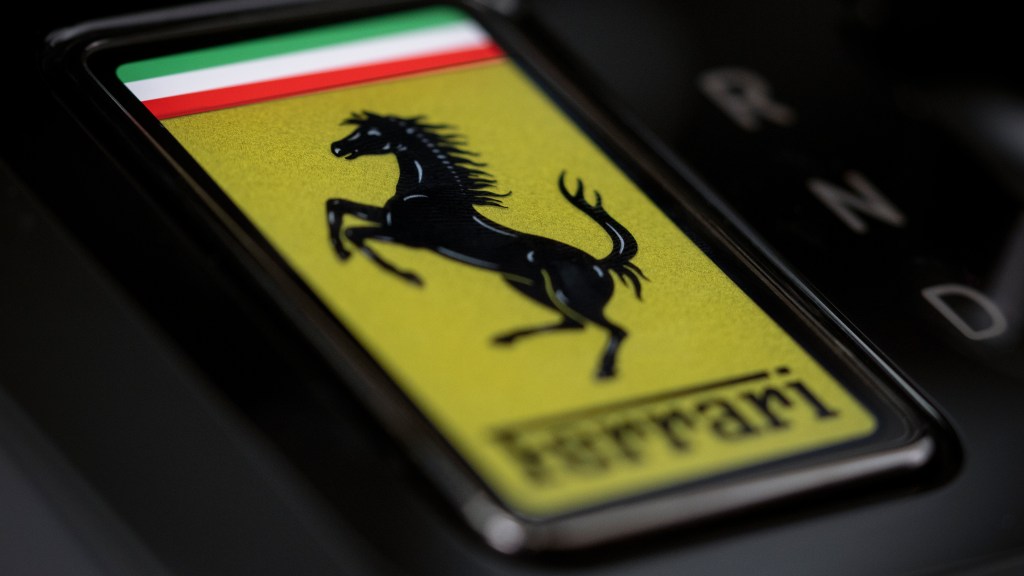
The key itself is crafted from Corning Gorilla Glass with an E Ink display—an automotive first—that triggers a wash of historic Ferrari yellow across the interface when docked., and the reverse when removed. Knowing that Ferrari drivers pine for the feel and sound of turning the engine on, creating a new kind of welcoming ceremony was in order. Materials throughout are pared back to essentials—recycled anodized aluminium, glass and premium leather. Everything was crafted to keep the driver engaged. “If you go back to the ’50s and ’60s, Ferrari competition cars, they’re all about a singular driving experience,” said Newson. The use of these noble materials meant creating new switches, dials, buttons and housings, primarily in aluminum and glass. Seeing or touching plastic in your Luce feels both inappropriate for a car at this price, but also violates the purity and mission of the design. “One of the things that we really became slightly obsessed with was that everything we did was in service to that kind of driver,” adds Newson.
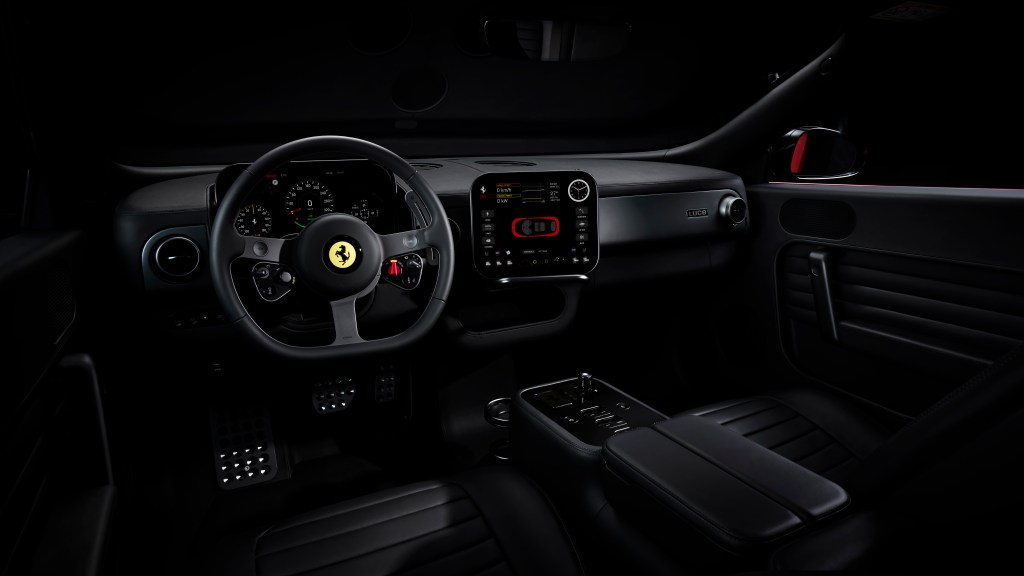
Replicating the visceral engagement of a combustion engine, the team spent years refining the haptics and controls, including the new manual torque-control paddles on the steering assembly. Chris Wilson, graphics and interaction designer at LoveFrom, elaborated on how they translated traditional driving thrills into an electric architecture: The shift paddles “bring some of the real thrill of driving, and you’ll really feel the feedback you get from those, and how that feedback directly relates to the digital interface and the visual feedback, as well as the physical feedback,” Wilson says. He added that guiding the driver through this new paradigm required intense iteration “to help the driver know when to use regenerative braking to downshift,” or to view the increased torque with intelligent dynamic dials that change with driving modes and use light and color to assist drivers. “It was probably one of the most challenging things to figure out how to do in this completely new interface,” he shares.
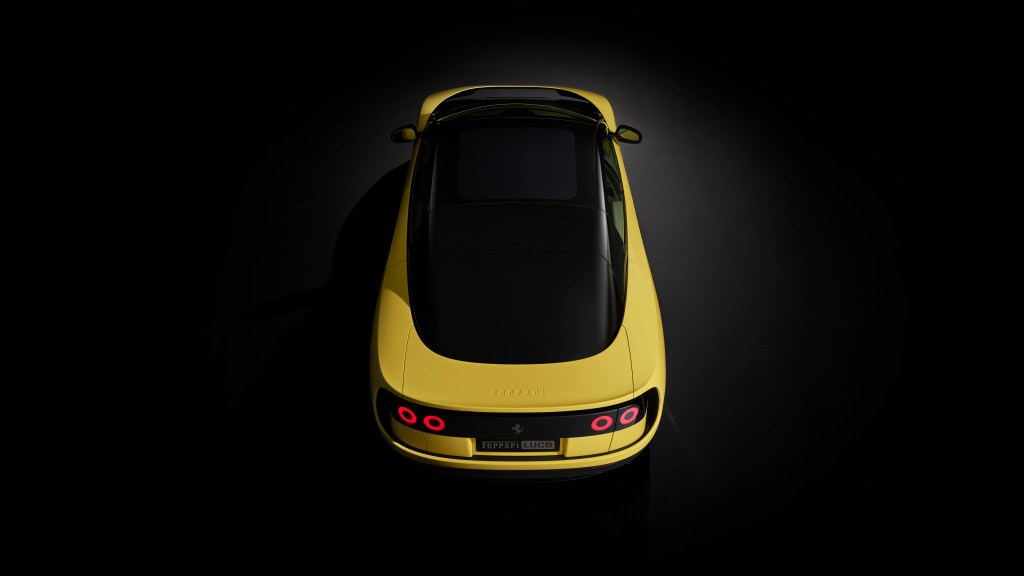
Even the sound of the Luce refuses synthesis—you won’t hear any generic humming or undulating synthetic tones. A precision accelerometer mounted at the rear axle captures the actual vibration of the rotating components and amplifies it both externally and into the cabin in a process Ferrari likens to an electric guitar—patented in-house, filtered and equalized in real time, and present only when the E-manettino is in its most expressive setting. The resulting acoustic signature drawn from the mechanics themselves communicates performance outside the car and fuels emotion inside it.
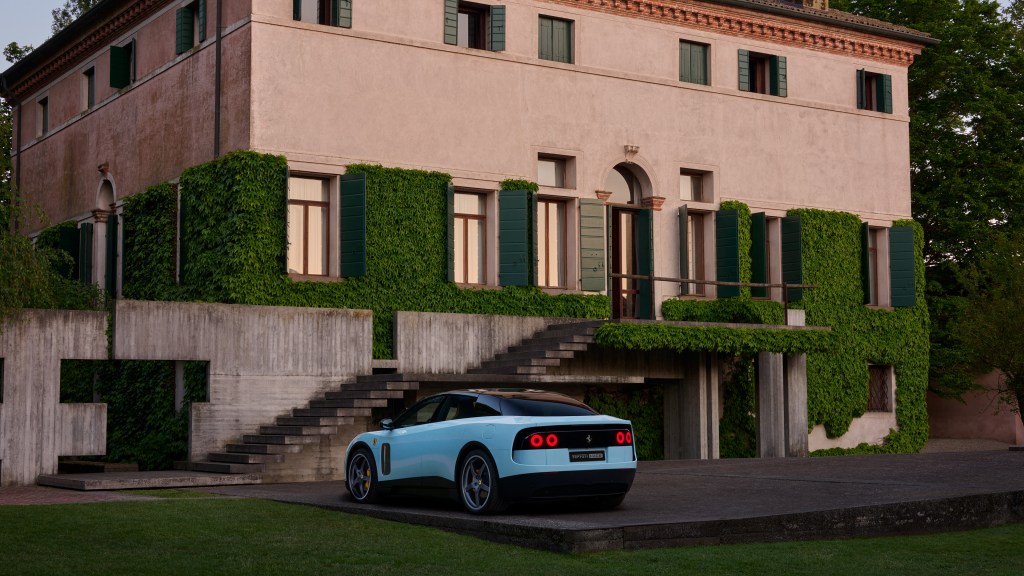
With the Luce, Ferrari and LoveFrom have achieved a remarkable duality—delivering a radically simplified, aerodynamic form pushing the boundaries of automotive design while preserving the tactile, driver-focused soul that defines the Prancing Horse. Yet the project’s ambition extends well beyond its debut. As Ferrari expands its lineup to include all-electric architecture alongside its existing hybrid and combustion offerings, considering how models like the Luce will age and eventually become vintage is paramount to preserving the marque’s legacy. In line with the Ferrari Forever philosophy, the automaker has committed to providing assistance on all electric components, including batteries, for the long term—a pledge underwritten by the strategic decision to fully design, validate and build key elements such as the 122 kWh battery pack and the four independent electric motors entirely in-house in Maranello. By retaining complete control over the engineering and assembly of these core components in keeping with Ferrari tradition, the automaker ensures it possesses the intimate technical knowledge and manufacturing capabilities necessary to faithfully maintain, repair or recreate these parts when the Luce eventually achieves classic status alongside the marque’s storied past.
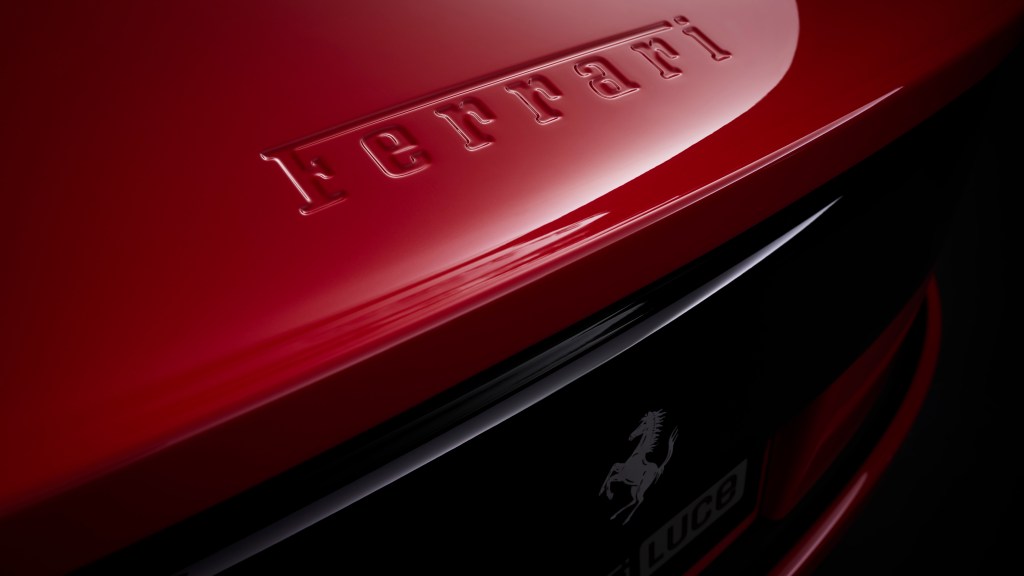
The Ferrari Luce begins European deliveries at the end of this year and US deliveries starting in 2027 with a base price of €550,000.



What are your thoughts?