The iF Design Trend Report 2026 Trades Forecasts for Frameworks
The fifth edition of the annual study moves past conventional forecasting, mapping the tension between emerging trends and their countertrends to argue for design as a form of connective intelligence
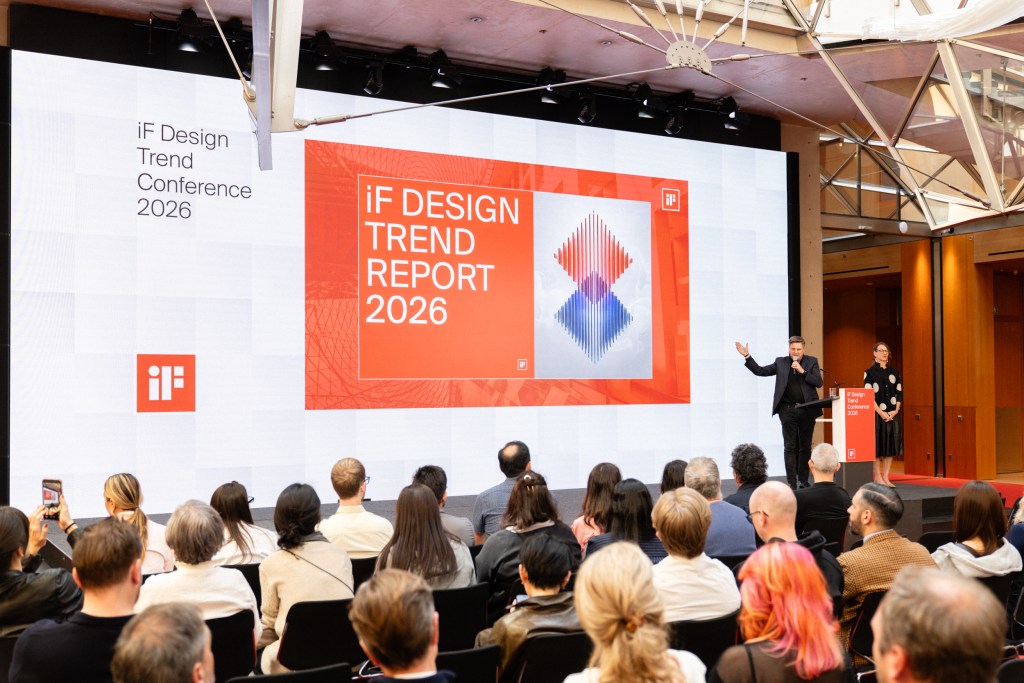
The iF Design Trend Report 2026 takes a layered look at design’s evolving remit, offering an internationally oriented analysis of the forces reshaping culture, technology and the built environment. Rather than a tidy list of predictions or a mood board of aesthetics, the report provides a framework for reading the present more clearly. It positions design as a form of connective intelligence—a method for framing problems, navigating complexity and shaping the relationships between people, systems and possible futures.
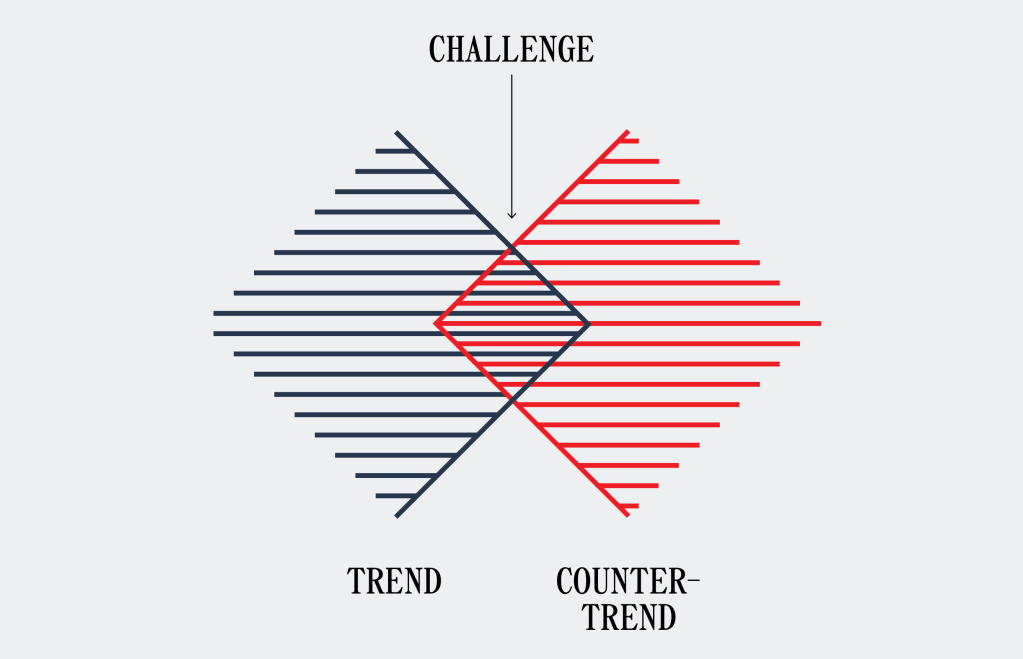
Available as a free download until 7 July, the 300-page digital report arrives as a timely resource for creative decision-makers. For its fifth collaborative edition, iF Design partnered with researchers at The Future:Project, drawing on global field research, expert interviews and submissions to the iF DESIGN AWARD 2026, which attracted more than 10,000 entries from roughly 70 countries. By treating design not as an isolated discipline but as a mediator of wider societal shifts, the report turns its attention to the friction between trends and their countertrends—the opposing forces where new possibilities tend to surface.
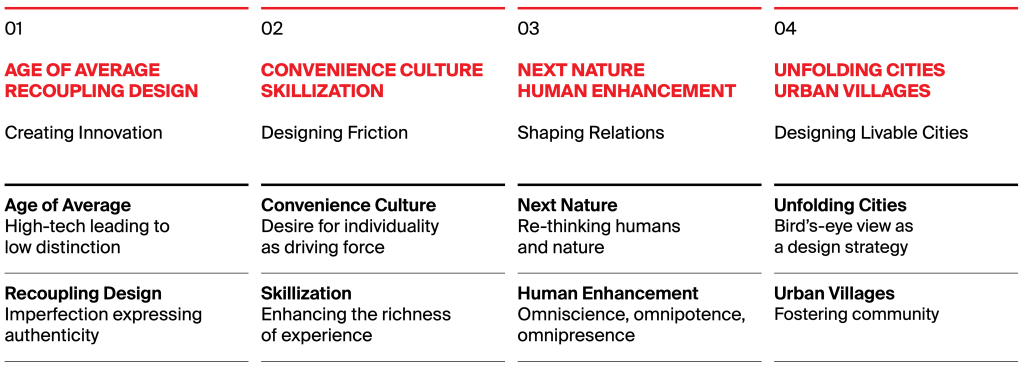
Four pairings anchor the analysis. The first, Age of Average and Recoupling Design, considers how AI and algorithmic tooling are accelerating a globalized visual sameness across interfaces, narratives and aesthetics. Recoupling Design pushes back, breaking with algorithmic logic to recover originality through imperfection, cultural specificity, materiality and human judgment. Innovation, the report suggests, increasingly arrives by way of the “Perfect Flaw”—the inefficiencies and lived idiosyncrasies that algorithmic averaging tends to smooth out, as detailed by former head of AI for Logitech and Trend Conference speaker, Branko Lukic.
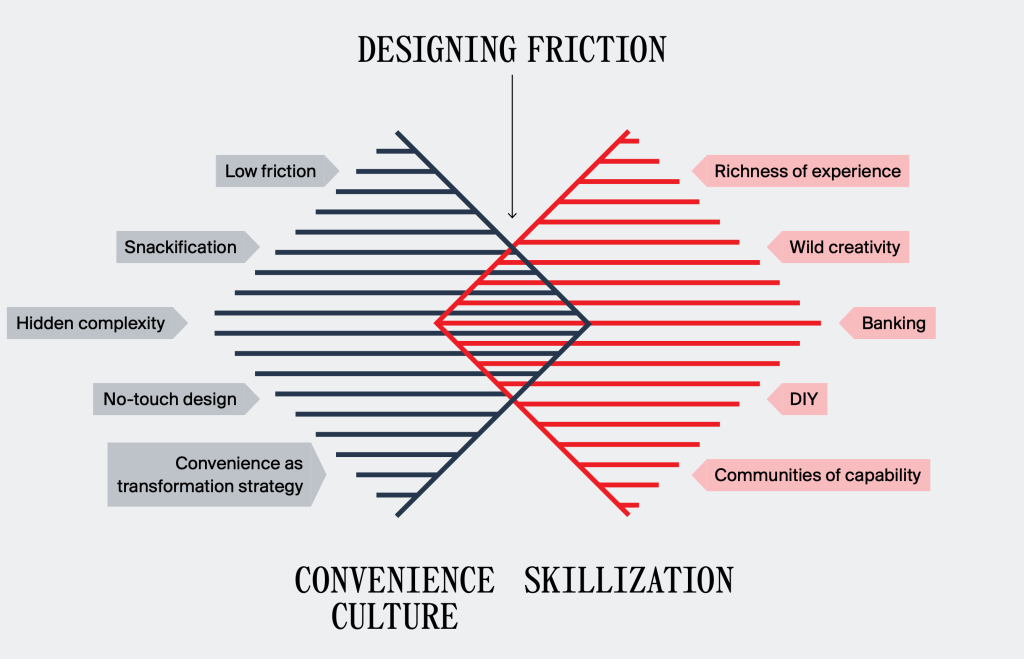
The second pairing, Convenience Culture and Skillization, examines the limits of frictionless design. Low-effort interactions, snackified content and hidden complexity remain a defining paradigm of contemporary life, yet they can flatten engagement and erode agency. Skillization makes the case for productive resistance—lifelong learning, participation and craft—reframing well-being around the satisfactions of mastery rather than the speed of completion.

Next Nature and Human Enhancement, the third pairing, traces design’s mediating role between the organic, the technological and the human. Next Nature departs from human-centric thinking, treating buildings and emerging materials such as mycelium and algae as living systems that regulate environments and coexist with non-human life. Human Enhancement, by contrast, looks outward from the body, expanding human capacity through biotechnology, wearables and data-driven medicine. Read together, the two argue for a future organized around ecological interdependence, holistic health and care.
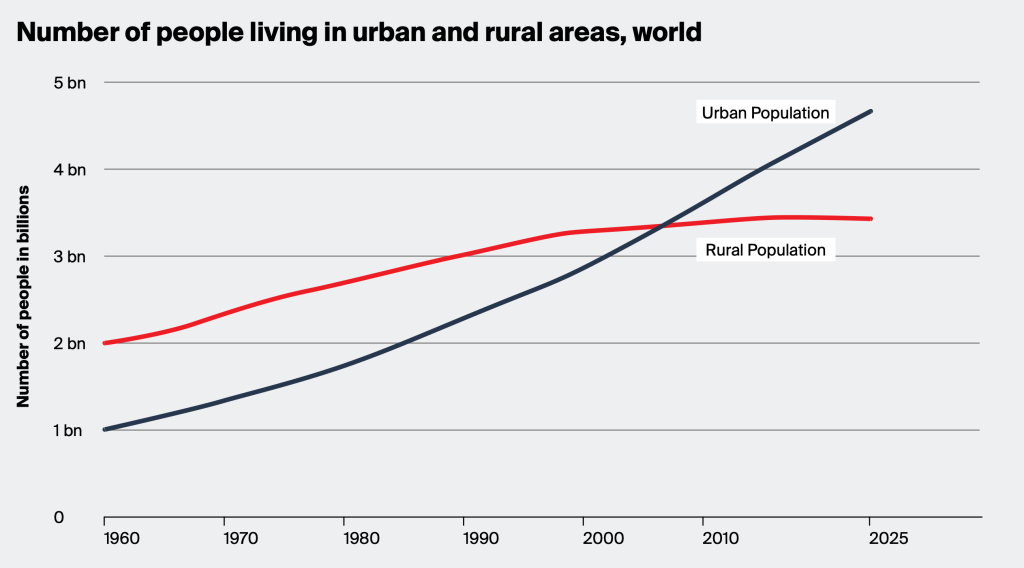
The final pairing, Unfolding Cities and Urban Villages, addresses civic life at radically different scales. Unfolding Cities approaches urban futures from above, concerned with infrastructural ambition, climate resilience and integrated mobility. Urban Villages works at eye level, responding to the appetite for social cohesion within megacities through neighborhood life, adaptive reuse, local identity and the conversion of transitional non-places into legible community spaces. Montreal-based Daily Tous les Jours, for example, builds playful music and light infused swings and other installations that garner smiles and bring strangers together.
As creative tools grow faster and more automated, the report’s underlying argument is that speed and efficiency are no longer sufficient on their own. Instead, meaning emerges instead from context, cultural intelligence, ecological awareness and the capacity to think across disciplines. Read this way, the iF Design Trend Report 2026 functions less as a forecast than as a compass—an instrument for understanding what design is being asked to solve next.
The full iF Design Trend Report 2026 is available as a free download until 7 July, after which it will cost 299 Euros to purchase.
iF Design has been an active member of the international design community committed to excellence and impact since 1953. Owned by the iF Design Foundation, a German non-profit, the organization runs the prestigious iF DESIGN AWARD, STUDENT AWARD, SOCIAL IMPACT PRIZE, iF DESIGN ACADEMY for leadership training, and the award-winning podcast FUTURE OF XYZ. Register here to enter the iF DESIGN AWARD 2027!








What are your thoughts?