Soul Over Spectacle: Kenneth Branyan on Designing Four Seasons New York Downtown
We spoke to the designer about what it takes to make a luxury hotel room feel like somewhere worth staying and why the details nobody notices are the ones that matter most
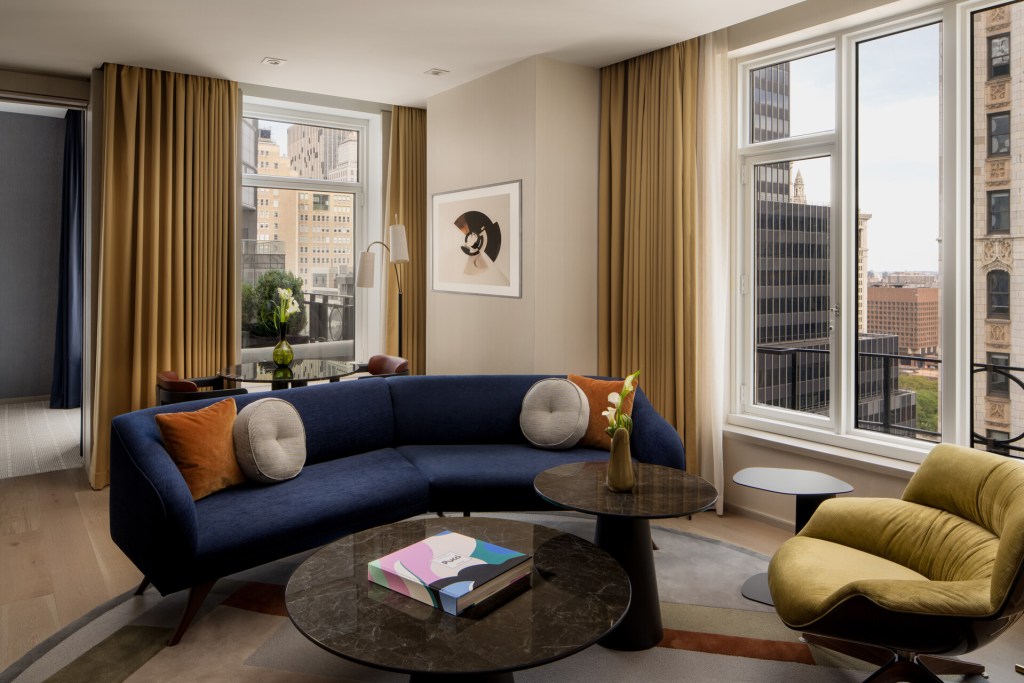
Kenneth Branyan came to design through film, and the detour shows. Now President of Bill Rooney Studio, the New York firm he built alongside his late husband and partner, Branyan thinks about rooms the way a director thinks about scenes: what the eye lands on, how the light moves, what stays with a visitor after leaving.
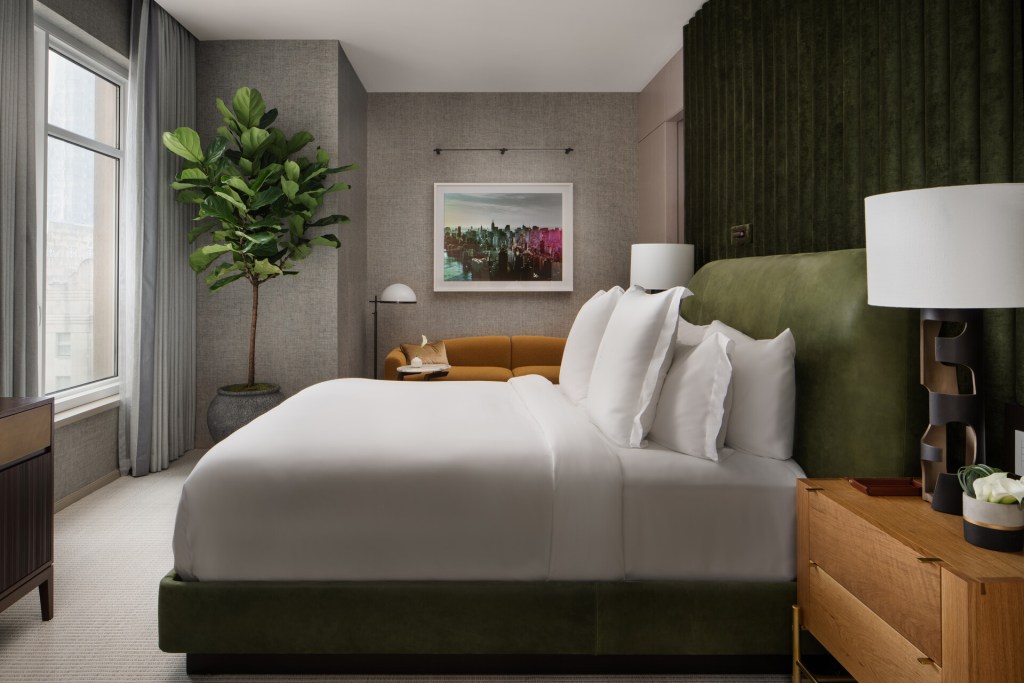
The studio, founded in 2010, built its business on residential and hospitality work where those instincts matter most. The suite redesign at the Four Seasons New York Downtown was among Rooney’s final projects, developed in close collaboration with the hotel’s General Manager, Thomas Carreras. The work spans the Metropolis, Tribeca and Gotham collections, followed by the Greenwich and Trinity suites, each one a version of the same idea: a Tribeca apartment, elevated. Following Rooney’s passing, Branyan stepped in to see it through, inheriting a space that was beautifully considered but not yet fully cohesive.
COOL HUNTING spoke to Branyan about what it takes to make a luxury hotel room feel like somewhere worth staying, what midcentury Tribeca has to do with it and why the details nobody notices are the ones that matter most.
COOL HUNTING: Tribeca has always had a particular design consciousness. Did the neighborhood feel like a brief in itself?
Kenneth Branyan: The original intent, working with Thomas [Carreras], was to live and breathe the space. He had a vision and my role was to bring soul to it, give it life. And Tribeca was its own thing. I’d worked in a furniture showroom down here in the early 2000s. It was all about interiors that were really focused, curated, collected. Industrial, lofts, that whole world. That’s what we honed in on.
CH: This project carries a personal history for you beyond the professional.
KB: Bill, my husband who passed away, started this project. He was always the diplomat in the room, that was his gift. He did more residential work and we worked together in tandem. What I’ve found is that with restrictions and compromise you can actually get to really good design. The work has evolved since Bill started. We had a strong color palette and then brought it back, less jewel tones, but the same aesthetic coordinates, if you will.
CH: The studio came in mid-project. What did you inherit?
KB: A lot of thought had gone into every little detail. Nothing was wrong exactly. It just didn’t feel welcoming.
CH: There’s a phrase you keep returning to: the room as an extension of home. What does that mean at this level of hospitality?
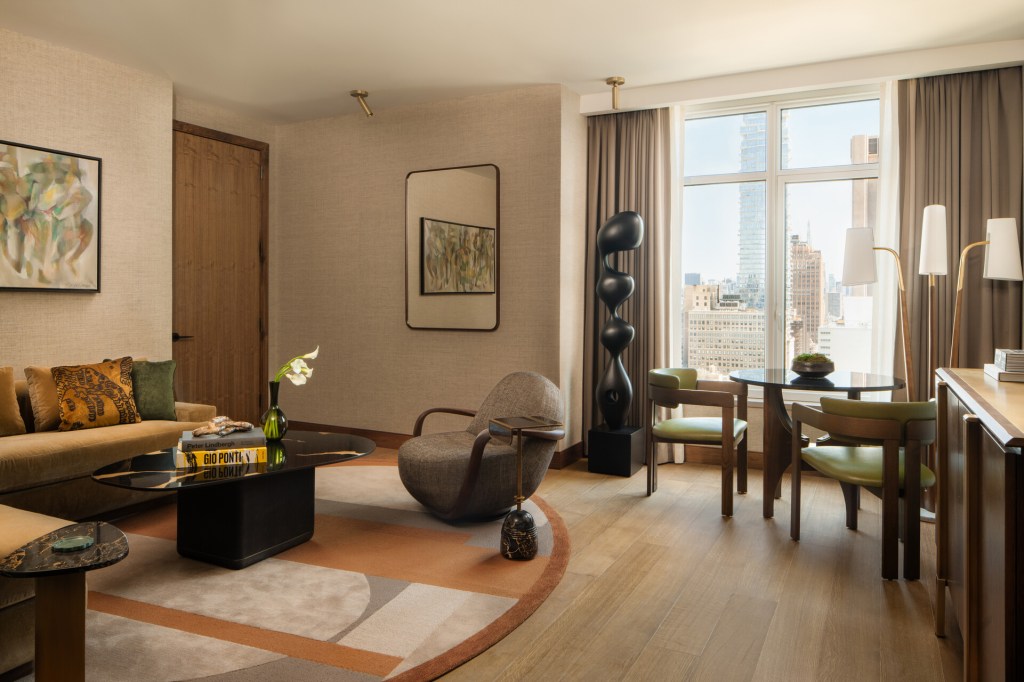
KB: You want people to feel like the room is an extension of their home but elevated. Something they dream about, want to come back and experience again. It has to feel warm, it has to hug you when you come in. If you can capture someone the moment they open the door, you’ve got them.
CH: How much of the design is a self-portrait?
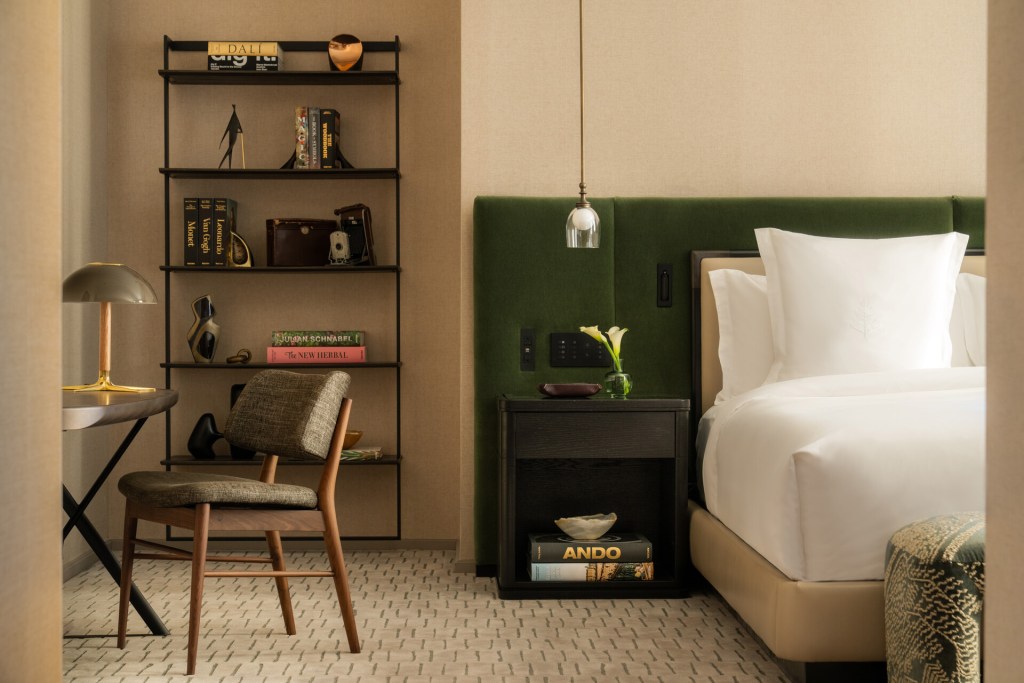
KB: That’s really the question I ask on every project. What would I love for myself? How would I want to be here and experience it, not just as a hotel but as an extension of me, if this were my pied-à-terre, the place I come back to when I’m in this city? Everything tactile was so important to make this experience cohesive and to make the guest feel special. That curated moment, this knick-knack here, those details.
CH: Luxury hotels live and die by the tension between consistency and surprise. How do you hold both?
KB: There’s an element of good design where the headboard has a little curve at the end and you repeat it, in the desk chair or an accent pillow in another room. Plus, it’s a cost-effective use of fabric and continuity in that way. The wallcovering has a variant to it; each room has its own personality. That’s what we believe in and what we were asked to do.
CH: The building’s original interiors leaned corporate. Was undoing that a design challenge?
KB: This one felt very corporate and because of the times when it was designed, that’s what downtown was. We took off from this idea of midcentury meets elemental. Every detail well thought out, all the items must dance together. We didn’t have overhead cabinets, didn’t wrap the columns in leather, didn’t move walls. Some things were custom; marbles sourced from local places. The original intent was to shop locally. There’s a credenza in one of the suites that’s genuinely midcentury, and those are the things that make it approachable and cozy and warm.
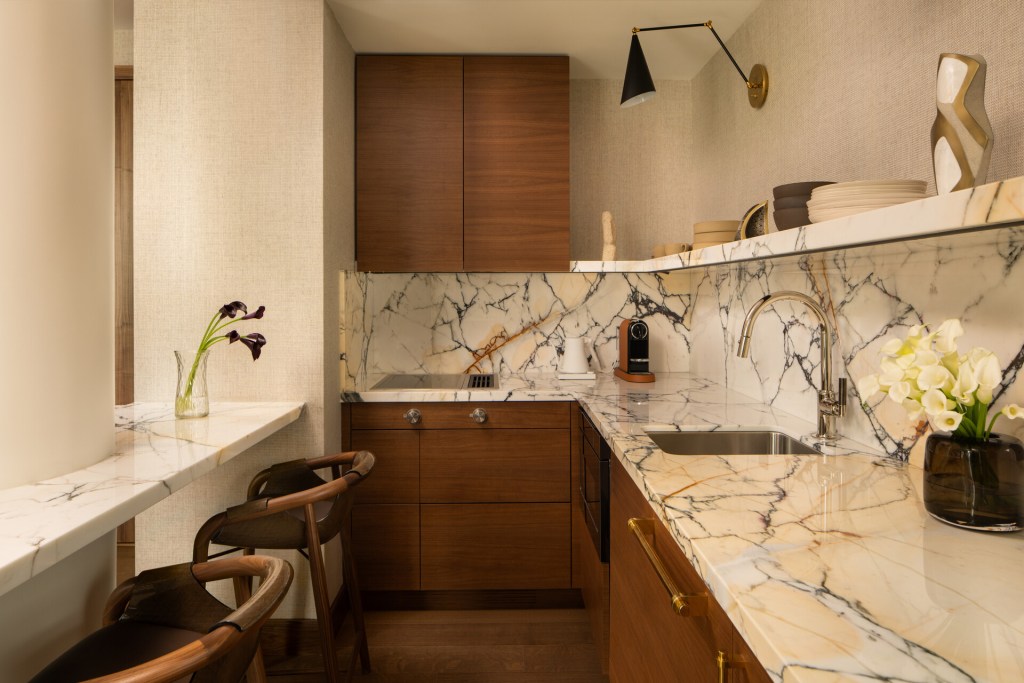
CH: With One World Trade as your view, how do you stop the art from feeling like decoration?
KB: It’s almost like a movie playing in my head. You visually know what fits and what doesn’t work there. We’re not just designing the room; we have New York and that backdrop. It’s not about putting a geometric piece somewhere because it needs something. All those details people take for granted, the height something is hung, how it’s mounted, those things are everything. What’s great is when the eye travels and stops on something and it hits you. It’s subjective, you connect with something. It’s transported you, made an impression that stays with you.
CH: Who is the guest you are designing for?
KB: Four Seasons was already forecasting this direction. Because of Instagram and the internet, everyone is so visual—it’s all in their heads. But the question becomes how can you actually experience something different from cookie cutter? We’ve all been to those rooms where you know every single room looks the same. For this location, because it’s New York and a world-renowned brand, it commands something. The guest deserves that respect. You must honor that.
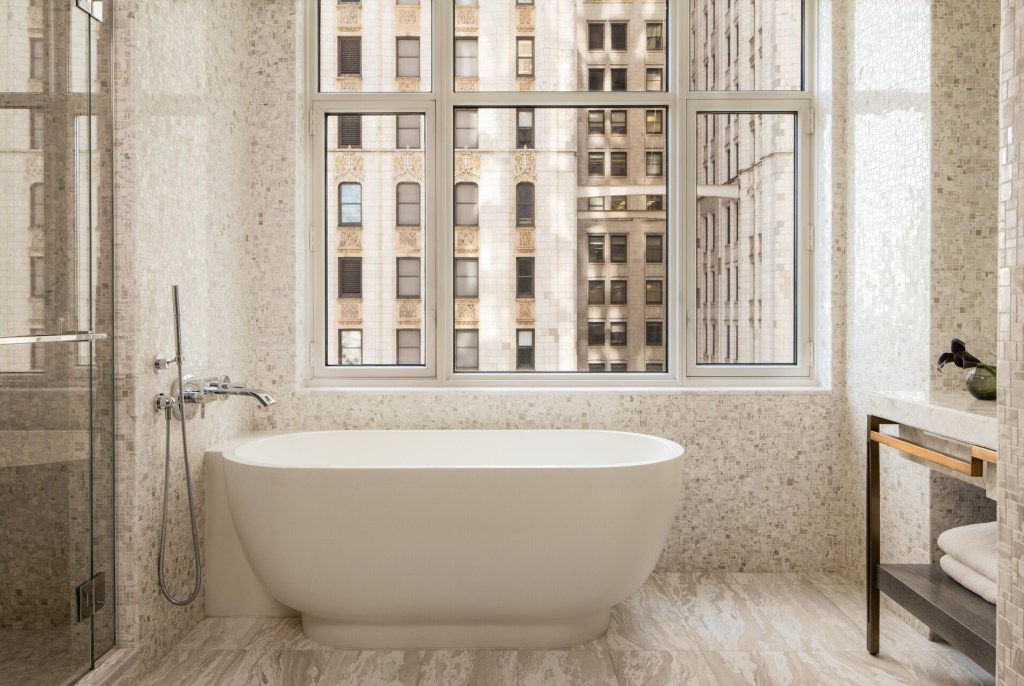
CH: You’ve said you’ll never be fully satisfied.
KB: I might not get everything right and I will never be pleased. But if you walk away and the experience stays with you, then we did everything we were supposed to do. Nothing in design is original, it’s all interpretation. You translate and transmit what you want to. Because you know the history and the location you must honor that. The ultimate goal is that it transcends, that it makes an impact on individual souls. We’re all here to learn, to teach, to love.
CH: Where does interior design sit for you among the other creative disciplines?
KB: I’m in awe of creative people. Not jealous, just genuinely in awe. It’s another version of what I do, that’s the thread. Doing tangibly what others do in words, making people dream and travel.





What are your thoughts?