iPhone Duo Is Delightful, and Different
A passport-sized iPhone opens into a 7.6-inch canvas and, unexpectedly, hands back a measure of attention
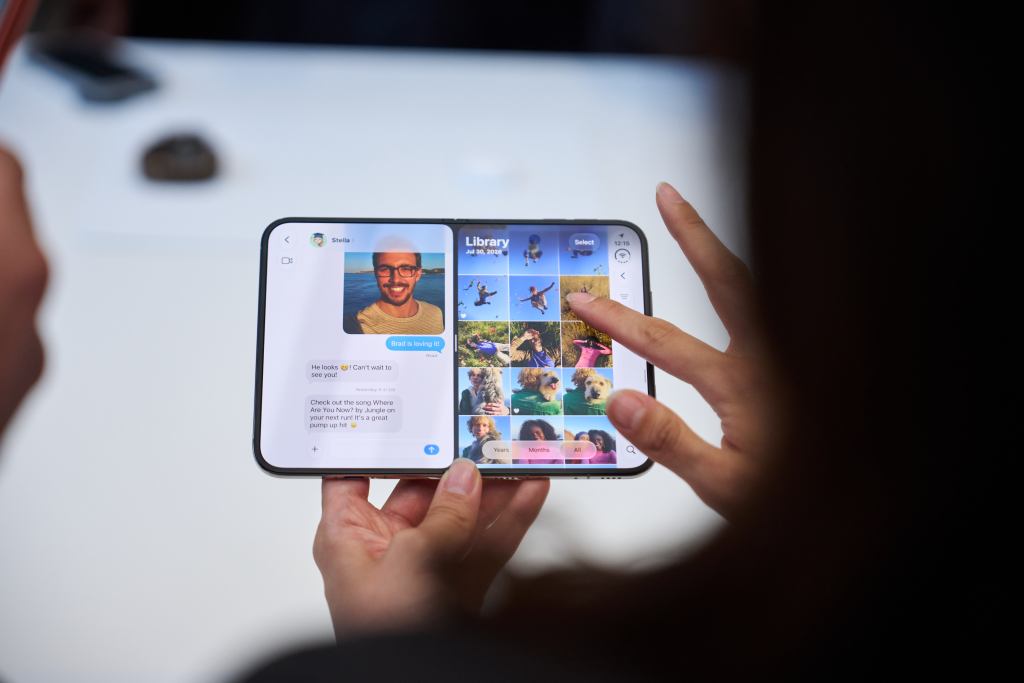
After a week with iPhone Duo, I’m pleased that Apple‘s first foldable can work as both a pocketable phone and a small tablet without compromising either. The 5.4-inch outer screen handles glances and quick maneuvers on the move and the 7.6-inch inner display opens for anything that deserves focus—a rhythm that has changed how and where I use a phone. The battery outlasts expectations and the hinge feels precise in its resistance, considered in its form and deeply satisfying to close. Years of iPhone muscle memory took a few days to yield, and some trade-offs, from the return to Touch ID to an incompatible MagSafe wallet, temper the delight without undoing it. Personally, the Duo also closes a loop that opened in 1999.
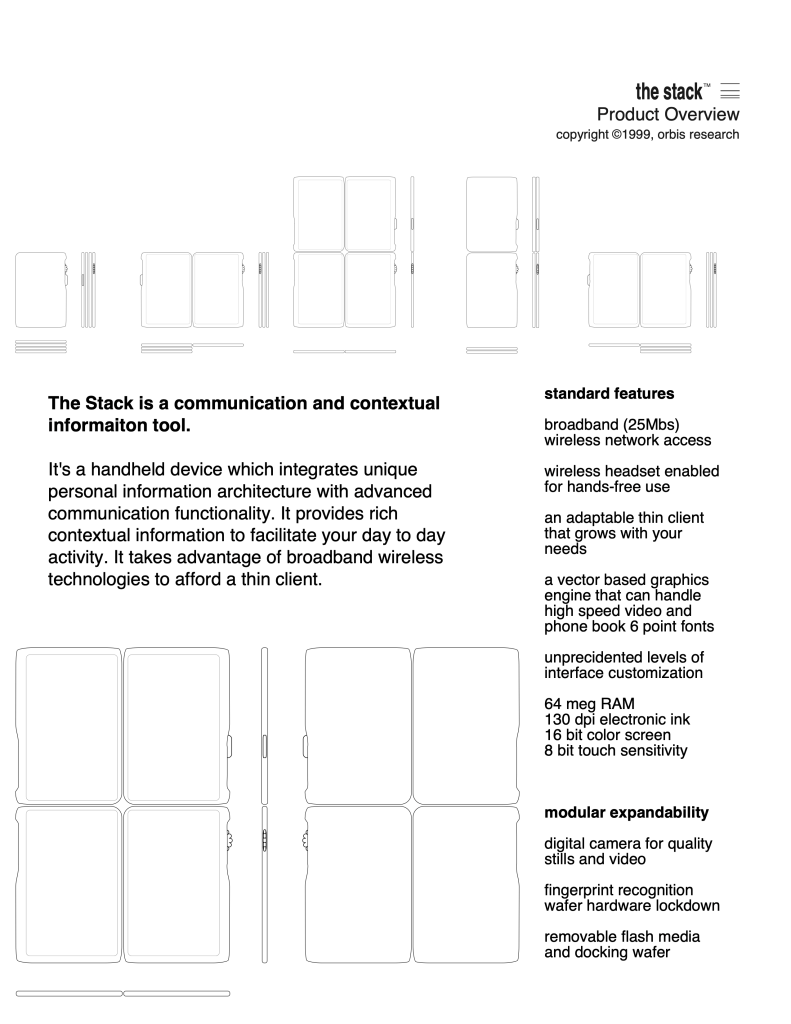
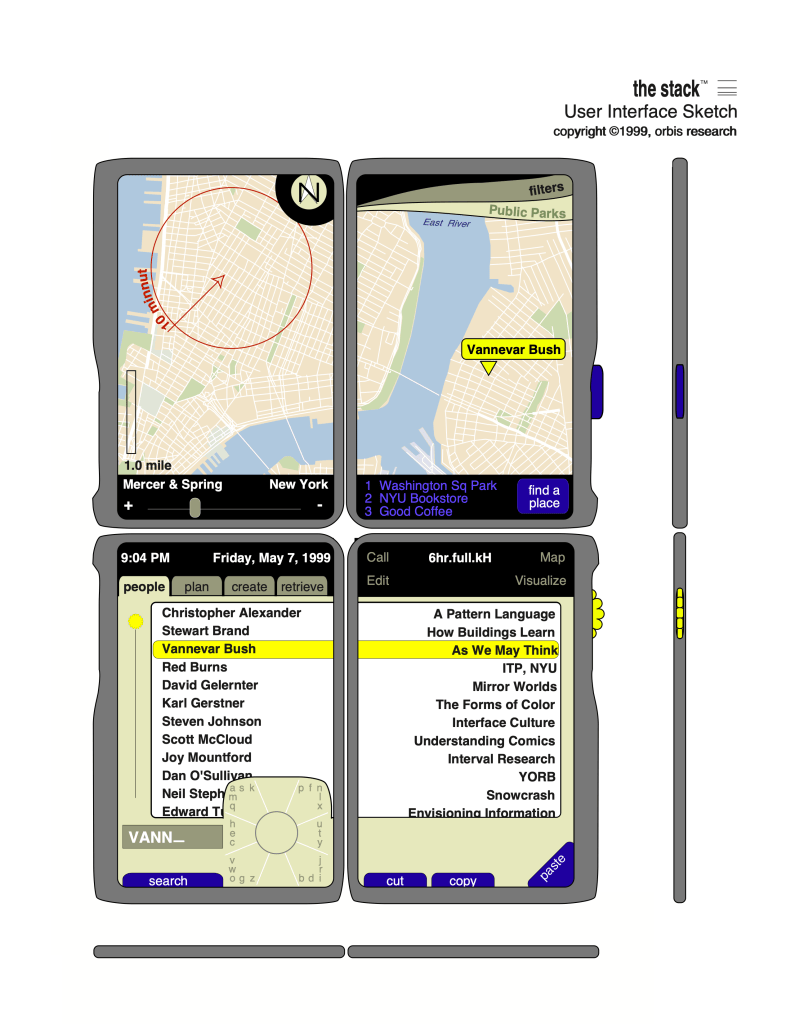
That year, my graduate thesis at ITP, NYU’s Interactive Telecommunications Program, was the conceptual design and interface prototyping of a future looking four-screen folding phone that Kent Hollrah and I called The Stack. It studied form setting function, with one configuration for reading, another for calls and another for maps, as much as it explored how software should behave on hardware that changes shape. Kent and I got a lot wrong in our forecast and a few things right, and it’s gratifying to see questions we once sketched answered, with far more finesse, in how the Duo’s postures shape its uses. I’ve tested many foldables over the years since they first came to market, but as someone embedded in the Apple ecosystem, this is the first I’ve been able to truly bring into daily life. It has also pared down what I carry. Until now I often traveled with an iPhone Pro alongside an iPad mini, the Duo now covers both. That hardly makes it an iPad killer, since there are still many tasks for which an iPad, especially one of the larger models, remains the best device.
The most surprising usage change is behavioral. Closed, the Duo is ideal for pruning an inbox with a thumb and firing off a terse response or, better, dictating one to Siri. When managing email requires more attention, opening the phone puts a message and the inbox side by side. That division of labor has spread beyond Mail. The outer screen is small enough to discourage lingering, so on the street I check, answer and pocket, saving the inner display for whenever I’m still, whether at a desk, on a sofa, at a café table or simply standing in place. The result is screen time with greater intentionality, and I feel more in control of when I let myself get pulled into a deep scroll. The open screen serves more than consumption, obviously. Making things, from photographing and editing images to writing, is far better on the larger canvas, and so is a round of Crossplay. The Stack argued that a device’s shape could direct its purpose, and it’s rewarding to watch that idea work as a behavioral nudge.
The initial delight of opening the Duo has settled into a quiet confidence, and its hinge now sets the bar for how every hinge should feel. Built from more than 100 components, it moves through its arc with measured tension, closer to a well-made notebook than a mechanism. Both displays share a 1.4:1 aspect ratio, so content scales up mid-task or reflows into a new layout if appropriate, and that continuity is the Duo’s most consequential design choice precisely because it goes unnoticed. A micro-blasted, 3D-printed titanium hinge cover contrasts with the mirror-polished Grade 5 titanium frame, making the spine read as a deliberate architectural element. Closed, it has the proportions of a passport and pockets as easily.
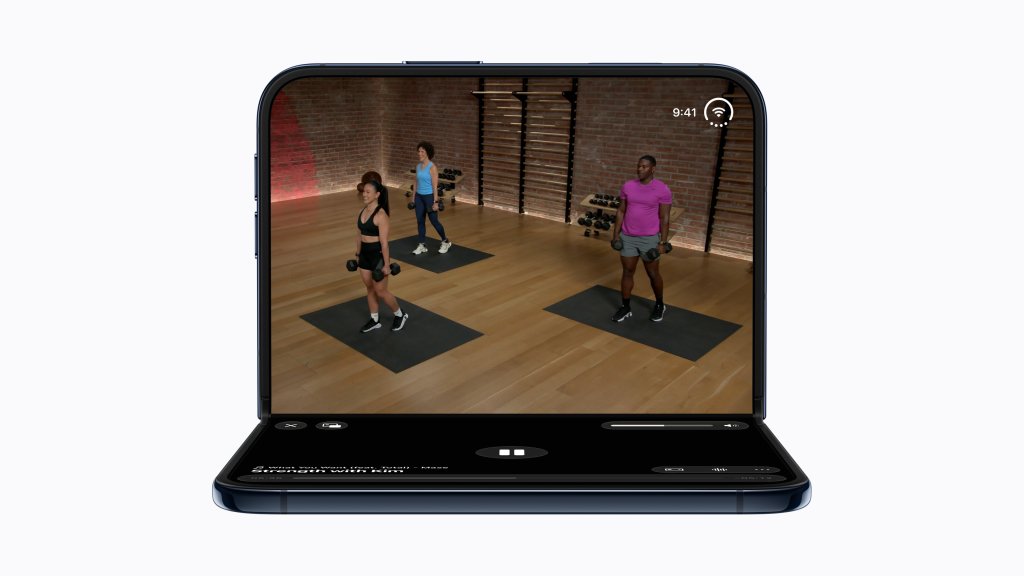
Foldability invites postures a slab phone can’t hold. Bent like a laptop, the Duo becomes a natural setup for watching videos of for FaceTime, its camera hidden beneath the inner display until needed, and a handy stand for shooting photos.
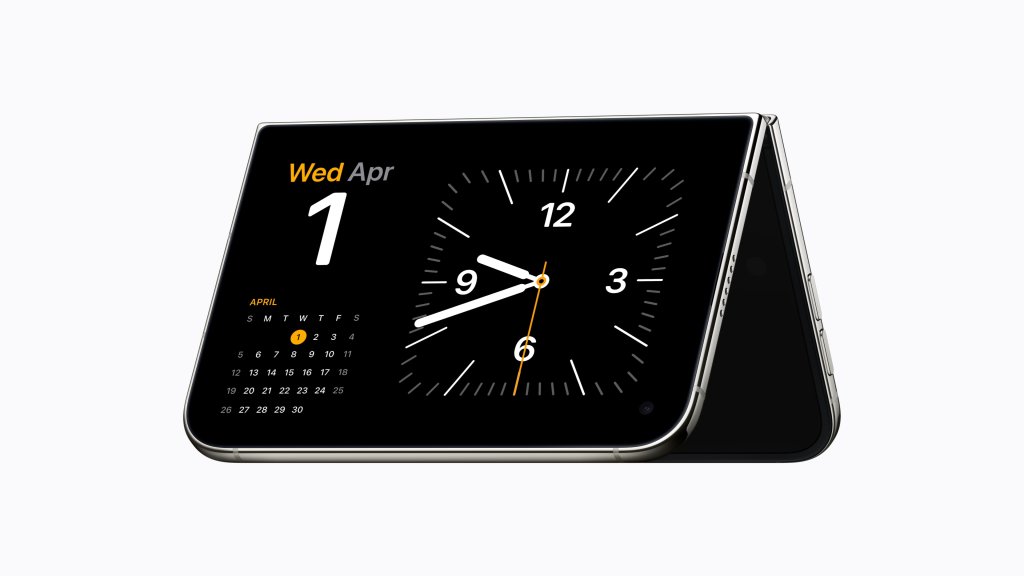
StandBy, which turns a docked iPhone into an ambient clock and widget display, no longer needs a charger on the Duo, and I’ve used it in every configuration. Fully open on a charger at my desk, it becomes nearly a home dashboard, pairing two small widgets and a large one on the left with an extra-large widget on the right. Partially folded and stood like a book, the inner display does the same without a cable. Tented into an inverted V, the outer screen offers clock, photo, modular, weather and calendar faces, and a Wake Up alarm in that position brings a glow that slowly brightens across the inner display.
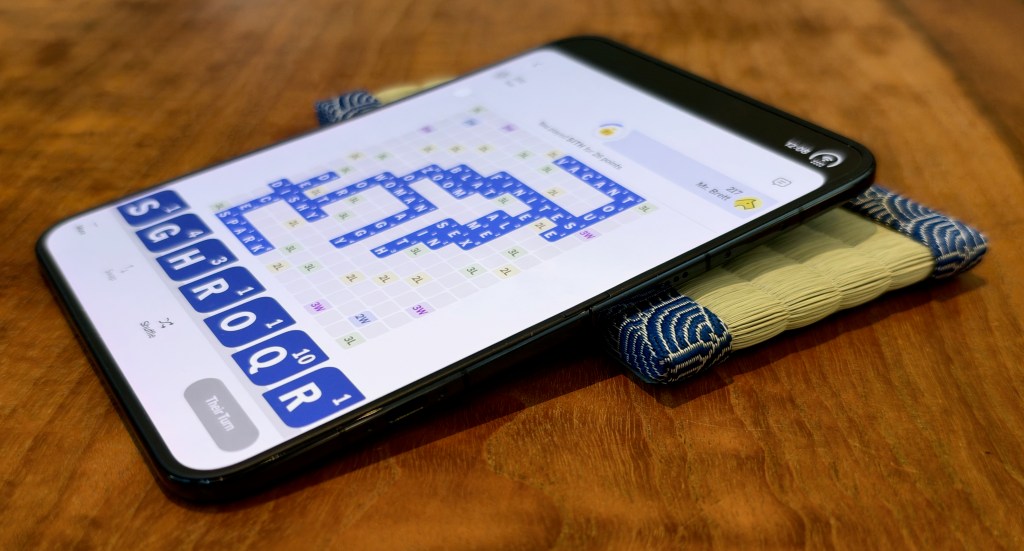
Laid open and flat on a table, the Duo rocks on its camera plateau, a problem Apple’s Folio with Kickstand, designed for upright, angled viewing, doesn’t solve. Somebody will likely design an accessory that levels it. In the meantime, I’ve been sliding my phone tatami mat under the upper half, which tilts the screen to a pleasant angle and ends the wobble.
Sound remains consistent regardless of form. Because the distance between the speakers changes as the Duo opens, folds and rotates, Apple compensates with real-time tuning, and whether the phone is tented, propped or held open, audio never lurches with a change of position. Apple says the microphones are likewise placed for each configuration, though I haven’t heard a Duo call from the other end.
Two screens haven’t taken a toll on battery. A cell in each half, with power managed by custom silicon, behaves as a single battery, and Apple claims up to 44 hours of video playback on the outer display versus 31 on the inner. On a full day running around the city, I carried a charger out of habit and never needed it, a genuine shift for someone used to topping up daily. A breakdown in Settings showing drain by display or folded state (this is a feature request) would make the trade-off between modes legible rather than intuited.
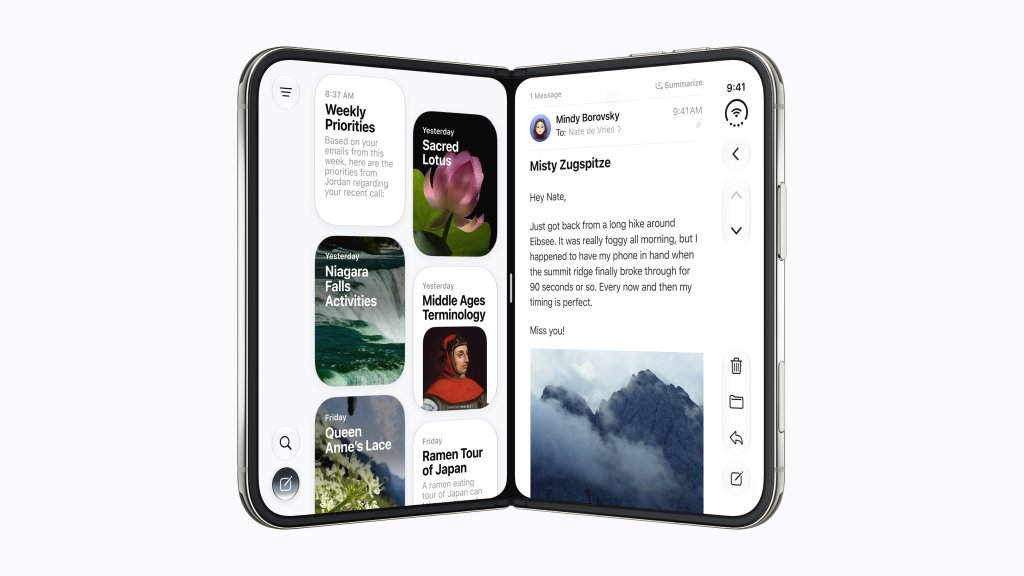
Moving from a conventional iPhone is where the Duo demands extra attention. The software looks as familiar as ever, but on the Duo, controls that have long lived along the top and bottom of the screen migrate to the side, so several interactions require relearning. Dynamic Island, the pill-shaped home for live alerts around the front camera, sits in a vertical rail along the right edge and pushes interface elements down, so in apps like Messages the back button doesn’t always land in the same place. Control Center screens are shorter, and after migration the last two rows of my layout spilled onto a new page. Neither issue is serious, and the adjustment has largely passed, though I still occasionally pause to recall where something lives. The clearest sign came when I picked up my 18 Pro after days of deliberately avoiding it, and the conventional phone was the one that felt foreign, and strikingly tall.
Authentication takes recalibration too. The Duo trades Face ID for Touch ID in the side button, so the first step is enrolling several fingers. I registered both index fingers and my right thumb, because the screen reorients to however the phone is held and the button lands somewhere different each time I seem to need it. Unlocking with Apple Watch shortens the path, with one quirk: holding the phone while it’s inside a pocket can unlock the phone, and more than once a tap on my wrist was the first sign the Duo had woken and was pocket-dial-ready. Apple Pay is slower, since double-clicking and confirming with a fingerprint can’t match Face ID’s glance at a checkout counter. MagSafe wallets won’t attach because of the Duo’s size and shape, which stings for anyone who consolidated cards onto the back of their phone—I’ve had to get used to carrying a separate wallet again. I also miss the Action Button, which I had mapped to Gemini for quick lookups; Gemini answers those faster than Siri, whose handoff to an outside chatbot is limited to ChatGPT.
Two displays, four cameras and a hinge that holds whatever angle it’s given open up shooting scenarios a slab phone can’t. Unfolded, the outer screen faces the subject. Duo Preview shows people a live view of themselves while framing them with the rear cameras, so they can adjust their pose without waiting for direction. Kid Cue plays Snoopy animations there to draw a child’s gaze to the lens; turns out it makes adults smile too. Turned around, the same arrangement makes selfies with the 48MP rear cameras practical, framed on the outer screen rather than guessed at, provided you look at the lenses rather than the preview once the shot is framed, or your sightline drifts. Propped on a table, the Duo becomes its own photographer: Smart Take uses on-device models to release the shutter once everyone is posed, retiring the sprint back from a self-timer. Dual Capture records the front and rear cameras at once, and Duo FaceTime lets someone beside you join a video call through the outer display and camera, so nobody has to crowd around one screen.
The Duo’s camera system isn’t the 18 Pro’s equal. Both models share the 48MP Fusion Ultra Wide, Cinematic focus effects applied after capture and the new texture and grain controls in Photographic Styles are a joy to find here. The Duo’s 48MP Fusion main camera can default to 26, 28 or 35 mm and reaches 2x the same way the 18 Pro does, but without the Pro’s dedicated telephoto, the 4x and 8x options are missing. The mechanical variable aperture and manual Pro controls are exclusive to the 18 Pro and 18 Pro Max.
That gap is where iPhone Handoff earns its place. The iOS 27 feature moves one phone number to whichever of two iPhones is unlocked, and with T-Mobile it has carried mine between the Duo and the 18 Pro seamlessly. The Duo handles daily life, from reading and writing to triage and calls to casual photography, while the 18 Pro stays at the ready for situations that call for more camera control. The two meet in iCloud Photos, where shots from the Pro arrive on the Duo, which has power to spare for editing and, unfolded, makes a finer darkroom than any slab.
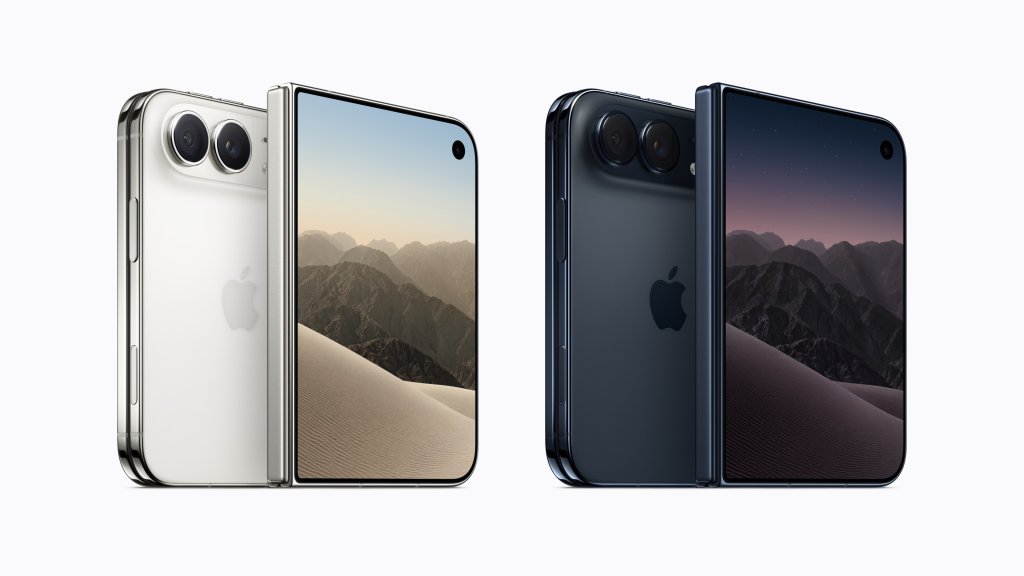
iPhone Duo arrives 23 October 2026 at $1,999 for the 256GB configuration, in Night Sky and Star White. It asks its owner to unlearn a few habits and accept a few compromises, and repays both with a phone that stays small when life is in motion, opens into a canvas when it isn’t and, for anyone who has imagined such a device for decades, offers the pleasure of finally carrying one.






What are your thoughts?