Bangkok, in Continuance
The Moxy Bangkok Ratchaprasong bridges the threshold where human presence, architectural ascent and cultural consciousness converge in the busy city
Bangkok does not emerge as a singular city, nor does it present itself in any complete or final form, but exists instead in a state of continual formation, where structure rises beside structure without erasure and where nothing that has come into being is ever entirely withdrawn. Towers ascend without displacing what came before them, their surfaces gathering light as though the city itself were engaged in the act of inscription, rewriting its own presence against the night. Movement persists without visible origin or conclusion. Architecture does not resolve into stillness, but remains held within duration, suspended between what has been built and what continues, without pause, to rise.
It is within this unbroken condition, where permanence and transformation remain in constant and indivisible relation, that Moxy Bangkok Ratchaprasong assumes its place. It’s neither removed from the city nor surrendered to it entirely, but sustained within its living continuity, occupying ground that has never belonged exclusively to the present.
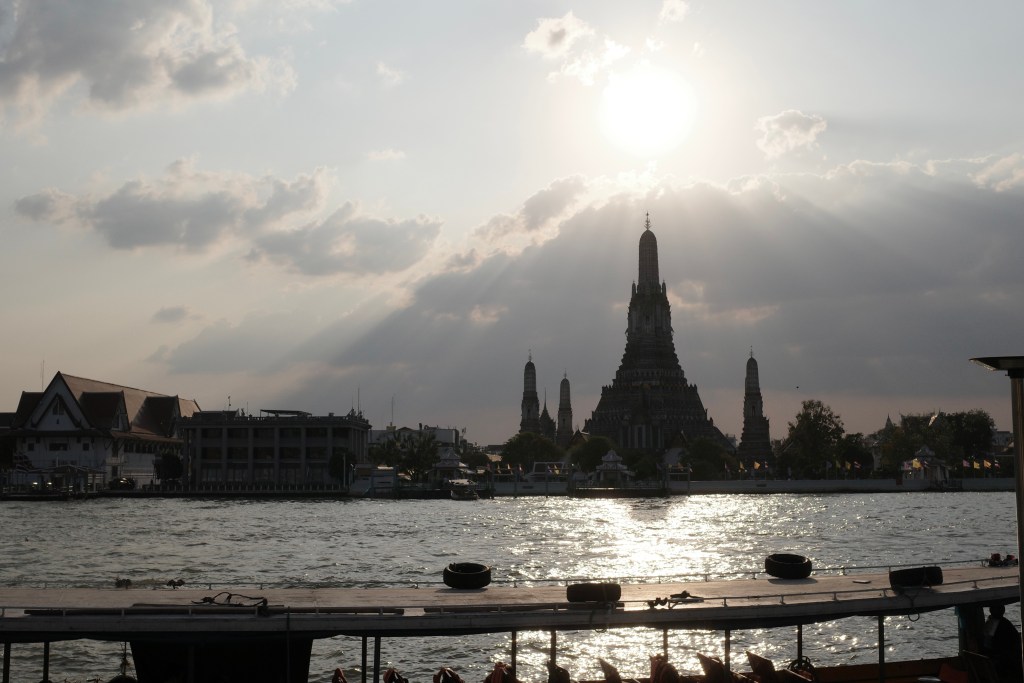
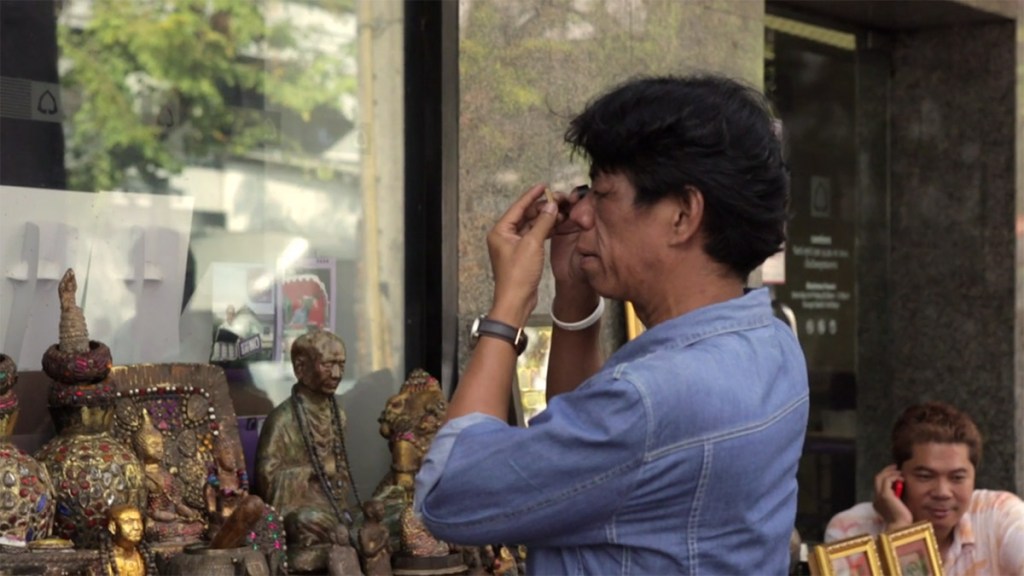
Just beyond its entrance, the Erawan and Trimurti Shrines remain in their exact and uninterrupted positions, receiving those who arrive without announcement and depart without ceremony. Garlands accumulate gradually, their colour deepening as the hours pass. Incense rises and disperses into air already shaped by glass, steel and uninterrupted motion. These structures do not assert themselves. They remain. Their permanence does not resist the surrounding ascent, but renders it comprehensible, introducing into the city’s expansion a counterweight of continuity.
Entry into the hotel unfolds without rupture. The interior does not withdraw from Bangkok but receives it, allowing the movement of the street to persist within its walls, transformed not into silence but into atmosphere. The lobby exists as extension rather than enclosure, where arrival dissolves into presence, and where the rituals of hospitality give way to something quieter and more immediate. Check in occurs not across distance but within proximity, at the bar, where guest and environment enter into the same uninterrupted field.
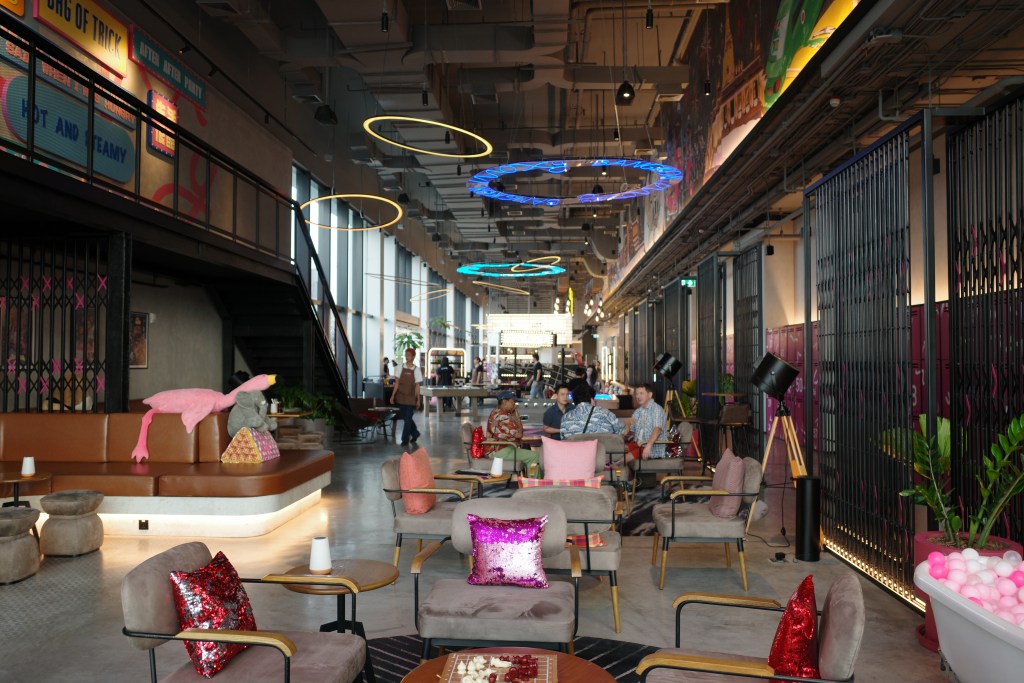
What becomes most perceptible within this environment, however, is the human presence that sustains it. The Moxy team moves through the space with an attentiveness that neither announces nor withholds itself, their gestures guided by instinct rather than instruction. Assistance appears before it is sought. Recognition emerges without introduction. Their kindness remains constant in its expression, neither heightened nor diminished, but exact in its continuity. In a city defined by ceaseless motion and perpetual construction, this human steadiness introduces a form of permanence that architecture alone cannot provide.
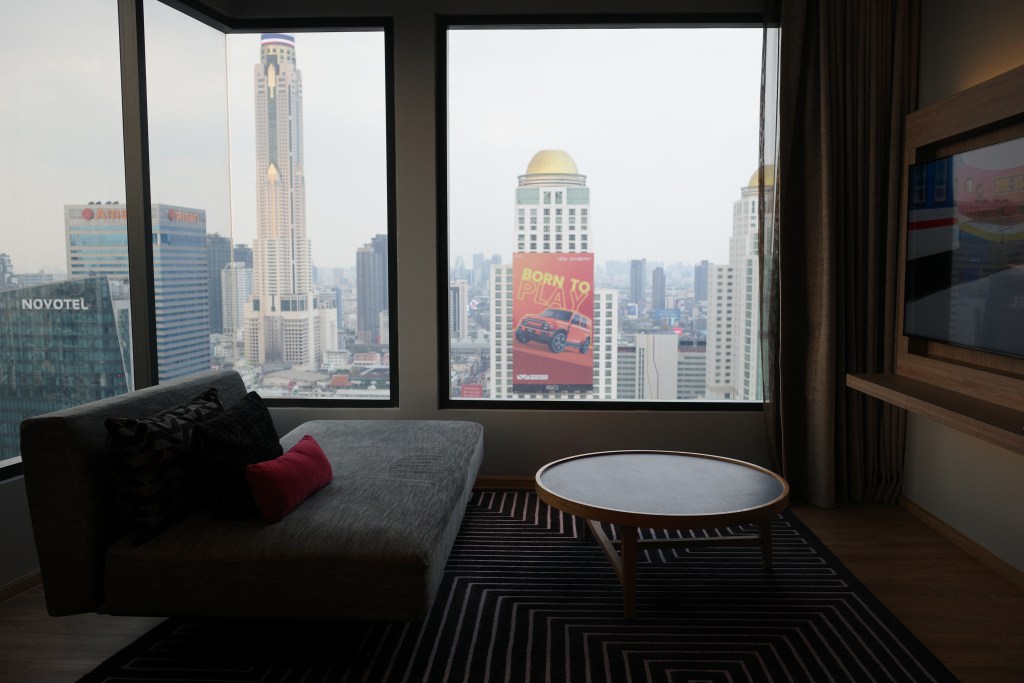
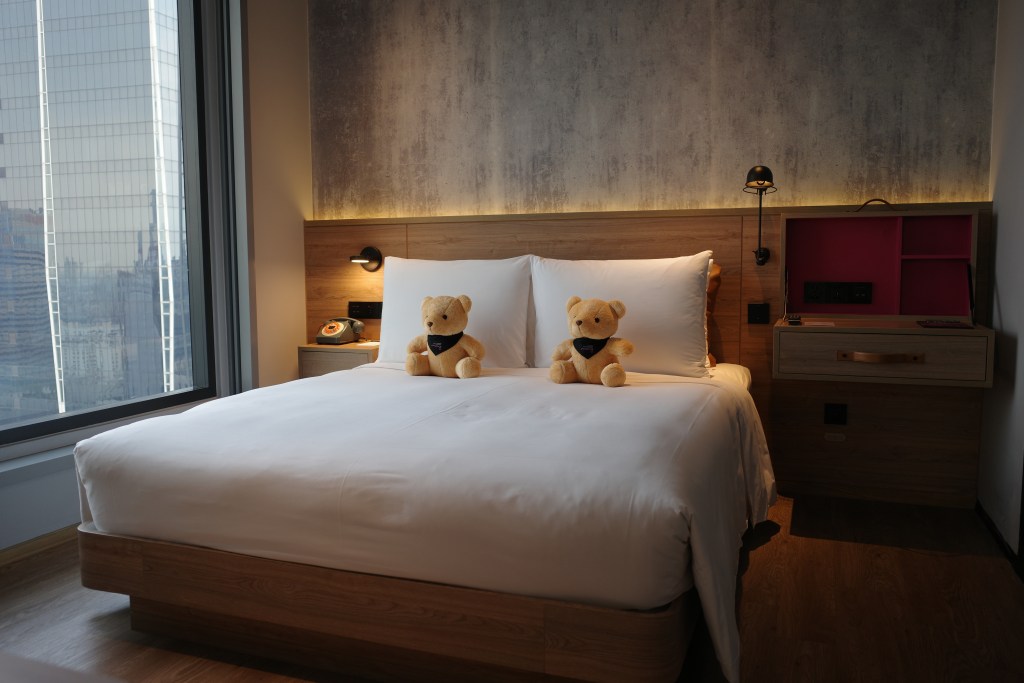
The rooms extend this same discipline. Their proportions remain measured. Their organisation remains precise. Peg walls establish a visible order that allows objects to remain present within the architecture rather than be concealed behind it. Light falls evenly across surfaces that neither demand nor resist attention. Nothing appears excessive. Nothing appears incomplete. The room becomes not a retreat from Bangkok, but a point of alignment within it, allowing the city’s density to settle, if only briefly, into coherence.
Yet it is above that Bangkok reveals its fullest magnitude.
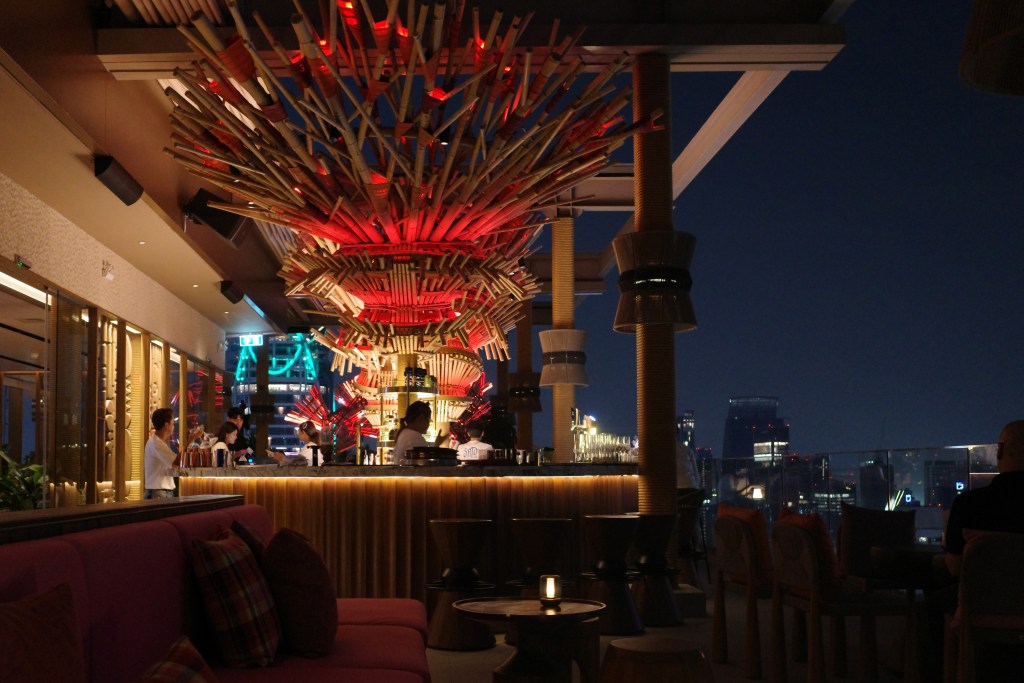
On the 32nd floor, Sato San Rooftop Bar occupies a position from which the city discloses itself without obstruction, where towers extend into distance and illumination gathers upon their surfaces in continuous succession. From here, Bangkok does not diminish. It expands. Its vastness becomes perceptible not as abstraction but as structure, its accumulation visible in every direction.
Within this elevated field, food and drink do not serve as ornament but as continuation. The culinary programme draws from Japanese discipline and Thai Isaan depth, allowing flavour to emerge with clarity and presence. Smoke, acidity and heat exist in measured relation, each element retaining its integrity within the whole. Nothing retreats from its own intensity. Nothing dissolves into excess.

Cocktails follow this same principle, composed with precision and proportion, their surfaces receiving and reflecting the surrounding illumination so that the act of drinking becomes inseparable from the act of witnessing. Glass holds the city within it. Light fractures and reforms across liquid surfaces. Presence becomes continuous.
As evening advances, the rooftop fills without disruption. Voices emerge and disperse. Light shifts across architecture that remains indifferent to time. Below, the city continues its uninterrupted expansion, its towers rising beside structures that have never withdrawn. This same continuity extends into Bangkok’s cultural life, where a profound consolidation has taken place. Galleries like Nova Contemporary have established spaces in which attention is permitted to endure, where works remain held within time rather than merely passing through it. Within these interiors, the city’s outward velocity is neither denied nor imitated, but absorbed and transformed, allowing perception itself to deepen.
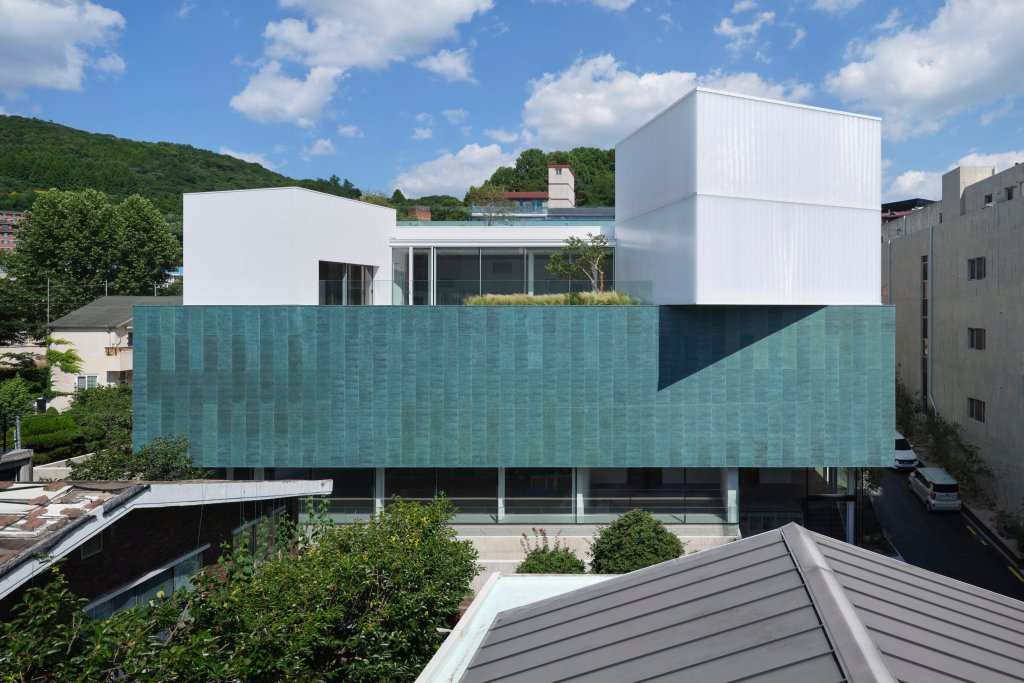
At Dib Bangkok, this transformation assumes architectural form. Conceived by Kulapat Yantrasast of WHY Architecture, the building sustains an environment defined by proportion, light and duration, where movement unfolds gradually and where the works it contains remain held within continuity independent of the city’s acceleration beyond its walls. Nothing here announces itself. Everything remains.
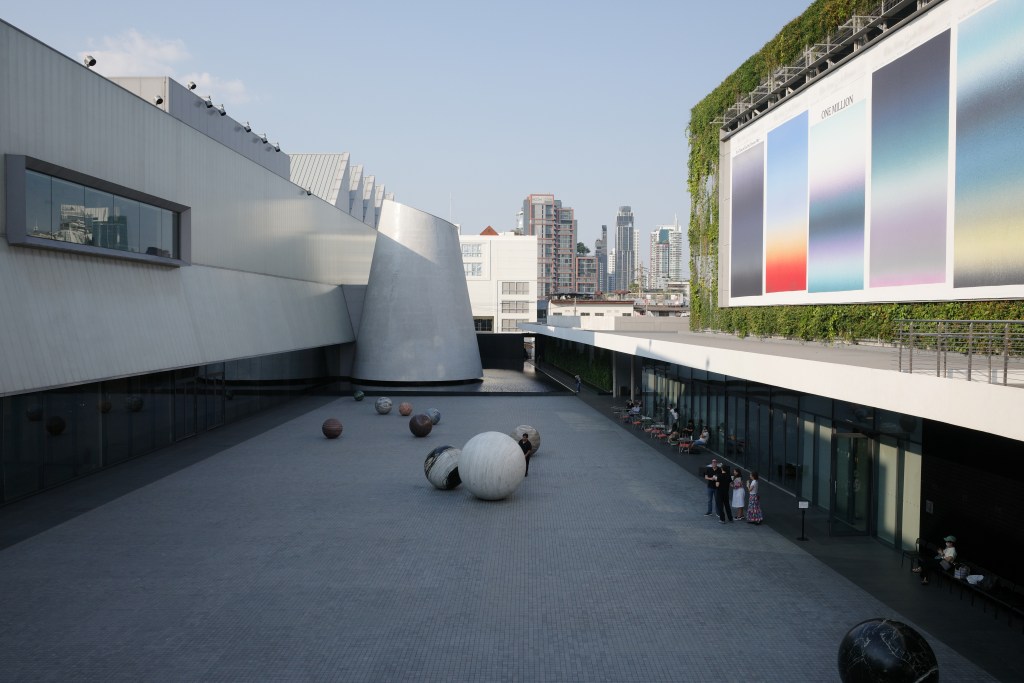
Artists return. Collectors remain. Cultural presence accumulates alongside architectural form, producing a city whose identity is no longer defined solely by ascent, but by endurance.
Within this expanding field of belief, construction and cultural permanence, Moxy Bangkok Ratchaprasong does not stand apart as object or interruption, but remains held within the city’s living continuity, occupying the precise threshold where human presence, architectural ascent and cultural consciousness converge, allowing Bangkok to reveal itself not as image or moment, but as structure and duration, as something that neither concludes nor resolves, but continues to rise, to gather and to remain, long after the act of observation has ceased.
It does not end. It persists.




What are your thoughts?