What Season Is It, America? Bring Your Answer to the Table
Keith Yamashita’s five-day happening in the Brooklyn Museum’s Beaux Arts Court begins with an image or poem picked from a ring of 500 and comes to life through the dialog it provokes
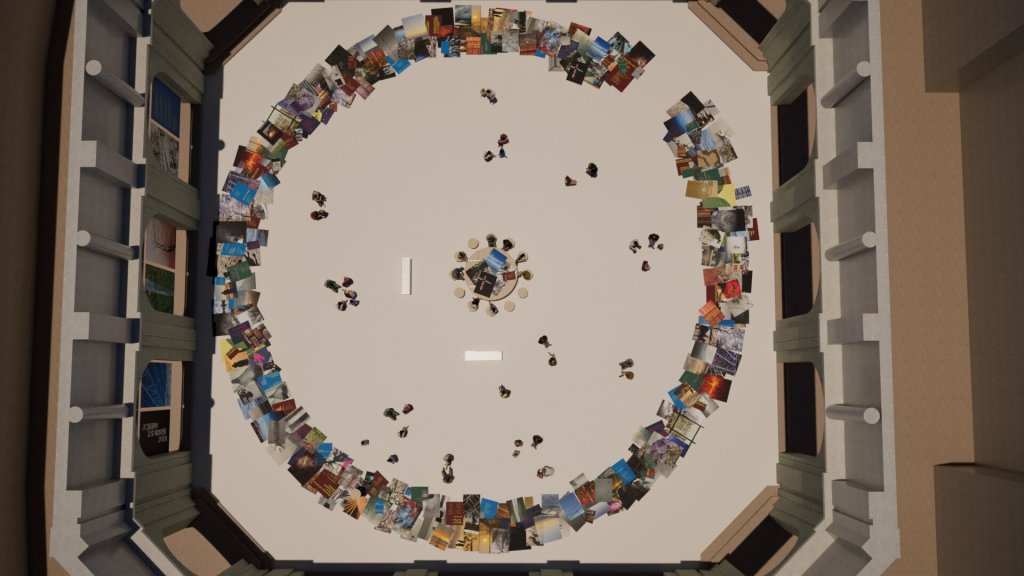
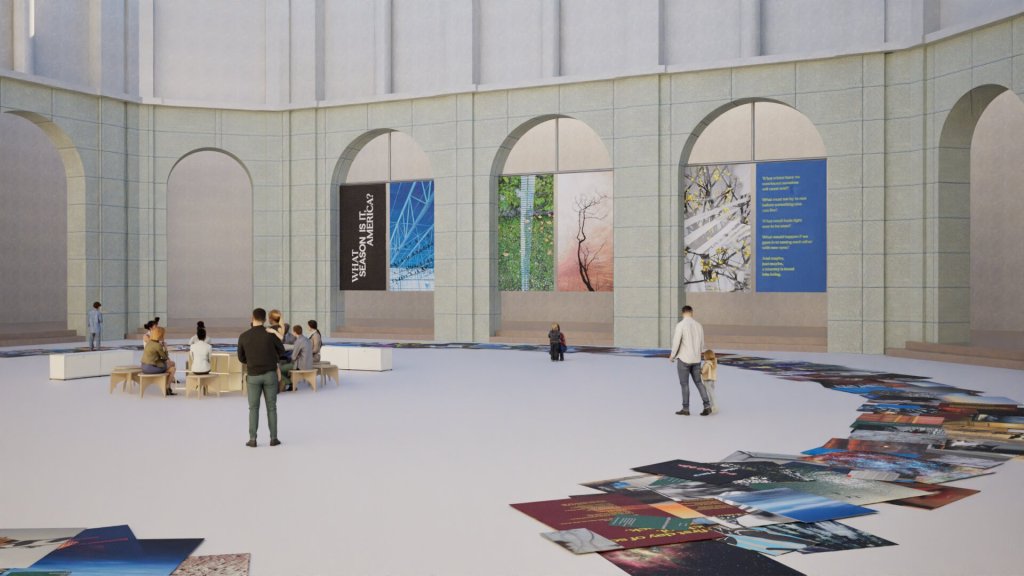
What season is America in right now? Is it a moment of loss, emergence, quiet reflection or celebration? From 21–25 October 2026, the Brooklyn Museum’s Beaux Arts Court will host What Season Is It, America?, a monumental, five-day interactive installation created by artist Keith Yamashita in collaboration with sound designer Joshua-Michéle Ross. The exhibition features nearly 500 original works—poetry, photography and curated historical Americana images—arranged across a 250-foot circle on the gallery floor, organized roughly by the four seasons.
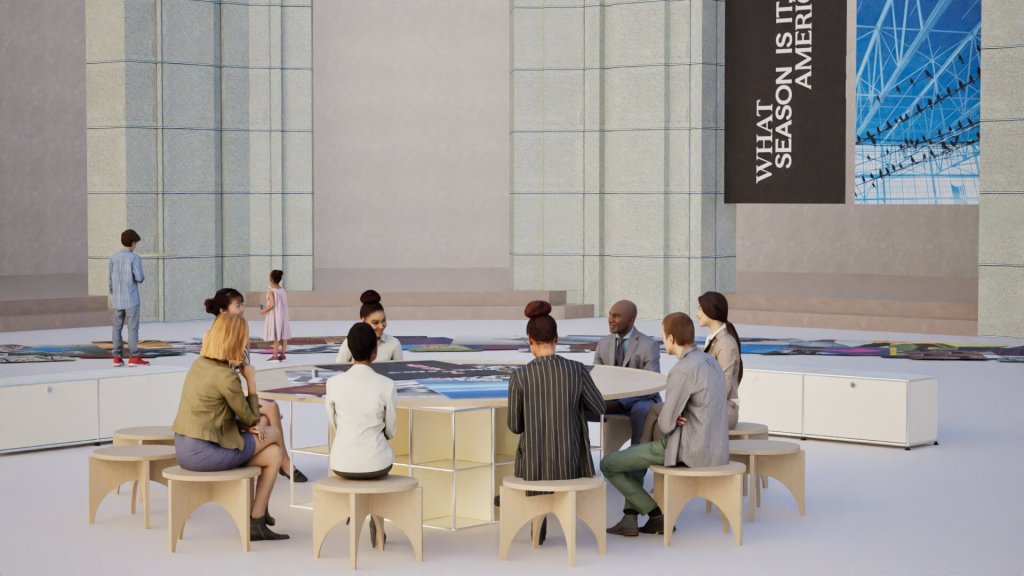
Rather than viewing the artwork passively, visitors are invited to walk the circle, choose a piece that resonates with them and bring it to a custom, 12-seat rotating table at the center of the room. There, Yamashita will remain in continuous residence throughout the five-day exhibition, engaging visitors in direct conversation about the stories, memories and hopes evoked by the image or poem they’ve chosen.
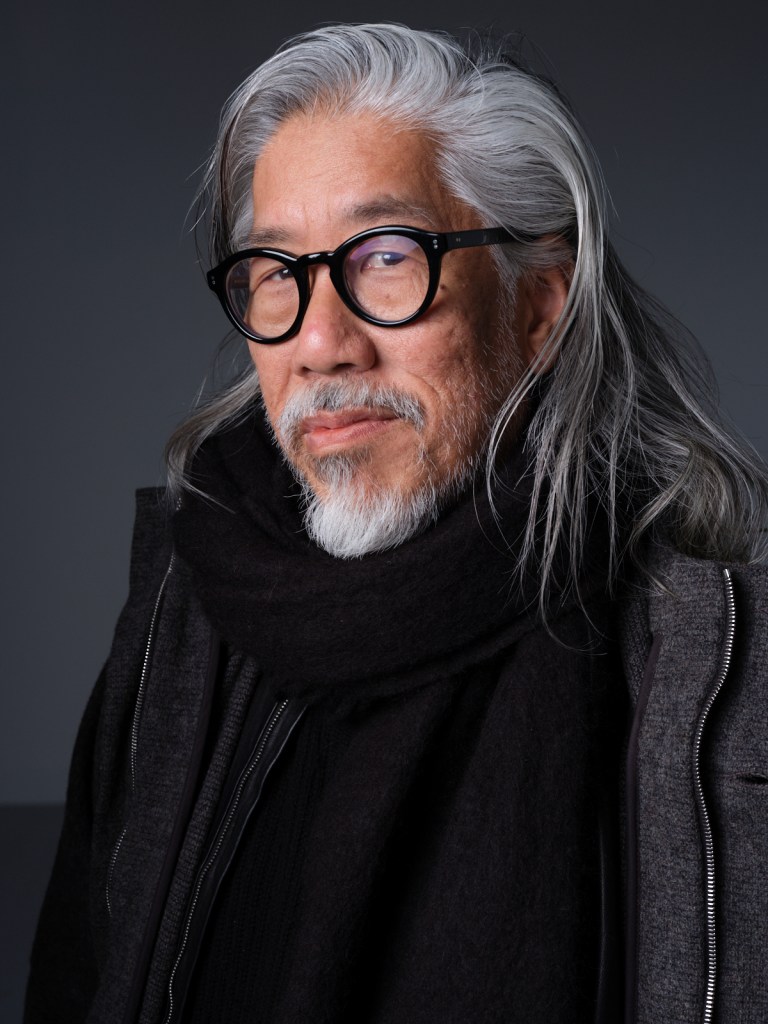
Ahead of the opening, we sat down with Yamashita to discuss his transition from a 30-year career in business and design leadership to declaring his artist practice, the mechanics of his participatory “happening” and why conversation itself is his primary medium.
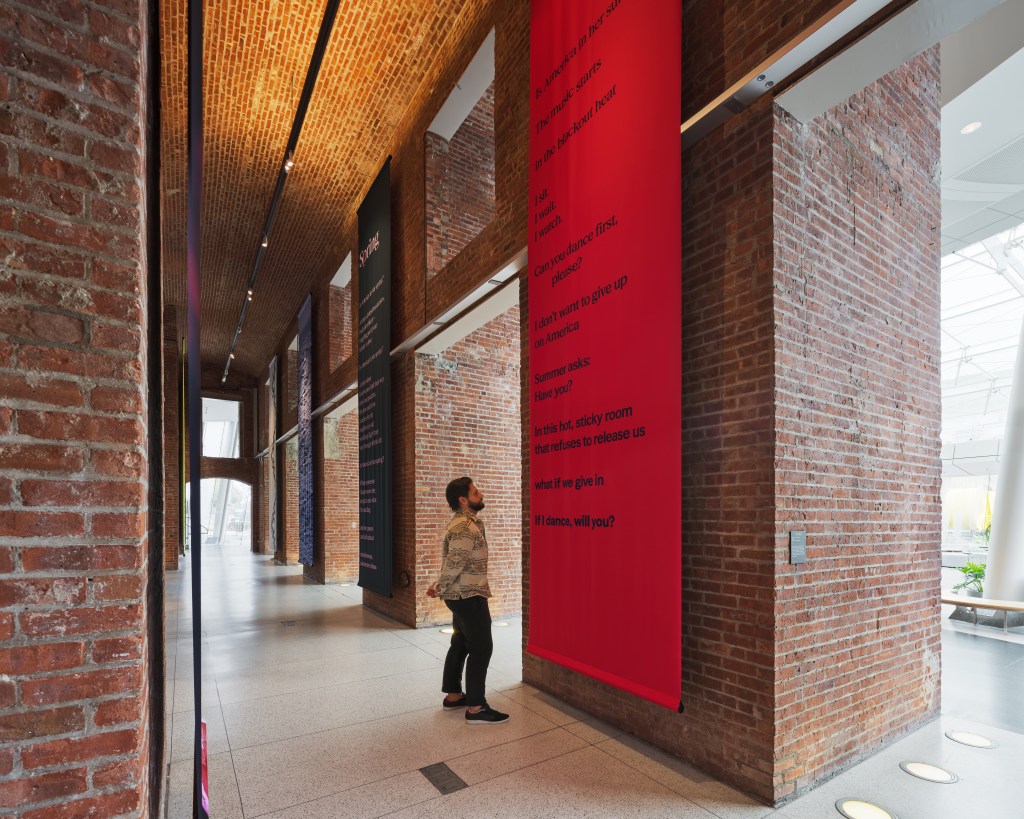
Stepping into the Brooklyn Museum under that new title registers as both a beginning and a return. “It feels equal parts exhilarating, mysterious and frightening,” he tells us. “On one hand, I’m declaring this role out front and driving with my own hopes for the world. On the other hand, if you asked me when I was three, five or ten years old what I was, I would have said an artist. It only shifted when I went to college and had to pursue a livelihood.” The impulse never went dormant during his years in boardrooms. “Throughout my 30-plus years in business, I always tried to bring artistry, humanity and design into the work,” he says. “So in a sense, this debut is both a brand-new declaration and a return to my deepest bedrock.”
Yamashita had no interest in an anniversary retrospective. He wanted a room where his poems and photographs supply the material and visitors complete the work in exchanges that exist only as they’re spoken. “The idea grew out of a conversation with Anne Pasternak leading up to America’s 250th anniversary,” Yamashita explains, referring to the museum’s executive director. “We were discussing how to create something meaningful for the public—something that isn’t just about looking at objects, but reflects people’s own dreams, histories and lives. I brought her a proposal for this installation, asking a central question: What season is it, America?” Seasons offered him a vocabulary that sidesteps partisan reflexes. “Asking the question through the lens of seasons allows people to step away from divisive political arguments and walk toward one another as human beings,” he says. “Whether someone feels we are in a season of grief, emergence or renewal, it creates an entry point for honest dialogue.”
My media are poetry and photography, but the real art is the conversation and the sharing of stories
Keith Yamashita
The room is vast—10,000 square feet—yet the choreography is intimate. Visitors circle the perimeter until a verse or image claims their attention, then pick it up and bring it inward to a table made for the occasion with industrial designer Rebecca Burdick and USM, the Swiss manufacturer best known for its modular Haller system. “At the center is a custom round table designed with industrial designer Rebecca Burdick and USM Modular Furniture,” Yamashita says. “It seats 12 people and features a rotating top. Visitors sit down with the art they selected, and I start simply by asking, ‘Why did you bring this?’” As each person explains the pull of their choice, whether a buried memory or a hope for the country, Yamashita turns the top so the piece travels around the circle and others can respond. The objects, in his framing, are prompts rather than the point. “My media are poetry and photography, but the real art is the conversation and the sharing of stories,” he says. “The photographs and poems act as gateways or starting points. They activate something inside you, and the sharing of whatever was activated is where the art actually happens.”
Ross supplies the atmosphere, drawing on recordings gathered across North America. “I’m collaborating with sound artist Joshua-Michéle Ross, who has drawn from an archive of thousands of field recordings—birds in a meadow at sunrise, mountain streams, bay waters,” Yamashita says. “He will be live-composing over 35 hours of an ambient, nature-inspired symphony continuously throughout the five days. The music evolves dynamically in response to the atmosphere and energy in the room, acting almost like changing weather that helps visitors slow down and open up.” Publication design, typography and visual curation come from CASA, the studio of Laura Vignale and Jaymes Moore.
I hope this work creates a rare space where strangers can sit at the same table, look at art, and really see each other deeper. It’s an experiment in presence, listening and human connection.
Keith Yamashita
Each exchange ends with an object and a mark. Participants take home their chosen work, sealed with a hanko, the carved personal stamp that in Japan stands in for a signature on everything from contracts to bank forms. “We have printed thousands of pieces so that visitors can take their chosen artwork home,” Yamashita says. “Before they leave the table, we perform a closing ritual involving traditional Japanese stamp chop (hanko) signing rituals. It completes the exchange, allowing a physical piece of the experience and story to travel back into their daily lives.”
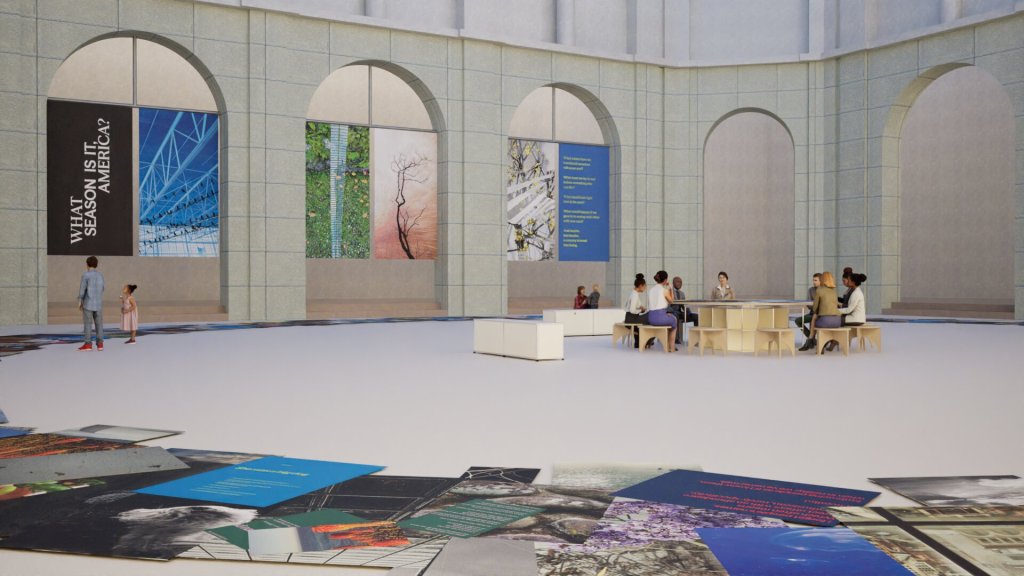
What he is staging, finally, is a test of whether strangers will still sit down together. “We live in a culture where we are constantly told to be wary of one another or that we cannot find a shared future,” he says. “I hope this work creates a rare space where strangers can sit at the same table, look at art, and really see each other deeper. It’s an experiment in presence, listening and human connection.”
What Season Is It, America? is on view in the Beaux Arts Court at the Brooklyn Museum from 21–25 October 2026.






What are your thoughts?