The Birth of the Astral Techyak
How a legendary sneaker designer built a low-carbon, zero-drop trail shoe
Unless you’re a paddler, you might not know Astral Designs, which only recently began making trail shoes and soon, clothing. The 20+ year-old company began with a fairly radical idea: to produce an entirely PVC-free, phthalate-free life jacket. By 2008, they’d also eliminated the use of neoprene, and by 2021, they were using the bluesign process across their entire supply chain to reduce climate impacts with every step of what they do.

Astral moved into footwear because existing water shoes—and now, trail shoes—were antithetical to Astral’s thinking. You’re out in nature, but what you’re wearing (petrochemicals) are harmful to the environment you’re enjoying. That led to the creation of better-gripping paddle shoes that, in founder Philip Curry’s mind, required a similar materials rethink he’d brought to life jackets. Then came the Nosobo, the first outdoor-specific performance shoe with a replaceable midsole (the part of the shoe that wears out quicker than the outsole). It’s not a new idea—the Nike Kobe 8 hit the market in 2012 with a replaceable midsole—but Astral’s Nosobo was the first shoe in the outdoor market to feature the innovation.
Today’s Techyak follows suit, now with a knit upper made entirely from 100% recycled PET. And they’re made without glue, because these bonding agents aren’t environmentally great, and Curry says “water is really brutal on adhesives; that’s always the failure point.” He eventually partnered with a shoemaking legend, Tuan Le, a Vietnamese refugee who broke through with the Reebok Stomper, an aerobics shoe worn by actress Sigourney Weaver in Aliens. Le also invented the Mizuno Wave Rider running shoe, made shoes for NBA stars Stephon Marbury and Vince Carter for the short-lived brand, And1, and since the early 2000s has worked for everyone from UGG to Boggs to Jack & Jones.
Le says he grew up so footwear-obsessed that he used to sleep with a pair of Nike Cortez sneakers instead of a stuffed animal as a kid. “And I named my pet gerbil Nike.” Fast-forward a few decades and NBA legend Kevin Garnett would ditch a Nike endorsement to instead wear And1s designed by Le.
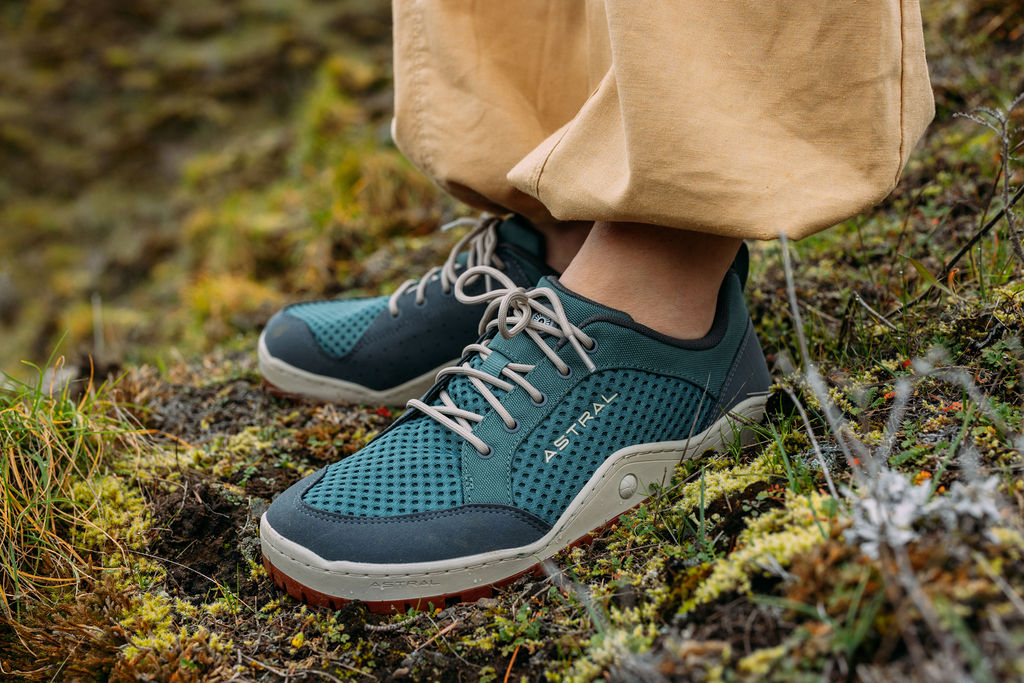
For the Techyak, Le says he riffed off a classic skate shoe silhouette, but pushed himself into a new space as Astral focuses on zero-drop designs that put the foot in a more athletic position. “The toes are open more, more rounded,” he says, noting that too many shoes make it hard to achieve natural, anatomical movement.
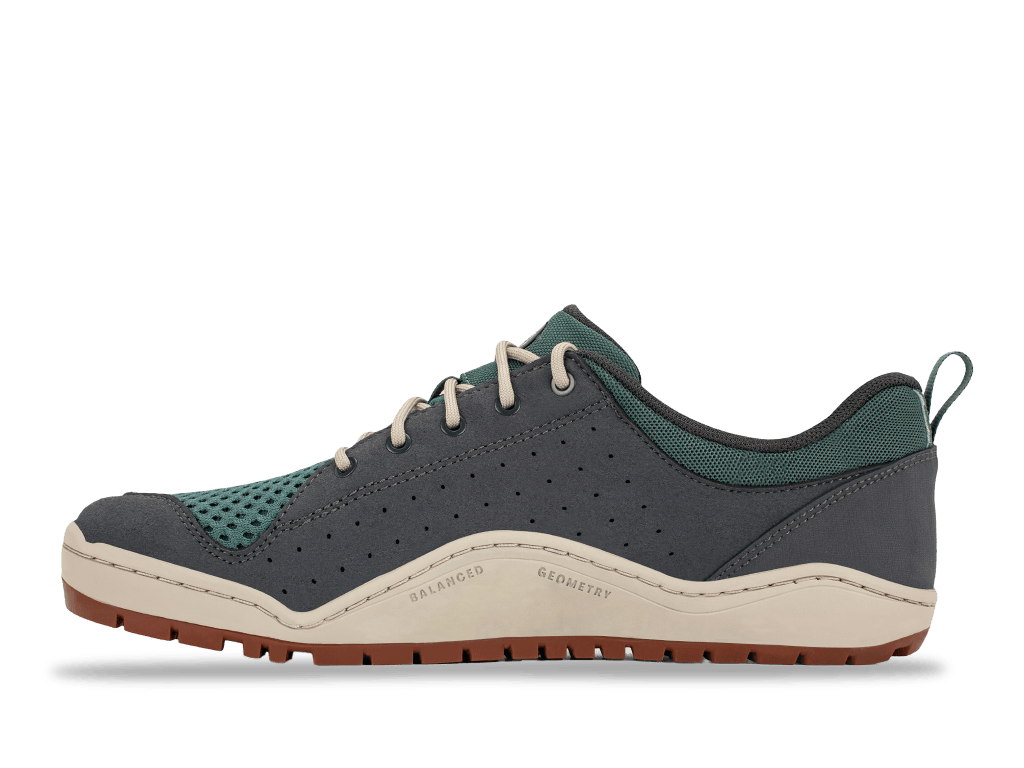
Le, also a runner, says that a typical EVA-midsole running shoe is “breaking down from the very first day,” and yet it’s meant to be a shoe’s backbone. Le and Curry wanted the Techyak to have a stronger spine, with better support without being heavy or clunky. It had to be thin enough to keep the Techyak svelte and lightweight.
Any shoe for an athletic person requires some anatomical language. Le says the shoe has to have a visual flex point, where your toes hinge, whether you notice it or not. “From there you need something that explains that the arch support is exactly where you need it, so that’s the story that we need to tell.”
“I’ve been through this process so many times and translated it in languages from Danish to Japanese,” Le says, talking about different clients and brands. “It’s like singing a song. It’s reggae or it’s country music. The words are exactly the same, traction, cushioning, flex, since humans need the same function. But it’s the tune I play with.”
Curry dissects another visual component: color. “We start with the viewpoint of a person in the middle of water, so there’s always a water color in our line.” From that perspective, the philosophy expands into soil and plant life. The colors are meant to be organic, but very specifically, inspired by flora.
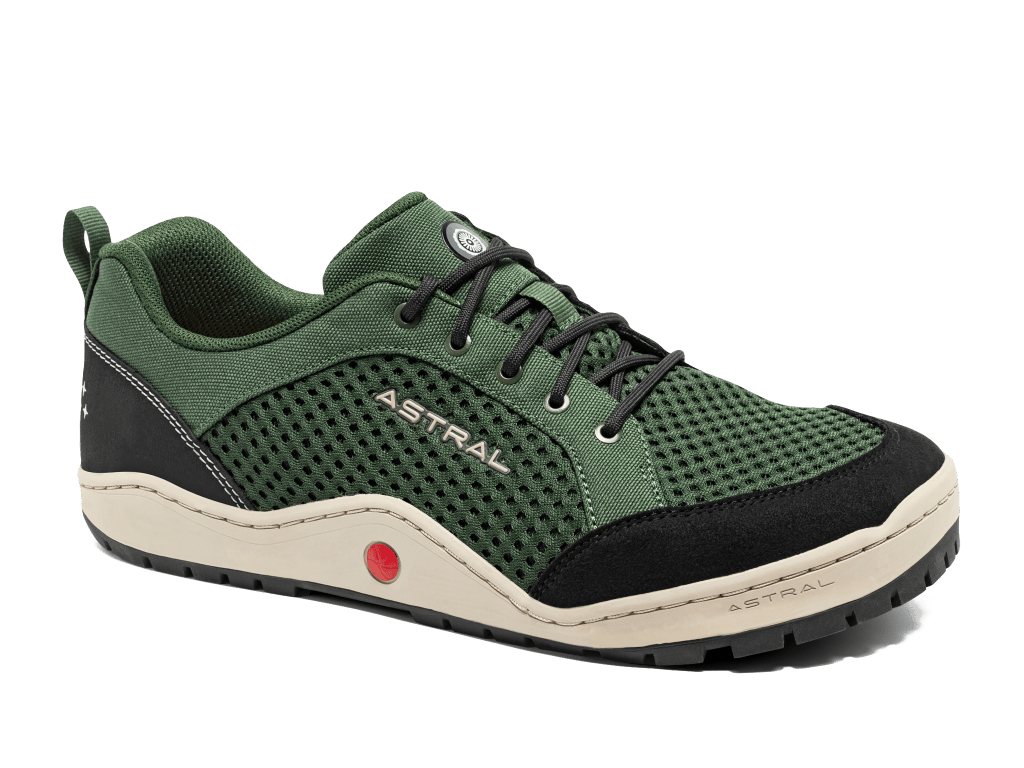
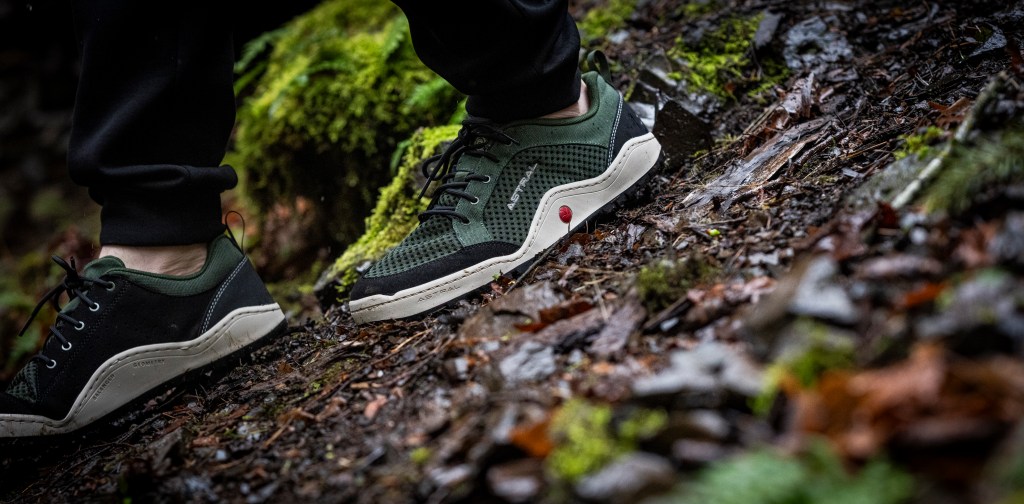
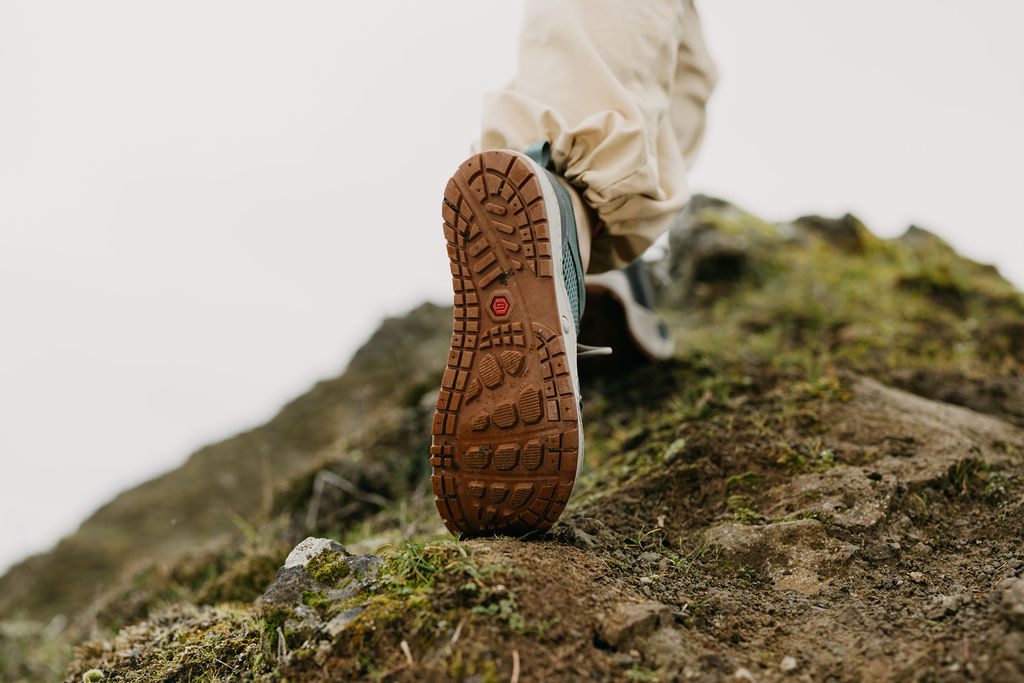
As for the original red dot on the shoe, Le took inspiration from Astral iconography and the relationship between a rock, the sea and the moon. In some markets, the red turned was too unusual for some buyers, so a revised design was made. The tiny icon will evolve to a lotus flower, which Le takes philosophically. “I’m lucky. I draw something and then the factory makes it real. I just have fun, and see if the design needs something.”
What are your thoughts?