Art, Architecture and Community: Crystal Bridges Museum of American Art’s Expansion Is Now Open
Featuring new galleries, new collections, a new arts learning center and a new Keith Haring in 3D exhibition
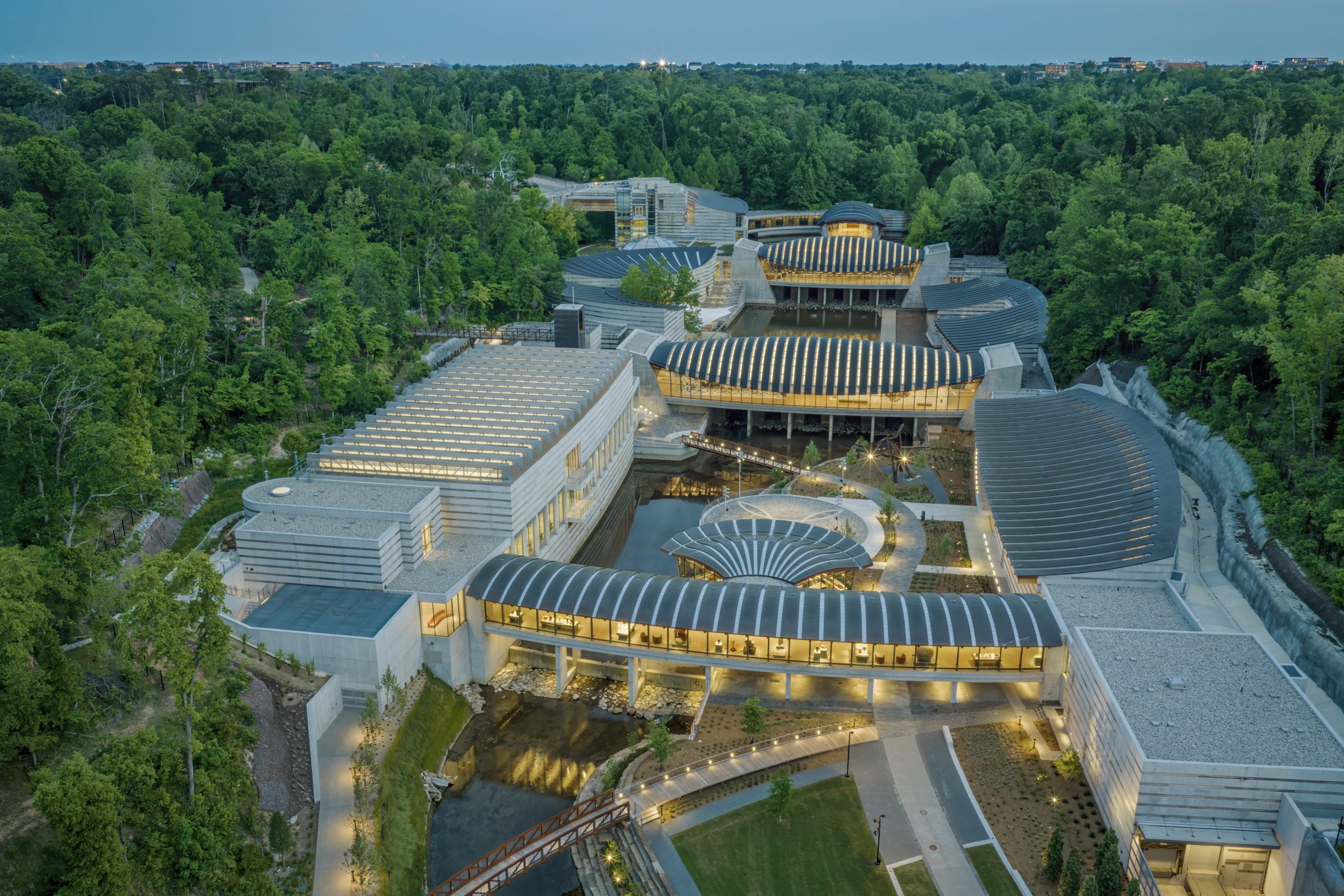
Bentonville, Arkansas, isn’t the first place most COOL HUNTING readers think of for art and architecture, but that changed in 2011 with the opening of the Crystal Bridges Museum of American Art designed by Safdie Architects. Fifteen years into its tenure as an increasingly important art destination, the museum celebrates the opening of its new wing, adding fifty percent to the museum’s footprint. We were on the ground for the opening, which introduced two new galleries, The Hub (an arts learning center) and a dedicated 14,000-square-foot temporary exhibition space, debuting with a powerful Keith Haring in 3D show, a landmark survey of the artist’s three-dimensional work.
I wanted to do Crystal Bridges because… it was my own personal journey and understanding of the power of art in healing
Alice Walton
For Alice Walton, the project remains deeply personal. She shared that her own journey with the power of art began during a period of health challenges: “It was my little watercolors and art books that brought me through 12 years of a chronic condition… it was my own personal journey and understanding of the power of art in healing… that really inspired me to start the Crystal Bridges journey.”
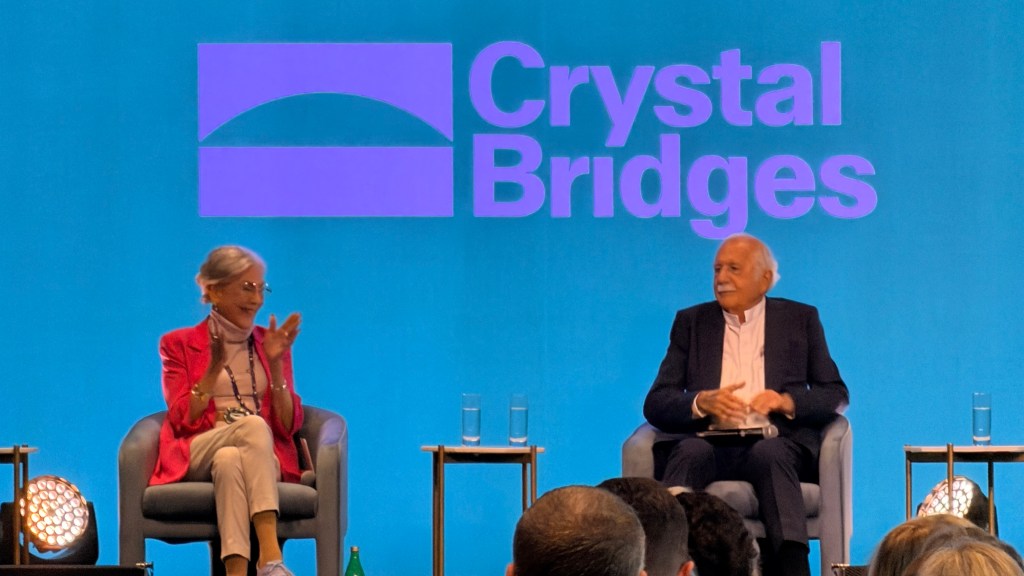
Seeing Alice Walton on stage in conversation with legendary architect Moshe Safdie helps frame the museum’s low-key ambition, from creating a space in the Ozarks showcasing modern art for local and regional visitors to becoming a must-see in the global art scene. While they had planned for an eventual expansion from the start, 25 years or so out, the museum’s ongoing success—it’s welcomed more than 15 million visitors since it opened, all for free—and the realization that “Moshe (87) and I (76) aren’t getting any younger” moved that timeline forward. That spirit of shared vision and client-architect symbiosis resonated throughout the opening days of sharing the new collections and The Hub arts learning center with friends, supporters and the press.
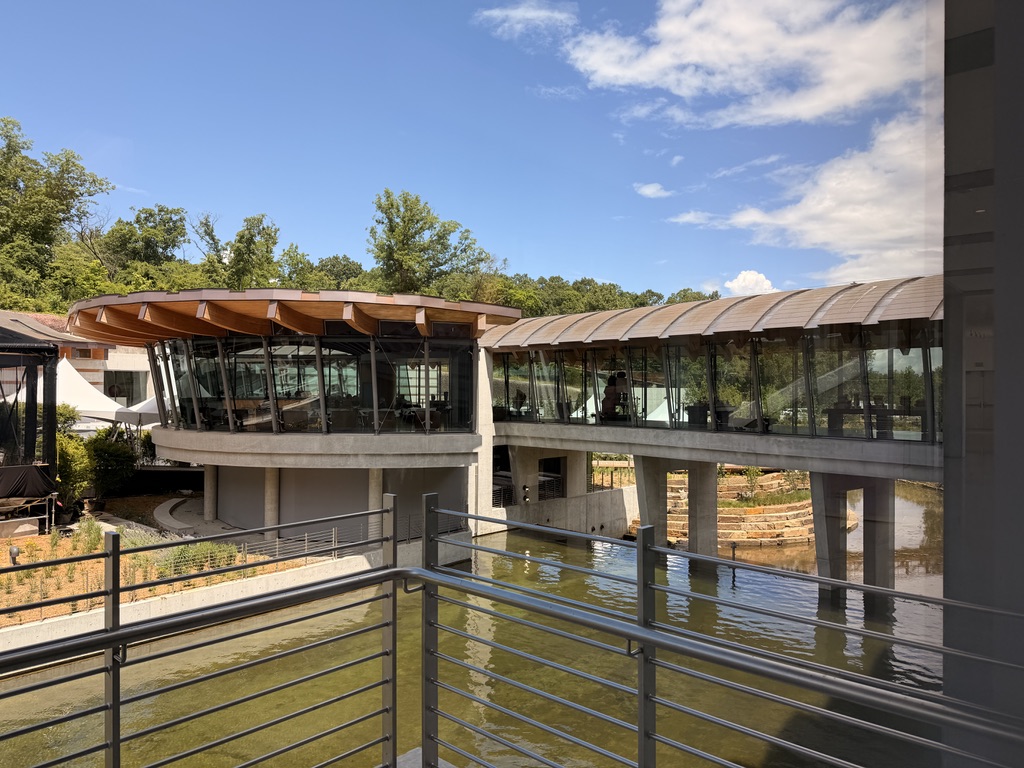
The expansion completes a figure-eight circulation loop, a move that Safdie notes was hinted at in a rough sketch on a napkin during the earliest days of the museum’s planning. Walking through it is both intuitive and flowing. When Alice Walton first recruited Safdie, she did so after extensive research and visits to other spaces the firm had created. She was specifically drawn to his ability to integrate a building into its environment. Safdie recalls their first meeting, flying in and being picked up by Walton in a truck. She cooked him a steak at her home that evening, and the following morning they walked the rugged Ozark site and around its stream beds. It was assumed that the museum would sit at the top of the property’s hills, but Safdie felt that the hills should cradle the museum, making it part of the landscape instead of crowning it. Walton agreed, despite the real world issues that would entail—cost, complexity, and flood prevention among them—but the vision was clear and the simplicity of Walton’s ability to make it happen is perhaps what makes the museum feel so special, and such a part of this place. Later that day as they approached the airport, Safdie asked her about which other architects she was considering, and what the process would be for awarding the job. Walton responded “the process ends tonight,” and their admirable partnership began.
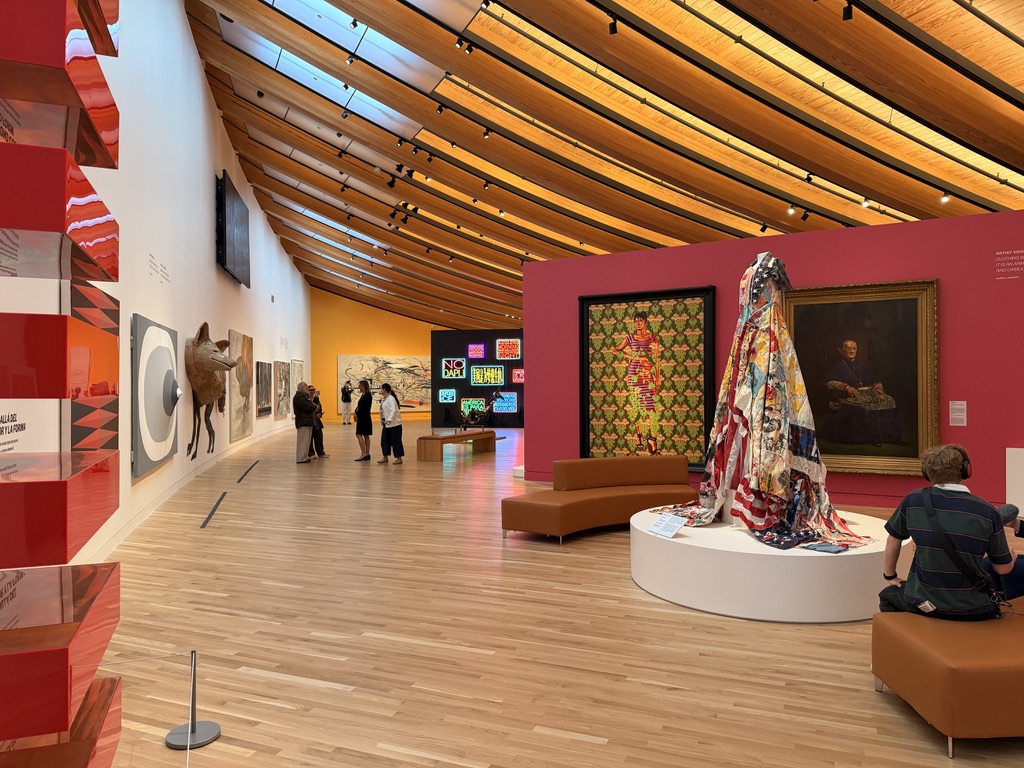
Safdie’s design for the new wing is intentionally a pretty seamless continuation of the museum’s existing spaces. Walking from the old to new galleries continues the same multi-sensory experience of curved spaces crafted with the same local materials—concrete, timber and copper—along with something new—natural light. As is not uncommon, the architects pushed strongly for integrating natural light into the gallery spaces from the start, but concerns about artwork safety from potentially damaged glass and sun exposure won out initially. Alice Walton conceded, “I regret canceling the skylights” in the original building, but museum staff, patron and architects are all jubilant with having it in the new galleries. Walton firmly believes in her new Ozark modern architectural style that prioritizes community and wellness, and having natural light in the new galleries—something probably unnoticed by most—lives up to that desire.
Executive Director Rod Bigelow views the expansion as a fundamental shift in the museum’s identity. “We have always thought we were a medium-sized institution—no longer,” Bigelow told us, noting that the museum is now a national destination where 60 percent of visitors travel from more than five hours away. For Bigelow, the new wing is a “starting line rather than a finish line,” emphasizing that the museum’s mission is driven by a desire to have visitors “discover, dream, and do”—a mantra physically realized in the new studios.
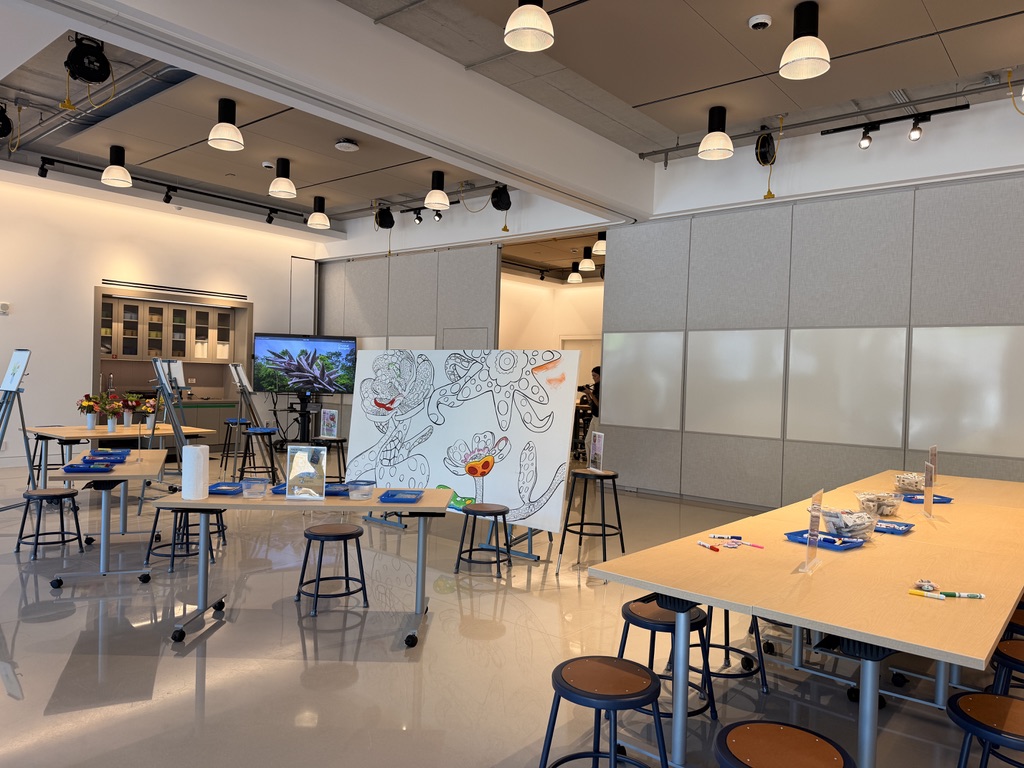
The heart of this “doing” is The Hub, a space for learning and engagement where the museum moves beyond passive viewing. The Hub features specialized studios for ceramics, metalwork, glass, and fiber arts, alongside a digital maker space. It also houses Artland by the artist Do Ho Suh and his daughters, an immersive participatory space where visitors use clay to build an ever-evolving world of creatures. All activities in The Hub (and admission to the museum itself), are free.
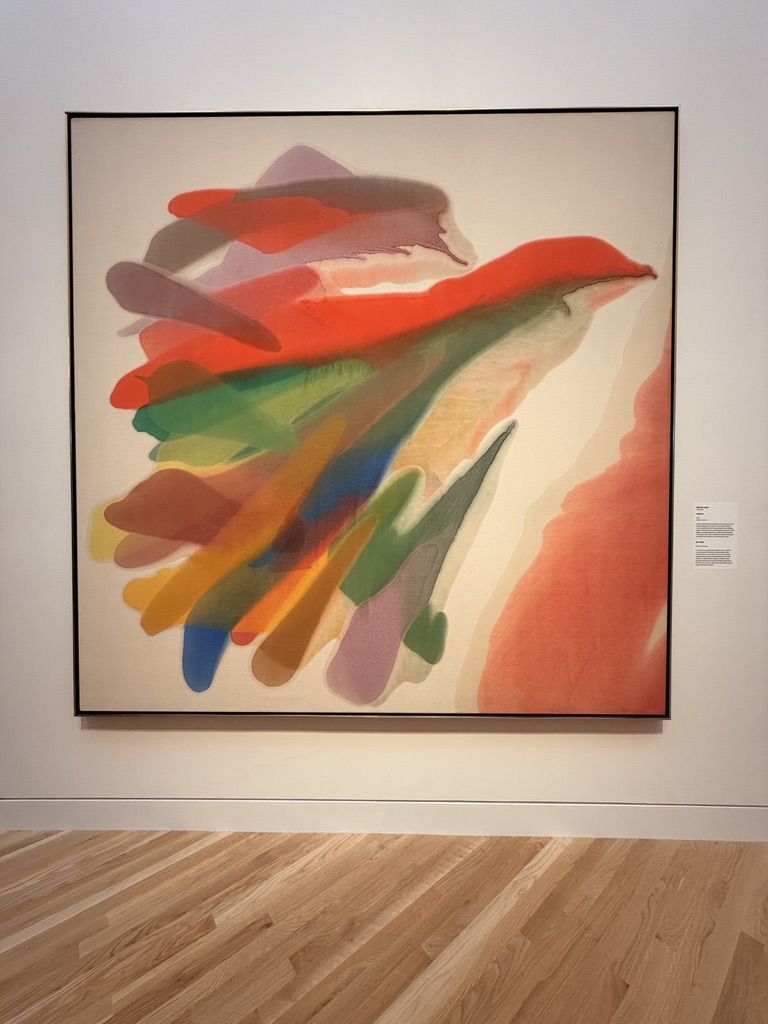
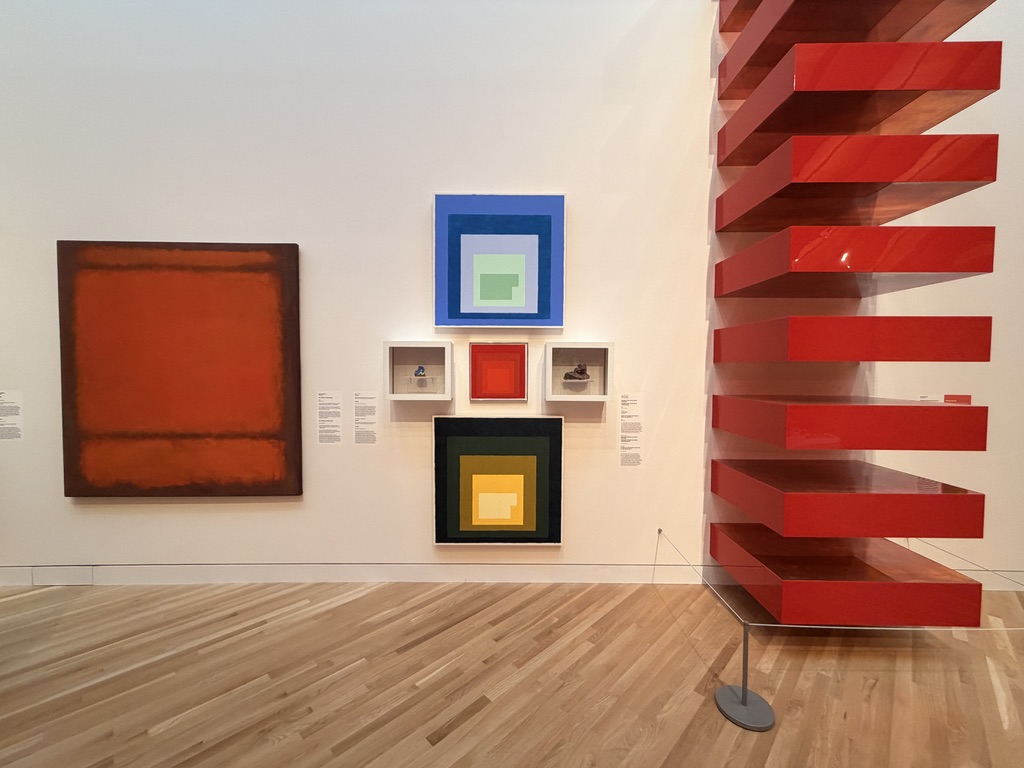
The new galleries showcase highlights from significant new collections and acquisitions, including 90 contemporary Indigenous artworks from the John and Susan Horseman Collection, featuring masters like Kent Monkman and Kay WalkingStick. You’ll also find works by Nick Cave among many others.
We’re having a Haring moment, feeling that his work is more relevant than ever, and a highlight of a visit to the museum is Keith Haring in 3D, which focuses on Haring’s totally unbounded practice as a artist. Walking through the gallery with guest curator Glenn Adamson and collector Larry Warsh, the depth of Haring’s output becomes clear. Many items in the show come from Warsh’s personal collection, which he began building in the ’80s while living near Haring in NYC’s East Village, back when “Haring did not have money for canvases and painted…on anything that was in front of him,” Warsh says. This survey follows the success of the Haring show at the Brant Foundation earlier this year and is accompanied by a major companion book/catalog, Keith Haring in 3D, authored by Adamson and Warsh.
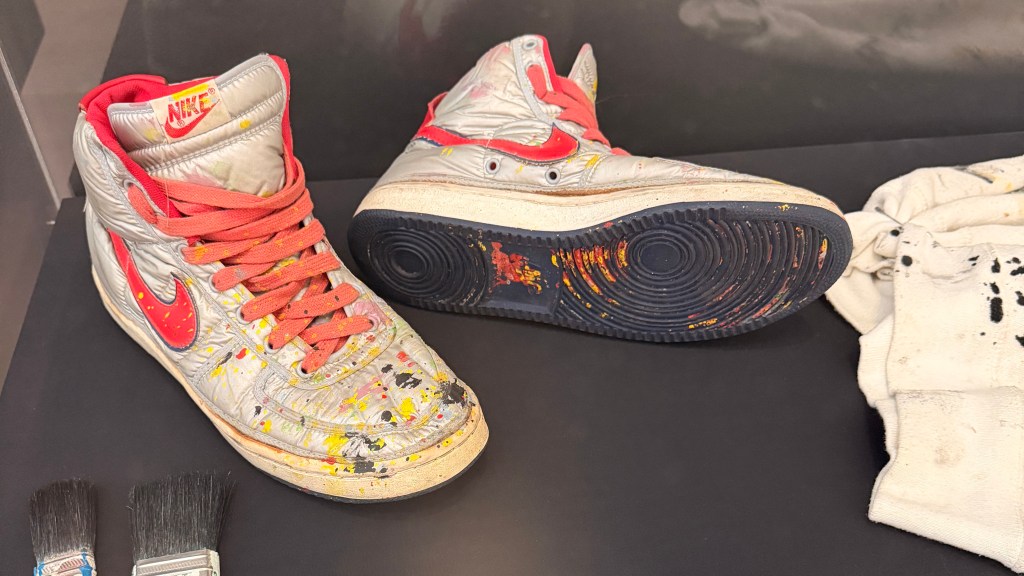
Photo by Evan Orensten 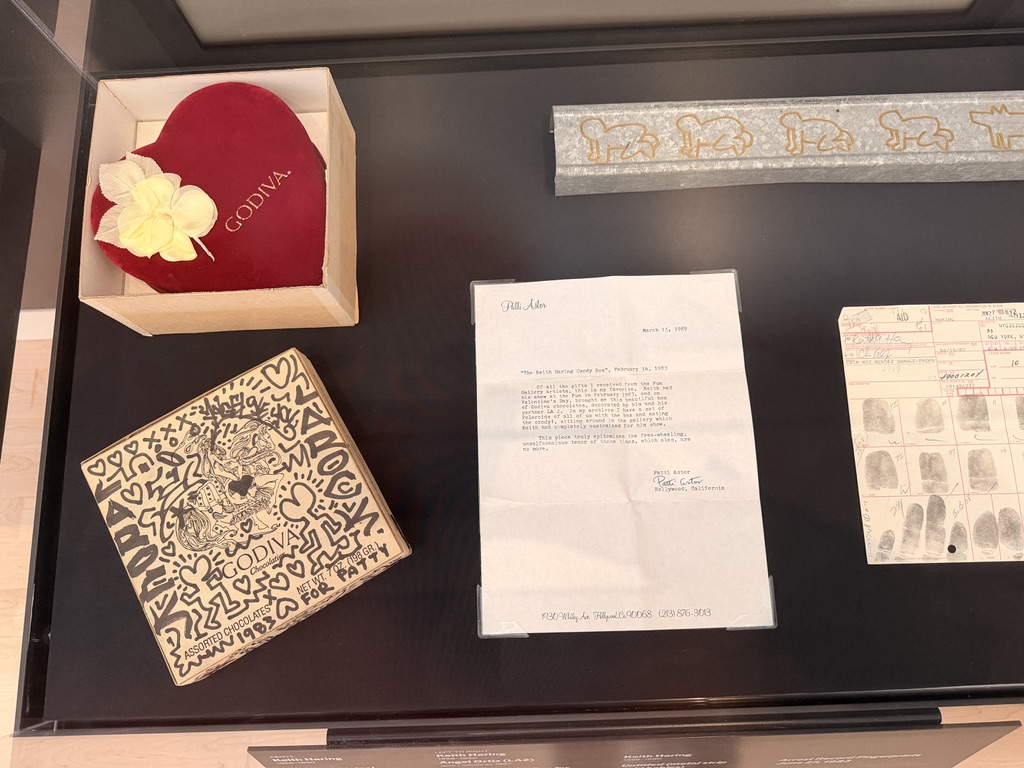
Photo by Evan Orensten 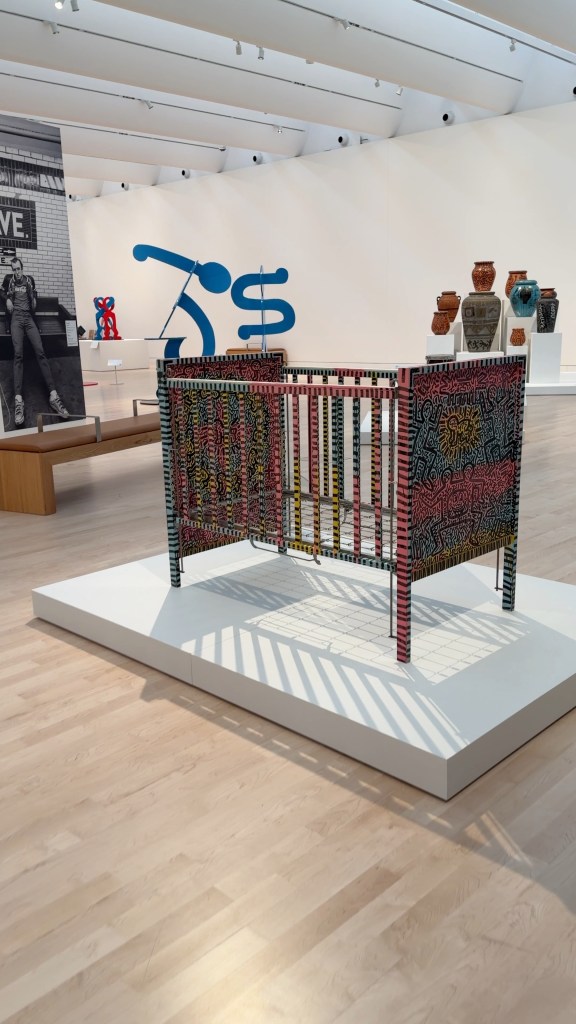
Photo by Evan Orensten 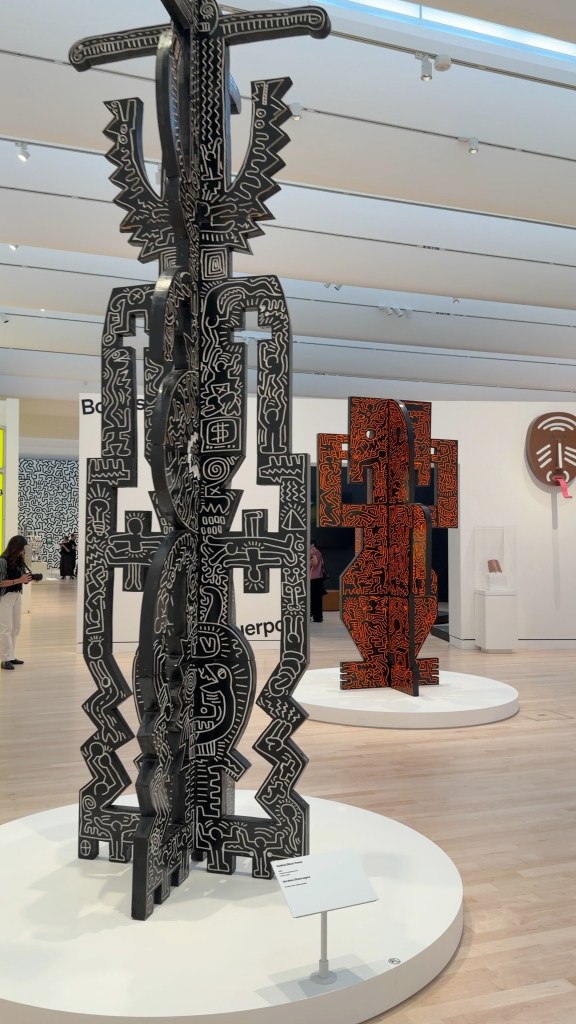
Photo by Evan Orensten 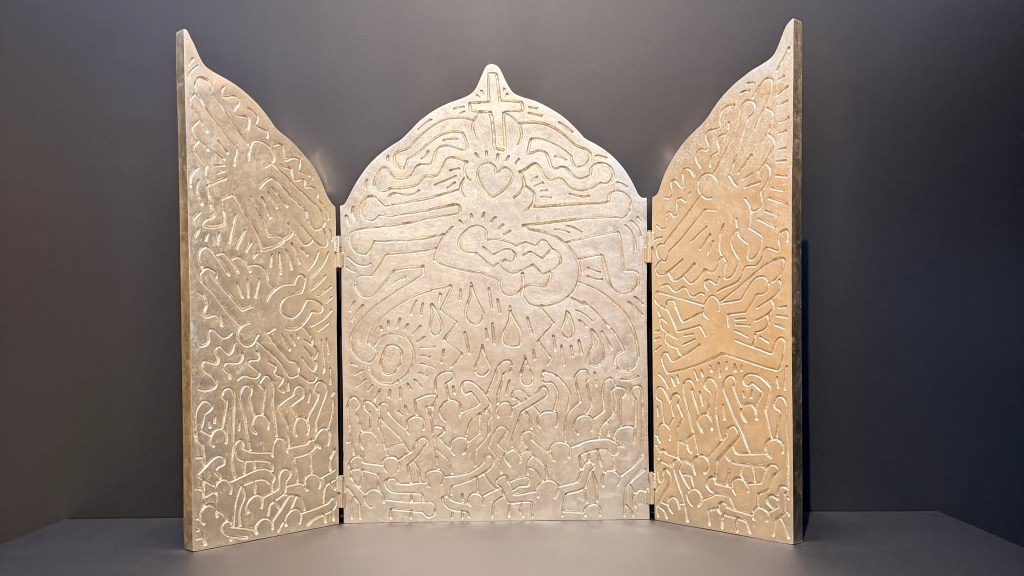
Photo by Evan Orensten 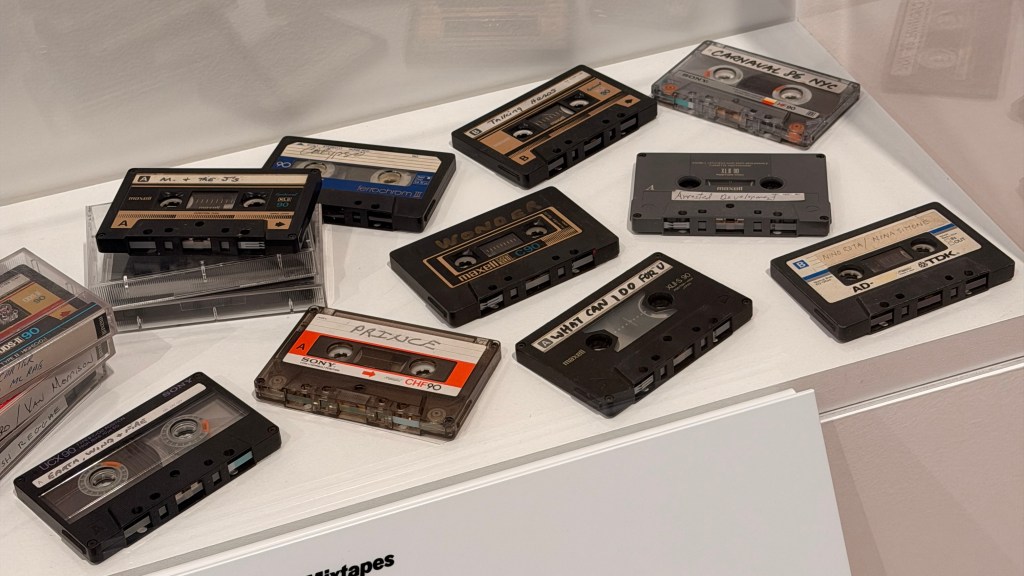
Photo by Evan Orensten 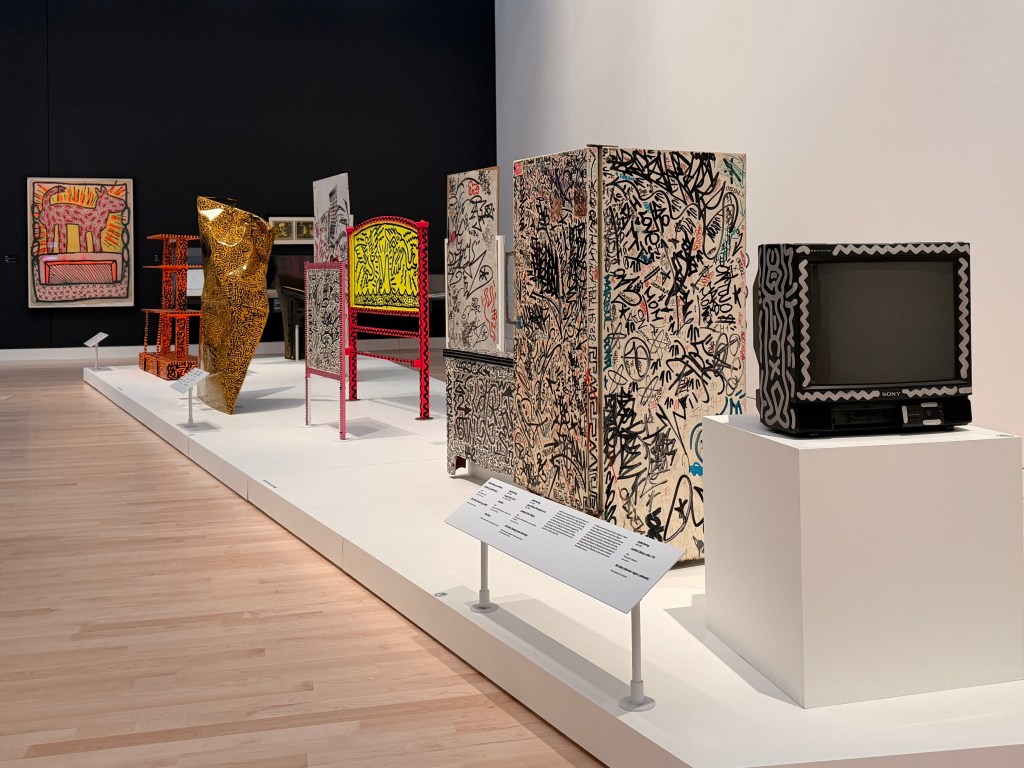
Photo by Evan Orensten 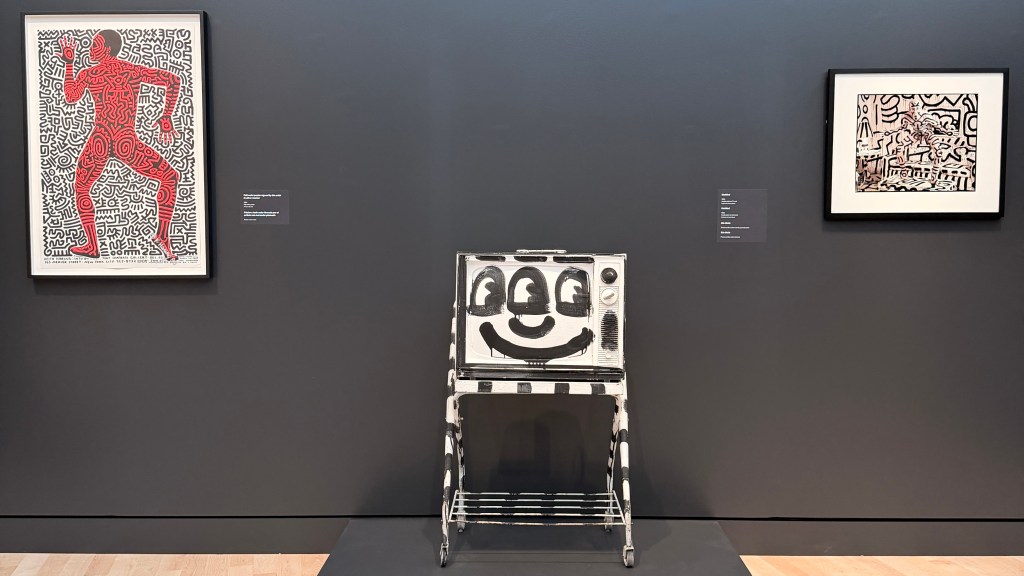
Photo by Evan Orensten 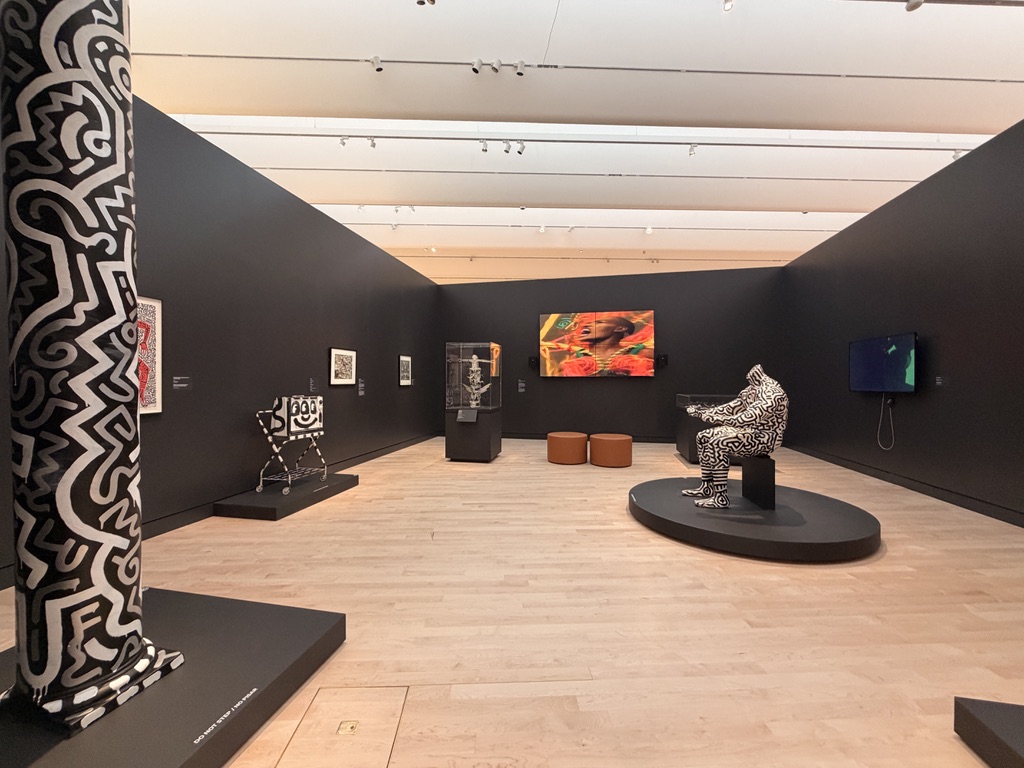
Photo by Evan Orensten 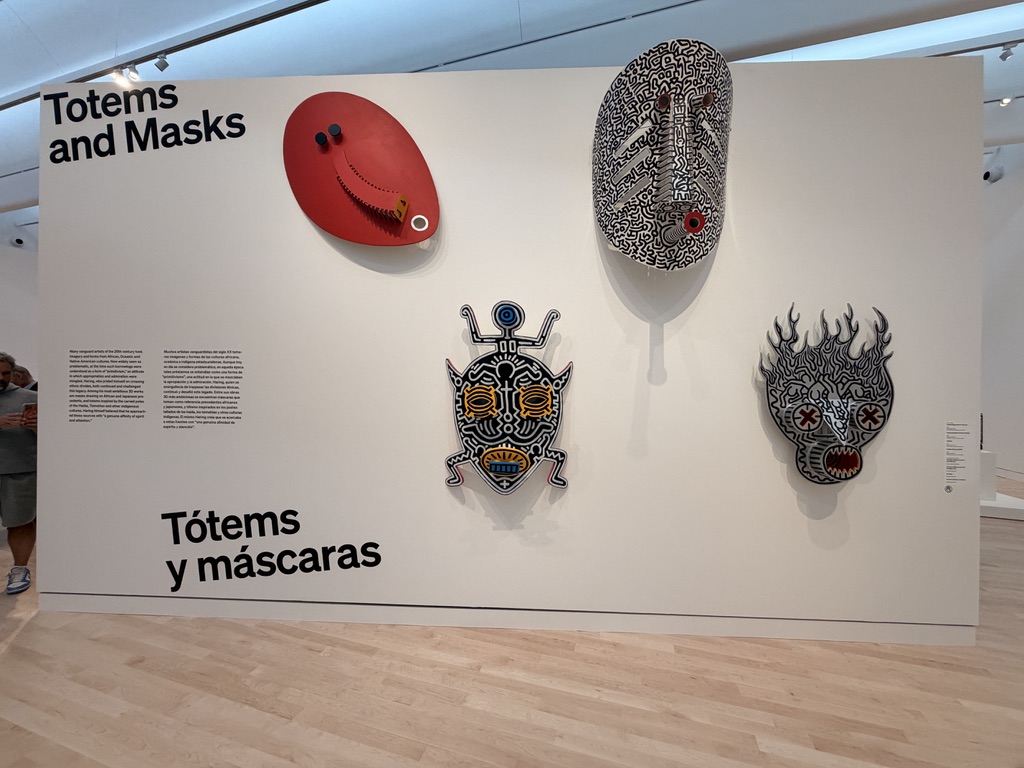
Photo by Evan Orensten 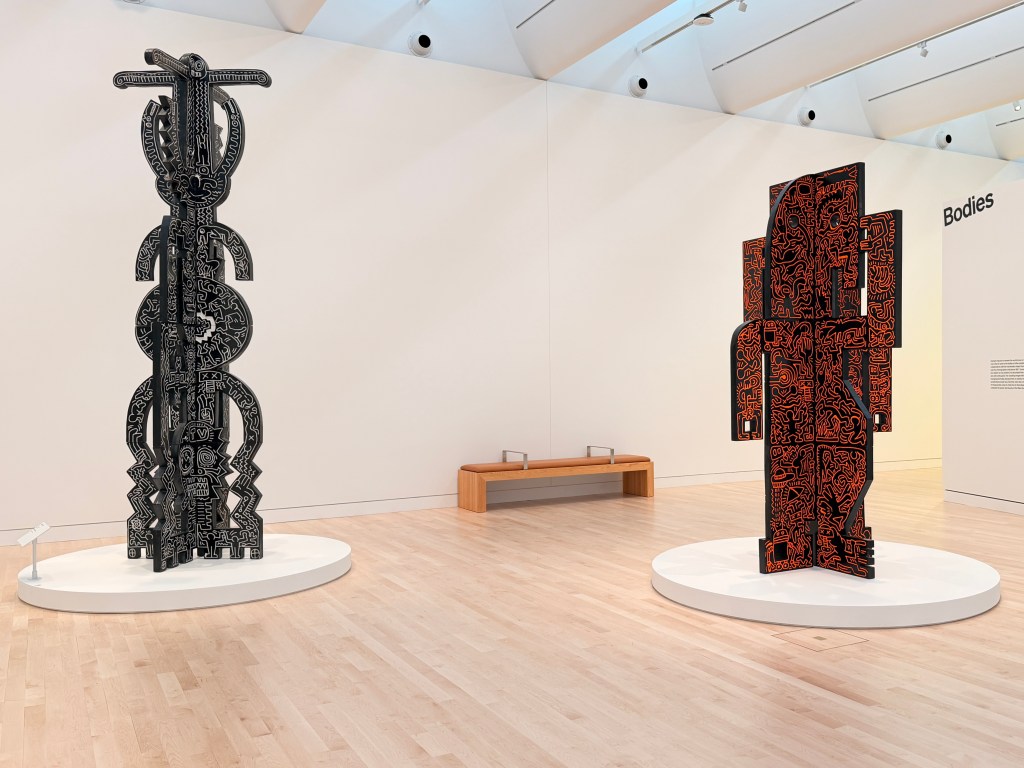
Photo by Evan Orensten 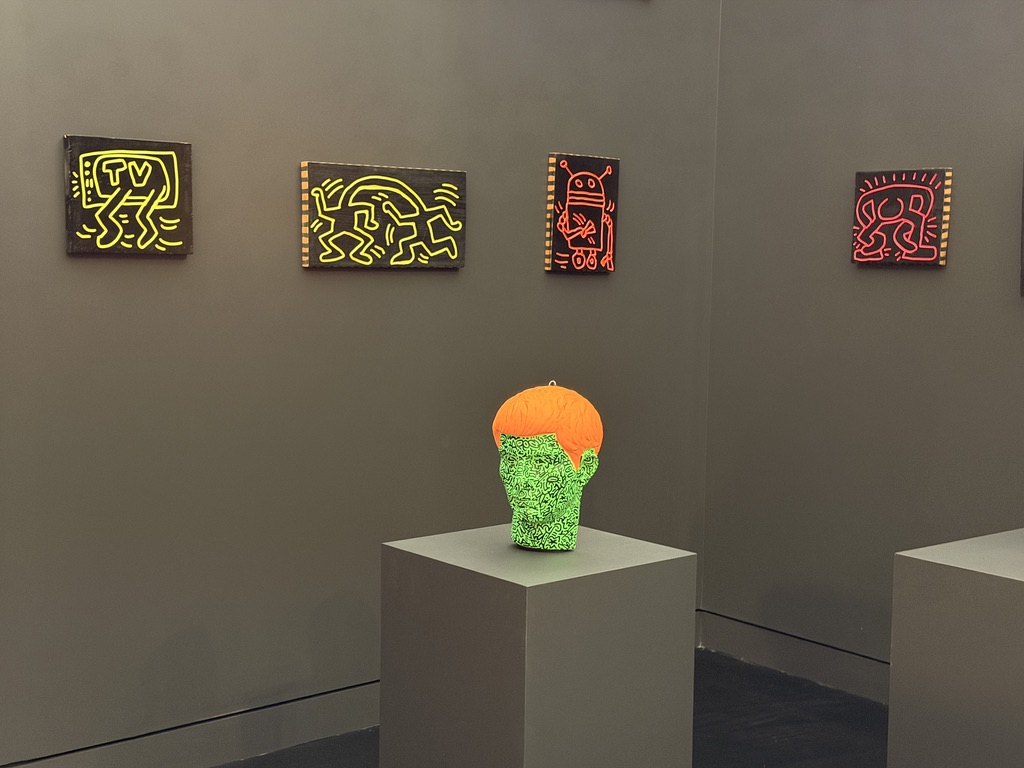
Photo by Evan Orensten 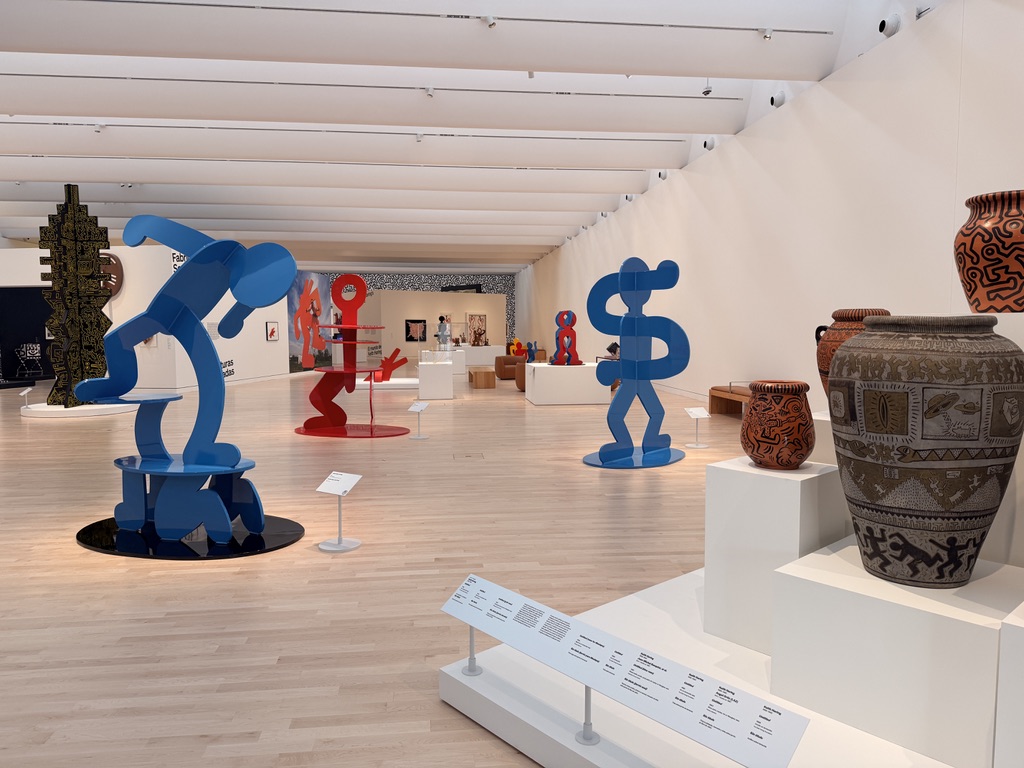
Photo by Evan Orensten 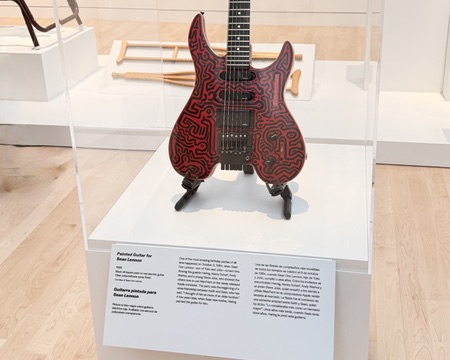
Photo by Evan Orensten 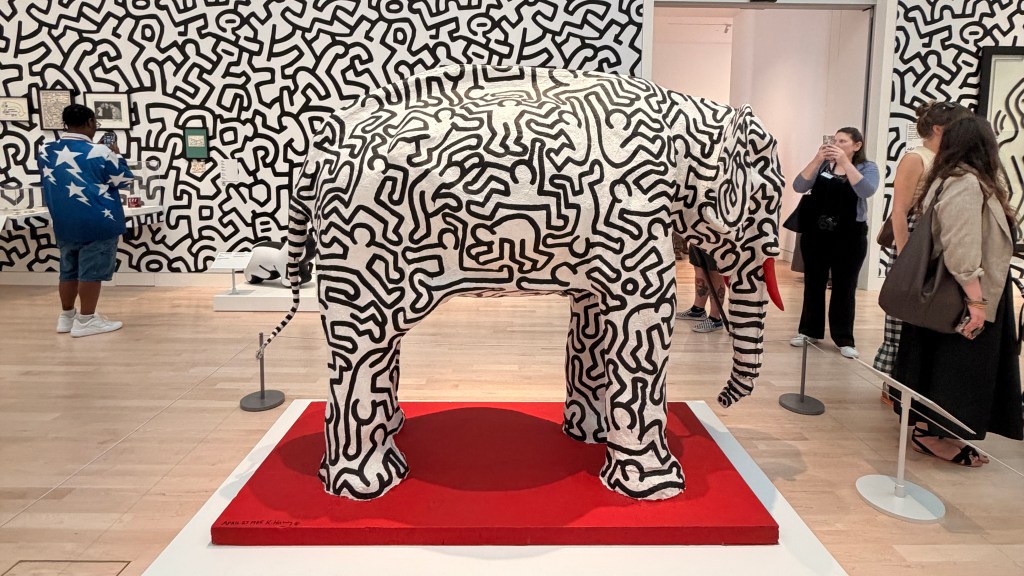
Photo by Evan Orensten 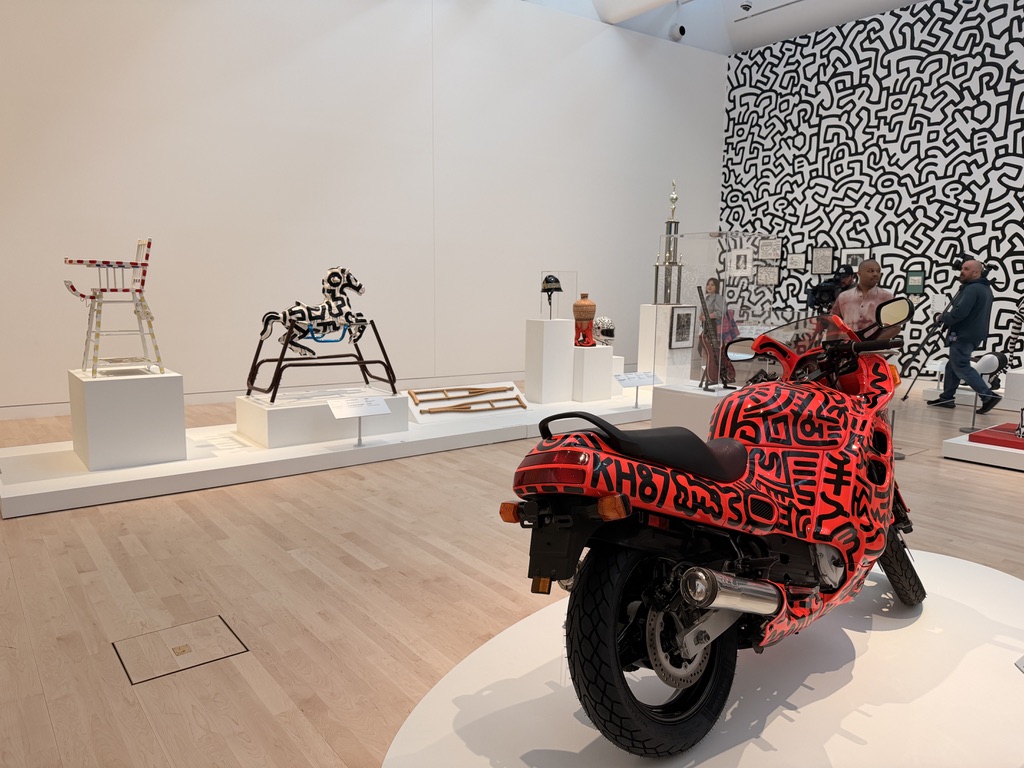
Photo by Evan Orensten 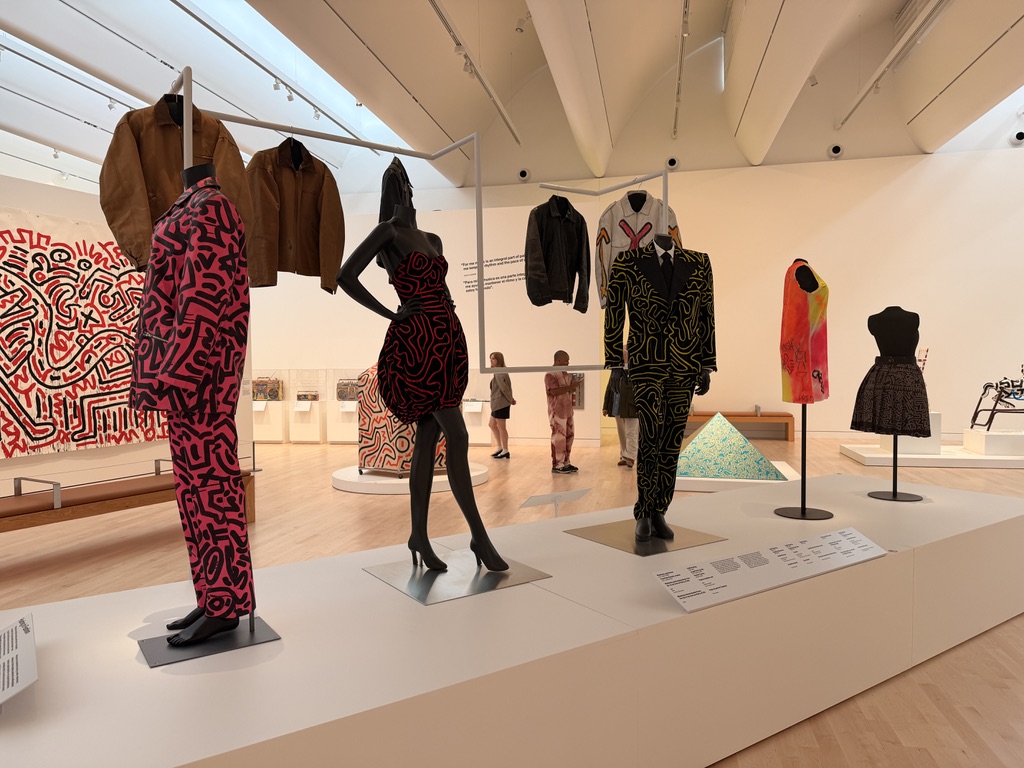
Photo by Evan Orensten
The show is a masterclass in the unclassifiable, featuring everything from painted vases, studio and personal items, props made for videos and photographs, gifts to friends (a Godiva chocolate box that he painted, a crib, a rocking horse, a high chair, a guitar for Sean Lennon’s 9th birthday) to a 1963 Buick Special and a refrigerator from Patti Astor’s Fun Gallery which includes graffiti from many artists. Haring’s mixtapes fill one display case, featuring music of the era, some made by his friends. Walking through it and seeing his ability to bring new life to discarded objects is powerful. Like items are grouped together, powerfully demonstrating that you may know his work, you don’t know, or haven’t seen all of it. And yet, it’s not overwhelming at all. One highlight is a painted I-beam from 1982 that was in Haring’s studio; Warsh recalled how a truck came at midnight to “yank this I-beam out of the building” to preserve it. Adamson noted that “rescued” is the better term, as these pieces would otherwise be “lost to the grit of old New York.” Adamson highlights Haring’s contemporary version of hieroglyphics, where he used a power router like a pen to carve outlines into wood, creating totems inspired by Indigenous art. One of the show’s most moving works is Altarpiece, created right before Haring’s death in 1990; presented simply on a black plinth, it’s widely believed to be a celebration of his life.
Collaborations between Haring and his friend Grace Jones gets its own room, showcasing props and garments from her I’m Not Perfect (But I’m Perfect for You) music video, with the inclusion of the massive, hand-painted tarp skirt Jones wore. Visitors can also see the sculpture Haring painted that Grace Jones used for a legendary lap dance in the film Vamp—an object that remains in “perfect condition despite all of her efforts,” Adamson added.
Bentonville’s growth mirrors the museum’s ambition. What was once a quiet town is now defined by the Razorback Greenway and a sophisticated culinary scene. The Momentary, Crystal Bridges’ satellite space in a repurposed cheese factory, has become the town’s living room, hosting a location of the Onyx Coffee Lab and serving as a multidisciplinary hub for music and performance. As Bigelow notes, the museum has acted as a “catalyst,” giving the community a sense of pride and a platform to compete with coastal cultural heavyweights.
Keith Haring in 3D is on view at Crystal Bridges through January 25, 2027. Admission is free, keeping with the museum’s core mandate that “everybody deserves access to art.”




What are your thoughts?