Rivian R2: A Masterclass in Subtraction
How Rivian’s designers turned cost reduction into a craft with ingenuity, creative thinking and a sense of humor to create an SUV that feels as premium as it looks
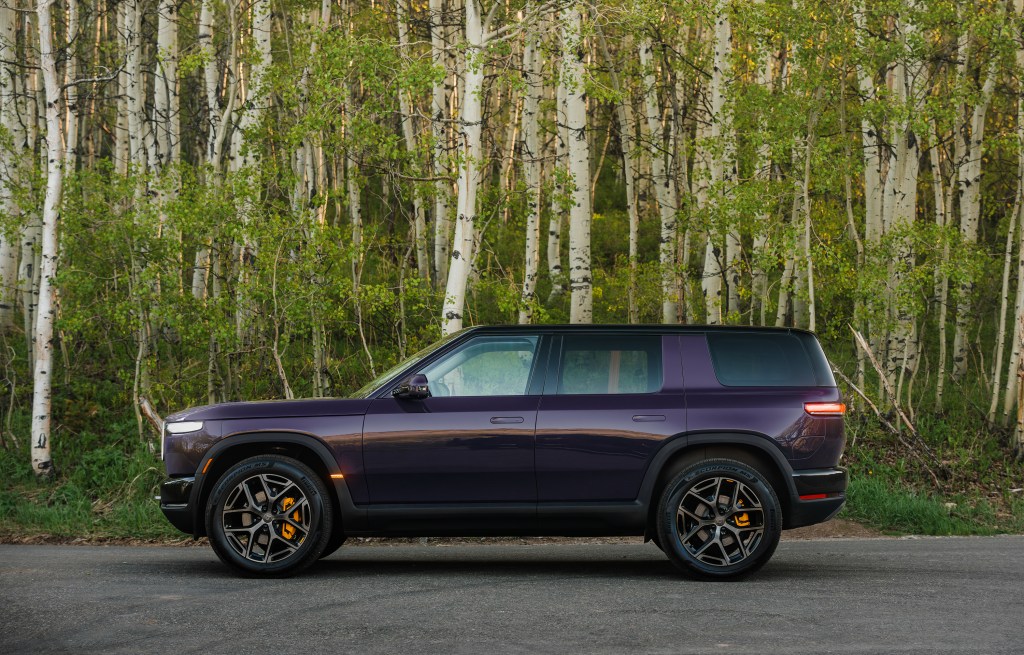
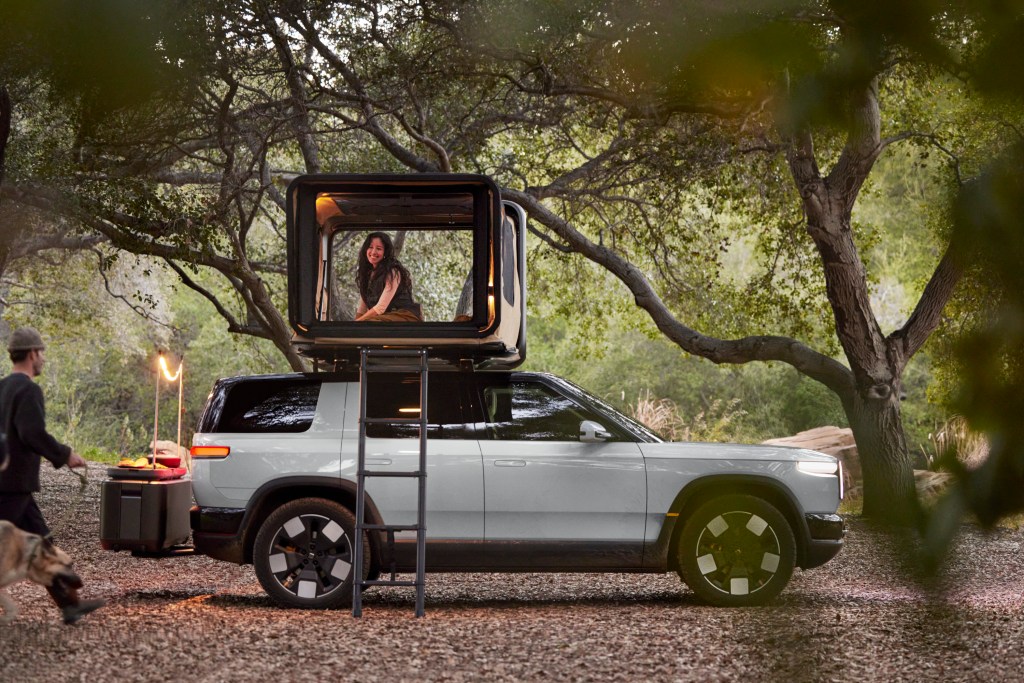
Rivian‘s R2 is the marque’s bid to make adventure affordable, and a few hours behind the wheel make clear that reducing the footprint and the sticker price has not thinned out the experience. Priced from $44,990 for the Standard trim to $57,990 for the Performance model, the new mid-size SUV undercuts the larger R1 it descends from while improving on it in ways that are worthy of a closer look. On our test drive in Utah moving from rutted mountain trails to open pavement it changed character without fuss, settling into a gentle road manner that gives no sign of where it had just been. The throughline is a philosophy Chief Design Officer Jeff Hammoud describes as evolution through subtraction: pull cost out of the vehicle without leaving the customer feeling shortchanged. What results is roughly 45% lower material cost, nearly 2,000 pounds shed, 2.3 miles of wiring deleted and a cabin still seeded with the subtle humor and tactile details that have earned the brand unusual affection.
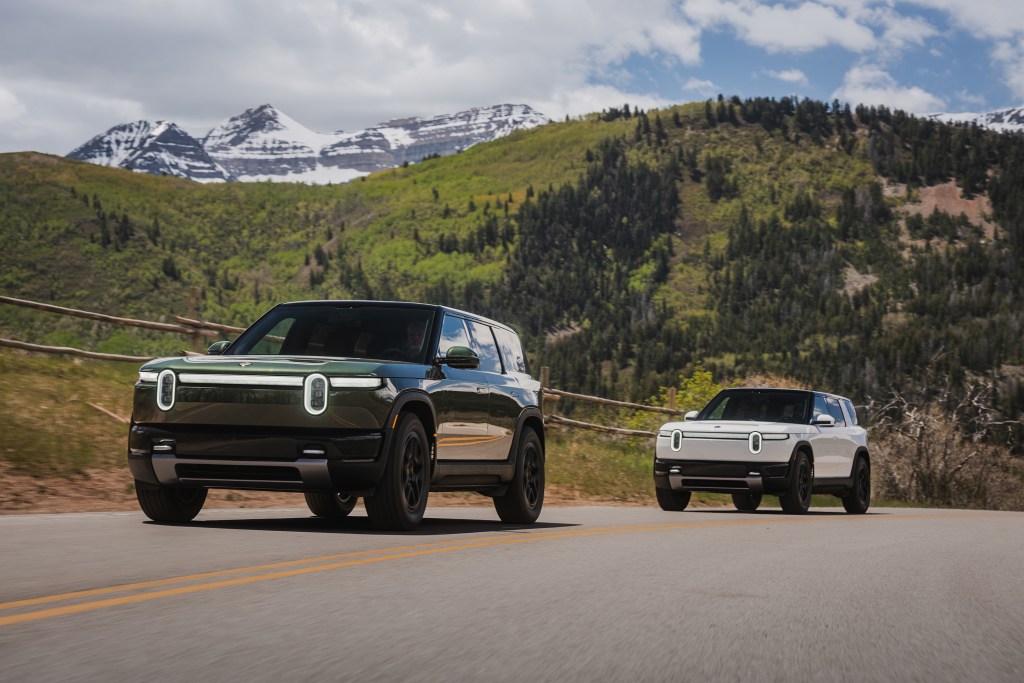
The aim, as Hammoud frames it, was to “create something that feels very premium but not precious, something that you’re not afraid to go out and use and get dirty.” The cabin’s surfaces read as refined yet invite a muddy boot or a wet dog without a second thought, from the non-glossy black trim that shrugs off fingerprints to the flat-woven floor mats that brush clean of dirt, sand and pet hair. On the highways around Park City the same restraint shows up in the way it drives, smooth, quietly powerful and easy in a way that asks little of the driver. Getting there meant cutting where the customer wouldn’t notice the cut. “With R2, it was more about thoughtful subtraction and making sure that what we’re removing from the vehicle isn’t something that the customer is automatically going to look at and say, ‘hey, this is a cheaper version of R1’,” he explained. He showed examples like the door—everything that you can see and touch while seated retain a premium look and feel, and how the biggest opportunities came by using simpler materials in the places you see and touch less often, like the lower door panel.
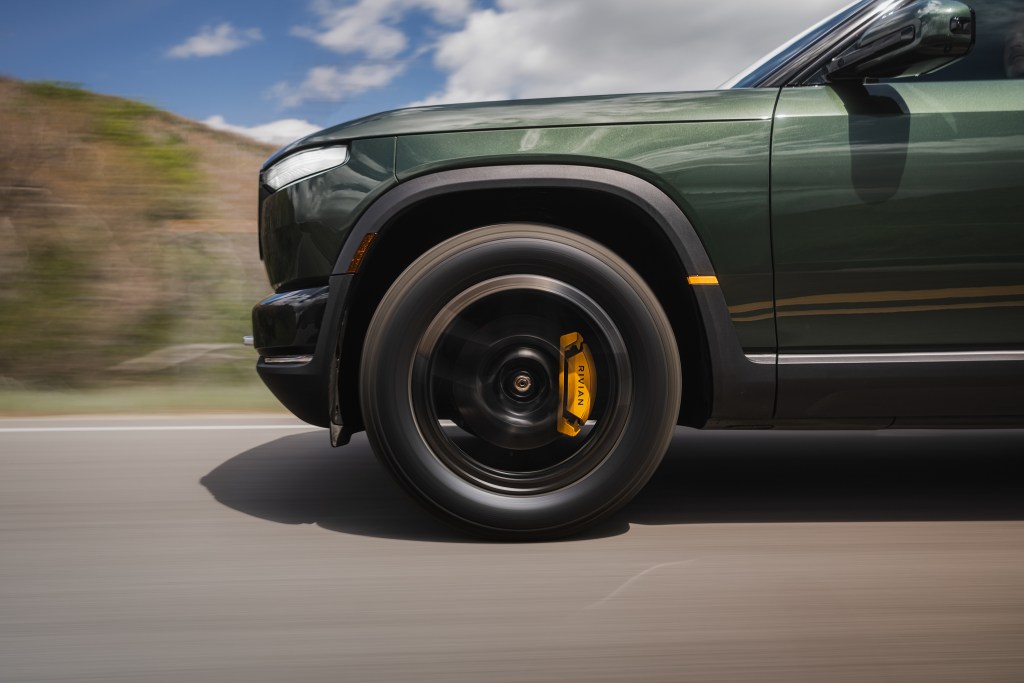
The team pared roughly 45% of material cost out of the vehicle relative to the second-generation R1, and did so by reconsidering how parts could be simplified or reduced rather than by stripping out luxury. On the R1, the front sides of the car carry three separate elements: a Rivian badge, a turn signal in the mirror and a side marker light. The R2 folds all three into a single illuminated reflector—providing the same clean, branded experience while lowering part count, manufacturing cost and assembly cost while tidying the surface.
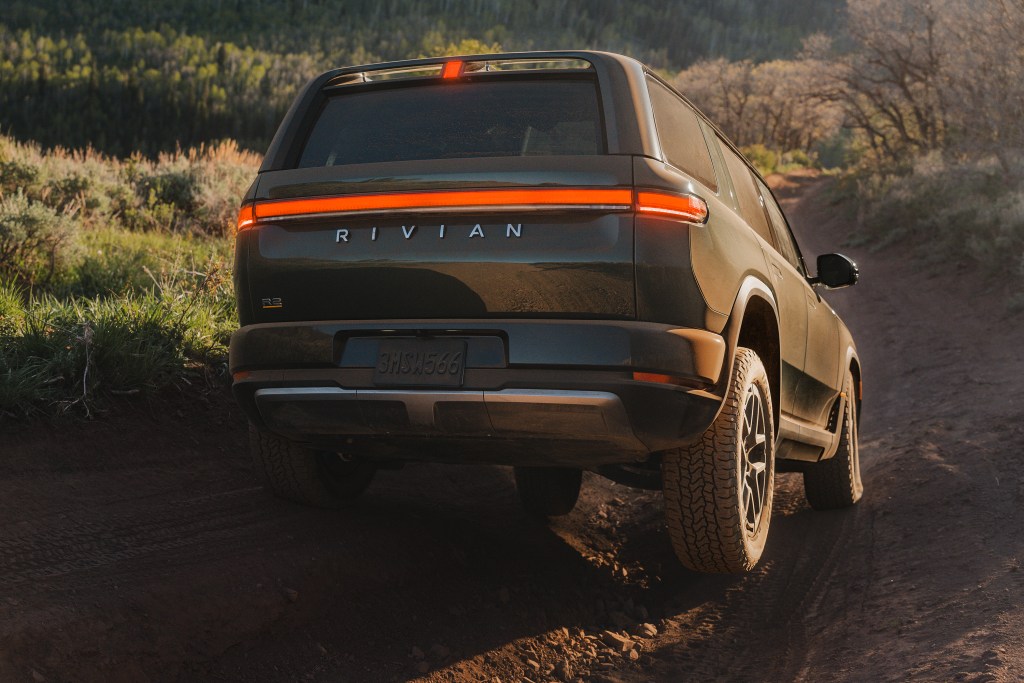
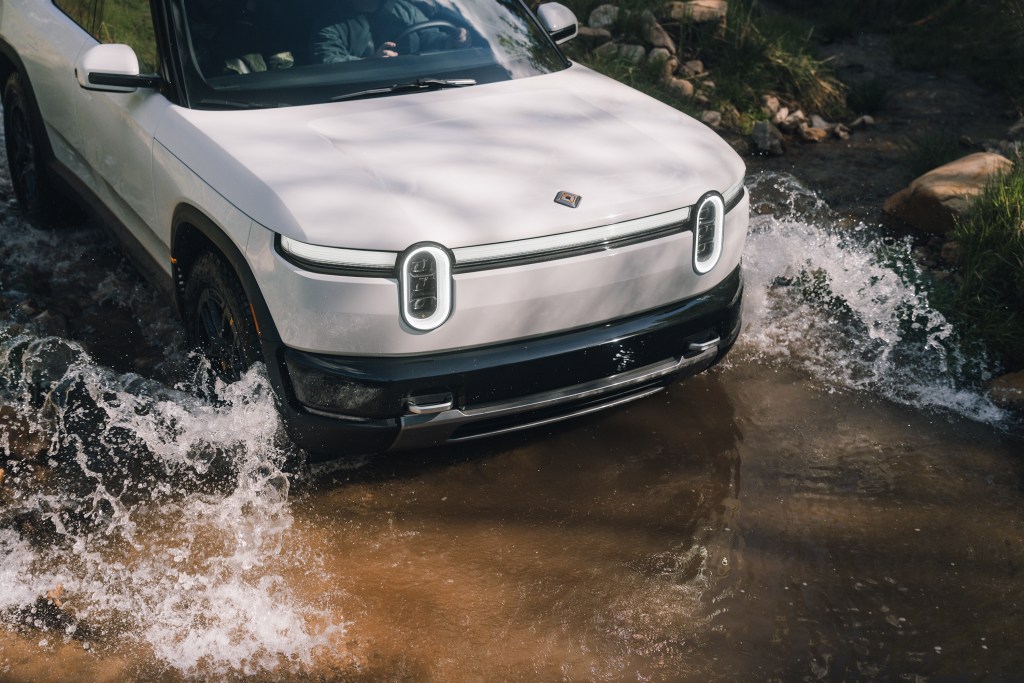
One area they didn’t hold back on is the unique liftgate, which carries a signature drop glass style that lowers fully into the tailgate. Instead of an unattractive windshield wiper, they sunk it into the gate itself—you only see it when it’s needed. The subtler achievement sits further forward: the rear passenger windows roll all the way down, which the rear wheel well typically prevents by intruding on the space the glass needs to disappear into. Rivian shifted the C-pillar clear of the well so the full pane could drop away, deleting the stationary division bar and, with it, the exterior belt moldings, for a notably clean flank. Lowering every window pane turns the cabin open-air in a way that feels a small step closer to a convertible than an SUV, and on the trail that detail earns its keep. With all five windows down and no engine to drown it out, the terrain comes in unfiltered—birdsong, the tires working over rock, the splash of a puddle—the register of the outdoors that a combustion drivetrain talks over.
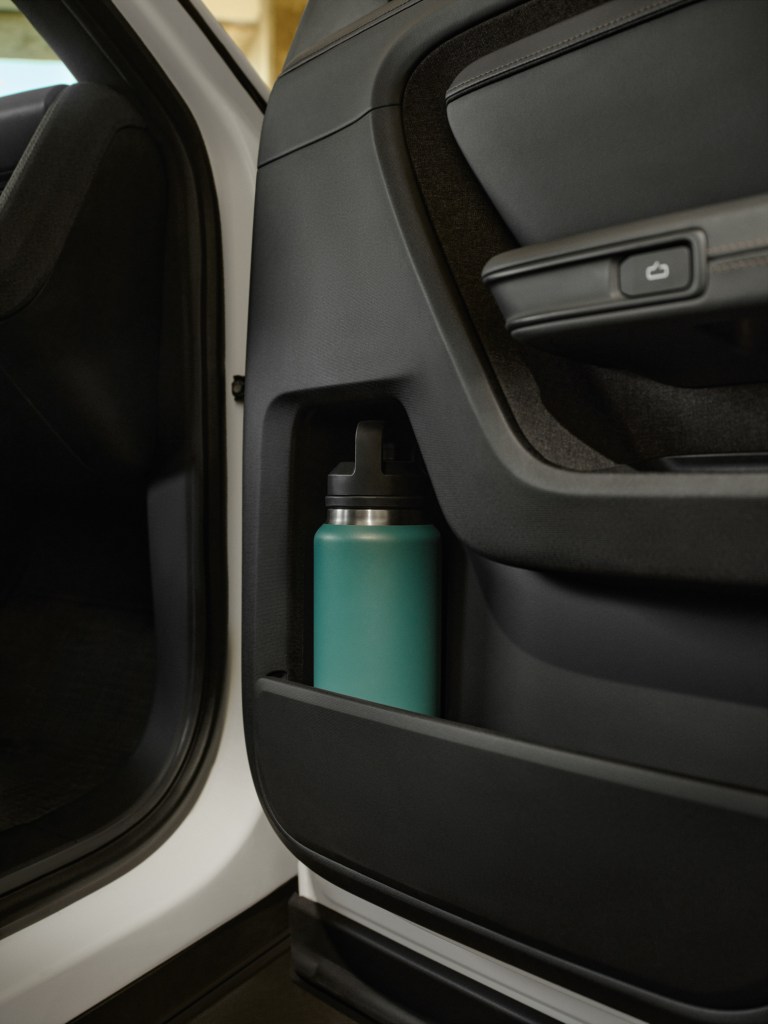
Audio components also moved. Pulling the speakers from the front doors and clustering them at the center console sharpened the cabin’s sound while simplifying the wiring, and the freed-up door space became pockets deep enough to hold a full-size water bottle. Underneath the surface, Rivian consolidated five power modules into one integrated assembly and evolved its zonal electronics, removing 2.3 miles of wiring versus the R1’s assembly.
Where the engineering brief was about removal, the design brief was about reward. The R2 hides small graphic winks for owners who look: a mountain climber tucked into the trim, a honeycomb pattern molded beneath the center console liner, the Gear Guard mascot caught mid-sneeze inside the tissue box holder, a frog motif near the windshield and a solvable maze pressed into the charge port cover to occupy you while the battery fills. Coming across the first one turns a routine task into a small game, and passengers can hunt for the rest. “It’s so important for us and for our brand identity that we have a way to express that playfulness and have people enjoy the product,” says Chief Software Officer Wassym Bensaid, who credits that connection with making Rivian the most loved automotive brand in the country. For Hammoud the math is clear: “These things don’t cost money. They just take time,” he says. The personality draws on no material budget and buys loyalty that price alone cannot.
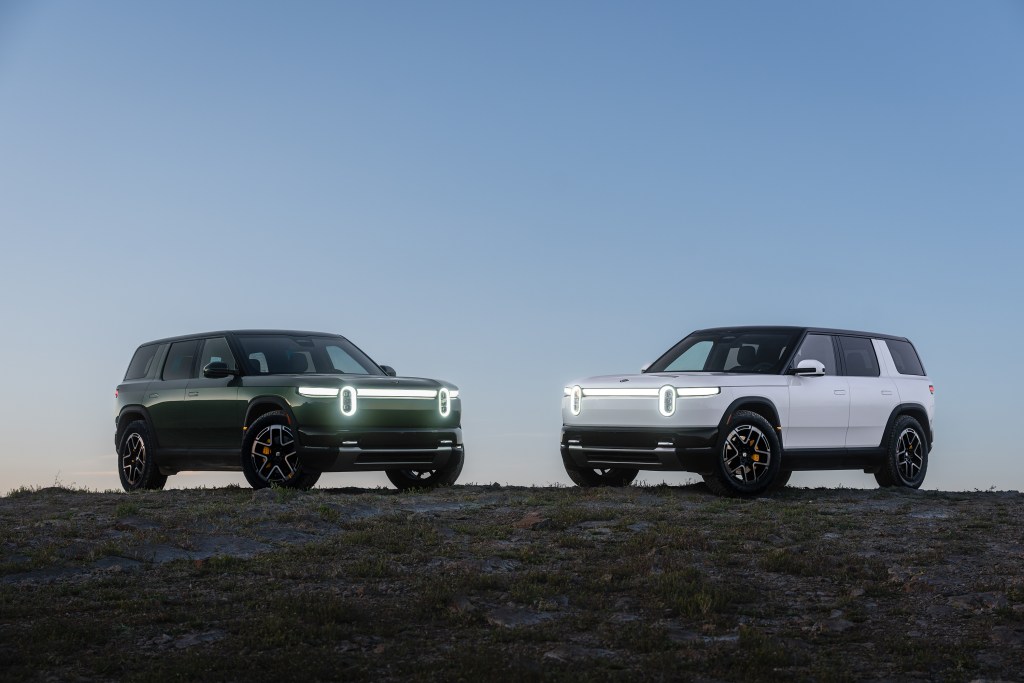
That same instinct shapes the palette. The three new exterior finishes are drawn from terrain the car is built to explore: Catalina Cove, a metallic that shifts between deep Pacific blue and a translucent green; Esker Silver, keyed to the look of a glacial ridge; and Half Moon Grey, which catches the warm tone of sandstone cliffs. Inside, the cabin comes in two themes, the dark volcanic Black Crater and the lighter Coastal Cloud. The materials carry an environmental brief without reading as a compromise: upcycled birch, headliners spun from recycled ocean plastic and a second-generation Adventex upholstery with more than 50% sustainable content.
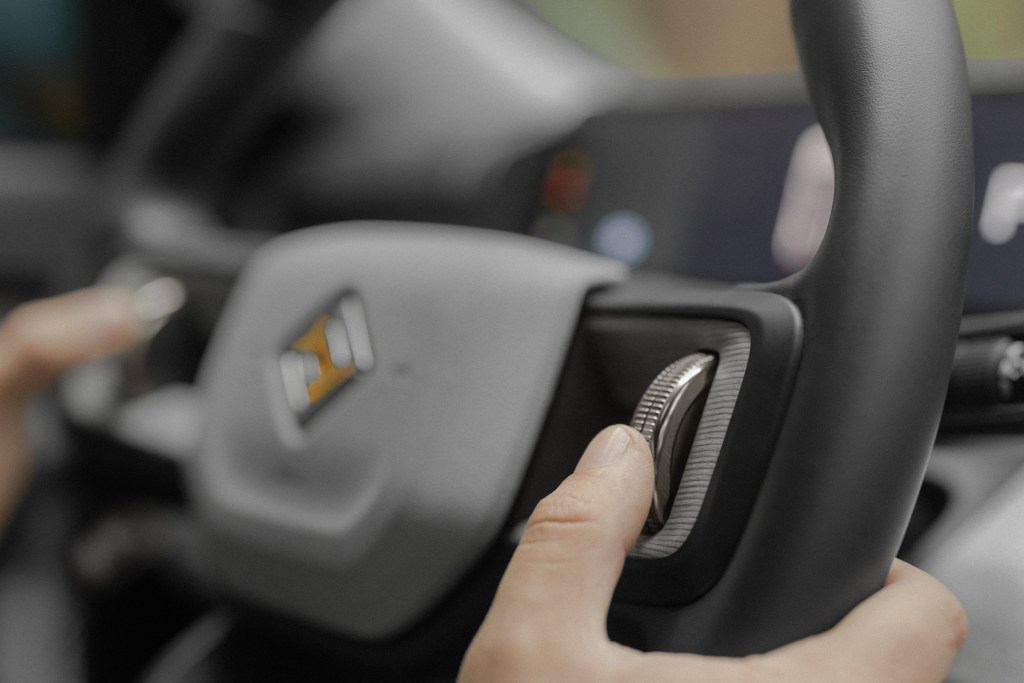
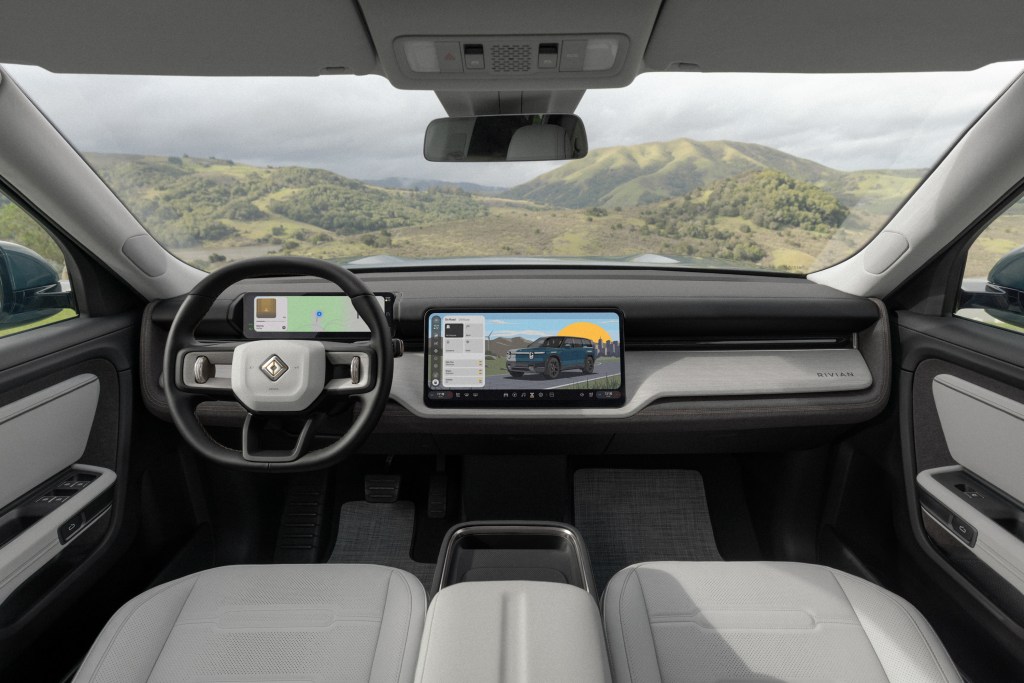
The R2 recognizes its drivers with preset profiles that remember and restore HVAC vent angles, steering wheel control layouts and even your Spotify login at the press of a button, so a borrowed seat never leaves you adjusting the vents. Add a new driver for the first time and the car opens with a short guided walk-through of its controls, an engaging and thoughtful onboarding that orients a newcomer without lecturing anyone who already knows where things live. Complementing the touchscreen, the steering wheel carries programmable Halo scroll wheels with haptics that change with the task at hand. Thumbing the wheel, the feedback registers clearly enough to read without a glance down so attention stays on the road. Volume arrives in 30 discrete clicks; fan speed comes in wider, chunkier steps that firm up at the maximum. Powering the cabin is a powerful on-board AI compute (200 sparse TOPS) reserved for the in-car experience, fed by an 11-camera HDR array and five radars that drive the Universal Hands-Free system. On the trail those cameras earn their place, framing the tight pinch points where a wheel meets rock, while an off-road data screen turns the climb into something the passenger can follow too, reading out pitch and roll as the chassis works. The car rides on an all-new 4695-cell structural battery pack that doubles as the floor, a move that frees legroom, drops weight and lowers the center of gravity.
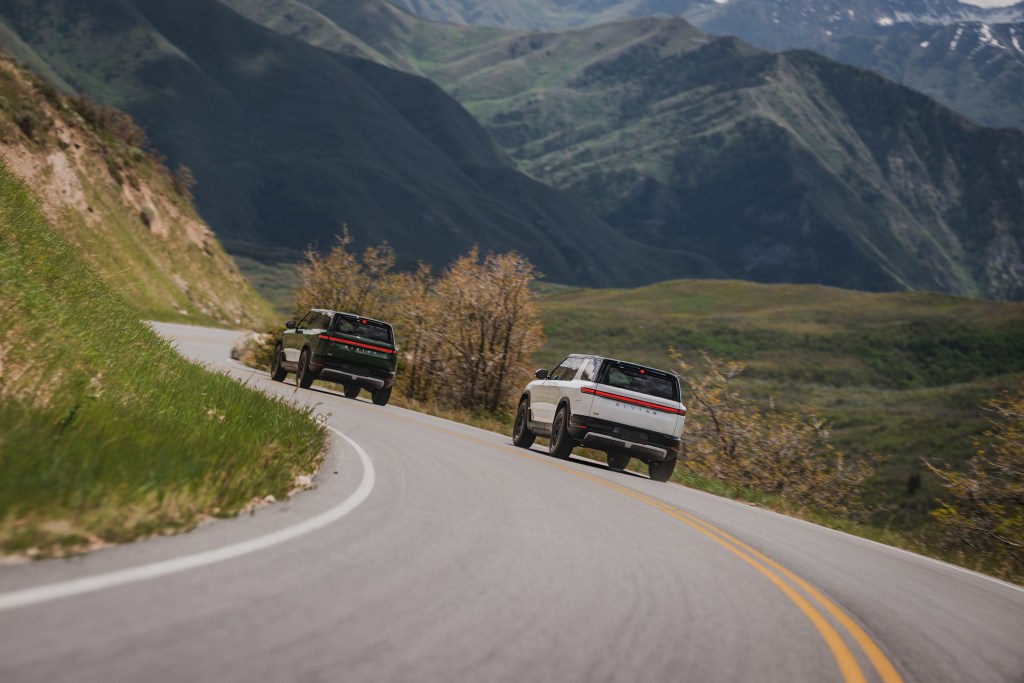
On the road the subtraction pays out in feel. At nearly 2,000 pounds lighter than the R1 and riding a shorter 115.6-inch wheelbase, the R2 turns with genuine agility, and the low slung battery keeps it planted in a way that quickly builds confidence. In Sport mode the Performance trim’s semi-active suspension reads the surface and all but erases body roll through corners; on a clear straight, its dual-motor all-wheel-drive setup—656 horsepower and 609 lb-ft of torque—covers 0 to 60 mph in 3.6 seconds, and the composure carries to the seats, where the suspension settles quickly over broken pavement instead of sharing every jolt.
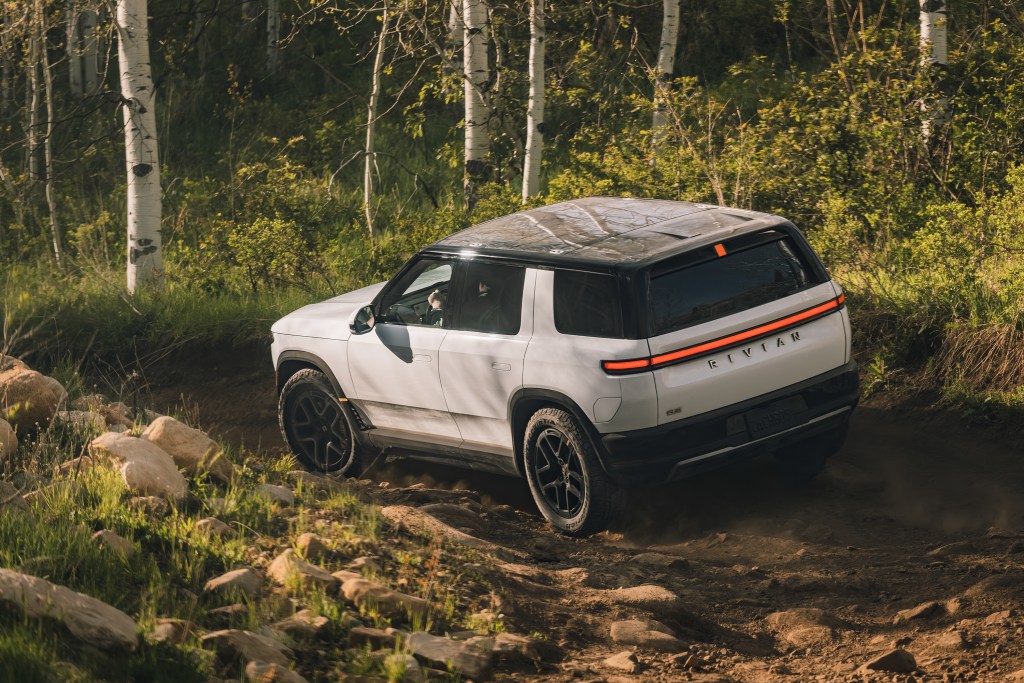
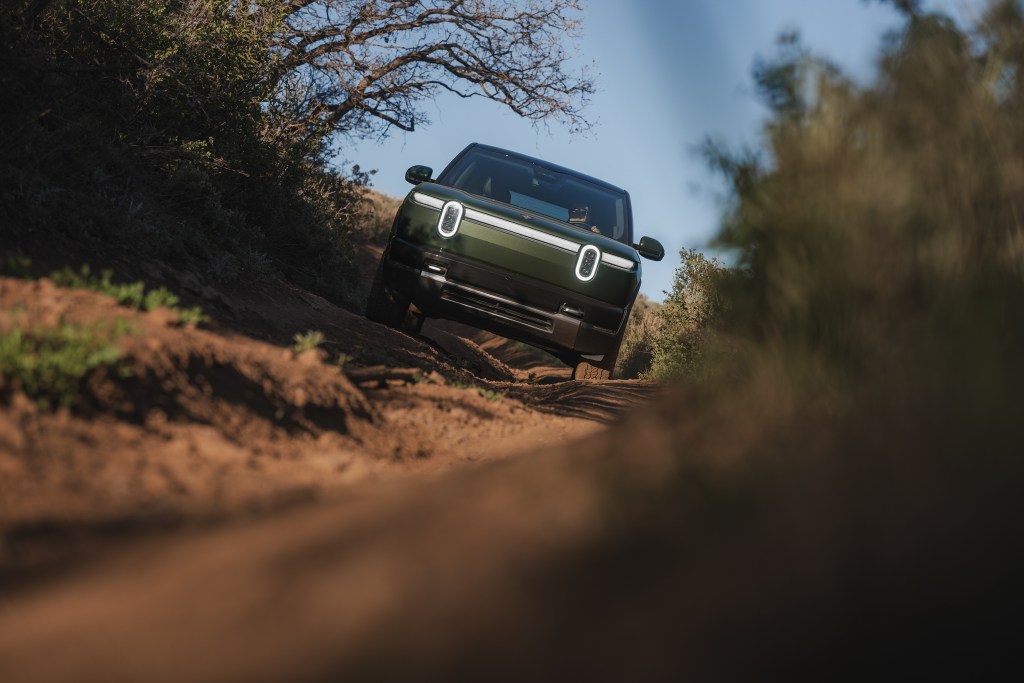
Climbing up the hills the R2 took on demanding terrain without hesitation, its figures holding up their end: 9.6 inches of ground clearance, a 25-degree approach angle and a 26-degree departure angle. The horizontal hood line, shaped to meet European pedestrian-safety rules, doubles as a sightline aid that makes the corners of the vehicle easy to place on a narrow trail. All-Terrain mode took ruts and steep climbs in stride, tackling trails more aggressive than most owners will ever attempt.
The Rivian R2‘s stance is that a lower price need not announce itself. Through deliberate subtraction, real capability and a streak of play that pulls owners closer to the brand, Rivian has built a mid-size SUV that reads as premium and stays honest about the adventuring it was built for. Hours in, the impression that holds is how little the car asks you to give up.



What are your thoughts?