Rumor and the Architecture of the Guestlist
From RSVP and guestlist management to check-in tech, Rumor helps event hosts make insightful decisions and understand data in real time
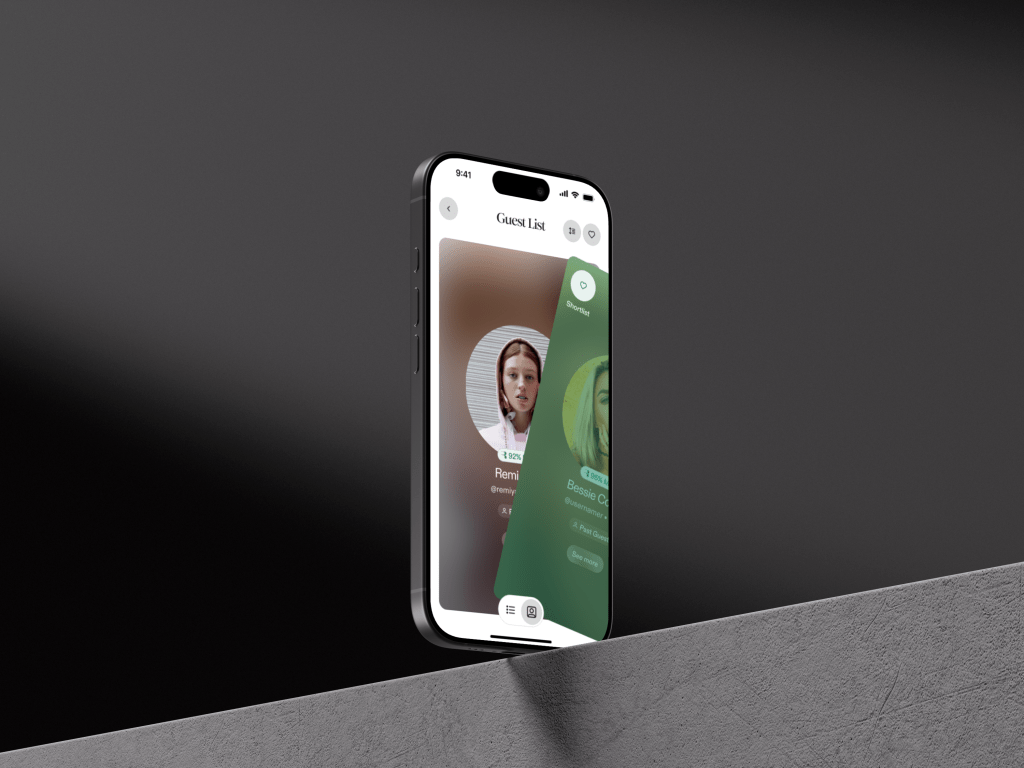
The events industry has spent most of the last decade pretending that software solved it. Ticketing was digitized. RSVPs moved to forms. Check-in got barcoded. But the thing that actually matters at a cultural event—who is in the room, why they are there and what that room produces once the doors close—has remained mostly analog, tracked in group chats, interns’ screenshots and the back-of-napkin intuition of a handful of producers who had done it a thousand times.
In response, Rumor has built its identity around a more difficult proposition: that events are curation problems, not logistics ones, and that the guestlist—not the check-in clipboard—is the most strategic surface in the room.
Founded by Josh Zipkowitz, a producer whose decade of rooms spans Drake, Justin Bieber, Kygo and Palm Tree Crew, Calvin Harris and Coldplay, Rumor launched publicly on Halloween 2025 and has since powered more than 750 events—from 30-person Red Bull dinners and 50-person influencer yacht experiences to a 1,500-person Stagecoach activation with Von Dutch and Neon Carnival at Coachella, which, at over 10,000 confirmed guests, may be the largest private event in the world. The platform is quickly becoming the de facto RSVP tool across Fashion Week, Art Basel, awards season and Formula 1 weekends.
“The fundamental approach across Rumor’s core product is helping hosts make insightful decisions and understand data in real time as they host an event,” Zipkowitz tells us. The platform pulls in relevant social data, runs its own recommendation algorithms to help shape the room and offers real-time social listening before, during and after the event itself. The point is not to digitize the existing workflow. The point is to treat the room as a live system.

What follows from that premise is a specific operating philosophy. “Ultimately, energy is everything,” Zipkowitz says. “Connection makes the world go round and keeps us all sane. You can be with your closest friends lost in the jungle and have no fear and the best time, or you can be at a party with a mismatched crowd and not feel the vibe.” Today, he adds, that vibe is measurable. “Today’s events are driven by content metrics. The more organic content, the better experience the guests are probably having.” In his framing, curation is not an aesthetic preference but an input. It is the thing that decides whether the room compounds or flatlines. “Curating the room is an art in itself,” Zipkowitz says. “It’s how you make sure the energy and the vibe are right.”
Practically, that thesis shows up across the product. Rumor’s mutual friends feature lets guests see the people on a list they already know, without giving anyone visibility into the entire room—an optional toggle most hosts leave on. Its social listening tools let hosts track activity in real time and pull a post-event content report that replaces what used to be teams of assistants screenshotting Instagram Stories into Google Drives. The platform’s newest view, Swiping, frames the guestlist as a dating-app-style decision experience, built after a host told Zipkowitz he was addicted to the product and wanted a more integrated way to interact with it. “We’re not just the cool new brand,” Zipkowitz says of what hosts see when they open a Rumor report for the first time. “We actually have the infrastructure and the engineering to drive an insane amount of value to our host partners.”
The infrastructure claim is not rhetorical. At this year’s Coachella, Rumor powered Neon Carnival’s 10,000-plus guests with what Zipkowitz describes as complete stability both leading up to the event and on-site for check-in—the largest operation the platform has run since inception. Seven months in, a different kind of signal has started to form. “There is an enhanced brand cache that comes with the invite itself,” Zipkowitz says. “If an event is hosted on Rumor, it’s worth attending.” For a piece of event software, that is a fairly unusual thing to become. It is also the point.
The fundamental approach across Rumor’s core product is helping hosts make insightful decisions and understand data in real time as they host an event.
Josh Zipkowitz, RUmor Founder
Part of what makes the positioning work is that Rumor refuses to be precious about scale. The same platform that powers a 30-person Red Bull dinner powers a 150-person private celebrity house party, a 1,500-person Stagecoach moment and a 10,000-person Carnival. “We’ve architected the product so it can be used super casually for smaller events,” Zipkowitz says, “but it also has integrated tools across CRM, data, analytics and logistics for larger events that need more.” Events, in his framing, are a category defined by variance—no two identical, endless nuance and variables—and the tooling should accommodate the spread rather than force it into a single shape.
That flexibility is also what has quietly pushed Rumor past the “event software” label and into something closer to cultural infrastructure. Fashion Week, Art Basel, Coachella, F1, awards season—the biggest rooms on the calendar are increasingly running through the same platform, and the platform is starting to behave less like a vendor and more like a substrate. “This has been part of our core thesis from day one,” Zipkowitz says. “We knew we had an advantage on product-market fit given my background, but part of the vision has always been to build a strong brand at the same time. We’re seeing it happen quickly and it’s pretty awesome to watch.”
Five years out, the ambition gets more explicit. “My vision for Rumor is that eventually everything across culture happens on platform,” Zipkowitz says. “It will be your centralized place for all things events and experiences, and it will really streamline how the right people get access to the right information.” Coming tools, he adds, will push further into connectivity between events and their ideal guests, and into AI-powered audience insights. “In five years, you’ll get all your invites on Rumor, you might meet new people on Rumor, you’ll interact with brands and products on Rumor, and much more.”
The events industry has spent the last decade digitizing surfaces that didn’t really need it. In a category that confused ticketing software for cultural infrastructure, Rumor’s greatest move may be refusing to digitize the surface at all—and building, instead, the system that sits underneath it.





What are your thoughts?