Second Serve: Heineken 0.0 Puts Serena Williams’ Ticket Art on a Can
Heineken 0.0 reactivates tickets from six championship runs in Flushing Meadows and puts their artwork on a set of collector cans
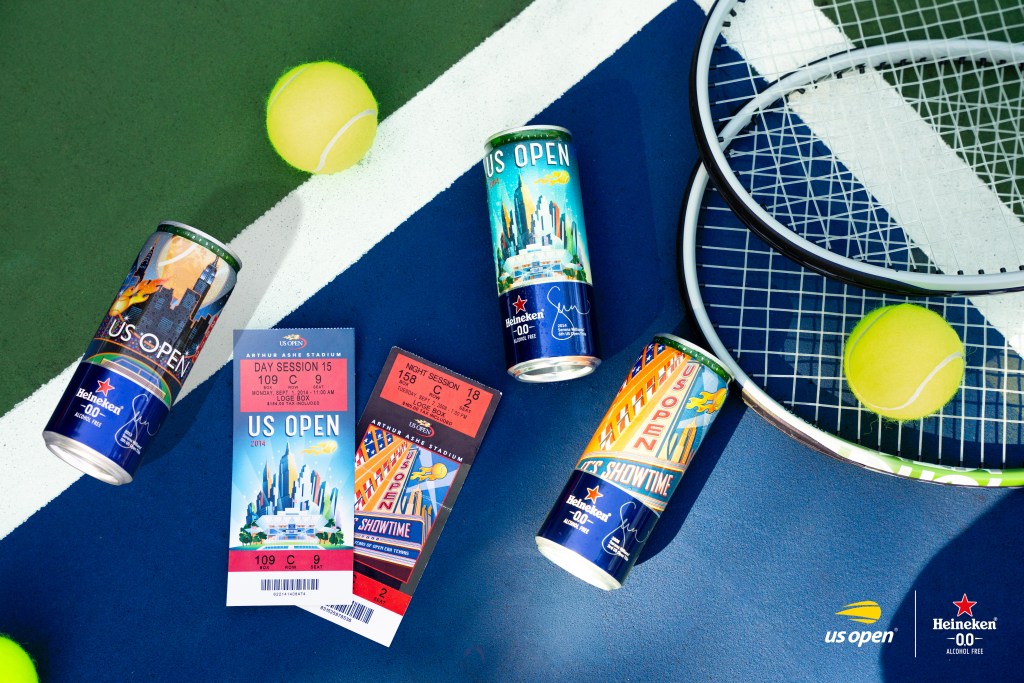
Ticketing has spent the last decade erasing its own evidence. Barcodes that expire on a lock screen. Transfers that move between wallet apps. What went missing in that shift was the ticket stub, the small printed artifact fans kept in a drawer for 20 years because it was the only proof they were in the room.
Heineken 0.0 has built its US Open campaign on the premise that those stubs are still live. Second Serve Tickets, made with 23-time Grand Slam champion and Heineken 0.0 global ambassador Serena Williams, asked fans to submit a photo of a ticket from any of her past US Open tournaments along with the memory attached to it. Entries ran from 3 to 16 August online, with a second route through the brand’s Instagram for anyone who never held a stub in the first place. The strongest entries earn a seat in the Heineken Suite at Arthur Ashe Stadium during this year’s tournament.
“Looking back at my career, some of my favorite memories happened on the courts at the US Open,” Williams says. “Reflecting on those moments this year has reminded me what made those wins truly unforgettable: the energy of the fans cheering me on from the stands.”

The mechanic reverses how sports partnerships usually run—most of them ask a fan to show up and be photographed. This one asks a fan to produce evidence of having already shown up, then treats that evidence as valid tender. A ticket spent in 1999 gets spent again.
Williams joined Heineken 0.0 as a global ambassador earlier this year, in a partnership introduced around padel rather than tennis, which made the US Open the obvious place for it to land properly. Non-alcoholic beer has had a strong two seasons in Flushing Meadows, where Heineken 0.0 has sold through its supply during the tournament. That is the commercial backdrop. The campaign relies on what the brand decided to do with six pieces of paper.
The US Open commissions new theme art every year, a graphic identity that carries across posters, merchandise and the tickets, which means most people who attend are walking around with a piece of commissioned art without ever calling it that. Few pieces of design get handled this much, folded into a wallet, taped into a scrapbook, kept for decades and fewer still go that long without anyone properly looking at them. The artwork lives one afternoon in a tote bag and then goes into a box.
Physical ephemera has been regaining status for a while now, in the same way film photography and printed matter did, because a screenshot cannot be handled and does not age. A stub carries the fold, the ink transfer, the gate number and the seat you sat in.
It’s an incredible concept that celebrates the fans who were right there with me, giving them a place to come together, share their own stories and build new friendships.
Serena Williams, Heineken 0.0 Global Ambassador
That is what makes the second half of the campaign more interesting than a standard commemorative run. Heineken 0.0 has taken the ticket designs from Williams’ six US Open championship wins and printed them across a set of limited-edition cans, sold exclusively at the tournament beginning Monday, 24 August while supplies last. The graphics were originally sized for a piece of card stock about the width of a hand. Wrapped around aluminum they read as a set, six variations on the same annual assignment, which is a way of seeing the tournament’s visual history that the tournament has never really offered on its own.

The span those designs cover is its own argument for the format. The run opens in 1999, when the then 17-year-old Williams won her first Grand Slam title, and closes with three consecutive championships from 2012 to 2014. Fifteen years, two versions of the same player and six graphic identities that track their own era of taste alongside her.
The campaign belongs to Fans Have More Friends, Heineken’s global platform, built on research finding that 75% of fans say their fandom has helped them meet new people. “At Heineken, we believe shared fandom sparks new connections,” says Maggie Timoney, chief executive officer of Heineken USA. The suite is the reward, but the entry form is the more telling piece of it. It asked for a memory and a photograph, and what came back is an informal archive of who was in the building for some of the most watched matches the sport has staged.

Brand activations at the US Open generally compete for attention by adding to it: more signage, more branded seating, more places to queue for a photograph. Heineken has gone the other way and borrowed a visual language the audience already owns, which is the harder move to land and the one with a longer memory behind it. Nothing here asks a fan to adopt a new symbol. It asks them to look again at one they kept.
Most tickets to this year’s tournament will never exist as paper at all. The ones that did, printed in the years Williams was winning them into history, turn out to have held a value the industry stopped designing for. A stub only becomes an artifact when somebody decides to keep it. The most convincing thing about Second Serve Tickets is its argument that the decision still counts.

What are your thoughts?