NUOVO Shapes a Multi-sensory Moment for Hong Kong’s Art and Design Scene
The exhibition evolves NUOVO’s identity beyond furniture showroom to design culture curator
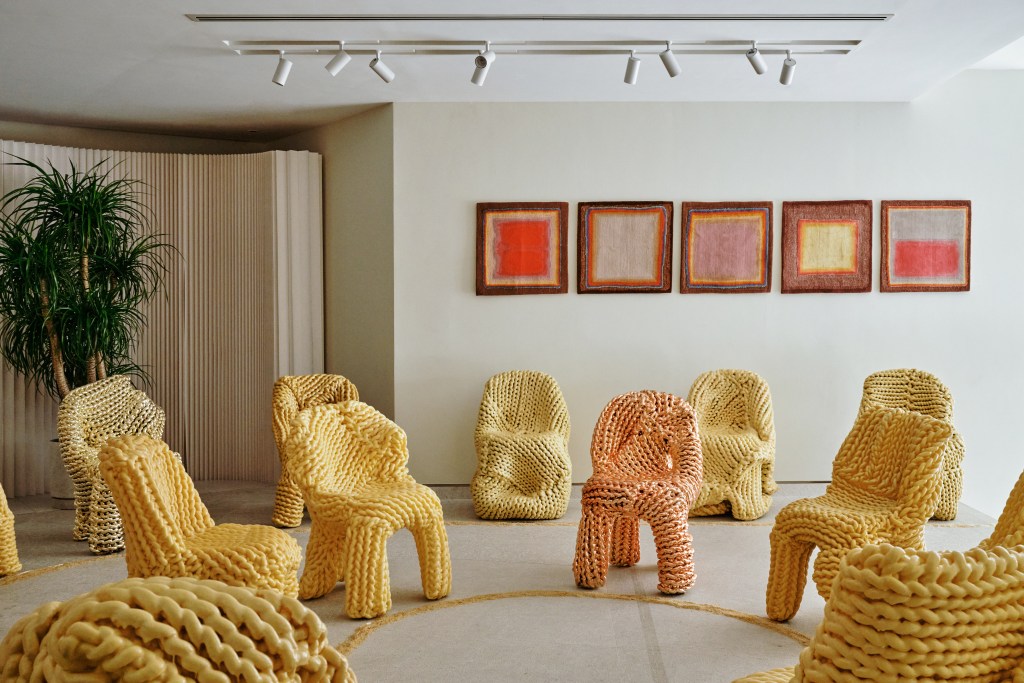
With Sequence – A Listening Room, NUOVO turns its space into an environment where furniture, sound, material research and spatial composition operate as one experience. At the center of the exhibition is South Korean designer Kwangho Lee, whose work has long occupied a compelling territory between industrial fabrication and hand-driven experimentation. For NUOVO, a leading Hong Kong-based platform for premium furniture and lifestyle brands, the exhibition also sharpens its identity: not simply as a showroom, but as a curator of design culture.
As CEO and creative director of NUOVO, Pak Man Lee sees the project as part of a broader evolution for the company. “NUOVO has a long history in importing and retailing furniture, representing various suppliers over the years. Today, we are evolving with the market and entering a new era,” he says. “Having established our name and earned deep trust from our clients, we want to move beyond simply representing brands. We aim to position ourselves as a curator and tastemaker in collectible design. With NUOVO Casa, we are beginning to present our own taste and vision more deliberately.”
Sequence brings together 20 unique chairs by Kwangho Lee, his rug collection for cc-tapis, a custom listening environment created with Bang & Olufsen and a music program developed in collaboration with White Noise Records. Rather than treating these elements as separate attractions, NUOVO frames them as parts of a single composition. The result is a show built around rhythm, repetition, texture and atmosphere—qualities more often associated with music than with furniture display.
A Gallery Built Around Dialogue
NUOVO has steadily positioned itself within Hong Kong’s design landscape as a place where collectible furniture and lifestyle objects are presented with curatorial intent. Sequence proposes that furniture can carry the same conceptual density as sculpture, and that a gallery can function as an instrument, calibrating sight, sound, movement and mood.
Pak sees this as part of a wider responsibility within Hong Kong’s cultural landscape. “Hong Kong has many great art galleries, but there are very few dedicated furniture galleries or platforms that properly educate people about collectible furniture— whether in the secondary market or new pieces,” he says. “Given our long history in the furniture business, I felt that if anyone should take on this role, it should be us.”
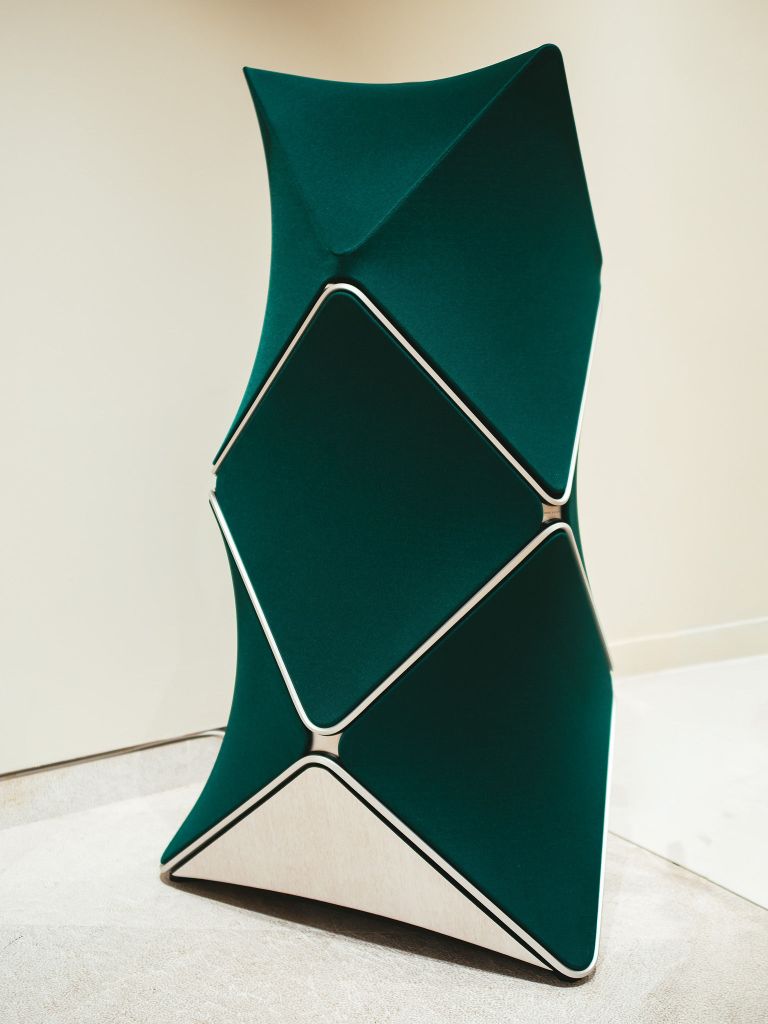
The listening room concept also emerged from a particular convergence of timing and partnership. “This is our 14th exhibition in recent years. The listening room concept came about to celebrate Bang & Olufsen’s 100th anniversary,” Pak says. “They had these beautiful Beolab 90 Atelier edition speakers in Hong Kong, and I thought, ‘why not create a listening room where people can enjoy great music and relax when they feel tired from viewing lots of art?’”
The premise is deceptively simple: what happens when seating, textiles, sound engineering and spatial proportion are orchestrated with the same care as an exhibition of contemporary art? In Sequence, the answer is not delivered through wall text alone, but felt through pacing, acoustics and proximity.
The installation draws formal inspiration from the work of Korean artist Haegue Yang and is structured around the logic of the golden ratio, using proportion as a quiet framework for balance and flow. Rather than relying on spectacle, NUOVO appears to be pursuing compositional intelligence—an exhibition architecture that creates harmony between objects without flattening their individuality.
“The exhibition is titled Sequence because the way we display the chairs—drawing inspiration from Haegue Yang’s works—follows the principles of the golden ratio,” Pak says. “The modular carpet designed by Kwangho Lee for cc-tapis also embodies a sense of sequence and music itself is inherently sequential.”
In this immersive environment, the furniture isn’t just seen; it becomes a part of the rhythm of the space.
Kwangho Lee
For Kwangho Lee, however, the exhibition’s proportional framework becomes less about mathematical systems than shared resonance. “Whether or not the ‘golden ratio’ exists as a tangible absolute, I felt that our ‘sequence’ was naturally pointing toward something balanced,” he says. “Ultimately, I think the most significant ‘golden ratio’ in this exhibition isn’t a mathematical formula, but rather the collective ‘golden ratio’ shared by everyone involved in the planning—the harmony and resonance we created together.”
Kwangho Lee and the Beauty of Material Transformation
Kwangho Lee refuses tidy distinctions between art, design and material experiment. His work often begins with ordinary industrial matter—plastic, rope, sponge tubing, metal—then pushes it toward states that feel bodily, strange or unexpectedly tender. He is less interested in pristine surfaces than in transformation itself: the point at which an everyday, static material stops behaving as expected and starts to suggest something alive.
“Rather than a sense of ‘tension,’ I see it as a deep communion between the material and myself,” Lee says. “My work is about capturing the exact moment when that communion takes place. Since I project my own existence and inner state into the material, the process naturally evolves into something organic and bodily. It is an extension of who I am.”
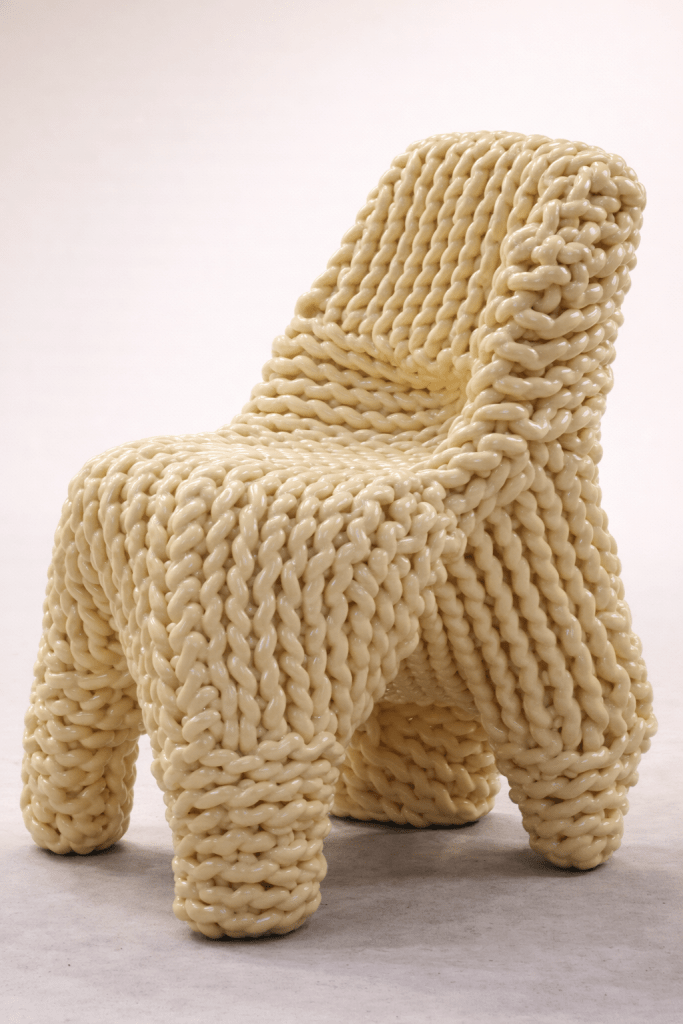
That sensibility is central to the chairs featured in Sequence. Lee wraps plastic chair structures in sponge pipes and nylon rope, creating dense, tactile surfaces through repeated knotting and layering. Once coated in polyurethane, the works develop an almost skin-like presence. They can read as knitted shells, protective armatures or organisms caught in the middle of mutation. The industrial base remains there, but it is no longer the final story. In Lee’s hands, synthetic materials become carriers of softness, labor and transformation.
“Since my work is a repetitive process grounded in spontaneity and chance, these materials allow me to push the boundaries of what traditional furniture materials simply cannot express,” Lee says. “I find these industrial materials—nylon rope, sponge pipes and polyurethane—to be far more suited to revealing who I am. They are excellent mediums that reflect the very world I inhabit.”
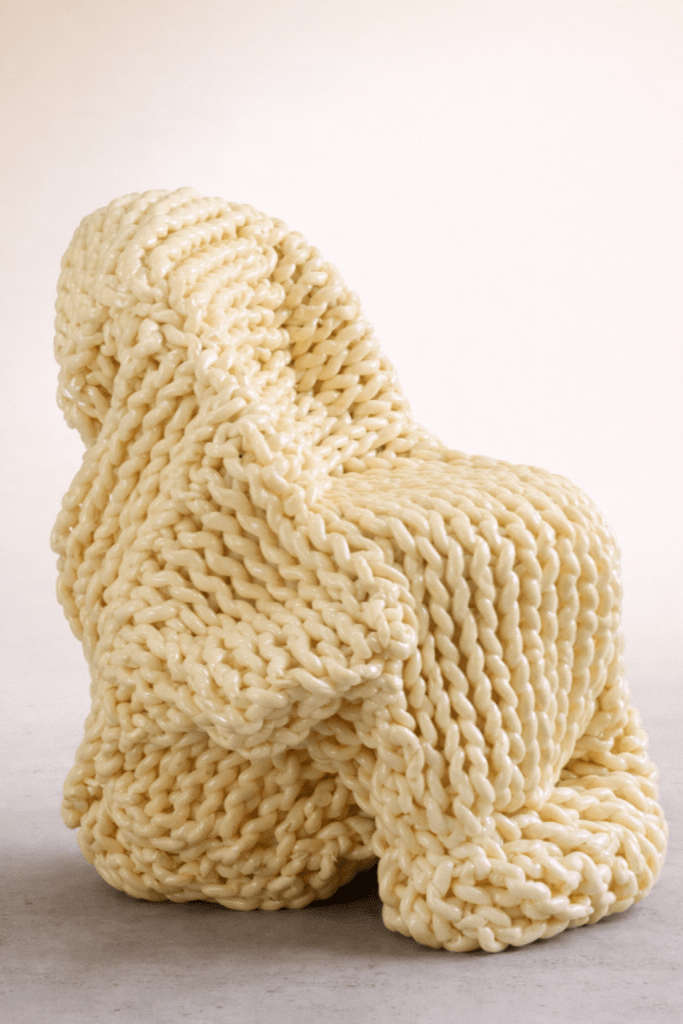
What makes these pieces so effective is the way they sit between recognition and estrangement. At a glance, they are chairs. Look longer, and they begin to resist utility, becoming sculptural objects that test the boundary between function and fiction. Their visual language suggests growth, encasement and adaptation. That ambiguity is a hallmark of Lee’s practice.
“I believe defining the work is the role of the viewer, not the creator,” Lee says. “I simply create something, and I have no desire to confine its existence within specific terminology. Whether it is perceived as furniture, sculpture or something in between is entirely up to the person experiencing it.”
The designer has cited Ghost in the Shell as an early influence, particularly during his student years, and the reference is revealing. The film’s interest in consciousness, evolution and the unstable line between human and technological life resonates with Lee’s material choices. His objects often feel as though they’re crossing categories: industrial yet organic, manufactured yet intimate, engineered yet strangely vulnerable.
“To me, the finished piece is a manifestation of my own existence,” Lee says. “Just as a ‘ghost’ defines the ‘shell,’ my essence naturally permeates the repetitive process and the final object without the need for explanation.”
Repetition, Touch and Time
Across Lee’s practice, repetition is not simply a method of construction; it’s a way of recording thought, time and bodily presence. The recurring acts of wrapping, binding, knotting and layering become both technique and philosophy: a means of allowing form to emerge through sustained contact with material.
“The core of my work lies in repetition,” Lee says, while “the final outcome is rooted in spontaneity, guided by where my hands and mind naturally flow.”
Within the immersive environment of Sequence, this idea finds a natural parallel in sound. Music also unfolds through sequence, repetition, rhythm, variation and return. Lee’s works, experienced in a listening room rather than a neutral white cube, become part of a broader spatial rhythm.
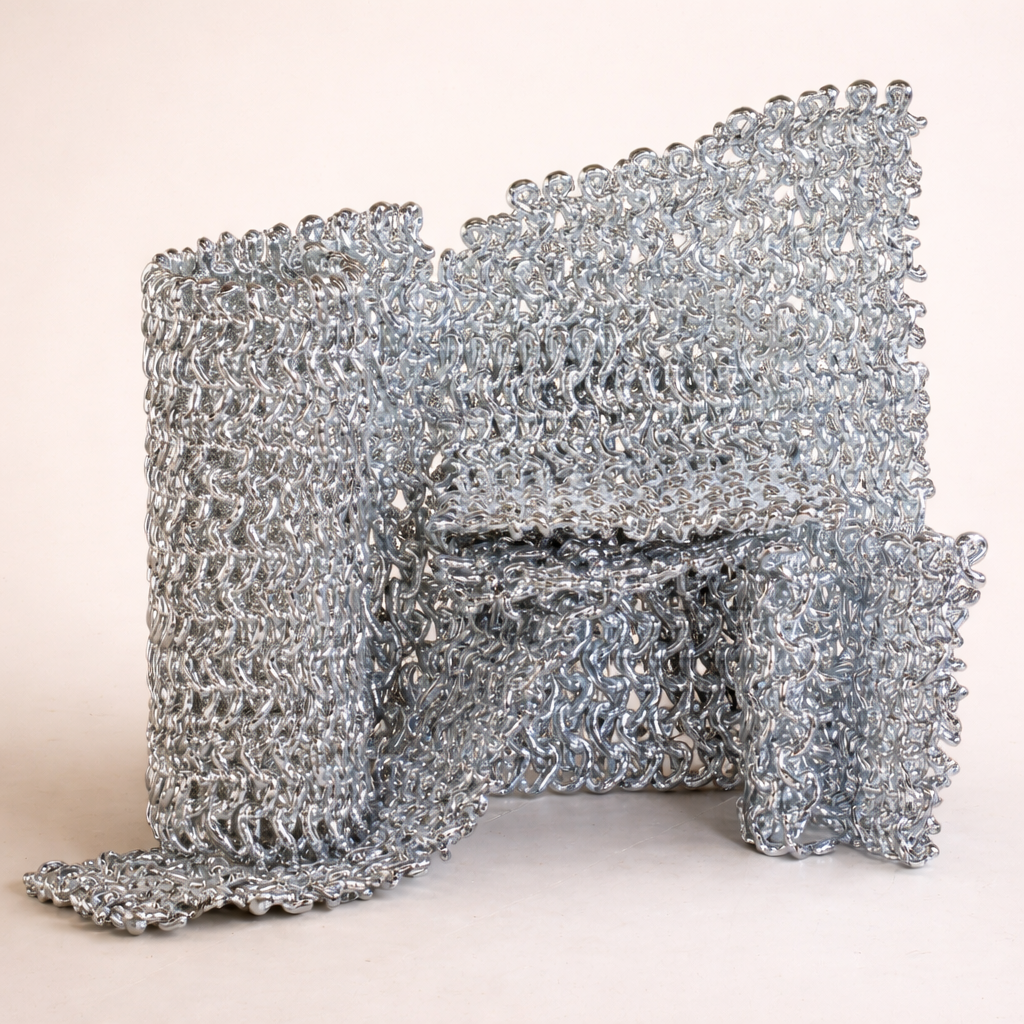
“Just as music unfolds in a specific sequence, my work is a physical manifestation of my inner state,” he says. “I describe it as a sequence created through the resonance of my thoughts and the materiality I engage with. In this immersive environment, the furniture isn’t just seen; it becomes a part of the rhythm of the space.”
The surfaces of Lee’s works often invite a strong tactile response, even when direct contact is not possible. Their textures make touch imaginable. For Lee, this is not an incidental effect but the origin of the work itself: “Since my work is born from the constant, physical engagement of my hands with the material, the act of touching is not just a ‘part’ of the process—it is the very beginning, the end and the core of how a specific form comes into existence,” he says. “To design is, for me, to think and exist through the sense of touch.”
Chairs as Sculptures, Carpets as Material Studies
Alongside the seating works, Sequence includes Lee’s modular carpet collection for cc-tapis, extending the exhibition’s conversation into the language of surface, color, and craft. If the chairs emphasize volume and bodily presence, the rugs shift attention toward surface, color, and material transformation. This is especially clear in Lee’s long-running interest in copper, a material he has explored since 2008.
Copper interests him not just as a metal, but as a changing surface. Its appeal lies in its instability: the way it reacts to air, moisture and time; the way reddish-brown tones gradually shift into greens and blue-greens through oxidation; the way chemistry becomes color. That process of slow visual transformation becomes the conceptual basis for The Color of Copper, his collection for cc-tapis.
“Among many metals, copper possesses a uniquely soft and malleable nature. It changes its appearance according to its environment,” Lee says. “I’ve always felt that the materiality of copper mirrors my own existence. It scars easily, retains every fingerprint and shifts its hue with heat. Over time, it develops a patina, transforming into a completely different color.”
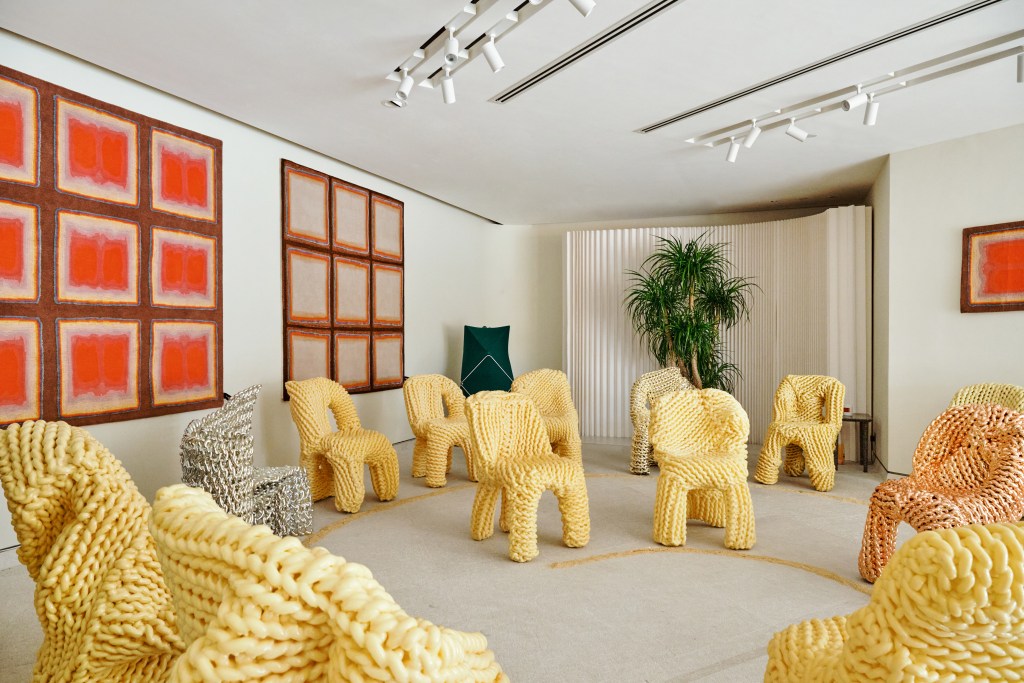
Rather than literally reproducing metal, the rugs interpret copper’s evolving chromatic life through hand-knotted textile construction. Made by artisans using Himalayan wool, silk and aloe fiber, the works translate the luminosity and tonal depth of oxidized copper into a tactile medium associated with warmth and domesticity. The collection’s geometric motifs also echo the marks and seams produced through the welding of copper plates, linking industrial technique to artisanal labor.
“It is the same language and the same vocabulary, expressed through a different material,” he says. “While the surface might appear fixed as a textile, the DNA of the work—the accumulation of time and the rhythm of repetition—remains identical to the original process of oxidation.”
This matters because Lee’s work is never only about appearance; process is embedded in the final object. The carpets hold the memory of making just as the chairs hold the logic of wrapping and layering. Across both bodies of work, material is treated not as passive substance but as collaborator, something with its own behavior, resistance and expressive potential.
The Listening Room as Exhibition Form
The subtitle A Listening Room is not decorative. Sound is one of the exhibition’s structural elements, and NUOVO appears to be treating listening as a design condition rather than an accessory. That choice places the show in a particularly contemporary conversation. Increasingly, the most interesting design exhibitions are not only visual but environmental, concerned with how atmosphere shapes interpretation.
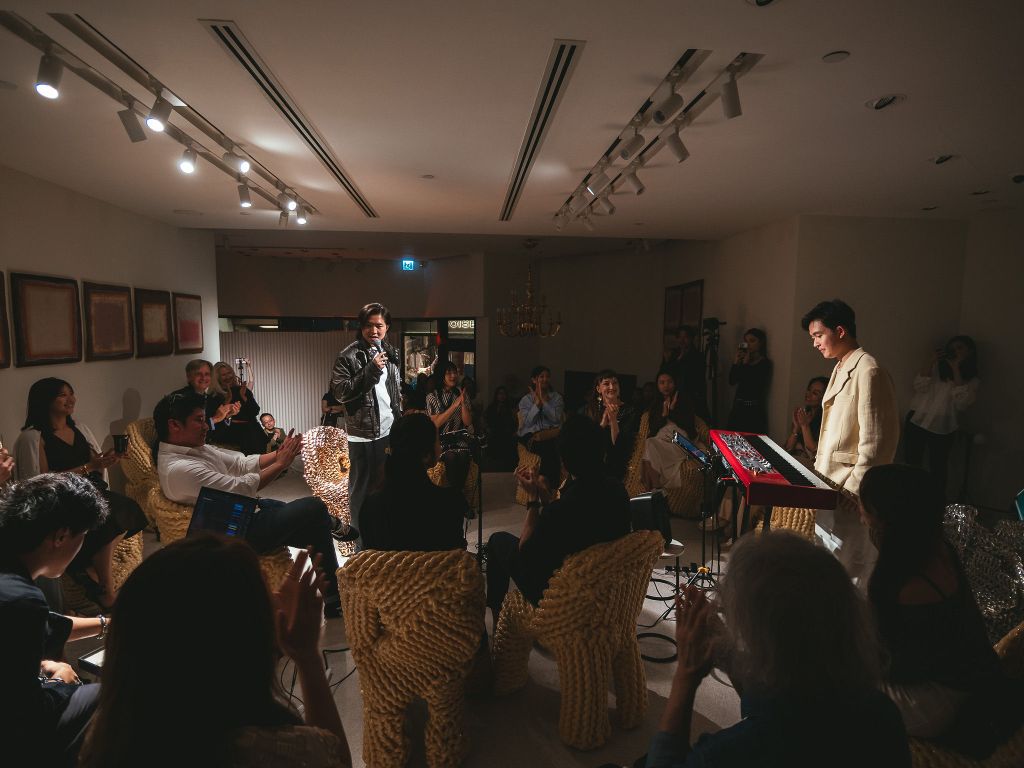
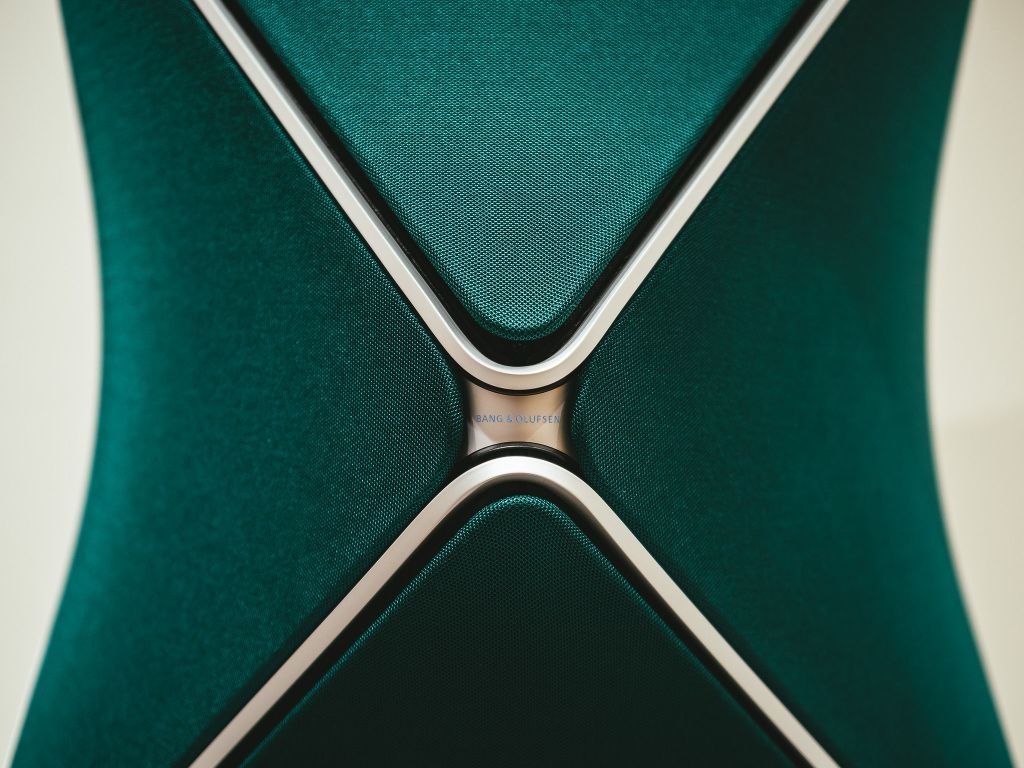
To realize that ambition, NUOVO marked Bang & Olufsen’s 100th anniversary with a dedicated audio installation built around the limited-edition Beolab 90 Atelier edition speakers. This is not merely a brand placement exercise. The Beolab 90 is known for its advanced acoustic technology, including Active Room Compensation, Beam Width Control, and Beam Direction Control—features that allow sound to be adjusted according to architecture, activity and listening position.
In a conventional retail setting, those specifications might be presented as luxury selling points. In Sequence, they become curatorial tools. Active Room Compensation allows the system to respond to the specific acoustics of NUOVO’s gallery. Beam Width Control makes it possible to move from concentrated listening to a more ambient sonic field. Beam Direction Control lets sound be aimed with precision, shaping how visitors inhabit the room. The technology effectively turns audio into spatial design.
For Pak, the show is rooted in exactly this kind of holistic staging. “This approach reflects the essence of Experience Retailing, bringing together design, technology, and lifestyle into a holistic environment where visitors don’t just view objects but engage with them as part of a curated sensory journey,” he says.
That emphasis on listening also deepens the exhibition’s central idea of sequence. Sequence is rhythm, order, variation, return. It is the logic of music, but also of weaving, knotting, modular composition and walking through a room. By framing the exhibition in these terms, NUOVO gives the visitor a way to understand the relationship between Lee’s objects and their environment.
Lee also sees a direct parallel between musical composition and the building of form. “Just as a song is built by layering sounds and rhythms over time, my process begins with a single repetitive act that gradually accumulates into a physical form,” he says. “This evolution—where small, individual elements gather to create a complete narrative—is exactly how I perceive the ‘sequence’ of my craft. In this exhibition, my furniture and the listening environment share the same heartbeat.”
White Noise Records and the Soundtrack of the Space
The collaboration with White Noise Records adds another layer of specificity. Founded in 2004 by three avid music enthusiasts, White Noise has become a respected presence in Hong Kong’s independent music culture. For Sequence, it is curating the playlist for the listening room, drawing from genres including jazz, funk, electronic music and beyond.
Pak describes the partnership as both personal and culturally specific. “I’ve been following White Noise Records since I was a teenager,” he says. “They are the most legendary name in Hong Kong for alternative music. Gary from White Noise is a true visionary and tastemaker, and that’s exactly what he brought to the show.”
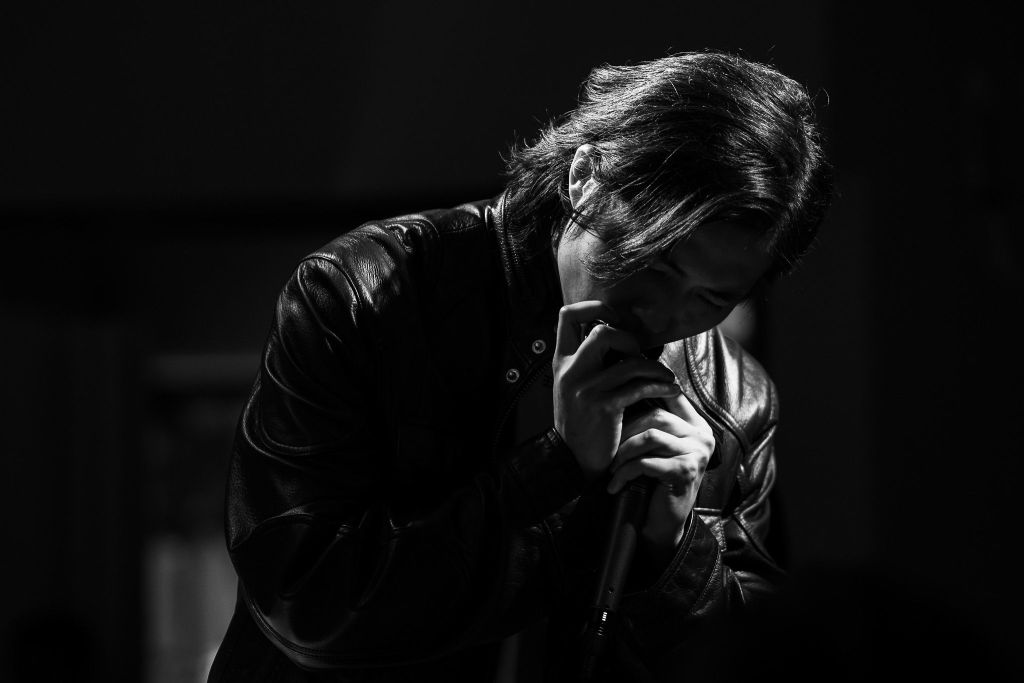
That curatorial choice is important. A playlist in this context is not background music; it is part of the exhibition design. It can alter the perceived weight of an object, the pace of movement through the room, even the emotional register of material. Jazz may heighten improvisation and structure. Electronic music may reinforce the exhibition’s dialogue with synthetic matter. Funk may bring tactility and bodily rhythm to the fore. The soundtrack becomes a subtle interpretive framework.
NUOVO Beyond the Gallery
Beyond its own gallery, NUOVO presented more than 30 pieces in the Art Basel Hong Kong VIP Lounge, extending its curatorial perspective into one of the city’s most visible cultural settings. The presentation places NUOVO’s furniture before an international audience of collectors, curators, patrons and design professionals, reinforcing the company’s belief that collectible design belongs within a broader cultural conversation.
That context carries additional weight this year with the first collaboration between Art Basel Hong Kong and Salone del Mobile Milano, arguably the world’s most influential furniture and design fair. For NUOVO, the partnership reflects a larger shift in how furniture and design are being understood globally: not as secondary to art, but as cultural objects with their own histories, authorship and collectible value.
Pak sees this moment as part of that wider rebalancing. “This is a pivotal moment where people are shifting their focus from art to other things that are recognisable, and collectible design,” he says. “I hope that in the future, museums worldwide will increasingly collect more pieces of design icons like Charles Eames, Le Corbusier, Jean Prouvé, Carlo Mollino and Eileen Grey. This collaboration is a significant step toward that recognition.”
“We are seeing more designers reaching out to specify collectible pieces for their projects,” Pak says. “Our recent partnership with Christie’s Hong Kong for an auction of collectible furniture yielded great results, and we now integrate at least one collectible piece into almost every interior styling project we handle.”
The gallery’s long-term ambitions are also expanding through NUOVO Casa, its home consultancy platform. “Exhibitions like Sequence allow us to evolve beyond a gallery into a comprehensive lifestyle brand,” Pak says. “We assist our clients with every facet of their living space, from managing land portfolios and real estate transactions to interior design, furniture selection and art acquisition. Our goal is to help them create a truly cohesive and curated home that they dream of.”
Why Sequence Matters
Sequence – A Listening Room does not reduce design to function, nor does it force furniture into the language of fine art just to borrow prestige. Instead, it works from a more nuanced premise: that objects, sounds and spaces can be curated together to produce meaning. Kwangho Lee’s work is particularly suited to this kind of treatment because it already challenges familiar hierarchies—industrial and handmade, practical and sculptural, technological and organic.
For Pak, the ambition is clear. “My hope is that visitors recognize us as the catalyst for a ‘Design Miami’-style movement, where we prioritize ‘furniture art’ over traditional ‘art for art’s sake,’” he says. “I want the audience to appreciate not just the individual pieces, but the entire curated ambiance, including the music and lighting that highlights the futurism of Kwangho’s and B&O’s design.”
For NUOVO, the exhibition is also a statement of intent. It suggests a future-facing model for design presentation in Hong Kong: one that is immersive, research-driven, and culturally literate. Sequence invites visitors not just to look, but to listen, to compare textures and to experience furniture as part of a larger sensory composition. Lee’s own hope for the exhibition is perhaps more expansive. “I wish for every visitor to engage in their own unique dialogue with the work, whether that communion is sparked by touch, visual cues, scent or any other sensory path,” he says. “I don’t want to dictate what they should feel.”
In that sense, the show’s title is exact. Sequence is about arrangement, but also about perception over time. A chair leads to a rug, a rug to a sound, a sound to a material, a material to an idea. The exhibition asks viewers to follow those links. And in doing so, it offers one of the more thoughtful intersections of design, music and contemporary culture.


What are your thoughts?